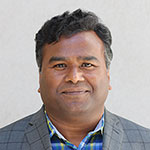
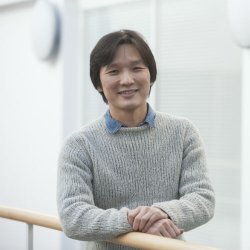
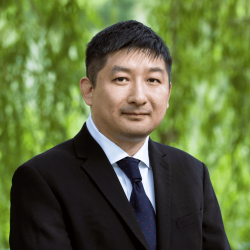
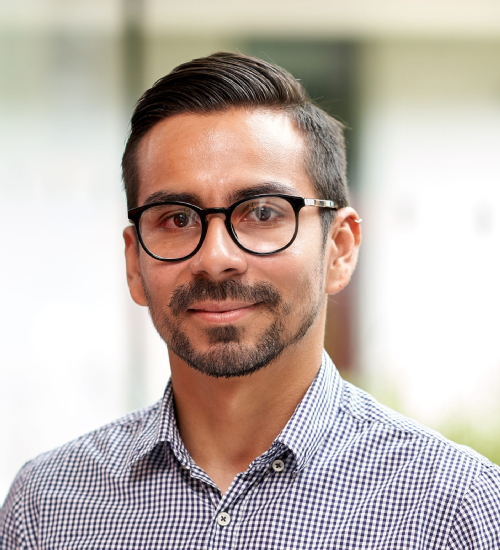
Howard Bondell is a Professor of Statistical Data Science at the School of Mathematics and Statistics, University of Melbourne, since 2018. He serves as Head of School since 2021, Co-Director of the Melbourne Centre for Data Science, and holds an ARC Future Fellowship (2020-2024). Ph.D. in Statistics, Rutgers University (2005) Academic Career: North Carolina State University (2005-2018) His research focuses on model selection , robust estimation , regularisation , Bayesian methods , and uncertainty quantification in statistical and machine learning. His publications emphasize applications in regression analysis, quantile modeling, variable selection for high-dimensional data, and genetic data analysis. Scientific awards include: Fellow of the American Statistical Association (2017) ARC Future Fellow (2020-2024)
Dr. Shakhawat Hossain is a Professor of Statistics at the University of Winnipeg, serving as Chair starting July 2025. He holds adjunct positions at the University of Manitoba and University of Regina. His academic journey includes a PhD from the University of Windsor (2008), postdoctoral training at the University of Alberta's School of Public Health (2008–2010), and prior faculty roles at Alabama A & M University. He specializes in advanced statistical methodologies with applications in health sciences and epidemiology. Dr. Hossain's education includes: Ph.D. in Statistics, University of Windsor M.Sc. in Statistics, University of Alberta M.Sc. in Mathematics, Jahangirnagar University, Bangladesh B.Sc. (Hons.) in Mathematics, Jahangirnagar University, Bangladesh His research focuses on shrinkage estimation techniques , longitudinal data analysis , survival analysis , and health services research . He actively applies these methods to study dengue transmission dynamics, neuroimaging correlates of developmental disorders, and clinical outcomes in pediatric populations. His work bridges theoretical statistical innovation with real-world public health challenges. Dr. Hossain currently holds an NSERC Discovery Grant supporting student research. His 2023-2024 publications emphasize spatial epidemiology, advanced survival models, and dengue fever dynamics. He serves as Associate Editor of the Journal of Statistical Computation and Simulation . His advisory and grant activities include mentoring students in statistical modeling and securing funding for interdisciplinary health projects. While specific lab affiliations are not explicitly stated, his collaborations span departments in statistics, public health, and biomedical sciences.
Andreas Groll is a Professor at the Technical University of Dortmund, affiliated with the Department of Statistical Methods for Big Data under the Faculty of Statistics. His research focuses on variable selection, regularization techniques in generalized linear models, categorical data analysis, and sports statistics, particularly predicting international soccer and tennis tournaments. He leads a working group including researchers like Dr. Daniel Horn and Dr. Rouven Michels. Key research areas include semiparametric regression and event data analysis. Recent work explores machine learning applications in sports analytics and healthcare, such as predicting hospital readmissions and modeling environmental data. Groll has published extensively in journals like Journal of Quantitative Analysis in Sports and Statistical Modelling .
Naratip Santitissadeekorn is a Senior Lecturer in Data Assimilation at the School of Mathematics and Physics, University of Surrey, where he is affiliated with the Mathematics at the Interface Group. His work bridges mathematics, data science, and real-world applications in urban planning, crime analysis, and geophysical fluid dynamics. Dr. Santitissadeekorn received his PhD from Clarkson University in 2008, with a dissertation titled "Transport Analysis and Motion Estimation of Dynamical Systems of Time-Series data." His doctoral research was supervised by Professor Erik Bollt. Following his PhD, he completed two significant postdoctoral positions: from 2008-2011 at the University of New South Wales, Sydney, Australia, working with Professor Gary Froyland on numerical techniques for finite-time Lagrangian coherent set identification, with applications to delimiting the polar vortex and Agulhas rings; and from 2011-2014 at the University of North Carolina-Chapel Hill, working with Professor Chris Jones on data assimilation projects. Dr. Santitissadeekorn's research focuses on inverse problems and data assimilation in geophysical fluid dynamics, the applications of Lagrangian Coherent Structures (LCS), and computational ergodic theory. His work combines theoretical mathematics with practical applications, particularly in urban growth modeling and crime analysis. He has developed innovative methods for identifying coherent structures in fluid flows, estimating transition probabilities from spatiotemporal data, and creating data-driven frameworks for urban expansion scenarios. His research demonstrates how mathematical techniques can be applied to solve real-world problems in environmental science, urban planning, and public safety. An analysis of Dr. Santitissadeekorn's recent publications (2020-2023) reveals a strong focus on urban expansion modeling and network analysis. His work on urban growth has evolved from basic cellular automata models to sophisticated frameworks that manage uncertainty through parameter clustering and growth mode identification. His research on Hawkes processes has advanced ensemble-based filtering techniques for analyzing count data in large networks. These publications demonstrate a consistent pattern of applying mathematical rigor to complex spatiotemporal phenomena, with increasing emphasis on data-driven approaches and practical applications. Dr. Santitissadeekorn has made significant contributions to data assimilation methods, particularly through the development of the extended Poisson-Kalman filter (ExPKF) for urban crime modeling. His teaching includes courses in Algebra and Bayesian Statistics, reflecting his expertise in both theoretical and applied mathematics. While specific awards are not mentioned in the available information, his extensive publication record in high-impact journals demonstrates recognition within his field. Dr. Santitissadeekorn's research has practical implications for urban planning and law enforcement. His work on urban expansion models helps planners understand different growth trajectories, while his crime modeling research contributes to improved police patrolling strategies. His interdisciplinary approach, combining mathematics, computer science, and domain-specific knowledge, positions him at the forefront of applying data science to societal challenges.
Professor Jin Xuan is the Associate Dean (Research and Innovation) at the University of Surrey's Faculty of Engineering and Physical Sciences, and holds a Chair in Sustainable Processes. He is also a Turing Fellow at the Alan Turing Institute. Previously, he led the Department of Chemical Engineering at Loughborough University. His research focuses on net-zero energy, circular economy, and sustainable development through AI and engineering innovations. He has pioneered Energy and AI as an interdisciplinary field, leading advancements in multiscale predictive models for energy systems and low-carbon solutions. Roles: Associate Dean, Professor of Sustainable Processes, Turing Fellow Affiliations: University of Surrey, Alan Turing Institute Prior Position: Head of Chemical Engineering, Loughborough University His research interests span AI-driven energy systems, CO2 capture/utilization, and renewable energy devices like fuel cells and electrolysers. He has developed novel models for complex systems and co-founded journals such as Energy and AI. He leads the UKRI CircularChem Centre, recognized with the IChemE Global Sustainability Award (2023). Awards: Philip Leverhulme Prize (2022), Beilby Medal (2020) Professor Xuan’s work bridges academia and industry, emphasizing ethical and policy frameworks in energy systems. He advises on grants and collaborates globally, fostering innovation in digital twins and sustainable technologies.
Prof. Dr. Alexander Meyer-Gohde is a Professor of Financial Markets and Macroeconomics at Goethe University Frankfurt’s Faculty of Economics and Business, and a key figure at the Institute for Monetary and Financial Stability (IMFS). His research spans macroeconomic theory, macro-finance, numerical methods, and econometrics, focusing on DSGE models, nonlinear dynamics, and the impact of risk and uncertainty on monetary policy. Education : PhD in Economics (Technische Universität Berlin), MA in Economics and Management (Humboldt-Universität zu Berlin), BA in Language, Literature & Culture (Colorado State University). Research Interests : Macroeconomics, macro-finance, numerical methods, recursive preferences, stochastic volatility, and model uncertainty. Grants : DFG Individual Research Grant (2021-2024) and MatlabMakro DigiTeLL Grant (2022-2023). Publications : Focus on DSGE model solution methods, numerical stability, term premia, and nonlinear dynamics in macroeconomics. Students : Supervises job market candidates Johanna Saecker and Mary Tzaawa-Krenzler. Leadership : Chair of Financial Markets and Macroeconomics at Goethe University (2018–present) and coimplementation of the IMFS “Project Monetary and Financial Stability”.
Jingbo Liu is an Assistant Professor in the Department of Statistics at the University of Illinois, Urbana-Champaign, with an affiliate appointment in Electrical and Computer Engineering. He received his B.E. (2012) from Tsinghua University, M.A. (2014) and Ph.D. (2018) from Princeton University, all in Electrical Engineering, followed by a postdoc at MIT IDSS. Education Ph.D. in Electrical Engineering, Princeton University (2018) M.A. in Electrical Engineering, Princeton University (2014) B.E. in Electronic Engineering, Tsinghua University (2012) His research focuses on statistical inference under systems constraints, information-theoretic inequalities, graphical models, and applications of high-dimensional probability to information sciences. Key areas include mutual covering bounds, hypercontractivity, Brascamp-Lieb inequalities, and their connections to machine learning and communication systems. Recent work applies information theory to generative AI, analyzing diffusion models' utility, privacy enhancements, and computational efficiency. He also investigates statistical physics techniques for high-dimensional problems like Lasso distributional limits and tensor model free energy, with applications in variable selection and PCA. Scientific awards include the Thomas M. Cover Dissertation Award (2018) and Princeton's Wallace Memorial Fellowship (2016). Courses taught include STAT 578 (High-Dimensional Statistics), STAT 430 (Nonparametric Statistics), and STAT 542 (Statistical Learning).
Professor Ian Marschner is a leading academic in biostatistics, currently holding the position of Professor of Biostatistics and Co-Director of Biostatistics at the NHMRC Clinical Trials Centre, University of Sydney. He has extensive experience spanning over 30 years, including roles as Professor and Head of the Department of Statistics at Macquarie University, Director of Biometrics at Pfizer, and Associate Professor at Harvard University. His research focuses on biostatistical applications in clinical trials, epidemiology, and public health, with a particular emphasis on adaptive trial designs, meta-analysis, and disease surveillance. Professor Marschner has contributed to major clinical trials in cardiovascular medicine, oncology, HIV/AIDS, neonatal/perinatal care, and COVID-19. He co-authored the book Inference Principles for Biostatisticians and is involved with the Biostatistics Collaboration of Australia (BCA) in developing and teaching the Masters of Biostatistics program. His grants include the NHMRC Centre of Research Excellence (AusTriM) and a National Critical Research Infrastructure Initiative grant totaling over $20 million. Research students under his supervision include Aydin HIBBERT, focusing on generalized joint regression models for longitudinal data. His work addresses methodological challenges such as bias in early-stopped trials, surrogate endpoints, and statistical frameworks for adaptive experiments. Recent contributions include risk modeling for diabetes, cardiovascular mortality prediction, and biomarker analysis in cancer therapies.
P. (Saday) Sadayappan is a Professor in the School of Computing at the University of Utah. He serves as a lead researcher in high-performance computing, with a focus on compiler optimization and algorithm-architecture co-design. His current projects include NIH SBIR Phase 2 funding for large-scale image analysis and NSF grants for tensor applications and cyber-infrastructure for AI. Research Interests : Compiler Optimization for High Performance Computing Optimization of Sparse/Dense Matrix/Tensor Computations Scalable Machine Learning Algorithm-Architecture Co-Design Optimization Research Trends in Publications : His work emphasizes optimizing computational workflows for emerging hardware architectures, with a focus on accelerating machine learning and scientific computing through compiler-level innovations. Recent trends include co-design for CNNs, sparse matrix optimizations, and distributed algorithms. Scientific Awards : ACM SIGPLAN Most Influential PLDI Paper Award (2018) Grants & Projects : NSF (2022–2027): Comprehensive Framework for Tensor Applications NSF AI Institute ICICLE (2021–2026): Cyber-infrastructure for environmental AI NIH SBIR (2023–2025): Next-gen machine learning for image analysis Labs & Teams : Collaborates with institutions like Ohio State University and RNET Technologies on projects involving parallel computing, sparse algorithms, and compiler design.
Max Schleser is Associate Professor in Film and Television at Swinburne University of Technology, where he also conducts research with the Centre for Transformative Media Technologies (CTMT). He is an Adobe Creative Educator Innovator, Founder of the Mobile Innovation Network & Association (MINA), and Screening Director of the International Mobile Innovation Screening & Festival. His work spans academic, artistic, and community domains, with a focus on innovative screen practices. Max holds a PhD in Creative Arts from the University of Westminster, an MA in Art and Media Practice with Distinction, and a BA Hons. His research centers on immersive media, documentary film, and creative arts 4.0, particularly cinematic VR and interactive filmmaking. He investigates screen production, emerging media, and smartphone filmmaking as tools for community engagement, creative transformation, and transmedia storytelling. His recent publications reveal a strong trend toward integrating Generative AI into documentary and city film genres, exploring the 'AI eye' and computational non-fiction. He also investigates novel immersive production methods in VR, HyFlex pedagogies in film education, and collaborative mobile storytelling through workshops. His work consistently bridges creative practice with theoretical inquiry. Best Cinematography, International Cell Phone Cinema - Cannes (2025) Best Mobile Film, Nitiin International Film Festival (2024) Dean's Award for Teaching and Research, Swinburne University (2023) International Visiting Research Scholar, Auckland University of Technology (2024) Early Career Award - Research, Massey University (2012) Max leads multiple research grants focused on health storytelling, intergenerational connection, AI in screen industries, and sustainability education. He supervises creative projects and has conducted digital storytelling workshops for cultural institutes and government bodies worldwide. As founder of MINA and director of major festivals, he leads international networks in mobile media innovation. He also serves on the editorial board of the Media Practice and Education journal and has co-edited several key volumes on mobile media and storytelling.
David Orrego-Carmona is an Associate Professor in Translation Studies at the University of Warwick, where he also serves as Deputy Director of Graduate Studies. He is affiliated with the School of Modern Languages and Cultures, specifically within the Translation and Transcultural Studies team. Prior to joining Warwick in 2022, he held academic positions at Aston University and was a visiting lecturer at the University of Warsaw. He maintains a research associate position at the University of the Free State in South Africa. His academic background includes a PhD and MA in Translation and Intercultural Studies from Universitat Rovira i Virgili, Spain, and a BA in English-French-Spanish Translation from Universidad de Antioquia, Colombia. David Orrego-Carmona’s research centers on the intersection of translation, technology, and users. He investigates how translation technologies empower both professional and non-professional translators, and how the democratization of these tools transforms users into active participants in translation processes. His work employs mixed-methods approaches, including eye-tracking experiments, to study subtitle reception, machine translation adoption, and the societal implications of AI in media localization. He is particularly interested in how translation fosters social equity and inclusion in multilingual societies. His recent publications reflect a strong trend in empirical and technological aspects of audiovisual translation. Key themes include AI-powered media localization, viewer comprehension under various subtitling conditions, the quality of machine-translated subtitles, and the methodologies for studying subtitle reading through eye-tracking. His research bridges academic inquiry with real-world applications, often involving collaboration with industry and public sectors. He is actively involved in the academic community, serving as treasurer of the European Association for Studies in Screen Translation (ESIST), associate editor of Translation Spaces , and deputy editor of JoSTrans, the Journal of Specialised Translation . He also contributes to organizing academic events such as IPCITI 2025 at the University of Warwick. David teaches modules on digital translation, audiovisual translation, translation technologies, and professional aspects of translation. He welcomes PhD proposals aligned with his research interests. He supervises students in areas related to subtitling, machine translation, and translation technology, though specific student names are not listed in the provided texts. He has led interdisciplinary initiatives to connect academic research with private and public sector challenges in translation and communication. He leads research projects focused on media localization, translation reception, and the impact of AI, often involving collaboration with international scholars. His lab and team activities emphasize experimental methods like eye-tracking and mixed-methods research in audiovisual translation contexts.
Stavros Vougioukas is a Professor and Vice Chair in the Department of Biological and Agricultural Engineering at the University of California, Davis, within the College of Engineering. He is actively involved in research and graduate mentorship, focusing on agricultural robotics and automation for specialty crops. His work integrates engineering solutions to improve efficiency and sustainability in farming systems. His research interests include agricultural robotics , automation of harvesting processes , sensors and control systems , precision agriculture , and wireless sensor networks for orchard environments . He develops technologies for robotic and robot-aided harvesting, particularly in strawberries and orchard crops, emphasizing optimal management of inputs and yield monitoring. The recent publications reflect a strong trend in robotics integration , real-time sensing , and data-driven decision-making in agriculture. His work spans mechanical design, signal processing, path planning, and structural durability, indicating a multidisciplinary approach to solving agricultural challenges through engineering innovation. Scientific Awards and Recognition: $1.6M grant (2021) to develop innovative fruit-picking machines CITRIS Seed Award (2023) for engineering solutions in agriculture Professor Vougioukas mentors graduate students and leads funded research projects focused on automation and robotics in agriculture. He has secured significant grants, including a $1.6M award for fruit-picking robotics, demonstrating strong research leadership. His collaborations span institutions and disciplines, particularly in agricultural machinery design and sensor network deployment. He leads research efforts in agricultural automation, particularly through projects involving robot-aided harvesting , orchard navigation systems , and wearable worker tracking devices . His lab contributes to the development of intelligent systems for sustainable farming, integrating mechanical, electronic, and computational components.
Shachar Lovett is a researcher at the University of California, San Diego (UCSD), specializing in computational complexity, combinatorics, and theoretical computer science. His work spans advanced topics in communication complexity, pseudorandomness, and coding theory, often intersecting with problems in additive combinatorics and Boolean function analysis. Education : Not explicitly detailed in the provided text. Research Interests : Lovett's research focuses on computational complexity, particularly in communication and circuit complexity, combinatorial structures like sunflowers and high-dimensional expanders, and the analysis of Boolean functions through Fourier and Gowers norms. His work explores the limits of deterministic vs. randomized computation, the structure of codes over finite fields, and the interplay between additive combinatorics and theoretical computer science. Article Trends : His recent publications address exact vs. approximate representations of Boolean functions, quasipolynomial bounds in combinatorics, hypercontractivity in high-dimensional expanders, and advancements in the log-rank conjecture. These works emphasize connections between computational complexity, discrete mathematics, and pseudorandomness, often yielding improved bounds or novel frameworks for understanding Boolean function behavior. Scientific Awards : No specific awards or honors were mentioned in the provided text. Advising and Collaborations : Lovett collaborates extensively with researchers like Hamed Hatami, Kaave Hosseini, and Jiapeng Zhang, contributing to fields such as non-malleable codes, matrix multiplication algorithms, and communication complexity. No formal student advising details were provided.
Dr. Vishnu Unnikrishnan is an Assistant Professor at the Department of Electrical Engineering, Tampere University, within the Faculty of Information Technology and Communication Sciences. His research focuses on energy-efficient high-performance analog/digital/RF integrated circuits and systems in nanometer-scale CMOS technologies. Key areas include time-based data conversion, high-speed serial links, and 5G/6G wireless transceivers. He leads research on analog interfaces using digital/switch components and collaborates with the SoC Hub ecosystem to bridge academic and industrial interests in system-on-chip design. He has secured significant funding, including an EU Marie Curie ITN grant (SMArT) worth €818k and an Academy of Finland Project (2021) of €821k. His work spans over 40 peer-reviewed publications, emphasizing innovations in time-based ADCs, beamforming receivers, and RF system design. Dr. Unnikrishnan actively supervises doctoral and postdoctoral researchers, offers paid master's theses and summer jobs in IC design, and collaborates with industry through the SoC Hub. His research aims to advance cross-technology portable analog interfaces and high-performance mixed-signal systems.
Dr. Saumen Mandal is a Professor in the Department of Statistics at the University of Manitoba, Faculty of Science. He holds a PhD from the University of Glasgow, UK, and MSc/BSc (Gold Medal) from the University of Calcutta, India. His research focuses on optimal experimental design, biostatistics, data science, shrinkage estimation, and constrained optimization. He has received numerous teaching awards including the Dr. and Mrs. H.H. Saunderson Award for Excellence in Teaching, Students Choice Best Professor Award, and multiple Merit Awards. He is also a P.Stat. designee from the Statistical Society of Canada. Education: PhD (Statistics), University of Glasgow, UK MSc (Statistics), University of Calcutta, India (First Class First, Gold Medal) BSc Honours (Statistics), University of Calcutta, India Research Interests: Optimal design theory and applications Biostatistical methods for clinical trials and healthcare data Data science and machine learning techniques Shrinkage estimation and model selection Linear models and goodness-of-fit testing Publications span topics like optimal regression designs, response-adaptive clinical trial methods, and statistical models for healthcare data. His work emphasizes practical applications in medicine and data-driven decision making. Awards include: Teaching Excellence Awards (2005-2007) Merit Awards for Teaching and Research (2010-2019) Faculty of Science Innovation in Teaching Award (2020) He advises graduate students in statistics and contributes to research teams in biostatistics and data science. His office is temporarily located at 256 Parker Building during construction.