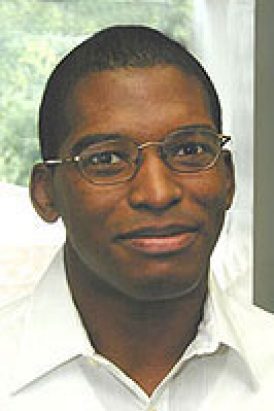
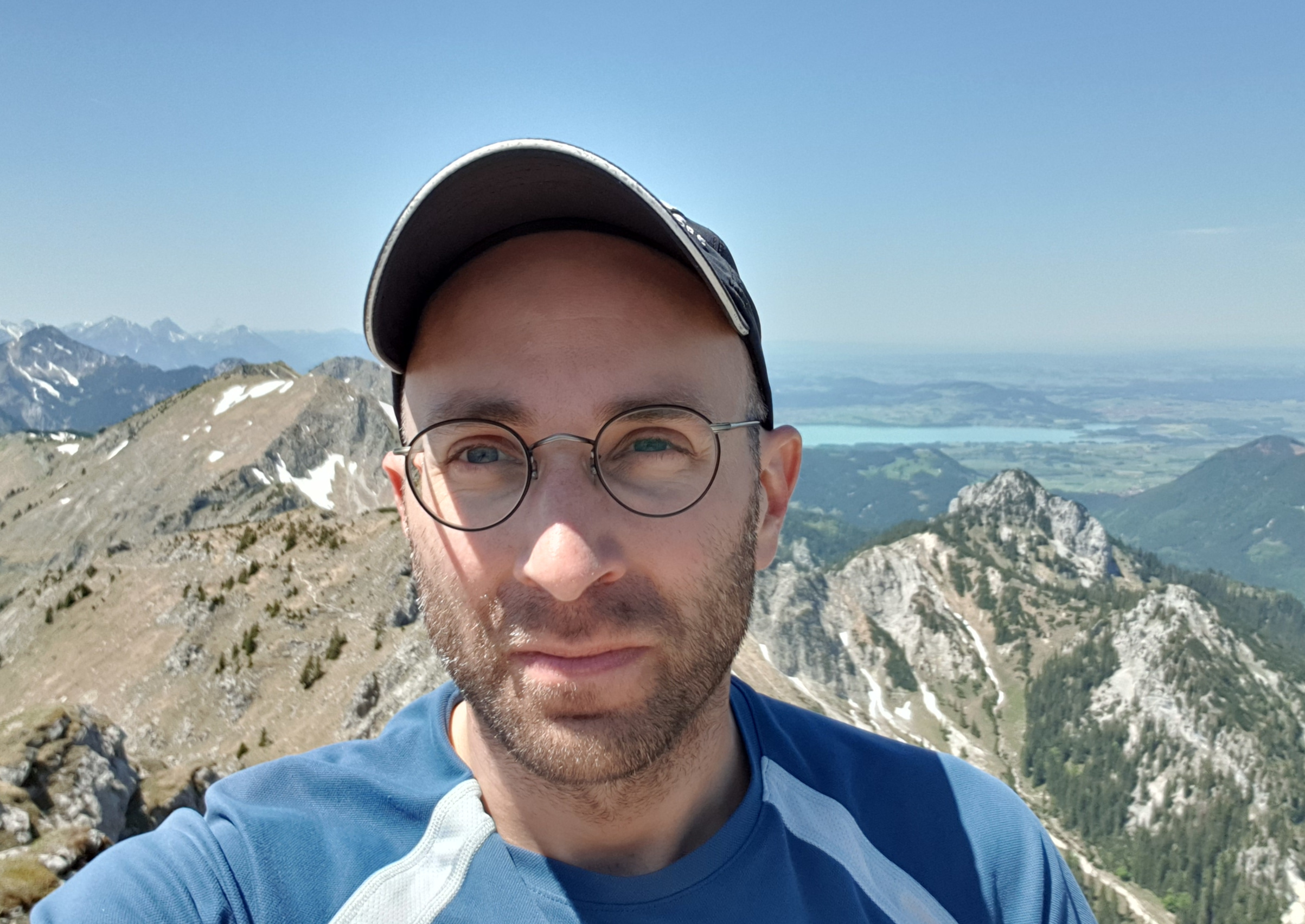
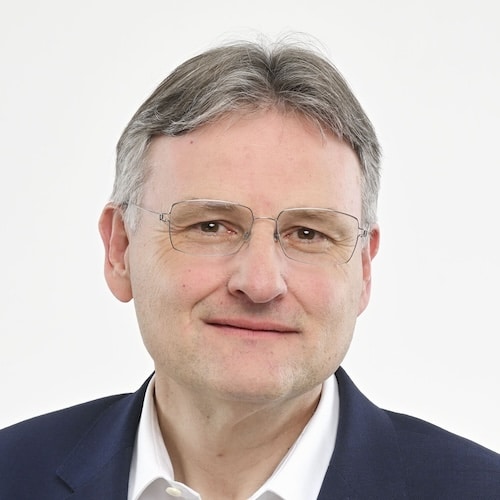
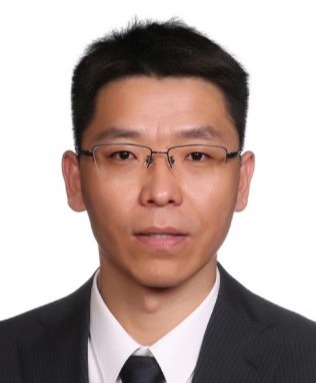
Veno Volenec is a Tenure-track Assistant Professor in the Department of Modern Languages and Linguistics at Concordia University. His research focuses on phonetics, phonology, neurobiology of language and speech, and cognitive neuroscience. He teaches courses such as LING 200 (Introduction to Linguistic Science) and LING 372 (Phonetics), covering topics like language acquisition, syntax, semantics, and sociolinguistics. His work bridges theoretical linguistics and cognitive science, with a strong emphasis on phonological features, generative grammar, and the neurobiological underpinnings of speech. Recent studies include cross-linguistic phonetic analyses, L2 acquisition patterns, and critiques of computational language models. Publications span 2012–2025, reflecting expertise in phonetics, cognitive linguistics, and historical linguistics. He actively contributes to debates on Chomskyan theory, innate language features, and the legacy of generative grammar. Volenec’s work is accessible via his Academia.edu profile and personal website, where he shares research on Croatian phonological phenomena, neurolinguistics, and pedagogical approaches in language education.
Julia Wolf is a Professor of Pure Mathematics at the University of Cambridge, affiliated with the Department of Pure Mathematics and Mathematical Statistics (DPMMS) and Trinity College. Her research focuses on arithmetic combinatorics, harmonic analysis, and analytic number theory, with interdisciplinary connections to model theory, discrete geometry, and theoretical computer science. She holds an EPSRC Open Fellowship and has organized events like the Warwick-Oxbridge-Manchester-Bristol-London (WOMBL) meetings. Wolf teaches advanced courses such as 'Higher-Order Uniformity' and 'Analytic Number Theory,' emphasizing structure and applications. Her work bridges combinatorial, analytic, and algebraic techniques, addressing problems like polynomial configurations in primes, extremal hypergraph theory, and Ramsey multiplicity. Recent research includes structural stability in finite abelian groups and applications of model theory to additive combinatorics. Wolf actively promotes open-access publishing and has mentored numerous postdoctoral researchers and students through initiatives like the Philippa Fawcett Internship Programme. She also contributes to academic equity efforts, such as gender-inclusive hiring in mathematics. Professional activities include editorial roles, conference organization (e.g., the Simons Institute's Pseudorandomness program), and leadership in collaborative projects like the 'Combinatorics Meets Model Theory' workshop. Her grants and fellowships underscore her contributions to advancing discrete mathematics and fostering international academic networks.
Leopoldo Pando Zayas is a Professor of Physics at the University of Michigan, specializing in Theoretical Elementary Particle Physics within the High Energy Theory group. His work is affiliated with the Michigan Center for Theoretical Physics (MCTP), where he conducts cutting-edge research at the intersection of quantum gravity, string theory, and black hole physics. Professor Pando Zayas' research focuses on quantum aspects of black holes, particularly examining how quantum corrections affect black hole entropy beyond the classical Bekenstein-Hawking formula. His work demonstrates how logarithmic corrections to black hole entropy can be matched to microscopic descriptions using the AdS/CFT correspondence. Additional research interests include quantum mechanical descriptions of gravity, quantum chaos, irreversibility theorems in renormalization group (RG) flows, gravitational collapse in Anti-de Sitter (AdS) space, Wilson loops in gauge theories, and implementing disorder within the AdS/CFT framework. His recent publications reveal a strong focus on precision calculations in holography, with particular attention to black hole thermodynamics across various dimensions, quantum corrections to Hawking radiation, and the application of quantum information concepts like complexity to gravitational systems. His work often bridges high-energy theory with mathematical physics, exploring connections between gauge theories and gravitational phenomena. Scientific Awards: UROP's Outstanding Research Mentor Award recognizing exceptional guidance of undergraduate researchers Honorable Mention in the Gravity Research Foundation Essay Competition (2014) for work connecting quantum chaos to the black hole information paradox Honorable Mention in the Gravity Research Foundation Essay Competition (2012) addressing AdS stability and gravitational collapse Professor Pando Zayas has actively mentored undergraduate research projects and advised diploma students at ICTP in Italy, demonstrating commitment to training the next generation of theoretical physicists. His teaching portfolio includes advanced courses in quantum mechanics, general relativity, string theory, and statistical physics. He has organized theoretical physics seminars and participated in numerous international collaborations with institutions including IAS Princeton, KITP Santa Barbara, and ICTP Italy.
Moritz Kerz is a Professor of Mathematics at the University of Regensburg's Faculty of Mathematics. His research spans arithmetic geometry and algebraic K-theory, with significant contributions to class field theory and cohomological methods. He leads a research group including postdoctoral scholars and doctoral candidates. Research Focus: Kerz's investigations center on: Non-archimedean K-theory and its applications to geometric problems Arithmetic invariants in positive characteristic Higher-dimensional class field theory constructions Monodromy representations and density theorems Publication Trends: Recent work demonstrates a consistent focus on K-theoretic invariants in arithmetic contexts, particularly through: Innovative applications to rigid analytic geometry Interactions between étale cohomology and representation theory Non-commutative generalizations of class field theory Awards: Minkowski Medal (2020) K-theory Prize (2014) Carus Medal (2011) Heinz Maier-Leibnitz Prize (2011) Cultural Prize of Bavaria (2009) Research Group: Current team members include Carolyn Echter, Lukas Krinner, Andrea Panontin, Yanshuai Qin, Yuenian Zhou, and Paul Ziegler, with research spanning arithmetic geometry and K-theory applications.
Siamak Ravanbakhsh is an Associate Professor at McGill University's School of Computer Science and a Canada CIFAR AI Chair at Mila. His research focuses on machine learning, particularly representation learning with an emphasis on geometry, symmetry, and probabilistic inference. He has held academic positions at the University of British Columbia and was a postdoctoral fellow at Carnegie Mellon University. Education: B.Sc. in Computer Science, Sharif University of Technology M.Sc. and Ph.D. in Computer Science, University of Alberta (supervised by Russ Greiner) Postdoctoral Fellowship at Carnegie Mellon University (with Barnabás Póczos and Jeff Schneider) His research interests span geometric deep learning, equivariant networks, reinforcement learning, and AI for scientific applications. Notable contributions include work on symmetry-aware models, diffusion processes, and equivariant representation learning. Publications highlight advancements in causal abstraction, diffusion-based anomaly detection, and equivariant architectures for crystals and hierarchical structures. His work often bridges theory and application, emphasizing symmetry principles. Advising & Grants: Supervised over 20 graduate students and postdocs, including recent PhD graduates Daniel Levy and Mehran Shakerinava Active in mentoring M.Sc. and internship students He contributes to academic leadership roles at Mila and McGill, fostering interdisciplinary collaborations in AI research.
Mark Bo Jensen is an Assistant Professor (Tenure track) at the Department of Engineering Technology and Didactics, Energy Technology and Computer Science at the Technical University of Denmark (DTU). His work bridges engineering and cognitive sciences through the emerging field of Perception Engineering. His research focuses on Extended Reality (XR) and Virtual Reality (VR) technologies to model and understand human perception and cognition. With over 10 years of expertise in real-time computer graphics, he develops immersive systems for applications in data visualization, medical testing, and geometric morphometrics. His recent publications highlight a strong trend in leveraging VR for precise human interaction tasks, such as anatomical landmark annotation and visual field testing, as well as advancing rendering techniques using diffusion models and mesh optimization. This reflects a multidisciplinary approach combining computer science, perception, and real-world applications. He has contributed to multiple research projects, including AL-EYE: The Visual Aid and Virtual Reality-Based Visualization of Geometric Data, where he served both as a PhD student and a project participant. These projects emphasize VR-based tools for data understanding and visualization. Assistant Professor (Tenure track), DTU PhD in Virtual Reality-Based Visualization of Geometric Data, completed June 2023 Project participant in AL-EYE: The Visual Aid (2025) While no formal advisees are listed, his role as a faculty member suggests future student supervision. He has collaborated extensively with researchers such as Jeppe R. Frisvad, Jakob Andreas Bærentzen, and Vedrana A. Dahl.
Andreas Kugi is the Scientific Director at the AIT Austrian Institute of Technology and a full professor of Complex Dynamical Systems at TU Wien (Vienna University of Technology) in the Faculty of Electrical Engineering and Information Technology, Institute of Automation and Control. He has held significant academic and leadership roles across Europe, including professorships at Saarland University and offers from TU Dresden and KIT. His research focuses on the modeling, control, and optimization of complex dynamical systems , with strong applications in mechatronics, robotics, and industrial automation . He has led major research centers such as the Christian Doppler Laboratory for Model-Based Process Control in the Steel Industry and the Center for Vision, Automation & Control at AIT. His work bridges theoretical control design and real-world industrial implementation. The recent publications reflect a consistent focus on nonlinear, hybrid, and distributed parameter systems , with applications in robotics, manufacturing, energy, and process industries. His research integrates advanced control theory with practical engineering challenges, emphasizing real-time optimization, robustness, and system efficiency. Scientific Awards: Mechatronic Systems Outstanding Investigator Award (IFAC, 2022) Goldene Stefan-Ehrenmedaille (OVE, 2023) 16 best paper awards Andreas Kugi has supervised over 50 completed PhD dissertations and has been deeply involved in research leadership, including serving as Editor-in-Chief of Control Engineering Practice (2010–2017) and Vice President of the OVE Austrian Electrotechnical Association (2017–2023). He has secured and led numerous research grants, particularly through industrial collaborations in automation and process control. He leads and contributes to major research initiatives, including the Center for Vision, Automation & Control at AIT and the Christian Doppler Laboratory , fostering interdisciplinary teams focused on industrial digitalization and smart systems.
Jian Tang is an Assistant Professor at HEC Montreal and the Montreal Institute for Learning Algorithms (MILA), as well as an Associate Professor at the Department of Computer Science and Operations Research (DIRO) at Université de Montréal. He is also affiliated with IVADO (Institut de valorisation des données) as a member. His research spans multiple institutions including collaborations with leading biology labs worldwide and access to extensive computational resources through industry partners. Ph.D. in Computer Science, Peking University (2009-2014) Visiting Ph.D. student, University of Michigan (2011.10-2013.8) B.S. in Mathematics, Beijing Normal University (2005-2009) Professor Tang's research focuses on the intersection of deep learning and graph theory, with particular emphasis on geometric deep learning, knowledge graph reasoning, and applications in drug discovery. His work bridges symbolic and neural approaches to create robust reasoning systems that can handle complex structured data. He has pioneered techniques in graph representation learning that have significantly advanced the field of molecular property prediction and protein design. His publication record shows a clear trajectory toward applying geometric deep learning to biological problems, with a growing emphasis on protein design, molecular conformation generation, and multi-omics analysis. Recent work demonstrates sophisticated integration of 3D geometry with deep learning architectures to model complex biomolecular interactions. Canada CIFAR Artificial Intelligence Chairs (CCAI Chair) Tencent AI Lab Rhino-Bird Gift Fund Amazon Faculty Research Award Microsoft-Mila collaboration grant National Research Council Canada (NRC) Collaborative Research and Development Grant Professor Tang actively mentors doctoral and master's students, with six recent graduates working on cutting-edge topics including graph neural networks for reasoning, protein design, and molecular representation learning. His research is supported by substantial funding from industry partners including Microsoft, Amazon, and Tencent, as well as government agencies like NRC. He collaborates extensively with biology labs worldwide, applying AI to solve real-world biomedical challenges. He leads a research group focused on geometric deep learning for drug discovery, with active projects in protein design using geometric-aware models and large language models for multi-omics analysis. The group has access to thousands of GPUs through industry collaborations, enabling large-scale experiments in molecular simulation and generative modeling.
Cao Haishan is an Associate Professor at Tsinghua University, affiliated with the Department of Energy and Power Engineering in the School of Mechanical Engineering. His research focuses on cryogenic cooling systems, high heat flux thermal management, and the physics of amorphous ice formation and phase transitions. He leads a research group supported by the National Natural Science Foundation of China and industry partners including Huawei, Midea, and Lenovo. Ph.D., Mechanical Engineering, University of Twente, 2013 M.Sc., Chemical Engineering, Dalian Institute of Chemical Physics, Chinese Academy of Sciences, 2009 B.Sc., Chemical Engineering, Zhejiang University, 2006 Dr. Cao's research spans three major areas: cryogenic cooling (including micro cryocoolers and sorption systems), high heat flux electronic cooling (especially with non-condensable gases), and the formation and transformation of amorphous water ice. His work combines theoretical modeling, computational simulation, and experimental validation, often at micro and nano scales. He applies principles from thermodynamics, fluid dynamics, and materials science to solve engineering challenges in refrigeration and thermal control. The recent publications reflect a strong trend toward interdisciplinary research, integrating machine learning for heat transfer prediction, computational screening of MOFs for cryogenic switches, and fundamental studies of ice nucleation on various substrates. The articles span journals in physics, engineering, materials, and applied thermal sciences, indicating broad impact across multiple domains. Notable scientific awards include: Gustav and Ingrid Klipping Award (2016) Cryogenics Best Paper Award (2017) Annual Teaching Excellence Award, Tsinghua University (2023) Excellent Supervisor Award, Tsinghua University (2024) Multiple First Prize Advisor awards in national student contests on energy saving Dr. Cao has been principal investigator on several grants, including projects funded by the National Natural Science Foundation of China on amorphous ice lifetime and micro-cryocooling for semiconductor chips. He has also led industry-university collaborations with Huawei, Midea, and Lenovo. He advises graduate students and leads a research team focused on next-generation cooling technologies. He serves on editorial boards for Journal of Refrigeration , Vacuum and Cryogenics , and Energies , and has chaired sessions at major international conferences such as ICEC-ICMC and ACTS. His research group operates within the Institute of Thermophysics at Tsinghua University, leveraging facilities in the Lee Shau Kee Science and Technology Building. The team collaborates with national laboratories and international institutions, particularly maintaining ties with the University of Twente. Current efforts are directed toward ultra-low vibration cooling, efficient separation of non-condensable gases, and extending the stability of amorphous ice for cryobiological applications.
Manuel Penschuck is a Research Fellow at the Institute of Computer Science , Goethe University Frankfurt, Germany. His research focuses on algorithm engineering, graph theory, and scalable network generation, with emphasis on parallel computing, I/O-efficient algorithms, and random graph models. He actively contributes to conferences like ESA, SEA, and IPDPS, and has co-authored publications in top venues including LIPIcs , IEEE Transactions , and SIAM . His work includes engineering algorithms for non-linear preferential attachment , parallel shuffling , and hyperbolic graph generation . He has co-organized program committees for ESA, EuroPar, and SEA, and his collaborations span institutions such as MPI-INF, TU Darmstadt, and Australian National University. Recent publications highlight advances in uniform graph sampling, geometric network models, and distributed systems. His research integrates theoretical rigor with practical implementation, addressing challenges in big data and high-performance computing. He is a key contributor to the Networkit toolkit for large-scale network analysis.
Jordan Cotler is an Assistant Professor of Physics at Harvard University, affiliated with the Department of Physics within the Faculty of Arts and Sciences. He holds a BS in physics and mathematics from MIT (2015) and a PhD in physics from Stanford University (2020). Before joining Harvard's faculty, he served as a Junior Fellow at the Harvard Society of Fellows from 2020 to 2024. His research focuses on the intersection of quantum information, computation, and spacetime physics. Key interests include quantum algorithms for analyzing many-body and quantum gravitational systems, information-theoretic frameworks for chaotic dynamics, and non-perturbative methods in quantum cosmology and field theory. Cotler's work has advanced quantum algorithm design for experimental platforms and contributed to understanding black hole microstructure and cosmological spacetimes. He has been recognized with prestigious early-career awards, including his Harvard Society of Fellows Junior Fellowship. His publications span foundational topics such as quantum gravity, holography, computational complexity, and quantum chaos, reflecting a multidisciplinary approach to theoretical physics.
Youssef Marzouk is a Professor of Aeronautics and Astronautics at MIT, serving as co-director of the MIT Center for Computational Engineering and director of the Aerospace Computational Design Laboratory. His research focuses on integrating physical modeling with statistical inference, emphasizing Bayesian computation, uncertainty quantification, and optimal experimental design. He holds a SB, SM, and PhD from MIT and has been recognized with prestigious awards including the DOE Early Career Award and the Junior Bose Teaching Prize. Education: PhD in Aeronautics and Astronautics, MIT SM in Aeronautics and Astronautics, MIT SB in Aeronautics and Astronautics, MIT Research Interests: Uncertainty Quantification techniques for complex systems Bayesian computational methods and inverse problem solutions Optimal experimental design strategies Interdisciplinary applications in geophysics, environmental science, and engineering Awards: 2022: Report to the President, Center for Computational Science and Engineering 2021: Bayesian Inference Software Framework (hIPPYlib-MUQ) 2012: MIT School of Engineering Junior Bose Award 2010: DOE Early Career Research Award Labs & Leadership: Aerospace Computational Design Laboratory (Director) MIT Center for Computational Engineering (Co-Director) Editorial Board roles: SIAM Journal on Scientific Computing, Advances in Computational Mathematics
Sezer Karaoglu is a Lecturer and part-time postdoctoral researcher at the Computer Vision Group, Informatics Institute, University of Amsterdam. He is also the CTO and Co-Founder of 3DUniversum, a technology spin-off of the University of Amsterdam that provides state-of-the-art 2D/3D computer vision solutions. Additionally, he has co-founded other startups including Scanm and 3DHealthScan. Dr. Karaoglu received his PhD from the Computer Vision Group, Informatics Institute, University of Amsterdam, with research funded by the COMMIT project. His educational background includes a double master's degree: an optics, image and vision master's degree from University Jean Monnet in France and a media technology master's degree from Gjovik University College in Norway. He completed his undergraduate studies with honors at Istanbul Technical University in Telecommunication Engineering. His research focuses on Artificial Intelligence and 3D Computer Vision, with specific interests in SLAM, re-localization, 3D reconstruction, 3D object detection and segmentation, synthetic media, generative AI, deep fake creation and detection, and VR/AR technologies. His work has significant applications in healthcare, particularly in using deepfake technology for therapy for victims of sexual violence-related PTSD and moral injury, as documented in a Frontiers in Psychiatry article. Analyzing his recent publications reveals a strong trend toward neural scene reconstruction, intrinsic image decomposition, and the application of diffusion models to computer vision problems. His research increasingly integrates 3D scene understanding with language models, as evidenced by his work on language-to-3D scene generation. The applications span from healthcare (deeptherapy.ai) to media authenticity (deepfake detection) and industrial applications. ICT.OPEN Poster Award (3rd Position), Oct'13 Pascal VOC'12 Classification challenge, 2nd Position, Sep'12 Pascal VOC'12 Detection challenge, 3rd Position, Sep'12 Best project award at Nokia and CIMET project competition Outstanding reviewer at CVPR'21 PROVADA Future Startup Battle winner Best Dutch AI startup by Valuer Dr. Karaoglu has supervised numerous PhD, Master's, and Bachelor's students, demonstrating his commitment to academic mentorship. His research has attracted significant media attention, with features on Dutch national TV programs including NPO, VPRO, RTL, and international outlets like BBC News. He has received research funding through the COMMIT project during his PhD studies and has successfully translated his research into commercial applications through his startups. His work on deepfake technology has been applied in innovative therapeutic contexts through DeepTherapy.ai, showing the real-world impact of his research. Dr. Karaoglu leads research efforts at the Computer Vision Group Amsterdam and through his company 3DUniversum, which has developed applications like weScan, DeepTherapy, and FairFake.ai. His team collaborates with various institutions including the Netherlands Film Academy for grief therapy applications using deepfake technology. The DeepTherapy project represents a particularly impactful application of his work, using deepfake technology to help victims of sexual violence confront perpetrators in therapeutic settings.
Jim Haglund is Professor of Mathematics at the University of Pennsylvania, specializing in algebraic and enumerative combinatorics. His research explores symmetric functions, Macdonald polynomials, combinatorial statistics, rook theory, and polynomial root behavior. He directs the CAGE seminar and IPAC seminar series, fostering collaboration in combinatorics. Dr. Haglund's work connects combinatorics with representation theory and special functions, particularly through Macdonald polynomial operators and the Delta Conjecture. His research employs both theoretical frameworks and computational experimentation. Analysis of recent publications reveals consistent focus on combinatorial structures underlying symmetric functions, with innovations in delta operators, chromatic quasisymmetric functions, and rook theory generalizations. His work frequently bridges combinatorics with algebraic geometry and representation theory. Awards & Recognition: Fellow of the American Mathematical Society Editorial boards: Journal of Combinatorics and Involve Advising & Collaboration: Mentored 16 PhD students and numerous postdoctoral researchers. Leads combinatorial research group exploring connections between Macdonald theory, diagonal harmonics, and algebraic geometry.
Hans Ulysses Boden is a Professor of Mathematics at McMaster University's Department of Mathematics and Statistics, specializing in Pure Mathematics with a focus on Geometry and Topology. His research centers on gauge theory, low-dimensional topology, knot invariants, and moduli spaces of flat connections. He has contributed to studies of virtual knots, character varieties, and generalized Casson invariants. Currently, his research team includes two postdocs, two graduate students, and one undergraduate student. Education: B.S. in Mathematics from the University of New Hampshire; Ph.D. in Mathematics from Brandeis University. Research interests span gauge theory, knot theory, and geometric topology, with recent work exploring periodicity in virtual knots, concordance invariants, and generalized Tait conjectures. Over 48 publications in the last decade include contributions to Algebraic and Geometric Topology , Communications in Analysis and Geometry , and Proceedings of Symposia in Pure Mathematics . His work integrates topological, algebraic, and geometric methods to address problems in knot theory and 3-manifold topology. Teaching includes courses on Algebraic Topology, Knot Theory, and Advanced Calculus. He has mentored multiple students, including Jie Chen (PhD 2023), Jeffrey Marshall-Milne (MSc 2025), and Jessie Meanwell (BSc 2023). Labs/Teams: Active in geometric topology research, with collaborations on virtual knot concordance and moduli spaces of flat connections.