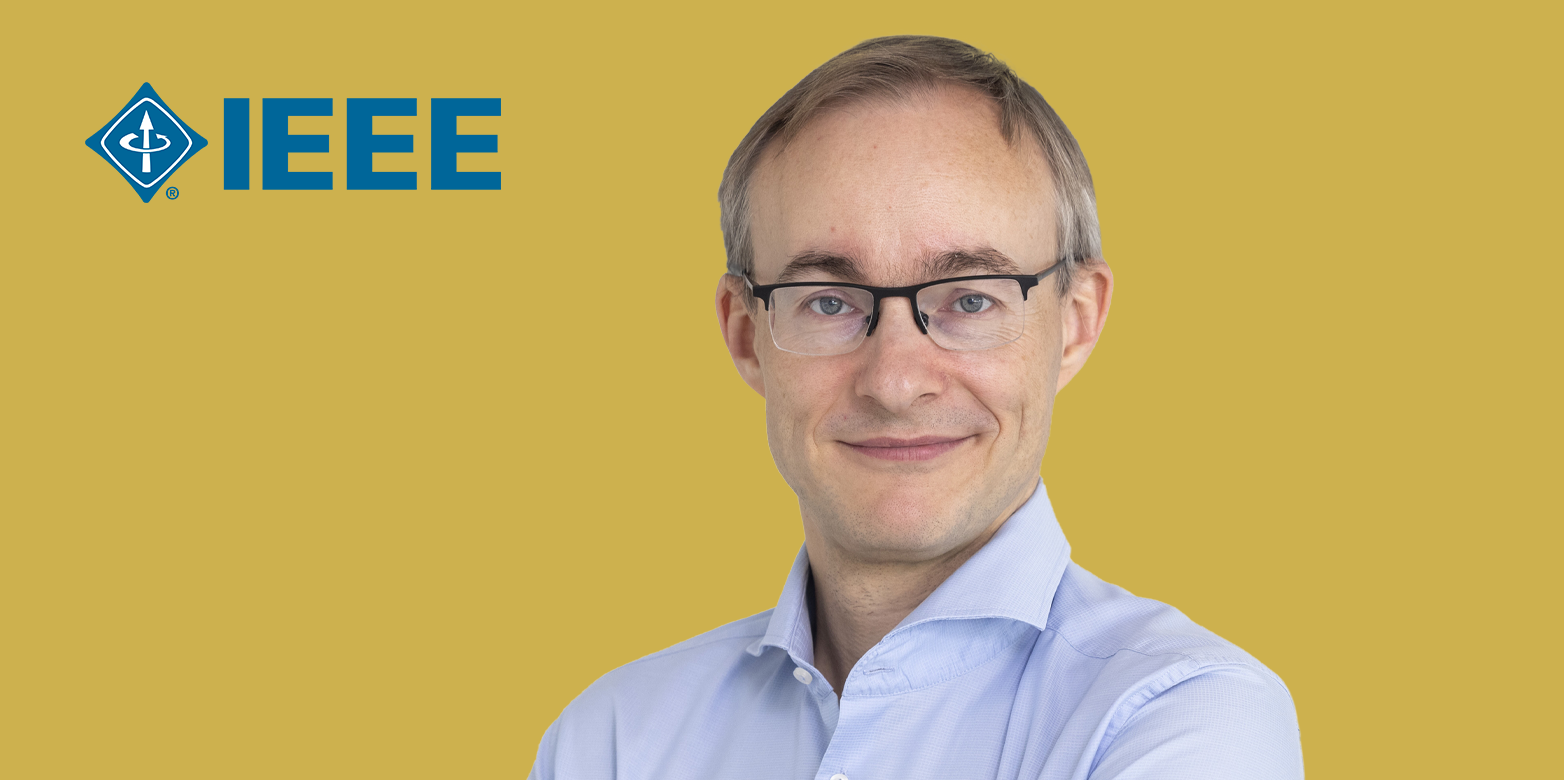
Andreas Krause is a Professor of Computer Science at ETH Zurich, leading the Learning & Adaptive Systems Group and serving as Chair of the ETH AI Center and Academic Co-Director of the Swiss Data Science Center. He previously held an Assistant Professorship at Caltech. His research focuses on machine learning, Bayesian optimization, reinforcement learning, and AI safety. Key contributions include advancements in active sensing, learning-based control, and probabilistic AI. Affiliations: ETH AI Center, Swiss Data Science Center, Max Planck Institute for Intelligent Systems (Fellow) Education: PhD in Computer Science (Carnegie Mellon University, 2008); Diplom in Computer Science and Mathematics (Technical University of Munich, 2004) His work bridges theory and practice, with applications in robotics, healthcare, and climate science. Notable awards include the IEEE Fellow distinction, Rössler Prize, and multiple ERC grants. Krause actively chairs ICML conferences and contributes to global AI policy through the UN’s High-level Advisory Body on AI. Research Interests: Machine learning fundamentals, adaptive systems, AI safety, and optimization. Recent work explores safe exploration in reinforcement learning, causal modeling, and large-scale generative AI.
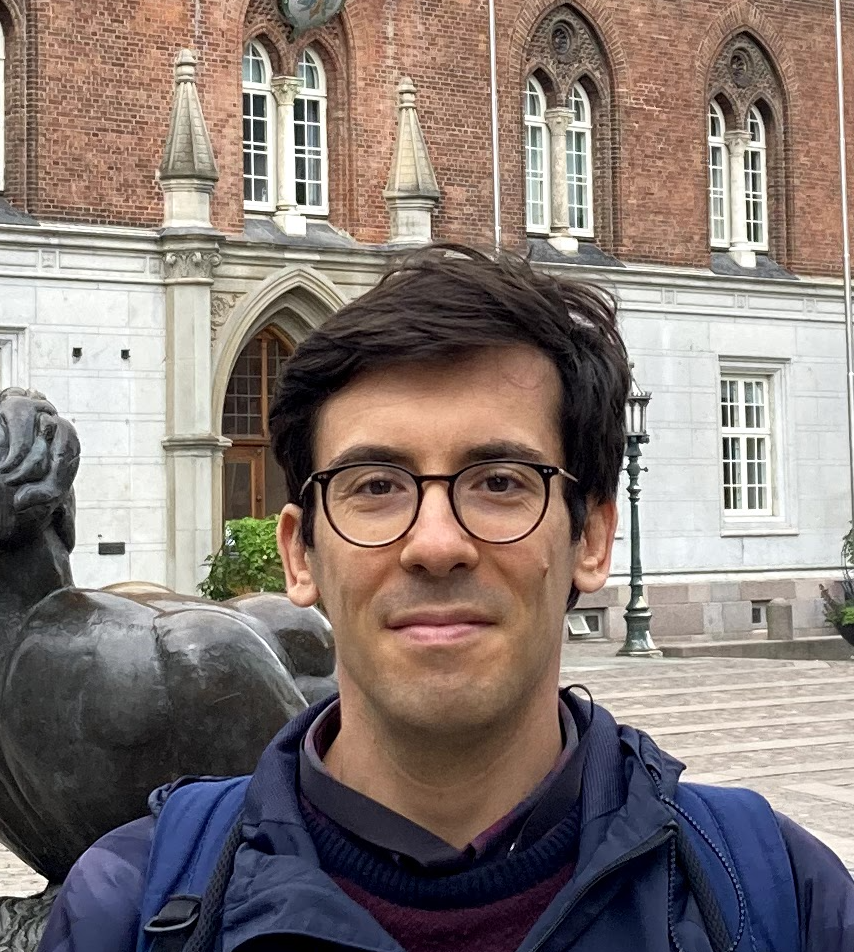
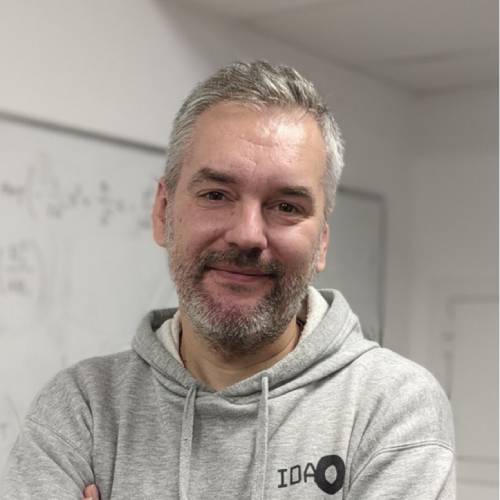
Bastian Alexander Grossenbacher is a Full Professor of Machine Learning at the University of Fribourg, where he leads the AIDOS Lab within the Department of Informatics, Faculty of Science and Medicine. He holds secondary appointments at the Institute of AI for Health and the Helmholtz Pioneer Campus of Helmholtz Munich. He is also a TUM Junior Fellow and a member of ELLIS and AI-LIFE. He co-directs the Applied Algebraic Topology Research Network (AATRN) and is involved in the Topology, Algebra, and Geometry in Data Science (TAG DS) initiative. His research lies at the intersection of geometry, topology, and machine learning, with a focus on Geometric Deep Learning, Topological Deep Learning, and Topological Data Analysis. He develops novel machine learning methods that use topological and geometric priors to improve model robustness and interpretability, particularly in biomedical applications. His work spans theoretical foundations and practical implementations in areas such as single-cell analysis, medical imaging, and network science. The 15 most recent publications (2023–2025) reveal a strong trend toward integrating algebraic and differential topology into deep learning architectures. Key themes include the use of Euler Characteristic and magnitude transforms, curvature-based analysis of graphs and data, simplicial and manifold-based neural representations, and the application of topological methods to biomedical data. His articles appear in top-tier venues such as Nature Communications, ICML, NeurIPS, ICLR, and IEEE conferences, reflecting both theoretical depth and high-impact applications. ERC Starting Grant Bastian Rieck is actively involved in mentoring and academic leadership. He supervises PhD students and postdoctoral researchers in the AIDOS Lab and is open to new collaborations, particularly with candidates from interdisciplinary backgrounds. He has secured significant research funding, including the ERC Starting Grant, and leads multiple collaborative research initiatives. He emphasizes open science, sharing code, data, and educational materials publicly. He leads the AIDOS Lab, which focuses on advancing machine learning through topological and geometric principles. He is also a co-director of the Applied Algebraic Topology Research Network (AATRN), which hosts a large online seminar series. Additionally, he maintains DONUT, a curated database of non-theoretical applications of topology, and is active in the ELLIS and AI-LIFE networks, fostering international collaboration in AI and health.
Prof. Alexandre Pouget is a leading Professor at the University of Geneva , affiliated with the Faculty of Medicine and Department of Basic Neuroscience . His research focuses on uncovering general principles of representation and computation in neural circuits , particularly how the brain handles uncertainty through probabilistic inference in domains like Decision Making Multisensory Integration Number Representation Visual Processing Perceptual Learning His work applies Bayesian inference to neural coding, with notable contributions to understanding odor demixing and confidence vs. certainty in cognitive tasks. He leads a dynamic research group at CMU (C08.1538.A) with postdocs and graduate students, and his collaborations span institutions like University College London Simons Foundation Human Frontiers Science Programme Swiss National Science Foundation While no specific scientific awards are listed, his publications in Nature Neuroscience and Nature highlight his impact. His lab emphasizes interdisciplinary approaches combining computational modeling , neurophysiology , and behavioral analysis .
Michael Multerer is an Associate Professor at the Faculty of Informatics, Università della Svizzera italiana (USI). His research focuses on multiresolution methods, scattered data analysis, and numerical analysis with applications in computational mathematics and engineering. He leads projects such as the SNSF Starting Grant on multiresolution methods for unstructured data, emphasizing nonlinear approximation and kernel-based techniques. Research Interests: Development of fully discrete multiresolution methods for unstructured data Wavelet theory and kernel matrix algebra Uncertainty quantification in partial differential equations Scattered data compression and approximation Key Software Contributions: FMCA: Fast multiresolution covariance analysis for scattered data Bembel: Boundary element library for solving Laplace and Helmholtz equations SPQR: Anisotropic sparse grid quadrature in MATLAB Funding: Holder of the SNSF Starting Grant (2025) for advancing multiresolution techniques in unstructured data processing. Labs/Teams: Active in the research group at USI’s Faculty of Informatics, collaborating with institutions like TU Darmstadt and University of Basel on numerical methods and engineering applications.
Mutian He is a PhD candidate and Doctoral Assistant at the École Polytechnique Fédérale de Lausanne (EPFL), Switzerland, affiliated with the Idiap Research Institute and the School of Engineering. He is pursuing his doctoral studies in Electrical Engineering under the supervision of Phil Garner. He holds a B.E. from Beihang University (BUAA) and an MPhil from the Hong Kong University of Science and Technology (HKUST). B.E., Beihang University (BUAA), 2019 MPhil, Hong Kong University of Science and Technology, 2022 PhD Candidate, École Polytechnique Fédérale de Lausanne (EPFL), ongoing His research focuses on spoken language understanding, speech synthesis, and the intersection of speech and language processing with machine learning. He explores efficient model architectures, pretraining strategies, multilingual and low-resource modeling, and the use of large language models in speech tasks. His work spans both theoretical and applied aspects, including distillation to linear-complexity models, robust TTS, and commonsense reasoning via conceptualization. His recent publications at top venues such as ICLR, EMNLP, Interspeech, and KDD demonstrate a strong trend towards efficient and scalable models for speech and language, with increasing emphasis on multilingualism, knowledge transfer, and real-world deployment in low-resource settings. He has also contributed to open-source implementations and community tools like Speech Rankings. Joint Fine-tuning and Conversion of Pretrained Speech and Language Models towards Linear Complexity (ICLR 2025) Acquiring and Modelling Abstract Commonsense Knowledge via Conceptualization (AIJ 2024) The Interpreter Understands Your Meaning: End-to-end Spoken Language Understanding Aided by Speech Translation (Findings of EMNLP 2023) Can ChatGPT Detect Intent? Evaluating Large Language Models for Spoken Language Understanding (Interspeech 2023) Multilingual Byte2Speech Models for Scalable Low-resource Speech Synthesis (2022) Mutian He has served as a teaching assistant for courses including Introduction to Natural Language Processing at HKUST and Introduction to Speech Processing at Idiap. He has also worked on speech synthesis at Microsoft, focusing on robustness and multilingual conditions. He is actively involved in research advising under Phil Garner and has collaborated with multiple researchers across institutions. He is affiliated with the LIDIAP (Laboratory of Intelligent Data Analysis and Pattern Recognition) at EPFL, where he contributes to research in deep learning for speech and language. His lab work involves developing novel neural architectures, conducting experiments on multilingual datasets, and open-sourcing code to promote reproducibility.
Giona Casiraghi is a Senior Researcher at ETH Zurich specializing in network science and complex systems, with a primary focus on resilience modeling in social organizations and data-driven network analysis. His work bridges theoretical advances in statistical network models with practical applications in supply chain management, open-source software ecosystems, and online social dynamics. His research interests center on developing quantitative methods for analyzing complex systems, particularly through the generalized hypergeometric ensemble of random graphs (gHypEG). Casiraghi's work spans multiple disciplines including network science, statistical physics, data science, and resilience theory, with particular expertise in temporal network analysis, multi-edge networks, and zero-inflation models for sparse networks. His research group develops the ghypernet R package , providing open-source tools for network regression and inference. Analysis of his recent publications reveals a strong trend toward applying network science to real-world resilience problems, particularly in pharmaceutical supply chains and social organizations. His 2025 Science paper on US tariffs threatening medicine supply chains exemplifies this practical turn, while his methodological work on zero-inflated network models (PNAS Nexus 2025) demonstrates continued theoretical innovation. Casiraghi frequently collaborates with Frank Schweitzer and others in the Systems Group at ETH Zurich, producing interdisciplinary work that bridges computer science, economics, and social science. Casiraghi's research has significant implications for understanding how social organizations withstand shocks and how supply chains can be made more resilient to disruptions. His work on the gHypEG framework provides foundational tools for network scientists across multiple disciplines, while his applied research offers concrete insights for policymakers and industry practitioners dealing with complex system failures. He has contributed to numerous projects examining online migration after community bans, developer productivity in open-source projects, and reconstruction of social relations from interaction data. His research methodology typically combines large-scale data analysis with advanced statistical modeling, often developing new network analysis techniques to address specific research questions.
Carl Allen is a Laplace Junior Chair in Machine Learning at École Normale Supérieure, Paris, working in the research group of Stéphane Mallat, Giulio Biroli and Garbiele Peyré. Previously, he was a postdoctoral fellow at ETH Zurich and completed his PhD in Machine Learning in 2021 at the University of Edinburgh under the supervision of Professors Tim Hospedales and Iain Murray. His educational background includes a BSc in Mathematics & Chemistry from the University of Southampton, an MSc in Mathematics and the Foundations of Computer Science (MFoCS) from the University of Oxford, and MScs in Artificial Intelligence and Data Science from the University of Edinburgh. Before transitioning to AI/ML research, he spent several years in Project Finance. Allen's research focuses on mathematically understanding mechanisms behind successful machine learning methods, particularly neural networks. He investigates how machine learning models exploit aspects of data distribution from a probabilistic perspective. His current topics include explaining how VAEs disentangle independent factors of data, identifying mathematical models behind self-supervised learning, and deriving probabilistic interpretations of softmax classification. His PhD work investigated neural representations of discrete objects and their relationships, with a main result explaining how word embeddings can seemingly be added and subtracted (e.g., queen ≈ king - man + woman), which received Best Paper (honorable mention) at ICML 2019. His research spans theoretical foundations of machine learning, with particular emphasis on representation learning, disentanglement, and probabilistic modeling of neural networks. His work connects mathematical principles with practical machine learning applications, aiming to develop more interpretable and reliable algorithms. Allen has received notable recognition including a Best Paper honorable mention at ICML 2019 and a research grant from the Hasler Foundation. He has delivered invited talks at prestigious institutions including Harvard Center of Mathematical Sciences & Applications and Astra-Zeneca. His collaborative work spans multiple institutions, including a notable internship at Samsung AI Centre, Cambridge, where he worked at the intersection of representation learning and logical reasoning. His research has significant implications for developing more interpretable, reliable, and theoretically grounded machine learning systems.
Dr. Francesco Paolo Casale serves as Principal Investigator in Machine Learning in Biomedicine at the Helmholtz Munich Institute AI for Health, part of Helmholtz Zentrum München and affiliated with Ludwig-Maximilians-Universität München's Biomedical Center. His research develops machine learning and statistical tools to analyze genetic cohorts with deep molecular and phenotypic data, addressing fundamental biomedical questions about disease mechanisms and progression. His academic foundation includes: PhD in Statistical Genetics from University of Cambridge & EMBL-EBI (2012-2016) M.Sc. in Physics of Complex Systems from Università di Napoli Federico II (2009-2012) B.Sc. in Physics from Università di Napoli Federico II (2009) Casale's research integrates machine learning, statistical inference, and systems genetics to develop scalable tools for genetic association studies, deep learning models for imaging genetics, and computational methods examining gene-environment interactions. His work emphasizes model robustness and interpretability while investigating molecular and cellular traits associated with disease severity. Current projects focus on rare variant analysis, aberrant gene expression prediction, and longitudinal omics data integration. His publication record shows a clear progression from foundational statistical genetics methods toward increasingly sophisticated integration of machine learning with multi-omics data. Recent work emphasizes practical biomedical applications including disease risk prediction through Mendelian randomization frameworks, advanced single-cell analysis techniques, and histopathology image classification. The research demonstrates consistent methodology development focused on scalability for large datasets while maintaining biological interpretability. Key recognitions include: Highly Recognized article in PloS Genetics Research Prize (2018) Microsoft Research New England Postdoctoral Fellowship (2017) EMBL studentship (2012) Honors for MSc and BSc degrees from Università di Napoli Federico II Throughout his career at Microsoft Research, Insitro, and Helmholtz Munich, Casale has led research teams developing computational approaches at the intersection of human genetics and machine learning. His work contributes to landmark projects including the 1000 Genomes Project and Blueprint initiative, with conference presentations at major venues including NeurIPS, ASHG, and EASL. Current grant support likely stems from Helmholtz Association funding mechanisms and collaborative biomedical research programs. He directs the Systems Genetics and Machine Learning Research team at Helmholtz Munich, which operates within the Biomedical Center ecosystem of LMU Munich. The team focuses on leveraging large-scale genetic datasets with machine learning to understand disease biology, with particular emphasis on target identification and characterization for therapeutic development. Current research directions include multi-timepoint omics analysis, disease subtyping, and developing interpretable models for clinical translation.
Melih Kandemir is an Associate Professor of Machine Learning at the University of Southern Denmark, Department of Mathematics and Computer Science. He earned his PhD in 2013 from Aalto University under Prof. Samuel Kaski, followed by postdoctoral work at Heidelberg University (with Prof. Fred Hamprecht) and an assistant professorship at Ozyegin University, Turkey. Prior to joining SDU, he led research at Bosch Center for Artificial Intelligence. Education: PhD (Aalto University, 2013), Postdoc (Heidelberg University). Previous Roles: Assistant Professor (Ozyegin University), Research Group Leader (Bosch CAI). His research focuses on Bayesian inference, stochastic process modeling with deep neural networks, and applications to reinforcement learning and continual learning. He leads the SDU Adaptive Intelligence (ADIN) Lab and is an ELLIS Member, reflecting his standing as a top European AI researcher. His work addresses critical challenges in uncertainty quantification, exploration strategies, and theoretically grounded algorithms for decision-making systems. Recent publications highlight expertise in model-based reinforcement learning (e.g., MOMBO for offline RL), PAC-Bayesian bandits, evidential learning for robust classification, and neural stochastic differential equations. His scientific awards include a Best Paper Award (2017) and ELLIS Membership. He also explores interdisciplinary applications of natural sciences to sustainable technology development.
Mathias Humbert is an Associate Professor at the University of Lausanne, with affiliations at the Department of Information Systems in the Faculty of Business and Economics. Previously, he held roles as a Scientific Project Manager at the Cyber-Defence Campus, Senior Data Scientist at the Swiss Data Science Center (SDSC) at ETHZ and EPFL, and Postdoctoral Researcher at CISPA in Saarbrücken. He earned his Ph.D. in 2015 from EPFL (Switzerland) after completing B.Sc./M.Sc. studies at EPFL and UC Berkeley. His research focuses on privacy, cybersecurity, and machine learning, particularly examining privacy risks in MLaaS, online social networks, wearable devices, and spectrum monitoring, while developing novel privacy-preserving frameworks for biomedical data and social graphs. Key research areas: Privacy in data sharing, interdependent privacy, genomic privacy, location privacy, and graph-based machine learning Notable contributions: GraphEraser for graph unlearning, KGP Meter for genomic privacy awareness, and SVT² for differential privacy in methylation data His recent publications explore machine unlearning vulnerabilities, privacy risks in DNA methylation data, and usability challenges in web security mechanisms, with a focus on empirical studies and cryptographic solutions. He received a Distinguished Paper Award at NDSS 2019 for his work on MBeacon and has contributed extensively to privacy research across ACM CCS, IEEE EuroS&P, and USENIX Security venues.
Linda Mhalla is a Researcher and Statistical consultant at the Swiss Federal Institute of Technology (EPFL) in the Department of Mathematics, School of Basic Sciences. She has also served as a Scientific collaborator at HEC Lausanne, Department of Operations, and as a Postdoctoral Fellow at HEC Montreal, Department of Decision Sciences. PhD in Statistics, University of Geneva, 2018 MSc in Statistics and Financial Mathematics, EPFL, 2014 BSc in Mathematics, EPFL, 2012 Her research focuses on extreme value theory and its applications to environmental and financial data, including: Quantitative risk modeling Smooth modeling techniques Causal inference in extreme events Climate risk assessment GAM (Generalized Additive Models) methodology Statistical consulting for environmental and financial sectors Linda's publications highlight the application of extreme value theory to diverse domains such as finance, environmental science, and climate modeling. Her work includes modeling extremal dependence through nonlinear regression, causal inference in river discharge data, and Bayesian spatiotemporal approaches for extreme hot-spots. Collaborations span institutions like HEC Lausanne, HEC Montreal, and University of Geneva. Extremal Connectedness and Systemic Risk of Hedge Funds (Mar 5, 2020) Causal mechanism of extreme river discharges (Jul 1, 2019) Tail risk and style dependence in the fund industry (Jun 21, 2019) Quantile-based approaches for tail causality (Jun 13, 2019) Exceedance-based nonlinear regression of residual dependence (Dec 16, 2017) Regression type models for extremal dependence (Jun 26, 2017) Semi-parametric estimation of non-stationary Pickands dependence functions (Apr 25, 2016)
Dmitry Vetrov serves as a Professor of Computer Science at Constructor University in Bremen, where he founded and leads the Bayesian Methods Research Group. His academic foundation includes graduation from Moscow State University in 2003 and completion of his PhD in 2006, establishing a career centered on advancing probabilistic machine learning methodologies. His educational trajectory features: Undergraduate studies at Moscow State University (2003) Doctoral degree (PhD, 2006) Vetrov's research program critically bridges Bayesian statistics with deep learning architectures, with his group pioneering efficient diffusion model algorithms, loss landscape characterization in neural networks, scalable stochastic optimization tools, tensor decomposition applications for large-scale ML systems, and enhanced conditional text generation frameworks. This work manifests practical implementations across generative AI domains while maintaining theoretical rigor in probabilistic modeling. Analysis of his 2024-2025 publications reveals a concentrated research thrust toward diffusion model innovation, spanning text generation (token embedding smoothing, language model encoding properties), image synthesis (hair transfer, gesture generation), and scientific applications (protein modeling, genetic fine-mapping). Key thematic threads include sampler acceleration, theoretical property analysis of diffusion processes, and robust evaluation frameworks for generative systems. No scientific awards were documented in the source materials. Mentorship outcomes demonstrate significant impact, with three recent PhD students securing research positions at DeepMind. While specific grant details remain undisclosed, the group's prolific output across NeurIPS, ICML, and CVPR indicates sustained research funding. The Bayesian Methods Research Group operates as an integrated innovation hub within Constructor University's academic ecosystem. The research collective he directs maintains active development of Bayesian-deep learning fusion techniques, with current projects emphasizing diffusion model efficiency, theoretical foundations of optimization landscapes, and cross-domain applications in computational biology and multimodal generation.
Giuseppe Durisi is a Professor at Chalmers University of Technology in Gothenburg, Sweden, specializing in information theory and communication systems. His research bridges mathematically rigorous solutions with practical engineering applications in wireless and optical communication. Primary affiliation: Communication Systems Group , Chalmers University. Research focus: Optimal information transmission, 6G network design, and theoretical foundations of deep learning. Research Interests: Durisi investigates the interplay between latency, reliability, and throughput in digital communication, particularly in millimeter-wave and optical fiber channels . He develops finite-blocklength theory for efficient coding and explores how information theory can explain deep learning performance. Recent Article Trends: His 2025–2024 work emphasizes 6G distributed MIMO networks , energy-harvesting protocols , and machine learning integration into communication theory. Key themes include random access protocols , privacy in wireless aggregation , and hardware-constrained massive MIMO . Scientific Recognition: An IEEE Senior Member, Durisi has published extensively in top journals like IEEE Transactions on Communications and IEEE Transactions on Wireless Communications . Notable Collaborations: Work with teams on radio-over-fiber fronthaul , unsourced multiple access , and time-synchronized URLLC links .
Michael Hahn is a Tenure-Track Professor (W2) at Saarland Informatics Campus, Saarland University, where he directs the Language, Computation, and Cognition Lab (LaCoCo). He is affiliated with the Departments of Language Science and Technology and Computer Science, and holds additional distinctions as an ELLIS Member and ELIZA Fellow. Dr. Hahn received his PhD from Stanford University in 2022, advised by Judith Degen and Dan Jurafsky. His academic journey has positioned him at the forefront of research bridging artificial intelligence, cognitive science, and linguistics, with a focus on understanding language models and human cognition through computational approaches. His research interests include: Information Processing in LLMs and the Brain Abilities of Language Models and how they are learned through theoretical and empirical methods Understanding Inner Workings of Language Models via mechanistic reverse-engineering Computational Cognition and Neuroscience, modeling human language processing and perception Dr. Hahn's publications reveal a strong emphasis on theoretical foundations of language models, with significant contributions to understanding transformer architectures, language model capabilities, and their relationship to human cognition. His work spans from establishing formal frameworks for length generalization to developing methods for neural activation analysis, consistently appearing in top-tier venues including ICML, ICLR, ACL, and NeurIPS. His scientific recognition includes: Best Paper Award at ACL 2024 for "Why are Sensitive Functions Hard for Transformers?" Second Prize at ICML 2024 Mechanistic Interpretability Workshop for "InversionView for reading out information from neural activations" Recognition as Outstanding Area Chair at EMNLP 2024 Dr. Hahn actively mentors students and researchers, supervising PhD students, postdoctoral researchers, and research assistants. His lab has demonstrated remarkable productivity, with multiple papers accepted at premier conferences including three at NeurIPS 2024 and works at ICLR 2025 and ICML 2025. He is also involved in the academic community through co-organizing workshops and delivering invited talks. The Language, Computation, and Cognition Lab (LaCoCo) serves as a hub for cutting-edge interdisciplinary research, investigating the fundamental connections between machine learning, language, and the human mind, with a particular emphasis on understanding the relationship between artificial and human intelligence.
Dr. Richard Ramsey is a Lecturer at the Department of Health Sciences and Technology at ETH Zürich. His research focuses on social cognition, cognitive control mechanisms, and the intersection of artificial intelligence with human behavior. He teaches courses like 'The Social Brain: Critical Perspectives on Science, Society and Neurodiversity.' Key research areas include neurophysiological correlates of imitation, AI ethics, loneliness in neurorehabilitation contexts, and methodological advancements in psychological data analysis. His work often employs computational models and neuroimaging techniques to explore decision-making processes and social perception. Developed Bayesian methods for analyzing time-to-event data in psychological studies Investigated anthropomorphic perceptions of humanoid robots Explored how art education impacts aesthetic and cognitive functions No scientific awards are explicitly listed in the provided materials. His academic contributions span experimental psychology, neuroscience, and interdisciplinary applications of cognitive science.