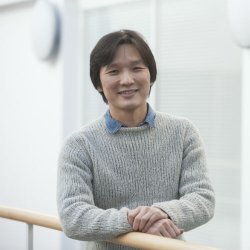
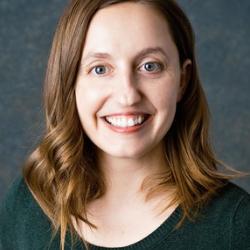
Dr Henry Moss is a Researcher at the Department of Applied Mathematics and Theoretical Physics within the School of Physical Sciences at the University of Cambridge. His work focuses on machine learning applications in climate modeling, Bayesian optimization, and Gaussian processes, bridging computational mathematics with environmental science and chemistry. His research interests include: Bayesian optimization for environmental and chemical systems Reinforcement learning in climate modeling Gaussian processes for molecular property prediction High-throughput machine learning in scientific domains Interpretable AI for coastal flooding prediction Hybrid ML-physics modeling Dr Moss's publications highlight his contributions to federated learning for climate models, sparse Gaussian process techniques, and multi-objective optimization frameworks. These works span applications in weather prediction, chemical engineering, and oceanography. Email: hwm26@cam.ac.uk
Professor Eric Atwell is a Professor of Artificial Intelligence for Language at the University of Leeds' School of Computer Science, part of the Faculty of Engineering and Physical Sciences. He holds additional roles as a LITE Fellow at the Leeds Institute for Teaching Excellence (40% part-time), Turing Fellow at the Alan Turing Institute, and member of the Leeds Institute for Data Analytics (LIDA) and Language at Leeds (LATL). His research focuses on AI applications in corpus linguistics, text analytics, and computational analysis of religious and medical texts, with a strong emphasis on Arabic and Islamic studies. He leads the AI4L research group and has supervised over 60 research students and fellows, many of whom have pursued careers in academia, tech, and AI-driven fields. Education: PhD in Corpus Linguistics and Language Learning (University of Leeds, 2008), BA (First Class) in Computing and Linguistics (Lancaster University, 1981) Grants: Includes EPSRC-funded projects like Natural Language Processing with Arabic and Islamic Studies (£337K, 2013-2015) and EDUBOTS chatbots for education (£94K, 2019-2022) Teaching: Leads modules in Data Mining, Text Analytics, and AI across multiple programs, including online Masters and PhDs. Known for innovative teaching approaches and student support, receiving positive feedback for engagement and course design. Research Interests: AI applied to corpus linguistics, Quranic text analysis, Arabic NLP, chatbots for education, and decolonizing curricula. Notable projects include Quranic semantic search tools, Hadith corpus analysis, and AI-driven fact-checking systems. Publications: Over 277 publications, with recent work focusing on Quranic QA systems, Arabic dialect identification, and generative AI applications in education. His research is widely cited, earning recognition from ResearchGate for high readership. Awards: Recognized for his most-read research items on ResearchGate (June 2021). Gallup StrengthsFinder highlights his top traits as Learner, Achiever, Ideation, Intellection, and Maximizer. Labs/Teams: Leads the AI4L research group and collaborates with international institutions including SUSTECH Sudan, King Saud University, and SWJT University (China). Active in research networks like LIDA and LATL.
Professor Dinusha Mendis is a leading academic in Intellectual Property and Innovation Law at Bournemouth University, where she serves as Director of the Centre for Intellectual Property Policy and Management (CIPPM). Her expertise bridges copyright law with emerging technologies like 3D printing, AI, blockchain, and the Metaverse, informed by extensive research and consultation with entities such as the European Parliament, UKIPO, and corporations like HP and Chanel. She holds a PhD from Edinburgh University and has authored seminal works on the intersection of technology and IP. BSc in Law from Aberdeen University LLM and PhD from Edinburgh University Called to the Bar of England and Wales Her research focuses on copyright challenges in immersive environments , AI-generated content regulation , and blockchain/NFTs . She led major studies for the European Commission and UKIPO , including the first peer-reviewed work on 3D printing and IP. Her 2019 co-edited book with Stanford and QUT scholars established foundational frameworks for additive manufacturing legal analysis. Recent publications highlight AI copyright disputes (2024 The Conversation ), NFT legal ambiguities (2022), and pandemic-era 3D printing (2020). Trends show increasing emphasis on decentralized IP systems and machine learning's impact on creative industries . Scientific Awards & Grants JSPS Visiting Professorship (2023) Daiwa Anglo-Japanese Foundation Grant (2024) EU Commission Research Funding (2020) AHRC Grant for 3D Jewellery Study (2017) As a PhD supervisor, she mentors researchers on AI copyright (Benjamin White), crypto-art (Bahar Dagli), and music creation law (Elizabeth Bailey). She contributes to global IP policy through the World Economic Forum's Metaverse Governance Team and EU IPR Enforcement Projects .
Ben Green is the Waynflete Professor of Pure Mathematics at the University of Oxford and a Fellow of Magdalen College. His work spans additive combinatorics, analytic number theory, harmonic analysis, ergodic theory, discrete geometry, and group theory, with a focus on interdisciplinary approaches. Research Interests: Additive combinatorics and its applications to primes Analytic number theory (prime distribution, L-functions) Harmonic analysis (Fourier methods, spectral theory) Ergodic theory and its combinatorial applications Discrete geometry (ordinary lines, convex structures) Group theory (approximate groups, expansion) Article Trends: His recent work emphasizes multiplicative functions, Ramsey-type problems in number theory, expansion in finite groups, and extremal set theory. Themes include prime gaps, arithmetic progressions, and interactions between analysis and algebra. Scientific Awards: Clay Research Award (2004) Ostrowski Prize (2005) Whitehead Prize (2005) Leverhulme Prize (2007) European Mathematical Society Prize (2008) Royal Society Fellow (2010) Sylvester Medal (2014) Senior Whitehead Prize (2019) Advising: Ben has supervised numerous D.Phil students across additive combinatorics, analytic number theory, and related fields. Past students hold postdoctoral and academic positions globally.
Professor Daniel Eyers is a Professor of Manufacturing Systems Management at Cardiff Business School, Cardiff University , where he also serves as Director of Quality Assurance & Enhancement. He is co-director of the Centre for Advanced Manufacturing Systems (CAMSAC) and Cardiff University RemakerSpace , highlighting his leadership in sustainable and advanced manufacturing innovation. Professor of Manufacturing Systems Management, Cardiff University (2024–present) Co-Director, Centre for Advanced Manufacturing Systems (CAMSAC) (2024–present) Co-Director, Cardiff University RemakerSpace (2020–present) External Advisor, Open University (2022–present) His research focuses on the strategic management of advanced manufacturing technologies , particularly Additive Manufacturing (3D printing) , within operations and supply chain contexts. He explores how digital technologies enhance supply chain flexibility, sustainability, and performance. His work spans flexible manufacturing systems, servitization, and change management in industrial settings. His recent publications (2020–2025) reveal a strong trajectory in AI-human collaboration in decision-making , sustainable manufacturing , urban logistics , and the integration of 3D printing in circular economies. Themes include risk management, digital transformation, and the strategic impact of emerging technologies on operations. He frequently publishes in top-tier journals such as International Journal of Operations and Production Management , Production Planning and Control , and Omega . CEng, Engineering Council (UK) FHEA, Higher Education Academy ESRC Early Career Impact Acceleration Fellowship Daniel Eyers actively supervises PhD, MSc, and MBA students and has attracted over £2.5 million in research funding from research councils, the Welsh Government, and industry. He contributes to academic program design and quality assurance, serving on university committees and as an external examiner for other institutions. He is deeply engaged in applied research with industrial partners, reflecting his background in commercial manufacturing. His leadership in research centers and commitment to sustainability, digital innovation, and education underscore his role as a key figure in modern operations management scholarship.
Declan Nolan is a Senior Lecturer in the School of Mechanical and Aerospace Engineering at Queen's University Belfast. He holds a PhD (2013) on 'Defining Simulation Intent,' focusing on automating simulation workflows. Before academia, he worked at Michelin, Williams F1 (as a Stress Engineer), and B/E Aerospace (Senior Structural Engineer), specializing in composite structures and structural integrity. He currently serves as Postgraduate Research Director (since 2022) and is a member of the EPSRC Early Career Forum in Manufacturing and the Circular Economy, and UKACM board member. His research spans design-to-simulation automation, bio-inspired design, and structural impact analysis. Key projects include PROTEUS (reimagining engineering design), COLIBRI (composite research), and Biohaviour (biological development analogies). He teaches Mechanics of Materials and Computer-Aided Engineering courses. Education: PhD in Mechanical and Aerospace Engineering (2013) Affiliations: Chartered Engineer, IMechE Member Grants/Projects: 4 active research grants, including EPSRC-funded initiatives Research outputs include 45+ publications, with recent focus on propulsion system integration, parametric nacelle modeling, and CAD-based machine learning. He has received two Best Paper Awards (2019) for manufacturing research contributions.
Dr. Yongchao Huang is a Lecturer (Assistant Professor) in the School of Natural and Computing Sciences at the University of Aberdeen, where he has been employed since August 2023. He also holds affiliations with the University of Oxford and the University of Cambridge through past postdoctoral and collaborative roles. He is actively involved in research, teaching, and academic service, and is currently accepting PhD students. His educational background includes: DPhil in Engineering Science, University of Oxford (2013–2017) Additional training in Machine Learning at Oxford (2015–2019) Dr. Huang's research focuses on fundamental and physics-informed machine learning, with core interests in Bayesian inference, variational methods, generative modeling (especially score-based), reinforcement learning, and interdisciplinary AI applications in mechanics, biology, energy, climate, and finance. A central theme of his work is the inference and sampling of probability densities, particularly through innovative particle-based and physics-inspired computational frameworks. He founded the Computational and Physical Learning (CPL) lab at Aberdeen in 2023. His recent publications (2020–2025) reflect a strong trend in probabilistic machine learning, with increasing focus on physics-based inference methods such as electrostatics, fluid dynamics, and material point methods. These works bridge machine learning with applied mathematics and physical simulation, demonstrating a unique interdisciplinary approach. Topics span Bayesian neural networks, acoustic wave propagation, mortality modeling, and adversarial cybersecurity. Dr. Huang has received academic recognition through invitations to serve on program committees and editorial roles: Program Committee Member, ECAI 2024 Organizing Committee, Bioinference 2024 Guest Editor, Journal of Theoretical Biology Senior Scientific Advisor to a UK firm He has supervised 57 MSc theses independently and currently supervises one PhD student. He has secured research engagement through collaborations with institutions including Oxford, Cambridge, and industry partners. His teaching includes courses such as Introduction to Software Engineering , Software Process and Management , and Computational Intelligence at Aberdeen, as well as practicals in inference at Cambridge. Dr. Huang leads the Computational and Physical Learning (CPL) lab at the University of Aberdeen, a curiosity-driven research group focused on foundational advances in machine intelligence. Though currently a solo researcher due to limited resources, the lab emphasizes end-to-end research and open collaboration. He encourages student mobility and interdisciplinary exploration.
Dr. Sumsun Naher is a Senior Lecturer in the Department of Engineering at City, University of London , where she has worked since 2013. Previously, she served as Lecturer and Research Development Officer at Dublin City University (2006–2013) and as Scientific Officer at Bangladesh Council of Scientific & Industrial Research (1998–2000). Her academic career includes a Post Graduate Diploma in Academic Practice from City, University of London. PhD , School of Mechanical & Manufacturing Engineering, Dublin City University MSc , Materials & Metallurgical Engineering, Bangladesh University of Engineering and Technology BSc , Materials & Metallurgical Engineering, Bangladesh University of Engineering and Technology Her research focuses on semi-solid processing , laser processing , simulation & modelling of materials technologies , and materials characterisation . Recent work explores cellulose nanofiber-based water filters for antibiotic removal and phase change materials in geothermal energy systems. Key article trends reveal expertise in: Laser Surface Modification of metals and composites Advanced Casting Methodologies and semi-solid metal forming Nanoparticle Reinforcement in metal matrix composites Thermal Modelling for energy systems Sustainable Material Solutions in water treatment and energy Computational Materials Science via finite element analysis Naher has received the DCU Invent Commercialisation Award (2011) and holds fellowships from IMechE , Institute of Materials, Minerals & Mining , and Advance Higher Education Authority . She actively reviews for funding bodies and examines PhD theses internationally. As an organiser of the ESAFORM Conference and co-organiser of its Additive Manufacturing symposium since 2017, she contributes to academic leadership. Her professional roles include Board of Directors for the European Association of Materials Forming and participation in EU COST Action projects (Thixoforming, Thixosteel, Nanostructured Materials).
Professor Rob Poole holds the Harrison Chair in Mechanical Engineering at the University of Liverpool’s School of Engineering, part of the Faculty of Science and Engineering. Previously Head of Department (2017–2021), he co-edits the Journal of Non-Newtonian Fluid Mechanics . His research focuses on rheology, fluid mechanics, and turbulence, with recent work on polymeric drag reduction, superhydrophobic surfaces, and viscoelastic instabilities. Education: BEng (Hons) and PhD in Mechanical/Aerospace Engineering. Research Interests: Non-Newtonian fluid mechanics Elastic turbulence and viscoelastic instabilities Polymer solutions and additive effects Heat transfer in porous media Constitutive equation development Awards & Fellowships: EPSRC Complex Fluids and Rheology Fellowship (2015–2021) British Society of Rheology Annual Award (2018) 2015 Best Paper Award (Theoretical and Applied Mechanics Letters) Grants & Projects: Funded projects include Flexible Heat Pump development (£1.5M), Instabilities in Complex Fluid Flows (£1.2M), and Superhydrophobic Surface Drag Reduction (£0.8M) Industry collaborations: Schlumberger, Procter & Gamble, National Nuclear Laboratory Professional Activities: Editorial roles: Journal of Non-Newtonian Fluid Mechanics (Co-Editor-in-Chief), Physics of Fluids External examiner at Warwick, Strathclyde, and multiple Indian Institutes of Technology
Nguyen Dang is a Lecturer at the School of Computer Science, University of St Andrews, actively supervising PhD students and teaching AI-related modules including Artificial Intelligence (CS3105), Artificial Intelligence Practice (CS5011), Machine Learning (CS5014), and Uncertainty in Artificial Intelligence (CS5016). He leads the Centre for Interdisciplinary Research in Computational Algebra and maintains an active research profile with numerous publications in top conferences. University of St Andrews, School of Computer Science Lecturer (equivalent to assistant professor) Supervising PhD students including Tai Nguyen Teaching multiple AI and Machine Learning courses Dr. Dang's research focuses on the intersection of machine learning and optimization, particularly automated algorithm configuration and design. His work centers on leveraging machine learning techniques to automate the development of optimization algorithms, with special emphasis on deep reinforcement learning for Dynamic Algorithm Configuration and integrating machine learning into constraint programming. His research has significant applications across various domains, especially in automated constraint modeling. The publications reflect strong activity in combinatorial optimization, algorithm selection, and benchmark instance generation. His recent publications demonstrate consistent output in top venues including Artificial Intelligence Journal, GECCO, FOGA, and CP conferences, with notable achievements including Best Paper Awards at GECCO'2025 and GECCO'2022. The research spans theoretical foundations of parameter control, practical applications in constraint programming, and innovative approaches to algorithm configuration. Best paper award at GECCO'2025 Best paper award at GECCO'2022 Nomination for best paper award at FOGA'2023 Best paper award at GECCO'2017 Dr. Dang holds a Leverhulme Early Career Fellowship (2020-2023) worth £90,000 for his project on constraint-based automated generation of synthetic benchmark instances. He has secured additional funding including EPSRC High Performance Computing grants totaling over 2.2 million CPU hours and a COST Action grant. His research group actively develops tools and frameworks for automated algorithm configuration and benchmark instance generation, with several open-source datasets available on GitHub. He is involved with multiple research groups including the Centre for Interdisciplinary Research in Computational Algebra and collaborates extensively with researchers at University of St Andrews and internationally, including at Université de Paris I Panthéon-Sorbonne where he conducted visiting research.
Dr. Matteo Fasiolo is a Senior Lecturer in the School of Mathematics at the University of Bristol, specializing in Statistical Science. His research focuses on advanced statistical modeling with significant applications in electricity demand forecasting and medical statistics, leveraging Generalized Additive Models (GAMs) as a core methodology. His primary research interests span: Generalized Additive Models and their extensions for complex data structures Covariance matrix modeling for high-dimensional energy forecasting Probabilistic forecasting techniques for uncertainty quantification Statistical machine learning including variational inference and contrastive learning Applications in electricity grid management and medical diagnostics Recent publications (2023-2025) reveal a dual focus: developing scalable statistical methods for electricity net-demand prediction in Great Britain using additive covariance models, and applying distributional regression to medical challenges like kidney function decline and cardiovascular risk prediction. His work on SoftCVI demonstrates innovation in variational inference, while extensions to GAMs address both mean modeling and full distributional forecasting. Dr. Fasiolo has supervised at least one student as indicated by university records. His research outputs include 16 publications and 2 publicly available datasets, reflecting active contributions to methodological statistics and domain-specific applications in energy systems.
Jalal Al-Tamimi is an Associate Professor (Maître de conférences) in experimental phonetics and phonology at Université Paris Cité, affiliated with the Laboratoire de Linguistique Formelle (LLF). He holds an HDR (Habilitation à Diriger des Recherches) in Phonetics and Phonology and has extensive experience in teaching and research across institutions including Newcastle University, UK. His research focuses on the interface between phonetics and phonology, particularly the role of acoustic and articulatory correlates in speech production, perception, and acquisition. He specializes in Arabic dialects, using advanced quantitative methods like generalized additive mixed models and machine learning techniques. Al-Tamimi’s academic journey includes a PhD from Lyon 2 University (2007) and postdoctoral roles in the UK before joining Paris. He currently directs the Master in Language Sciences and co-leads research strands on phonetic complexity and language variation. His administrative roles include membership in the AFCP and coordination of experimental linguistics at LLF. Research interests span laboratory phonology, articulatory-acoustic mapping, and the application of automated methods in clinical diagnosis. His work explores epilarynx dynamics in Arabic gutturals and forced-alignment systems for dialectal Arabic. Awards include the Peter Ladefoged Prize (2018) and Leverhulme Fellowships. He supervises numerous PhD and MA students across computational linguistics and phonetics. Publications highlight contributions to vowel dynamics, speech processing in Alzheimer’s, and cross-linguistic phonological studies. His lab collaborations involve the MAUS team and Sorbonne’s SCAI, focusing on speech technology and pathological speech analysis.
Naratip Santitissadeekorn is a Senior Lecturer in Data Assimilation at the School of Mathematics and Physics, University of Surrey, where he is affiliated with the Mathematics at the Interface Group. His work bridges mathematics, data science, and real-world applications in urban planning, crime analysis, and geophysical fluid dynamics. Dr. Santitissadeekorn received his PhD from Clarkson University in 2008, with a dissertation titled "Transport Analysis and Motion Estimation of Dynamical Systems of Time-Series data." His doctoral research was supervised by Professor Erik Bollt. Following his PhD, he completed two significant postdoctoral positions: from 2008-2011 at the University of New South Wales, Sydney, Australia, working with Professor Gary Froyland on numerical techniques for finite-time Lagrangian coherent set identification, with applications to delimiting the polar vortex and Agulhas rings; and from 2011-2014 at the University of North Carolina-Chapel Hill, working with Professor Chris Jones on data assimilation projects. Dr. Santitissadeekorn's research focuses on inverse problems and data assimilation in geophysical fluid dynamics, the applications of Lagrangian Coherent Structures (LCS), and computational ergodic theory. His work combines theoretical mathematics with practical applications, particularly in urban growth modeling and crime analysis. He has developed innovative methods for identifying coherent structures in fluid flows, estimating transition probabilities from spatiotemporal data, and creating data-driven frameworks for urban expansion scenarios. His research demonstrates how mathematical techniques can be applied to solve real-world problems in environmental science, urban planning, and public safety. An analysis of Dr. Santitissadeekorn's recent publications (2020-2023) reveals a strong focus on urban expansion modeling and network analysis. His work on urban growth has evolved from basic cellular automata models to sophisticated frameworks that manage uncertainty through parameter clustering and growth mode identification. His research on Hawkes processes has advanced ensemble-based filtering techniques for analyzing count data in large networks. These publications demonstrate a consistent pattern of applying mathematical rigor to complex spatiotemporal phenomena, with increasing emphasis on data-driven approaches and practical applications. Dr. Santitissadeekorn has made significant contributions to data assimilation methods, particularly through the development of the extended Poisson-Kalman filter (ExPKF) for urban crime modeling. His teaching includes courses in Algebra and Bayesian Statistics, reflecting his expertise in both theoretical and applied mathematics. While specific awards are not mentioned in the available information, his extensive publication record in high-impact journals demonstrates recognition within his field. Dr. Santitissadeekorn's research has practical implications for urban planning and law enforcement. His work on urban expansion models helps planners understand different growth trajectories, while his crime modeling research contributes to improved police patrolling strategies. His interdisciplinary approach, combining mathematics, computer science, and domain-specific knowledge, positions him at the forefront of applying data science to societal challenges.
Marta Halina is a University Associate Professor in the Philosophy of Cognitive Science at the University of Cambridge, affiliated with the Department of History and Philosophy of Science. She serves as a Senior Research Fellow at the Leverhulme Centre for the Future of Intelligence and is a Fellow of Selwyn College. Her academic journey began with a PhD in Philosophy and Science Studies from the University of California, San Diego in 2013, followed by a McDonnell Postdoctoral Fellowship in the Philosophy-Neuroscience-Psychology Program at Washington University in St. Louis before joining Cambridge in 2014. Halina's educational background includes a PhD from UC San Diego (2013) and postdoctoral training at Washington University in St. Louis. Her academic trajectory reflects a strong interdisciplinary foundation bridging philosophy, cognitive science, and neuroscience. Her research focuses on nonhuman animal cognition, mechanistic explanation, and artificial intelligence, with particular emphasis on comparative cognition and the philosophical foundations of cognitive science. Halina investigates how researchers design studies to address complex questions about animal minds, arguing that current methods in comparative cognition often face challenges with hypothesis underdetermination by empirical evidence. She advocates for additional behavioral constraints on theorizing, known as 'signature testing,' while emphasizing the need to incorporate neuroscience and biology more substantially into animal cognition research. Her work on major transitions in cognitive evolution proposes treating the evolution of cognition as a series of major evolutionary transitions to better comprehend cognitive complexity across species. Analysis of Halina's recent publications reveals a clear trajectory toward computational comparative cognition. Her work increasingly integrates AI and machine learning techniques with traditional comparative cognition approaches, exemplified by her development of the Animal-AI Testbed. This platform allows for direct comparison between AI systems, humans, and animals on cognitive tasks, revealing that while AI and children perform similarly on basic navigational tasks, children outperform AI on more complex cognitive tests requiring object permanence. Her research demonstrates how computational modeling can generate novel hypotheses about animal behavior that generate precise, testable predictions beyond what traditional experimental methods alone can achieve. McDonnell Postdoctoral Fellowship Halina directs research initiatives at the Leverhulme Centre for the Future of Intelligence, particularly focusing on the intersection of AI and animal cognition. Her work on the Animal-AI Environment has received significant funding and collaborative support, enabling interdisciplinary research that bridges computer science, cognitive science, and biology. She actively collaborates with researchers across multiple institutions to develop computational frameworks for understanding nonhuman animal cognition. Halina leads significant research initiatives through the Leverhulme Centre for the Future of Intelligence, where she develops the Animal-AI Environment—a research platform for conducting cognitive experiments with artificial agents, humans, and nonhuman animals in directly comparable, ecologically valid contexts. This environment facilitates interdisciplinary collaboration between computer scientists, engineers, biologists, and cognitive scientists, reducing the 'language barrier' between these fields and enabling cross-pollination of ideas and methodologies.
David Lewis is the Head of the Department of Materials and Professor of Materials Chemistry at the University of Manchester. His research focuses on energy-generation materials, including inorganic thin films and nanomaterials for applications in thermoelectrics, photocatalysis, and photovoltaics. He leads an internationally collaborative group exploring solution-phase synthesis routes and additive manufacturing techniques. Lewis holds editorial roles at Scientific Reports and Materials Science in Semiconductor Processing . Education: PhD in Chemistry MSc in Chemistry (1st Class Hons), University of Birmingham Research Interests: Lewis’s work centers on designing low-temperature syntheses of nanomaterials using molecular precursors. Key areas include layered and 2D materials (e.g., MoS2, black phosphorus), high-entropy materials, and superhydrophobic nanomaterials. His lab pioneers scalable methods like aerosol-assisted CVD and liquid-phase exfoliation. Grants & Awards: Lewis has secured £3.1M+ in funding, including EPSRC grants for nanofabrication and corrosion-resistant electrocatalysts. He received the IAAM Medal (2021) and FIMMM fellowship. His group hosts students via scholarships like the Presidential Doctoral Scheme. Labs & Teams: His lab collaborates globally on energy materials. Capacity-building initiatives include the Royal Society-funded CaGSUMI project for African solar cell development.