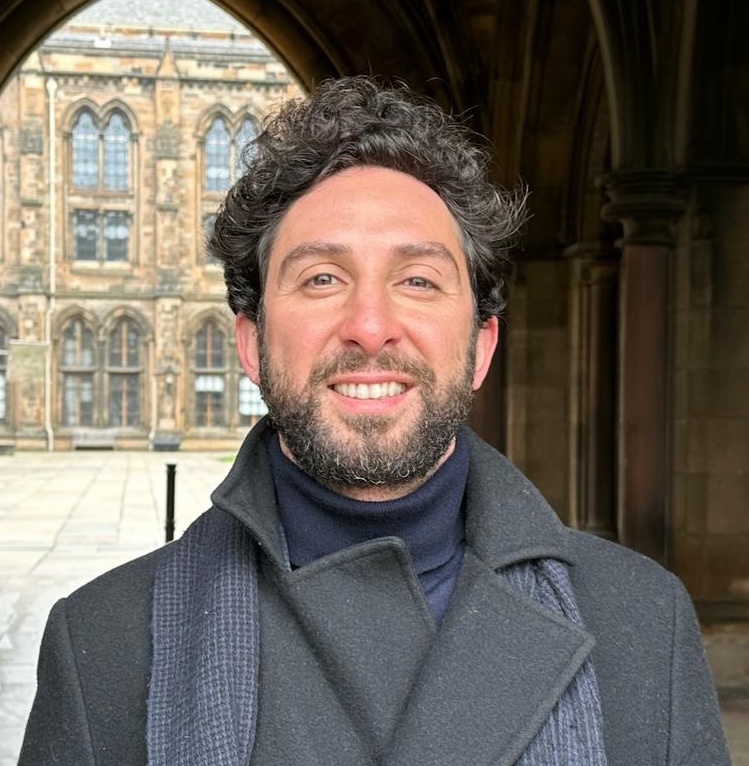
Stefano Almi is an Associate Professor at the University of Naples Federico II. His research focuses on calculus of variations, partial differential equations, fracture mechanics, and optimal control, with applications in material science and elasticity. He has contributed to topics such as free discontinuity problems, nonlocal approximations, and geometric rigidity in multi-well systems. Almi has organized several conferences, including the upcoming 'Variational Analysis of complex systems in Materials Science, Physics and Biology' (Oct 2025) and 'Variational models in Materials Science-III' (Feb 2025). He has spoken at events like 'Recent progress in PDEs' (Feb 2025) and 'Beyond Elasticity: Advances and Research Challenges' (May 2022). His recent work explores mean-field limits, agent-based models, and fractional approaches to plasticity. He has collaborated extensively with researchers such as R. Durastanti, M. Friedrich, and F. Solombrino, producing publications in journals like Calculus of Variations and Partial Differential Equations and Mathematische Annalen .
Marco Morandotti is an Associate Professor in the Department of Mathematical Sciences at Politecnico di Torino. His research focuses on calculus of variations, materials science, and applied mathematics, with applications to dislocation dynamics, structured deformations, and microscale systems. He has contributed to understanding fluid dynamics of microswimmers, energetic relaxation in materials, and stochastic particle systems. Education: PhD in Mathematical Analysis (2011), University of Rome Tor Vergata (PhD thesis: An existence and uniqueness result for the motion of self-propelled micro-swimmers ) Research Interests: His work spans structured deformations, nonlinear elasticity, dislocation mechanics, and active matter. Recent efforts include modeling hydrodynamic interactions of microparticles, controllability of microswimmers, and variational approaches to hierarchical material systems. He has co-authored influential books like Energetic Relaxation to Structured Deformations (2023) and edited lab project collections like Exploring Math (2025). Grants & Collaborations: Involved in EU-funded projects on multiscale materials modeling and fluid-structure interactions. Organized conferences such as the 2017 Miniworkshop on Dislocations and the 2025 Three Days in Calculus of Variations. Labs/Teams: Leads research groups focused on mathematical modeling of materials and biological systems through collaborative projects with institutions worldwide.
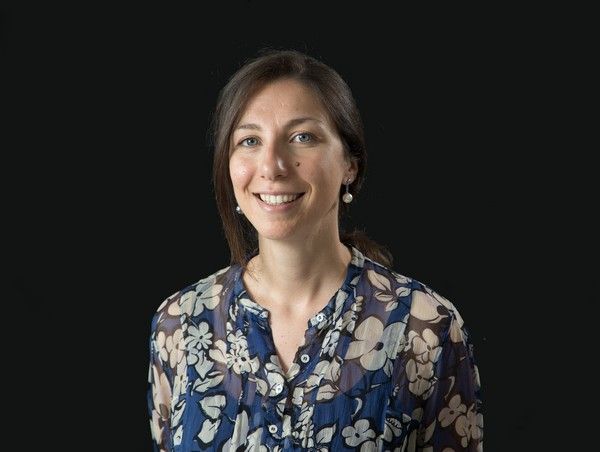
Gioia Carinci is an Associate Professor at the University of Modena and Reggio Emilia, affiliated with the Department of Physical, Computer and Mathematical Sciences. She teaches courses such as Probability and Statistics for Computer Science, Mathematics for Electronic Engineering, and Markov Chains for Mathematics students. Her research focuses on stochastic processes, interacting particle systems, and duality principles in non-equilibrium statistical physics. Teaching: Probability and Statistics (Computer Science) Mathematics for Electronic Engineering (Engineering) Markov Chains (Mathematics) Research Interests: Analysis of Markov chains and their convergence properties Boundary-driven non-equilibrium systems Large deviations and additivity principles Duality in stochastic processes Key Contributions: Derivation of macroscopic properties from microscopic models Study of condensation phenomena in particle systems Development of exact solutions for stationary non-equilibrium states Her work bridges probability theory, statistical mechanics, and applications in mathematical physics. She actively contributes to both theoretical advancements and interdisciplinary collaborations.
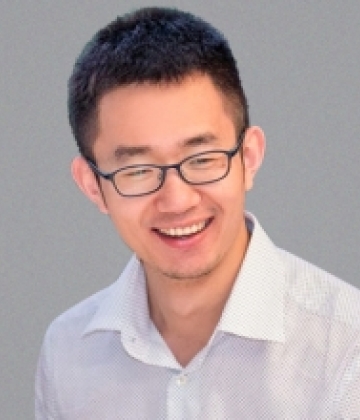
Kai Zhu is an Assistant Professor at Bocconi University in Milan, Italy. He holds a PhD in Information Systems from Boston University and additional degrees from Peking University and Beijing Language and Culture University. His research focuses on computational social science, leveraging machine learning and network analysis to study digital technologies' impact on markets, media, politics, and society. Key areas include digital transformation in cultural markets, text-as-data methodologies, and social network dynamics. Teaching responsibilities include courses like 'Data Mining for Marketing Analytics' and 'Computational Applications in Marketing.' His work integrates interdisciplinary methods to analyze large-scale datasets from platforms like Wikipedia and social media, addressing challenges such as information poverty and platform monetization. Collaborative projects include contributions to the Wikipedia Detox initiative aimed at detecting toxic online discourse through machine learning models. Notable publications explore topics ranging from platform economics to crisis communication during the early stages of the COVID-19 pandemic. His research emphasizes the ethical and societal implications of digital technologies while advancing computational methodologies for social science inquiry.
Ada Amendola is an Associate Professor in the Department of Civil Engineering at the University of Salerno, where she conducts advanced research in innovative materials and structural mechanics. Her work bridges computational modeling, bio-inspired design, and experimental validation of multiscale systems. Her research interests include: Mechanics of Metamaterials and Tensegrity Structures Nonlinear Wave Propagation in Solids Seismic and Dynamic Protection of Structures Energy-Harvesting and Carbon-Storing Building Systems Bio-inspired and Fractal Structural Design Additive Manufacturing of Advanced Structural Components The recent articles highlight her focus on solitary wave dynamics, tensegrity-based seismic isolators, impact-resistant columns, and sustainable composite structures. These works reflect a strong integration of theoretical, computational, and experimental approaches in applied mechanics and civil engineering. Scientific recognition includes competitive funding from the Italian Ministry of University and Research (PRIN), MAECI, and PRIN-PNRR Linea Giovani for projects such as: 'The Mathematics and Mechanics of Nonlinear Wave Propagation in Solids' 'Sustainable Composite Structures for Energy-Harvesting and Carbon-Storing Buildings' (SUSTBUILD) 'Next-Generation Green Structures for Natural Disaster-Proof Building' (NEXTBUILDING) She leads and contributes to interdisciplinary research initiatives, advising teams working on 3D-printed meta-isolators highlighted in Nature , and developing novel structural systems with re-centering capabilities using shape memory alloys. Her lab investigates post-tensioned tensegrity columns, dynamic impact responses, and parametric design of meta-braces. Ongoing work explores the use of self-similarity and biological principles to innovate in structural resilience and sustainability.
Karl Tuyls is a Professor of Computer Science at the University of Liverpool's School of Electrical Engineering, Electronics and Computer Science, with additional research affiliation at DeepMind. His work bridges theoretical game theory and practical multi-agent reinforcement learning systems. His research focuses on cooperative multi-agent systems, where he pioneers value decomposition techniques and emergent communication protocols. Key contributions include frameworks for handling team reward structures, analyzing inequity aversion in social dilemmas, and developing differentiable game mechanics that separate potential and Hamiltonian game dynamics. Analysis of his 2017-2019 publications reveals dominant trends in cooperative multi-agent reinforcement learning, particularly value decomposition architectures and emergent communication systems. These works span artificial intelligence, game theory, and behavioral economics, with specific focus on fair reward allocation, relational inductive biases in deep learning, and open-source framework development for experimental validation. Professor Tuyls leads collaborative research between the University of Liverpool and DeepMind, directing projects on multi-agent coordination and social dilemma modeling through frameworks like OpenSpiel that enable reproducible experimentation in complex game-theoretic scenarios.
Serena Bovetti serves as Associate Professor in the Department of Life Sciences and Systems Biology at the University of Turin, Italy. Her research integrates advanced optical techniques with cellular neuroscience to investigate neural circuit dynamics and adult neurogenesis, primarily within the olfactory system and neocortex. Her primary research interests encompass adult-born neuron integration in olfactory circuits, molecular mechanisms of neural plasticity, and the development of cutting-edge two-photon imaging methodologies. She specializes in patterned illumination techniques, optogenetic manipulation, and microendoscopic approaches for high-resolution in vivo brain imaging. Her work bridges molecular neuroscience with systems-level circuit analysis to understand how sensory experience shapes neural network organization. Analysis of her recent publications reveals a consistent focus on developing and applying optical tools to dissect neural circuit function. Her research demonstrates strong interdisciplinary integration between biomedical engineering and neuroscience, with particular emphasis on cortical state transitions, inhibitory circuit control, and experience-dependent plasticity in adult-born neurons. The work spans cellular, circuit, and systems neuroscience levels. No scientific awards were explicitly documented in the provided materials. Dr. Bovetti leads the Adult Neurogenesis research group and participates in the PRIN PNRR 2022 DELIMIT project (Discovering the Effectors of Lifestyle-driven Memory enhancement via Inflammation). While specific students aren't listed, her extensive publication record with junior co-authors indicates active mentorship of graduate researchers. She serves on the Departmental Council and teaches Comparative Anatomy courses across multiple biology degree programs. Her laboratory develops and applies advanced optical techniques including two-photon microscopy, patterned illumination systems, and microendoscopic platforms. The research team collaborates extensively on interdisciplinary projects involving neural circuit mapping, optogenetic control, and the molecular regulation of adult neurogenesis, with particular focus on the olfactory bulb as a model system for neuroplasticity studies.
Santa Di Cataldo is an Associate Professor at the Department of Control and Computer Engineering (DAUIN) of Politecnico di Torino. His research focuses on computer vision, pattern recognition, digital image processing, and medical image processing, with applications in industrial systems and AI for manufacturing. Scientific Branch: IINF-05/A - Information Processing Systems ERC Sectors: PE6_8 - Computer graphics, computer vision, multi media, computer games ERC Sectors: PE6_11 - Machine learning, statistical data processing His work includes developing AI-driven anomaly detection frameworks, physics-informed neural networks for additive manufacturing optimization, and neuro-symbolic approaches for Industry 4.0 applications. He supervises PhD students in Artificial Intelligence and Computer Engineering programs, collaborating on projects like BIG (Blue Is Green) and PNRR-Complementary Plan. Premio Donna Innovazione (2010) He leads courses such as Machine Learning in Applications and Applied AI and Machine Learning , while contributing to bioinformatics and robotics-related teaching. His research is supported by IAM@PoliTo and EDA groups, utilizing LADISPE laboratory facilities.
Francesco DE PAOLIS is an Associate Professor of Astronomy and Astrophysics at the Department of Mathematics and Physics "Ennio De Giorgi" at the University of Salento, Italy. His research focuses on theoretical astrophysics, particularly the physics of collapsed objects including white dwarfs, neutron stars, and black holes, gravitational lensing and microlensing phenomena, exoplanets, and relativistic astrophysics. Dr. DE PAOLIS earned his Physics degree from the University of Rome "La Sapienza" in 1991 and completed his PhD in Physics at the University of Bari. He conducted postdoctoral research at the Institute for Theoretical Physics of the University of Zurich and the Bartol Research Institute at the University of Delaware before joining the University of Salento in 1999 as a researcher. He was promoted to Associate Professor in September 2015. His primary research interests include theoretical astrophysics with specialization in collapsed objects, gravitational lensing applications, exoplanet detection through microlensing techniques, and relativistic effects in strong gravitational fields. His work has significantly advanced our understanding of gravitational microlensing as a tool for discovering exoplanets and extragalactic planets, as well as the physics of gamma-ray bursts and galactic nuclei. Dr. DE PAOLIS has authored over 160 publications in international journals, with recent work demonstrating a strong emphasis on gravitational lensing applications, exoplanet detection methodologies, and theoretical frameworks for understanding compact objects in extreme gravitational environments. His research portfolio shows consistent contributions across multiple subfields of theoretical astrophysics. Research Fellow at INFN (Istituto Nazionale di Fisica Nucleare) Associated with INAF (Istituto Nazionale di Astrofisica) Member of the RIAA Internationalization Commission Co-chairman of Italian-Pakistani Workshops on Relativistic Astrophysics Local manager of INFN specific initiative TAsP As an educator, Dr. DE PAOLIS has supervised numerous theses at various academic levels and has been instrumental in shaping physics curriculum at the University of Salento. He currently teaches Fundamentals of Astronomy and Astrophysics for undergraduate students and Theoretical Astrophysics for graduate students, in addition to offering a PhD course in Relativistic Astrophysics.
Gianluca Percoco is a Full Professor at the Department of Mechanics, Mathematics & Management, Politecnico di Bari (Poliba), specializing in manufacturing technologies and systems. His research focuses on advancing 3D printing methodologies for soft robotics, sensors, and biomedical applications. Department: Mechanics, Mathematics & Management Research Themes: Additive manufacturing, material extrusion, bioinspired structures His recent work explores ironing process optimization for improved sensor sensitivity, electromagnetic assistance in silicone-based soft robotics, and machine learning for predicting interlayer adhesion in multi-material printing. Publications from 2023-2025 highlight innovations in 3D printed sensors , self-healing polymers , and microfluidic devices . Contact: gianluca.percoco@poliba.it | Tel: +39 080 596 3267
Alessandro Fasana is a Full Professor at the Department of Mechanical and Aerospace Engineering (DIMEAS) at Polytechnic University of Turin, where he serves as Deputy Coordinator of the College of Mechanical, Aerospace and Automotive Engineering. His academic career spans multiple decades with continuous involvement in doctoral education as Course Coordinator in Mechanical Engineering from 2018-2024 and consistent participation in doctoral colleges since the 27th cycle (2011/2012). Professor Fasana's research focuses on Mechanical Systems Dynamics, Modal Analysis, Nonlinear Dynamics, Rotating Machinery Diagnosis, Structural Health Monitoring, Viscoelastic Materials, Prognostics and Health Management, and Signal Processing. His work bridges fundamental mechanical principles with practical industrial applications, particularly in vibration analysis, structural dynamics, and condition monitoring systems. His research lines specifically include modal analysis and identification of linear dynamic systems, characterization of viscoelastic materials, dynamics of nonlinear systems, and evaluation of defects and residual life of structures. Analysis of his recent publications reveals a strong emphasis on pyroshock testing for aerospace qualification, structural health monitoring, vibration control, and advanced signal processing techniques. His work spans both theoretical developments and practical applications across aerospace, mechanical engineering, and industrial sectors, with particular attention to vibration analysis, structural dynamics, and condition monitoring systems. The research demonstrates increasing integration of computational methods, machine learning, and experimental validation. Professor Fasana has supervised PhD student Luca Viale, whose thesis focused on Pyroshock Testing for aerospace qualification. His research portfolio includes numerous commercial research projects spanning from 2007 to 2023, primarily focused on vibration testing, characterization of damping materials, and structural analysis for diverse industrial applications including aerospace, dental equipment, and power generation systems. He leads the research group 'Dinamica dei sistemi meccanici e identificazione (DIMEAS)' and has been Principal Investigator on multiple commercial research projects related to vibration analysis, structural dynamics, and material characterization. His work connects mechanical engineering fundamentals with practical industrial solutions across multiple sectors including aerospace, automotive, and energy.
Elena Campagnoli is an Associate Professor and Confirmed Researcher at the Department of Energy (DENERG) within the College of Mechanical, Aerospace and Automotive Engineering at the Polytechnic University of Turin. She holds a degree in Nuclear Engineering and a PhD in Energetics, both from the Polytechnic University of Turin, and has been affiliated with the university since 1999. Her research focuses on the analysis and modeling of heat transport phenomena and the measurement of thermophysical properties (thermal diffusivity, thermal conductivity, radiative properties) of both traditional and innovative materials, and recently also of biological tissues. Her work spans multiple domains including energy engineering, materials science, and thermal management systems. She has particular expertise in thermal conductivity measurement techniques, phase change materials, and thermal management applications for aircraft engines. Over the years, her research has evolved from fundamental thermophysical property measurements to applied research in energy systems and aerospace engineering. Her recent publications demonstrate strong focus on thermal energy storage, advanced materials characterization, and thermal management solutions for various applications including biomedical and automotive fields, with particular emphasis on sustainable energy solutions aligned with SDG Goal 7: Affordable and clean energy. Member of the Board of Directors - Italian Association of Thermophysical Properties (1999-) President of AIPT (2016-2019, renewed 2019) Member of the Editorial Board for INSTRUMENTATION MESURE MÉTROLOGIE (2020-) As an educator, she teaches "Fundamentals of Engineering Thermodynamics and Heat Transfer" for Mechanical Engineering and "Applied Thermodynamics and Heat Transfer" for Automotive Engineering programs. She has been the course instructor for these subjects continuously from the 2019/2020 academic year through the upcoming 2025/2026 academic year, demonstrating her sustained commitment to academic instruction. Her research is conducted through the ThEAM Research Group (DENERG), where she has served as Scientific Director for multiple research projects including "GREEN ENGINE FOR AIR TRAFFIC 2020 FASE 2" (2012-2015) and "MEASUREMENT AND MODELING OF THE THERMAL BEHAVIOR OF BITUMINOUS MATRIX DAMPING MATERIALS" (2011-2011), spanning both competitively funded research and commercial contracts.
Ivano Alogna is a Senior Research Fellow in Environmental and Climate Change Law at the British Institute of International and Comparative Law (BIICL), where he leads the Institute’s environmental law program. Concurrently, he serves as an Adjunct Professor of Environmental Law at the University of Paris 1 Panthéon-Sorbonne, University of Bologna, and Catholic University of Lyon. He is also a licensed Attorney-at-Law at the Bar of Milan. Education: Alogna holds a PhD in Comparative and International Environmental Law from Sorbonne Law School, an LLM in Environmental Law (Paris 1 & Paris 2), and additional degrees in Law, Environmental Law, and Comparative Law from institutions in France, Italy, and Spain. His international academic training included research stays at Glasgow, Louisiana State University, SOAS London, the Indian Law Institute, and Wuhan University. Research Focus: His interdisciplinary research explores climate litigation, environmental liability, corporate accountability, and the intersection of human rights with sustainability. He pioneers frameworks for global environmental governance, emphasizing comparative legal models and judicial responses to climate crises. Professional Leadership: Alogna founded and directs the Global Toolbox on Corporate Climate Litigation and co-leads the Climate Litigation Cluster for IUCN’s World Commission on Environmental Law. He sits on the IUCN French Committee’s Environmental Law Commission and the ELI UK Hub Advisory Board. Previously, he contributed to the ELI 'Ecocide' project and served as General Rapporteur for the Global Pact for the Environment. Awards: Special Jury Prize from the French Society of Environmental Law (SFDE) for his doctoral thesis on global environmental law. Teaching and Training: He designs executive courses on climate law for professionals (law firms, NGOs, governments) and delivers judicial training worldwide. His pedagogy integrates theoretical rigor with practical litigation strategies.