Gaetano Siscaro serves as Associate Professor of General and Applied Entomology (AGRI-05/A) at the Department of Agriculture, Food and Environment (Di3A), University of Catania, where he has held a permanent position since 2002 within the Faculty of Agriculture. His academic career spans over three decades at the same institution, transitioning from researcher to associate professor while maintaining continuous research activity. Education: Master's Degree in Agricultural Sciences, University of Catania (1985) PhD in Agricultural Entomology, University of Naples Federico II (1992) Dr. Siscaro's research focuses on sustainable pest management in Mediterranean agroecosystems, with specialized expertise in citrus and protected crops. His work integrates biological control strategies through the enhancement of natural enemy biocenoses, particularly targeting whiteflies, scale insects, and leaf miners. He emphasizes field-applicable solutions for economically significant pests while maintaining ecological balance. As an active participant in international scientific networks, he contributes to the IOBC/wprs Working Groups on Citrus IPM and Protected Crops, having organized the 2007 Catania meeting on citrus integrated pest management. His teaching responsibilities include courses such as Applied Entomology and Parasitology for undergraduate agriculture programs. Professional Affiliations: Italian Entomological Society (SEI) - Agricultural Entomology Section (since 1991) IOBC/wprs (since 1992) International Society of Citriculture (since 2004) Italian National Academy of Entomology (since 2018) Gioenia Academy of Catania (Resident Correspondent since 2021)
Donato Romano serves as Associate Professor at The BioRobotics Institute of Scuola Superiore Sant'Anna, Italy, where he coordinates the Bio-Robotic Ecosystems Lab and co-founded the spin-off company HUBILIFE srl. His interdisciplinary work bridges robotics, biology, and AI to develop biohybrid systems for biodiversity preservation, sustainable environmental management, and life support in extreme scenarios including space exploration. With over 90 publications and an H-index of 27 (Scopus, March 2025), he has established significant academic leadership through editorial roles across 12+ international journals. Romano's educational foundation includes advanced degrees with honors: an M.Sc. in Agriculture Science and Technologies (2014) and a PhD in BioRobotics (2018), both from Scuola Superiore Sant'Anna. His academic journey includes visiting scholar positions at Khalifa University and substantial industry-academia collaboration through HUBILIFE srl, which commercializes bioinspired devices for human daily life improvement. His research program focuses on bioinspired and biomimetic robotics with particular emphasis on animal-robot interaction, biohybrid systems, and natural intelligence. Key projects address critical global challenges: SENSORBEES develops biohybrid environmental surveillance for ecological monitoring; REGOLIFE investigates lunar soil-terrestrial organism interactions for space agriculture; and OCEAN ROBOCTO explores marine ecosystem solutions. This work demonstrates a strategic progression from fundamental behavioral studies toward applied ecological and extraterrestrial systems. Analysis of his recent publications reveals strong trends in AI-driven behavioral analysis, with deep learning increasingly applied to entomological studies and pest management. The research spans agricultural applications (precision monitoring traps, larval detection systems), ecological conservation (biodiversity surveillance), and extreme-environment adaptation (lunar regolith studies). A distinctive feature is the consistent integration of biohybrid approaches where living organisms and robotic systems create synergistic capabilities exceeding either component alone. Romano's scientific recognition includes election as Junior Fellow of the Italian Academy of Engineering and Technology (2025), the Lucani fuori dal Comune award (2024), and multiple best-thesis prizes. His editorial leadership spans high-impact journals including IEEE Transactions on Medical Robotics and Bionics and Pest Management Science, where he serves as Associate Editor. As principal investigator, Romano coordinates major international projects totaling over €15M in funding: HORIZON-EIC's SENSORBEES (2024-2029), ASI's REGOLIFE (2024-2027), National Geographic's OCEAN ROBOCTO (2024-2026), and PRIN's COSMIC (2023-2025). His teaching portfolio includes PhD courses in Biosystems for Biorobotics and M.Sc. instruction in Bionics Engineering at Scuola Superiore Sant'Anna and University of Pisa. The Bio-Robotic Ecosystems Lab under Romano's direction pioneers biohybrid technologies where living organisms and robotic systems create integrated solutions. Current initiatives include SENSORBEES' environmental monitoring swarms, REGOLIFE's moonworm colonization systems, and HUBILIFE's commercial vector-control devices. The lab maintains active collaborations with space agencies, agricultural institutes, and conservation organizations, positioning biohybrid systems as next-generation tools for planetary-scale challenges.
Lucia Zappalà is a Full Professor of General and Applied Entomology at the University of Catania's Department of Agriculture, Food and Environment (Di3A) since 2020. She serves as University Delegate for International Relations since 2019 and President of the European University Alliance EUNICE since 2024. Her research focuses on Hymenoptera parasitoids, integrated pest management (IPM), and pesticide effects on natural enemies. She is a member of the Italian Entomological Society's Agricultural Entomology section and the Italian National Academy of Entomology. PhD in Agricultural Entomology (University of Naples Federico II, 2001) Postdoctoral fellowship at University of Florida (2003) University of Catania faculty since 2006 Visiting professor at UC Berkeley (2015) Her research spans biological control agent discovery, pesticide risk assessment, and invasive pest management across Mediterranean agroecosystems. She has published over 300 indexed articles (h-index 37) on parasitoid-pest interactions and sustainable control strategies. Recent work examines botanical extract compatibility with natural enemies and essential oil-based plant defenses . She contributes to Phytoparasitica and European Journal of Entomology editorial boards. Scientific awards include a 2003 postdoctoral fellowship. She has served as Principal Investigator for national (FIR, PRIN) and international (FP7, ARIMNET 2) projects, and contributes to EFSA's Plant Health Panel. Her laboratory (Biocontrol Lab, Di3A) conducts applied entomology research on invasive Hemiptera and quarantine pest evaluations .
Gaetana Mazzeo is an Associate Professor of General and Applied Entomology at the Department of Agriculture, Food and Environment, University of Catania. She specializes in Apidology, integrated pest management, and biodiversity conservation, with a focus on pollinators, citrus pests, and anthophilous insects. Her research spans ecological studies in natural and anthropogenic environments, pesticide side effects on natural enemies, and conservation of the Sicilian honeybee subspecies Apis mellifera siciliana . Education: PhD in Agricultural Entomology (1994, University of Naples); Laurea in Agriculture (1986, University of Catania). Roles: President of Food Science and Technology degree course (2023–present), Deputy Director of Department of Agriculture, Food and Environment (2014–2018), Deputy Director of Phytosanitary Sciences and Technologies (2008–2010). Research Projects: APESLOW (reintroduction of native honeybee subspecies), BEENET (environmental monitoring with bees), DI.OL (pest control in olive crops), FAIR/PHOCUS (scale insect management in Mediterranean forests). Her work addresses ecological challenges in citrus and olive crops, urban green spaces, and protected natural areas, documented in over 160 publications. She collaborates with scientific societies such as AISASP-IUSSI and Entomology Italian Society, and is affiliated with the Accademia dei Georgofili and CUTGANA.
Christian Agrillo is an Associate Professor at the Department of General Psychology, University of Padova. His research focuses on numerical cognition across species, visual perception in primates, and the psychology of music. He investigates how non-human animals (e.g., zebrafish, guppies) and humans perceive numerical quantities, spatial relationships, and visual illusions. Recent work includes studies on musical perception in professionals and susceptibility to illusions in domestic animals like dogs and cats. His research spans comparative psychology, behavioral ecology, and cognitive neuroscience. Key topics include quantity discrimination in fish, color discrimination in piranhas, and the application of operant conditioning in larval zebrafish. He collaborates on environmental enrichment strategies for captive fish using visual illusions. Agrillo’s articles explore cross-species perceptual mechanisms, emphasizing methodological rigor in studying animal cognition. His work bridges basic science with applied topics like animal welfare and music psychology.
Massimo Faccoli is an Associate Professor in the Department of Agri-Food, Environmental and Animal Sciences (DAFNAE) at the University of Padova, Italy. His academic field is AGR/11 – General Entomology, reflecting his expertise in insect science within agricultural and environmental contexts. His research focuses on entomological aspects relevant to agriculture and natural ecosystems, particularly in areas such as insect ecology, pest management, and sustainable agricultural practices. Given his academic classification, his work likely involves both field and laboratory studies on insect populations, their interactions with crops and forests, and integrated pest control strategies. While no specific publications or research projects are listed in the available text, his affiliation with DAFNAE—a department dedicated to sustainable agri-food systems—suggests a strong orientation toward applied entomology and environmental stewardship. There are no listed scientific awards or honors in the provided information. There is no mention of graduate students supervised or formal advising roles in the available content. No specific grants or funded projects are referenced. Massimo Faccoli is based at the Agripolis campus in Legnaro (Padova), a research and teaching hub for agricultural sciences at the University of Padova. He is part of a broader academic unit engaged in interdisciplinary research linking agriculture, environment, and food systems.
Salvatore Nucifora is an Assistant Professor in General and Applied Entomology at the University of Catania, where he has been since 1996. His research focuses on the systematics of scale insects (Hemiptera: Coccomorpha: Diaspididae) , agricultural crop protection from pests, and entomophilous pollination of greenhouse vegetables. University: University of Catania Department: Department of Agricultural Engineering, Buildings and Territory Academic Rank: Assistant Professor Research Interests Taxonomy and faunistics of armored scale insects Development of integrated and biological control strategies in Mediterranean agricultural and forest ecosystems Entomophilous pollination of greenhouse crops Teaching Agricultural, Forestry, and Aquaculture Zoology Agricultural Entomology Crop Protection Methods Applied Zoology and Entomology Forestry Entomology Leadership & Collaborations Scientific director of the Di3A - SiMuA entomological collections Collaborates with the Department's teaching and research activities Office hours: Tuesday and Wednesday (9:00–11:00) in room C1/14
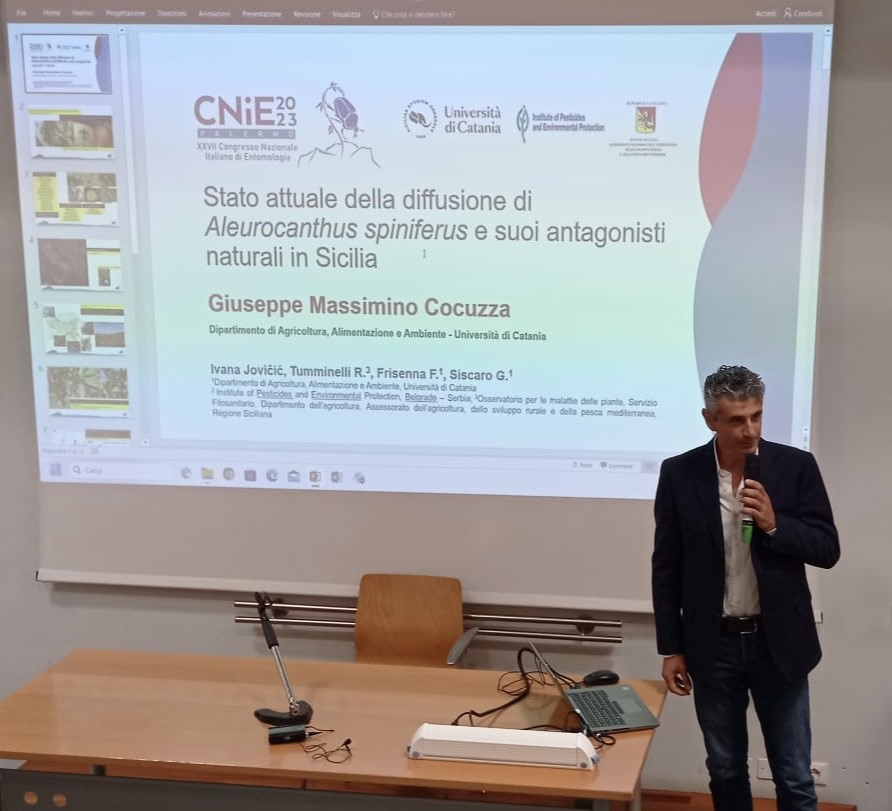
Giuseppe Eros Massimino Cocuzza is an Associate Professor of General and Applied Entomology (SSD AGRI-05/A) at the Department of Agriculture, Food and Environment, University of Catania. Holding a PhD in Agricultural Entomology from the University of Naples 'Federico II' (2000), his academic career spans research fellowships (2001-2005), researcher positions (2006-2021), and a national scientific qualification (2023) enabling his current associate professor role since December 2024. Key research areas: Molecular systematics of aphids, molecular biotechnology applied to insects, control strategies for citrus disease vectors, and entomofauna management in Mediterranean agroecosystems. Teaching roles include Entomological Biotechnologies (2011-2021) and Biotechnologies and Arthropods (2024-25). He has authored/co-authored 75+ publications (Scopus h-index 12) and contributed to 13 international book chapters, focusing on sustainable pest control and climate change impacts on citrus ecosystems. His scientific awards include a prestigious 2000 scholarship from the Italian Plant Protection Association. Research projects: PON POFACS (2014-2020), LIFE VIDA FOR CITRUS (2018-2022), Horizon 2020 VIRTIGATION (2018-2022), PRIN Bio-inspired Plant Protection (2022), and industry collaborations with Corteva and DowAgroSciences. Professional roles: Organizer of international conferences (IOBC/WPRS Citrus Control 2009, XXXVII Italian Biogeography Congress 2008), invited speaker at 15+ national/international events (2013-2024), and thesis supervisor for 34 students.
Paola Riolo is a Full Professor in the Department of Agricultural, Food and Environmental Sciences at the Università Politecnica delle Marche (UNIVPM), affiliated with the Faculty of Agriculture. Her scientific focus lies in General and Applied Entomology (AGRI-05/A). Her research interests include entomology with applications in agriculture, covering areas such as pest management, insect ecology, and integrated pest control methods. This work contributes to sustainable agricultural practices and environmental protection. Prof. Riolo maintains regular office hours on Tuesdays and Thursdays from 15:00 to 18:00 at the Dip. 3A office in Via Brecce Bianche, Ancona. She can be contacted via email at p.riolo@staff.univpm.it or by phone at +39 0712204954. While specific publications and awards are not detailed in the provided text, her profile indicates an active research and teaching role, supported by the university's research infrastructure and access to the IRIS Repository for publications. She is involved in academic guidance and likely supervises graduate students, although no specific advisees are listed. Her work is situated within broader national and international research frameworks supported by UNIVPM, including participation in EU research programs. Prof. Riolo is part of a multidisciplinary department engaged in agricultural sciences and environmental research, collaborating within research groups focused on sustainable food systems and environmental management.
Francesca Barbero is an Associate Professor in the Department of Life Sciences and Systems Biology at the University of Turin. She is affiliated with the "Ferdinando Rossi" School of Advanced Studies (SSST) and teaches courses in Natural Sciences and Natural Systems Sciences, focusing on Evolution of Animal and Human Behavior and General Zoology. She serves on the Orientation Committee, Departmental Council for Natural Sciences, and Thesis Coordination Committee. Her research centers on insect behavioral ecology with emphases on chemical and acoustic communication systems, social parasitism mechanisms in butterfly-ant interactions, and conservation biology. She investigates multimodal deception strategies where parasites mimic host signals, plant-insect defense dynamics, and biodiversity responses to anthropogenic pressures. Her work integrates field ecology, chemical analysis, and acoustic monitoring to dissect complex interspecies relationships. Analysis of her 15 most recent publications reveals dominant themes in butterfly-ant coevolution (particularly Maculinea-Myrmica systems), with recurring investigations into chemical mimicry, vibroacoustic signaling, and conservation applications. She has pioneered methods for butterfly red-listing in Italy and examined cross-kingdom interactions including plant responses to extracellular DNA and forest-vineyard microbial connectivity. Her research bridges fundamental behavioral ecology with applied conservation frameworks. Dr. Barbero co-leads the "Evolution of Communication" and "Plant-Arthropod Interactions" research groups at the University of Turin, where her teams explore signal evolution in symbiotic systems and tritrophic interactions between plants, herbivores, and their natural enemies through integrated molecular and ecological approaches.
Samuele Bovo is a Junior Assistant Professor (fixed-term) and Fixed-term Researcher Type A (junior) at the Department of Agricultural and Food Sciences and Technologies (DISTAL), University of Bologna. His academic discipline is AGRI-09/A (General Zootechnics and Genetic Improvement). He holds a Master's in Bioinformatics (2013) and a PhD in Biotechnological and Pharmaceutical Sciences (2018), both from the University of Bologna. His research focuses on omic data analysis in livestock, including pigs, cattle, rabbits, and bees, with an emphasis on metabolomics, genomics, and their application to breeding and conservation. He has contributed to projects like PigPhenomics (PRIN2017-MIUR) and EU-LI-PHE, and has conducted international collaborations at institutions such as the Earlham Institute (UK) and the National Centre for Biotechnology (Spain). His work integrates computational methods and systems biology to address challenges in sustainable livestock production and genetic resource management. Education: PhD in Biotechnological and Pharmaceutical Sciences (2018), University of Bologna Master's in Bioinformatics (2013), University of Bologna Research Interests: His research spans computational biology, metabolomics, and genomic analysis in livestock. Key areas include: Omics integration for molecular phenotyping Genetic improvement of Italian pig breeds Functional genomics and systems biology Entomological authentication of honey via eDNA Sustainable breeding strategies for conservation Recent Articles: Over 90 peer-reviewed publications, focusing on genomic and metabolomic analyses in livestock, including studies on pig viromes, breed-specific metabolic pathways, and honey bee population genetics. These contributions highlight advancements in applying omic technologies to improve animal health, productivity, and genetic resource management. Awards: While no specific awards are listed, his work has been recognized through high citation metrics (Scopus h-index 19, Google Scholar h-index 23 as of 2025). Grants & Collaborations: Involved in national and international grants including PRIN2017-MIUR and COST Action FAANG-EUROPE. He has also conducted STSM research exchanges in the UK and Spain. Labs/Teams: Member of the Animal and Food Genomics Group, contributing to projects like PigPhenomics and EU-LI-PHE. Formerly part of the Bologna Biocomputing Group.
Antonio Biondi serves as Full Professor of General and Applied Entomology at the University of Catania's Department of Agriculture, Food and Environment. He concurrently holds significant administrative positions as Coordinator of the PhD Course in Agricultural, Food and Environmental Science and Deputy Rector for University Evaluation. His educational background includes a Master's degree in Agricultural Sciences and Technologies (2009) and an international PhD in Phytosanitary Technologies and Agro-Ecosystem Protection (2012), both from the University of Catania. His post-doctoral training spanned multiple prestigious institutions including the Instituto Valenciano de Investigaciones Agrarias (Spain), Institut National de Recherche Agronomique (France), University of Minnesota, and University of California, Berkeley. Professor Biondi's research focuses on sustainable approaches to pest management in Mediterranean agriculture, with particular emphasis on the biology, ecology, and toxicology of bioinsecticides against invasive species. His work centers on model pests including Tuta absoluta , Drosophila suzukii , and Xylosandrus compactus and their natural enemies. His research integrates field studies with laboratory investigations to develop ecologically sound pest control strategies. With an h-index of 49, his scholarly impact is substantial, earning him recognition as a Highly Cited Researcher annually since 2019. He currently serves as Editor-in-Chief for the Journal of Pest Science and has contributed as editor and reviewer for numerous other high-impact journals in the WoS-Scopus network. Highly Cited Researcher (2019-present) Editor-in-Chief, Journal of Pest Science Member of expert committee for ANSES (French Agency) on plant health risks (2018-2022) Full member of Italian Entomological Society Professor Biondi actively supervises graduate students and post-doctoral researchers through international programs including Marie Curie and Erasmus agreements. His teaching responsibilities include Applied Agricultural Entomology and Integrated Pest Management courses for undergraduate and master's students. He has participated in numerous national and international research projects focused on sustainable pest control in agricultural ecosystems. His laboratory facilities at the Department of Agriculture, Food and Environment support both fundamental research on insect-plant interactions and applied studies for developing practical pest management solutions for Mediterranean agriculture.
Giovanna Maria Daniela Tropea Garzia is an Associate Professor of General and Applied Entomology at the Department of Agriculture, Food and Environment, University of Catania. She specializes in integrated pest management strategies for Mediterranean crops, with expertise in biological control, taxonomy of mites, and invasive ambrosia beetles like Xylosandrus compactus . Her career spans over three decades at the University of Catania, transitioning from Technical-Scientific Coordinator to Researcher and finally to Associate Professor since 2021.
Nicola Mori is an Associate Professor at the Department of Biotechnology, University of Verona, with a focus on General and Applied Entomology. He is affiliated with the College of Science and Engineering and actively involved in teaching and research related to plant pathology, integrated pest management, and agroecosystem sustainability. Research Interests : Epidemiology of phytopathogenic agents, integrated pest management, and pesticide effects on beneficial organisms in agro-ecosystems. Teaching : Courses on Grapevine Protection, Environmental Sustainability, and Food Production Systems Protection across Bachelor's, Master's, and PhD programs. Office : Villa Lebrecht, Room 2.15, Second Floor. Contact: 045 842 5628 | nicola.mori@univr.it Committee Involvement : Member of PhD Faculty Board, Teaching Committees for Viticultural Science, Innovation in Food Production, AQ Didattica, ERASMUS, and Biotechnology Departmental Council.
Sergio Angeli is a Tenured Associate Professor at the Faculty of Agricultural, Environmental and Food Sciences , Free University of Bozen-Bolzano . His research focuses on applied entomology, pest management, and chemical ecology, with a particular emphasis on insect-plant interactions and sustainable agricultural practices. He teaches courses like Applied Entomology in Horticulture Crops and Novel Food . Angeli’s work spans the development of attract-and-kill strategies using yeast-based formulations, olfactory behavior studies in pests like Drosophila suzukii , and the ecological impacts of neonicotinoid insecticides on honeybees. His recent studies include optimizing low-cost olfactometers ( OlfactionROOM ) and assessing the efficacy of biological control agents like Ganaspis kimorum . His research highlights environmental and economic sustainability, such as reducing insecticide use through targeted interventions and exploring insect-based feed for poultry. He leads projects on invasive species management, including the European spruce bark beetle and olive fruit flies. Publications trends : Over 40 peer-reviewed articles since 2010, with a focus on pest control innovation, chemical ecology, and pollinator protection. Recent work emphasizes multi-component lures, volatiles as biological tools, and integrated pest management systems. Awards : No specific awards mentioned in the provided texts. Advising & Grants : No student advisees listed; grants and collaborations inferred from publication topics but not explicitly detailed here. Labs/Teams : Affiliated with the Department of General and Applied Entomology, collaborating on projects involving chemical ecology, biopesticide development, and sustainable agriculture technologies.