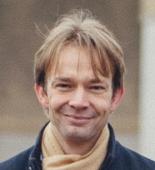
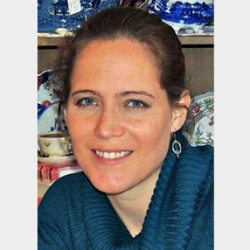
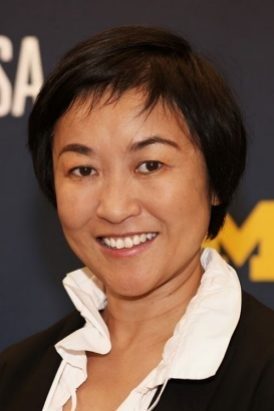
Prof. Dr. Frank Ulbrich is a Lecturer and Programme Director for the BSc Business Administration at the Lucerne School of Business (HSLU). He holds a PhD in Business Administration from the Stockholm School of Economics. His academic career spans roles at universities in Sweden, the UK, Canada, and Switzerland, alongside IT & Management consulting experience. Research focuses on management education, project management, information management, and organizational change. He has published extensively in areas like shared services, digital transformation, and curriculum development. Notable awards include multiple Emerald Literati Awards and a Fellowship from the Higher Education Academy. Education: PhD in Business Administration (Stockholm School of Economics) Affiliations: Institute of Business and Regional Economics at HSLU Teaching Subjects: Academic Methods, Higher Education Management, Project Management, Digital Transformation Recent presentations include discussions on bridging academia-industry gaps, curriculum integration of SDGs, and data-driven learning strategies. His work emphasizes aligning education with labor market needs and advancing evidence-based teaching practices.
Adam Zylbersztejn is an Assistant Professor (Maître de conférences HDR) at Université Lumière Lyon 2 and affiliated with GATE Lyon Saint-Etienne, a research group in economics. He holds a PhD from the Paris School of Economics (2013) and previously conducted postdoctoral research at WU Wien (Vienna University of Economics and Business). His research focuses on behavioral economics using experimental methods to study individual and interactive decision processes, particularly in contexts involving trust, strategic uncertainty, and cultural variability. Key research areas include behavioral game theory, experimental finance, and the impact of nonverbal communication in economic interactions. His work has been published in top journals such as Journal of Economic Psychology , Games and Economic Behavior , and Experimental Economics . Recent studies examine topics like anonymity effects in charitable giving, trust in market exchanges under oath, and cognitive processes in asset markets using eye-tracking technology. His ongoing projects include research on risk-incentive tradeoffs and ambiguity framing in decision-making. While no formal academic awards are listed, his work has received press coverage in outlets like Le Monde and CORTEX Mag . He collaborates widely with institutions such as GATE-LSE and the Paris School of Economics, contributing to both theoretical and applied economic inquiry.
Melvyn R.W. Hamstra is a Full Professor at IÉSEG School of Management in France since 2023. His academic career includes roles as Associate Professor (2021–2023) and Assistant Professor (2020–2021) at IÉSEG, as well as Assistant Professor positions at the University of Maastricht (2015–2020) and the University of Amsterdam (2013–2015). He holds a Ph.D. in Behavioural and Social Sciences from the University of Groningen (2013), preceded by a Master’s (2009) and Bachelor’s (2007) in Psychology from the same institution. Research Interests : His work centers on organizational behavior, leadership, and employee motivation, with a strong emphasis on regulatory focus theory, employee voice dynamics, and knowledge management. Key themes include how leadership styles (e.g., promotion vs. prevention focus) influence team innovation, conflict resolution, and workplace morale. Publication Trends : Recent publications (2025–2024) explore topics such as gender bias in leadership evaluation, financial stress and counterproductive behavior, ethical conflict in teams, and the dual-edged role of humor in workplace negotiations. His longitudinal studies on religious engagement and life satisfaction, as well as theoretical models on knowledge withholding, highlight interdisciplinary breadth. Teaching : He contributes to bachelor and master’s programs at IÉSEG, focusing on leadership development, positive leadership, and organizational learning.
Alison Ledgerwood is a Professor in the Department of Psychology at the University of California, Davis, and Principal Investigator of the Attitudes and Group Identity Lab. Her research examines how social context shapes attitudes and preferences, with a focus on open and inclusive scientific practices. Ph.D., Social Psychology, New York University (2008) M.A., Psychology, New York University (2006) B.A., Psychology, Amherst College (2003) Her research explores psychological distance , framing effects , and system justification theory , while methodologically advancing preregistration , collaborative science , and equity in publishing . She also investigates group identity dynamics and implicit/explicit bias measurement . Recent publications highlight her work on racial bias methodology , open science reform , and contextual framing . Awards include the 2024 Distinguished Service to the Society award, 2021 UC Davis Advising and Mentoring Award, and 2017 SPSP Service to the Field award. 2024 Distinguished Service to the Society, SPSP 2021 UC Davis Graduate Advising and Mentoring Award 2017 Service to the Field, SPSP Hellman Fellowship (2010-2011), UC Davis UC Davis Chancellor's Fellow APS Fellow SESP Fellow Ledgerwood advises on scientific integrity through roles like Chair of the Transparency and Openness Promotion (TOP) II Guidelines Task Force and Anti Colorism and Eurocentrism in Methods and Practices (ACEMAP) Task Force. Her lab fosters contextual evaluation studies and psychological distance frameworks .
Professor Anne JENY is a Full Professor at IÉSEG School of Management, France, specializing in accounting and auditing. She holds a Ph.D. in Accounting from HEC Paris Business School (2003) and Master's degrees in Audit, Finance, and Economics from the University of Paris Dauphine (1995-1996). Her academic career includes professorships at IÉSEG (2021–present) and ESSEC Business School (2002–2020). Her research focuses on intangible assets valuation , fair value measurement , IFRS adoption dynamics , and transparency in financial reporting . She has published widely on topics such as non-audit services' impact on debt costs, innovation's interplay with accounting systems, and gender disparities in accounting professions. Her work integrates empirical analysis with policy implications, particularly in digital economy contexts and public-private partnerships. A member of the LEM (Laboratory of Economy and Management), she has authored books like Les 12 travaux de l'analyste financier (2021) and contributed to international journals such as Accounting in Europe and European Accounting Review . Her research bridges theoretical frameworks with practical insights into corporate governance and regulatory challenges.
Armin Falk is a Professor of Economics at the University of Bonn, leading the BonnEconLab since 2004 and co-founding the briq Institute on Behavior & Inequality. He holds affiliations with the IZA, DIW, CEPR, and Max-Planck-Institut. His research focuses on behavioral economics, exploring how social preferences like fairness and trust influence decision-making, and investigates early childhood development's role in inequality. Falk has received prestigious awards, including the Leibniz Prize and Yrjö Jahnsson Award. His work combines lab experiments, field studies, and representative data analysis. Education includes a PhD in Economics from the University of Zurich after studies in Economics, Philosophy, and History at the University of Cologne. Key research highlights include global climate action support studies (Nature Climate Change, 2024), socioeconomic disparities in child development (JPE, 2021), and global economic preferences surveys (QJE, 2018). He co-authored the book *Warum es so schwer ist, ein guter Mensch zu sein* to popularize behavioral economics. Awards include recognition for contributions to behavioral and development economics. Mentoring programs like *Balu und Du* aim to reduce educational inequality. His work bridges academic research with public discourse through media contributions and policy engagement.
Claus Lamm is a Full Professor of Biological Psychology at the University of Vienna , where he leads the Social, Cognitive and Affective Neuroscience Unit (SCAN-Unit) . He serves as Vice Dean for Research and Advancement of Early Career Researchers at the Faculty of Psychology and holds affiliations with the Vienna Cognitive Science Hub , Environment & Climate Change Hub , and Austrian Academy of Sciences . His academic career spans international collaborations and formative research experience abroad. Scientific Focus: Lamm investigates the neural underpinnings of empathy and prosocial behavior , employing multi-modal approaches combining neuroimaging, psychopharmacology, and psychoneuroendocrinology . His work extends to comparative studies with ravens and dogs, and explores environmental social neuroscience through climate change decision-making research. Recent publications show trends in cross-cultural psychology , machine learning applications , and neurobiological pathways related to social behavior. Awards & Grants: Recipient of the APS Mentor Award for his support of early career researchers. Funded by European Research Council , Austrian Science Fund , Vienna Science and Technology Fund , and intramural grants exceeding €10 million. Key projects include "Unravelling the opioid system in empathy" and "Comparative dog-human fMRI" . Media Engagement: A prominent public science communicator, Lamm has appeared in Nature , Science Magazine , and Austrian media outlets like Ö1 Mittagsjournal and ORF2 , discussing topics from pandemic psychology to social media effects . He maintains active outreach through Science TV and educational programs .
Jana Diesner is a Professor at the Technical University of Munich (TUM), leading the Human Centered Computing group within the School of Social Science and Technology. Previously, she held a tenured position at the University of Illinois Urbana Champaign (UIUC) School of Information Sciences. She earned her PhD in Computation, Organizations, and Society from Carnegie Mellon University's School of Computer Science. Her research focuses on human-centered data science, computational social science, network science, and ethical AI. She integrates methods from natural language processing, machine learning, and social science theories to study societal systems and responsible computing. Key areas include crisis informatics, data regulations, and impact assessment of media and research. Leadership Academy Fellow for underrepresented STEM leaders (2020) R.C. Evans Data Analytics Fellow (2018) NCSA Faculty Fellow (2015) Siebel Scholarship (2011) Recent work addresses stereotypes in large language models, reliability of crisis data extraction, and societal impact assessment of research. She advises on projects like the NCSA Faculty Fellowship and collaborates with organizations globally. Her teaching includes independent studies at TUM. Her research has been presented at venues like the International Conference on Computational Social Science (IC2S2), European Computational Social Science Symposium, and conferences on ethics in AI. She actively engages in initiatives promoting inclusive STEM leadership and responsible data science practices.
Kyle Treiber is a University Professor in Neurocriminology at the Institute of Criminology, University of Cambridge , with a focus on integrating psychological, neuroscientific, and criminological theories to explain criminal behavior. She serves as Deputy Director of the Peterborough Adolescent and Young Adult Development Study (PADS+) and has developed its neurocognitive dimensions and theoretical foundation, Situational Action Theory (SAT) . Education: BS in Psychology (University of North Carolina at Chapel Hill, 2001, Phi Beta Kappa), MPhil (2003), and PhD (2008) in Criminology (University of Cambridge). Leadership: Director of Criminological Research Programmes (2016–2019), Editor-in-Chief of the European Journal of Criminology , and member of the European Society of Criminology Executive Board. Her research examines how neurocognitive machinery (e.g., prefrontal brain functioning, self-control) and social environments interact to shape crime propensities. She specializes in multi-method longitudinal studies, dual process models of decision-making, and cross-comparative research grounded in SAT. Key themes include: Neurocognitive and moral decision-making in criminal behavior Gene-environment interactions in crime causation Space-time budgets and criminogenic environments Policy implications of integrated biosocial frameworks Recent publications highlight SAT’s application to diverse contexts like corruption , intimate partner abuse during the pandemic , and gender gaps in juvenile crime . She emphasizes refining theoretical models through empirical testing and advancing analytical criminology. Awards: Lopez-Rey Graduate Prize (2008), Nigel Walker Prize (2008). Dr. Treiber contributes to teaching programs in criminological theory, research methods, and neurocriminology. She leads the Centre for Analytic Criminology and collaborates on international comparative studies of crime causation.
Fiona Lee is the Arthur F. Thurnau Professor of Psychology at the University of Michigan, with affiliations in Organizational Studies and the Advisory Committee. She holds a Ph.D. from Harvard University. Her research focuses on three core areas: Identity Integration (how individuals navigate multiple identities), Power Dynamics (effects of power on behavior), and Cultural Differences (impact of cultural contexts on organizations and individuals). She teaches courses on Organizational Psychology and Research Methods in Personality/Social Contexts. Lee’s work bridges social psychology and organizational behavior, emphasizing multicultural experiences and adaptation. Her recent studies explore refugee well-being, racial discrimination coping strategies, and the role of family in resettlement processes. Notably, she investigates how cultural identity integration influences creativity, decision-making, and social tolerance. Her publications span cross-cultural communication, biculturalism, and institutional barriers faced by minorities. Lee’s research often combines qualitative and quantitative methods to address real-world challenges in workplace dynamics and global mobility.
Professor Roberta Fida is the Head of the Leadership and Management Department at Aston Business School, part of Aston University in the UK. She holds a Professorship in Organisational Behaviour and Organisational Psychology, with prior roles including Professor of Work Psychology at the University of East Anglia and Chair of the Ethics Committee there. A Chartered Occupational Psychologist with the British Psychological Society, her research focuses on unethical workplace behaviors, moral disengagement, and workplace stress, particularly in healthcare contexts. She specializes in advanced data analytics like structural equation modeling and has led major grants including EDI initiatives and studies on workplace aggression policy mapping. Her work bridges academic research with practical applications to foster ethical and inclusive organizational cultures. Education: Laurea (5-year degree in Work and Organizational Psychology) from Sapienza University of Rome (2002) MA in Organizational Training (2004–2005) PhD in Psychology from Sapienza University (2006) Postgraduate Certificate in Higher Education Practice (UEA, 2017) Italian National Qualifications as Full Professor (2017) and Associate Professor (2013) Research Interests: Her core areas include moral disengagement, counterproductive workplace behaviors, stress resilience, healthcare leadership, and EDI. She has published over 60 articles and is listed in Stanford's Top 2% Scientists globally. Awards & Grants: NIHR Work & Health Development Award (2023–2024) for EDI Smart-Dash (£95,855) INAIL grants totaling over €1.1 million for psychosocial risk studies and work-related stress analyses ESRC funding for workplace wellbeing research (£659,540) Research Council of Canada grant for nurse leadership studies ($202,852) Teaching & Supervision: She has taught across undergraduate to postgraduate levels, including modules on organizational psychology, multivariate analysis, and conflict management. She supervises PhD students and has led course design for programs focusing on organizational wellbeing and research methods.
Jordan Siegel is a Professor of Strategy at the Ross School of Business, University of Michigan, and a Michael R. and Mary Kay Hallman Faculty Fellow. He also serves as a Visiting Faculty member at The American College of Greece (ACG). His academic background includes a Ph.D. from MIT, and B.A. and M.A. degrees from Yale University. Professor Siegel’s research focuses on global strategy, particularly how companies leverage institutional differences across borders to gain competitive advantages through governance and human resource management strategies. His work examines institutional arbitrage—how firms exploit formal and informal rules (e.g., laws, cultural norms) to enhance performance, even in single-country operations. Notably, he investigates how foreign multinationals in Japan and South Korea exploit social biases by promoting female managers, leading to long-term performance improvements. His findings highlight the strategic use of labor market discrimination as a competitive tool. Professor Siegel’s research has been published in top-tier journals such as Management Science , Administrative Science Quarterly , and Strategic Management Journal . He is affiliated with the William Davidson Institute and Harvard Korea Institute, contributing to interdisciplinary studies on global business strategy and institutional dynamics.
Prof. Dr. Matthias A. Tietz is an Assistant Professor and leads the Competence Center for Entrepreneurship at the St.Gallen Institute of Management in Asia (SGI-HSG), part of the University of St.Gallen in Singapore. He holds affiliate positions at IE Business School (Madrid), INDEG ISCTE (Lisbon), and the Mediterranean School of Business (Tunis). His academic journey includes degrees from Ivey Business School (Ph.D. in Entrepreneurship), Universidad del Pacífico (Peru), and Nanyang Business School (MBA, Singapore). Research focuses on entrepreneurial decision making, corporate innovation in SMEs and MNCs, and business model copycats. He regularly presents at global conferences like the Babson College Entrepreneurship Research Conference and Academy of Management Annual Meetings. Prior to academia, he consulted for companies like DHL, Henkel, and Sulzer Engineering, focusing on HR and turnaround management. He teaches courses on business consulting, social entrepreneurship in Southeast Asia, and executive education programs globally. Awarded multiple Best Paper Awards (2012, 2014, 2020) and Best Lecturer Awards across IE University programs (2019-2020). Engaged in startups as an advisor and investor, emphasizing cultural diversity in entrepreneurial contexts. Active in pro bono projects, such as supporting rural entrepreneurs in Peru.
Nida Latif is a Research Fellow in the Department of Internal Medicine at Yale School of Medicine. Her work focuses on understanding coronary microvascular dysfunction and ischemic heart disease in patients with nonobstructive coronary arteries, particularly in women. She is a key contributor to the DISCOVER INOCA multicenter registry, evaluating invasive coronary function testing protocols and diagnostic strategies. Her research integrates clinical, anatomical, and physiological data to improve diagnostic accuracy and patient outcomes. Key areas of investigation include coronary vasoreactivity testing, risk factor analysis in ischemic syndromes, and the impact of diabetes on angina pathophysiology. Latif's publications highlight advancements in coronary flow reserve measurement, comparison of diagnostic modalities (e.g., PET vs thermodilution), and the clinical utility of vessel-specific analysis. Her work emphasizes translational outcomes, bridging basic science insights with clinical practice improvements. While no specific awards are listed, her contributions to high-impact clinical registries and peer-reviewed publications reflect her active role in advancing cardiovascular medicine.
Rainer Watermann is a Full Professor for Empirical Research in Education at the Free University of Berlin since 2011, previously serving as Full Professor for Education and Empirical Research in Schools at Georg-August University of Göttingen (2005-2011). His academic career includes significant research positions at the Max Planck Institute for Human Development in Berlin (1997-2005). Watermann earned his Diploma in Educational Science from the University of Münster (1996), followed by a Dr. phil (2002) and Habilitation (2005), both from Freie Universität Berlin. His educational background established the foundation for his extensive research in educational transitions and disparities. His research focuses on educational transitions, particularly from primary to secondary school and into higher education, examining motivational factors, social background influences, and achievement goal development. Watermann's work consistently addresses how social disparities affect educational opportunities and outcomes, with particular attention to gender differences and longitudinal developmental patterns. His methodological expertise includes latent class analysis, structural equation modeling, and large-scale assessment design. Watermann's publication portfolio reveals consistent research trajectories examining motivational frameworks (particularly expectancy-value theory), educational transitions, social disparities in education, and political socialization. His work spans both theoretical development and practical applications for educational policy and practice, with increasing focus on intervention effectiveness in recent years. As an active member of the academic community, Watermann serves on multiple editorial boards including the Swiss Journal for Educational Sciences and Empirical Educational Science , and regularly reviews for major educational and psychological journals. He has also contributed to significant research centers, including serving as spokesman for the Center for Empirical Research on Teaching and Learning in Schools (ZeUS) at the University of Göttingen (2008-2010). Watermann maintains an active research program with numerous collaborations across Germany and internationally, evidenced by his consistent publication record through 2025. His work bridges educational psychology, sociology of education, and policy-relevant research, maintaining strong connections between theoretical frameworks and practical educational contexts.