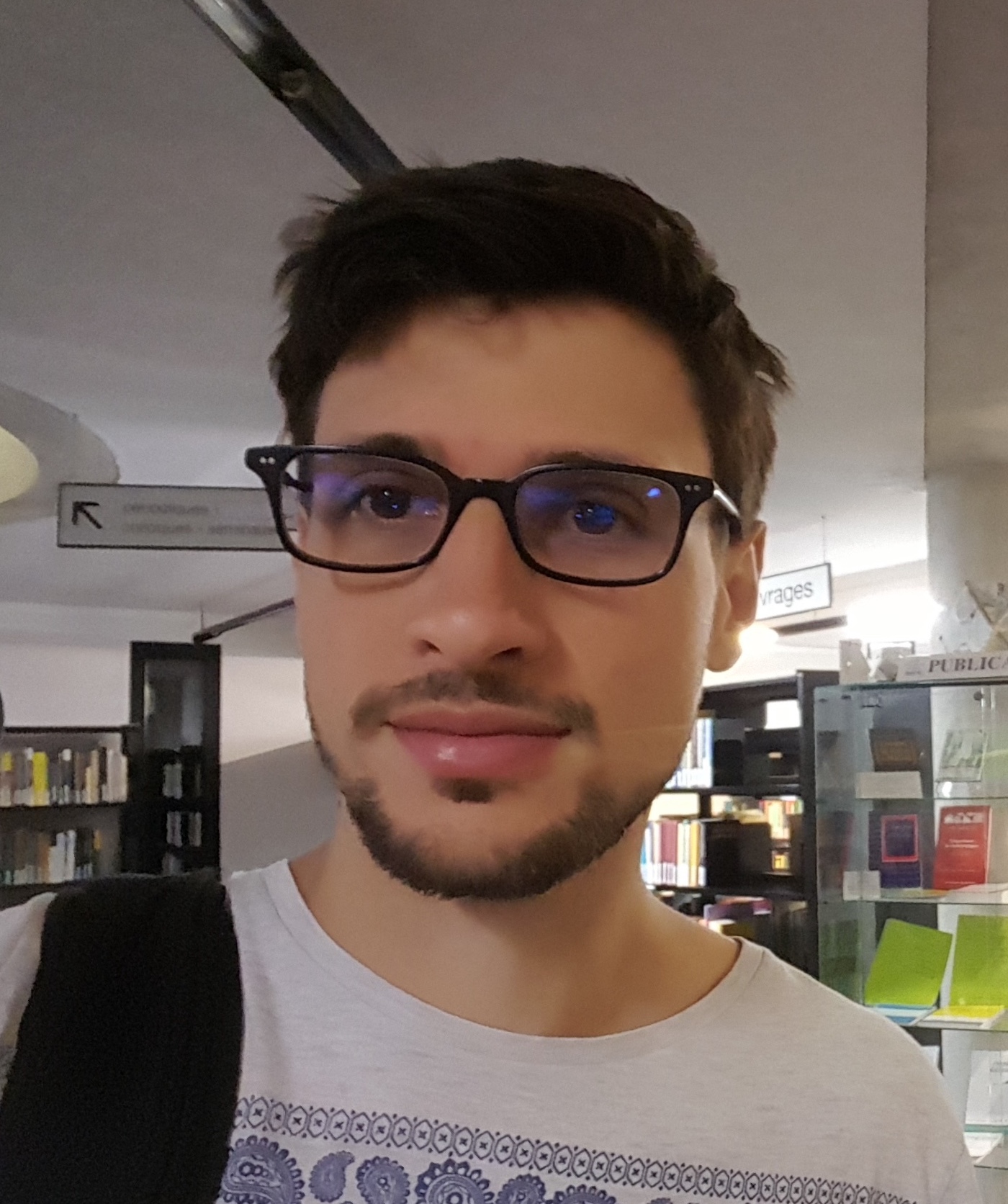
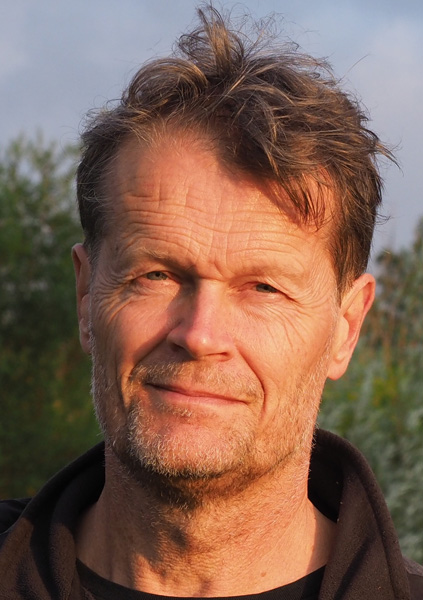
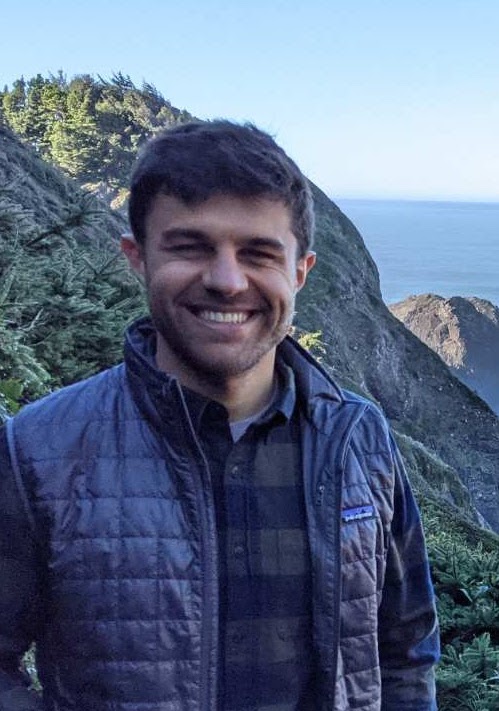
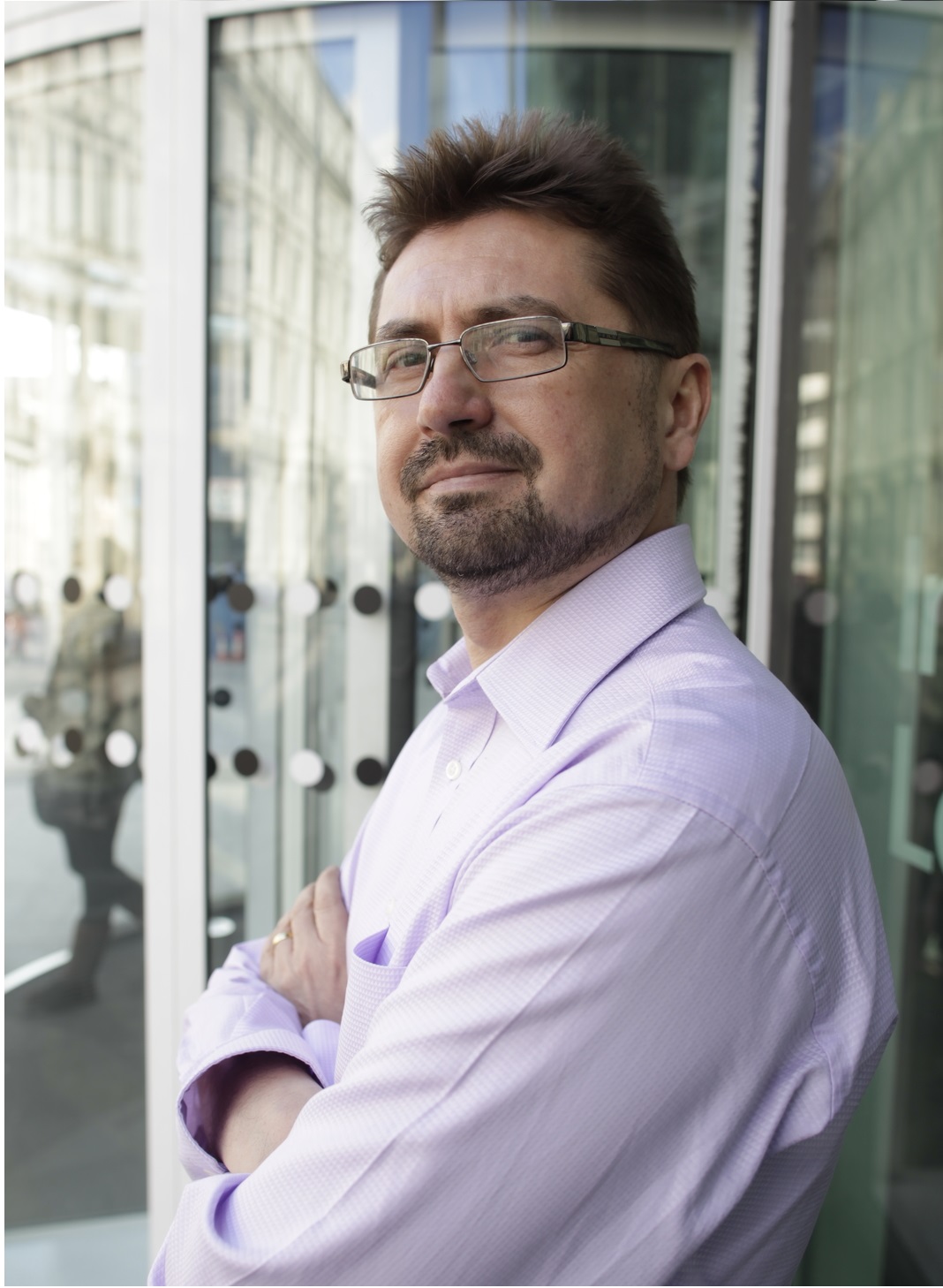
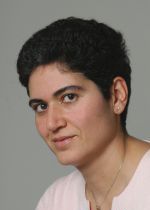
Julien Poisat is a Lecturer (equivalent to Assistant Professor) at CEREMADE, Paris-Dauphine University, where he has been affiliated since 2014. Previously, he was a postdoctoral researcher at Leiden University (2012-2014) and completed his Ph.D. at Lyon 1 University (2008-2012). His research focuses on probability theory and statistical mechanics, with specific interests in disordered systems, polymers, random walks, and large deviations. He investigates phenomena such as localization, pinning, and phase transitions in various models including copolymers, charged polymers, and random environments. His recent publications primarily explore rigorous analyses of stochastic systems, with recurring themes including large deviations for random walks, critical behavior of polymer models, and asymptotic properties of disordered systems. Research often involves mathematical techniques from renewal theory, potential theory, and weak convergence methods. He leads the ANR LOCAL grant (2022-2027) focused on localization phenomena in polymers and random walks. Currently advises two doctoral students: Nicolas Bouchot (2021-2024) and Elric Angot (2022-2025). Active in academic community, recently co-organized the 2023 Workshop on Random Walks, Localization and Reinforcement in Paris.
Stéphane BORDAS is a Full Professor in Computational Mechanics at the University of Luxembourg's Faculty of Science, Technology and Medicine (FSTM), leading the Computational Mechanics (Legato) research group. His work focuses on free boundary problems, method development for complex geometries, and applications in fracture mechanics, biomechanics, and computational engineering. He previously held roles at Cardiff University and the Swiss Federal Institute of Technology in Lausanne (EPFL). His research integrates computational methods like XFEM, isogeometric analysis, and meshfree techniques to address challenges in engineering and medicine. Education: Ph.D. in Theoretical and Applied Mechanics, Northwestern University (2003) M.Sc. in Civil Engineering, École Spéciale des Travaux Publics and Northwestern University (1999) Research Interests: Computational Mechanics, Biomechanics, Finite Element Methods, Fracture Mechanics, High-Performance Computing, Isogeometric Analysis. Grants & Projects: ERC Starting Grant (RealTCut) for surgical simulation and material cutting FP7 ITN INSIST for meshless methods Labs/Teams: Computational Mechanics (Legato) Group at the University of Luxembourg. His work bridges academia and industry, with applications in aerospace, biomedical engineering, and materials science. He is active in open-source software development, including codes for XFEM, isogeometric analysis, and meshfree methods.
Alper Tolga Çalık serves as an Assistant Professor in the Department of Mechanical Engineering at Istanbul Technical University (ITU), Turkey. His research centers on advanced combustion systems for internal combustion engines, with particular expertise in diesel and Wankel engine technologies, emission control strategies, and computational fluid dynamics modeling. His primary research interests include combustion regime analysis in compression-ignited engines, exhaust gas recirculation optimization, turbulent jet ignition systems for rotary engines, and machine learning applications for predicting oil dilution and emissions. Recent work demonstrates strong focus on alternative ignition methods for Wankel engines and numerical investigations of flow fields in rotary combustion chambers. Çalık's publication record shows consistent output since 2005, with notable acceleration in high-impact journals (Fuel, SAE Technical Papers) from 2013-2024. His research demonstrates evolving trends from fundamental combustion analysis (2007) toward practical applications in emission reduction (2013-2019) and cutting-edge ignition systems (2021-2024), with increasing integration of computational methods. He actively supervises graduate students (3 supervised works documented) and leads research projects including the 2023 ITU ZES Solar Car Team battery pack design and 2019 autonomous driving integration for solar electric vehicles. His work with the ARIBA solar vehicle team demonstrates commitment to applied renewable energy transportation solutions.
Elham Kowsari is a Postdoctoral Researcher specializing in Automation Technology and Mechanical Engineering. Her research focuses on advanced control systems, particularly in forestry machinery automation and sway motion reduction in cranes. She explores nonlinear control strategies for DC microgrids and develops fault detection algorithms for electrical systems, including induction motors and continuous stirred-tank reactors. Her work integrates techniques like Kalman filtering, Gaussian processes, and model predictive control to address real-world engineering challenges. Key research areas include: Motion control and vibration suppression in forestry cranes Stabilization of DC microgrids with complex loads Fault diagnosis in electrical and mechanical systems Elham has collaborated internationally on sensor calibration (Star Tracker-Fiber Optic Gyroscope integration) and nonlinear system analysis. Her 12 peer-reviewed articles since 2014 demonstrate expertise in both theoretical control methodologies and practical industrial applications.
Aad van der Vaart is a distinguished Professor of Statistics at Delft University of Technology (since 2021). Previously, he held Full Professorships at Leiden University (2012–2021) and Vrije Universiteit Amsterdam (1996–2012). His research focuses on foundational statistical theory and applications, including high-dimensional statistics, Bayesian methods, inverse problems, and genomics. He has made seminal contributions to nonparametric Bayesian inference, empirical processes, and semiparametric theory. Van der Vaart has authored influential textbooks such as Asymptotic Statistics (1998) and Fundamentals of Nonparametric Bayesian Inference (2017, with S. Ghosal). His work bridges theoretical rigor and practical applications, with over 34,830 citations (Google Scholar, 2023) and an H-index of 60. Key honors include the Spinoza Prize (2015, Netherlands’ highest science award), DeGroot Prize (2020), and membership in the Royal Netherlands Academy of Sciences. His academic journey includes roles such as Miller Fellow at UC Berkeley (2000), visiting positions at leading universities, and leadership in statistical societies. His research group actively explores modern challenges in statistical theory and methodology, including causal inference, adaptive estimation, and large-scale data analysis. Notable grants include an ERC Advanced Grant (2012) for Bayesian inverse problems. Collaborations span academia and industry, emphasizing interdisciplinary impact. While specific lab affiliations are not explicitly stated, his work is rooted in foundational mathematical statistics with broad applicability.
Boris Landa is an Assistant Professor in the Department of Electrical & Computer Engineering at Yale University. His research focuses on statistical signal processing and geometric data analysis, developing theoretical and computational tools for analyzing large, complex datasets. He holds a Ph.D. and M.S. from Tel Aviv University, Israel, and a B.S. from the Technion - Israel Institute of Technology. His work bridges computational methods with applications in molecular biology, cryo-electron microscopy, and high-dimensional data analysis. Notable contributions include robust inference of manifold geometry, doubly stochastic scaling techniques, and multi-reference factor analysis for alignment problems. Recent research explores optimal transport metrics for single-cell data and noise stabilization in signal recovery. Landa's publications span prestigious journals such as SIAM Journal on Mathematics of Data Science and Information and Inference. His methodologies address challenges in manifold learning, graph Laplacian normalization, and biological dataset integration. Active areas include developing adaptive algorithms for low-rank signal detection and robust statistical techniques for heterogeneous data. His educational background includes advanced studies in applied mathematics and engineering, with a strong emphasis on interdisciplinary applications. Ongoing projects involve geometric approaches to omics data analysis and scalable solutions for large scientific imaging datasets.
Frank Röttger is an Assistant Professor at Eindhoven University of Technology, specializing in Mathematical Statistics. His primary research focuses on graphical models, multivariate extremes, and statistical inference in high-dimensional settings. Research Interests : Extreme value theory, probabilistic graphical models, causal inference in extremes, and data-driven risk modeling. Awards : NWO Prize (Scientific) - 2024 Organized Activities : Eurandom Workshop on Graph Laplacians, Multivariate Extremes, and Algebraic Statistics (2024) Causality in Extremes Workshop (2024) Courses Taught : Dependence Modeling Foundations of Statistics Mathematical Statistics Contact : Email: f.rottger@tue.nl
Yang Cao is a Professor at the University of Science and Technology of China , Department of Automation, Hefei, China. He holds a PhD from Northeastern University (2004, Shenyang, China) and has active affiliations with institutions like Virginia Tech and Huazhong University of Science and Technology. Research Focus: Spatiotemporal modeling, event-based vision, 3D human-object interaction, and industrial defect detection. Publications: 15 recent articles highlight his work in diffusion models, transformers, and state-space networks for tasks like traffic emission imputation, eye tracking, and PCB defect detection. Collaborative Work: Co-authored with Zheng-Jun Zha, Wei Zhai, Yu Kang, and others in journals like IEEE Transactions on Neural Networks and CVPR Workshops. Scientific Contributions: His research bridges computer vision, machine learning, and industrial applications, emphasizing real-world challenges such as low-light enhancement and sensor fusion.
Christos Thrampoulidis is an Assistant Professor in the Department of Electrical and Computer Engineering at the University of British Columbia (UBC), part of the Faculty of Applied Science. Previously, he held the same position at the University of California, Santa Barbara (2018–2020) and was a Postdoctoral Researcher at MIT (2016–2018). He earned his Ph.D. and M.Sc. in Electrical Engineering from Caltech (2016 and 2012) and a Diploma in ECE from the University of Patras, Greece (2011). His research focuses on machine learning theory , optimization , high-dimensional statistics , and statistical signal processing . Specific interests include the theoretical foundations of deep learning, neural collapse phenomena, and the analysis of overparameterized models. He has contributed to understanding imbalanced data challenges, model compression, and safe optimization techniques. Key academic achievements include the Qualcomm Innovation Fellowship (2014) and the A. Mentzeolopoulos Fellowship . He teaches graduate courses on Optimization and Signals & Systems at UBC. His research group (MILD Group) actively explores topics like language model geometry, federated learning, and algorithmic reasoning in transformers. Notable publications include work on neural-collapse geometry, imbalance-aware learning, and the theoretical underpinnings of transformers. He advises multiple Ph.D., M.Sc., and undergraduate students, fostering a collaborative environment centered on equity, diversity, and inclusion.
Dr. Shan Du is an Assistant Professor in the Department of Computer Science, Math, Physics & Statistics at the University of British Columbia Okanagan Campus. She holds a PhD in Electrical and Computer Engineering from UBC (2009) and has over 15 years of experience in image/video processing, computer vision, and machine learning. Previously, she worked as an Assistant Professor at Lakehead University and as a Research Scientist at IntelliView Technologies. Her research focuses on computer vision, deep learning, and biometrics, with applications in video surveillance systems and environmental monitoring. She has secured grants including NSERC Discovery, CFI JELF, and Alberta Innovates. Dr. Du is a Senior Member of IEEE and serves as an Associate Editor for IEEE Transactions on Circuits and Systems for Video Technology and the IEEE Canadian Journal of Electrical and Computer Engineering. Teaching interests include Image Processing, Computer Graphics, and Software Engineering. She advises graduate students and has published extensively on topics like gas leak detection, 3D face modeling, and medical image fusion.
Athanasios G. Kanatas is a Professor at the Department of Digital Systems, University of Piraeus, Greece, and Director of the Telecommunication Systems Laboratory. He holds a Ph.D. in Mobile Satellite Communications from NTUA (1997), and has held roles such as Dean of the School of Information & Communication Technologies (2013–2017) and IEEE Communications Society Chairperson (1999). Education: Diploma in Electrical Engineering (NTUA, 1991), M.Sc. in Satellite Communication Engineering (University of Surrey, 1992), Ph.D. in Mobile Satellite Communications (NTUA, 1997). Research focuses on V2X communications, UAV-assisted networks, antenna design, stochastic geometry, and cybersecurity. He has published over 200 papers and authored 6 books, and leads projects in 5G/6G systems and integrated sensing-communication networks. His work includes pioneering contributions to aerial relay placement, fluid antenna systems, and hybrid beamforming techniques. He serves as Editor of IEEE Transactions on Wireless Communications, Associate Editor of IEEE Transactions on Antennas and Propagation, and is a Senior IEEE Member since 2002. Recent activities include extending the deadline for M.Sc. program applications and promoting internships for students. Labs/Teams: Directs the Telecommunication Systems Laboratory, collaborating on projects like ARGOS RFI monitoring and UAV corridor-assisted IoT networks. His research emphasizes practical implementation through prototyping and experimentation, with applications in aerospace, IoT, and intelligent transport systems.
Professor Dan Crisan is a Professor of Mathematics at Imperial College London and Director of the EPSRC Centre for Doctoral Training in the Mathematics of Planet Earth. He holds a PhD in Mathematics from the University of Edinburgh and an MSci in Mathematics from the University of Bucharest. His research focuses on Stochastic Analysis, Stochastic PDEs, Fluid Dynamics, Nonlinear Filtering, and Data Assimilation. He leads the Stochastic Transport in Upper Ocean Dynamics (STUOD) project, supported by an ERC Synergy Grant, exploring stochastic models in geophysical fluid dynamics. His academic roles include directing the MPE CDT and teaching advanced courses like Stochastic Calculus with Applications to Non-Linear Filtering. He collaborates extensively with researchers globally on topics including stochastic fluid dynamics, particle methods, and Bayesian inference. His work bridges theoretical advancements with applications in climate modeling and environmental systems. Education: PhD (University of Edinburgh, 1996), MSci (University of Bucharest, 1992). Professional roles include Director of MPE CDT (2013–present), Professor at Imperial College (2011–present), and prior academic appointments at the University of Cambridge and Imperial College. His research emphasizes stochastic processes in fluid dynamics, with projects funded by EPSRC and EU grants. Current PhD supervision opportunities are available in areas like stochastic fluid dynamics and data assimilation. Key achievements include foundational contributions to particle filtering, numerical methods for stochastic PDEs, and stochastic transport models. His work on the Camassa-Holm equation and rotating shallow water models demonstrates expertise in nonlinear wave dynamics and stochastic parametrization. He actively engages in international collaborations and serves on editorial boards for leading journals in stochastic analysis.
Dr. Aretha Teckentrup is a Lecturer in the Mathematics of Data Science at the University of Edinburgh's School of Mathematics. Her research focuses on integrating mathematical models with observational data, particularly in areas like uncertainty quantification, Bayesian inverse problems, and computational methods for partial differential equations (PDEs). She holds a PhD in Mathematics from the University of Bath and has held postdoctoral positions internationally, including in Florida. Her work emphasizes interdisciplinary approaches, blending statistics, numerical analysis, and applied mathematics. Notably, she has contributed to advancing Gaussian processes, multilevel Monte Carlo techniques, and sparse grid methods for high-dimensional problems. Her academic journey reflects a strong commitment to bridging theoretical foundations with practical applications. She has published extensively on topics such as probabilistic numerical methods, error estimation in Bayesian inference, and adaptive sampling strategies. Dr. Teckentrup is an active member of the SIAM community, having received the prestigious SIAG/UQ Early Career Prize in recognition of her contributions to uncertainty quantification. Her research continues to explore innovative solutions for data-driven modeling challenges in science and engineering. Dr. Teckentrup’s work often addresses the growing importance of combining data with physical models, exemplified by her development of numerical methods for weather prediction and stochastic dispersion modeling. She advocates for collaboration across disciplines and emphasizes the transformative potential of integrating computational tools with real-world data. Her career trajectory underscores the dynamic and collaborative nature of modern academic research in applied mathematics and data science.
Dr. Avideh Zakhor is a Professor and Qualcomm Chair at the Department of Electrical Engineering and Computer Sciences (EECS) at the University of California, Berkeley. She is affiliated with several research centers including the Berkeley Artificial Intelligence Research Lab (BAIR), Berkeley Deep Drive Initiative, Video and Image Processing Lab, and Berkeley Center for New Media (BCNM). Her career spans over three decades with significant contributions to signal processing, 3D computer vision, robotics, and deep learning. 1983 B.Sc. in Electrical Engineering from Caltech 1985 S.M. in Electrical Engineering and Computer Science from MIT 1987 Ph.D. in Electrical Engineering and Computer Science from MIT Dr. Zakhor's research interests focus on 3D computer vision, autonomous systems and robotics, deep learning, and signal/image processing. Her work spans diverse areas including drone navigation, medical imaging analysis, indoor positioning, and building energy audits. She has led projects on drone-based 3D building reconstruction, legged robot locomotion, and melanoma detection using AI. The 15 most recent publications highlight her work in several key areas: person search pre-training techniques, drone-based indoor navigation and 3D modeling, medical image segmentation for melanoma detection, hexapod robot locomotion, and proximity detection for public health. These publications demonstrate her expertise at the intersection of computer vision, robotics, and AI applications. Dr. Zakhor has received numerous prestigious awards throughout her career: 2022 Winner of Phases 1 and 2, Department of Energy E-Robot Competition 2018 Electronic Imaging Scientist of the Year by SPIE 2004 Okawa Research Grant 2002 IEEE Fellow 1992 Office of Naval Research Young Investigator Award 1990 Presidential Young Investigator (PYI) Award from President George H.W. Bush 1990 Junior Faculty Development Award 1984-1988 Hertz Fellowship 1983 Henry Ford Engineering Award 1982-1983 General Motors Scholarship Dr. Zakhor has advised numerous research projects and has been involved in significant research grants. She has founded successful companies including Indoor Reality, which develops technologies for rapid 3D mapping and visualization of buildings and assets. She leads research initiatives in various cutting-edge technologies: Unmanned Aerial Vehicles (UAV) with focus on autonomy and obstacle avoidance, perception, path planning and control Deep learning applications in legged locomotion, unsupervised learning for multimodal sensors, misinformation detection, and learning-based image compression Wi-Fi proximity detection methods for contact tracing of diseases Temporal graphical neural networks for disease prediction Detection of small objects in ultra-high resolution images 3D reconstruction and recognition
Bruno Ebner is a researcher at the Institute of Stochastics within the Department of Mathematics at Karlsruhe Institute of Technology (KIT). He maintains an active research program in theoretical and applied statistics, with particular expertise in goodness-of-fit testing and distribution characterizations. His office is located in Kollegiengebäude Mathematik (20.30) room 2.018, and he holds regular office hours on Tuesdays from 2 p.m. to 3 p.m. Dr. Ebner's primary research interests focus on asymptotic statistics , goodness-of-fit problems , stochastic processes , and distribution characterizations . His work prominently features Stein's method as a theoretical foundation for developing new statistical tests. He has made significant contributions to directional data analysis, particularly for hyperspherical data, and has developed novel approaches for testing uniformity on spheres. Analysis of his recent publications reveals a strong trend toward developing unified theoretical frameworks for goodness-of-fit testing across various distribution families. His work increasingly integrates computational methods with theoretical statistics, particularly through collaborations that bridge Stein's method with modern computational techniques. The development of R packages like gofIG, mnt, and gofgamma demonstrates his commitment to making theoretical advances accessible to practitioners. Dr. Ebner has developed several R packages that implement his theoretical work, including gofIG for Inverse Gaussian distribution testing, mnt for multivariate normality tests, and gofgamma for Gamma distribution testing. These packages represent significant contributions to statistical methodology with practical applications across various scientific domains. His teaching portfolio demonstrates expertise across multiple domains, including introductory stochastics for teaching candidates, generalized regression models, statistics for biology students, and specialized courses on Stein's method. He has also contributed to educational initiatives for economics students at KIT, reflecting his commitment to statistical education across disciplines.