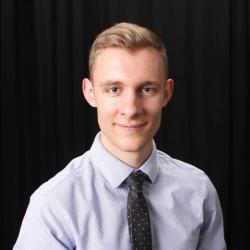
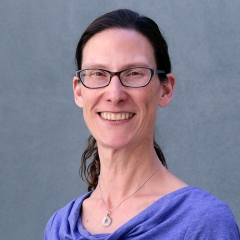
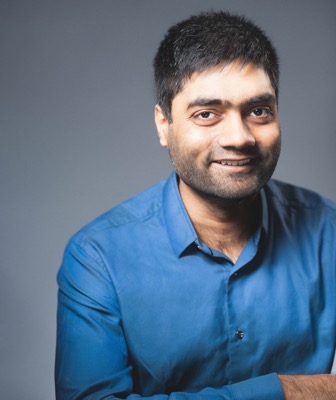
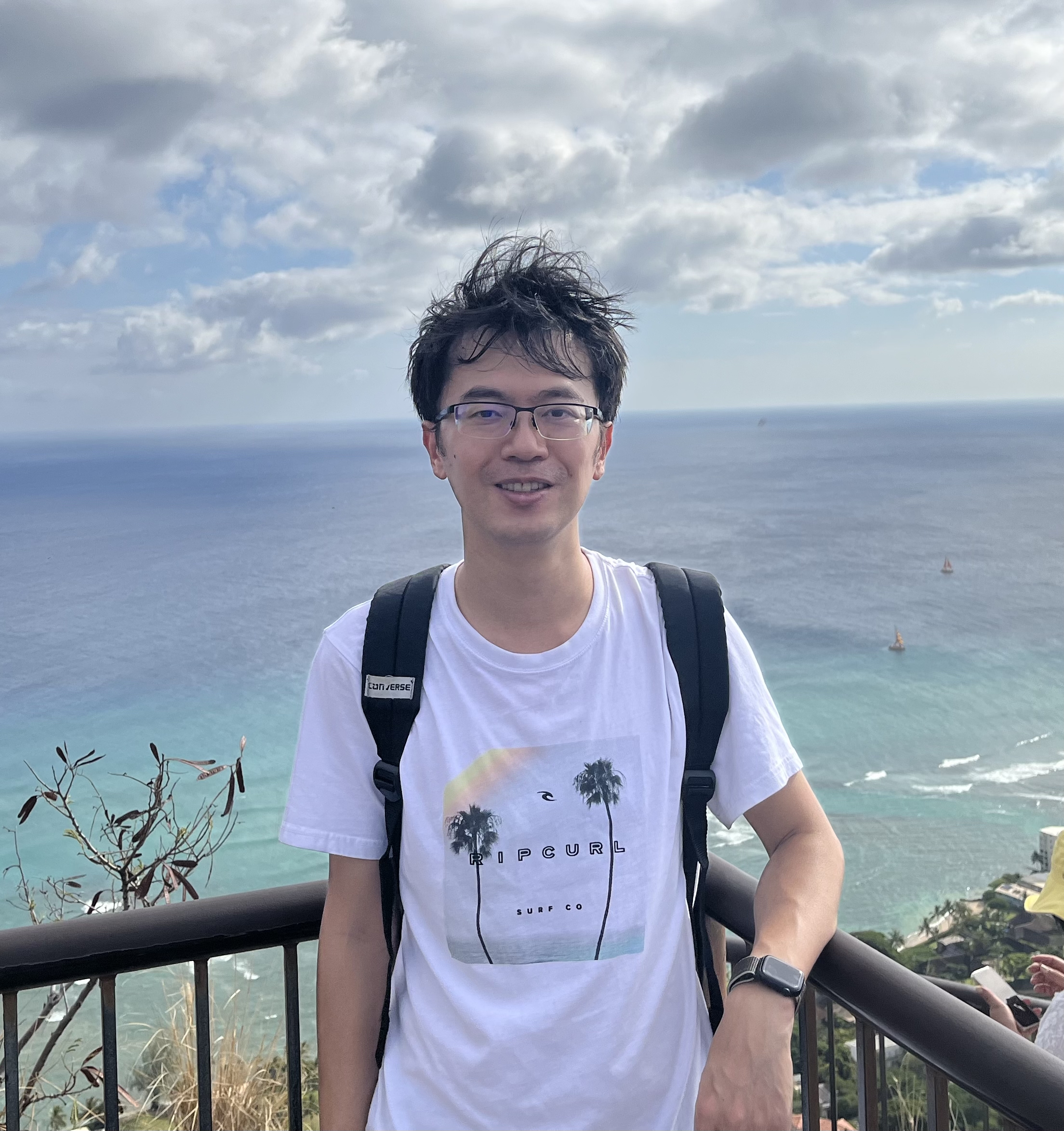
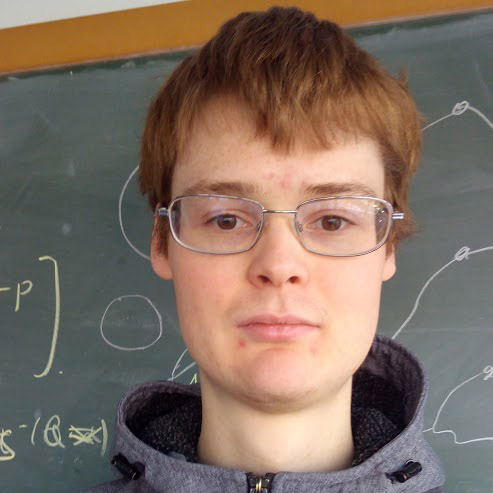
Halil Ali is a Lecturer in Data Science (Education Focused) at the School of Computing Technologies, RMIT University. His research spans privacy-preserving machine learning, blockchain technologies, and cybersecurity. Key research areas include federated learning , quantum-enhanced AI , secure biometrics , edge unlearning , and privacy in healthcare data . His recent publications focus on resilient AI systems , blockchain applications , and ethical data handling in emerging technologies. His work demonstrates expertise in integrating machine learning with blockchain security across domains like IoT, smart grids, and metaverse healthcare. He contributes to practical frameworks for zero-trust architectures , lightweight consensus protocols , and quantum-classical hybrid models .
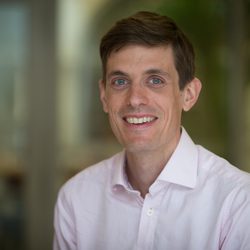
Trevor Campbell is an Associate Professor in the Department of Statistics at the University of British Columbia (UBC), Vancouver. He holds a Ph.D. in Machine Learning and Statistics from MIT and a B.A.Sc. in Aerospace Engineering from the University of Toronto. His research focuses on automated, scalable Bayesian inference algorithms, Bayesian nonparametrics, and streaming data analysis. Campbell is a core contributor to probabilistic programming tools like Pigeons.jl and has developed influential methods for coreset-based Bayesian inference. Education : Ph.D. in Machine Learning and Statistics (2016), MIT M.S. in Aeronautics and Astronautics (2013), MIT B.A.Sc. in Aerospace Engineering (2011), University of Toronto Research Interests : His work emphasizes scalable Bayesian computation, including variational inference, MCMC optimization, and coresets. He develops algorithms that balance statistical accuracy with computational efficiency, particularly for large-scale datasets. His recent work explores adaptive samplers (e.g., AutoStep, autoMALA) and theoretical guarantees for coreset methods. Applications span astrophysics, materials science, and network analysis. Awards & Grants : NSERC Discovery Grant (2025) Blackwell-Rosenbluth Award (2021) PIMS Early Career Award (2023) Google Perception Academic Funding (2020) Advising & Labs : He supervises a team of PhD and M.Sc. students at UBC, focusing on Bayesian methodology and computational tools. His lab collaborates with institutions like SFU and MIT on projects involving distributed sampling and probabilistic modeling. He co-organizes workshops on Bayesian computation and serves on editorial boards for Bayesian Analysis and TMLR.
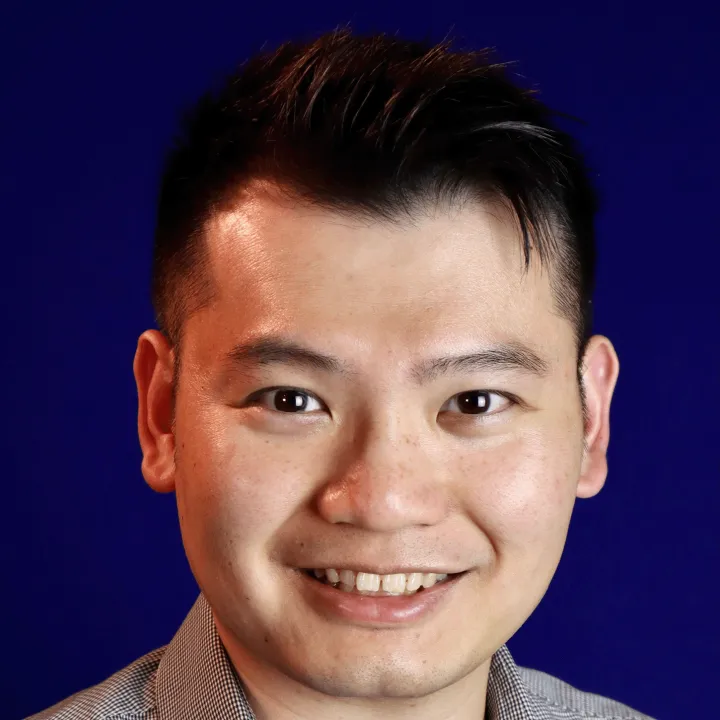
Andrea Tagliasacchi is an Associate Professor in the School of Computing Science at Simon Fraser University (SFU), where he holds the Visual Computing Research Chair. He is also a part-time (20%) Staff Research Scientist at Google DeepMind in Toronto and holds an associate professor (status only) appointment in the Department of Computer Science at the University of Toronto. Education: PhD in Computing Science – Simon Fraser University (NSERC Alexander Graham Bell Fellow) Postdoctoral Research – École Polytechnique Fédérale de Lausanne (EPFL) MSc in Computer Science – Politecnico di Milano (Gold Medalist) His research lies at the intersection of computer vision, computer graphics, and machine learning, with a focus on 3D visual perception. Key areas include neural radiance fields (NeRF), 3D Gaussian splatting, inverse rendering, and geometric deep learning, with applications in robotics, augmented reality, and autonomous systems. His work emphasizes robust and efficient scene understanding and reconstruction from visual data. His recent publications, appearing in top venues like CVPR, SIGGRAPH, NeurIPS, and ECCV, demonstrate a strong emphasis on neural fields, 3D reconstruction, and generative modeling. Trends include improving rendering efficiency, enhancing robustness to noise and distractors, and enabling controllable and 3D-aware generation. His group has made significant contributions to Gaussian splatting, NeRF optimization, and diffusion-based 3D/4D synthesis. Scientific Awards: 2024 CVPR Best Paper Award (Honorable Mention) 2020 CVPR Best Student Paper Award 2015 SGP Best Paper Award NSERC Alexander Graham Bell Canada Graduate Scholarship MITACS Best Paper Award (SIGGRAPH Asia 2009) NSF Best Poster Award (SGP 2012) He has advised numerous PhD and MSc students, many of whom are now researchers at leading institutions and companies. His research has been supported through collaborations with Google, Intel, and academic partners. He serves the community as a Senior Area Chair for CVPR 2025, Associate Editor for IEEE TPAMI (2024–2026), Guest Editor for IEEE TPAMI on 3D GenAI, and Program Chair for 3DV 2024. He leads a vibrant research lab at SFU focused on pushing the boundaries of 3D scene understanding with machine learning.
Wendy Ju is an Associate Professor of Information Science at Cornell Tech, with appointments in the Cornell Ann S. Bowers College of Computing and Information Science, the Jacobs Technion-Cornell Institute, and the Technion-Israel Institute of Technology. Previously, she served as executive director of interaction design research at Stanford University's Center for Design Research and as an associate professor of interaction design at the California College of the Arts. Her work bridges human-computer interaction, design, and robotics with a focus on how interactive devices can communicate with people without interrupting them. PhD in Mechanical Engineering from Stanford University Master's degree in Media Arts and Sciences from MIT Professor Ju's research centers on implicit interactions, human-robot collaboration, and automotive interfaces. She investigates how people interact with automated systems in natural contexts, develops methods for early-stage prototyping of autonomous technologies, and examines the social implications of robotics in urban environments. Her work spans from theoretical frameworks to practical applications, with particular emphasis on designing systems that integrate seamlessly into human activities without demanding constant attention. Her recent publications reveal a strong trajectory toward understanding human-robot interaction in public urban spaces, with increasing focus on robot navigation in city streets, the social implications of autonomous vehicles, and the integration of generative AI in design processes. Her work consistently bridges theoretical HCI frameworks with practical applications in transportation, urban design, and everyday robotics. Inducted into the ACM SIGCHI Academy (2025) Multiple Honorable Mention Awards at ACM CHI and DIS conferences Best Paper Award at Multimodal Technologies and Interaction (2023) Best Student Paper Award at IEEE Intelligent Vehicles Symposium (2017) Best Demonstration Award at HRI (2017) Professor Ju actively mentors numerous PhD and master's students, many of whom have become leading researchers in HCI and robotics. Her research has been supported by significant grants from NSF and industry partners, enabling extensive field studies of human-robot interaction in real-world settings. She has pioneered methodologies for studying autonomous vehicle interactions through both simulated and naturalistic driving environments. Her work with the Jacobs Technion-Cornell Institute supports interdisciplinary research at the intersection of computing, design, and urban technology. She has established research partnerships with transportation authorities, automotive companies, and urban planning organizations to study how emerging technologies can enhance urban mobility while respecting human needs and social contexts.
Michael A Osborne is Professor of Machine Learning at the University of Oxford and leads the Bayesian Exploration Lab . He serves as Director of the EPSRC Centre for Doctoral Training in Autonomous Intelligent Machines and Systems and co-directs the Oxford Martin AI Governance Initiative. His research focuses on Bayesian optimization, Gaussian processes, and probabilistic numerics with applications in quantum devices, battery modeling, and AI governance. Key Positions: Professor of Machine Learning, University of Oxford Official Fellow, Exeter College Co-founder of Mind Foundry Lead Researcher, Oxford Martin Programme on Technology and Employment Research Themes: Probabilistic modeling for quantum systems Uncertainty quantification in energy storage AI safety and societal impact analysis Automated experimental design Quantum device calibration Probabilistic numerical methods Technical Contributions: Bridging reality gap in quantum devices Efficient Bayesian quadrature techniques Personalized neurostimulation algorithms Automated measurement protocols Quantum-classical hybrid ML
Alex Wong is an Assistant Professor of Computer Science at Yale University, specializing in computer vision, robotics, and medical imaging. His research focuses on sensor fusion, unsupervised learning, 3D vision, robust perception under adverse conditions, and medical image analysis. He holds degrees from the University of California, Los Angeles (UCLA), including a B.S., M.S., and Ph.D. in Computer Science. Wong’s work bridges theoretical advances with practical applications, particularly in depth estimation, autonomous systems, and medical diagnostics. He has received prestigious awards such as the NeurIPS Outstanding Student Paper Award (2011) and the ICRA Best Paper Award in Robot Vision (2019). His research often addresses challenges in unstructured environments, emphasizing robustness and adaptability. Recent projects include developing novel frameworks for unsupervised depth completion, adversarial robustness in vision systems, and multimodal fusion techniques. His contributions span conferences like CVPR, ICCV, and ICRA, with a strong focus on advancing AI for real-world applications in healthcare and robotics. Education: B.S., Computer Science, UCLA M.S., Computer Science, UCLA Ph.D., Computer Science, UCLA Awards: NeurIPS Outstanding Student Paper Award (2011) ICRA Best Paper Award in Robot Vision (2019) His lab at Yale Engineering focuses on AI-driven solutions for perception challenges, collaborating across disciplines to advance medical imaging and autonomous systems. Current efforts explore generative models, continual learning, and vision-language integration for robust scene understanding.
Massachusetts Institute of TechnologyUnited States
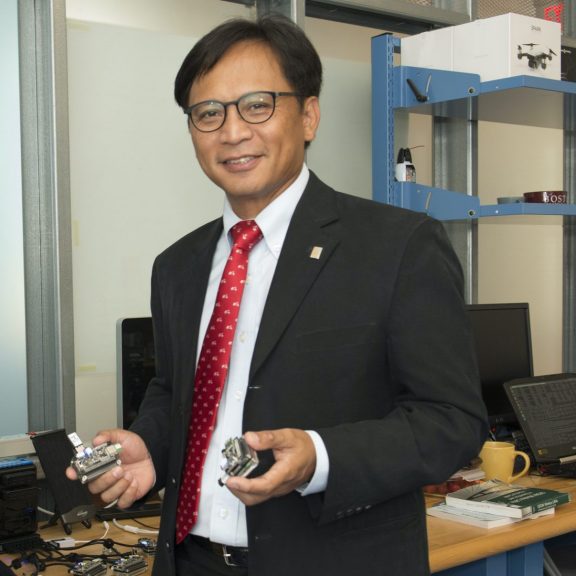
Moe Z. Win is the Robert R. Taylor Professor at the Massachusetts Institute of Technology (MIT), specializing in wireless communications, optical communications, and space communications systems. His research bridges theoretical and applied domains, including quantum sensing, network localization, and signal processing. B.S.E.E., Texas A&M (1987) M.S.E.E. & Ph.D., University of Southern California (1989, 1998) Recent work focuses on quantum-enhanced positioning, machine learning for localization, and next-generation (xG) non-terrestrial networks. He leads research at the Quantum neXus Laboratory (QX Lab), Wireless Information & Network Sciences Lab, and Laboratory for Information and Decision Systems. His career spans the Jet Propulsion Laboratory (1987-1995) and AT&T Research Laboratories (1998-2002). Key methodologies include soft information fusion, variational quantum sensing, and robust beam tracking for terahertz communications.
Florentina Bunea is a Professor in the Department of Statistics and Data Science at Cornell University’s Bowers College of Computing and Information Science, and an active member of the Graduate Fields of Statistics, Applied Mathematics, and Computer Science. She also serves on the Diversity and Inclusion Council of her college, championing workforce diversity in data-science disciplines. Education & Institutional Roles Professor, Department of Statistics and Data Science, Cornell University Member, Graduate Fields of Statistics, Applied Mathematics, Computer Science Member, Diversity and Inclusion Council, Bowers College of Computing and Information Science Research Interests Professor Bunea’s research lies at the intersection of statistical machine-learning theory and high-dimensional inference. She develops rigorous methodology supported by sharp theoretical guarantees to tackle core problems in modern data science. Recent themes include: Soft-max mixtures for understanding large-language-model/AI algorithms Optimal transport for high-dimensional mixture distributions Wasserstein-distance inference for sparse mixing measures in topic models Latent-space clustering and cluster-based inference in high dimensions Network modeling and hidden-structure inference Applications spanning genetics, systems immunology, neuroscience, sociology, and economics Research Funding & Awards Her work is supported by grants from the National Science Foundation (NSF-DMS). She is a Fellow of the Institute of Mathematical Statistics and a recipient of the IMS Medallion Award. Editorial & Service Contributions Associate Editor: Annals of Statistics, Bernoulli, JASA, JRSS-B, EJS, Annals of Applied Statistics Co-Editor: Chapman & Hall/CRC Statistics and Applied Probability Monograph Series Advising & Collaboration Professor Bunea has mentored numerous doctoral and post-doctoral researchers, including Xin Bing, Shuyu Liu, Seth Strimas-Mackey, and Yang Ning, among others. Collaborative projects extend across Cornell and external institutions, producing widely-used software packages and high-impact publications. Contact Office: 1184 Comstock Hall, Cornell University Email: fb238@cornell.edu Phone: (607) 255-8449
University of California , Santa Barbara (UCSB)United States
Katie Byl is an Associate Professor in the Departments of Electrical and Computer Engineering and Mechanical Engineering at the University of California, Santa Barbara (UCSB). Her research focuses on robot dynamics and control, particularly in locomotion and manipulation, with applications in rough terrain legged locomotion, supervised autonomy, and flapping-wing flight. She holds B.S., M.S., and Ph.D. degrees in Mechanical Engineering from MIT. Affiliations: Center for Control, Dynamical Systems and Computation (CCDC) Mechanical Engineering Department Research Interests: Byl’s work emphasizes modeling and control of underactuated systems, stochasticity in real-world environments, and the development of robust control principles for dynamic systems. Her applied projects include exoskeletons, autonomous robots like RoboSimian (part of the DARPA Robotics Challenge), and flapping-wing microrobotics. Scientific Awards: NSF Early Career Development Award Hellman Faculty Fellowship Alfred P. Sloan Foundation Fellowship in Neuroscience Regents’ Junior Faculty Fellowship Teaching & Advising: Byl teaches courses in control systems (e.g., ECE 147B, ECE 179D) and robotics. She advises students in UCSB’s Robotics Lab, emphasizing a mix of control theory, mechanical design, and algorithm development. Undergraduate researchers are also recruited annually for summer projects. Labs & Teams: Her Robotics Lab focuses on hardware implementation of control ideas, maintaining a high robot-to-student ratio. Collaborations include the Army’s Institute for Collaborative Biotechnologies and the DARPA Robotics Challenge with JPL.
Alexei A. Efros is the Howard Friesen Professor in the EECS Department at the University of California, Berkeley, and a core member of the Berkeley Artificial Intelligence Research (BAIR) Lab. Previously, he spent a decade at Carnegie Mellon University’s Robotics Institute. His research focuses on data-driven computer vision, self-supervised learning, computational photography, and generative models. He has pioneered advancements in visual representation learning, including seminal work on neural radiance fields and generative adversarial networks. Education Background: Efros holds a PhD in Computer Science from MIT, though specific details of his academic journey are not explicitly provided in the text. His career includes postdoctoral research at the University of Oxford with Andrew Zisserman and collaborative work with Team WILLOW at INRIA Paris. Research Interests: Efros explores how vast uncurated visual data can be leveraged for understanding and synthesizing the visual world. Key areas include self-supervised learning, generative models, and applications in robotics and art. His lab has contributed influential techniques such as Style Transfer, GAN-based image synthesis, and neural scene representation learning. Recent work emphasizes real-time adaptation (Test-Time Training), 3D perception models, and ethical AI implications of generative systems. Publications: Over 150+ publications span topics like Generative Adversarial Networks (GANs), unsupervised learning, and visual-linguistic models. Notable works include Unpaired Image-to-Image Translation (CUT/GAU), Style Transfer , and Swapping Autoencoder . His research has significant industry impact, with techniques adopted in Adobe’s software and generative AI applications. Grants & Collaborations: Efros has secured major funding from NSF, DARPA, and industry partnerships (e.g., Adobe, NVIDIA). He co-leads projects on scalable vision models, ethical AI, and real-world perception systems. Current collaborations include work with MIT, NYU, and INRIA Paris. Labs & Teams: Leads the BAIR Vision Group at Berkeley, fostering interdisciplinary research between computer vision, graphics, and robotics. The group emphasizes Slow Science principles, prioritizing deep exploration over rapid publication.
Aditya Guntuboyina is an Associate Professor in the Department of Statistics at the University of California, Berkeley. He has held this position since January 2012, following a postdoctoral stint at the Wharton Statistics Department and a PhD in Statistics from Yale University (2011) under Professor David Pollard. He earned his B.Stat and M.Stat degrees from the Indian Statistical Institute, Kolkata. PhD: Statistics, Yale University (2011) B.Stat/M.Stat: Indian Statistical Institute, Kolkata His research focuses on nonparametric and high-dimensional statistics , particularly shape-constrained estimation and Bayesian/Empirical Bayes methods . Key themes include convex regression, isotonic regression, mixture models, and total variation denoising. Recent publications analyze multivariate scale mixtures, convergence rates, and suboptimality of least squares in constrained settings. Aditya has supervised multiple PhD students in the Berkeley Statistics and EECS programs. He teaches courses such as Time Series Analysis (Stat 153/248), Data, Inference, and Decisions (Data 102), and advanced probability (Stat 201A). His work often intersects with machine learning, optimization, and information theory. Scientific contributions include theoretical advances in shape-restricted regression, adaptation in log-concave density estimation, and risk bounds for convex-constrained models. He has published in top journals like Annals of Statistics , Journal of the Royal Statistical Society: Series B , and IEEE Transactions on Information Theory .
Dai Zhongxiang is an Assistant Professor and Presidential Young Fellow at the School of Data Science, The Chinese University of Hong Kong, Shenzhen (CUHKSZ), where he joined in August 2024. Previously, he was a Postdoctoral Associate at MIT's Laboratory for Information and Decision Systems (January-June 2024) and a Postdoctoral Fellow at the National University of Singapore's Department of Computer Science (April 2021-December 2023). He completed his Ph.D. in Artificial Intelligence at NUS under the supervision of Bryan Kian Hsiang Low and Patrick Jaillet. Dr. Dai's research focuses on the intersection of theoretical and practical AI, with particular emphasis on large language models (LLMs) and optimization techniques. His work spans both theoretical foundations of multi-armed bandits and Bayesian optimization, as well as practical applications in LLM inference, including prompt optimization, in-context learning, personalization of LLMs, LLM-based agents, and scaling up test-time computation of LLMs. His research approach often bridges theoretical principles with real-world applications, particularly in AI4Science problems. His recent publications demonstrate a clear trend toward advancing LLM capabilities through optimization techniques, with increasing focus on practical deployment challenges. The research spans both theoretical contributions to optimization theory and applied work on enhancing LLM performance in real-world scenarios. His work on dueling bandits, neural bandits, and zeroth-order optimization has been consistently published in top-tier venues including NeurIPS, ICML, ICLR, and ACL. Presidential Young Fellow, CUHKSZ (2024) Dean's Graduate Research Excellence Award, NUS (2021) Research Achievement Award × 2, NUS (2019 & 2020) Singapore-MIT Alliance Graduate Fellowship (2017) Dr. Dai actively mentors multiple Ph.D. students and research assistants, with several of his students' papers accepted to top conferences. His research has received significant attention, with invitations to serve as Area Chair for NeurIPS 2025 and ICLR 2025, reflecting his growing influence in the machine learning community. His work bridges theoretical machine learning with practical applications in large-scale AI systems.
Ewain Gwynne is a Professor of Mathematics at the University of Chicago, affiliated with the Committee on Computational and Applied Mathematics (CCAM) and the Statistics Department. He previously held postdoctoral positions at the University of Cambridge and earned his Ph.D. from MIT in 2018 under Scott Sheffield. His research focuses on probability theory, particularly random geometric structures in statistical mechanics, including Schramm-Loewner evolution (SLE), Liouville quantum gravity (LQG), and random planar maps. Education: Ph.D. in Mathematics, MIT (2018); M.Sc., MIT (2015); B.Sc., Northwestern University (2013). Research Interests: Random geometric objects in statistical mechanics Liouville quantum gravity and its metric properties Random planar maps and their scaling limits SLE and its relationship with LQG Random walks on random planar maps Percolation and permutons His recent articles explore topics such as supercritical LQG, Gaussian curvature on random maps, and harmonic balls in LQG. He has advised multiple Ph.D. students and serves as an associate editor for Probability and Mathematical Physics . His work bridges probability theory, geometry, and mathematical physics, with applications to understanding critical phenomena in random systems.
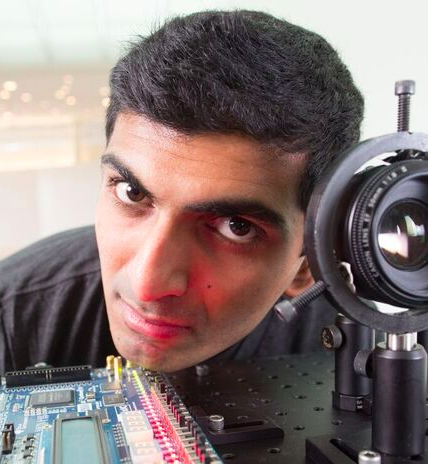
Matthew O'Toole is an Associate Professor at Carnegie Mellon University's School of Computer Science, holding joint appointments in the Robotics Institute and Computer Science Department. His research focuses on computational imaging, integrating optics, electronics, and computational processing to innovate visual information capture and display. Education: PhD (Computer Science, University of Toronto, 2016), MSc (2009), BSc (Honors Computer Science and Mathematics, University of British Columbia, 2007). Prior roles include Banting Postdoctoral Fellow at Stanford University and visiting scholar at MIT Media Lab's Camera Culture group. Research interests emphasize programmable imaging systems, transient imaging, non-line-of-sight sensing, and holographic displays. Key innovations include vibration sensing via dual-shutter optics and radar super-resolution for autonomous vehicles. Awards include runner-up best paper recognitions at ICCV 2007, CVPR 2014, and SIGGRAPH 2017 dissertation honors. Advisees include Dorian Chan and Arjun Teh. Grants supported by Canadian Banting Fellowships. Active in workshop organization (CVPR Computational Cameras 2016-2017) and course development on computational imaging at SIGGRAPH 2014. Labs/Teams: Leads research in computational imaging and robotics at CMU, collaborating with industry partners like NVIDIA and MDA. Current projects explore LiDAR-radar fusion, holographic projection systems, and dynamic scene reconstruction.
University of California, Los AngelesUnited States
Achuta Kadambi, Ph.D., is an Associate Professor at UCLA in Electrical Engineering and Computer Science, leading an interdisciplinary research group focused on AI, computational imaging, and bias mitigation in medical technologies. He recruits PhD students from EE, CS, and Bioengineering departments and has commercialized research through two California-based companies. His research investigates the intersection of physics and artificial intelligence, with a focus on unbiased low-level vision systems. Current projects explore how light transport interacts with human skin variations to identify and correct imaging biases in facial recognition and medical devices. His work has produced over 70 patents, with 30+ issued, and a textbook Computational Imaging (MIT Press, 2022). NSF CAREER Award (2021) for light transport bias research DARPA Young Faculty Award (2021) for AI and medical imaging innovations ARO Young Investigator Program (2021) for computational sensing IEEE-HKN Under 35 Award (2022) for inclusive EECS inventions Forbes 30 Under 30 recognition His recent publications focus on polarization imaging, 3D Gaussian splatting, synthetic data generation for healthcare, and bias mitigation in machine learning. Collaborations with UCLA medical school faculty, including Dr. Laleh Jalilian, aim to deploy these innovations in clinical settings. Current teaching includes ECE 149: Foundations of Computer Vision (Fall 2024, Spring 2025) and ECE 102: Signals and Systems (Winter 2024).