Dr. Lluis Batet Miracle is a Professor at the Universitat Politècnica de Catalunya (UPC) with the Department of Physics . He leads the Advanced Nuclear Technologies Research Group (ANT) and has contributed extensively to nuclear fusion technology, thermal hydraulics, and liquid metal systems. His work spans reactor safety analysis, tritium processing, and magnetohydrodynamic modeling. Expertise : Nuclear Engineering, Plasma Physics, Computational Fluid Dynamics, Fusion Reactor Design, Tritium Management Notable Projects : CONSOLIDER TECNO-FUS (2009-2013), EURATOM collaborations, HCLL Breeding Blanket Systems for ITER Research Trends : Recent publications focus on helium solubility in liquid metals, bubble dynamics in fusion blankets, and MHD simulations under nuclear conditions. His work combines atomistic modeling, high-fidelity CFD, and experimental validation for tritium and hydrogen systems in fusion reactors. Collaborations : Regularly works with Luis Sedano, Eduardo Ríos, Jordi Martí, Francesc Reventos, and Elisabet Mas de les Valls Grants : Involved in Horizon Europe, EURATOM, and Spanish National Research programs
Dr. Thomas Gennett is a University Professor at the National Renewable Energy Laboratory (NREL) within the Chemistry and Nanoscience department. His career spans over two decades, focusing on advanced materials for energy applications, particularly hydrogen storage and carbon dioxide capture technologies. Research interests include hydrogen storage in nanoporous materials Development of covalent organic frameworks Investigations into borohydride chemistry Gas separation and storage systems Thermal stability of magnesium-based compounds Direct air CO2 capture materials His publications from 2016 to 2025 demonstrate expertise in metal-organic frameworks, covalent organic frameworks, and borohydride systems. While no formal awards are publicly documented, his work has been cited over 250 times. He holds multiple patents related to hydrogen storage and electrochemical devices.
Dr. Paul Cross is a Senior Lecturer in the Environment and Senior Tutor at the School of Environmental and Natural Sciences, Bangor University, UK. He is actively involved in research, teaching, and public engagement, with a strong focus on environmental science, pollinator conservation, and sustainable agriculture. His work bridges ecology, engineering, and socio-economic modeling, contributing significantly to understanding pollinator health and agricultural sustainability. His research interests include UAV-based tracking of insect pollinators, beekeeping as a tool for poverty alleviation, zoonotic diseases (particularly E. coli O157), bee morphometrics, and socio-economic methodologies for estimating disease and illegal behaviors. He employs advanced technologies such as radar, machine learning, and UAVs to study pollinator behavior and environmental impacts. His recent publications highlight a strong trend in integrating engineering and ecological sciences, particularly through the development of energy-harvesting bee tracking devices and radar-based monitoring systems. His work spans disciplines from entomology and soil science to public health and climate change, reflecting a highly interdisciplinary approach to environmental challenges. Senior Lecturer in the Environment, Bangor University Senior Tutor Course Director for MSc Conservation and Land Management Member of SENRGy Teaching and Ethics Committees Dr. Cross has supervised multiple PhD students on topics ranging from beekeeping in Tanzania to UAV-based bee tracking and neonicotinoid impacts. He has led or contributed to numerous research projects funded by the Welsh Government, RCUK, and the British Academy, focusing on pesticide hazards, greenhouse gas emissions, and food safety. He is actively involved in public outreach, with media appearances on BBC Countryfile and contributions to The Conversation. His work contributes to UN Sustainable Development Goals related to poverty reduction, climate action, and life on land.
Professor Chike F. Oduoza is a distinguished academic in Process and Manufacturing Engineering at the University of Wolverhampton, Faculty of Science and Engineering, Department of Chemical Engineering. He holds the rank of Professor and serves as the academic lead for chemical engineering, with extensive leadership in research, teaching, and professional service. His educational background includes a PhD in Instrumentation and Control from UMIST (University of Manchester), an MBA from the University of Exeter, and multiple postgraduate qualifications in management, teaching, and chemical engineering. He is a Chartered Engineer, Fellow of the Institution of Chemical Engineers, and Senior Fellow of the Higher Education Academy. His research interests span chemical and manufacturing engineering, with a focus on electroplating, corrosion protection, reactor design, sustainability, life cycle engineering, oil and gas processing, and risk management in industrial and construction sectors. He has developed innovative models for SMEs, particularly in risk assessment and lean-excellence business management. The recent publications reflect a strong trend in sustainable energy systems, risk and safety management, digital transformation in manufacturing and oil & gas, and advanced materials. His work integrates computational modelling, experimental validation, and practical application across industries. Chartered Engineer (CEng), 1996 Fellow, Institution of Chemical Engineers, 2006 Senior Fellow, Higher Education Academy, 2020 Winner, West Midlands Construction Excellence Award (Innovation, 2017) Professor Oduoza has supervised over 30 PhD students and secured significant research funding from EPSRC, EU (FP7, Horizon 2020), and industry. He is currently leading the FLAREMANAGER and PROCEDURE consortia, focusing on flare gas utilization and future process design. His editorial roles include guest editor for Robotics and Computer Integrated Manufacturing and International Journal of Advanced Manufacturing Technology . He has chaired major conferences such as FAIM 2015 and the Electrochemistry and Sustainability Conference (2010). He leads the RiMaCon project, a €1M EU FP7 initiative that developed a risk management software system for SMEs in construction, which won a regional innovation award. His professional memberships include the Engineering Professors Council, SCI Electrochemical and Energy Groups, and the UK Royal Academy of Engineering Ethics Committee.
Chris Hogan is a Professor and Head of the Department of Mechanical Engineering at the University of Minnesota, College of Science and Engineering. He leads the Advanced Technologies for Preservation of Biological Systems (ATP-BIO) research group and is actively involved in multiple high-impact research projects related to aerosol science, particle technology, and environmental health. He is accepting PhD students and maintains a robust research portfolio. Education: PhD, Washington University in St. Louis (2008) BS, Cornell University (2004) Postdoctoral Associate, Yale University (2008–2009) His research focuses on aerosol science , particle dynamics , and nanomaterial synthesis , with applications in bioaerosol detection , cryopreservation , and airborne virus mitigation . His work integrates experimental techniques with mathematical modeling to solve complex engineering challenges in health and sustainability. He has made significant contributions to ion mobility spectrometry, electrostatic precipitation, and sustainable carbon nanotube synthesis. His recent publications reflect a strong trend toward interdisciplinary research, particularly at the intersection of mechanical engineering, environmental science, and biomedical applications. Key themes include particle transport modeling, nanoparticle diagnostics, cryoprotectant delivery, and the development of eco-friendly bioproducts. His articles span high-impact journals and conferences in engineering, environmental health, and materials science. Scientific Awards: Japan Society for the Promotion of Science Short Term Faculty Fellow (2011) McKnight Land-Grant Professorship (2011) Sheldon K. Friedlander Award (2011) Smoluchowski Award (2013) Kenneth T. Whitby Award (2018) Dr. Hogan has secured substantial research funding from NSF, NIH, 3M, and industry partners. He serves as Principal Investigator (PI) or Co-Investigator (CoI) on numerous active grants, including projects on identifying infectious aerosols, biodegradable sunscreen development, and sustainable nanomaterial synthesis. He advises graduate students and collaborates widely across disciplines. His lab, ATP-BIO, focuses on advancing technologies for preserving biological systems through innovative particle and aerosol engineering.
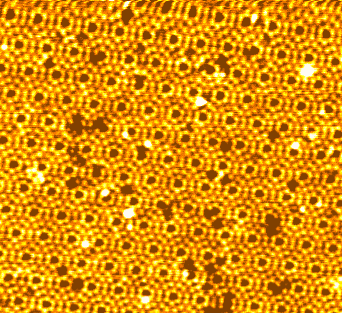
Marcel Rost is a Researcher at the Leiden Institute of Physics (LION) , Leiden University, focusing on fundamental surface science and electrochemical processes at atomic scales. His work bridges thin film technology , electrocatalysis , and scanning probe microscopy (SPM) innovations. Developed high-speed EC-STM for real-time electrochemical imaging Explores platinum electrode degradation mechanisms in energy applications Pioneered Subsurface-AFM for nanoscale friction-based imaging His research combines thermodynamic modeling , kinetic Monte Carlo simulations , and custom SPM systems to address unresolved questions in surface stress, island nucleation, and additive effects in copper electrodeposition . Collaborations with semiconductor industries and institutions like TU Wien and Forschungszentrum Juelich highlight his impact. Scientific awards include the Vidi Subsidy (2009) and TOP Subsidy (2018) . His lab's 15+ recent publications (2017–2024) cover topics such as platinum roughening , heterodyne force microscopy , and additive-driven deposition , with implications for catalysis , microelectronics , and material synthesis .
C.T. DeGroot is an Assistant Professor in the Department of Mechanical and Materials Engineering at Western University , focusing on wastewater modelling, computational fluid dynamics, and thermal systems. His research spans wastewater-based epidemiology, microalgae photobioreactors, activated sludge processes, and porous media analysis. Education: Ph.D., Mechanical and Materials Engineering, University of Western Ontario, 2012 M.E.Sc., Mechanical and Materials Engineering, University of Western Ontario, 2009 B.E.Sc., Mechanical and Materials Engineering, University of Western Ontario, 2008 Research Interests: Wastewater-Based Epidemiology for pandemic monitoring CFD Modelling of wastewater treatment processes Photobioreactor design for microalgae cultivation Thermal systems optimization in mechanical engineering Porous media analysis for composite materials Gas-liquid mass transfer in environmental systems Recent Publication Trends: 2024: Pioneering wastewater surveillance for SARS-CoV-2 variants 2023: Advancing microalgae biofilm reactor efficiency 2022: Innovations in resin transfer molding thermal models 2021: Editor's Choice Paper on CFD for wastewater treatment 2019: Conference leadership roles in CFD and water professionals Scientific Awards: Editor's Choice Paper (Water Science & Technology, 2019) for work on gas-liquid mass transfer models in wastewater treatment Teaching Activities: Undergraduate: Thermodynamics, Heat Transfer, Finite Element Methods Graduate: Computational Fluid Dynamics, Viscous Flow Professional Contributions: Developed open-source WEdiff library for automatic differentiation in thermal CFD Collaboration with Ontario Wastewater Surveillance Consortium for global SARS-CoV-2 tracking Key roles in CFD Society of Canada and International Water Association
Prof. Dr. Dirk Notz is a Professor and Head of the Sea Ice research group at the Institute of Oceanography, University of Hamburg, where he also serves as Deputy Managing Director. He is affiliated with the Centrum für Erdsystemforschung und Nachhaltigkeit (CEN) and the Cluster of Excellence Climate, Climatic Change, and Society (CLICCS), focusing on Arctic and Antarctic climate dynamics. His research centers on sea ice physics, Arctic amplification, climate modeling, and the impacts of global warming on polar regions. He investigates sea ice decline, Antarctic precipitation sensitivity, light transmission in sea ice (notably through the MOSAiC expedition), and uncertainty in climate data and sea-level projections. His work integrates observational data, satellite retrievals, and climate model simulations to understand and project changes in the cryosphere. His recent publications reveal strong trends in Arctic warming, under-ice photosynthesis at extremely low light levels, observational constraints on ice-free Arctic projections, and the communication of sea-level rise uncertainty. His articles appear in leading journals such as Science , Nature Communications , Nature Climate Change , and The Cryosphere . He leads and participates in multiple research projects, including those related to sea ice modeling, polar tipping points, and laboratory ice applications. His work contributes to international climate assessments and supports the UN Sustainable Development Goals, particularly SDG 13 (Climate Action), SDG 14 (Life Below Water), and SDG 15 (Life on Land). Prof. Notz mentors students and early-career researchers within his group and through his leadership roles. He has secured funding for projects analyzing sea ice light and biology, climate sensitivity, and future Arctic scenarios. His research infrastructure includes data from major field campaigns and collaborations with international polar science teams.
Yan Feng is a Principal Atmospheric Scientist at Argonne National Laboratory and holds secondary appointments at the Consortium for Advanced Science and Engineering (University of Chicago) and Northern Illinois University. She earned a Ph.D. in Atmospheric Science (2005) and an M.S. in Computer Science and Engineering (2002) from the University of Michigan. Research Focus: Global and regional modeling of aerosols, clouds, and their interactions with the Earth system, extreme events, hydrological cycles, and biogeochemical cycles. Leadership Roles: Associate Editor for the Journal of Advances in Modeling Earth Systems (JAMES) (2021–present), committee member for AGU James R. Holton Award (2021–2024) and Science For Solutions Award (2024–). Scientific Contributions: With over 61 peer-reviewed publications (including Nature Geoscience , PNAS ), 6600+ citations (H-index 34), and co-authorship of three book chapters, Yan has advanced understanding of black carbon, brown carbon, and iron solubility in aerosols. Her work includes key developments in the DOE E3SM model and studies on wildfire impacts on climate. Scientific Awards: Wiley Top Cited Article (2022–2023) Argonne Impact Award (2021)
Moritz Lehmann is a Professor at the Department of Environmental Sciences , University of Basel , specializing in Aquatic and Isotope Biogeochemistry . His research spans Aquatic Biogeochemistry , Stable Isotope Geochemistry , and Microbial Ecology , with a focus on lake and marine systems. Education: PhD in Environmental Geochemistry/Stable Isotope Geochemistry from ETH Zurich (2002). Professional Roles: Full Professor (2017–present), Head of Department (2019–2023), Cox Visiting Professor at Stanford University (2018). Research Trends: Recent publications highlight his work on lake sediment priming effects , oxygen isotope calibration , nitrous oxide kinetics , and methanogenesis in oxic waters . Collaborative projects with institutions like ETH Zurich and Stanford emphasize stable isotope analysis and biogeochemical modeling . Leadership & Grants: Served on the Department Board of Directors (2017–2023) and as Dean of Research (2014–2017). Led projects funded by agencies including the Federal Office for Agriculture and Zurich Basel Plant Science Centre .
Professor Gaboury Benoit holds the Grinstein Class of 1954 Professorship in Environmental Chemistry at Yale University's School of the Environment (YSE). He is a Fellow of Trumbull College and focuses on trace metals biogeochemistry, nonpoint source pollution, and watershed dynamics. His research integrates field studies with advanced analytical methods to address environmental challenges in aquatic ecosystems and urban areas. Education: B.S. Yale University; M.S. and Ph.D. from MIT-Woods Hole Oceanographic Institution. Research emphasizes metal speciation, watershed management, and sustainable land development. Key projects include investigating caffeine as a sewage tracer, sediment phosphorus immobilization, and trace metal cycling in freshwater systems. His work has been published in over 50 peer-reviewed articles and a book on sustainable land practices (2007). Awards include the Trumbull College Fellowship. Teaching includes courses on biogeochemistry, aquatic chemistry, and environmental policy. Lab locations: Kroon Hall (office) and Class of 1954 Environmental Science Center (lab).
Andrew Babbin is the Cecil and Ida Green Career Development Professor and Associate Professor of Chemical Oceanography and Marine Microbiology at the Massachusetts Institute of Technology's Department of Earth, Atmospheric and Planetary Sciences (EAPS). He joined MIT as faculty in 2017 after serving as an NSF Postdoctoral Research Fellow in Civil and Environmental Engineering (2014-2016). In 2024, he was appointed Mission Co-director for the MIT Climate Project's 'Restoring the Atmosphere, Protecting the Land and Oceans' initiative. He holds a B.S. in Earth and Environmental Engineering (minor in Applied Mathematics) from Columbia University (2008) and a Ph.D. in Geosciences from Princeton University (2014). Research Focus Dr. Babbin leads the Bablab research group, investigating microbial interactions with chemical environments to understand climate regulation. Key research areas include ocean biogeochemistry, nitrogen cycling, carbon sequestration, and greenhouse gas dynamics. His work combines field expeditions across global oceans, laboratory experiments, and computational modeling to study microbial control of atmospheric gases. Publication Trends His recent publications (2021-2023) demonstrate a strong focus on marine nitrogen cycling, particularly in oxygen-deficient zones. Research themes include microbial niche partitioning in anoxic environments, denitrification dynamics in marine particles, and novel bacterial/archaeal metabolisms. Methodologically, his team employs microfluidics, genomics, and isotope tracing to resolve microscale biogeochemical processes. Awards and Honors National Science Foundation CAREER Award (2022) Cecil and Ida Green Career Development Professor (2021) Simons Foundation Early Career Investigator (2019) MIT First Year Advisor Rookie of the Year (2019) MIT Sea Grant Doherty Professor (2018) Academic Engagement He actively integrates undergraduates into climate research and advises graduate students through the MIT-WHOI Joint Program. His educational initiatives include developing high school chemistry modules with oceanography contexts and creating hands-on MIT lab courses. Current projects include NSF-funded work on marine snow carbon transport and J-WAFS-supported development of nitrogen-scrubbing biocapsules. Institutional Leadership As Climate Mission Co-director, he coordinates MIT-wide efforts to develop atmospheric restoration and ocean protection strategies. His lab collaborates globally with research institutions in Mexico, Israel, Ukraine, and Norway to study extreme marine environments and develop biotechnological solutions for water treatment.
Dr. Igor Chernyavsky is a Senior Lecturer in Applied Mathematics at the Department of Mathematics, The University of Manchester. His research focuses on complex living systems, particularly transport phenomena and biofluid dynamics in tissue physiology. He leads projects in continuum mechanics, mathematics in life sciences, and uncertainty quantification. His work contributes to UN Sustainable Development Goals through initiatives like Digital Futures, Christabel Pankhurst Institute, and Henry Royce Institute. Research interests include placental hemodynamics, biomimetic models, and multiscale modeling of biological systems. Key projects involve placental circulation modeling for stillbirth prediction, umbilical cord dynamics, and microfluidic studies of blood flow in porous media. He collaborates on placental imaging, bioreactor engineering, and clinical placentology. Recent publications highlight placental oxygenation, umbilical cord solute transfer, and robust fabrication of PDMS microcapsules mimicking red blood cells. His work bridges experimental and theoretical approaches, emphasizing clinical translation. He supervises PhD students and leads grants totaling £ millions, including Maternal & Fetal Health Research Centre (2018-2035) and ROBUST-BIOPRINT (2023-2025). He actively seeks collaborations in biomaterials, fluid dynamics, and biomedical engineering. Labs/teams: Continuum Mechanics Group, Mathematics in Life Sciences Team, and Uncertainty Quantification & Data Science Group.
Dr. Michael H. Young is a Research Professor and Associate Dean for Research at the Jackson School of Geosciences, University of Texas at Austin. He holds dual roles at the Bureau of Economic Geology and the Jackson School, focusing on ecohydrology, groundwater recharge, and soil-water interactions. His career spans over 35 years in academia, federal agencies, and private industry, with expertise in vadose zone hydrology and environmental geosciences. Education: Ph.D. in Soil and Water Science (1995, University of Arizona), M.S. in Geological Sciences (1986, Ohio University), B.A. in Geology (1983, Hartwick College). Research interests include arid landscape hydrology, water/energy nexus, and soil physics. He has authored/co-authored nearly 100 peer-reviewed articles, served as Editor of Vadose Zone Journal , and chairs committees in professional societies. Awards include Fellowships from the Geological Society of America and Soil Science Society of America (2016), and the Walter Excellence Award (2017). Advising: Supervised over 10 graduate students and postdocs, focusing on interdisciplinary topics like life cycle assessments of energy systems and induced seismicity. Active in teaching, including courses on geological research methods. Labs/Teams: Leads projects in the Texas Soil Observation Network (TxSON) and collaborates with the Center for Injection and Seismicity Research (CISR). Engages in consortia like the Advanced Energy Consortium (AEC) and Mudrock Systems Research Laboratory (MSRL).
Mike Burton is the Chair in Volcanology at the School of Earth and Environmental Sciences, University of Manchester . Since 2015, he has led the Geoscience Group, comprising 13 permanent academic staff, and directs a research team of 3 postdoctoral researchers, 3 PhD students, and a senior research fellow. He also serves on the School Senior Leadership Team, shaping institutional strategy and research direction. He earned a BSc in Chemical Physics from the University of Sussex in 1993 and a PhD in Atmospheric Chemistry from the University of Cambridge in 1999. His early career included postdoctoral research at Cambridge and research roles at INGV in Catania and Pisa, Italy, before returning to the UK in 2015. His research integrates volcanology , petrology , remote sensing , and gas geochemistry to improve eruption forecasting and volcanic hazard management. He uses ground-based and satellite observations, numerical modeling, and field experiments to study volcanic degassing, magma ascent, and volatile cycling. He has pioneered the use of SO2 cameras and open-path FTIR systems for real-time volcanic gas monitoring. His recent publications span mafic eruption dynamics , CO2 flux quantification , tephra microstructure , and remote sensing of volcanic plumes , often in collaboration with volcano observatories and international partners. These works reflect a consistent focus on integrating observational data with modeling to understand volcanic behavior and its environmental impact. Scientific Recognition: ERC Consolidator Grant (CO2Volc, €1.72M) NERC Large Grant (DisEqm, £3.5M) University of Manchester Researcher of the Year (2017) President, GMPV Division, European Geosciences Union (2015–2018) Fellow of the Geological Society (2016–present) Invited/keynote speaker at AGU, EGU, and other major conferences Leadership & Advisory Roles: Member, Foreign Office Scientific Advisory Committee (UK volcanism hazards) Former Chief Scientist, Stromboli Volcano Observatory (2002/03 crisis) Led INGV Catania gas monitoring team (2002–2008) External PhD examiner for Cambridge and Montreal Reviewer for Nature, Science, EPSL, JVGR, and funding agencies (NERC, NSF, EU) Research Platforms & Collaborations: He is affiliated with the Manchester Environmental Research Institute , Sustainable Futures , and Digital Futures research platforms. He maintains active collaborations with INGV (Italy), NSF (USA), and multiple European institutions, and has co-supervised joint PhD students.