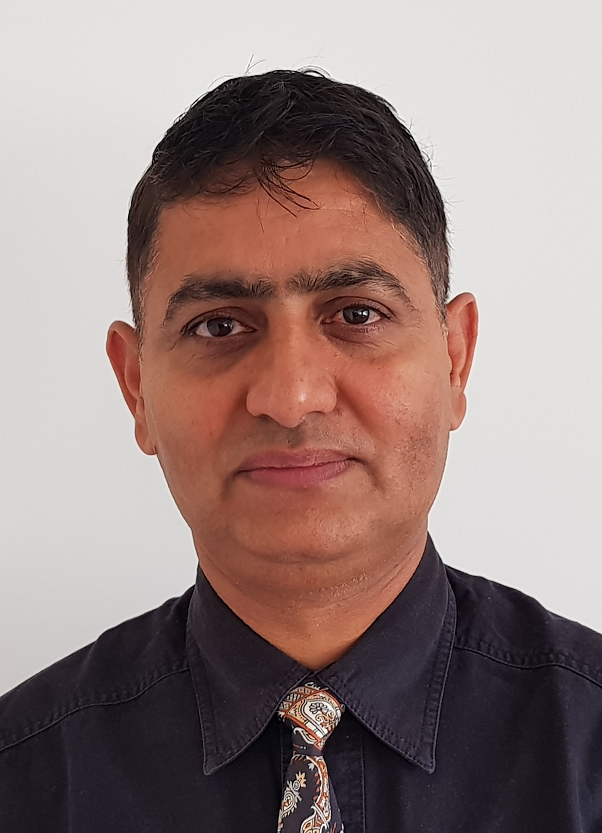
Professor Vishnu Pareek is the John Curtin Distinguished Professor at Curtin University, leading the Western Australian School of Mines (WASM) within the Faculty of Science and Engineering. He has held academic roles including Dean of Engineering, Head of School, and various professorships since 2002. His research focuses on multiphase flow modeling, computational fluid dynamics, and reactor engineering, with applications in energy and chemical processes. He holds a BE (Hons) from MNIT, MTech from IIT Delhi, and a PhD from UNSW. Key research interests include LNG process modeling, erosion modeling, and granular flow dynamics. He has authored over 200 peer-reviewed publications, with recent work emphasizing structured packing design, biomass gasification, and additive manufacturing for process intensification. Notable projects include CFD-ANN hybrid models for fluidized beds and experimental studies on 3D-printed structured packings. His expertise spans industrial collaborations in LNG safety, fluid catalytic cracking, and biofuel production. Teaching areas include chemical engineering fundamentals and process systems engineering. He advises on energy policy and leads research teams in multiphase flow and reactor design.
Professor Manolis Gavaises is a leading academic in the field of mechanical engineering and computational fluid dynamics at City St George's, University of London, where he holds the position of Professor in the School of Engineering and Mathematical Sciences. He earned his PhD from Imperial College London and has been a faculty member since 2001, progressing to full Professor in 2009. His research is centered on advanced modeling of multi-phase flows, cavitation, and fuel injection systems, with extensive collaborations across Europe and industry partners such as Delphi, Caterpillar, and BP. Education: DIC, Mechanical Engineering, Computational Fluid Dynamics, Imperial College London, 1997 PhD, Mechanical Engineering, Computational Fluid Dynamics, Imperial College London, 1997 Diploma (5 years), Mechanical Engineering, National Technical University of Athens, 1992 His research interests span computational fluid dynamics, cavitation, fuel injection, atomization, high-pressure and supercritical flows, and alternative fuels . He has developed advanced numerical models and experimental techniques, including X-ray phase contrast imaging and high-pressure test rigs. His work integrates fundamental DNS and LES simulations with industrial applications in automotive, marine, aerospace, and medical devices such as heart valves. The recent publications reflect a strong trend toward real-fluid thermodynamic modeling (e.g., PC-SAFT), multi-component fuel behavior, cavitation erosion, and advanced diagnostics . His research increasingly incorporates machine learning and high-fidelity imaging to understand complex flow phenomena across energy, transportation, and biomedical domains. Scientific Awards and Recognitions: Richard Way Prize (1998) Arch T. Collwell Merit Award (1998) Best Oral Paper, SAE World Congress (2006) PE Publication Award, IMechE (2007) Best Presentation Award, Engine Combustion Processes (2009) Fellow, IMechE (2013) Fellow, IMA (2015) As a dedicated mentor, Professor Gavaises has supervised 13 PhDs to completion and currently guides 23 doctoral students. He has secured over €16 million in EU and UK funding, including multiple Horizon 2020 Marie Skłodowska-Curie ITN projects (CAFÉ, HAOS, IPPAD), which support 46 early-career researchers globally. He has created academic opportunities for post-docs and junior faculty, significantly advancing the research profile of his institution. He leads the International Institute of Cavitation Research (IICR), co-founded in 2011 with partners from Loughborough University, TU Delft, and Imperial College, supported by The Lloyd’s Register Foundation. His lab maintains strong experimental capabilities, including a 2000bar pressure flow rig with micro-transparent nozzles and collaborations with Argonne National Laboratory for X-ray imaging.
Dr. Joshua Brinkerhoff is an Associate Professor in Mechanical Engineering at the University of British Columbia Okanagan Campus. He serves as the Associate Director for Research & Industrial Partnerships in the School of Engineering and leads the UBC-Okanagan Computational Fluid Dynamics Laboratory. His research spans computational fluid dynamics, turbomachinery, multiphase flows, hydrogen safety, wind energy, and biofluid mechanics. He teaches courses in mechanics of materials, alternative energy systems, turbulence, computational fluid dynamics, and aircraft design. PhD, Aerospace Engineering (Carleton University, Ottawa, ON) BEng, Aerospace Engineering (Carleton University) Dr. Brinkerhoff’s research interests include: Computational Fluid Dynamics (CFD) for laminar-to-turbulent transition and instability analysis Wind energy systems and turbine aerodynamics Hydrogen storage and safety protocols for transportation Biofluid mechanics for respiratory diseases and aneurysm modeling Multiphase flows in industrial and environmental contexts His publications focus on CFD simulations for: Aerosol dispersion and mitigation in indoor environments Wind farm interactions and atmospheric gravity waves Cavitation and phase transitions in cryogenic and LNG systems Heat transfer optimization in industrial and thermal systems Instability dynamics in buoyancy-driven and swept flows Turbulent structures in fluidized beds and reactors Dr. Brinkerhoff has no listed scientific awards in the provided data but has extensive contributions to renewable energy, hydrogen safety, and medical fluid dynamics. His laboratory develops open-source tools like TOSCA for large-eddy simulations and investigates practical applications in urban air quality, dental aerosol control, and turbine wake modeling.
Michael Ellis is an Associate Professor in the Department of Mechanical Engineering at Virginia Tech since 2012, with prior roles as Associate Professor and John R. Jones Faculty Fellow (2007–2012). His work spans fuel cell systems, energy modeling, and sustainable technologies. Ph.D. , Mechanical Engineering, Georgia Institute of Technology (1996) M.S. , Mechanical Engineering, Georgia Institute of Technology (1993) B.S. , Mechanical Engineering, University of Tennessee (1985) Research interests include fuel cell systems for building cogeneration, energy consumption modeling, industrial process analysis, and optimal hybrid energy system design. Recent work focuses on battery recycling processes, microbial fuel cells, and thermal stress characterization of membranes. His 15 most recent publications highlight trends in battery recycling scalability , fuel cell durability , microbial energy conversion , and nanomaterials for energy applications . Key subfields include membrane stress modeling, microbial adhesion mitigation, and hybrid gas/electric system optimization. Excellence in Architecture Award (2006) Woodruff Teaching Fellowship (1995) Tau Beta Pi Member Multiple teaching awards at Virginia Tech (2000–2003) As faculty advisor for the award-winning Solar Decathlon team (2002), he contributed to interdisciplinary energy projects. His work connects mechanical engineering with sustainable energy systems, focusing on practical implementations and material innovations.
Donald L. Koch is a full Professor in the School of Chemical Engineering at Cornell University, specializing in fluid dynamics, rheology, and transport processes in complex systems. His research spans particulate flows, colloidal science, and sustainable energy applications. B.S. and B.A., Case Western Reserve University (1981) Ph.D., Massachusetts Institute of Technology (1985) Postdoctoral Study, DAMTP, Cambridge University (1986) Research Interests: Rheology of particle suspensions and porous media Fluid dynamics in micro- and nano-structured materials Statistical mechanics of colloids and aerosols Sustainable energy systems (CO2 sequestration, geothermal energy) Computational modeling of multiphase flows Scientific Awards: Fellow, American Physical Society 1998 Presidential Young Investigator 1988 Frenkiel Award (APS Division of Fluid Dynamics) NATO Postdoctoral Fellowship (1986) NSF Graduate Fellowship (1981) Publications: Over 100 scientific works focusing on particulate and multiphase flows, with recent contributions to non-Newtonian fluid mechanics and bacterial suspension dynamics.
Albert H. Titus is a Professor in the Department of Biomedical Engineering and an Adjunct Professor in the Department of Electrical Engineering at the University at Buffalo, State University of New York. He serves as Associate Vice President for Regulatory Support in the Office of the Vice President for Research and Economic Development. His research focuses on analog VLSI design for neuromorphic visual processing, biosensors, wearable devices, optoelectronic systems, and neural networks. Education: PhD in Electrical and Computer Engineering, Georgia Institute of Technology (1997) MS in Electrical Engineering, University at Buffalo (1991) BS in Electrical Engineering, University at Buffalo (1989) Research Interests: His work spans wearable and implantable sensors, bioinstrumentation, neural network-based visual processing, analog VLSI implementations, optoelectronics, and electronic packaging. He pioneered CMOS-based neuromorphic systems and developed patented technologies for glare sensing and RF power calorimetry. Publication Trends: His recent articles emphasize CMOS-integrated sensors, machine learning for bioimpedance analysis, implantable medical devices, and xerogel-based optical biosensors. These works bridge biomedical engineering and microelectronics. Scientific Recognition: He is a Fellow of the National Academy of Inventors and has received the SUNY Chancellor’s Award for Excellence in Service (2017), NSF CAREER award, and Western New York Inventor of the Year (2010). His inventions include a patented low-power glare sensor (U.S. Patent 7,586,079) featured in Popular Science’s 2011 Top Ten Inventions. Academic Leadership: As a faculty member, he has supervised nearly 20 PhD and over 40 MS students, while teaching courses in circuits, IC design, sensors, and signal processing across electrical and biomedical engineering disciplines.
Kwanghee Jeong is a Research Fellow at the University of Western Australia , affiliated with the Fluid Science and Resources research group within the School of Engineering and Chemical Engineering Department . His work focuses on energy transport, decarbonisation technologies, and flow assurance. Education: PhD in Chemical Engineering (UWA, 2020), BSc in Mechanical Engineering (Dongguk University, 2014) Research Themes include: Flow Assurance for hydrogen, CO2, and natural gas pipelines Carbon Capture & Emissions Management (MOFs, Raman spectroscopy) Cryogenic Hydrogen Process Engineering (liquefaction, boil-off gas) Cold Energy Utilisation and Waste Heat Recovery Hydrate Formation Kinetics via Acoustic Levitation Article Trends reflect expertise in: Using Raman spectroscopy for real-time adsorption and phase transition analysis Developing Joule-Thomson loops to simulate pipeline conditions Optimizing Metal-Organic Frameworks for GHG separation Advancing hydrogen liquefaction efficiency through catalysis Addressing microplastics and hydrate nucleation via spectroscopic methods Scientific Awards : Best Poster Award (2023) - Natural Gas UWA Travel Award (2017) ARC PhD Scholarship (2016) He contributes to UN Sustainable Development Goals via decarbonisation research and has collaborated with Chevron, Woodside Energy, and Curtin University. His technical skills include Aspen HYSYS, OLGA simulations, HAZOP studies, and Differential Scanning Calorimetry (DSC).
Ciprian Cimpan is an Associate Professor at the Department of Green Technology (IGT), University of Southern Denmark, and a key member of the SDU Climate Cluster and SDU Life Cycle Engineering. His research focuses on Circular Economy , Industrial Ecology , Waste and Resources Management , and Life Cycle Assessment , with a strong emphasis on sustainable growth and resource efficiency. Postdoctoral Fellow, Norwegian University of Science and Technology (2019–2021) His recent publications highlight applications of LCA in evaluating additive manufacturing , plastic packaging , and critical material recycling within green transition contexts. He also investigates systemic challenges in textile waste , ICT product obsolescence , and rebound effects in reuse practices . Scientific awards include the DANROAD Prize (2025) for innovative drug recycling. He supervises PhD student Bubinek R. and teaches courses on Eco-efficient Engineering , Waste Management , and Solid Waste Processing .
Dr Mahdi Davoodianidalik is a researcher in the Department of Nuclear Physics & Accelerator Applications at the Australian National University (ANU). He is affiliated with the Space plasma power and propulsion group and the Physics of fluids group, focusing on interdisciplinary research at the intersection of plasma physics, fluid dynamics, and space propulsion technologies. His research interests include Turbulence and wave-driven flows Plasma thrusters and electrothermal propulsion Fluctuation-induced forces and interactions Fluid-structure dynamics Thermal engineering of micro-thrusters Nonlinear phenomena in fluids Recent publications highlight his work on analogs of the Casimir effect in turbulent flows, passive propulsion mechanisms, and advanced propulsion systems using solid hydrocarbon propellants. He has contributed to understanding turbulence in both fundamental and applied contexts, with a focus on energy transfer and chaotic flow phenomena. His collaborations span ANU colleagues including Nicolas Francois and Michael Shats, with a strong emphasis on experimental and computational fluid dynamics.
Ed Pickering is a Senior Lecturer in Metallurgy and Materials Engineering at the University of Manchester. He has held roles since 2015, advancing to Reader in 2023. His affiliations include the Henry Royce Institute (Research Area Lead for Advanced Metals Processing), the Advanced Metallics System CDT and Fusion CDT Management Boards, and industrial technical advisory panels. Ed’s work bridges academic and industrial collaboration with Rolls-Royce, UKAEA, Airbus, EDF, and Sheffield Forgemasters. Ed completed his undergraduate studies (2011) and PhD (2014) in Materials Science at the University of Cambridge, followed by a Research Associate role in Cambridge’s Rolls-Royce UTC. His academic trajectory includes: Senior Lecturer (2019–present) Reader (2023–present) Ed’s research focuses on phase transformations, microstructural characterization, and alloy development for nuclear (fission/fusion) and aerospace applications. Key themes include optimizing processing routes to enhance material properties while minimizing waste and environmental impact. His studies frequently address steel, high-entropy alloys, and novel refractory alloys, emphasizing their service performance under extreme conditions. His scientific contributions span structural integrity assessment of welded joints, machine learning applications in metallurgy, and material flow uncertainties in forging. He has also advanced heat treatment optimization for reactor steels and explored cobalt-free hardfacing alloys. Frank Fitzgerald Medal (2017) Grunfeld Memorial Medal (2021) In advising and grants, Ed leads the Materials Performance Centre (MPC) and co-leads the NEWAM project on wire-additive manufacturing. He supervises research across these initiatives and collaborates with over 30 PGR students in interdisciplinary teams. His work also involves managing technical facilities like the Advanced Metal Processing platform. Ed’s laboratory affiliations include the MPC and WAAM-based Engineering and Process Metallurgy groups, where he explores sustainable materials solutions for energy and aerospace industries.
Prof. Dr. Hans-Jörg Vogel is the Head of the Department of Soil System Science at the Helmholtz Centre for Environmental Research (UFZ) in Halle, Germany. His research focuses on understanding soils as complex systems, emphasizing their porous structure and its role in facilitating water, gas, and matter fluxes, as well as biological processes. He leads interdisciplinary projects integrating experimental and computational approaches to model soil functions under climate and land-use changes. He holds the Emil-Ramann-Medaille 2022 and the Don and Betty Kirkham Soil Physics Award 2022 for contributions to soil science. His work spans soil structure dynamics, denitrification processes, nanoparticle transport, and systemic modeling of soil functions via frameworks like BODIUM. Collaborations include TERENO observatories and the Soil Structure Library (open-access CT data repository). Key affiliations include the UFZ’s Ecosystems of the Future research community and the Soil System Science Team. His research addresses sustainable agriculture, environmental monitoring, and climate change impacts, with over 150 peer-reviewed publications since 2000.
Arash Nemati is an Assistant Professor at the Department of Energy Conversion and Storage, Technical University of Denmark (DTU). His research focuses on sustainable energy technologies, particularly solid oxide fuel cells, ammonia-fueled systems, and multiphysics modeling of energy conversion processes. He leads and participates in EU-funded projects such as RESCUE and X-SEED, aiming to advance renewable energy storage and green hydrogen production. His work addresses challenges in electrochemical systems, including durability, efficiency, and integration of renewable energy sources. He has received notable recognition, including a Highly-cited Paper award (Web of Science, 2022) and the DAAD Green Hydrogen Research Tour Scholarship (2024). Nemati actively supervises PhD students in areas like co-electrolysis and solid oxide electrolysis cell modeling. His expertise spans thermochemical processes, numerical simulations, and techno-economic evaluations of energy systems. Key projects include developing ammonia-driven reversible solid oxide cells for grid storage and optimizing pyrolysis-electrolysis systems for methanol and char production. His research aligns with UN Sustainable Development Goals, emphasizing clean energy and climate action.
Domenico Ferrero is a Fixed-term Tenure-track Assistant Professor at the Department of Energy (DENERG), Politecnico di Torino. His primary role involves advancing research in renewable energy systems, particularly focusing on hydrogen technologies, energy storage, and thermochemical cycles. He contributes to the College of Electrical and Energy Engineering, teaching courses such as Hydrogen Laboratory and Sistemi di accumulo dell'energia elettrica . His research emphasizes experimental and modeling studies on hydrogen production via electrolysis, solar-driven thermochemical cycles, and CO₂ utilization. Key projects include H2SHIFT, HyAcademy.EU, and IMAGHyNE, funded by EU initiatives. Ferrero collaborates internationally on material characterization for protonic ceramic electrolysis cells and sealant development. He supervises multiple PhD students in energy systems and leads the M3ES research group. Publications highlight innovations in solar fuels, redox cycles, and hydrogen-battery hybrid systems. His work bridges fundamental science with applied engineering, targeting sustainable energy solutions for remote and urban environments.
Professor Ahmed F. Ghoniem is the Ronald C. Crane (1972) Professor of Mechanical Engineering at MIT, directing the Center for Energy and Propulsion Research and the Reacting Gas Dynamics Laboratory. He holds a B.Sc. and M.Sc. from Cairo University and a Ph.D. from the University of California, Berkeley. His research focuses on computational methods in fluid-thermal sciences, turbulent combustion, energy conversion systems, and CO2 capture technologies. He has authored over 500 publications and mentored over 100 students, many of whom are leaders in academia and industry. His research interests include multiscale simulations of turbulent reactive flows, clean energy systems, and advanced combustion technologies. He has pioneered work on oxy-fuel combustion, gasification processes, and ion transport membrane reactors. Ghoniem’s contributions span fundamental science and applied engineering, addressing challenges in sustainable energy and environmental sustainability. Honors: ASME James Harry Potter Gold Medal (2015), AIAA Propellant and Combustion Award (2016), Fellowships from ASME, APS, and The Combustion Institute. Service: Leadership roles in MIT’s Energy initiatives, KAUST collaborations, and advisory boards for energy research centers. Extensive contributions to curriculum development and graduate education in mechanical engineering. Labs/Teams: Directs the Reacting Gas Dynamics Lab and leads the Center for Energy and Propulsion Research, focusing on integrated energy systems and CO2 capture innovations.
Professor Christopher Berndt is a Distinguished Professor in Surface Science and Engineering at the School of Engineering, Swinburne University of Technology, where he joined in 2008 as the founding professor of this discipline. He previously held founding professorships at James Cook University and was a tenured professor at Stony Brook University, USA, where he remains an Adjunct Professor. He also served as a Fellow at NASA-Lewis Research Center, working on thermal barrier coatings. His leadership in professional societies includes serving as President of the Thermal Spray Society (ASM) and being inducted into the Thermal Spray Hall of Fame in 2007. His research interests center on materials engineering , particularly surface science , thermal spray technologies , high-entropy alloys , and coatings for extreme environments . He also contributes significantly to biomedical engineering through bioactive coatings and clean energy via advanced materials for batteries and hydrogen technologies. His work bridges fundamental materials science with industrial applications in aerospace, energy, and manufacturing. The recent publications reveal a strong focus on advanced thermal spray techniques such as HVOF and HVAF, development of high-entropy and medium-entropy alloys, and innovative coating applications in energy storage, corrosion resistance, and high-temperature protection. His research consistently emphasizes microstructural control, phase stability, and mechanical performance under extreme conditions. Inducted into the Thermal Spray Hall of Fame (2007) Fellow of the Australian Institution of Engineers Fellow of ASM International Fellow of The Institution of Metallurgists (UK) Fellow of ASME, ACS, and ACerS Chartered Engineer (UK) Professional Engineer (Australia) Member of the College of Bioengineers (Australia) Professor Berndt actively supervises numerous PhD students, with current projects on high-entropy alloys, internal pipe coatings, and biomedical surface engineering. He has secured extensive research funding from organizations including the Australian Research Council (ARC), Department of Defence, Office of Naval Research (US), and industry partners such as Entromat and Amaero Engineering. He leads major initiatives such as the ARC Training Centre in Surface Engineering for Advanced Materials (SEAM) and has contributed to commercialization projects in space vehicle manufacturing. He is the Founding Editor and now Editor Emeritus of the Journal of Thermal Spray Technology and has edited over 10 conference proceedings. His research network spans across Australia, the USA, and Thailand, reflecting a strong international collaborative footprint in advanced materials research.