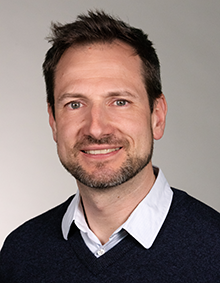
Wes Osburn is an Associate Professor in the Department of Animal Science at Texas A&M University, specializing in meat science. He holds a B.S. in Agricultural Education from Texas A&M (1981), an M.S. in Meat Science from Texas A&M (1992), and a Ph.D. in Animal Science from the University of Nebraska (1996). Before joining Texas A&M in 2004, he served as faculty at Michigan State University with a joint appointment in Animal Science and Food Science & Human Nutrition. His research focuses on processed meats, food safety, meat quality, and value-added products, collaborating with national/international meat processors. He coordinated MSU’s meat judging program and has extensive industry engagement. Osburn’s work addresses innovations in meat processing, packaging, and consumer perception of alternative curing systems. His research integrates food chemistry, microbiology, and sensory science to enhance meat product quality and safety.
Matthew Jones is a Professor and Head of Department in the Department of Chemistry at the University of Bath, where he leads research in sustainable chemical technologies. He is affiliated with the Centre for Sustainable Chemical Technologies (CSCT) and the Institute of Sustainability and Climate Change. His work focuses on catalyst design for green chemistry, biopolymer synthesis, and chemical recycling of plastics. Research Interests: His research spans homogeneous and heterogeneous catalysis , synthesis of biopolymers like polylactide (PLA) , catalytic upgrading of renewable feedstocks (e.g., ethanol to butadiene), and lignin depolymerization . He employs advanced techniques such as NMR, mass spectrometry, electron microscopy, and X-ray crystallography. The recent trend in his publications reflects a strong focus on chemical recycling of plastics (PET, PLA, POM, nitrile gloves), design of metal-based catalysts (Zn, Zr, Al), and circular economy strategies . His work integrates computational modeling with experimental validation to develop sustainable chemical processes. Scientific Awards and Recognition: Frequent grant reviewer for EPSRC and MDPI Editorial contributions to high-impact journals Active participant in UK research councils and innovation networks Advising and Grants: He supervises doctoral students and leads multiple externally funded projects, including grants from the Engineering and Physical Sciences Research Council (EPSRC) and Innovate UK. Major projects include AP19: Developing Catalyst Strategies for a Truly Circular Plastic Economy , TUPLA - traceability of used PLA , and feasibility studies on nitrile glove recycling . He collaborates extensively with researchers such as Matthew Davidson and James Stewart. Labs and Research Teams: His research group is embedded within the Centre for Sustainable Chemical Technologies, a multidisciplinary hub promoting sustainable innovation. The team works on catalyst synthesis, polymer characterization, and process development for a circular chemical economy.
Scot M. Miller is an Associate Professor in the Department of Environmental Health and Engineering at the Whiting School of Engineering, Johns Hopkins University. He leads the Greenhouse Gas Research Group, focusing on quantifying emissions of greenhouse gases and air pollutants using satellite, aircraft, and tower observations. His research spans global scales, from Arctic ecosystems to urban and industrial sources in the U.S. and China. His research interests include atmospheric science, greenhouse gas emissions, inverse modeling, big data analytics, and climate policy. He integrates tools from statistics, high-performance computing, and satellite remote sensing to improve emission estimates and inform environmental regulations. Recent publications highlight trends in methane, ethane, and sulfuryl fluoride emissions, carbon cycle dynamics, and innovative methods for analyzing massive satellite datasets. His work increasingly leverages OCO-2 and OCO-3 satellite data to study carbon dioxide and methane fluxes across diverse ecosystems. Scientific awards include the NSF CAREER Award, JHU Catalyst Award, and the Carnegie Distinguished Postdoctoral Fellowship. He was also recognized with Harvard’s Certificate of Excellence in Teaching. Miller advises multiple PhD students, including Mingyang Zhang, Dylan Gaeta, and Leyang Feng, and has secured grants from NASA, NSF, NOAA, and JHU. He is a member of the NASA OCO Science Team and collaborates with institutions such as Northern Arizona University, Carnegie Institution, and NOAA. His lab is involved in urban environmental monitoring in Baltimore and interdisciplinary climate policy research.
Mehdi Mortazavi is an Associate Teaching Professor in the Department of Mechanical and Materials Engineering at Worcester Polytechnic Institute (WPI), where he has been since January 2023. He previously served as an Assistant and Associate Professor at Western New England University (WNE) from 2016 to 2022. His expertise lies in experimental thermo-fluid systems, multiphase flow, and clean energy technologies. Education: PhD in Mechanical Engineering (Michigan Tech University, 2014), MS in Mechanical Engineering (Michigan Tech University, 2011), BS in Mechanical Engineering (KN Toosi University, 2007). Research Interests : Multiphase Flow Dynamics Hydrogen Energy Systems Droplet Dynamics in Fuel Cells Decarbonization Strategies Additive Manufacturing in Heat Exchangers As director of the Multiscale Thermal Fluids Laboratory (MTFL) at WPI, Dr. Mortazavi leads research addressing thermo-fluid challenges in energy systems. His work bridges fundamental and applied research, with a focus on improving fuel cell efficiency, hydrogen production, and sustainable energy solutions. He also emphasizes pedagogical innovation, teaching courses like Fluid Dynamics, Thermodynamics, and Heat Transfer. His recent publications highlight advancements in PEM fuel cell optimization, hydrogen electrolyzers, and thermal modeling of renewable energy systems. While no specific awards are listed, his contributions to clean energy and experimental fluid mechanics are notable. Lab involvement includes directing the MTFL, which focuses on additive manufacturing, multiphase flow characterization, and energy storage. His teaching portfolio spans both undergraduate and graduate levels, reflecting his commitment to engineering education.
Prof. Ksenija A. Stojanović holds the position of Full Professor at the University of Belgrade's Faculty of Chemistry , Department of Applied Chemistry. She has been affiliated with the Faculty since 2008, progressing from Assistant Professor (2008–2013), to Associate Professor (2013–2018), and Full Professor since 2018. Education: PhD in Chemistry (2000–2004), Faculty of Chemistry, University of Belgrade Postdoctoral studies at the Institute of Petroleum Chemistry, Russian Academy of Sciences (2006–2007) Research focuses on organic geochemistry , chemometry , and environmental chemistry . Her work includes biomarker analysis, oil-source rock correlations, and studies on lignite and lacustrine sediments. She has led or contributed to national and international projects, including investigations into lignite utilization and organophosphate flame retardants. Awards: 2006: Best Paper Prize for Young Researchers at the International Conference on Oil and Gas Chemistry 2011: American Chemical Society Reviewing Award Administrative roles include serving as Chair of the Admission Committee for Basic and Integrated Studies (2016–2022) and Deputy Chairman of the Faculty Board (2018–2020). She is a member of the Serbian Chemical Society and European Association of Organic Geochemists. Her teaching covers courses such as Industrial Chemistry , Geochemistry and Soil Pollutants , and Biomarkers in Geological Evolution .
Associate Professor Bryce Frederick John Kelly is an academic at the University of New South Wales (UNSW), affiliated with the School of Biological, Earth and Environmental Sciences. His research focuses on greenhouse gas emissions, hydrogeology, and groundwater management, with a specialization in methane and carbon dioxide isotopic analysis. He leads the Greenhouse Gas Measurement Laboratory, which analyzes gas isotopes to trace emissions from coal seam gas (CSG), agriculture, and urban environments. Education: BSc (Hons) in Environmental Geology (UNSW, 1989); PhD in Environmental Geophysics (UNSW, 1995). Research Interests: Measuring methane emissions from CSG, coal mining, and agriculture Soil carbon sequestration and groundwater sustainability Isotope geochemistry for source attribution of greenhouse gases Satellite and airborne greenhouse gas monitoring Impact of CSG development on aquifers and ecosystems Key Projects: Leading the United Nations Environment Programme Methane Science Studies team, quantifying emissions in the Surat Basin. Co-supervising 60+ students. Collaborating with ANSTO on soil carbon and groundwater modeling. Awards: 2016 Cotton Seed Distributor Researcher of the Year finalist, 2011 Eureka Prize finalist for water research, and multiple industry awards for hydrogeological innovation. Labs/Teams: Connected Water Initiative, Centre for Ecosystem Science, Earth and Sustainability Science Research Centre (ESSRC). Active in policy outreach through The Conversation and Australian Geographic.
Thomas Aubry is an Associate Professor in the Department of Earth Sciences at the University of Oxford and a Tutorial Fellow at St Hugh's College. His research bridges climate science and physical volcanology, focusing on volcanic eruptions' societal impacts, climate interactions, and climate change effects on volcanic processes. He coordinates volcanic forcing datasets for IPCC assessments and co-chairs the IAVCEI Tephra Hazard Modelling Commission. Education: BSc in Physics, École Normale Supérieure de Paris-Saclay, France MSc in Climate Dynamics, Université Pierre et Marie Curie / École Normale Supérieure Paris PhD in Geophysics, University of British Columbia, Canada Postdoctoral Research Fellow, University of Cambridge (2019–2022) Research Interests: Volcanic ash and gas dispersion hazards Volcanic impacts on historical and future climates Climate change feedback on volcanic processes His interdisciplinary methods include numerical modeling, laboratory experiments, satellite remote sensing, and field studies. Current projects explore volcanic aerosol life cycles under climate change and the modulation of volcanic column heights by atmospheric conditions. Funded by the European Union, Royal Society, and Sidney Sussex College, his work informs climate models and hazard mitigation strategies. Academic Contributions: Key publications on volcanic plume dynamics and climate-eruption interactions Development of volcanic forcing datasets for IPCC's 7th Assessment Report Opportunities: Offers postdoctoral and PhD supervision in volcanology and climate science, with fellowship application support.
Professor Tariq Durrani is a Research Professor in the Department of Electronic and Electrical Engineering at the University of Strathclyde, UK. He is also recognized as a Visiting Professor and Honorary Professor at other institutions, reflecting his international academic engagement. His research spans signal and image processing with applications in sensor networks, UAVs, and intelligent communication systems. Research Interests: Signal and Image Processing Integrated Sensing and Communication (ISAC) Unmanned Aerial Vehicle (UAV) Networks Wireless Sensor Networks Big Data Analytics for Energy and Infrastructure Cognitive Neuroscience-Inspired Systems His recent publications highlight a strong trend in leveraging deep learning and optimization techniques for next-generation wireless systems, particularly in intelligent transportation, secure communications, and IoT. The integration of sensing, communication, and computing in UAV-enabled environments is a dominant theme. His work contributes to UN Sustainable Development Goals in clean energy, smart cities, and climate action. Scientific Awards and Honors: Thales Scottish Technology Prize 2009 (Third Place) Elected Honorary Member, Eta Kappa Nu (2010) Honorary Professor, University of Stirling (2010) Visiting Professorial Fellow (2012) Vice President (International Activities) Recipient (2012) Research Leadership: He has led and co-led multiple funded research projects, including those supported by the Royal Society of Edinburgh and the British Council, focusing on geological disaster monitoring, microseismic detection in oil exploration, and cognitive information integration in heterogeneous networks. His collaborative network spans the UK, China, and other international partners. Laboratories and Research Teams: His work is associated with advanced research in intelligent systems and sensor networks at the University of Strathclyde, contributing to the Fingerprint research profile in areas such as Unmanned Aerial Vehicles, Algorithms, and Optimization.
Dr. Ehsan Mohseni is a Senior Lecturer in the Department of Electronics and Electrical Engineering at the University of Strathclyde, Faculty of Engineering. He is a key member of the Centre of Ultrasound Engineering (CUE) research group and supports the Royal Academy of Engineering and Spirit AeroSystems research chair led by Professor Gareth Pierce. His work focuses on advancing robotic and intelligent Non-Destructive Evaluation (NDE) systems for industrial applications. B.Sc. in Materials Science and Metallurgical Engineering, University of Tehran, 2006 M.Sc. in Metal Forming Processes, University of Tehran Ph.D. in Automated Defect Detection using Electromagnetic NDE, École de Technologie Supérieure (ETS), Montreal, Canada Dr. Mohseni’s research is centered on NDE 4.0, integrating advanced sensing, multi-physics modeling, and machine learning. His expertise spans ultrasonic and eddy current testing, multi-sensor data fusion, and probability of detection studies. He focuses on applications in additive manufacturing, welding, composites, and metal processing, aiming to overcome current technological barriers in industrial inspection. The recent publications highlight a strong trend toward intelligent, automated, and robotic NDE systems. Key themes include self-supervised learning for ultrasonic segmentation, human-machine collaboration in data analysis, and advanced signal processing for weld and composite inspection. The integration of AI, flexible sensor arrays, and embedded navigation systems reflects a shift toward smart, adaptive inspection platforms aligned with Industry 4.0. Scientific Awards: The BINDT Annual Conference Award (2019) Dr. Mohseni is actively involved in research funding and knowledge transfer. He serves as Principal Investigator on KTP projects with ETHER NDE LIMITED and NATIONAL OILWELL VARCO UK LIMITED, focusing on in-process inspection for additive manufacturing and field calibration for ultrasonic testing. He contributes to large-scale collaborative projects funded by Innovate UK and industry partners, emphasizing practical deployment of NDE solutions. He also supervises research staff and collaborates with global aerospace firms including Pratt & Whitney Canada, Safran, and Bell Helicopter. He is a core member of the Centre of Ultrasound Engineering (CUE), a dynamic research group developing next-generation ultrasound technologies. The team works on advanced robotic sensing hubs, flexible transducer arrays, and AI-driven data interpretation tools, often in collaboration with the Royal Academy of Engineering research chair and industrial partners.
Eduard Massaguer Colomer is an Assistant Professor in the Department of Mechanical and Industrial Construction Engineering at the University of Girona, where he is part of the School of Engineering. He is a Serra Húnter Fellow, reflecting his strong research and academic trajectory. He is affiliated with the Research Group in Fluids, Energy and Environmental Engineering (GREFEMA) and leads research in thermoelectric energy harvesting and waste heat recovery. His research focuses on improving the efficiency of thermoelectric generators for heat recovery in automotive, industrial, and renewable energy systems. Key areas include: Thermoelectric generator design and optimization Waste heat recovery from exhaust gases and industrial processes Integration with solar, biomass, and marine systems Dynamic modeling and experimental validation Technology transfer and spin-off development His recent publications reveal a consistent focus on energy conversion efficiency, transient thermal behavior, and practical applications of thermoelectric systems across transportation, industrial, and domestic sectors. He has contributed significantly to hybrid energy systems and low-cost solutions for rural electrification. His scientific awards include: Extraordinary Doctoral Award 2016 (UdG) Volkswagen Think Blue Award 2015 Seal of Excellence 2019 (European Commission) Multiple awards from Repsol Foundation, Iberdrola Foundation, and La Caixa He has supervised two doctoral theses and led multiple competitive research projects, securing over €320k as Principal Investigator and €500k in total funding. His work has led to four patents and five technology transfer contracts. He co-founded the spin-off Nabla Thermoelectrics SL (2016–2021), demonstrating strong industry collaboration and innovation impact. He is actively involved in research leadership, having served as guest editor for a special issue on Solar Thermoelectric Generators in MDPI Energies. His lab work centers on the Heat and Cold Laboratory at the University of Girona, where experimental validation and prototype development are conducted.
Taran Mari Thune is a Professor at the Centre for Technology, Innovation and Culture (Tik) at the University of Oslo. She directs INTRANSIT (Innovation Policy for Industrial Transformation, Sustainability and Digitalization), co-directs the Oslo Institute for the Research on the Impact of Science (OSIRIS), and leads the SIVAC research project on innovation in the Norwegian supplier industry. Her work focuses on innovation processes, collaboration networks, and knowledge transfer mechanisms across various sectors including healthcare and energy. Dr. Thune earned her Dr. Oecon degree from the Norwegian School of Management (BI Business School) in 2006 with a dissertation on university-industry partnerships, and holds a Master of Philosophy in Comparative and International Education from the University of Oslo (2000). Prior to joining Tik, she worked at the Nordic Institute for Studies of Innovation, Research and Education (NIFU) as a senior researcher and research director, and at the Work Research Institute in Oslo. She has been a visiting scholar at Stanford University and Ingenio at the Polytechnic University of Valencia. Her research spans multiple innovation domains with particular emphasis on: University-industry collaboration and knowledge transfer mechanisms Public sector innovation, especially in healthcare Sectoral innovation systems, particularly petroleum and energy transitions Science policy and research impact on society Academic work and the relationship between research, education, and third mission activities Analysis of Dr. Thune's recent publications reveals consistent focus on innovation dynamics across sectors. Her work examines knowledge flows between universities, public research organizations, and industry, with special attention to mechanisms enabling effective collaboration. She has made significant contributions to understanding innovation in traditional sectors like petroleum undergoing sustainability transformation, as well as in public sectors like healthcare where innovation processes differ from commercial contexts. Dr. Thune serves on the boards of OsloTech and NORSI, contributing to broader innovation policy discussions in Norway. She teaches in Tik's master's program, particularly in TIK4001 and TIK4021 courses, and supervises multiple master's and PhD students. Her research is primarily funded by the Norwegian Research Council, with involvement in multiple large-scale projects examining innovation policy, sectoral transformations, and the societal impact of research.
Sebastian Sobek is a Professor in the Department of Ecology and Genetics at Uppsala University, Sweden, where he specializes in limnology and biogeochemical cycling in inland waters. His research investigates carbon dynamics, greenhouse gas emissions, and sediment processes in lakes, rivers, and reservoirs under environmental change. Research Interests: His work focuses on carbon sequestration, methane and CO₂ emissions from aquatic systems, organic matter degradation in sediments, and the role of inland waters in the global carbon cycle. He integrates field observations, laboratory experiments, and modeling to understand ecosystem-scale processes. The recent publications highlight a strong trend in tropical and boreal aquatic systems, with emphasis on reservoir emissions, methane dynamics, and global-scale carbon flux predictions. Key themes include drawdown zone emissions, sediment methane production, and the impacts of climate warming on lake biogeochemistry. Scientific Awards: No awards listed in the provided text. Advising and Grants: He supervises several PhD students and postdoctoral researchers. He leads multiple funded projects including CLIMIPHY (FORMAS, 1.6 M€) and PredPeat (FORMAS, 1.6 M€), as well as projects funded by the Swedish Research Council (VR), Lamm Foundation, and Swedish Energy Agency, focusing on ecosystem restoration and climate impacts. Labs and Teams: His research group includes PhD students Simone Moras, Anna Bottone, Esra Reichert, Sahra Gibson, and Khadija Aziz, and postdoc Ana Ayala. The team conducts interdisciplinary research on carbon cycling, dam removal, peatland rewetting, and nature-based climate solutions.
Prof. Dr.-Ing. Ruben-Laurids Lange is a faculty member at the Westfälische Hochschule Gelsenkirchen, where he holds the Professorship for Water Technologies in Supply and Disposal within the Faculty of Mechanical Engineering, Environmental and Building Technology. His work bridges academic teaching and applied research in municipal water systems, with strong ties to practical engineering through prior industry experience at Emschergenossenschaft and Dahlem Beratende Ingenieure. Bachelor in Civil Engineering, Bergische Universität Wuppertal (2006) Doctorate in Engineering (Dr.-Ing.), Ruhr-Universität Bochum (2013) His research focuses on sanitary engineering, wastewater treatment, and urban water management , with particular expertise in micropollutant removal, membrane technologies, sediment dynamics in sewers, and hydraulic design of water systems. He investigates advanced treatment methods such as powdered activated carbon dosing and ultrafiltration, often in combination, to improve water quality and sustainability. His work contributes to optimizing cleaning intervals, minimizing environmental impact, and adapting infrastructure to climate change. The 15 most recent publications highlight a consistent focus on micropollutant and pharmaceutical removal , especially through adsorption and membrane-based processes . Key themes include the integration of powdered activated carbon with ultrafiltration, phosphate precipitation effects on greenhouse gases, sediment transport in real wastewater systems, and fourth-stage wastewater treatment. The research spans experimental studies, technical comparisons, and field applications, primarily targeting municipal wastewater treatment plants and urban drainage systems. No scientific awards or fellowships are mentioned in the provided text. Prof. Lange teaches core undergraduate courses in Sanitary Technology, Wastewater Engineering, and Water Treatment , covering topics such as drinking water installation design, DIN standards, fire protection, rainwater utilization, biological and chemical wastewater treatment, sludge processing, and membrane technology. He supervises various internships in water and biomass energy systems. While no formal students or advising roles are listed, his leadership in teaching and applied research suggests an active mentoring role. There is no mention of research grants or funding sources. His research is closely aligned with practical applications in municipal water infrastructure, particularly through collaborations with water management associations like Emschergenossenschaft and Lippeverband. While no formal lab or research team is explicitly named, his work involves experimental sewer systems and pilot-scale treatment studies, indicating hands-on research facilities likely integrated within the university’s engineering programs.
Angel Petrov Anchev is a Professor in the Department of Materials Science and Mechanics of Materials at the Technical University - Gabrovo , Faculty of Mechanical Engineering and Instrument Making. He holds a Doctorate in Technical Sciences and has led or participated in numerous research projects focused on fatigue strength, surface plastic deformation, and welding technologies. University: Technical University - Gabrovo Academic Rank: Professor Department: Materials Science and Mechanics of Materials His research interests span multiple domains, including: Materials Science: Surface integrity, fatigue behavior, and creep analysis of metals. Mechanical Engineering: Residual stress modeling, cold working processes, and structural component optimization. Welding Technology: Electron beam welding of dissimilar alloys and intermetallic phase control. His recent publications emphasize diamond burnishing, fatigue strength improvement, and surface engineering of stainless steels and aluminum alloys. He has collaborated on international projects related to surface integrity and welding. While specific scientific awards are not mentioned, his work has significantly advanced mechanical surface treatment methodologies.
Professor Ravi Naidu is a Distinguished Laureate Professor and Director at the University of Newcastle's School of Environmental and Life Sciences. He also serves as the Managing Director of the Cooperative Research Centre for Contamination, Assessment and Remediation of the Environment (CRC CARE) and Director of the Global Centre for Environmental Remediation (GCER). With over 25 years of experience, Professor Naidu is a global leader in contamination studies, focusing on agricultural and industrial impacts on the environment. Professor Naidu's educational background includes a Doctor of Philosophy from Massey University (New Zealand), a Master of Science from the University of the South Pacific, and an honorary Doctor of Science from Tamil Nadu Agricultural University. His academic journey has positioned him as a leading expert in environmental contaminants, bioavailability, and remediation. Professor Naidu's research focuses on contaminated soil, water, and potential impacts of contaminants on human health. His work has led to the implementation of policy directives for governments and new technologies to manage and remediate polluted groundwater and soil. He has developed a systems-based approach to risk assessment that examines contaminants from agriculture and industry and their relationships with environmental and human receptors. His research spans PFAS (Per- and polyfluoroalkyl substances), heavy metals, arsenic, and other environmental contaminants, with a strong emphasis on practical applications and remediation technologies. Professor Naidu has patented seven technologies to safeguard the environment and human health, including a product to remediate toxic chemicals left behind by firefighting foams. Professor Naidu's scientific contributions have been recognized with numerous prestigious awards: Gold Medal in environmental science (1998, Tamil Nadu Agricultural University) Elected Fellow of the Soil Science Society of America (2000) Elected Fellow of the New Zealand Soil Science Society (2004) Elected Fellow of the Agronomy Society of America (2006) Soil Science Society of America's International Soil Science Award (2012) Elected Fellow of the American Association for the Advancement of Science (2013) Honorary DSc from Tamil Nadu Agricultural University (2013) Inaugural Banksia CEO award for outstanding contribution to environmental sustainability research (2013) Professor Naidu has supervised over 35 PhD completions and established strong research networks including the Soil Contamination Research Australasia Pacific (SCRAP), now titled the Australian Remediation Industry Cluster (ARIC), which has grown to over 4000 members across the region. He has independently raised funds for research and training in the Asia region, running more than 20 workshops and 5 international conferences over the last 10 years. His research funding totals over $170 million, including CRC CARE funding. As Director of GCER and Managing Director of CRC CARE, Professor Naidu leads teams focused on developing solutions for complex contamination problems. CRC CARE's center in China enables collaboration with scientists and engineers to train locals to develop solutions for environmental contamination problems. His "pooCARE" technology helps convert piggery waste into biogas, demonstrating his commitment to practical, scalable environmental solutions. Professor Naidu's vision includes expanding research on environmental risk assessment and remediation to China and the Asia region through collaboration and the development of Centers of Excellence.