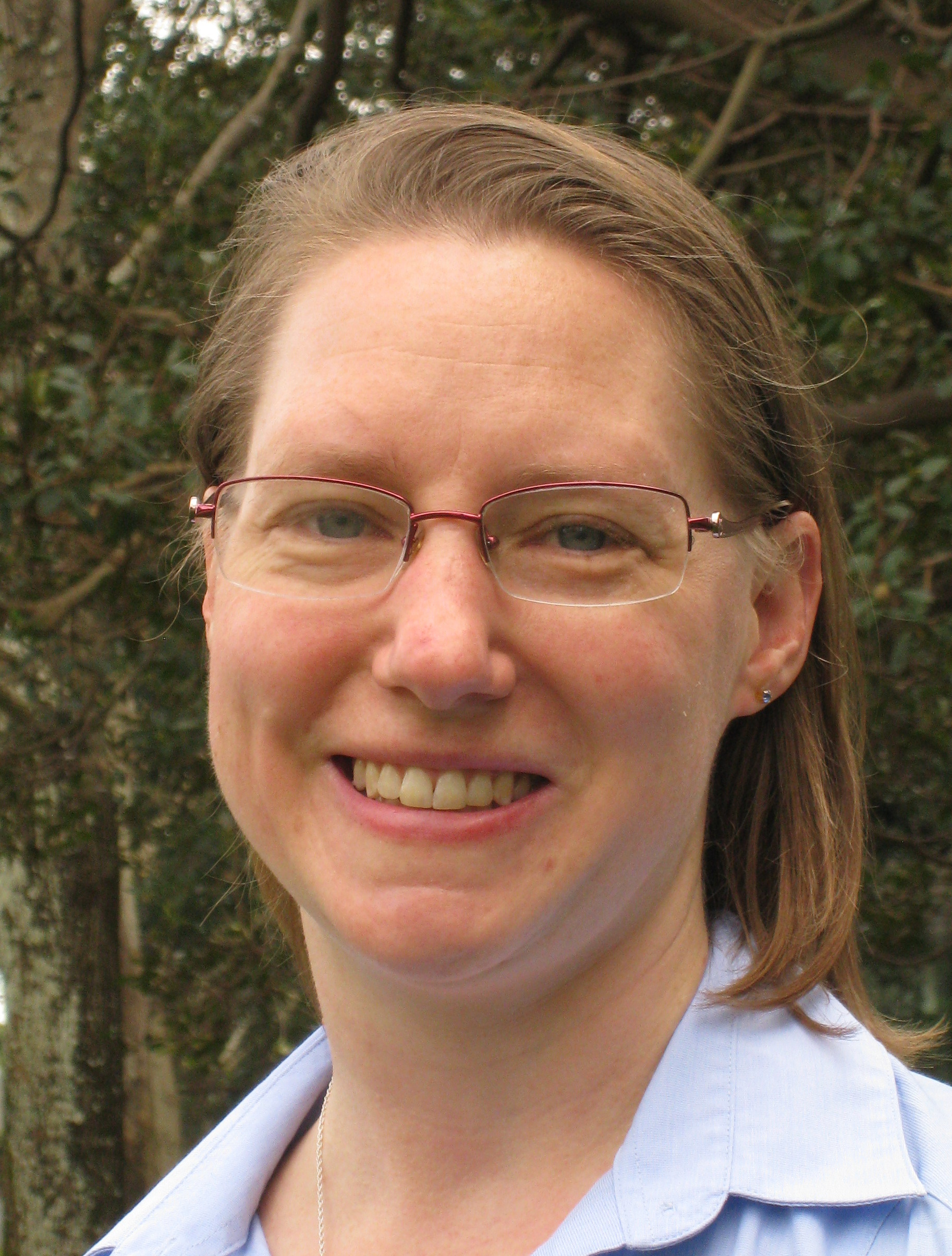
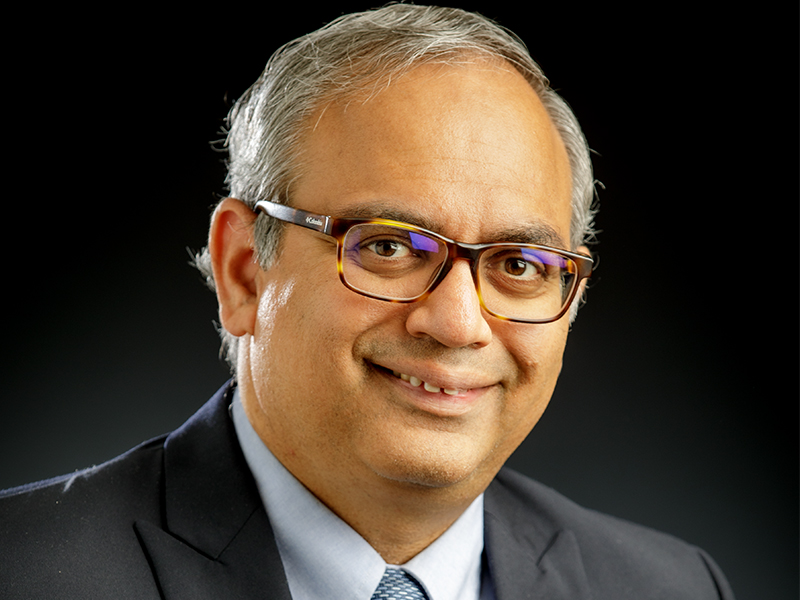
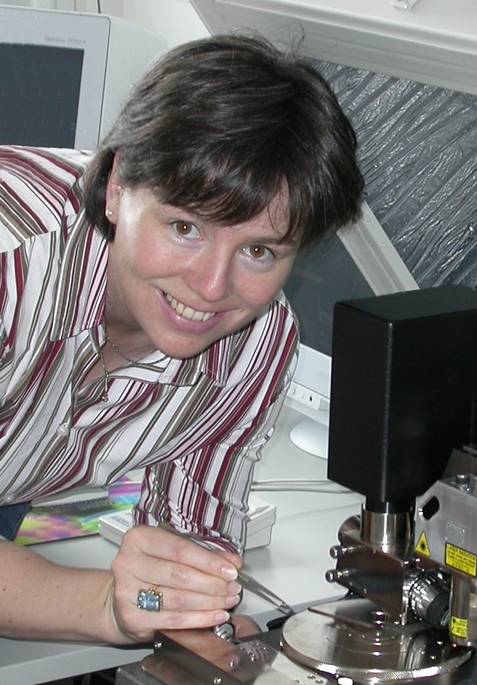
Professor Christopher Roland is a faculty member in the Department of Physics at North Carolina State University, part of the College of Sciences. He holds the rank of Professor since 2002, joining the university in 1993 after completing his PhD in Physics at McGill University, Canada, and postdoctoral work at the University of Toronto and AT&T Bell Laboratories. His research focuses on theoretical condensed matter physics and biophysics, particularly investigating nucleic acid structures (DNA and RNA) associated with neurodegenerative and neuromuscular disorders like Trinucleotide Repeat Expansion Diseases (TREDs). Key areas include DNA/RNA hairpin dynamics, free energy calculations, and molecular mechanisms underlying genetic mutations. Recent publications emphasize structural and computational studies of nucleic acid conformations, such as Z-DNA motifs, triplex formations, and disease-linked repeat sequences. His work bridges quantum transport simulations, biomolecular modeling, and disease prediction. No scientific awards are explicitly listed in the provided materials. His research is supported by grants from NC State University and collaborations within the Department of Physics. Laboratory and team details are not specified, though his work aligns with computational biophysics and condensed matter research groups at NC State.
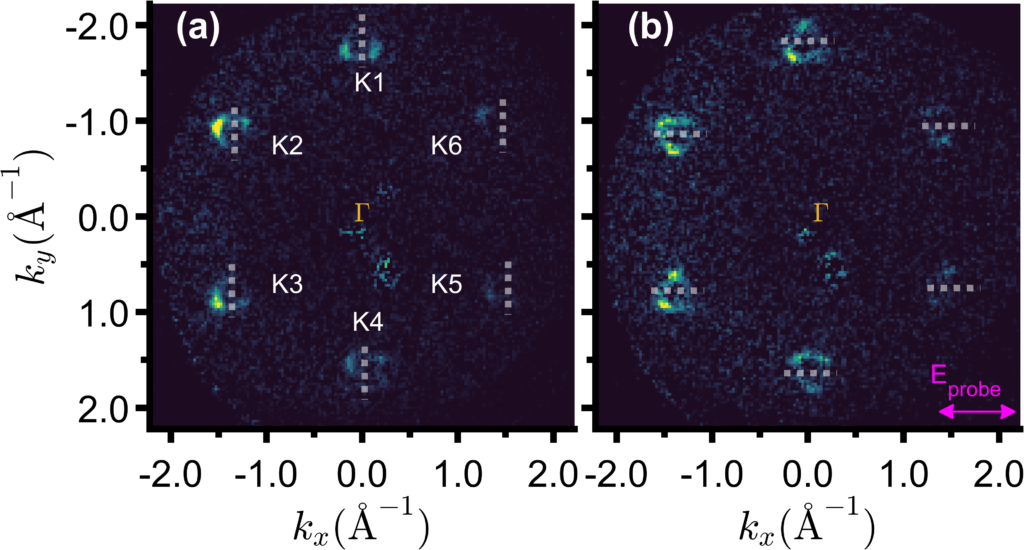
Professor Tom Allison leads an active research group at Stony Brook University focusing on ultrafast laser spectroscopy and nonlinear optics. His laboratory specializes in time- and angle-resolved photoemission spectroscopy (tr-ARPES) and frequency comb laser development for studying ultrafast dynamics in novel materials. His research interests center on understanding electron dynamics in two-dimensional materials, particularly graphene and transition metal dichalcogenides. Using sophisticated tr-ARPES instrumentation, his group investigates pseudospin dynamics, valley polarization, and exciton coupling with unprecedented momentum and energy resolution. The research bridges condensed matter physics, quantum materials, and ultrafast optical science. Professor Allison's recent publications demonstrate a strong focus on 2D materials physics, with particular attention to momentum-resolved phenomena in graphene and TMD heterostructures. His group combines cutting-edge experimental techniques with theoretical modeling to unravel complex ultrafast processes at the quantum level. Scientific Recognition: DOE Office of Science Highlight for work on valley polarization dynamics in monolayer WS2 NSF Major Research Instrumentation grant for developing high-power frequency combs Marie Skłodowskiej-Curie fellowship awarded to group member Grzegorz Professor Allison has successfully mentored multiple graduate students to completion of their degrees, including PhD candidates Jin Bakalis and Myles Silfies, and MS student Michael Wahl. His former postdoc Alice Kunin has secured an assistant professor position at Princeton University. Current research is supported by NSF funding for developing advanced frequency comb technology spanning from THz to soft x-ray regions.
Franklin Goldsmith serves as Associate Professor of Engineering within Brown University's School of Engineering, where his research bridges fundamental chemical kinetics with practical combustion applications. His work directly impacts energy conversion technologies and emission reduction strategies through rigorous investigation of reaction mechanisms. His academic foundation includes: PhD in Chemical Engineering from Massachusetts Institute of Technology (2010) BS in Chemical Engineering from North Carolina State University (2003) BA in Chemistry from University of North Carolina at Chapel Hill (1998) Goldsmith's research program centers on radical reaction kinetics and low-temperature oxidation phenomena , employing both computational master equation modeling and experimental techniques like shock tube spectroscopy and synchrotron photoionization. His investigations into non-Boltzmann energy distributions and pressure-dependent rate coefficients have established new frameworks for understanding ignition chemistry. The Thermochemistry for Combustion Database project exemplifies his commitment to foundational data resources for the field. Analysis of his publication record reveals three dominant research thrusts: (1) detailed kinetic modeling of hydrocarbon oxidation, particularly propane systems; (2) development of computational methodologies for pressure-dependent rate estimation; and (3) fundamental studies of radical-molecule interactions. His work consistently integrates high-precision experimental validation with theoretical frameworks, as evidenced by collaborations with national laboratories. Goldsmith teaches Brown's core chemical engineering curriculum including ENGN 1120 (Reaction Kinetics and Reactor Design) and ENGN 1130 (Chemical Engineering Thermodynamics), alongside specialized graduate courses in heterogeneous catalysis (ENGN 2751) and chemically reacting flow (ENGN 2910Q). His educational approach emphasizes the connection between molecular-scale kinetics and reactor design principles. His research group maintains active collaborations with Argonne National Laboratory (Klippenstein), MIT (Green), and Sandia National Laboratories (Taatjes), focusing on multiscale informatics for complex reaction systems. Current projects investigate biomass-derived fuel combustion and catalytic partial oxidation mechanisms using spatially resolved experimental techniques.
Prof. Paul Wright is a Professor of Chemistry at the University of St Andrews, leading the Physical Chemistry Teaching program. He holds a PhD from the University of Cambridge and has held roles at Shell R&D, the Royal Institution, and St Andrews since 1994. His research focuses on nanoporous solids, including zeolites and MOFs, with applications in catalysis and carbon capture. He has pioneered methods for synthesizing novel materials and pioneered synchrotron-based structural analysis techniques. Awards include the RSC/SCI Barrer Prize and ICI Readership. He supervises PhD students in advanced materials and catalysis, and teaches courses in thermodynamics, kinetics, and heterogeneous catalysis. Education: PhD in Chemistry, University of Cambridge (1986) Research Interests: Prof. Wright’s work spans five core areas: (1) Designing zeolite templates for novel structures, (2) Developing MOFs with unique properties, (3) Optimizing zeolites/MOFs for CO₂ adsorption, (4) Investigating catalytic applications of microporous solids, and (5) Advanced structural characterization using synchrotron techniques. Recent breakthroughs include understanding ‘sentinel’ cations in zeolites for selective adsorption and developing tandem catalysts combining MOFs with metal nanoparticles. Publications Trends: His articles emphasize structure-property relationships in porous materials, with 2011–2015 papers focusing on scandium-based frameworks, CO₂ capture mechanisms, and catalytic performance of SAPOs and MOFs. Collaborations with institutions like Edinburgh University and European projects highlight applied energy solutions. Awards: RSC/SCI Barrer Prize (1999) ICI Readership (2002–2004) Teaching & Grants: Leads Physical Chemistry courses at all levels, including a 5th-year Masters course in Heterogeneous Catalysis. Active in placement student monitoring via CH4441. Grants include European projects on mixed matrix membranes for CO₂ separation. Labs/Teams: Heads a research group investigating nanoporous solids, collaborating with institutions like Aberdeen University on synchrotron-based catalysis studies.
Paul Erhart is a Professor in Condensed Matter and Materials Theory at the Department of Physics, Chalmers University. He received his PhD from Technische Universität Darmstadt in 2006, followed by postdoctoral and staff positions at Lawrence Livermore National Laboratory from 2007, before joining Chalmers in 2011. His research bridges computational physics, materials science, and machine learning to tackle fundamental problems in materials design and characterization. Dr. Erhart's research focuses on computational materials science with particular emphasis on condensed matter physics, nanomaterials, and quantum materials. His work spans from developing computational methods like machine-learned potentials (GPUMD, neuroevolution potentials) to studying fundamental phenomena in perovskites, 2D materials, thermal transport, and plasmonics. He has pioneered approaches connecting simulation with experimental techniques through correlation functions and has made significant contributions to understanding phase transitions, defect physics, and electronic structure in complex materials systems. Analysis of his recent publications reveals a strong trend toward integrating machine learning with traditional computational physics methods. His work increasingly focuses on developing and applying neuroevolution potentials to study thermal properties, phase transitions, and optical phenomena in materials. There's also a clear emphasis on connecting computational results with experimental observations, particularly in neutron scattering, Raman spectroscopy, and plasmonic sensing applications. His research spans fundamental materials physics to applied areas like hydrogen sensing and sustainable materials development. Dr. Erhart has contributed to numerous software packages essential to the computational materials science community, including WulffPack for Wulff constructions, Dynasor for extracting dynamical structure factors, calorine for neuroevolution potential models, and ICET for alloy cluster expansions. His collaborative work spans multiple institutions and disciplines, reflecting the interdisciplinary nature of modern materials research. His contributions to understanding perovskite materials, thermal transport phenomena, and plasmonic systems have established him as a leading researcher in computational materials science.
Thomas Justus Schmidt is a Professor and Chair for Electrochemistry at ETH Zürich and Head of the PSI Center for Energy & Environmental Sciences at the Paul Scherrer Institute (PSI) in Switzerland. He also directs the Swiss Center of Excellence for NetZero Emissions. His research focuses on electrochemical energy conversion and storage, including fuel cells, electrolyzers, and catalyst development. Schmidt received his University Diploma (1996) and PhD (2000) in Chemistry from the University of Ulm, followed by postdoctoral work at Lawrence Berkeley National Laboratory. He has held leadership roles in industry (BASF Fuel Cell GmbH) and academia, including directing the Swiss Competence Center for Energy Research. His awards include the Charles W. Tobias Young Investigator Award and the CW Schönbein Gold Medal. He advises PhD students and leads interdisciplinary teams at ETH and PSI, with a focus on advancing sustainable energy technologies. Education: University of Ulm (Diploma 1996, PhD 2000) Industry Experience: BASF Fuel Cell GmbH (2002–2010) Key Roles: Director of Swiss NetZero Center, Head of PSI Energy & Environmental Sciences His research bridges fundamental electrochemistry with practical applications, emphasizing catalyst design, operando spectroscopy, and sustainable energy systems. Notable projects include high-temperature membrane electrode assemblies and CO₂ electroreduction technologies. Collaborations leverage PSI’s large-scale facilities for advanced material characterization. Scientific contributions include over 200 publications in journals like Nature Chemistry and Advanced Energy Materials . His team explores electrocatalysts for oxygen evolution/reduction reactions and novel materials for energy storage. Current work addresses scalability of electrochemical processes and low-carbon technologies.
Yu Xia is a Post Doc at the Department of Chemistry, Stockholm University, Sweden. He is affiliated with the Tom Willhammar Research Group, focusing on advanced electron microscopy and diffraction techniques for structural characterization of materials. PhD (2019–2023) from a joint program between the University of Birmingham (UK) and the Southern University of Science and Technology (China). Research emphasizes fabrication of metallic nanoparticles with non-equilibrium structures and shapes using gas-phase condensation and thermal shock methods. Specializes in scanning transmission electron microscopy (STEM), in-situ heating experiments, and electron energy loss spectroscopy (EELS) for nanoparticle analysis. Current work prioritizes 4DSTEM imaging for electron beam-sensitive materials and Python-based post-processing of electron microscopy datasets. Yu Xia's research spans Materials Science , Nanotechnology , and Electrocatalysis , with applications in photocatalytic hydrogen evolution , graphene composites , and advanced electron microscopy techniques . His work often integrates computational image processing with structural characterization to optimize material properties. Publications highlight innovations in heterostructure engineering , metallic alloy catalysts , and electron beam-sensitive material imaging . No scientific awards are explicitly mentioned in the provided text. Yu Xia's technical expertise includes Python scripting for image analysis, in-situ electron microscopy , and multifunctional graphene-based materials .
François Peeters is a Full Professor of Physics at the University of Antwerp, Belgium, holding the position since 2000 (with Dutch title 'gewoon hoogleraar' since 2003). He previously served as Research Director (FWO-VI) at the University of Antwerp (1996-1999), Research Leader (NFWO) (1992-1996), and Senior Research Assistant (NFWO) (1988-1992), establishing a distinguished academic career spanning over three decades. His educational background includes a Ph.D. in Physics from the University of Antwerp (1982), followed by a Habilitation (Hoger aggregaat) from the same institution (1987), and a postdoctoral fellowship at Bell Laboratories in Murray Hill, New Jersey (1982-1983). His academic journey also featured research periods at prestigious institutions including the High Magnetic Field Laboratory in Grenoble, University of California Berkeley, Oxford University, and several Brazilian and Australian universities. Peeters' research focuses on theoretical condensed matter physics , specializing in the electronic, optical, and magnetic properties of nanostructured systems. His work encompasses semiconductors , superconductors , graphene , and hybrid quantum systems , with particular emphasis on strong correlations in both classical (colloids, dusty plasma) and quantum (quantum dots) environments. His theoretical frameworks bridge fundamental quantum mechanics with practical nanotechnology applications, driving innovations in spintronics and quantum device design. Analysis of his publication record reveals a clear evolution from foundational work on polaron physics and quantum Hall systems in the 1980s-1990s toward contemporary research on graphene, topological materials, and programmable quantum nanodevices. His most cited works demonstrate consistent leadership in mesoscopic physics, with recent publications showing increased focus on spin-dependent transport phenomena and two-dimensional material systems. His scientific recognition includes: Fellowship in the American Physical Society (2005) APS Outstanding Referee award (2008) Doctor Honoris Causa from University of Szeged, Hungary (2009) Peeters has supervised 26 completed PhD theses and currently leads the Condensed Matter Theory research group comprising 3 ZAP researchers, 16 PhD students, and 8 postdocs. His grant portfolio includes coordination of an EU Marie Curie Training site on 'Electrons on helium', participation in multiple EU projects, COST actions, and ESF networks, demonstrating sustained success in securing competitive international funding. The Condensed Matter Theory group maintains extensive international collaborations, evidenced by Peeters' research visits to over 10 institutions worldwide and regular hosting of 3-4 international visitors at postdoc or professorial levels. The group's output of over 770 refereed publications with 12,000+ citations reflects its position at the forefront of theoretical condensed matter physics research.
Ivana Brekalo is a Researcher at the Ruđer Bošković Institute in Zagreb, Croatia, affiliated with the Division of Physical Chemistry and the Laboratory for Applied and Sustainable Chemistry. She holds a Ph.D. in Chemistry from Georgetown University (2019), with a thesis on "Solid State Synthesis and Study of Porous Materials," and completed her Master's (2012) and Bachelor's (2010) degrees in Chemistry at the University of Zagreb. Her work bridges mechanochemistry and materials science, focusing on scalable synthesis methods for functional materials. Doctor of Philosophy, Chemistry, Georgetown University (2013–2019) Master of Science, Chemistry, University of Zagreb (2010–2012) Bachelor of Science, Chemistry, University of Zagreb (2007–2010) Her research emphasizes mechanochemical synthesis, particularly for porous materials like metal-organic frameworks (MOFs) and coordination polymers. She explores solvent-free methods, polymorphism control, and the role of gas-phase catalysts in solid-state reactions. Recent publications highlight thermally controlled milling for agrochemical cocrystals, conductivity in alkali metal coordination polymers, and real-time monitoring of mechanochemical processes. Key publications include Nature Reviews Chemistry perspectives on advanced mechanochemical synthesis and Inorganic Chemistry studies on low-dimensional magnetism in MOF-74 materials. Her work appears in journals like ACS Sustainable Chem. Eng. and Chemical Science , with a focus on green and scalable methods. Scientific Awards Scholarship of the Polish National Agency for Academic Exchange – Ulam Programme (2020) Bepina Sabalić Kunin Fellowship (2013-2015, 2017-2018) Ludo Frevel Crystallography Scholarship, IUCr (2017) CCDC award for best presentation (2022) Brekalo contributes to outreach as the 2019 ACS Volunteer of the Year and has received recognition for her work on solvent-free polymorphism and mechanochemical templation of ZIFs.
Associate Professor Judy Hart is a materials scientist at the School of Materials Science & Engineering, UNSW Sydney , specializing in the development of semiconducting materials for renewable energy applications. Her work integrates computational (DFT) and experimental approaches to understand composition-property relationships in systems like solid solutions , heterostructures , and doped materials for photocatalysis and solar cells . She leads projects funded by ARC Discovery and Linkage grants , including work on photo-electro-catalysis systems and stabilizing ceramic materials . Education: PhD in Materials Engineering (Monash University, 2007), BEng (Materials) (Monash, 2002) Professional Experience: Senior Lecturer (UNSW, 2017–), Lecturer (UNSW, 2013–2017), University of Bristol (2007–2012) Research Interests Her research focuses on designing materials for renewable energy , particularly photoelectrochemical water splitting and organic oxidation reactions . Key areas include Density Functional Theory (DFT) , defect engineering , band gap tuning , and nanostructured materials . She investigates ferroelectric polarization effects , metal oxide heterostructures , and stability of battery components , with applications in hydrogen production , CO2 conversion , and advanced battery materials . Scientific Awards Ramsay Memorial Fellowship (University of Bristol, 2007–2009) Teaching Contributions She is co-author of the 1st Australian & New Zealand edition of "Materials Science and Engineering: An Introduction" , and teaches courses on computational materials science , corrosion-resistant surfaces , mechanical behavior of metals , and materials design .
Dr. Chathura Bandutunga is a Research Fellow at the Centre for Gravitational Astrophysics within the Research School of Physics at the Australian National University (ANU). His research focuses on advanced optical techniques for precision measurement, with significant contributions to gravitational wave detection technology, molecular spectroscopy, and space exploration instrumentation. Dr. Bandutunga's research expertise spans digital interferometry, fiber optic sensors, and precision optical measurement systems. His work has pioneered digitally enhanced interferometric techniques that have enabled new capabilities in molecular dispersion spectroscopy, gravitational wave detection, and optical frequency referencing. He has developed innovative methods for phase noise suppression, common-mode noise rejection, and thermal-noise-limited optical measurements that operate at the boundaries of physical possibility. His publication record demonstrates consistent innovation in optical measurement technology, with recent work advancing fiber optic gyroscopes, frequency comb technology, and applications for interstellar propulsion systems like the Breakthrough Starshot program. His research bridges fundamental optical physics with practical applications in both terrestrial scientific instrumentation and space-based technologies. Dr. Bandutunga is actively involved in the Centre for Gravitational Astrophysics at ANU, contributing to Australia's participation in international gravitational wave research collaborations. His technical leadership in precision optical measurement systems directly supports next-generation gravitational wave detectors and related technologies requiring unprecedented measurement stability.
Jindal Shah is a Professor and holds the Anadarko Petroleum Chair in Chemical Engineering at Oklahoma State University, where he also serves as the Graduate Program Director. He is affiliated with the Department of Chemical Engineering within the College of Engineering at Oklahoma State University. Dr. Shah received his educational training from prestigious institutions worldwide. He earned his Ph.D. in Chemical Engineering from the University of Notre Dame in 2005, followed by an M.S. in Environmental Engineering from the University of Cincinnati in 1999, and completed his undergraduate education with a B.Tech. in Chemical Engineering from the Indian Institute of Technology (IIT) Bombay in 1996. Dr. Shah's research focuses on the application of molecular simulation methodologies to understand molecular-level interactions that give rise to macroscopic phenomena. His primary research interests include Monte Carlo and Molecular Dynamics Simulations, Phase Equilibria, Ionic liquids, and Dye-sensitized solar cells. A significant portion of his work centers on designing novel biodegradable ionic liquids with properties suitable for chemical processes, with applications in next-generation batteries and carbon capture. He also investigates molecular-level interactions responsible for device efficiency in dye-sensitized solar cells to rationally design novel dye molecules. Additionally, Dr. Shah employs data science and machine learning techniques to correlate properties of ionic liquids and generate new molecules with desired properties. An analysis of Dr. Shah's recent publications reveals a strong focus on ionic liquids and their applications in energy storage and carbon capture technologies. His work consistently bridges fundamental molecular-level understanding with practical applications, particularly in developing electrolytes for batteries and CO2 capture systems. A notable trend is the integration of machine learning techniques with traditional molecular simulation methods to accelerate materials discovery and optimization. His research demonstrates a progression from fundamental molecular simulations toward applied technologies with significant environmental impact, particularly in climate action (SDG 13) and affordable clean energy (SDG 7). Dr. Shah has secured substantial research funding from multiple prestigious sources including the National Science Foundation, U.S. Department of Energy, National Aeronautics and Space Administration, and industry partners. His funded projects include 'Collaborative Research: Cyber Training-Implementation, Medium, Establishing Sustainable Ecosystem for Computational Molecular Science Training & Education' (NSF), 'Ionic Liquids for Direct Air Capture of CO2 using Electric-Field-Mediated Moisture Gradient Process' (DOE), and 'CAREER: Computation-Enabled Rational Design of Cytochrome P450 for Ionic Liquid Biodegradation' (NSF). These grants support his research in computational molecular science, CO2 capture technologies, and the development of biodegradable ionic liquids. As an educator, Dr. Shah has been actively involved in teaching graduate courses including Principles of Chemical Engineering Thermodynamics, Doctoral Thesis supervision, and specialized courses such as Machine Learning for Chemical Processes and Introduction to Chemical Process Analytics. His teaching philosophy integrates cutting-edge research with educational practice, preparing students for the computational challenges of modern chemical engineering. He has also mentored numerous doctoral students through their dissertation research, contributing to the development of the next generation of chemical engineers and computational scientists.
Roy Johnsen is a Professor in the Department of Mechanical and Industrial Engineering at the Norwegian University of Science and Technology (NTNU), specializing in corrosion and surface technology. With a Dr.ing. degree from NTH (1984), he has extensive industry experience from Statoil Research Centre (1985-1991) and CorrOcean (1991-2004), where he expanded the company globally. His current research focuses on hydrogen embrittlement, corrosion protection, and integrity management in offshore systems, with collaborations across Europe, Asia, and the Americas.
Prof. Dr. Ioachim Pupeza serves as Group Leader in the Department of Spectroscopy/Imaging at the Leibniz Institute of Photonic Technology (Leibniz-IPHT) in Jena, Germany. His research focuses on advanced optical measurement techniques, particularly in the field of field-resolved spectroscopy and precision optical measurements. Dr. Pupeza's research interests center around optical spectroscopy with a particular emphasis on field-resolved techniques that capture the complete electric field waveform of light-matter interactions. His work spans infrared spectroscopy , molecular fingerprinting , ultrafast laser technology , and precision optical measurements . He has made significant contributions to electro-optic sampling techniques, which enable characterization of electric-field waveforms across the terahertz to visible spectral range. His research also extends to mid-infrared light generation , terahertz spintronic emitters , and cavity-enhanced spectroscopy , with applications ranging from fundamental physics to medical diagnostics. Analysis of Dr. Pupeza's recent publications reveals a strong trend toward increasingly sophisticated field-resolved spectroscopy techniques with applications in both fundamental science and practical diagnostics. His work has evolved from basic measurement techniques to applications in cancer detection through molecular fingerprinting of biofluids. A consistent theme across his publications is the pursuit of higher precision, broader bandwidth, and improved sensitivity in optical measurements, often achieving attosecond-level precision. His research bridges physics, engineering, and medical applications, demonstrating how fundamental optical advances can translate to real-world diagnostic tools. Dr. Pupeza leads the research group "Field-Resolved Optical Precision Measurement Methods" at Leibniz-IPHT, which appears to collaborate extensively with other research institutions and groups. His work involves sophisticated laser systems including high-power Yb:YAG thin-disk oscillators, femtosecond enhancement cavities, and dual-oscillator systems for precision measurements. The group's research has implications for molecular spectroscopy, medical diagnostics, and fundamental studies of light-matter interactions at the most fundamental time scales.
Karin Jacobs is a Professor in the Department of Physics at Saarland University, where she leads the research group for soft matter physics within the Faculty of Natural Sciences and Technology. Her work bridges experimental physics and applied materials science, focusing on interfacial phenomena, thin films, and functional materials. Research Interests: Her group investigates the stability of coatings, properties of simple and complex fluids, and the adhesion of biomolecules on surfaces. Using advanced experimental techniques such as atomic force microscopy (AFM), ellipsometry, surface plasmon resonance spectroscopy, optical microscopy, and ultra-high vacuum (UHV) methods like photoelectron spectroscopy, her team probes nanoscale and microscale interactions at solid-liquid and solid-gas interfaces. The research spans fundamental and applied domains, including the synthesis and characterization of graphene and boronitrene, production of water-in-water vesicles using hydrophobins, and bacterial adhesion studies. These investigations are often linked to industrial applications in the paint, semiconductor, and biomedical sectors. Publication Trends: Over the past 15 years, her publications reflect a consistent focus on surface physics and soft matter. Key themes include graphene synthesis via liquid precursor deposition (including unconventional sources like fingerprints), interfacial rheology, biopolymer adsorption, and quantitative imaging analysis. The interdisciplinary nature of her work is evident in the combination of physics, chemistry, and biological interfaces. Scientific Awards: No specific awards are mentioned in the provided text. Advising and Grants: As head of an active research group, Prof. Jacobs supervises graduate students and postdoctoral researchers, though specific names are not listed. Her collaborations with theoretical groups and external institutions (e.g., University of Augsburg) suggest participation in joint grants and funded projects, particularly in nanomaterials and surface science. The applied orientation of her research indicates engagement with industry partners in coatings and semiconductor technologies. Labs and Teams: The Jacobs Group operates a well-equipped experimental laboratory at Campus E2 9, Saarland University, specializing in surface analysis and soft matter characterization. The team includes researchers working on biofilms, microfluidics, and functional materials, supported by technical and administrative staff.