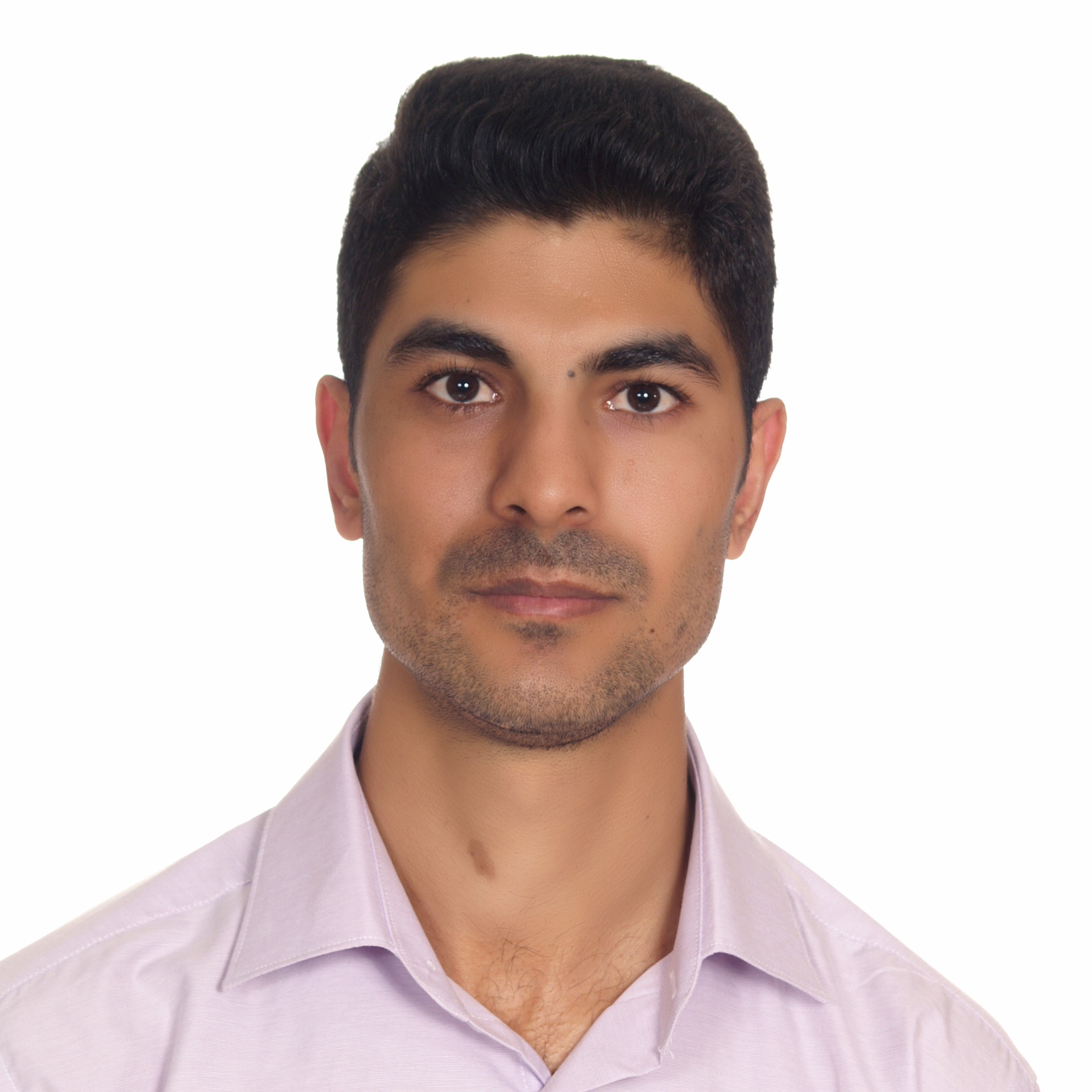
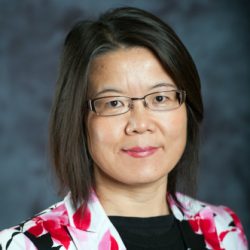
Massimo Rundo is an Associate Professor at the Polytechnic of Turin 's Department of Energy (DENERG) and coordinator of the Fluid Power Research Laboratory (FPRL) . With over 70 Scopus-indexed publications, his work focuses on modeling, simulation, and experimental validation of fluid power systems. Research Interests: Positive displacement pumps (gerotor, gear, vane, piston) Hydraulic valves (flow forces, pressure control) Mobile hydraulics (excavators, telehandlers) CFD and lumped parameter modeling Incomplete filling phenomena at high speeds Recent Publications analyze flow dynamics in pumps, vibration-based fault detection, and energy-efficient hydraulic architectures through 1D/3D simulations. He has coordinated industry-funded projects with companies like Casappa and Pierburg Pump Technology. Honors: MDPI Energies Editor's Choice (2018) SAE Excellence in Oral Presentation (2004) SAE Certificate of Appreciation (2000) Rundo teaches graduate courses in Mobile and Industrial Fluid Power and advises master's theses, while serving as Associate Editor for the International Journal of Fluid Power and committee member for major conferences including ASME/BATH Symposium and International Maha Fluid Power Conference.
David Headrick serves as Professor in the Horticulture and Crop Science Department at California Polytechnic State University (Cal Poly), San Luis Obispo, specializing in entomology, biological pest management, invasive species, and pollinator conservation. His teaching portfolio includes agricultural pest management, vertebrate pest management, and biological control courses within the College of Agriculture, Food and Environmental Sciences. Education: Ph.D. in Entomology from University of California, Riverside Dr. Headrick's research investigates sustainable insect pest management systems in vegetable, citrus, and greenhouse cropping environments. He focuses on biological control through beneficial insects, tephritid fruit fly ecology, and conservation of native pollinators including European honeybees. His field studies have established predator-prey relationships for sustainable pest suppression without pesticides across California agricultural landscapes. Current work examines organic farming's role in conserving dung beetles that disrupt foodborne pathogen vectors. Analysis of his 100+ publications reveals consistent contributions to biological control literature since the 1980s, with recent emphasis on organic pest management strategies (2019-2024), mating disruption techniques for citrus pests, and invasive species management. His work bridges fundamental entomological research with practical agricultural applications, particularly in Mediterranean cropping systems. Scientific Awards: No major awards documented in available sources With over 130 professional presentations, Dr. Headrick has significantly advanced pest management knowledge through collaborative research. While specific grant details aren't provided, his extensive field studies suggest sustained funding for biological control projects. His mentorship has contributed to agricultural science education through classroom instruction and research supervision. Dr. Headrick collaborates with entomology researchers across California on integrated pest management solutions, particularly focusing on vegetable and citrus systems where biological control agents reduce pesticide dependency. His work integrates ecological principles with practical farming constraints.
Nico Pietroni is a Professor at the School of Computer Science at the University of Technology Sydney (UTS), where he conducts research at the intersection of geometry processing, digital fabrication, and architectural geometry. His work bridges theoretical foundations in computational geometry with practical applications in industrial production pipelines, and he is affiliated with the Visualisation Institute (VI) Research Network at UTS. His primary research interests include geometry processing, mesh parametrisation, digital fabrication, architectural geometry, and computational design. He has pioneered techniques such as FlexMaps for computational design of flat flexible shells and Metamolds for computational design of silicone molds. His research focuses on developing concepts and practical algorithms for the creation and manipulation of digital shape representations, with applications spanning entertainment industry, digital fabrication, and architectural geometry. His recent publications demonstrate a strong trend toward computational methods for digital fabrication and architectural applications. His work spans from garment design and alteration to architectural structures like grid shells and bending-reinforced structures. He has developed innovative approaches for surface approximation, mesh processing, and computational design that address practical challenges in manufacturing and construction, with particular emphasis on reducing manufacturing complexity while maintaining design integrity. Wynne Prize finalist for "Bending the Light" artwork, exhibited at the Art Gallery of New South Wales Professor Pietroni has supervised numerous research students working on projects related to geometry processing, digital fabrication, and computational design. His funded research includes projects such as "Digital Optimization of Personalised Spacesuit" and "CRC-P Shoulder Replacement Implant Design for Additive Manufacturing," demonstrating the practical applications of his work across diverse fields from space research to medical technology. He has secured multiple research grants totaling significant funding for computational design research. He has developed several influential software projects including MeshLab (an open-source system for 3D mesh processing that won the SGP Software Award in 2017), HexaLab (an online viewer for hexahedral meshes), and QuadMixer (for layout-preserving blending of quadrilateral meshes). His work has been widely adopted by both academic researchers and industry practitioners in fields ranging from entertainment to architecture to medical technology.
Mladen Furtula is an Associate Professor at the Faculty of Forestry, University of Belgrade , Department of Wood Processing. His research focuses on woodworking machinery , energy in the wood industry , occupational safety , and wood biomass utilization . B.Sc. and Ph.D. from the Faculty of Forestry, University of Belgrade. Employment history: Assistant-Trainee (2003), Assistant (2011), Assistant Professor (2014), Associate Professor (2020). His research interests include: Development and optimization of CNC woodworking machines and reconfigurable systems . Energy efficiency and CO2 emission reduction in wood pellet production. Acoustic emission analysis for cutting force and surface roughness monitoring. Thermal modification of wood and its impact on color and surface properties . Publication trends highlight his work on wood biomass for decarbonization, precision in CNC machining , and sustainable energy strategies in the wood industry. He has contributed to conferences and journals like BioResources , Thermal Science , and Wood Research . He teaches courses on internal transport , energy in wood industry , and numerically controlled machines , with a focus on professional practice and safety.
Srdjan Svrzic , an Associate Professor at the Faculty of Forestry, University of Belgrade , is a prominent researcher in wood processing, focusing on acoustic analysis, unconventional machining techniques, and energy efficiency. His work spans ionizing radiation effects on wood composites, vibro-acoustic diagnostics, and automation systems. B.Sc. (1999), M.Sc. (2004), PhD (2010) from the Faculty of Forestry Teaching areas include control technology, energy systems, and automation in wood processing Research keywords: Wood Processing, Acoustic Analysis, Radiation Effects, Automation . His recent publications (2024–2021) explore machine learning for noise diagnostics, energy optimization in Serbian wood industries, and rheological models for particleboard creep. He has also published on CNC machine precision, microwave-assisted drying, and surface roughness prediction. His textbooks cover automation in wood product manufacturing and physics entrance exam preparation.
Roland Baatz is a Researcher at the Leibniz Centre for Agricultural Landscape Research (ZALF) within the Simulation and Data Science research area. His work focuses on landscape modelling with emphasis on model-data fusion and data assimilation techniques for agro-ecosystem models. Specializes in soil-vegetation-atmosphere continuum processes Develops methodologies for cosmic ray neutron soil moisture sensing Active in climate change impact assessment on agricultural systems Research Trends identified from recent publications include: Advancements in cosmic ray neutron sensor applications for soil moisture monitoring Integration of remote sensing data with crop models for regional-scale agricultural assessments Analysis of drought impacts on ecosystem water-use efficiency Development of data assimilation frameworks for land surface models His work demonstrates strong technical expertise in environmental data analysis , model calibration , and cross-disciplinary collaboration through projects like the COSMOS-Europe soil moisture sensor network and WASCAL observatory in West Africa.
Erkut Sönmez serves as Associate Professor of Supply Chain Management and Analytics in the College of Business at the University of Nebraska-Lincoln. His research integrates operations management with real-world applications in food systems, energy supply chains, and financial services, utilizing advanced analytical methods to solve complex capacity management problems. Education: Ph.D., Operations Management, Carnegie Mellon University, Tepper School of Business M.S., Operations Management, Carnegie Mellon University, Tepper School of Business B.S., Industrial Engineering, Middle East Technical University, Turkey Sönmez's research focuses on capacity management challenges arising from new business models and technologies, particularly in food and energy supply chains and banking operations. He employs queueing theory, simulation, and stochastic optimization to derive counter-intuitive managerial insights for strategic and tactical decision-making. His work reveals critical tradeoffs in volunteer staffing for gleaning operations, LNG supply chain optimization, and risk-efficiency balances in banking systems. Publication trends show consistent contributions to high-impact journals including Operations Research , Manufacturing and Service Operations Management , and Food Policy , with emphasis on sustainable operations in food waste reduction (40% of U.S. food is wasted while 14 million households face food insecurity) and energy logistics. His research bridges theoretical rigor with practical applications, frequently covered by media outlets like Huffington Post and Perishable Pundit . Scientific Awards: Distinguished Research Award, College of Business, University of Nebraska-Lincoln (2019) William Larimer Mellon Fellowship for doctoral studies Yasar Holding High Academic Achievement Fellowship Sönmez actively contributes to academic service as reviewer for Operations Research , Management Science , and other top journals, and as judge for POMS and M&SOM competitions. His research on LNG supply chains received support from Qatar National Research Fund's NPRP award. He collaborates extensively with organizations including Boston Area Gleaners, Food Bank of the Southern Tier, Cornell University, and Boston College to translate research into operational improvements for food rescue systems. As an educator, he teaches Supply Chain Logistics Management and Operations and Supply Chain Management courses while serving on university committees including Recruiting, Grade Appeal, and as Independent Study Advisor. His work demonstrates how community-focused operational innovations can simultaneously address food waste and insecurity through efficient gleaning systems.
Astra Auziņa-Emsiņa is an Associate Professor and Leading Researcher at Riga Technical University. With a Doctoral degree in Economics, she specializes in macroeconomic modeling, econometrics, and sustainable transport development. Macroeconomic and intersectoral analysis Green transportation systems Input-output modeling Regional development Transport policy In recent projects, she has led work packages on manufacturing sector performance evaluation and participated in Ukraine war impact assessments. She contributes to EU income convergence studies and sustainable last-mile delivery research. Her work appears in journals like Engineering for Rural Development and conference proceedings. Active in academic governance, she: Co-develops econometric models Advises the Latvian Council of Science Co-founded the Latvian Association of Young Researchers Collaborates with European input-output experts
Michael Schuster is a Research Fellow at the Chair for Dynamics, Control, Machine Learning and Numerics (DCN-AvH) at Friedrich-Alexander University Erlangen-Nuremberg (FAU), operating under the Alexander von Humboldt Professorship. He actively contributes to the CRC TRR154 project focused on gas network optimization. His academic foundation includes: Industrial Mathematics studies at FAU PhD in Mathematics from FAU (2021) with dissertation on nodal control and probabilistic constrained optimization for gas networks His research specializes in PDE constrained optimization, optimization under uncertainty, and probabilistic robustness, with direct applications to gas network systems. He has pioneered work on the turnpike phenomenon in optimal control under uncertain conditions, establishing critical theoretical frameworks for long-horizon control problems. Analysis of his publication record reveals a consistent focus on mathematical optimization of energy infrastructure, particularly addressing compressor station placement, boundary control of wave equations, and probabilistic constraints in flow networks. His interdisciplinary approach bridges pure mathematics with engineering applications in gas transport systems. Supported by the German Research Foundation (DFG) through the CRC TRR154 grant, his work integrates advanced numerical methods with real-world energy market modeling. He collaborates extensively within the FAU MoD (Mathematics and Data Science) initiative and maintains active international research partnerships.
Orhan Sisman is a Researcher in the Department of Functional Materials at Alexander Dubček University of Trenčín, Slovakia. He contributes to the Centre for Functional and Surface-Functionalized Glass (FunGlass), a Horizon 2020 project focused on advanced glass materials. His work bridges materials science and sensor technology, with particular emphasis on developing next-generation gas detection systems using nanomaterials. Education: 2020: Ph.D. in Information Engineering-Physics Curriculum, University of Brescia, Italy (Thesis: Strategies to Enhance the Performances of Metal Oxide Gas Sensors) 2016: M.S. in Physics, Gebze Technical University, Turkey (Thesis: Fabrication of Organic/p-type Semiconducting Metal Oxide Hybrid Structures for Gas Sensing Applications) 2013: B.S. in Physics Education, Middle East Technical University, Turkey Dr. Sisman specializes in semiconductor nanomaterials for sensing applications. His research spans metal oxide nanomaterials, organic-inorganic hybrids, and glass/ceramic systems with focus on hydrogen, NO 2 , and humidity detection. He investigates structural, electrical, and surface properties of nanostructured materials to develop sensors with improved selectivity and sensitivity. His work integrates materials synthesis, surface engineering, and device fabrication for environmental monitoring and safety applications. His publication record shows consistent advancement in sensor technology, evolving from fundamental material characterization to sophisticated device engineering. Recent work emphasizes hybrid and core-shell nanostructures, UV-enhanced sensing, and ion beam surface modification techniques to optimize sensor performance. The publications demonstrate strong international collaboration across European research institutions. Research Projects: HORIZON 2020 FunGlass Project (2021-2023) - Researcher CERIC-ERIC Project (2018) - Research Fellow COST ACTION TD1105 EuNetAir (2016-2018) - Research Fellow COST ACTION MP1202 HINT (2016-2018) - Research Fellow VEGA Project No: 1/0844/21 - Researcher TUBITAK Project No: 113F403 (2016-2018) - Research Assistant Dr. Sisman maintains active collaborations with institutions across Europe including Friedrich Schiller University Jena, University of Brescia, Vinca Nuclear Institute, and multiple COST Action networks. He has participated in numerous research training programs and short-term scientific missions, contributing to his expertise in advanced materials characterization and sensor development. His work within the FunGlass center positions him at the forefront of functional glass research in Europe.
Amin Salehi is a Doctoral Researcher at the Department of Electrical Engineering and Automation, Aalto University (Espoo, Finland). His work focuses on power and energy systems within smart grid technologies, with particular emphasis on voltage profile estimation and phasor measurement unit (PMU) placement optimization. Key Research Themes: Smart grid monitoring, energy storage, renewable energy integration Current Projects: PMU placement frameworks for active distribution networks, wind farm capacity assessment for hydrogen production Recent publications highlight trends in smart grid optimization and sustainable energy systems, including technical-economic analyses of PMU deployments and renewable energy-to-hydrogen conversion studies in Nordic contexts.
Dr. Lukasz Laniewski-Wollk serves as an Honorary Fellow at the School of Mechanical and Mining Engineering, The University of Queensland, where he conducts advanced research in computational fluid dynamics and optimization methodologies. His work bridges theoretical development with practical applications in energy systems and resource extraction. His primary research domains encompass: Computational Fluid Dynamics Lattice Boltzmann Methods Aerodynamic Optimization Multiphase Flow Fracture Mechanics Particle Transport Analysis of his 2020-2025 publications reveals a concentrated effort on developing high-fidelity computational frameworks for complex fluid phenomena, particularly in multiphase systems and fractured media. His methodologies demonstrate strong interdisciplinary integration between fluid mechanics, materials science, and petroleum engineering, with significant contributions to lattice Boltzmann variants for non-Newtonian fluids and fracture permeability quantification. Collaborative patterns indicate sustained partnerships with UQ's computational mechanics group and international energy research consortia.
Dr. Yongqin Zhang is an Associate Professor in Geospatial Information Technologies and the founding Director of the Master of Applied Science in Geospatial Information Technologies (MAS-GIT) program at Delta State University's College of Arts and Sciences, Department of Biological Sciences. She joined Delta State in 2011 and has developed this master's degree program, which is designated as a “Signature Program” at the university. Her educational background includes: Ph.D. from the University of Toronto (2007) M.Sc. from Nanjing University of Information Science and Technology (1999) B.Sc. from Nanjing University of Information Science and Technology (1994) Dr. Zhang specializes in remote sensing, photogrammetry, GIS, and climatology, with research focusing on hyperspectral and lidar remote sensing, advanced spatial analysis, invasive species detection, grassland and cropland modeling, forest parameter retrieval, and climate change applications. Her work applies geospatial technologies to estimate and map earth system variables. With over 70 publications cited 575 times, her research has been internationally recognized. Her recent publications demonstrate strong trends in applying geospatial technologies to solve real-world problems across multiple domains including public health (Zika virus mapping), environmental monitoring (hydraulic fracturing impacts), conservation biology (species mapping), and sustainable infrastructure (EV charging stations). The research consistently integrates advanced remote sensing techniques with practical applications. Her scientific recognition includes: NSERC PDF Postdoctoral Fellowship Award National Best Ph.D. Thesis Award Graduate Student Research Award from University of Toronto Ontario Association of Remote Sensing Award Connected Educator Award Highest Course Evaluation Response Rate Award Dr. Zhang has secured research funding from Ellucian Service, Technology for Higher Education, and SunGard Higher Education Solutions. She has advised over 90 graduate students and guided researchers at Canadian government institutions, York University, and the University of Toronto. Her teaching excellence is reflected in student evaluations with scores of 4.2 to 4.8 out of 5, and she has developed 12 graduate and undergraduate courses in geospatial technologies, hydrology, and climatology. She established a Geospatial Information Technologies research program and lab at Delta State University, where students gain hands-on experience with cutting-edge GIS and remote sensing instruments for data acquisition, geospatial data analysis, and image processing. Her research has led to the development of standard practices for digital hemispheric photography in vegetation measurements for the North American Carbon Program and Canadian Carbon Program.
Dr. Iain MacLeod serves as Principal Lecturer in Strategy and Politics at Aberdeen Business School, Robert Gordon University, where he also leads Strategy and International Business curriculum development. His extensive academic profile spans teaching, research, and cross-sector knowledge exchange with policymakers across public, private, and voluntary domains. His educational foundation includes: PhD in Political Science from Robert Gordon University (2004-2009), examining youth participation in the Scottish Parliament MA (Hons) in Political Science and French from University of Aberdeen (1997-2001) Post Graduate Certificate in Research Methodology from Robert Gordon University (2004-2005) MacLeod's research centers on comparative institutional analysis, devolution dynamics, deliberative democratic processes, and marginalized group political engagement—with pronounced emphasis on youth participation. His scholarly trajectory reveals consistent exploration of Scottish political evolution, electoral behavior patterns, and digital-era civic mobilization, notably through studies of referendum impacts and cross-national youth voting experiences. Publication trends demonstrate evolving focus from foundational youth participation frameworks toward contemporary digital democracy investigations, while maintaining strong connections to Scottish governance contexts. His work bridges political theory with practical policy applications across both civic engagement and energy sector workforce development domains. Professional recognition includes: Fellow of the Higher Education Academy (FHEA, 2015) Advance HE Senior Fellow (SFHEA, 2024) MacLeod actively mentors doctoral candidates, currently supervising April Cuffy's research on youth voter experiences in Canadian and UK elections. His grant portfolio features Scottish Funding Council-supported projects on oil and gas workforce optimization and Communities and Culture Network+-funded studies of post-referendum digital activism. Current knowledge exchange initiatives maintain direct connections to policymaking processes through sustained sector partnerships.
NAKAYAMA Masanobu serves as Professor in the Department of Life and Applied Chemistry at Tokyo Institute of Technology, leading research in solid-state battery materials. His work integrates computational modeling, machine learning, and experimental electrochemistry to develop advanced energy storage solutions, with particular focus on ionic conduction mechanisms and interface engineering in next-generation batteries. His academic foundation includes: Bachelor of Engineering in Chemical Engineering (Tokyo Institute of Technology, 1997) Master of Science in Chemical Engineering (Tokyo Institute of Technology, 1999) Doctor of Engineering in Applied Chemistry (Tokyo Institute of Technology, 2004) Professor Nakayama's research spans solid-state ionics, electrochemistry, and materials informatics, emphasizing the application of neural network potentials for molecular dynamics simulations. His group pioneers AI-driven approaches to predict ionic conductivity, optimize electrode materials, and understand degradation mechanisms in lithium/sodium-ion batteries. Current projects address critical challenges in sustainable battery development, including cobalt-free cathodes and chloride-based solid electrolytes. Analysis of his 2024 publications reveals a strong trend toward integrating deep learning with experimental validation to accelerate materials discovery. Key themes include atomic-scale simulation of battery interfaces, machine learning prediction of ionic conductivity, and development of sustainable electrode architectures with enhanced energy density. His significant contributions have been recognized through: Japan Ceramic Society Academic Award (2021) MEXT Young Scientist Award (2014) Nagai Science and Technology Foundation Academic Award (2013) Takagawa Memorial Solid-State Chemistry Award (2009) Tokyo Institute of Technology Engineering Young Researcher Award (2008) Tedashima Memorial Research Award Doctoral Thesis Award (2005) Professor Nakayama actively mentors graduate researchers in interdisciplinary projects combining computation and experiment. His group secures competitive funding from Japanese research agencies including JSPS and NEDO, supporting collaborations with industry partners on solid-state battery commercialization. Current grants focus on AI-accelerated materials discovery and interface engineering for all-solid-state batteries. Based in the Environmental Ceramics Field at Tokyo Tech, his laboratory employs advanced characterization techniques including in situ XPS alongside neural network potential simulations. The team maintains strong industry partnerships for translating fundamental research into practical battery technologies, with recent work emphasizing sustainable materials design and manufacturing scalability.