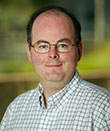
Prof. Dr.-Ing. Marco Pruckner leads the Chair of Communication Networks at the University of Würzburg since 2022, following his assistant professorship in Energy Informatics at Friedrich-Alexander-University Erlangen-Nürnberg (2016–2022). His research focuses on energy system analysis, vehicle grid integration, and future mobility systems using modeling and simulation methodologies. University of Würzburg (2022–present) Friedrich-Alexander-University Erlangen-Nürnberg (2016–2022) UC Berkeley (Visiting Scholar, 2020) Key research areas: Modeling and simulation of integrated energy systems Digital twin development for local energy systems Optimization of electric vehicle charging strategies Water-energy nexus analysis and sustainability metrics Recent publications (2022–2025) demonstrate expertise in: Smart charging algorithms for vehicle grid integration Heat pump electrification and seasonal performance modeling Battery state-of-health estimation techniques Multi-objective optimization for data centers and energy systems His team at University of Würzburg includes Daniel Bayer, Paul Benz, Jonas Schiller, and Leo Strobel. Methodologies combine system dynamics, discrete-event simulation, and machine learning for energy and mobility system analysis.
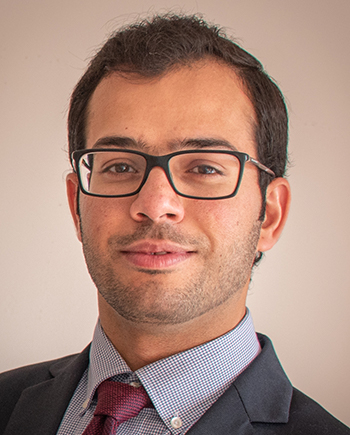
Tooran Emami is a tenured full professor of Electrical Engineering in the Department of Electrical Engineering and Computing at the U.S. Coast Guard Academy (USCGA). She joined USCGA as a Tenure Track Assistant Professor in July 2011, advanced to Tenured Associate Professor in August 2017, and currently serves as a Tenured Professor since August 2023. Prior to USCGA, she was an adjunct faculty member at Wichita State University for three semesters. Ph.D., Electrical Engineering, Wichita State University M.S., Electrical Engineering, Wichita State University Dr. Emami's research focuses on control systems, with expertise in Proportional-Integral-Derivative (PID) controller design, robust control, time-delay systems, compensator design, analog and digital filter design, and hybrid fuel cell power plant design. Her work bridges theoretical control engineering with practical applications in energy systems, particularly fuel cells and renewable energy integration. She has made significant contributions to engineering pedagogy, developing innovative teaching methods for hybrid and virtual learning environments. Analysis of Dr. Emami's recent publications reveals a strong focus on PID controller design methodologies, particularly for systems with time delays. Her work increasingly integrates renewable energy systems, with numerous publications on hybrid fuel cell, solar, and battery systems. She maintains a dual focus on theoretical control systems and practical engineering education, with several publications addressing project-based learning approaches in electrical engineering education. Center for Advanced Study Summer Fellowship Award (2012) Spirit of The Bear Award (2016) Outstanding Doctoral Dissertation Award at Wichita State University Student Paper Award from Engineering Physics and Physics Division (2022) Multiple Best Paper and Student Paper Awards at ASEE conferences Dr. Emami serves as Lead Advisor for Electrical Engineering and Cyber Systems Majors and Advisor for Electrical Engineering Senior Capstone Projects. She has held numerous leadership positions including Interim Program Chair of Electrical Engineering, ASEE Electrical and Computer Engineering Division Program Chair, and Faculty Senate Vice President. Her service extends to conference organization, where she has served as Session Chair, Program Committee member, and Scientific Committee member at national and international conferences. She previously served as Ph.D. Student Dissertation Co-Adviser and Master Student Theses Co-Adviser at Wichita State University. Dr. Emami actively participates in professional organizations as a Senior Member of IEEE and member of IEEE Control System Society and American Society for Engineering Education. Her leadership roles in ASEE include serving as Electrical and Computer Engineering Division Vice Chair, Engineering Physics and Physics Division Program Chair, and Ocean Engineering Division Publication Chair. She has contributed to numerous conference committees and served as an advisor for Lockheed Martin Ethics in Engineering Case Competitions.
Rubén Turo Cortés is a Postdoctoral Researcher at the Madrid Institute for Advanced Studies (IMDEA Nanoscience), specializing in switchable nanomaterials. He earned his Chemistry degree (2017) and Master’s (2018) at the University of Valencia (UV), followed by a PhD (2023) at UV’s Institute of Molecular Science (ICMol-UV) under Dr. Carlos Bartual Murgui and Professor Dr. José Antonio Real Cabezos. His research focuses on Spin Crossover (SCO) materials, particularly coordination compounds for thermal control and gas sensing applications. PhD in Chemistry (2023), University of Valencia MSc in Chemistry (2018), University of Valencia BSc in Chemistry (2017), University of Valencia Turo’s research integrates synthesis and characterization of functional materials with dual-responsive properties. His recent work explores the interplay between luminescence and spin states in europium-based MOFs, CO₂ sensing through van der Waals-enhanced frameworks, and structural tuning of Hofmann-type polymers for guest-induced bistability. This aligns with broader efforts to develop multifunctional nanomaterials for environmental monitoring and molecular electronics. His publications demonstrate expertise in tailoring metal-organic frameworks for gas-phase applications, with a focus on stability, quantum yield optimization, and device integration. Key sub-fields include ligand design, symmetry breaking, and host-guest interactions in 2D/3D architectures. Rubén currently contributes to the Switchable Nanomaterials group led by Dr. José Sánchez Costa, advancing coordination chemistry for thermal management technologies. His work bridges molecular magnetism, luminescence engineering, and adaptive material design.
Paul Forster is an Associate Professor in the Department of Chemistry and Biochemistry at the University of Nevada, Las Vegas (UNLV), with additional appointments in the radiochemistry program. His research focuses on synthesizing and characterizing nanoporous materials for gas storage, separation, and nuclear waste applications. His educational background includes a Ph.D. in Materials Science from the University of California, Santa Barbara (advisor: Anthony K. Cheetham) and a B.S. in Chemistry, Summa cum Laude, from Oregon State University (advisor: A. W. Sleight). Dr. Forster's research program centers on materials discovery through hydro/solvothermal synthesis, with emphasis on nanoporous frameworks exhibiting tunable pore chemistry. His group employs crystallography, neutron scattering, and gas sorption techniques to study structure-property relationships, particularly for hydrogen storage via coordinatively unsaturated metal sites and nuclear waste remediation involving technetium/actinide chemistry. Systematic studies of synthesis parameters (temperature, pH, concentration) enable precise control over material formation. Analysis of his publication record reveals consistent innovation in hybrid inorganic-organic materials, with dominant themes in gas-solid interactions ( hydrogen storage , fission product capture ) and structural characterization ( single-crystal diffraction , neutron studies ). His work bridges fundamental synthesis with energy and nuclear security applications. Dr. Forster directs a research group equipped with a Bruker Apex II diffractometer (SEB 2120) and maintains programmatic access to synchrotron facilities at the Advanced Light Source (Berkeley) and Advanced Photon Source (Chicago) for advanced structural studies.
Dr. Eugene Mohareb is an Associate Professor in Sustainable Urban Systems at the University of Reading, where he leads the Sustainable & Equitable Resource Consumption (SERC) group. His research focuses on quantitative sustainability assessments of urban systems, specializing in life cycle analysis of energy and food systems, greenhouse gas mitigation strategies, and adoption of low-carbon technologies. He directs multiple courses including Statistical Analysis, Sustainable Built Environments, and Carbon Management. Dr. Mohareb holds a PhD in Civil (Environmental) Engineering from the University of Toronto, an MSc in Biological (Food) Engineering from the University of Guelph, and a BSc in Biological (Food) Engineering from the same institution. He is affiliated with the International Society for Industrial Ecology. His research examines urban sustainability through three primary lenses: life cycle sustainability assessment of built environments, domestic retrofit adoption patterns, and sustainability metrics for food systems. Key projects include FoodSEqual, HiFi Bread, and BBSRC-funded assessments of biobased food system transitions. His work with Toast Brewing exemplifies industry collaborations to quantify carbon benefits of circular economy approaches. Mohareb's publications demonstrate strong thematic coherence around urban decarbonization, with recent expansions into social dimensions of sustainability in developing contexts. His 15 most recent articles (2022-2025) cluster around six domains: waste management innovations, energy retrofit behavior, urban metabolism modeling, climate adaptation strategies, food-energy systems, and renewable technology adoption in rural areas. This reflects an evolution from foundational urban GHG accounting toward applied socio-technical transitions. He leads the SERC research group, collaborating with academic and industry partners to develop evidence for low-carbon societies. Current projects investigate decentralized waste systems, solar adoption impacts on rural livelihoods, and urban heat resilience frameworks.
Meltem Yıldirım İmamoğlu is an Assistant Professor in the Department of Software Engineering at International Cyprus University. Her research focuses on adaptive neural networks, evolutionary algorithms, and data mining techniques for multi-dimensional and multi-view datasets. Research Interests: Evolutionary parameter optimization for unsupervised learning models Multi-view association rule mining using neural clustering Rule-based decision systems for software engineering applications Publication Trends: Recent work includes (1) PTGNG for parameter tuning in the Growing Neural Gas algorithm (2023), (2) MARCMV for multi-view rule extraction (2023), and (3) a decision support system for programming language selection (2017). These studies highlight expertise in neural networks, data mining, and evolutionary computing.
Hao Li is a MSCA Postdoc Fellow and Visiting Scholar at LIP6 , affiliated with the University of Southern Denmark in the Department of Mechanical Engineering . His research focuses on advanced computational methods for topology optimization in thermal, fluid, and structural engineering systems. Education: Not explicitly stated in the provided text. Current Projects: Leading EU-funded research on heat exchanger design using multiscale models and machine learning. Dr. Li's work spans multiscale topology optimization, level-set methods, and fluid-structure interaction, with applications in microchannel cooling, compliant mechanisms, and biodegradable composites. His recent publications highlight advancements in 3D conjugate heat transfer, adaptive meshing, and eigenfrequency maximization. The trends in his research output (2017–2025) emphasize thermal-fluid systems , high-resolution structural optimization , and manufacturable composite designs . Notable subfields include triply periodic minimal surfaces for cooling channels, nonlinear buckling analysis, and phasor-based dehomogenization techniques. Teaching & Supervision: Currently supervising projects on topology optimization frameworks for heat sinks and high heat flux cooling. His past projects (2018–2023) include research on piezoelectric transducers and thermal-fluid system design. Labs & Collaborations: Collaborates with institutions in Japan and France, focusing on experimental validation and industrial applications. His network includes partnerships with researchers in structural mechanics, computational fluid dynamics, and additive manufacturing.
Dr. Michael Bitterlich is a scientific collaborator at the Albrecht Daniel Thaer Institute of Agricultural and Horticultural Sciences, part of the Faculty of Life Sciences at Humboldt University. His work focuses on plant-soil interactions mediated by arbuscular mycorrhizal fungi. Location: Lentzeallee 55-57, Room 17 Contact: Phone 030 2093-46433 Research Interests Dr. Bitterlich investigates how arbuscular mycorrhizal fungi enhance plant nutrition and drought tolerance through hyphal networks , soil hydraulic modifications , and nutrient-water coupling . His studies explore: Soil texture-dependent mycorrhizal effects Brassinosteroid-sucrose transporter interactions Hyphal water transport under drought Root-hyphal redundancy in resource uptake Publication Trends His 15 most recent publications highlight mycorrhizal fungi's role in: Modulating soil hydraulic properties Enhancing phosphorus/nitrogen uptake Improving drought resilience Engineering sustainable soil-crop systems Interpreting symbiotic biomarkers like blumenols Modeling root-hyphal water dynamics Contact Email: michael.bitterlich@hu-berlin.de
Mim Rahimi serves as Assistant Professor in the Department of Civil & Environmental Engineering at the University of Houston's Cullen College of Engineering, with affiliate status in Materials Science and Engineering since 2021. Holding a Ph.D. in Chemical Engineering from Pennsylvania State University (2017) and postdoctoral training at MIT, Dr. Rahimi directs research at the intersection of electrochemistry and climate solutions. Postdoctoral, Chemical Engineering, Massachusetts Institute of Technology, 2021 Ph.D., Chemical Engineering, Pennsylvania State University, 2017 B.S., Chemical Engineering, Sharif University of Technology, 2014 Dr. Rahimi's research centers on electrochemical carbon capture, utilization, and storage (eCCUS) , with specific focus on developing processes for carbon separation from flue gas and air, waste heat harvesting, and AI-integrated carbon capture systems. The lab pioneers electrochemical approaches to bridge electricity and thermochemistry for emission reduction, addressing critical gaps in industrial decarbonization pathways through both fundamental electrochemistry and applied process engineering. Analysis of recent publications reveals strong emphasis on electrochemically mediated amine regeneration for carbon capture (12+ papers), thermally regenerative batteries for waste heat conversion (8+ papers), and emerging work on ocean carbon removal and AI-optimized capture systems . Key disciplinary intersections include environmental electrochemistry, chemical process engineering, and sustainable materials development. NSF CAREER Award (2024) AAEES 40 Under 40 Recognition (2025) UH Junior Faculty Research Excellence Award (2024-2025) UH-Chevron $25K Energy Transition Innovation Challenge (2023) As Principal Investigator, Dr. Rahimi directs multiple federally funded projects including the NSF CAREER award for electrochemical carbon capture research. The lab maintains active collaborations with Schlumberger-Doll Research, Illinois Sustainable Technology Center, and University of Texas at Austin, while advising graduate students in electrochemical process development. Professional service includes editorial roles at Frontiers in Earth Science and Batteries Journal, plus IPCC AR6 review contributions. Team Rahimi operates a dedicated electrochemistry research facility focusing on bench-scale carbon capture system development and waste heat conversion technologies, with strong industry partnerships driving translational research toward commercial implementation.
Y. Chen is a researcher active in urban planning, landscape architecture, and transportation systems. Their work spans urban wilderness perception, ecological park design, and traffic management technologies. Affiliations include collaborative projects between China and the Netherlands. Key Research Areas: Urban ecology, cross-cultural landscape design, traffic network optimization, and microfluidic systems. Recent research (2022-2024) focuses on urban wilderness perception in Hangzhou and design strategies from Dutch practices. Earlier work explores traffic data fusion, 3D cell culture fabrication, and cell migration stress measurement. Articles from 2002-2020 highlight expertise in photonic crystals, transport systems, and environmental monitoring. Participated in a 2025 workshop on residential garden design. No explicit awards or affiliations listed beyond peer-reviewed publications.
Banu Aysolmaz is an Assistant Professor at Eindhoven University of Technology (TU/e) in the Information Systems group within the Industrial Engineering and Innovation Sciences school. She is affiliated with EAISI and actively supervises PhD candidates Paola Lara Machado, Montijn van de Ven, and Ginger Korsten. Her research focuses on business process management , digital innovation , and the integration of intelligent systems with organizational processes. She explores how organizations develop data analytics capabilities and align business models with operational processes. Her work includes process model visualization techniques like animation and virtual environments. Recent publications emphasize greenhouse gas emission management , network-based business models , and capability maturity models for data analytics. Her research spans process mining , sustainability in production , and critical success factors in digital transformation projects. Scientific Awards I3E 2024 Runner-up Best Paper Award Marie Curie Individual Fellowship NWO Creative Industry Grant (2020) Banu is involved in educational activities including Design of service operations , Business process management , and Green and digital transformation: sustainability in the era of AI . She contributes to academic peer-review for journals like International Journal of Production Economics and European Conference on Information Systems .
Dr. Timenko Artur Valentynovych serves as Senior Lecturer at Zaporizhia National Technical University's Department of Computer Systems and Networks within the Faculty of Computer Science and Technologies. Holding a specialist degree in Computer Systems and Networks (2010), he maintains active roles in both teaching and research. His educational background includes graduation from Zaporizhia National Technical University in 2010 with specialization in Computer Systems and Networks. Professional development is evidenced through continuous research output and curriculum development activities. Research focuses on Internet of Things , computer networks , and neural networks , with particular emphasis on protocol verification, device interoperability, and embedded system optimization. Recent work explores semantic chatbots for IoT management, air quality monitoring systems, and MQTT protocol compatibility analysis. His methodology integrates formal verification techniques with practical hardware implementation. Publication trends from 2020-2024 reveal consistent contributions to IoT infrastructure (45%), network protocols (30%), and AI applications (25%). Key journals include Shipbuilding & Marine Infrastructure and Scientific Notes of Vernadsky University. Research demonstrates strong industry relevance with applications in smart homes, environmental monitoring, and critical systems. Teaching responsibilities encompass Python programming basics, computer network design, IoT fundamentals, and wireless technologies. His laboratory guidelines for Embedded Computer Systems and IoT disciplines reflect practical, hands-on pedagogy. Current projects involve developing automated temperature control systems and network anomaly detection using hybrid neural networks. Professional activities include active participation in Ukrainian academic conferences and international collaborations through ZNTU's research infrastructure. His work contributes to the university's strategic focus on digital innovation and sustainable technology development.
Michele Stefanizzi serves as an Assistant Professor in the Department of Mechanics, Mathematics and Management at the Polytechnic University of Bari, Italy. His academic work focuses on energy systems and power generation within the ING-IND/09 classification, with research centered on sustainable energy infrastructure and decarbonization technologies. His research interests encompass: Advanced hydrogen storage systems (solid-state and physisorption) Energy recovery in water distribution networks using pumps as turbines Thermoacoustic instability control in gas turbine combustion Fuel cell systems for marine propulsion applications Concentrated solar thermal integration with thermal energy storage Wave energy conversion using Wells turbines Analysis of his 15 most recent publications (2022-2025) reveals a strong thematic focus on decarbonization pathways through hydrogen technologies, renewable energy integration, and energy recovery systems. His work consistently combines numerical modeling, experimental validation, and techno-economic analysis across fluid mechanics, thermodynamics, and energy conversion domains, with particular emphasis on practical applications in water infrastructure, marine transportation, and industrial processes. Scientific awards: No awards were documented in the provided materials. Regarding academic advising, research grants, and laboratory facilities, the available information does not specify any details about student supervision, funded projects, or dedicated research infrastructure.
Prof. Dr. Numan CELEBİ serves as a Professor at Sakarya University's Faculty of Computer and Information Sciences, Department of Information Systems Engineering, where he has held academic positions since 2007. His career progression includes promotion to Associate Professor in 2013 and subsequent advancement to full Professor. His educational foundation comprises a Doctorate in Industrial Engineering from Sakarya University (1998-2004) with thesis Inductive-rough clustering approach to part family generation , a Master's in Electrical and Electronics Engineering (1995-1997) with thesis Development of computer program for the implementation of Adapazari medium voltage distribution network (SCADA) system , and a Licence from Istanbul Technical University's Electrical-Electronic Engineering program (1985-1989). CELEBİ's research spans Artificial Intelligence , Machine Learning , and Computer Vision , with significant contributions to optimization algorithms (Polar Bear Algorithm, Tug of War Optimization), intelligent transportation systems (traffic congestion detection, vehicle rerouting), and computer vision applications (object tracking, saliency detection, UAV-based plant recognition). His methodology frequently integrates Rough Set Theory and fuzzy systems for data analysis and decision support. Analysis of his 15 most recent publications (2007-2023) reveals a clear research trajectory toward applying metaheuristic optimization and deep learning to real-world problems. His work demonstrates increasing focus on transportation systems (40% of recent publications), agricultural technology via UAVs (15%), and novel optimization frameworks (25%), with consistent methodological emphasis on hybrid algorithm design and real-time implementation. As an educator, CELEBİ supervises graduate research through courses like ENF 524 Project and teaches specialized subjects including Meta Heuristic Optimization Methods , Intelligent Techniques in Data Analysis , and Data Science across undergraduate and graduate programs. His teaching portfolio spans discrete mathematics, computer networks, and cloud computing, reflecting interdisciplinary expertise.
Muhammed Fatih ADAK is an Associate Professor at Sakarya University's Faculty of Computer and Information Sciences, Department of Computer Engineering. His work spans software engineering, artificial intelligence, and sensor systems with applications in energy, healthcare, and industrial automation. Doctorate: Sakarya University (2016) - Electronic Nose Data Classification with AI Master's: Kocaeli University (2012) - Elevator Simulator Design Bachelor's: Dokuz Eylul University (2009) - Computer Engineering Research focuses on machine learning , software testing , fuzzy logic , anomaly detection , and decision support systems . His articles (2013-2024) explore AI-driven solutions for natural gas monitoring, medical diagnostics, and industrial processes. Recent publications include systematic reviews of AI integration in software engineering phases and predictive models for gas consumption and voice pathology. He supervises graduate students and contributes to academic projects like Smart Gas Sensor Systems and Adaptive Online English Placement Exams . Teaches courses: Data Structures, Fuzzy Logic, Software Testing, Java Programming Co-authored books: Principles of Programming Languages , Visual Programming Managed EU-funded projects like HOPE (street rehabilitation) and AI-Enhanced Performance Evaluation Platforms Develops applications for visually impaired education and workplace safety systems