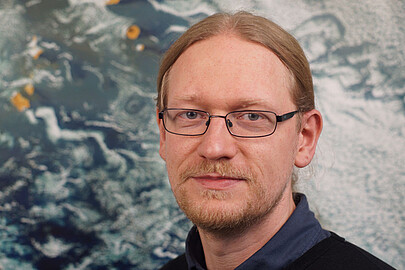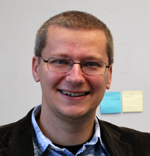
Konrad Patkowski is an Associate Professor in both the Department of Chemistry and Biochemistry and the Department of Physics at Auburn University's College of Sciences and Mathematics (COSAM). He serves as Graduate Program Officer (GPO) for the Chemistry and Biochemistry department. Dr. Patkowski leads a theoretical and computational chemistry research group focused on weak intermolecular interactions and the development of accurate computational methods to study them. Education M.S. in Chemistry, University of Warsaw, Poland (1999) Ph.D. in Chemistry, University of Warsaw, Poland (2004) Postdoctoral Fellow, University of Delaware (2003-2010) Research Interests Dr. Patkowski's research focuses on theoretical and computational study of weak intermolecular interactions, which are fundamental to understanding molecular behavior in various contexts from liquid water properties to protein structure. His work particularly emphasizes: Development of Symmetry-Adapted Perturbation Theory (SAPT) methodology and software Computational studies of molecules physisorbed on metallic and graphite/graphene surfaces Development of ultra-accurate potential energy surfaces for weakly interacting systems His group uses quantum mechanical methods and high-performance computing to investigate the properties of molecules and clusters, with particular emphasis on accurate calculation of interaction energies. Research Trends Dr. Patkowski's recent publications demonstrate a strong focus on advancing computational methods for studying intermolecular interactions, particularly through the development and application of Symmetry-Adapted Perturbation Theory (SAPT). His work spans from fundamental theoretical developments to practical applications in materials science and biochemistry. A significant portion of his recent research involves improving the accuracy and efficiency of computational methods for calculating weak interactions, with applications ranging from gas-phase dimers to more complex systems like metal-organic frameworks and carbon nanotubes. Scientific Awards The OpenEye Outstanding Junior Faculty Award in Computational Chemistry, American Chemical Society (2015) NSF CAREER Award (2014) European Union-funded visiting professorship at Nicolaus Copernicus University, Torun, Poland (2015) Best M.S.c. thesis in Chemistry, Polish Chemistry Society (2000) Bronze Medal, International Chemistry Olympiad, Hong Kong (1994) Bronze Medal, International Mathematical Olympiad, Hong Kong (1994) Advising and Grants Dr. Patkowski has successfully mentored multiple graduate students to completion of their degrees, including Daniel G. Smith (who received the ACS Chemical Computing Group Excellence Award for Graduate Students in 2015) and Sicheng Li. His current research group includes graduate students Jonathan Waldrop, Monika Kodrycka, and Reza Hemmati, as well as postdoctoral researcher Narendra Nath Dutta. His research has been supported by significant grants including an NSF CAREER award (2014) for developing a multireference variant of symmetry-adapted perturbation theory, and funding from the American Chemical Society Petroleum Research Fund for studying hydrocarbon physisorption on carbon nanotubes. Laboratory and Research Team Dr. Patkowski leads a vibrant research group that maintains a high-performance computing cluster with 26 nodes and 544 cores. His group collaborates extensively with researchers worldwide, including institutions in Poland, Taiwan, China, and multiple US universities. The Patkowski lab has made significant contributions to the development of the SAPT (Symmetry-Adapted Perturbation Theory) software suite, which is widely used for calculating intermolecular interaction energies.