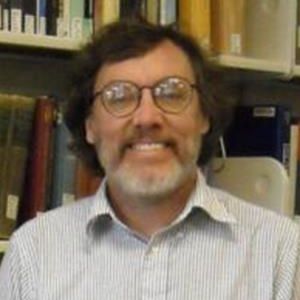
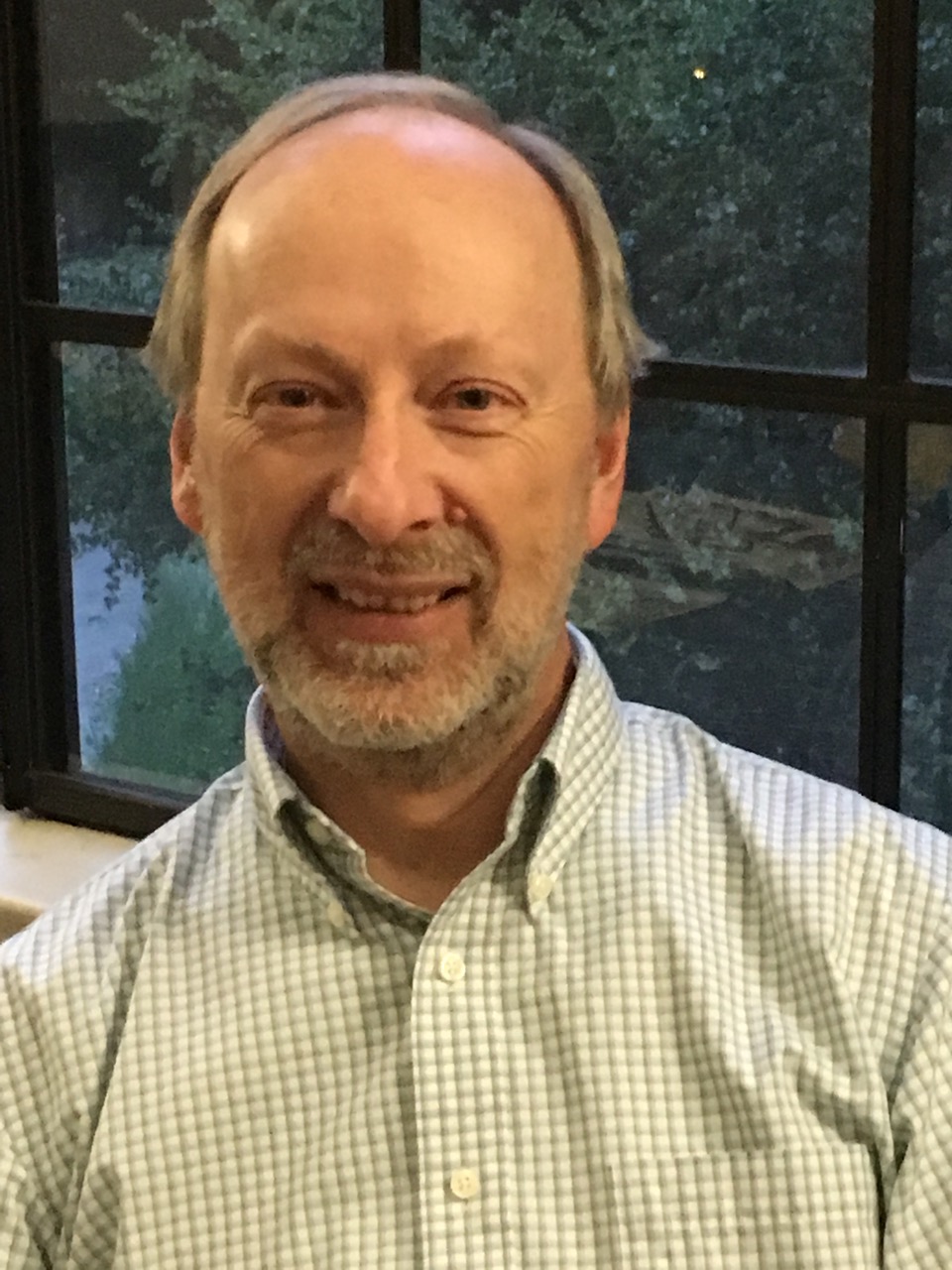
David Seckel is a Professor of Physics & Astronomy at the University of Delaware, affiliated with the College of Arts & Sciences. His research focuses on cosmic rays, neutrino astrophysics, and the development of large-scale observatories like the IceCube Neutrino Observatory and the ANITA detector. He has contributed to studies of ultra-high-energy cosmic rays, neutrino detection techniques, and cosmological implications of particle interactions. Key research areas include analyzing atmospheric and astrophysical neutrino fluxes, probing cosmic ray composition via air shower measurements, and investigating neutrino emission from active galactic nuclei. His work leverages advanced detector technologies and machine learning methods for data analysis. Collaborations include the IceCube Collaboration, RNO-G radio array, and the PUEO payload for airborne neutrino detection.
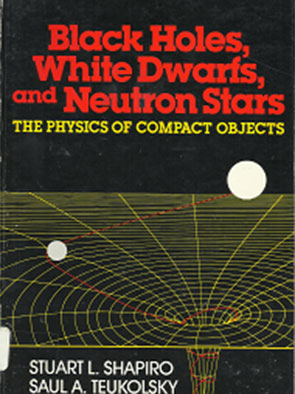
Stuart L. Shapiro is a Professor of Physics and Astronomy at the University of Illinois at Urbana-Champaign and a NCSA Senior Research Scientist. Previously, he held faculty positions at Cornell University from 1973 to 1995. He earned an A.B. in Astronomy from Harvard University (1969) and a Ph.D. in Astrophysical Sciences from Princeton University (1973). His research focuses on theoretical astrophysics and general relativity, including black holes, neutron stars, gravitational waves, and relativistic magnetohydrodynamics. Shapiro pioneered computational methods in numerical relativity, co-developing the BSSN formalism and advancing simulations of compact object mergers. He is renowned for coining terms like 'supramassive' and 'hypermassive' neutron stars and for exploring gravitational wave generation via LIGO/LISA. His work integrates supercomputing, analytical modeling, and visualization to address fundamental questions in astrophysics. Recipient of the Hans A. Bethe Prize (2017), he has authored a seminal textbook Black Holes, White Dwarfs and Neutron Stars (1983) and led a vibrant research group training undergraduates and graduate students. His research group’s simulations visualize phenomena such as black hole formation and neutron star mergers, bridging theory with observational astronomy.
Anita Reimer is a Full Professor at the Institute for Astro- and Particle Physics, Faculty of Mathematics, Computer Science and Physics, University of Innsbruck. Her research focuses on theoretical astroparticle physics, particularly high-energy phenomena in active galactic nuclei (AGN), blazars, gamma-ray bursts, and cosmic-ray acceleration, with strong involvement in major international collaborations such as Fermi-LAT, H.E.S.S., and the Cherenkov Telescope Array (CTA). Her research interests center on multi-messenger astrophysics, exploring the connections between gamma rays, neutrinos, and cosmic rays. She develops theoretical models for particle acceleration and emission in relativistic jets, photohadronic interactions, and neutrino production in AGN. Her work often bridges theoretical predictions with observational data from space- and ground-based telescopes. The recent publications of Prof. Reimer span topics such as TeV gamma-ray emission from Eta Carinae, periodic modulation in blazars, cosmic-ray electron spectra, and dark matter searches. These works reflect a strong emphasis on observational constraints for theoretical models, multiwavelength analysis, and the physics of extreme astrophysical environments. She has delivered numerous invited talks at international conferences on topics including neutrino-emitting blazars, multi-messenger astronomy, and theoretical modeling of AGN jets. She collaborates extensively with leading research groups worldwide and contributes to major catalog efforts like the Fermi-LAT source catalogs. She advises students and junior researchers in high-energy astrophysics and is actively involved in large-scale projects such as the Cherenkov Telescope Array, contributing to both instrumentation and science preparation. Her work is central to advancing our understanding of particle acceleration and emission in the most energetic sources in the universe.
Mauricio Bustamante is an Assistant Professor at the Niels Bohr Institute , University of Copenhagen, specializing in theoretical high-energy astrophysics, astroparticle physics, and neutrino phenomenology. His research bridges cosmic phenomena with fundamental particle physics, focusing on ultra-high-energy neutrinos, cosmic rays, gamma-ray bursts, and new physics beyond the Standard Model. PhD in Physics (2012-2014) M.Sc. in Physics (2007-2010) B.Sc. in Physics (2001-2006) His work explores neutrino oscillations, self-interactions, and decay in extreme astrophysical environments. He contributes to major international collaborations like GRAND (Giant Radio Array for Neutrino Detection) and IceCube-Gen2, developing simulation pipelines and forecasting detection methods for EeV-scale neutrinos. Recent publications highlight energy-dependent flavor transitions, Lorentz invariance testing, and constraints on long-range neutrino interactions via DUNE and T2HK experiments. He actively participates in peer review for journals such as Physical Review D , Physical Review Letters , and Astrophysical Journal , and has attended conferences like TeV Particle Astrophysics (2017). His research emphasizes detector design, cosmic ray reconstruction via graph neural networks, and multi-messenger astronomy.
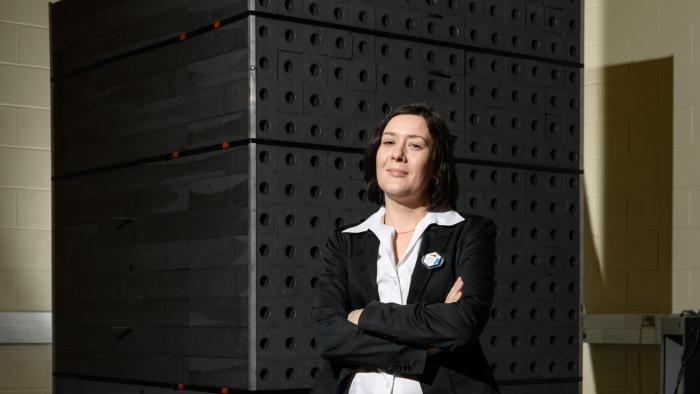
Anna Erickson serves as Woodruff Professor and Associate Chair for Research at Georgia Institute of Technology's George W. Woodruff School of Mechanical Engineering, where she bridges reactor engineering and nuclear nonproliferation through integrated theoretical and experimental approaches. Director of the $25M DOE NNSA-funded Consortium for Enabling Technologies and Innovation (12 universities, 12 national labs), she has authored over 100 publications including the seminal text Active Interrogation in Nuclear Security (Springer, 2018) and advises federal agencies on nuclear security policy. Education: Ph.D. in Nuclear Science and Engineering, Massachusetts Institute of Technology (2011) M.S. in Nuclear Science and Engineering, Massachusetts Institute of Technology (2008) B.S., Oregon State University (2006) Research Focus: Dr. Erickson pioneers nonproliferation-by-design methodologies through two integrated thrusts: advanced reactor analysis for proliferation-resistant nuclear energy systems and radiation detection for border security applications. Her work uniquely combines machine learning with nuclear engineering to develop safeguards for next-generation reactors, with significant contributions to antineutrino detection systems and medical physics applications like proton radiography. Current projects emphasize small modular reactor safety and spectral imaging techniques. Publication Trends: Analysis of her 15 most recent publications (2018-2020) reveals dominant themes in antineutrino-based reactor monitoring (60% of works), advanced radiation detection systems (30%), and small modular reactor design (10%). Key innovations include lithium-loaded scintillators for neutron detection, spectral X-ray correction algorithms, and high-temperature reactor concepts with inherent proliferation resistance, demonstrating consistent DOE funding focus on nuclear security infrastructure. Awards: Woodruff Professorship (2019) Lockheed Dean's Excellence in Teaching Award (2016) US Frontiers of Engineering Symposium (National Academy of Engineering, 2015) American Nuclear Society Graduate Scholarships (2006, 2009) Stewardship Science Graduate Fellowship (DOE, 2008-2011) Leadership & Funding: As director of the $25M Consortium for Enabling Technologies and Innovation, she manages cross-institutional R&D in machine learning, advanced manufacturing, and nuclear detection. Her Laboratory for Advanced Nuclear Nonproliferation and Safety (LANNS) coordinates with Aerospace Engineering, Chemistry, and International Affairs departments on nonproliferation projects, while her ELATES leadership program participation (2022) enhances STEM management capabilities. Recent media engagements with CBS News (nuclear fusion breakthrough) and CNN (radiation safety) demonstrate policy impact. Research Infrastructure: The multidisciplinary LANNS lab develops experimental detection systems alongside reactor modeling tools, supporting the Consortium's mission to create deployable nuclear security technologies. Collaborations with 12 national laboratories enable access to unique facilities for radiation source characterization and reactor simulation, with current efforts focused on AI-enhanced safeguards for commercial reactor fleets.
Manuela Reben serves as a Professor at AGH University of Science and Technology in Kraków, Poland, within the Faculty of Materials Science and Ceramics. Her primary appointment is in the Department of Glass Technology and Amorphous Coatings, with office space in building A-3, room 222. She holds the significant administrative role of Vice-Dean of the Faculty of Cooperation and participates in multiple governance bodies including the Chemical Engineering Discipline Council, Faculty College, University Senate, and Senate Committee on Science. Her research centers on advanced glass systems with specialization in optical materials , radiation shielding composites , and waste glass valorization . Key investigations include structural characterization of rare earth-doped tellurite and phosphate glasses, development of novel compositions for photonic applications, and utilization of industrial glass wastes in sustainable construction materials. Her work bridges fundamental materials science with practical engineering solutions for laser technology, nuclear shielding, and eco-friendly building products. Analysis of her recent publications (2022-2025) reveals dominant research trajectories in three interconnected domains: (1) Engineering phosphate/tellurite glass matrices doped with rare earth ions for broadband optical amplifiers and laser gain media; (2) Developing radiation-shielding glasses with optimized attenuation properties for medical and nuclear applications; (3) Transforming industrial glass wastes into functional construction materials through sintering process optimization. These efforts demonstrate consistent innovation in glass composition design and property tailoring. Scientific awards: No awards documented in available sources. Advising activities and research grants are not specified in current documentation, though her leadership roles suggest significant mentorship responsibilities. Her departmental affiliation indicates active participation in collaborative research teams focused on glass technology and amorphous materials development.
Dr. Sarah Burke-Spolaor is an Associate Professor in the Department of Physics and Astronomy at West Virginia University and a member of the Center for Gravitational Waves and Cosmology (GWAC) . Her research focuses on dynamic astrophysical phenomena , including binary supermass of mass black holes , pulsar timing arrays for gravitational wave detection , and Fast Radio Bursts (FRBs) . Key Research Areas : Gravitational wave detection via pulsar timing Observational studies of binary supermassive black holes Fast Radio Burst detection and classification Galaxy formation and merger dynamics Dr. Burke-Spolaor mentors a team of students and postdocs including Gregory Walsh, Jessica Sydnor, Reshma Thomas , and Kshitij Aggarwal , whose work includes projects like the BHBinary/Galaxy Evolution Survey and The Petabyte Project for Radio Transients . Her awards include the Alfred P. Sloan Fellowship and recognition as a CIFAR Azrieli Global Scholar . Selected Article Trends : Leading gravitational wave research through NANOGrav's 15-year data set Multi-messenger astronomy targeting binary black hole systems FRB host galaxy characterization across telescopes Exploring unconventional astrophysical transients in the Galactic bulge Advancing pulsar timing array methodologies Developing next-generation radio interferometry techniques Scientific Awards : Alfred P. Sloan Fellow CIFAR Azrieli Global Scholar
Ashley Villar is an Assistant Professor of Astronomy at the Center for Astrophysics at Harvard University. Her research focuses on the intersection of astrophysics and machine learning, particularly in the study of supernovae, transient phenomena, and circumstellar interactions. She is actively involved in time-domain surveys and the development of advanced algorithms for classifying and analyzing astronomical transients. Current Position: Assistant Professor of Astronomy Affiliation: Harvard University Center for Astrophysics Her work integrates observational data from facilities like the Hubble Space Telescope (HST), James Webb Space Telescope (JWST), and the Vera C. Rubin Observatory to study supernova progenitors, explosion mechanisms, and circumstellar environments. Key research areas include pulsational pair instability models, binary progenitor systems, and the application of neural networks for rapid transient classification. Dr. Villar has pioneered methods such as the SPLASH classifier, Superphot+, and Maven framework to enhance automated analysis of transient events. Her contributions to the Young Supernova Experiment (YSE) have resulted in large-scale datasets and photometric classifications of over 1,500 supernovae. Notable Projects: YSE DR1 Data Release, Rubin Observatory Target-of-Opportunity programs, LIGO/Virgo follow-up campaigns Her research also addresses kilonova light-curve interpolation, gravitational wave follow-up strategies, and the detection of anomalies in variable star catalogs. She collaborates widely on multimessenger astronomy and next-generation survey strategies for transient detection.
Professor Tara Murphy serves as the Head of School of Physics at the University of Sydney and is a Chief Investigator in the ARC Centre of Excellence for Gravitational Wave Discovery. Her leadership position within one of Australia's premier academic institutions places her at the forefront of astronomical research and academic administration in the field of physics. Professor Murphy's research focuses on extreme astronomical objects that change rapidly on human timescales, specifically in the domain of radio transients. She leads the Variables and Slow Transients (VAST) project on the Australian SKA Pathfinder Telescope, where her team aims to detect radio emission from distant explosive events such as supernovae and gamma-ray bursts, as well as objects in our local neighborhood like flaring stars and potentially exoplanets. Her work aligns with the Faculty of Science Research Strengths in Understanding the Universe, Fundamental Laws of Nature, Earth and Space Exploration and Technologies, and Data and Decisions. She has pioneered radio follow-up of gravitational wave events detected by LIGO, achieving the first detection of radio emission from a binary neutron star merger GW170817. Analysis of Professor Murphy's recent publications reveals a strong emphasis on radio transient phenomena, gravitational wave follow-up observations, and the development of survey techniques using the Australian SKA Pathfinder (ASKAP). Her work spans multiple astronomical subfields including pulsar astronomy, tidal disruption events, fast radio bursts, and gamma-ray burst afterglows. The VAST survey and RACS (Rapid ASKAP Continuum Survey) projects form the backbone of her observational work, with numerous publications detailing discoveries of new radio transients, pulsars, and other variable phenomena. Professor Murphy actively mentors the next generation of astronomers, currently supervising multiple PhD students including Ashna GULATI, Qichen HUANG, Mali LAND-STRYKOWSKI, Joshua LEE, Vasudev MITTAL, Oliver OAYDA, Kovi ROSE, and Kavya SHAJI. Her students work on diverse projects ranging from radio follow-up of gravitational wave events to testing the cosmological principle and searching for unusual radio transients. Her research program is closely tied to major astronomical facilities including the Australian SKA Pathfinder telescope and the ARC Centre of Excellence for Gravitational Wave Discovery. Through her leadership of the VAST project and Australian efforts in gravitational wave follow-up, she has established a significant research team focused on time-domain radio astronomy, contributing substantially to our understanding of the dynamic radio sky.
Jens Hjorth is a Professor of Astrophysics at the University of Copenhagen's Niels Bohr Institute, where he leads research in the DARK center. With over 400 refereed publications, more than 35,000 citations, and an h-index of 96, he is a prominent figure in modern astrophysics. His work spans cosmology, dark matter research, and high-redshift galaxy studies, with approximately 33 papers published in Nature or Science journals. Professor Hjorth's primary research focuses on astrophysical transients, very high-redshift galaxies, cosmology, and the origin of universality in dark-matter halos. His work bridges theoretical modeling with observational data, particularly through his involvement with the Euclid space mission. His research often explores the intersection of astrophysics with art and science, demonstrating a commitment to interdisciplinary approaches. His recent publications reveal a strong emphasis on dark matter halo structure, galaxy evolution across cosmic time, and the development of sophisticated simulations for cosmological studies. His publication record shows consistent high-impact contributions, with recent work heavily focused on the Euclid mission's instrumentation and data analysis. These publications span theoretical cosmology, observational techniques, and the development of advanced simulation methods for understanding large-scale structure formation. The research demonstrates both depth in specialized areas like dark matter physics and breadth across related astrophysical disciplines. Villum Investigator: Time in Astrophysics Member of the boards of the Carlsberg Foundation Member of the boards of the Tuborg Foundation Approximately 33 scientific papers in Nature or Science journals Most cited lead-author paper: J. Hjorth et al. Nature 423, 847–850 (2003) with ~1300 citations As a Villum Investigator, Professor Hjorth leads significant research initiatives focused on time-domain astrophysics. He also serves as Co-lead of the UCPH Forward career development program, demonstrating his commitment to academic leadership and mentorship. His extensive publication record and high citation count reflect substantial research impact across multiple funding cycles and collaborative projects. Professor Hjorth is deeply involved with the DARK research center at the Niels Bohr Institute, which focuses on cosmology, dark matter, and dark energy research. His work with the Euclid mission places him at the forefront of international space-based cosmological surveys. The research teams he participates in combine observational astronomers, theoretical physicists, and computational scientists to tackle fundamental questions about the universe's structure and evolution.
Professor Eigil Kaas is affiliated with the Niels Bohr Institute at the University of Copenhagen . His work spans climate dynamics , numerical weather prediction (NWP) , and atmospheric modeling . As former Section Head of Climate and Computational Geophysics , he leads research on climate-chemistry coupling and sea ice impacts. Education : MSc (1987) and PhD (1993) in Meteorology from University of Copenhagen Research Focus : Climate dynamics and physics Numerical methods in atmospheric models Machine learning for weather prediction Arctic sea ice-climate interactions Thunderstorm electricity and radiation Coupled atmosphere-ocean modeling Article Trends : Recent work combines neural networks with radiative transfer optimization Focus on storm dynamics and gamma-ray flashes Extreme precipitation modeling under climate change Pioneering tidal flow studies in Faroe Island fjords Teaching Legacy : Instructor of Atmospheric Physics and Dynamical Meteorology courses Developed zonally averaged climate model for educational use Mentored 12 PhD/MSc students with DMI/ECMWF collaborations Professional Roles : Chairman of BFI Group 28 (Geosciences & Climate) Scientific Advisory Committee member at ECMWF Project lead in EU ENSEMBLES and PEGASOS initiatives
Calvin R. Howell is a Professor of Physics at Duke University within the Trinity College of Arts & Sciences. Since 2001, he has held faculty positions at Duke, and in 2025 became the Director of the Triangle Universities Nuclear Laboratory (TUNL), a position he previously held from 2006 to 2016. His academic career at Duke includes progression from Instructor (1984-1985) to Assistant Professor (1985-1992), Associate Professor with Tenure (1992-2001), and ultimately Professor of Physics (2001-present). Professor Howell's research is centered on experimental nuclear physics with emphasis on the quantum chromodynamics (QCD) description of low-energy nuclear phenomena. His work focuses on structure properties of nucleons and nuclei and reaction dynamics in few-nucleon systems. The macroscopic properties of nucleon structure and the residual strong nuclear force between neutrons and protons in nuclei emerge from QCD at distances where the color interactions between quarks and gluons are strong. His research spans multiple areas including neutron scattering, photonuclear reactions, fission product yields, and precision nuclear physics measurements. Analysis of Professor Howell's recent publications (2021-2025) reveals a strong focus on fission product yield measurements across various actinide isotopes (235U, 238U, and 239Pu) using both neutron-induced and photon-induced fission techniques. His work combines experimental precision with applications in nuclear energy, nuclear security, and fundamental nuclear physics. Additional research threads include neutron-neutron interactions through deuteron breakup experiments, development of novel instrumentation like the HIFROST Dilution Refrigerator, and applications of nuclear physics techniques to plant biology through projects like PhytoPET. Professor Howell has received significant recognition including: Dean's Diversity Award (2016) Samuel DuBois Cook Award for Service (2008) Fellow of the American Physical Society (2006) He has secured substantial research funding with current grants including NEUTRON SCATTERING EXPERIMENTS FOR ACTINIDES USING MONOENERGETIC NEUTRON BEAMS (2025-2028), Alfred P. Sloan Foundation Graduate School Award (2017-2027), and multiple Department of Energy projects. His leadership extends to directing the REU Site: Undergraduate Research in Nuclear Particle Physics at TUNL and Duke (2022-2027). Professor Howell has also made significant service contributions, chairing the Tom Bonner Prize Committee for the APS Division of Nuclear Physics and serving on the Board of Trustees of the Southeastern Universities Research Association (2016-2019). As Director of TUNL, Professor Howell leads a major nuclear physics research facility that facilitates collaboration between North Carolina's Research Triangle Universities. His laboratory work includes the High Intensity Gamma-ray Source (HIGS) facility, where many of his photonuclear experiments are conducted. He has also been instrumental in developing interdisciplinary applications of nuclear physics, particularly in plant biology research through projects like PhytoPET, a modular positron emission tomography system designed specifically for plant imaging.
Mark Riley serves as Chair and Distinguished Research Professor in the Department of Physics at Florida State University, holding the Raymond K. Sheline Professorship since 2001. Education: BS: University of Liverpool, UK (1981) PhD: University of Liverpool, UK (1985) Research Interests: Professor Riley specializes in experimental nuclear physics, investigating atomic nuclei under extreme conditions (high excitation energy, angular momentum, and neutron/proton imbalances) through gamma-ray spectroscopy. His work leverages the FSU Gamma-ray Array system, Superconducting Linear Accelerator Facility, and national resources like Gammasphere—the world's most powerful gamma-ray detector array. He actively contributes to next-generation instrumentation development through the GRETINA-GRETA project and explores emergent nuclear symmetries and structural phenomena. Scientific Awards: No specific prizes, fellowships, or medals are documented in the source material. Advising and Grants: While formal student lists are absent, Riley leads experimental projects utilizing major national facilities and serves on the GRETINA-GRETA development committee, indicating substantial grant-funded research activity. Labs and Teams: He directs the Nuclear Physics Group (Experiment) at FSU, chairs the Gammasphere Users Executive Committee (serving as Chair in 2006 for the "Ten Years of Gammasphere" celebration), and operates the FSU Gamma-ray Array system for cutting-edge nuclear structure studies.
David A. Williams is an Adjunct Professor of Physics at the University of California, Santa Cruz . He is a member of the VERITAS and CTA collaborations, focusing on high-energy gamma-ray astronomy. Additionally, he is an Affiliated Scientist with the Fermi -Large Area Telescope project. Ph.D. from Harvard University (1987) Office: Room 319, Natural Science 2 Email: daw@ucsc.edu Research Interests Williams investigates high-energy astrophysical phenomena using ground-based gamma-ray telescopes. Key research areas include: Understanding gamma-ray bursts and their emission mechanisms Analyzing active galactic nuclei (particularly blazars) and their relativistic jets Studying cosmic rays and their acceleration processes in astrophysical systems Developing advanced instrumentation for experiments like VERITAS and CTA Investigating absorption of gamma rays via cosmic microwave background interactions His recent publications highlight collaborative work on TeV gamma-ray detection, source analysis, and telescope design advancements. Collaborations VERITAS : Observational gamma-ray astronomy with 12m telescopes CTA : Chair of the CTA-US group for next-generation telescope development Fermi -LAT : Multi-wavelength studies combining satellite and ground-based data
Johann Isaak is a leading experimental nuclear physicist serving as Head of Research Data Management and Principal Investigator (PI) of the IRTG 2891 program at the Institute for Nuclear Physics (IKP) , TU Darmstadt , Germany. His research focuses on advancing our understanding of nuclear structure through precision photonuclear experiments, particularly in the areas of the Pygmy Dipole Resonance, nuclear resonance fluorescence, and gamma-ray spectroscopy. He actively teaches specialized courses such as "Photonuclear Reactions" and contributes to interdisciplinary nuclear physics education. Research Interests: Experimental Nuclear Physics: Design and implementation of advanced detection systems like DAGOBERT for electron-gamma coincidence spectroscopy. Photonuclear Reactions: Investigating nuclear responses to real photons via quasimonoenergetic and polarized beams, focusing on dipole excitations in medium-mass nuclei. Pygmy Dipole Resonance (PDR): Pioneering studies on low-lying dipole strength, its systematic behavior across isotopic chains (e.g., Sn, Ce, Te), and implications for nuclear astrophysics. Nuclear Structure: Precision measurements of transition strengths, level densities, and gamma-ray strength functions to test theoretical models and the Brink-Axel hypothesis. Advanced Detectors and Techniques: Development of high-efficiency spectroscopy setups like y³ at HIγS and AGATA for high-resolution gamma-ray detection. Publication Trends: Isaak's recent publications (2020-2025) demonstrate a strong focus on collective nuclear excitations , evidenced by studies on giant dipole resonances, two-phonon states in Sr-88, and quadrupole excitations in tin isotopes. His collaborative work spans international facilities, including HIγS, GRAF, and Legnaro National Laboratories, highlighting his role in large-scale experimental campaigns. Scientific Contributions: Methodological Advances: Introduced model-independent approaches for determining dipole responses via (γ, γ′γ″) reactions, enhancing precision in photon strength function measurements. Experimental Leadership: Coordinated multi-institutional projects like the AGATA collaboration and NUMEN project, driving advancements in gamma-ray spectroscopy. Educational Outreach: Mentors young researchers through IRTG 2891 and contributes to foundational texts, such as chapters in the Handbook of Nuclear Physics . Collaborations and Infrastructure: Isaak leverages world-class facilities, including the S-DALINAC accelerator at TU Darmstadt and international gamma-ray sources, to probe nuclear phenomena. His leadership in research data management ensures FAIR principles are integrated into nuclear physics workflows, enhancing reproducibility and data sharing.