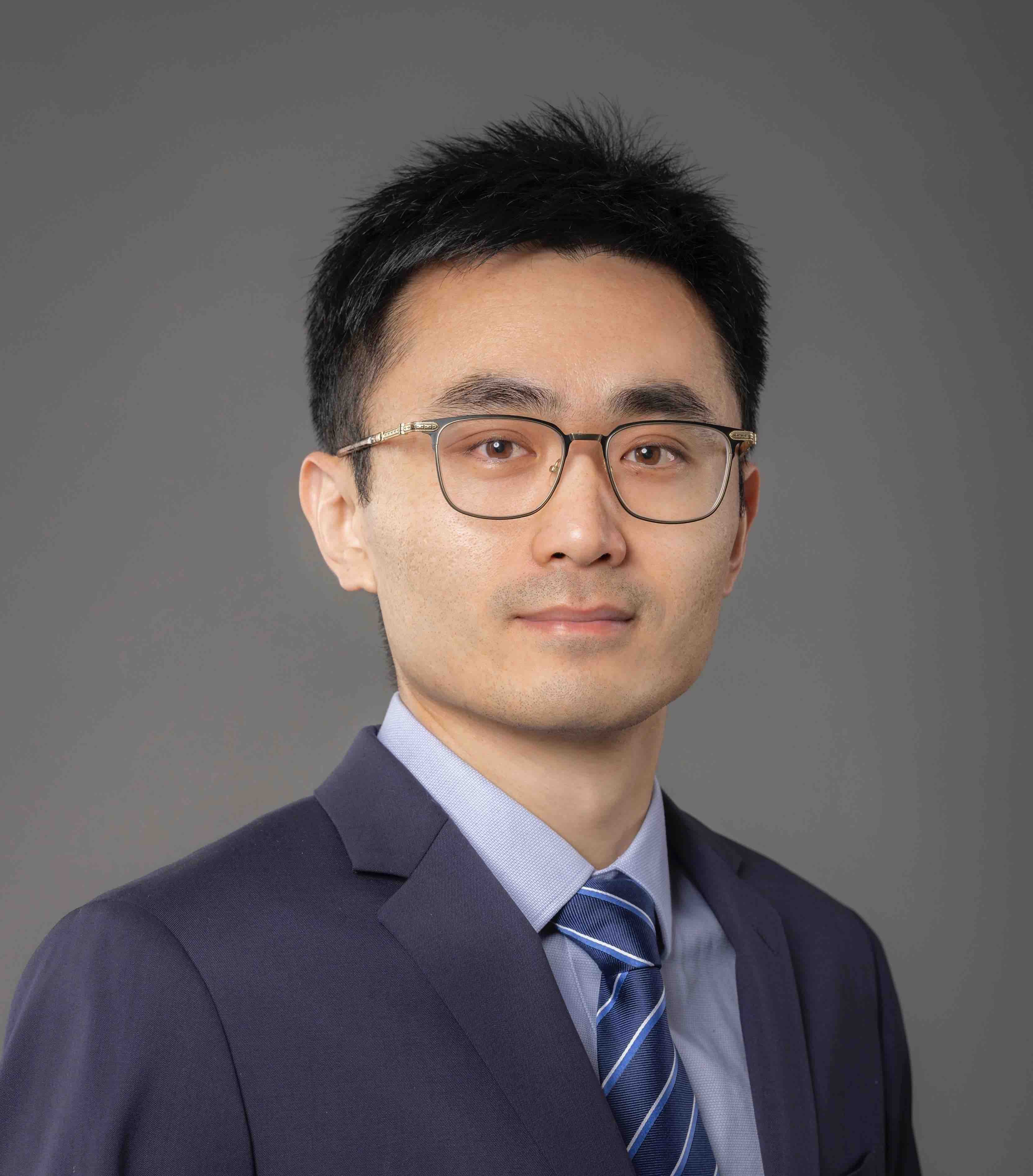
Dr. Stuart Murray is an Associate Professor at Bond University's Faculty of Society & Design, specializing in diplomacy and international relations. His research focuses on traditional and modern diplomacies, including sports diplomacy, translational research, and innovations in diplomatic theory. Education: PhD (2006), Cours D'etet (University of Geneva, 2001), MA International Relations (2000), BA Hons (Edinburgh Napier University, 1996). External roles include Adjunct Research Fellow at Griffith University and Fellow of the Academy of Sport at the University of Edinburgh. Key projects include 'eSports Diplomacy' and 'Promoting a Strategic Approach to EU Sports Diplomacy.' His work explores sports as a tool for soft power, geopolitical strategy, and cultural exchange. Recent articles address global diplomatic dynamics in sports, pandemic responses, and future diplomatic strategies. Murray has contributed to media discussions on sport diplomacy, including expert commentaries on the Australian perspective and the role of sports in political movements.
Professor Gernot Sieg holds the Chair of Industrial Organization with a focus on Infrastructure and Transport Economics at the University of Münster, leading the Institute of Transport Economics. He previously served as Director of the Institute of Economics at TU Braunschweig and has held visiting positions at institutions like the University of Southern California. His academic background includes a Dr. rer. pol. (1993–1999) and Habilitation (1993–1999). Prof. Sieg’s research focuses on transport markets, regulatory economics, and infrastructure policy. Notable projects include the CRC 1385 on Law and Literature, evaluating bicycle traffic optimization (Leezenflow), and analyzing aviation slot regulations. He advises the Federal Ministry for Digital and Transport’s Scientific Advisory Board. His research interests span transport infrastructure financing, traffic flow dynamics, and environmental policy. Recent work addresses vehicle value externalities, phantom jam costs, and the economic impact of speed limits. He teaches courses on competition regulation, transport economics, and industrial organization. Prof. Sieg frequently engages with public policy debates, contributing to media discussions on infrastructure rehabilitation, climate policy, and mobility transitions. His work bridges academic research with practical policy solutions, emphasizing sustainable and equitable transport systems.
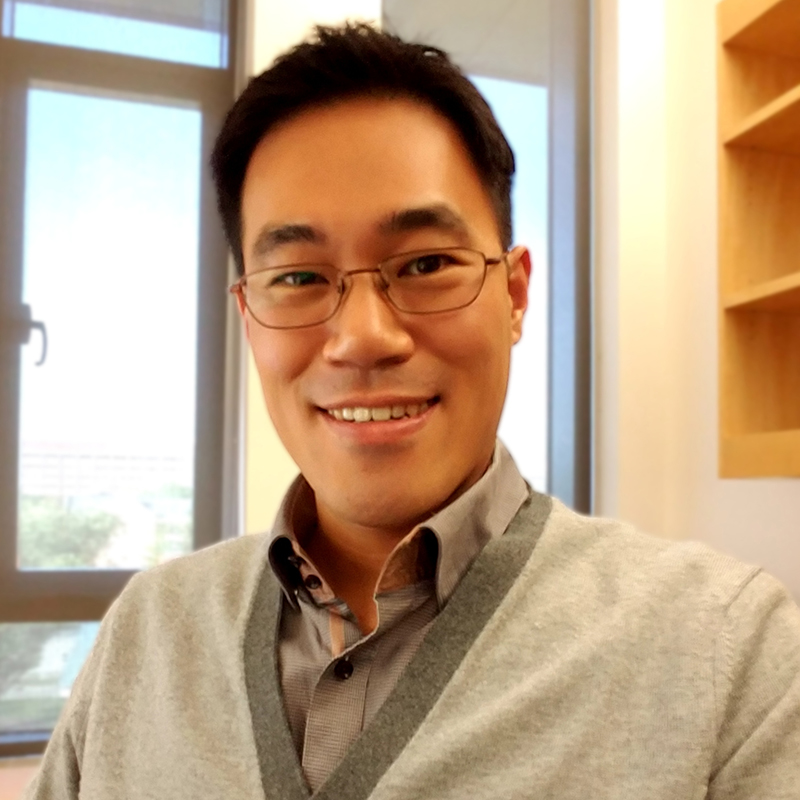
Edward Kim is an Associate Professor in the Department of Computer Science at Drexel University's College of Computing & Informatics. His research spans computer vision, sparse coding, neuromorphic computing, and AI, with a focus on neuro-inspired machine learning and robust, interpretable models. Research Interests: Computer Vision Sparse Coding and Dictionary Learning Neuromorphic and Spiking Neural Networks Explainable and Adversarially Robust AI Multimodal Learning Medical Image Processing His recent publications highlight a strong trend in developing biologically inspired, robust, and interpretable machine learning models, particularly using sparse coding and spiking neural networks. Themes include adversarial robustness, model confidence calibration, and cross-modal integration. His work often bridges neuroscience and AI, aiming to create more human-like and trustworthy systems. Scientific Awards: NSF CAREER Award (2019) Longsview Fellow (collaborative project, 2021) Dr. Kim advises several graduate students in the SPARSE Lab and has secured significant research funding from the NSF, DARPA, and the Bill & Melinda Gates Foundation. His grants focus on ethical AI, racial bias in ML, and digital health platforms. He also contributes to academic leadership as a Provost Fellow at the Drexel Solutions Institute and co-chair of computer vision tracks at major conferences. Labs and Teams: He leads the SPARSE (SPiking And Recurrent SOFTwarE) Coding Lab, which investigates biologically inspired learning models beyond traditional deep learning. The lab integrates neuroscience principles to improve stability, interpretability, and robustness in AI systems.
Nuno Pinto is a Senior Lecturer in Urban Planning and Urban Design at the University of Manchester's School of Environment, Education and Development. He holds a PhD in Planning from BarcelonaTech (Spain) and a Civil Engineering degree from the University of Coimbra (Portugal). Previously, he held academic positions at the University of Coimbra and served as a Researcher at the Polytechnic Institute of Leiria. His research focuses on quantitative approaches to urban planning, including decision support systems, urban simulation, integrated transport planning, and big data applications. He is particularly known for his work on cellular automata models and agent-based simulations in urban policy analysis. Nuno has secured significant funding, including a £663k EPSRC grant for the 'Resilience Beyond Observed Capabilities Network+' and a £19k Turing-Manchester grant for VR analytics in digital twins. Teaching expertise spans data science applications in planning, GIS, and decision-support methods across multiple master's programs. He advises on PhD topics combining quantitative methods with Iberian/Latin American urban contexts. Nuno is a Fellow of the Higher Education Academy and recipient of the 2011 Breheny Prize for outstanding urban planning research. Notable projects include 'Synthetic Cities' digital twin frameworks, peri-urban climate change analyses (PERI-CENE), and cross-border collaborations like the FAPESP-University of Manchester initiative. Current research explores smart city strategies in Latin America and carbon accounting systems. Supervised over a dozen PhD students, including works on mobility decision systems, metropolitan data analytics, and serious gaming for urban participation. Active in professional networks such as the COST TU1408 Air Transport and Regional Development initiative.
Dr. Tyler Hollett serves as an Associate Professor of Learning Sciences in the Department of Learning and Performance Systems at The Pennsylvania State University, contributing to the Learning, Design, and Technology program from 315 Keller Building, University Park, PA. His research champions interest-driven learning often devalued by formal institutions and neoliberal markets, investigating contexts like skateboarding, video gaming, and nature hobbies (fishing, birding). Hollett examines how passion-fueled activities generate embodied, affective learning that transcends goal-oriented education, advocating for equitable alternatives to capitalist learning trajectories. Current projects focus on intergenerational play through the FIGMENT Lab, exploring family gaming dynamics, climate engagement via outdoor hobbies, and evolving children's play across settings. Analysis of his recent publications reveals a methodological commitment to qualitative inquiry, with recurring themes of spatial-temporal rhythms, affective atmospheres, and embodied cognition. His work bridges learning sciences, critical pedagogy, and digital media studies, increasingly emphasizing intergenerational and ecological dimensions of informal learning. No scientific awards are listed in his current profile. However, Hollett actively mentors graduate students, inviting collaboration on FIGMENT Lab initiatives. His advising philosophy emphasizes rigorous scholarship within supportive, interest-driven research teams, with the FIGMENT Lab representing his current focus on family-centered learning in gaming, nature, and play contexts.
Professor Adrian Bell is Chair in the History of Finance at the ICMA Centre, Henley Business School, University of Reading, where he also serves as Associate Pro-Vice-Chancellor for Research (Prosperity and Resilience). He has been a faculty member since 1994 and leads a major AHRC-funded project, 'The People of 1381', examining the Peasants' Revolt through interdisciplinary economic and social lenses. His research integrates medieval financial systems with modern economic theory. His research interests span History of Finance , Medieval Economic History , Football Finance , Hundred Years War , and Higher Education Policy . He employs quantitative and archival methods to explore topics such as medieval real estate bubbles, credit systems, and pandemic economics. His work often bridges historical analysis with contemporary financial issues, such as the economic impact of football clubs on universities or lessons from the Black Death for modern crises. The 15 most recent publications reflect a strong trend in medieval financial systems , behavioral and market finance , and socioeconomic impacts of sports and pandemics . His articles frequently analyze long-term economic patterns, price formation, and institutional finance, combining history with econometrics. Key themes include market efficiency, credit innovation, and the social consequences of financial decisions. Professor Bell has received continuous research funding from prestigious bodies including the AHRC , ESRC , and Leverhulme Trust . Notable projects include: The People of 1381 (AHRC) The first real estate bubble in medieval England (Leverhulme Trust) The Soldier in Later Medieval England (AHRC) Advance contracts for wool supply (ESRC) Medieval foreign exchange and credit finance (ESRC) He has advised on numerous collaborative research initiatives and contributes actively to public discourse through media appearances, podcasts (e.g., The Unexpected World of Business), and blogs. He is a frequent expert commentator on financial history and football economics. His work is supported by research teams and digital platforms such as 1381.online and the medievalsoldier.org database. He also contributes to academic leadership as former Head of the ICMA Centre and Associate Dean (International).
Yan Huang is an Associate Professor in the Department of Software Engineering and Game Development at Kennesaw State University (KSU). His work bridges Federated Learning (FL) and Cybersecurity Education , with a focus on personalization and privacy in distributed systems. Research spans Machine Learning , Extended Reality (XR) , and Data Privacy . He has served as Editor of WCMC and Program Co-Chair for CyberSciTech 2020-2024. Research Trends: Recent publications emphasize Federated Learning for non-IID data, VR-based Cybersecurity Education , and Privacy-Preserving Algorithms in IoT and social media analytics. Key subfields include personalized learning architectures, graph learning, and game-theoretic privacy frameworks. Scientific Awards: Excellent Paper Award (Tsinghua Science and Technology, 2021) Best Paper Award (Future Generation Computer Systems, 2019) Best Paper Awards at IEEE SmartWorld 2021, COCOA 2019, and WASA 2019 Grants: Led over $600,000 in NSF and NSA-funded projects, including VR cybersecurity education for K-12 and XR engineering curricula. His lab recruits VR/AR Research Assistants via industry partnerships.
Dr. Scott L. Nykl is a Professor in the Department of Computer Science at the Air Force Institute of Technology (AFIT), part of the Graduate School of Engineering & Management. He is a leading researcher in computer vision, real-time 3D graphics, and autonomous aerial systems, with a focus on automated aerial refueling and navigation in GPS-denied environments. Education: Ph.D. in Computer Science, Ohio University (2008–2013), Summa Cum Laude, GPA: 4.0/4.0 M.S. in Computer Science, Ohio University (2011–2012), Summa Cum Laude, GPA: 4.0/4.0 B.S. in Software Engineering, University of Wisconsin–Platteville (2002–2006), Summa Cum Laude, GPA: 3.94/4.0 Dr. Nykl's research interests include computer vision, sensor fusion, interactive virtual worlds, and real-time 3D graphics, with applications in aerospace and defense. His work bridges simulation and real-world deployment, particularly in autonomous aerial refueling using stereo and monocular vision. He has pioneered techniques in pose estimation, occlusion mitigation, and sim-to-real transfer learning. His recent publications and projects show a strong trend toward robust, vision-based navigation systems for unmanned and manned aircraft, with emphasis on reliability, accuracy, and real-time performance. His work frequently appears in IEEE, AIAA, and ION venues, reflecting its high technical and operational relevance. Scientific Awards and Recognitions: 2024 Harold Brown Award – Highest U.S. Air Force scientific honor 2024 General Bernard A. Schreiver Award 2025 AETC Airmen of the Year Multiple Air Force Outstanding Scientist/Engineer Awards (2017–2023) Best Paper Award, ACM SIGGRAPH i3D 2013 Forbes' The Greatest Young Inventors in America (2012) NSF GK-12 Fellow (2006) Dr. Nykl has advised numerous graduate students and collaborated extensively on projects involving automated aerial refueling, 3D reconstruction, and cyber education. He has secured significant research funding, including a $100,000 Ohio Third Frontier grant. His work has led to multiple patents and technology transfers. He leads research integrating virtual worlds, digital twins, and augmented reality for both research and pedagogy. Laboratories and Research Teams: His work is conducted within AFIT’s research ecosystem, involving collaborations with the Air Force Research Laboratory (AFRL), Boeing, and academic partners. He leads projects under the Aerial Refueling Systems Advisory Group (ARSAG) and presents regularly at ION, AIAA, and IEEE conferences.
Dr. Ian Sturrock is a Senior Lecturer in Games, Animation & Visual Effects at Teesside University, within the Department of Computing & Games. He is actively involved in teaching across undergraduate, postgraduate, and foundation levels, and contributes to the university's Arts Research Group. His academic work spans game design, narrative theory, and digital innovation, with a strong focus on motivation and world-building in games. His research interests include: Game narrative and narratology Transmedia storytelling and world-building Player motivation and identity Cybersecurity awareness through games The cultural impact of role-playing games Dr. Sturrock's recent publications explore innovative frameworks for measuring game motivation and examine how transmedia narratives can promote social justice. His work often bridges academic theory with practical game design, emphasizing interdisciplinary approaches. He has led the Innovate UK-funded project 'HackEscape,' which uses game mechanics to teach cybersecurity. His research has been published in journals such as Gamevironments and Analog Game Studies , and he has contributed to educational syllabi collections on game design pedagogy. He is currently accepting PhD students and has supervised research in game studies. Dr. Sturrock was previously affiliated with the University of Hertfordshire, where he served as Partnership Manager for the Creative Enterprise degree and contributed to the Media Research Group, co-organizing the first international Game of Thrones Conference in 2017. His professional engagements include media contributions on video game adaptations and the success of Games Workshop, reflecting his public-facing scholarship. He is an active researcher with a growing body of peer-reviewed work in digital games and narrative.
Tarmo Lipping is a Professor in the Department of Computer Science and Engineering at the Faculty of Information Technology and Electrical Engineering, University of Oulu. His work bridges computing sciences with biomedical engineering, environmental modelling, and data-driven societal applications. Doctor of Science (Technology), Information Technology – Awarded 14 Feb 2001 Master of Science (Technology), Information Technology – Awarded 10 Sept 1993 His research focuses on electroencephalography (EEG) , mental workload assessment , depth of anesthesia monitoring , and machine learning applications in healthcare and human-computer interaction. He also contributes to environmental informatics , particularly in land uplift modelling and radionuclide transport , aligning with UN Sustainable Development Goals. Recent publications highlight trends in transformer networks for EEG analysis , wearable HCI systems , data-driven food safety , and participatory municipal governance . His work integrates deep learning, signal processing, and real-world deployment. Scientific awards include: CIMO opettajavaihto (2017) Lipping has supervised numerous master’s students and served as an examiner in diverse topics including data vault modelling , telecom revenue estimation , and EEG hyperscanning . He has evaluated funding applications, acted as a journal reviewer (65 times), and contributed to editorial work. His activities reflect strong engagement in academic service and interdisciplinary research mentorship. He has contributed datasets on Fennoscandian land uplift , lake isolation , and archaeological shorelines to PANGAEA, supporting open science in geosciences and environmental history.
Derek T. Robinson is an Associate Professor at the University of Waterloo's Department of Geography and Environmental Management , specializing in land-use science, agent-based modeling, and geospatial analysis. His work integrates GIS, ecological models, and human decision-making to assess impacts of land policies on ecosystem services and human well-being. Research Interests : Land-use/cover change and carbon cycle dynamics Agent-based modeling of socio-ecological systems Exurban land management and fragmentation Ecosystem service quantification Land policy scenario analysis Teaching : Courses in spatial analysis, advanced GIS, and land-use-carbon interactions. His lab utilizes cutting-edge tools like ArcGIS, NetLogo, and UAV systems (e.g., Aeryon SkyRanger) for fieldwork and modeling.
Pan Xu is a tenure-track assistant professor with joint appointments in the Department of Biostatistics & Bioinformatics, Department of Computer Science, and Department of Electrical & Computer Engineering at Duke University's Pratt School of Engineering. Prior to joining Duke, he was a Postdoctoral Scholar Research Associate at the California Institute of Technology, and he earned his Ph.D. in Computer Science from UCLA. His research bridges theoretical foundations with practical applications in machine learning and artificial intelligence. Dr. Xu's research focuses on developing computationally- and data-efficient machine learning algorithms with strong theoretical guarantees, particularly in reinforcement learning, optimization, and high-dimensional statistics. His work addresses two fundamental challenges in sequential decision-making: efficient exploration with minimal interactions and robustness against distributional shifts. His research spans theoretical algorithm design, practical implementation, and real-world applications in bioinformatics and healthcare. His publication record demonstrates consistent high-impact contributions to top-tier conferences including ICML, NeurIPS, ICLR, AAAI, and AISTATS. The research trends show a progression from foundational work in non-convex optimization and multi-armed bandits toward increasingly sophisticated frameworks for robust reinforcement learning, with particular emphasis on distributional robustness, efficient exploration strategies, and practical applications. His work often bridges theoretical guarantees with empirical validation. NSF award on approximate sampling based exploration for sequential decision making Whitehead Scholar award from Duke University School of Medicine PIMCO Postdoctoral Fellowship in Data Science UCLA Outstanding Graduate Student Research Award Rising Stars in Data Science by University of Chicago Best Paper Award for Queer In AI: A Case Study in Community-Led Participatory AI at FAccT 2023 Featured Certification for Wasserstein Distributionally Robust Policy Evaluation and Learning for Contextual Bandits at TMLR Oral Presentation award at AAAI 2024 Dr. Xu actively mentors students and researchers, seeking highly motivated individuals with strong mathematical backgrounds for Ph.D. programs in Biostatistics & Bioinformatics, Computer Science, and Electrical & Computer Engineering at Duke. He has received multiple research grants including an NSF award on approximate sampling based exploration for sequential decision making. His service to the academic community includes roles as area chair for NeurIPS, ICML, ICLR, and AISTATS, as well as action editor for Transactions on Machine Learning Research. His research group develops algorithms that address fundamental challenges in sequential decision-making, with applications spanning healthcare, bioinformatics, and multi-agent systems. Current research directions include distributionally robust reinforcement learning, efficient exploration strategies, and applications of graph neural networks to biological problems.
Andrew M Milsten serves as Professor in the Department of Emergency Medicine at UMass Chan Medical School, specifically within the T.H. Chan School of Medicine and Division of EMS/Disaster. His work bridges clinical emergency medicine with large-scale disaster response systems. His educational foundation includes a BA in Biology from Bucknell University, an MS in Emergency Health Services from the University of Maryland Baltimore, and an MD from George Washington University. Milsten's research centers on disaster behavioral science and mass gathering medicine , with signature studies analyzing injury patterns at NHL/MLB games, marathons, and concerts. His recent work explores augmented reality applications for field procedures and ethical frameworks for hospital active shooter incidents. He has significantly contributed to disaster medicine standardization through the 2023 Model Core Content development. Publication trends reveal a strategic evolution from foundational mass gathering epidemiology (2000-2010) toward behavioral disaster science and technological integration (2020-2024), primarily in Prehospital and Disaster Medicine and similar journals. Fellow of the American College of Emergency Physicians (FACEP) Through his Division of EMS/Disaster affiliation, Milsten collaborates with national bodies like the National Association of EMS Physicians to shape position statements and resource documents. His research consistently informs operational guidelines for event medical planning and disaster response protocols. He maintains active leadership in disaster medicine education and operational research within UMass Chan's emergency medicine infrastructure.
Prof. Dr. Mehmet TAŞDEMİR is a faculty member at Kirsehir Ahi Evran University's Faculty of Education, Department of Educational Sciences, specializing in Curriculum and Instruction. He has been a Full-Time Professor since 2016, following roles as Associate Professor (2011-2016) and Doctor Lecturer (2006-2011). His academic career spans over three decades, including administrative roles such as Department Head and Scientific Projects Coordinator. Education: PhD in Primary Education Curriculum and Instruction from Hacettepe University (1995); Master's in Educational Sciences from Gazi University (1988); Bachelor's in Educational Sciences from Gazi University (1985); Associate Degree in Classroom Teaching from Gazi University (1983). Research Interests: His work focuses on curriculum development, instructional design, educational assessment, and values education. He has extensively studied foreign language teaching, mathematics education, and inclusive practices in primary and secondary schools. Recent Publications: His 2025-2024 articles analyze community-centered curricula, problem-based learning models, and mind games in education. Trends include foreign language motivation, mathematics teaching methods, and values integration in school programs. Scientific Awards: TÜBİTAK Yayın Teşvik Awards (2010-2012) Advising: Mentored 23 theses (Master's and Doctoral) and collaborated with researchers like Figen Taşdemir and Cem Şahin on topics spanning educational psychology, curriculum theory, and instructional practices.
Dr. Patrick Park is an Assistant Professor at the Software and Societal Systems Department within Carnegie Mellon University's School of Computer Science. His work bridges computational and social sciences to analyze network dynamics, digital communication, and open source systems. Current position: Assistant Professor Institution: Carnegie Mellon University Department: Software and Societal Systems Park's research focuses on social network analysis, behavioral modeling, and computational sociology. Key contributions include studies on network diversity, geospatial visualization techniques, and digital communication patterns across civilizations. His recent publications (2023-2024) highlight expertise in network visualization, social contagion, and open source innovation. Earlier work spans topics like organizational classification, user behavior paradoxes, and cross-cultural communication networks.