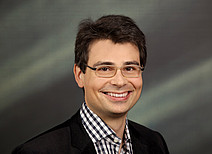
A. J. Julius is an Assistant Professor of Philosophy at the University of California, Los Angeles (UCLA). He is affiliated with the Inequality: Measurement, Interpretation, and Policy (MIP) network, focusing on interdisciplinary research at the intersection of philosophy and economics. Discipline: Philosophy Fields of Study: Economic Growth, Income Distribution, Justice, Collective Action, Reasons, Wrongness, Persons His research explores normative questions in political philosophy, action theory, and moral philosophy, particularly through economic frameworks. He has published extensively on topics such as Kant's legal philosophy, exchange dynamics, egalitarianism, and growth models, often analyzing the ethical implications of economic structures and policies. Julius’s publications demonstrate interdisciplinary engagement with economics, philosophy, and public affairs. Key themes include the ethics of collective action, distributive justice, and the interplay between technical change and economic inequality. His work spans theoretical analysis (e.g., contractualism, Nagel’s philosophy) and empirical-economic modeling (e.g., profit rate dispersion, steady-state growth).
Brent Lagesse is an Associate Professor at the University of Washington - Bothell , affiliated with the Division of Computing & Software Systems under the School of Science, Technology, Engineering & Mathematics . His research focuses on security in emerging environments , particularly secure machine learning and privacy in sensor-rich systems . Ph.D. in Computer Science from the University of Texas at Arlington (2009) Research Interests include: Detecting and locating hidden webcams Scalable AI/ML defense mechanisms Privacy-preserving video sharing AI systems for air quality prediction Automated yeast cell analysis CRISPR/CAS9 guide-donor libraries Article Trends : Recent publications emphasize secure machine learning for smart city applications, privacy-preserving technologies , and resource-constrained security in crowdsensing environments . Collaborative work spans cybersecurity education , environmental monitoring , and context-aware systems . Scientific Awards : Cybersecurity Fulbright Scholar (University of Cambridge, 2018) Johann-von-Spix International Guest Professorship (University of Bamberg, 2019-20) Advising & Grants : Advises current research students Neil Prakasam and Nicholas Handaja NSA grant ($96k) for GenCyber curriculum development (2022) NSF grant ($300k) for AI-enhanced cybersecurity workforce studies (2021) T-Mobile grants for ML security metrics and dataset anonymization (2020-2022) Laboratory : Leads the Security of Emerging Environments (SEE) Lab , developing practical and theoretical frameworks for smart city security and privacy-preserving technologies .
Susan Land is a Professor of Education and the Associate Dean of Undergraduate and Graduate Education in the Learning, Design, and Technology Program at Penn State University's College of Education. She also serves as the Head of the Department of Learning & Performance Systems. Dr. Land earned her doctorate in Instructional Systems from The Florida State University under Dr. Michael Hannafin. Prior to Penn State, she was a postdoctoral fellow at the University of Georgia's Learning and Performance Support Laboratory and faculty at the University of Oklahoma's Instructional Psychology and Technology Program. Earlier, she worked on instructional design projects with the U.S. Air Force Academy, Citibank, and Hewlett Packard. Her research emphasizes frameworks for technology-enhanced learning environments, particularly focusing on how learners meaningfully engage with technology in student-centered contexts. She has published over 60 manuscripts and co-edited two editions of Theoretical Foundations of Learning Environments with Dr. David Jonassen, which has been reprinted repeatedly, translated into Korean, and achieved notable sales in the Instructional Technology field. Her recent publications demonstrate a clear trajectory toward mobile, context-sensitive learning in outdoor environments using proximity-based technologies like iBeacons. These studies examine children's scientific observations in arboretums, sense-making conversations in botanical gardens, and knowledge sharing in online affinity spaces, revealing patterns in how technology mediates learning experiences across different contexts. Young Scholar Award from Association for Educational Computing and Technology (AECT) Outstanding Article of the Year Award from AECT 2015 SIG-IT Best Paper Award from American Educational Research Association (AERA) Top 10 most-published/frequently-cited authors in Educational Technology Research & Development College of Education 2016 Outstanding Teaching Award Dr. Land advises graduate students and collaborates extensively with researchers including Heather Zimmerman, Priya Sharma, and Chris Millet. Her NSF-funded research with Zimmerman examines how proximity-based computing supports children's scientific sense-making in outdoor environments. She leads the Augmented and Mobile Learning Research Group, which investigates context-sensitive, place-based learning using mobile technologies and augmented reality. Her research has been supported by multiple grants from the National Science Foundation (NSF), Institute of Museum and Library Services (IMLS), and Penn State's Center for Online Innovation in Learning (COIL). Current projects include developing the Penn State Places platform for creating iBeacon-triggered content in public spaces, with applications in arboretums, children's gardens, and community engagement initiatives.
Stephanie Forrest is a Professor of Computer Science at Arizona State University and serves as Director of the Biodesign Center for Biocomputation, Security and Society . She holds affiliations with the School of Computing and Augmented Intelligence , Global Futures Laboratory , and Santa Fe Institute External Faculty . Education: B.A. from St. John's College M.S. and Ph.D. in Computer Science from the University of Michigan Research Interests: Forrest specializes in the intersection of biology and computation , with key contributions to cybersecurity (anomaly detection, instruction-set randomization), automated software repair (evolutionary methods), and biological modeling (immune systems, SARS-CoV-2 spread). Her work bridges complex adaptive systems , AI/ML , and defense applications . Scientific Contributions: 2020 IEEE S&P Test of Time Award 2019 ICSE Most Influential Paper Award 2011 ACM/AAAI Allen Newell Award NSF Presidential Young Investigator (1991) IEEE Fellow Evolutionary Computation Pioneer award Publications & Grants: Her research appears in top venues (ICSE, IEEE S&P, PNAS) and is funded by the National Science Foundation , DARPA , Air Force Research Lab , and Santa Fe Institute . Key projects include Crispy (CRISPR-inspired DoS defense), GenProg (automated bug correction), and SIMCoV-GPU (agent-based pandemic modeling).
James F. Peters is a faculty member in the Department of Electrical and Computer Engineering at the University of Manitoba, Winnipeg, Canada. His research lies at the intersection of computational topology, proximity theory, rough sets, and digital image analysis, with applications in computer vision, pattern recognition, and biologically-inspired computing. He has made foundational contributions to the theory of near sets and computational proximity, publishing extensively in journals and book series by Springer. His research interests include computational proximity, near sets, rough sets, digital image analysis, pattern recognition, and topological models of perception. These are evident from his numerous publications in theoretical and applied computer science, often in collaboration with researchers such as Andrzej Skowron, Sheela Ramanna, and Arturo Tozzi. His work spans mathematical foundations, computational models, and real-world applications in biomedical imaging and rehabilitation systems. The recent articles (2017–2025) show a strong trend toward integrating topology, physics, and neuroscience in the analysis of digital images and brain activity. Topics include proximal nerves, optical vortices, thermodynamics of emotions, and entropy in cosmology, indicating a broad interdisciplinary approach. His publications frequently appear in journals such as Entropy , Information Sciences , and Transactions on Rough Sets , as well as in Springer’s Lecture Notes in Computer Science and Intelligent Systems Reference Library series. He has authored or co-authored several books and special issues, notably in the Transactions on Rough Sets series, and has contributed to encyclopedic works on rough sets and computational intelligence. His editorial and collaborative roles highlight his leadership in the rough and near sets research community. Dr. Peters has advised or collaborated with several researchers, though specific student names are not listed in the provided text. He has been involved in projects related to adaptive learning, telerehabilitation gaming systems, and image classification using tolerance near sets. His work often involves grants and interdisciplinary teams, especially in computational intelligence and biomedical applications. He is associated with research groups and labs focused on computational intelligence, rough sets, and digital image analysis, often in collaboration with the University of Warsaw and other international institutions. His ongoing work continues to explore the mathematical foundations of perception and proximity in both artificial and biological systems.
Joseph Harrington is the Patrick T. Harker Professor of Business Economics and Public Policy at The Wharton School of the University of Pennsylvania. He holds a named professorship in the Department of Business Economics and Public Policy and has established himself as a leading authority in industrial organization and antitrust economics. Professor Harrington's research interests center on industrial organization, microeconomic theory, and organizations, with a particular focus on collusion and cartels. His work spans theoretical frameworks and practical applications, examining observed collusive practices, developing markers for detecting collusion, and designing competition policy to deter anticompetitive behavior. His research has evolved to address contemporary issues including pricing algorithms, artificial intelligence, and their implications for market competition. Harrington has published more than 75 articles in leading journals including the American Economic Review, Journal of Political Economy, Econometrica, Management Science, and American Journal of Sociology. His current research focuses on the intersection of algorithmic pricing and competition policy, addressing how autonomous pricing systems might facilitate collusion and what regulatory responses are appropriate. SEEK Grant, 2013-2014 President (2012-13) and Vice President (2010-11), Industrial Organization Society Cátedras de Excelencia (Chair of Excellence), Universidad Carlos III de Madrid, Sept 2012 – Dec 2012 National Science Foundation Grant, 2012-2015 Honorable Mention for the Jerry S. Cohen Memorial Fund Writing Award for antitrust scholarship, 2010 ENRE Best Publication Award, INFORMS, 2007 Professor Harrington has served extensively in editorial capacities, including co-editor at the RAND Journal of Economics and the International Journal of Industrial Organization. He is currently associate editor at Economics Letters, the Journal of Industrial Economics, and the Review of Industrial Organization. He has performed significant service as President of the Industrial Organization Society and remains active on its Board of Directors. His research has been supported by multiple National Science Foundation grants, reflecting the significance and impact of his work on competition policy.
David A. Goldberg is an Associate Professor and Director of Undergraduate Studies in the Operations Research and Information Engineering (ORIE) department at Cornell University's College of Engineering. His research bridges theoretical probability with practical applications in operations management, inventory systems, and queueing networks. Education: Ph.D. in Operations Research, MIT, 2011 B.S. in Computer Science, minors in Applied Math and Industrial Engineering / Operations Research, Columbia University SEAS, 2006 Professor Goldberg's research focuses on advancing theoretical understanding of stochastic systems while developing practical insights for operations management. His work spans applied probability, stochastic processes, queueing theory, inventory models, distributionally robust optimization, and combinatorial optimization. He has made significant contributions to understanding the behavior of complex systems under uncertainty, particularly in many-server queues and inventory management under demand variability. His publications reveal strong trends in asymptotic analysis of stochastic systems, particularly in the Halfin-Whitt regime for queueing systems and in inventory models with large lead times. His work consistently bridges theoretical probability with practical operations management applications, with a strong emphasis on developing models that account for real-world uncertainties while maintaining mathematical tractability. His recent work shows increasing focus on distributionally robust approaches that require minimal assumptions about underlying distributions. Scientific Awards: INFORMS Applied Probability Society Best Publication Award (2019) INFORMS Nicholson student paper competition first place (2019) INFORMS Nicholson student paper competition first place (2015) INFORMS Junior Faculty Interest Group paper competition second place (2015) Professor Goldberg has successfully advised multiple Ph.D. students who have gone on to prestigious academic and industry positions. His research is supported by significant NSF funding, including a CAREER award and a grant for stochastic comparison approaches to parallel server queues. He serves on editorial boards for leading journals including Operations Research and Stochastic Models, and has held leadership positions in the INFORMS Applied Probability Society including Vice-chair (2020-2022) and Council member (2015-2017).
Marsha Chechik is a Professor in the Department of Computer Science at the Faculty of Arts and Science, University of Toronto. She previously served as Department Chair from 2019-2022 and as Acting Dean in the Faculty of Information from July-December 2022. Her academic career spans numerous research contributions and leadership roles within the software engineering community. Professor Chechik's primary research interests focus on software engineering with emphasis on formal methods to enhance software quality. Her work encompasses scalable automated verification techniques including model-checking and theorem-proving, formal specification languages, verification of protocols, non-classical logics, and reasoning under inconsistency. She has made significant contributions to model management, software product lines, safety and security assurance, and automotive safety systems. Her research bridges theoretical foundations with practical applications, particularly in managing uncertainty in software models and developing techniques for automotive safety verification. Her recent publications demonstrate a strong focus on model management and transformations, software product lines and variability analysis, safety and security assurance cases, and semantic analysis of software evolution. The integration of formal methods with practical software engineering challenges, especially in safety-critical domains like automotive systems, represents a consistent theme throughout her work. Professor Chechik has been recognized with multiple prestigious awards including a Best Paper Award at RE'12, a SIGSOFT Distinguished Paper Award at ICSE'12, a Best Student Paper Award at CASCON'07, and a Distinguished Paper Award at ICSE'07, highlighting the impact and quality of her research contributions. She actively supervises graduate students and has successfully guided numerous Ph.D. candidates to completion. Her group has produced graduates who predominantly pursue research careers in both academic institutions and industrial research labs. She currently leads several funded projects including the Automotive Safety project (in collaboration with General Motors) and the Software Evolution project, focusing on practical applications of her research interests. Professor Chechik leads the Software Engineering Lab at the University of Toronto, where innovative projects like Matchmakers (a serious game for software engineering) are developed. Her collaborative network extends across institutions, with notable partnerships including Julia Rubin at the University of British Columbia, demonstrating her commitment to interdisciplinary research and academic collaboration.
Klemens Fellner is a Professor of Mathematics/Computational Sciences and Group Leader of the Applied Analysis Group at the Institute of Mathematics and Scientific Computing, University of Graz. His research focuses on the analysis of partial differential equations and mathematical modeling across physics, chemistry, and biology. Research Interests: Prof. Fellner's work spans theoretical analysis of nonlinear PDEs (reaction-diffusion, kinetic, and non-local equations) using entropy/duality methods, with applications to: Biological systems (lipolysis, protein localization, stem-cell division) Physical processes (organic photovoltaics, semiconductor modeling) Collective behavior (swarming micro-organisms, aggregation dynamics) Interdisciplinary Mathematics-Arts collaborations Publication Trends: His recent articles (2018-2021) demonstrate strong focus on: Global existence and regularity for reaction-diffusion systems Convergence to equilibrium via entropy methods Drift-diffusion models in semiconductor physics Mathematical biology applications (prion dynamics, lipolysis) Novel approaches for non-local aggregation and hysteresis phenomena Research Leadership: Currently leads the Applied Analysis Group with members including postdocs and PhD students. Key projects: Doctoral School IGDK (International Graduate School) SFB Lipid Hydrolysis (Special Research Program) Mathematics and Arts collaborations Colibri research platform Supervises PhD candidate Reymart Lagunero studying generalized reaction-diffusion systems.
Andrea Simonetto is a Research Professor at the Applied Mathematics Unit (UMA) , ENSTA Paris, Institut Polytechnique de Paris. His work spans optimization, control theory, and learning algorithms for large-scale and streaming data , with applications in smart grids, intelligent transportation, personalized health, and quantum computing. Current research focuses on online algorithms for time-varying optimization , personalized optimization for cyber-physical systems , and variational quantum algorithms . Past contributions include theoretical and algorithmic advances in convex/non-convex optimization, distributed optimization (robotic networks, smart grids), and signal processing for sparse reconstructions and parallel computing in particle filtering. Key application domains include renewable energy integration , quantum state preparation , and human-in-the-loop control systems . His research is published in journals like ACM Transactions on Quantum Computing , IEEE Control Systems Letters , and Automatica .
Ramón Luis Rizo Aldeguer is a University Professor in the Department of Computer Science and Artificial Intelligence at the Higher Polytechnic School of the University of Alicante. He has held this position since 1996 and continues to be actively involved in teaching and research as recently as 2025. He previously served in various leadership roles including Director of the Department of Computer Science and Artificial Intelligence (1997-2004) and Deputy Director of the Institutional Projects Area at the University of Alicante (2012-2020). His educational background includes a PhD in Computer Science from the Polytechnic University of Valencia (1992) and a degree in Mathematics from the University of Valencia (1977). He has been a member of the Spanish Association for Artificial Intelligence since 1990 and has held leadership positions within the organization. Rizo Aldeguer's research focuses on artificial intelligence with particular emphasis on swarm robotics, UAV deployment, and deep reinforcement learning. His work bridges theoretical foundations with practical applications in robotics and autonomous systems. He has made significant contributions to educational methodologies, particularly in integrating computational tools into engineering education. His publication record shows a consistent trajectory in swarm intelligence and robotics, with recent publications (2018-2023) demonstrating increasing sophistication in applying deep reinforcement learning to complex multi-agent systems. His research spans both theoretical advancements and practical implementations in robotics and autonomous systems. Fifteen five-year research periods (trienios) Six teaching merit periods Five six-year research periods (sexenios) President of Organizing Committee of VI Conference of Spanish Association for Artificial Intelligence (1995) President of Scientific Committee of CAEPIA (1999) Rizo Aldeguer has supervised 14 doctoral theses, with many receiving the highest honors (SOBRESALIENTE CUM-LAUDE). He has participated as a researcher in over 30 competitive public research projects, serving as principal investigator in 12 of them. His educational projects include innovative teaching methods and the development of computational tools for engineering education. He has been instrumental in the design and implementation of computer science programs at both the University of Alicante and the Polytechnic University of Valencia. He is a founding member of the University Institute for Computer Research and directed the Industrial Computing and Artificial Intelligence research group from 1992 to 2004. His current research continues to focus on swarm robotics and intelligent systems, with active participation in the Valencian Graduate School and Research Network of Artificial Intelligence since 2021.
Peter Grünwald is full professor of Statistical Learning at Leiden University's Mathematical Institute and senior researcher in the Machine Learning group at CWI (Centrum Wiskunde & Informatica) in Amsterdam. His pioneering work on e-values establishes a transformative framework for statistical inference that overcomes critical limitations of classical p-values, enabling flexible experimental designs while maintaining rigorous error control. His research centers on e-values and e-processes as a unifying paradigm between Bayesian and frequentist statistics, with core innovations in safe testing, anytime-valid inference, and optional continuation. These methods allow researchers to gather additional data after initial analysis without inflating Type I errors and to determine significance levels post-hoc—addressing longstanding rigidity in Neyman-Pearson hypothesis testing. His publication trajectory reveals rapid adoption of e-values across disciplines: from foundational theory in PNAS and JRSSB to clinical applications in survival analysis (NEJSDS) and epidemiology (medrxiv meta-analysis). The 2022–2024 publications demonstrate methodological maturation, with implementations in R (safestats package) and growing use in social sciences (PsyArXiv) and causal inference (JASA). Scientific recognition includes: ERC Advanced Grant (2024) for developing flexible statistical inference theory via e-values His ERC-funded project drives current research, while his internship policy restricts non-Dutch master’s/bachelor’s students but welcomes advanced international PhD candidates. Collaborative work spans statisticians (Ly, de Heide, Koolen), machine learning researchers (Ramdas, Shafer), and medical scientists (van Werkhoven). As core member of CWI's Machine Learning group, he advances theoretical foundations with practical impact—evidenced by the first live deployment of e-values in a BCG vaccine meta-analysis. His work redefines statistical practice for adaptive data collection in clinical trials, AI, and social science research.
Marc Labie is a Full Professor and 1st Vice-Rector at the University of Mons, specializing in Management and Organizational Studies. His research focuses on microfinance, corporate governance, social enterprises, and financial inclusion, with a particular emphasis on hybrid organizations and cooperative models. Key Research Areas: Microfinance, Corporate Governance, Social Enterprises, Financial Inclusion, Cooperatives, Organizational Identification Recent Publications: 2024 Handbook contribution on cooperatives and circular economy, 2023 European Management Review article on organizational identification His work analyzes governance mechanisms in microfinance institutions, interest rate caps, and systemic crises in microcredit markets. He has presented extensively at international conferences including EMES, EURAM, and European Research Conference on Microfinance. Labie serves as co-editor for major publications like The Handbook of Microfinance and A Research Agenda for Financial Inclusion , contributing to both theoretical and practical frameworks in development economics.
Prof. Dr. Gabriele Weiß is a Professor of Educational Science specializing in General Pedagogy at the University of Siegen (Faculty II). Her work bridges educational theory, philosophy, and cultural studies, focusing on aesthetic education, museum pedagogy, and phenomenological analyses of pedagogical phenomena. Key research areas: Educational theory-practice transformation, subjectivity theories, ethics/aesthetics/politics intersections Teaching spans topics like social inequality theories, post-digital education, Foucauldian subjectivation, and Nietzsche's educational philosophy Collaborations include co-editing with Klaus Mollenhauer, Christian Thompson, and Jörg Zirfas Recent publications examine ludification/gamification, educational conscience, and participation in practice theory
Professor Subhajit Basu is a leading academic at the University of Leeds , holding the position of Professor of Law and Technology within the School of Law . His work bridges Law, Artificial Intelligence, Big Data, and Emerging Technologies , with a focus on the Global South . He has authored influential books including Privacy and Healthcare Data (Routledge, 2016) and Global Perspectives on E-Commerce Taxation Law (Ashgate, 2008). PhD, Liverpool John Moores University LLB, Calcutta University Called to the Bar in 1998, specializing in Corporate Law in India Research Interests span Regulation of Emerging Technologies, AI Governance, Health Data Privacy, Autonomous Systems, and Online Harm . His recent projects include CoR: Sextortion in the Age of Blockchain and Deepfakes (Naif Arab University, 2025–2026) and Autonomy and Moral Agency in Bioethics (WBNUJS, 2024–2025). He previously led EU Horizon projects like PASCAL (2019–2023) on Connected and Autonomous Vehicles. Scientific Awards include the Hind Rattan (Jewel of India, 2020) and fellowships from the Royal Society of Arts and Higher Education Academy . His editorial leadership includes Editor-in-Chief of the International Review of Law Computers and Technology and associate roles on five journals. Notable Grants include funding from Naif Arab University (Saudi Arabia), EU Horizon 2020, EPSRC, and the Atlantic Philanthropies. He has provided consultancy to the National Cybercrime Research Centre (Poland), the Government of Saudi Arabia on AI frameworks, and The Dialogue (India) on IT Rules.