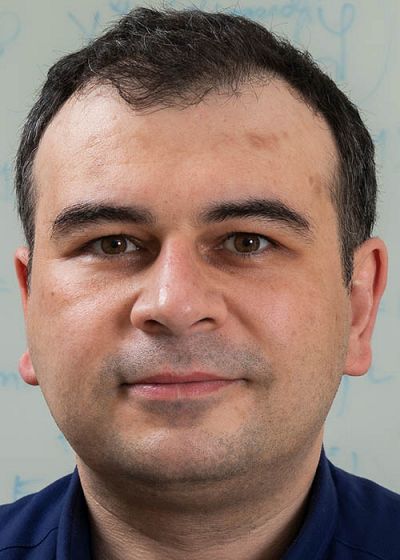
Laurent Pfeiffer is a researcher at the Signals and Systems Laboratory , focusing on Optimization and Control Theory . His work bridges theoretical advancements in mean field games, stochastic optimization, and numerical methods with practical applications in energy systems and fluid dynamics. Research Interests: Optimal Control, Mean Field Games, Stochastic Optimization, Nonlinear Programming Recent Publications: Explore mean field games, nonconvex optimization, and control theory applications in nuclear energy, gas portfolios, and fluid dynamics. Labs: Signals and Systems Laboratory, specializing in control systems and mathematical modeling.
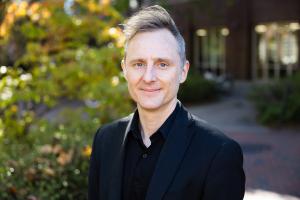
Daniel Quint is a Professor in the Department of Economics at the University of Wisconsin-Madison. His research focuses on Microeconomic Theory , Industrial Organization , and their intersections with Auction Theory , Mechanism Design , and Game Theory . He has taught advanced courses such as Advanced Microeconomic Theory (Econ 805), PhD Micro I (Econ 711), and Law and Economics (Econ 522), emphasizing theoretical rigor and practical applications. Quint's recent research includes analyzing digital platform collusion , procurement auction dynamics , and firm conduct under tariffs . He has published extensively on English auctions , differentiated products , and market design challenges, with a particular emphasis on equilibrium behavior and empirical validation of theoretical models. His work on matching markets spans both historical (e.g., medieval markets) and modern applications like school choice, kidney exchange, and supply chain networks. Though no scientific awards are mentioned, his contributions to graduate education and seminar leadership (e.g., UW Theory Seminar, UW IO Seminar) underscore his academic impact.
Gustavo Barboza is a Full Professor and the Jack and Vada Reynolds Endowed Chair of International Business at the College of Business , Loyola University New Orleans . He holds a Ph.D. in Agricultural Economics from Oklahoma State University (1997) and dual citizenship in the US and Costa Rica. Fluent in Spanish, English, and Italian, his career spans applied and theoretical research with an international focus. Education: Ph.D., Agricultural Economics, Oklahoma State University, 1997 M.S., Agricultural Economics, Oklahoma State University, 1994 Licentiate, Economics, Universidad de Costa Rica, 1989 B.S., Economics, Universidad de Costa Rica, 1989 Research Interests include international business and economic growth, geography and entrepreneurship, financial education and literacy, present-biased preferences and procrastination, micro credit systems, commodity price variability, and corporate social responsibility. His work often integrates spatial econometric methods and behavioral economics. Notable Research Trends from his publications reveal a focus on knowledge spillover effects from foreign direct investment, micro credit mechanisms in Latin America, financial behavior linked to procrastination and literacy, and climate change impacts on agricultural markets. His work bridges theoretical models with empirical analyses. Awards & Grants are not explicitly mentioned in the provided text, but his role as an endowed chair suggests sustained recognition of his academic contributions. Advising and mentorship activities are not detailed here, though his leadership in research and publications indicates a strong academic influence.
Michael Dickson is Professor of Philosophy at the University of South Carolina’s McCausland College of Arts and Sciences. His research has migrated from foundations of quantum physics to philosophy of music and psychiatry, reflecting a career that blends rigorous physics scholarship with humanistic and aesthetic inquiry. Education: PhD, University of Notre Dame, 1995 BA/BS, University of South Carolina, 1990 Research Interests: Dickson’s early work concentrated on interpretations of quantum mechanics, probability in physics, and the philosophy of science. Over the past decade he has turned to philosophy of music , investigating musical notation as instruction and the ontology of musical works, drawing on his own background as a classical pianist and French-horn player. He is also developing projects in philosophy of psychiatry , focusing on hallucination and self-understanding in schizophrenia. Publication Trends: His 40-plus articles range from technical analyses of quantum modal interpretations and probability to recent essays on musical ontology and psychiatric symptoms. The 2018–2015 output shows a pivot toward aesthetics and value theory, while earlier works remain staples in quantum-foundations literature. Presentations & Engagement: “Musical Notation and Musical Instructions” – American Society for Aesthetics, Philadelphia “Intellectual Humility” – Madpeople’s Coping Mechanisms, Oxford “Living with the ‘Paradox of Delusion’” – Too Mad to be True III, Ghent “Hallucination as a Memory of the Present” – Southern Society for Psychology and Psychiatry Teaching & Additional Interests: He periodically teaches medieval philosophy and game-theoretic models of signaling, rounding out a portfolio that bridges formal, historical, and applied philosophy.
Jacob Holm is a Tenure Track Assistant Professor in the Department of Computer Science at the University of Copenhagen, specializing in the Algorithms and Complexity research section. His work focuses on theoretical computer science with emphasis on graph algorithms and data structures. Dr. Holm's research interests span multiple areas of theoretical computer science: Dynamic graph algorithms, particularly for planar graphs Biconnectivity and triconnectivity in dynamic settings Efficient data structures for graph problems Parallel and distributed algorithms for graph processing Computational geometry and pursuit-evasion problems His publication record shows 25 research outputs including 17 article in proceedings, 6 journal articles, 1 book chapter, and 1 Ph.D. thesis. His work demonstrates consistent contributions to theoretical computer science, with numerous publications in top venues like the ACM-SIAM Symposium on Discrete Algorithms (SODA). Analysis of his recent publications reveals a strong focus on worst-case performance guarantees for dynamic graph problems, particularly in planar graph settings where maintaining efficiency during updates presents significant theoretical challenges. Dr. Holm maintains an active research profile with an ORCID identifier (0000-0001-6997-9251) and collaborates extensively with researchers in the theoretical computer science community, particularly with Eva Rotenberg as evidenced by multiple co-authored publications. His work bridges theoretical computer science with practical applications, developing algorithms that maintain efficiency even as graphs dynamically change.
Artur Czumaj is a Professor of Computer Science and Director of the Center for Discrete Mathematics and its Applications (DIMAP) at the University of Warwick, United Kingdom. He is a member of the Global Faculty at the University of Cologne and serves as President of the European Association for Theoretical Computer Science (EATCS). PhD and Habilitation from University of Paderborn Recipient of the IBM Award and Fellow of EATCS His research focuses on theoretical computer science, particularly in the design of randomized algorithms, analysis of large data, and applications to parallel/distributed computing, property testing, sublinear algorithms, optimization algorithms, and algorithmic game theory. His work has been funded by major institutions including EPSRC, NSF, Royal Society, European Union, Simons Foundation, and IBM. The 15 most recent publications reflect expertise in graph algorithms, distributed systems, approximation techniques, and algorithmic complexity. His research spans foundational algorithm design to practical applications in large-scale data processing. Fellow of the European Association for Theoretical Computer Science (EATCS) IBM Award recipient Czumaj has held leadership roles in prominent conferences, including Program Committee Chair for STOC, ICALP, SODA, and HALG. His academic career is supported by grants from multiple international research councils and organizations.
Emily Jensen is an Assistant Professor in the Department of Electrical, Computer & Energy Engineering at the University of Colorado, Boulder. She specializes in the analysis and control of spatially-distributed systems with applications in power grids, satellite constellations, and bio-inspired robotics. Her work focuses on developing theoretical frameworks to optimize system performance under constraints such as communication limitations and nonlinear dynamics. Education: B.S. in Engineering Mathematics & Statistics, UC Berkeley, 2015 M.S./Ph.D. in Electrical & Computer Engineering, UC Santa Barbara, 2020 Professional Appointments: Postdoctoral Researcher at UC Berkeley (2022-2023) Postdoctoral Researcher at Northeastern University (2021) Her research interests center on optimal distributed control, system-level synthesis, and the interplay between system structure and controller design. Key projects include multi-timescale power network control, nonlinear wave dynamics in engineering systems, and distributed parameter systems with limited communication. Dr. Jensen has delivered invited talks at high-profile venues such as the International Symposium on Mathematical Theory of Networks & Systems (2024) and the System Level Synthesis Workshop (2022). She currently advises a team of graduate and undergraduate researchers, including Addie McCurdy, Andy Gusty, and Matt Baughman (co-advised with Prof. Hodge). Awards: UC Regents’ Graduate Fellowship (2016) Zonta Amelia Earhart Fellowship (2019) IFAC Conference Young Author Award Honorable Mention (2022) She teaches ECEN 3300 (Linear Systems) and ECEN 5738 (Nonlinear Control Systems) at CU Boulder. Her work has been published in IEEE journals and conferences, emphasizing theoretical contributions with practical engineering relevance.
Sai Mounika Errapotu is an Assistant Professor in the Department of Electrical and Computer Engineering at the University of Texas at El Paso (UTEP). She leads the Cyber Physical Systems Privacy and Security Enhanced Computing (CyPSEC) Lab, focusing on developing practical security and privacy solutions for hardware and software systems in distributed networks, IoT, and smart grids. Her research integrates cryptography, differential privacy, and optimization to address emerging challenges in cyber-physical systems. Education: Ph.D. in Electrical and Computer Engineering (University of Houston, 2018), B.Tech. in Electronics and Communication Engineering (Jawaharlal Nehru Technological University, 2013). Postdoctoral work: AI, Networking Technologies, and Security Lab, University of Houston (2018–2019). Her research interests span cybersecurity, privacy-preserving protocols, trust modeling, and optimization in smart grids, IoT, and wireless networks. She emphasizes application-specific solutions that balance security, privacy, and scalability. Recent articles highlight advancements in intrusion detection via GANs and neural networks, smart home IoT security protocols, and privacy-preserving techniques in healthcare and transportation systems. Major Grants: $782,500 ARL grant for GAN-based intrusion detection, $1.1M DOE NNSA consortium for power systems, and $140K PNNL grant for healthcare synthetic data. Awards: Miguel Izquierdo Teaching Excellence Award (2021), Rising Stars Award, and Best Dissertation Award (2018). Advising highlights include mentoring students like Humaira (CPS Rising Star), Nicholas Lopez (M.S. grad in IoT security), and Ismael Holguin (LLNL intern). The CyPSEC Lab actively publishes in IEEE and NAPS conferences, addressing vulnerabilities in protocols like DNP3 and smart home IoT systems. Labs/Teams: CyPSEC Lab focuses on bridging theory and practice in CPS security, collaborating with industry partners and national labs.
Dr. M Bonnet serves as a Lecturer in the Clinical Child and Family Studies department within the Faculty of Behavioural and Movement Sciences at Vrije Universiteit Amsterdam. With a research profile spanning over two decades, Dr. Bonnet's academic career demonstrates consistent contributions to child psychology, particularly focusing on peer victimization, parenting strategies, and early childhood development. Dr. Bonnet's research interests center on child psychology with specific expertise in peer victimization among preschool children, parenting strategies related to bullying prevention, autonomy support, self-efficacy development, and early childhood developmental psychology. Their work often examines how parental approaches influence children's experiences with peer relationships and victimization in educational settings. The publication record reveals a consistent trajectory of research focused on understanding and addressing peer victimization in early childhood settings. Dr. Bonnet's work spans theoretical investigations of parenting styles and their relationship to victimization trajectories, practical interventions like serious games for bullying prevention, and clinical applications for working with parents and children. Recent publications demonstrate a continued focus on innovative approaches to bullying prevention, particularly for vulnerable populations including children with disabilities. As an educator, Dr. Bonnet contributes to courses within the Clinical Child and Family Studies program, sharing expertise on child development and intervention strategies with future professionals in the field.
Emrah Akyol is an Associate Professor in the Electrical and Computer Engineering Department at Binghamton University (SUNY). He joined in 2017 after postdoctoral research at the University of Illinois at Urbana-Champaign (UIUC) and the University of Southern California (USC). He holds a PhD from UC Santa Barbara (2011) and prior industry experience at HP and NTT Docomo. Education: PhD in Electrical and Computer Engineering, UC Santa Barbara (2011) Postdoctoral Researcher at USC (2013–2014) and UIUC (2014–2017) Research: Focuses on game theory, control systems, and secure cyber-physical systems. Key areas include strategic communication, opinion dynamics in social networks, and stealthy attacks in multi-agent systems. Recent work addresses bounded rationality in data gathering and network topology inference. Awards: NSF Career Award (communication over human networks), Binghamton's Interdisciplinary Collaboration Award (with Economics/Political Science), and CoCo Seed Grant (CPS security). Advising & Grants: Supervised PhD/Master’s students Anju Anand, Xilin Zhang, and Griffin Rule (recipient of ECE MS Research Award). Active grants include NSF Career and CoCo Seed. Labs/Teams: Leads research on secure cyber-physical systems and game theory applications. Collaborates with UIUC and organizes conferences like DSAA’20.
Professor Peter Hedström is a leading academic at Linköping University (LiU), serving as the founder of the Institute for Analytical Sociology (IAS) and holding a senior research fellowship at Nuffield College, Oxford. He earned his PhD in Sociology from Harvard University and has held professorships at prestigious institutions including the University of Chicago, Stockholm University, and NYU Abu Dhabi. His research focuses on social networks, segregation processes, and the methodology of social sciences, with grants from the European Research Council and Swedish Research Council. Hedström is a fellow of the Royal Swedish Academy of Sciences, Royal Swedish Academy of Letters, and Norwegian Academy of Science and Letters. Research Interests: Hedström’s work explores how social networks influence societal phenomena, particularly segregation. His recent studies challenge traditional views on gender segregation, proposing the 'Trojan-horse mechanism' where networks can reduce segregation. He also investigates urban scaling and regional divides, using computational social science methods. His methodologies combine causal inference, machine learning, and large-scale data analysis. Awards: He received the Robert K. Merton Award for his groundbreaking article on gender segregation and is frequently cited in global rankings. His contributions to analytical sociology have positioned IAS as a hub for computational social science. Grants & Collaborations: Supported by major grants, Hedström leads SweCSS, a computational social science center. He advises students and collaborates with global researchers through visiting programs. The IAS, founded in 2014, drives interdisciplinary research on societal challenges like segregation and urban dynamics. Labs & Teams: As IAS director, Hedström fosters collaboration between social and computational sciences. The institute’s work spans migration, cultural dynamics, and policy analysis, with projects like the SweCSS Visiting Fellows Program enhancing international partnerships.
Matthew Bolton is an Associate Professor in the Department of Systems and Information Engineering at the University of Virginia. His research focuses on human-centered systems engineering, particularly addressing how human behavior and cognition contribute to system failures. He has held prior roles as a Senior Researcher at NASA Ames Research Center and faculty positions at the University of Illinois at Chicago and the University at Buffalo. Bolton specializes in formal methods to enhance system safety in domains like aerospace, healthcare, and cybersecurity. Dr. Bolton holds B.S., M.S., and Ph.D. degrees in Computer Science and Systems Engineering from the University of Virginia (2003, 2006, 2010). His work has been funded by organizations including the European Space Agency, NSF, NASA, AHRQ, and the Department of Defense. His research interests span system safety, human performance modeling, formal methods, cybersecurity, and engineering ethics. Notable contributions include developing the SAFPH formal human reliability analysis framework and advancing medical alarm audibility standards. Recent publications emphasize trust in AI systems, tactile navigation for the visually impaired, and human-agent teaming dynamics. His work has earned prestigious awards, including the Jerome H. Ely Human Factors Article Award (2021) and the William C. Howell Young Investigator Award (2018). Bolton’s research integrates formal verification techniques with human factors engineering to prevent errors in safety-critical systems. He leads the Formal Human Systems Laboratory, exploring inclusive design principles and ethical engineering practices.
Giulia Di Nunno is a Professor in the Department of Mathematics at the University of Oslo, specializing in stochastic analysis and its applications to finance and risk management. She also holds an adjunct professorship at the Norwegian School of Economics (NHH). Her research focuses on stochastic calculus, control theory, financial modeling, and energy finance, with a particular interest in dynamic risk measures. She has led major projects like the STORM initiative on time-space risk models and is involved in interdisciplinary research on sustainability and energy markets. Di Nunno has served as President of the Scientific Council of CIMPA and is an associate editor for several prestigious journals, including Finance and Stochastics and Stochastics . Her work bridges theoretical advancements with practical applications in finance and energy sectors. Education: PhD in Mathematical Statistics (University of Pavia, 2003), Degree in Mathematics (University of Milan, 1998). Research Groups: Risk and Stochastics, STORE (completed). Key Projects: SURE-AI (AI-driven risk modeling), Unruly Sustainability (interdisciplinary research), STORM (ToppForsk project). Editorial Roles: Associate Editor for Finance and Stochastics , DEAF , FMF , and others. Her publications emphasize stochastic processes, volatility modeling, and risk measurement, with recent contributions on time-changed dynamics and applications to energy finance. She actively contributes to the international academic community through research networks like AMaMeF and ModSimFIE.
Yan Leng is an Assistant Professor at the McCombs School of Business, University of Texas at Austin, with a courtesy appointment at the School of Information. He is a core member of the UT Machine Learning Lab and affiliated with MIT Media Lab. His PhD from MIT Media Lab (2020) and dual Master's degrees in Computer Science and Transportation Engineering (MIT) underpin his research in interpretable AI, network dynamics, and human-centric machine learning. Education: PhD, MIT Media Lab (2020) Dual Master's in Computer Science & Transportation Engineering, MIT Research focuses on interpretable machine learning for networks, generative AI ethics, and network spillover dynamics. His work bridges computer science, economics, and social sciences, with grants from NIH, NSF, and industry partnerships. Notable achievements include a $1M NIH grant for mental health AI tools and multiple best paper awards at INFORMS conferences. Award-winning educator, recognized with the Trammell/CBA Teaching Award and McCombs BBA Honor Roll. Active in grant-funded projects addressing AI fairness, urban mobility, and behavioral economics.
Kevin Zollman is the Herbert A. Simon Professor of Philosophy and Social and Decision Sciences at Carnegie Mellon University, with affiliations as an associate fellow at the University of Pittsburgh's Center for Philosophy of Science and a visiting professor at the Munich Center for Mathematical Philosophy. His work bridges game theory, agent-based modeling, and the philosophy of science. Education: Ph.D. and M.A. in Philosophy, University of California, Irvine B.S. in Philosophy, Kansas State University His research focuses on the intersection of strategic reasoning and social epistemology, including evolutionary dynamics in scientific communities, signaling theory in biological and academic contexts, and computational methods in philosophy. Recent publications examine hybrid equilibria in signaling games, incentives in peer review, and the epistemic consequences of stochasticity. Kevin actively engages in public outreach, co-authoring the popular science book The Game Theorist's Guide to Parenting and contributing to discussions about applying game theory to real-world challenges. Leadership: Director, Institute for Complex Social Dynamics