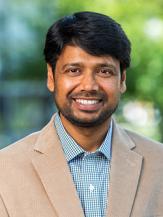
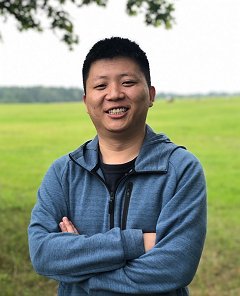
Ali DURUSU is a researcher at Yıldız Technical University, College of Engineering , with a focus on Renewable Energy Systems and Photovoltaic Power Plants . His work spans techno-economic modeling, energy optimization, and smart grid integration. Research Interests : Solar power plant design, grid integration, energy economics, MPPT algorithms, hybrid systems, and smart grid technologies Advisory : Has advised 25 theses on renewable energy topics Projects : Involved in 15 research initiatives Recent publications emphasize peer-to-peer energy trading, distributed storage, and optimization techniques. He has contributed to 80 WoS-indexed publications with significant citations (H-Index: 8 in WoS, 11 in Scopus) and participated in 43 peer-reviewed conferences.
Hugo Barbosa is an active faculty member in Informatics Engineering, affiliated with Lusófona University – Porto University Center and Porto Polytechnic (IPP). He teaches both theoretical and practical aspects of informatics and collaborates with the Social Innovation and Interactive Systems (SIIS) R&D unit at ISEP, focusing on applied research in interactive technologies for education and healthcare. Master’s in Informatics Engineering – Graphics and Multimedia Systems Bachelor’s in Informatics Engineering – Computers and Systems Professional Aptitude Certificate (CAP) PhD candidate in Informatics Engineering at FEUP (60 ECTS completed) Senior Member, Portuguese Engineers Association (OE) Hugo Barbosa's research lies at the intersection of technology and education, with a strong emphasis on serious games , virtual reality , and interactive simulation for training and rehabilitation. His work explores how adaptive digital environments can enhance learning, particularly in medical and engineering contexts, and investigates the integration of cybersecurity and network optimization in these systems. He focuses on user-centered design, aiming to create accessible and effective solutions for diverse populations, including the elderly and individuals with mobility or cognitive challenges. His publication record from 2009 to 2020 reveals a consistent trajectory in applied informatics, with a recent concentration on serious games for rehabilitation , cybersecurity in healthcare , and digital privacy . These works reflect a multidisciplinary approach, bridging computer science with health sciences and education. His research often addresses real-world challenges such as data protection in national health systems, adaptable therapeutic environments, and immersive training simulations. Hugo Barbosa has been recognized as a Senior Member of the Portuguese Engineers Association (OE), a professional distinction reflecting his contributions and expertise. While no additional awards are explicitly mentioned, his active participation in conferences and publications in research journals underscores his scholarly engagement. He is involved in research advising and project development through his work with SIIS at ISEP/IPP, though no named students are listed. His academic and professional activities suggest involvement in research grants and collaborative projects, particularly within R&D units focused on social innovation and interactive systems. His dual teaching role across institutions also indicates a broad educational impact. Hugo Barbosa is actively involved with the Social Innovation and Interactive Systems (SIIS) research unit at ISEP, Porto Polytechnic. This lab focuses on developing innovative interactive applications for social good, particularly in healthcare, education, and rehabilitation. His work there involves designing and evaluating multimedia and simulation-based tools that support learning and therapy, leveraging technologies like serious games and virtual environments.
Ioannis Stamelos is a Professor of Software Engineering at the School of Informatics, Aristotle University of Thessaloniki (since 2015, research/teaching staff since 1997). He serves as Director of the Postgraduate Master Course in Interactive Hardware & Software Technologies. Major Research Areas: Open Source Software, Software Effort/Quality Estimation, Agile Methods, Enterprise Information Systems Key Projects: Deep Blue/AUTH Research Hub (2018-2022), BlockAdemic (blockchain-based micro-credentials), European Commission Open Source Policy Studies Research Trends from recent publications include: Process mining in library information systems Reusability metrics for software assets Bayesian networks in software project management Impact of design patterns on gaming software defects Technical debt assessment via structural metrics Blockchain applications in supply chain management Scientific Awards: Best Paper Award at IEEE DEST’09 Best Student Paper Award at ICSR 2012 Best Paper Award at QUATIC2012 Education & Leadership: PhD in Computer Science (1988), Diploma in Electrical Engineering (1983). Led numerous EU-funded projects (IST, ERASMUS, FP7) and national initiatives (ΓΓΕΤ, ΕΠΕΑΕΚ). Supervised PhD/MSc students in software reuse, OSS quality, and agile practices.
Robert Hsu is Chair Professor and Dean of the College of Information and Electrical Engineering at Asia University, Taiwan, and holds concurrent appointments as Professor at National Chung Cheng University. He serves as President of the Taiwan Association of Cloud Computing and Research Consultant at China Medical University Hospital. His research spans parallel and distributed computing , cloud and edge systems , AI , and medical applications , with over 350 publications in top venues like IEEE TPDS, IEEE TSC, and ACM TOMM. Editor-in-Chief of International Journal of Grid and High Performance Computing Founding Editor-in-Chief of International Journal of Big Data Intelligence Advisory roles in 10+ journals including IEEE Transactions on Cloud Computing His research focuses on cloud-edge collaboration , AI for medical imaging , IoT security , and big data analytics . Key projects include federated learning frameworks for multi-institutional healthcare, optimization techniques for UAV-assisted MEC, and blockchain-based security solutions. His 15 most recent articles highlight advancements in malware detection, resource orchestration in edge environments, and lightweight AI models for retail and rural applications. Scientific accolades include: Stanford University's World's Top 2% Scientists (2020-2023) Best Paper Awards at IEEE ICEIB 2023 and SysCom 2021 Over 25 grants from Ministry of Science and Technology and Ministry of Education Leadership roles as IEEE TCCLD Chair and Steering Committee member He has supervised 30+ PhD/Master's students , including Shih-Chang Chen (2010), Tai-Lung Chen (2010), and Nithin Melala Eshwarappa (2020). His laboratory focuses on edge computing , cloud systems , and AI-driven solutions for healthcare and urban infrastructure.
Pedro Adão is an Assistant Professor at the Department of Computer Science and Engineering (DEI) of the Instituto Superior Técnico (IST) , University of Lisbon . He is affiliated with the SQIG - Security and Quantum Information Group at the Institute of Telecommunications , formerly part of CLC - Logic and Computation Centre . His work bridges formal methods and computational cryptography , focusing on security protocols , software security , and quantum information security . PhD in Mathematics (2006, IST) with thesis "Formal Methods for the Analysis of Security Protocols" Graduated in Applied Mathematics and Computation (2002, IST) with thesis "Electronic Money" His research interests include verification of secure systems, composition of secure systems, mathematical foundations of cryptography, and physical/day-life security. His publications span topics like firewall configuration tools , smart contract verification , quantitative protocol analysis , and computationally sound symbolic cryptography . He has collaborated with institutions such as the University of Pennsylvania, Microsoft Research Cambridge, and INRIA-Microsoft Research Paris. Key teaching contributions include courses in Introduction to Algorithms and Data Structures , Computational Models in Security , and Software Security . He is a member of the SQIG research group and has organized the SQIG Information Security Seminar . Past teaching roles include lecturing at the Catholic University of Portugal and the Air Force Academy.
Prof. Dr.-Ing. Carsten Deckert serves as Professor of Innovation and Production Management at Hochschule Düsseldorf University of Applied Sciences within the Faculty of Mechanical and Process Engineering. He leads the WIM (Business Information Systems and Management) program and teaches courses including Basics of Business Administration, Procurement and Supply Chain Management, Technology Management, Innovation and Technology Management, and Operations Management, along with electives in Sustainable Logistics and Behavioral Economics. Dr. Deckert's research focuses on the intersection of cultural influences and innovation capacity at both national and organizational levels, sustainable logistics systems, engineering creativity, and social innovation. His work examines how cultural dimensions such as collectivism, performance orientation, trust, and tolerance impact a nation's ability to innovate. He has pioneered research on measuring engineering creativity and comparing it with artificial intelligence capabilities, while also exploring sustainable logistics solutions including micro-depots for urban parcel delivery and underground cargo transport systems. His extensive publication record of 117 publications with over 57,000 reads demonstrates significant scholarly impact across multiple disciplines. The recent articles reveal a clear research trajectory examining cultural determinants of innovation, sustainable logistics solutions for urban environments, and creativity in engineering education. His work bridges theoretical frameworks with practical business applications, often presented through detailed case studies on topics ranging from synthesizer development to rap music commercialization. Dr. Deckert actively supervises bachelor's and master's theses in areas including cultural influences on innovation capacity, creativity in engineering, social innovation, sustainable logistics, and behavioral economics. He encourages students to submit inquiries regarding thesis supervision with details about their degree program, expected supervision period, preferred subject areas, and academic transcripts. His research projects include the assessment of the ecological and economic implementation of the CargoCap system at the Bergisch Gladbach site, demonstrating his commitment to practical, sustainable logistics solutions.
Dr. Hongyan Ma is a Kummer Impact Professor, Francisco Benavides Scholar, and Associate Professor at Missouri University of Science and Technology (Missouri S&T). She joined Missouri S&T in 2015 as an Assistant Professor and was promoted to tenured Associate Professor in 2021. Currently directing the Lab of Future Cements and Carbon-negative Initiatives (FuCCI) , Dr. Ma leads research funded by NSF, DOE, DOD, and industry. Her work spans future cements , CO2 mineralization , and critical minerals recovery , with affiliations across multiple departments. Education: Ph.D. in Civil Engineering, The Hong Kong University of Science and Technology, 2013 M.Eng. in Structural Engineering, Shenzhen University, 2008 B.Law. and B.Eng. in Inorganic Non-metallic Materials Engineering, Chongqing University, 2005 Research Interests: Dr. Ma’s work addresses carbon-negative construction materials , focusing on future cements (efficiency strategies, alternative binders), solid waste upcycling , CO2 capture/utilization , thermal energy storage , and nano-biological technologies . Her lab employs advanced materials characterization and multi-scale modeling to enhance concrete durability and develop carbon-negative recovery of critical metals (Ni, Co, Li, Cu). Research Trends: Her recent publications emphasize carbon mineralization , steel slag upcycling , and multi-scale transport modeling , reflecting a strong focus on sustainable construction and industrial waste valorization . Key areas include CO2 sequestration , phosphate cement synthesis , and seawater-resistant concrete . Scientific Awards & Recognitions: Kummer Impact Professorship (2024) Francisco Benavides Scholar (2022) Faculty Excellence Awards (2023, 2020) Top 2% Scientists in 'Building & Construction' (2020–2022) Game Changer Academies Panel Fellow, NSF (2022) Grants & Leadership: Dr. Ma’s research is supported by National Science Foundation , Department of Energy , Department of Defense , and private foundations. She serves on editorial boards, evaluates grants internationally, and leads the FuCCI Lab , integrating multi-disciplinary teams for carbon-negative innovation.
Henrik Artman is a Professor at KTH Royal Institute of Technology, affiliated with the Media Technology and Interaction Design (MTM) school. His research focuses on Cyber Situational Awareness , Simulator Training , Live Virtual Constructive (LVC) systems, and intersections with Sustainability and Energy Supply . He serves as Deputy Head of School and teaches courses such as Advanced Individual Course in Human-Computer Interaction and Computer Game Design . Research Interests include: Human-Computer Interaction Cybersecurity and situational awareness LVC military training systems Sustainability in digital design Energy infrastructure resilience Key Contributions involve analyzing LVC training value for air combat, cyber threat response frameworks, and simulator mission design. His work bridges military training, cybersecurity, and interaction design, with a focus on real-world applications.
Sandra Stein is a Lecturer at the Technische Universität Wien within the College of Mechanical Engineering and Operations Sciences , affiliated with the Department of Logistics and Quality Management . She also serves as an external Postdoctoral Researcher and holds leadership roles at the Center for Sustainable Production and Logistics (Fraunhofer Austria Research GmbH) since 2013. Academic Director, eMBA Mobility Transformation (2021-2025) Board Member, Logistics Research Austria (since 2020) Expert Evaluator, Horizon Europe and Horizon2020 Research Interests include Physical Internet , Collaborative Logistics Networks , Sustainable Transport Systems , and Inland Waterway Transport . Her work focuses on: Green and Resilient Freight Networks Modal Shift Optimization Dynamic Transport Capacity Planning Intermodal Integration Shared Logistics and Data Utilization Scientific Awards include summa cum laude and cum laude distinctions for her academic achievements. She has contributed to major transport conferences like TRA2018 and IPIC 2019, and her work spans practical projects with organizations like Horizon Europe and the Austrian Ministry for Transport, Innovation, and Technology.
Shafaeat Hossain is a Professor in the Department of Computer Science at Southern Connecticut State University (SCSU) . He holds a Ph.D. in Computational Analysis and Modeling from Louisiana Tech University (2014) and advanced degrees from the University of Dhaka. His research focuses on machine learning , user authentication in smart devices , behavioral biometrics , and multi-biometric verification . B.S. in Computer Science and Engineering, University of Dhaka (2006) M.S. in Computer Science, Louisiana Tech University (2012) Ph.D. in Computational Analysis and Modeling, Louisiana Tech University (2014) His work bridges machine learning with security applications , particularly in touchscreen gesture analysis , continuous authentication , and behavioral biometrics for smartphones. He explores multi-biometric fusion strategies to enhance security and user convenience, while also investigating game theory in social networks and NLP for deep authorship attribution . Recent publications highlight advances in capacitive swipe authentication , zoom gesture analysis , and Wi-Fi indoor positioning . Collaborative studies address sleep apnea diagnosis and smartwatch dynamics in verification systems. SCSU Faculty Scholar Award (2023) SCSU Mid-Level Faculty Research Fellowship (2019) Senior Member, IEEE He has secured grants totaling over $25,000 from SCSU, CSU-AAUP, and UConn for projects on child safety in digital authentication and multi-biometric security enhancement . His scholarship spans IEEE Access , Computers & Security , and top-tier conferences like IEEE IJCNN and SMARTCOMP .
Patricia Anthony serves as Associate Professor at Lincoln University's School of Landscape Architecture in New Zealand, where she holds an ORCID identifier 0000-0002-4991-3340. Her academic appointments include Faculty Postgraduate Chair for the Faculty of Environment, Society and Design (2021-2024) and current affiliation with the Centre for Geospatial and Computing Technologies (2025-present). Previously, she served as Head of Department (2016-2017), Department Postgraduate Coordinator (2014-2016), and SHIFT Coordinator (2017-2020). Her educational background comprises a Ph.D. from the University of Southampton, United Kingdom; an M.Sc. from Birkbeck, University of London, United Kingdom; and a BSc (High Honors) from the State University of New York, United States. She is proficient in Malay language, with reading, writing, and speaking capabilities. Dr. Anthony's research centers on agent and multi-agent systems, utilizing artificial intelligence techniques including machine learning, evolutionary computation, and text processing as decision-making strategies for agents. She is recognized as a leading researcher applying intelligent agents across diverse domains such as online auctions, agriculture, education, and social media analysis. Her specialized work in sentiment analysis and emotion identification enables agents to detect emotional states in textual communications, with recent applications in earthquake tweet analysis. Her publication record demonstrates consistent scholarly output with over 130 publications, showing particular strength in applying multi-agent systems to practical challenges. Recent work reveals three major research streams: trust and reputation management in IoT environments (accounting for approximately 30% of recent publications), agricultural technology applications including mastitis detection and water resource management (approximately 40%), and social media analysis focusing on elderly technology adoption and cyber aggression classification (approximately 30%). Adjunct Professor, Hubei University of Technology, Wuhan, China Program Committee/Senior Program Committee member for Pacific Rim International Conferences on Artificial Intelligence (PRICAI) 2016, 2018, 2019 Co-chair for International Carnahan Conference on Security Technology (ICCST) 2014, 2016, 2018, 2020 Member of Institute of Electrical and Electronics Engineers (IEEE) Reviewer for Engineering Applications of Artificial Intelligence, Malaysian Journal of Computer Science, and Adaptive Behaviour Dr. Anthony has supervised numerous postgraduate students across multiple research areas related to multi-agent systems, with completed projects spanning cyber aggression classification, agricultural technology, IoT security, and elderly technology adoption. She serves as an examiner for advanced computing courses including Advanced Database (COMP643), Advanced Programming (COMP642), and Studio Project (COMP639), demonstrating her integration within the university's computing curriculum despite her Landscape Architecture appointment. Her research aligns with Sustainable Development Goal 11 (Sustainable Cities and Communities), reflecting her commitment to applying computational techniques to address real-world challenges in urban and community contexts. She actively collaborates across disciplines through the Centre for Geospatial and Computing Technologies, bridging computational methods with landscape architecture applications.
Federico Ciliberto is an Associate Professor in the Department of Economics at the University of Virginia, with additional affiliation as a DIW Fellow in the Department of Firms and Markets at Deutsches Institut für Wirtschaftsforschung (DIW Berlin). His research spans industrial organization, agricultural economics, and transportation economics, with a significant focus on the airline industry. His research interests include industrial organization with emphasis on airline market competition, econometric modeling of market structure, agricultural economics focusing on genetically engineered crops, and the application of game theory to market behavior. His work often combines sophisticated econometric techniques with detailed industry data to analyze complex market dynamics. Ciliberto's publication record shows a strong concentration in top economics journals, with a notable shift toward agricultural economics in recent years while maintaining his expertise in airline industry analysis. His research demonstrates consistent methodological rigor, often employing structural econometric models and large-scale datasets to address questions of market competition, innovation valuation, and policy impacts. His work has appeared in premier journals including Journal of Political Economy, Review of Economic Studies, Econometrica, RAND Journal of Economics, and Science Advances, reflecting both the theoretical and empirical strength of his research contributions across multiple subfields of economics. Ciliberto has maintained active research collaborations with scholars from various institutions, producing work that bridges theoretical economics with practical policy implications, particularly in regulated industries and agricultural technology adoption.
Francisco Javier Oliver Bernal is a Lecturer at the University of Deusto in Bilbao, Spain, within the Faculty of Education and Sport and the Department of Physical Activity and Sports Sciences. He teaches across Computer Engineering, Physical Activity and Sports Sciences, and Primary Education bachelor's programs, as well as the Master's in Secondary Education. He earned his Doctor of Medicine and Surgery from the University of the Basque Country. His research spans Human-Computer Interaction, Educational Technology, and Science Education, with a strong emphasis on accessibility for visually impaired users. He has developed tools for e-learning, digital resource centers, and innovative teaching methodologies in computer science and natural sciences, aiming to enhance educational experiences through technology. His scholarly output, spanning from the 1990s to 2023, demonstrates a consistent focus on technology-enhanced learning, evolving from early work in 3D interfaces and computer graphics to recent applications in health, music, and interdisciplinary educational contexts. Key trends include the integration of accessibility features, the development of domain-specific educational tools (e.g., for biology and astronomy), and responses to contemporary challenges like the COVID-19 pandemic. He has supervised multiple theses on digital accessibility and cooperative systems, though student names were not listed. Details on research grants were not provided in the available text. As a member of the eVida research group (officially recognized by the Basque Government), he contributes to projects advancing accessible educational technologies, including the ACCE project for audiovisual accessibility and READIS digital resource centers for visually impaired users.
Roxani Gkavra M.Sc. is a researcher at the Institute of Transport Studies within the University of Natural Resources and Life Sciences, Vienna (BOKU). Her work focuses on transport economics , traffic engineering , and geoinformatics applications in mobility research. She actively contributes to projects addressing equitable and accessible transportation systems. Location: Peter-Jordan-Straße 82, 1190 Vienna Contact: roxani.gkavra@boku.ac.at Research Interests: Roxani Gkavra specializes in analyzing shared micromobility adoption , mobility hub effectiveness , and rural demand-responsive transport systems . Her work evaluates how technological and policy interventions impact urban mobility patterns and transport equity . Key Projects: She contributes to initiatives like Wiener Linien's Hüpfer pilot and the SmartHubs series, examining mobility hub impacts across Europe. Funders include the Austrian Research Promotion Agency (FFG) and National Companies . Project durations span 2021-2026. Scientific Engagement: Gkavra serves as reviewer for journals including Sustainable Futures and European Transport Research Review . She is a member of the Central European Excellence in Transportation Research Association (CEETRA) and frequently presents at international conferences like the International Association of Travel Behavior Research . Advisory Role: While not explicitly mentoring students, she collaborates extensively on transport behavior research with senior academics like Yusak Susilo and Oliver Roider. Her work informs policy recommendations for equitable mobility solutions.
Xiaofei Xie is an Assistant Professor in the School of Computing and Information Systems at Singapore Management University (SMU), where he has been employed since 2022. Prior to this position, he was a postdoctoral researcher at Nanyang Technological University in Singapore from 2018 to 2021. His research primarily focuses on program analysis, software testing, vulnerability detection, and quality assurance of AI systems. SMU is ranked No. 9 (No. 5 in Asia) in the Software Engineering category according to CSRankings. Dr. Xie's research interests span multiple critical areas in software engineering and AI systems. His work on program analysis includes detecting non-termination bugs and developing practical methods like EndWatch for real-world software. In software testing, he has made significant contributions to deep learning systems testing, autonomous driving systems testing, and smart contract security. His research on vulnerability detection encompasses various aspects of AI security, including backdoor attacks, adversarial examples, and security testing for web-based deep learning frameworks. His quality assurance work for AI systems includes developing metrics for robustness evaluation and creating testing methodologies for diverse AI applications. Dr. Xie's publication record shows a strong trend toward integrating large language models with traditional software engineering techniques. His recent work demonstrates increasing focus on testing autonomous systems, securing AI models, and applying advanced machine learning techniques to traditional software engineering problems. The research spans multiple domains including deep learning frameworks, smart contracts, autonomous driving systems, and federated learning environments. Among his notable achievements are multiple ACM SIGSOFT Distinguished Paper Awards (ASE 2019, ASE 2023, ISSTA 2022), the ACM Tianjin Doctoral Dissertation Award 2019, and the Best Paper Award at APSEC 2020. His work has been accepted to top-tier conferences including ICSE, FSE, ASE, ISSTA, and security venues like USENIX Security. Dr. Xie actively serves the academic community as a PC co-chair for ICECCS 2025 and as a program committee member for numerous prestigious conferences including ICSE, FSE, ASE, ISSTA, and AAAI. He has also organized workshops such as the Workshop on AI and Software Testing/Analysis (AISTA) and served as Guest Editor for special issues on AI security. His service demonstrates leadership in bridging software engineering with AI and security research communities.



.jpg)