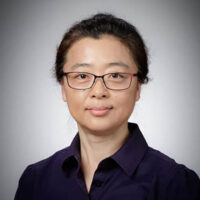
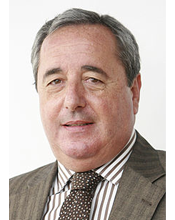
Daniel Månsson is a Professor at the Department of Electrical Engineering, Royal Institute of Technology (KTH), specializing in smart electricity grids and power system components. His work spans electromagnetic compatibility (EMC) of large distributed systems, energy storage optimization, and privacy protection in smart metering. PhD in Engineering Physics (with specialization in Electromagnetism) Docent (Swedish Academic Title) in Electrical Engineering His research focuses on: Optimization of self-sufficient microgrids with energy hubs Smart meter privacy protection using energy storage EMC analysis of photovoltaic systems and UWB transients Hybrid energy storage system performance in renewable grids Recent publications indicate expertise in: Electromagnetic interference from solar PV systems Cyber-physical security in smart meters Conducted emission analysis Greenhouse gas reduction through optimized storage
Ruta Mehta is an Associate Professor in the Department of Computer Science at the University of Illinois at Urbana-Champaign . Since 2016 she has led a vibrant research program in algorithmic game theory, market design, and fair division, while actively shaping the community through service roles such as Program Co-Chair of WINE 2020 and Area Chair of EC 2021. Education Ph.D. in Computer Science & Engineering, Indian Institute of Technology Bombay, 2012. (Advisors: Prof. Milind Sohoni & Prof. Bharat Adsul; ACM India Doctoral Dissertation Award 2012) M.Tech. in Computer Science & Engineering, Indian Institute of Technology Bombay, 2005 B.E. in Computer Engineering, Maharaja Sayajirao University (MSU) Baroda, 2003 Research Interests Mehta’s work lies at the intersection of theoretical computer science , mathematical economics , and social choice theory . She investigates the computability and complexity of equilibria—both market and Nash—under a variety of utility models, and designs provably efficient algorithms that are practical for real-world resource-allocation tasks. Current themes include: Algorithmic Game Theory: equilibrium computation, smoothed analysis, learning in games Fair Division: envy-freeness up to any good (EFX), mixed manna, competitive equilibrium with chores Interdisciplinary Applications: genetic evolution, machine-learning markets, climate-aware allocation Publication Trends Her 15 most recent works (2017–2025) span Operations Research , Mathematics of Operations Research , STOC, SODA, EC, ITCS, AAMAS, and NeurIPS. The articles cluster around three thrusts: (i) rigorous hardness and approximation results for market equilibrium in Leontief and PLC exchange economies, (ii) algorithmic advances toward guaranteed EFX allocations and competitive equilibrium with mixed manna, and (iii) novel game-theoretic analyses of genetic diversity and strategic resource allocation under budget constraints. Scientific Awards & Honors NSF CAREER Award (2018) Outstanding Post-Doctoral Researcher Award, Georgia Tech (2014) Rising Stars in EECS (2013) ACM India Doctoral Dissertation Award (2012) Google India Anita Borg Memorial Scholarship (2012) IBM PhD Award (2010) IBM PhD Fellowship (2009–2010) Grants, Advising, and Community Leadership Mehta currently mentors a growing group of graduate students and post-docs. She is PI on an NSF CAREER grant and has served on federal panels reviewing NSF CISE proposals. Beyond research, she founded the EC (AGT) Mentoring Workshop , co-located with the ACM Economics & Computation conference, to broaden participation of women and under-represented minorities in algorithmic game theory. Labs & Teams Her research group operates within the Theory & Algorithms cluster at UIUC, leveraging ties with the Decision & Control group and the Social & Algorithmic Thinking initiative. She is an active member of ACM SIGecom and regularly organizes reading groups on algorithmic game theory and fair division.
Jennifer R Mc Conville is a researcher at Chalmers University of Technology's Department of Urban Design and Planning. Her work focuses on sustainable sanitation systems, particularly in developing countries, with extensive research on wastewater management, community-based approaches, and resource recovery. Key affiliations: Formas-funded projects (2012–2020) Geographic focus: Bolivia, West Africa, Sweden Methodologies: Gamification, participatory planning, regime analysis Research interests include: Sanitation planning frameworks Decentralized wastewater systems Equity in urban-rural transitions Policy implementation barriers Recent publications analyze: Circular economy in sanitation Decision-support tools Community-managed infrastructure Role-playing in engineering education
Dr. Dongmei Zhao is a Professor in the Department of Electrical & Computer Engineering at McMaster University, part of the Faculty of Engineering. She specializes in wireless networking, network resource management, mobile edge computing, mobile computation offloading, and digital twins. Her research clusters focus on Digital & Smart Systems. Dr. Zhao holds a Ph.D. from the University of Waterloo. She teaches courses such as COMPENG 4DK4 (Computer Communication Networks), COMPENG 4DN4 (Advanced Internet Communications), and graduate-level courses like ECE 729 (Resource Management in Wireless Networks). Her research interests span cutting-edge topics including UAV-enabled edge computing, digital twin migration, vehicular networks, and reinforcement learning applications in resource allocation. She actively contributes to advancing 6G networks, security redundancy in autonomous systems, and decentralized manufacturing platforms. Dr. Zhao's recent publications emphasize optimization techniques for dynamic networks, platooning systems, and multi-agent learning frameworks. She has been recognized for her work in vehicular edge computing and digital twin integration, though explicit awards are not listed here. She advises on graduate studies in networking and edge computing, though no specific student names are provided in the text. Her work often intersects with practical challenges in smart infrastructure and autonomous vehicle systems.
Guannan Liu is an Assistant Professor of Computer Science at the Colorado School of Mines, specializing in cybersecurity and network security. He holds a Ph.D. in Computer Engineering from Virginia Tech (2023) and a BS from Purdue University (2016). His research focuses on system/network security, human-factor security, cloud computing security, and user authentication mechanisms. He has identified critical vulnerabilities in online services, collaborating with major tech firms to address resource mismanagement issues. Dr. Liu's work has been published in top-tier security conferences. He actively seeks motivated students for cybersecurity research projects. His honors include a Student Travel Grant for DSN 2022 and academic recognition through Dean’s List distinctions. His research bridges theoretical insights with practical impact, particularly in identifying real-world system vulnerabilities through comprehensive measurements. Key areas of exploration include container registry typosquatting, cloud gaming service misuse, DNS query analysis, and acoustic side-channel attacks on IoT devices. His interdisciplinary work integrates software engineering, artificial intelligence, and network measurement techniques to enhance security across diverse systems.
Fang Kong is an Assistant Professor in the Department of Statistics and Data Science at the Southern University of Science and Technology (SUSTech). He earned his PhD in Computer Science from Shanghai Jiao Tong University under the supervision of Prof. Shuai Li and received his Bachelor's degree in Software Engineering from Shandong University. Education: PhD in Computer Science, Shanghai Jiao Tong University (2020-2024) Bachelor's Degree in Software Engineering, Shandong University (2016-2020) Dr. Kong is broadly interested in developing theoretically guaranteed algorithms for sequential decision-making problems, with particular focus on multi-armed bandits and reinforcement learning, as well as their applications in online experimentation and recommendation systems. His research spans theoretical foundations of bandit algorithms, matching markets, influence maximization, and online learning under various feedback structures. He has made significant contributions to the understanding of best-of-both-worlds algorithms that perform well in both stochastic and adversarial environments. His publication record shows a strong trajectory of high-impact work in top-tier conferences including NeurIPS, ICML, ICLR, AAAI, WWW, and AAMAS. His research demonstrates expertise in theoretical machine learning with a focus on bandit algorithms, particularly in matching markets and sequential decision-making problems. His work often bridges theoretical guarantees with practical applications in recommendation systems and online experimentation. Scientific Awards: CCF Doctoral Dissertation Award in Agent and Multi-Agent Systems (2025) Baidu Scholarship (2024) National Scholarship for PhD students (2023, 2022) AAMAS Student Scholarship (2023) Microsoft Research Asia Excellence Award (2022) Dr. Kong actively mentors students at various levels, including PhD and Master's students at SUSTech, visiting students from other institutions, and undergraduate researchers. He serves as a reviewer for top machine learning conferences (ICLR, NeurIPS, ICML, WWW) and journals (IEEE PAMI, TMLR). His teaching includes graduate Machine Learning and undergraduate Artificial Intelligence courses at SUSTech.
Patrick Pollok serves as Assistant Professor at the Institute for Technology and Innovation Management (TIM) at RWTH Aachen University, where he leads the Business Transformation Lab. His research focuses on leveraging external actors—particularly crowds and communities—for corporate innovation and analyzing organizational change processes driven by digitalization and sustainability. Pollok's primary research interests include Open Innovation, Crowdsourcing Platforms, Digital Transformation, and Business Model Innovation. His work investigates how firms effectively harness external creativity and navigate transformation challenges, with recent studies examining knowledge diversity in teams, platform strategies, and managerial attention allocation in innovation ecosystems. He emphasizes practical applications through industry collaborations. His publication record demonstrates consistent high-impact output since 2011, with accelerating contributions from 2019-2025. The 15 most recent articles reveal evolving focus areas: early work centered on crowdsourcing mechanics (2015-2019), while recent publications (2021-2025) expand into platform ecosystems, CEO decision-making in cleantech, and attention dynamics in exploratory innovation. Key journals include Research Policy and Journal of Product Innovation Management. Pollok actively partners with industry to implement innovation methods and develop new business models, translating theoretical insights into practical frameworks. His collaborations with Dirk Lüttgens, Frank Piller, and international researchers highlight strong interdisciplinary networks. He directs the Business Transformation Lab, which serves as an experimental hub for studying digital and sustainable innovation processes. The lab facilitates industry-academia knowledge exchange through applied projects on crowdsourcing implementation, platform strategy development, and business model transformation.
Vinh Nguyen is an Assistant Professor in the Department of Mechanical and Aerospace Engineering at Michigan Technological University, where he directs the Michigan Tech Center for AI and coordinates the NIST-PREP program. His research focuses on advanced manufacturing through Industry 4.0, human-robot-machine interaction, and physics-based/data-driven modeling. He has developed solutions for machining, additive manufacturing, metal forming, and robotic assembly to promote smart and sustainable manufacturing. Prior to joining Michigan Tech in 2022, he was a National Research Council Postdoctoral Fellow at NIST (2020–2022). Dr. Nguyen earned his PhD (2020), MS in Mechanical Engineering (2017), and MS in Electrical & Computer Engineering (2017) from Georgia Institute of Technology. He received dual bachelor’s degrees in Electrical and Mechanical Engineering from Rensselaer Polytechnic Institute (2014). His research portfolio spans Advanced Manufacturing Industry 4.0 and 5.0 Human-Robot Interaction Physics-Based/Data-Driven Modeling Industrial Automation based on his lab’s interdisciplinary focus on human-centric, resilient solutions. His recent publications address trends in Machine Learning for Manufacturing Autonomous Vehicle Sensors Hybrid Additive/Subtractive Manufacturing Augmented/Mixed Reality Interfaces Industrial Robot Diagnostics Material-Specific Machining with keywords spanning Robotics, Data Science, and Industrial Engineering.
Pedro M. B. Silva Girão is a Full Professor in the Department of Electrical Engineering at Instituto Superior Técnico (IST), University of Lisbon (UL), and a Senior Researcher at Instituto de Telecomunicações where he heads the Instrumentation and Measurements Group and coordinates the Basic Sciences and Enabling Technologies area. His dual institutional roles position him at the forefront of academic research and technological innovation in Portugal. His research program focuses on instrumentation, transducers, and measurement techniques with specialized applications in biomedical and environmental domains. Key interests include wireless sensor networks for health monitoring, metrology standards, and digital data processing methodologies. This work bridges engineering principles with real-world healthcare and ecological challenges, emphasizing practical implementations in diagnostic systems and environmental sensing. Analysis of his 2019-2024 publications reveals a strong thematic trajectory in IoT-enabled healthcare solutions and precision environmental monitoring. Recurring motifs include gait rehabilitation through mixed reality systems, advanced dosimetry for liver cancer radioembolization, microvascular reactivity assessment, and water quality sensor networks. His output demonstrates consistent interdisciplinary collaboration between engineering, medical, and environmental science communities. Dr. Girão's scientific recognition includes: IEEE Senior Member status IEEE IMS Distinguished Lecturer appointment Honorary Chairmanship of IMEKO TC19—Environmental Measurements As leader of the Instrumentation and Measurements Group at Instituto de Telecomunicações, he directs a multidisciplinary team developing next-generation measurement systems. Current initiatives integrate microwave Doppler radar, wearable biopotential sensors, and wireless networks for unobtrusive health monitoring and environmental assessment, with active partnerships across medical institutions and ecological agencies.
Russell King is the Henry Armfield Foscue Distinguished Professor of Industrial and Systems Engineering (ISE) at North Carolina State University's College of Engineering. He serves as the Director of Graduate Programs for the ISE department, responsible for administering degree programs serving approximately 190 graduate students. King is also a Fellow of the Institute of Industrial and Systems Engineers and has received numerous teaching and research awards throughout his 37-year career at NC State. Dr. King earned his Ph.D. in Industrial Engineering from the University of Florida (1986), following a Master of Industrial Engineering (1982) and Bachelor of Science in Systems Engineering (1980). His undergraduate journey was unconventional, having considered seven different majors including pre-med, biology, microbiology, biochemistry, math, and ornamental horticulture before selecting engineering. His doctoral work was completed under advisor Thom Hodgson, who moved from Florida to become NC State's ISE department head during King's studies. King's research focuses on solving practical problems across diverse areas including logistics, scheduling, and inventory control for additive manufacturing, remanufacturing, and military systems under risk. His work spans pricing strategies, stress control of 3D-printed parts, supply chain design, and military logistics optimization. His research approach bridges theoretical rigor with real-world applications, resulting in consulting engagements with Ford Motors, The Gap, Dillards Department Stores, and the Institute for Defense and Business. Analysis of his recent publications shows a consistent focus on military logistics applications (5 of 10 recent papers), additive manufacturing integration (3 papers), and supply chain risk management (4 papers), demonstrating how his research has evolved to address emerging challenges in manufacturing and defense logistics while maintaining practical relevance. C. A. Anderson Outstanding Faculty Award, ISE Department at NC State University (2020, 2014, 2008, 2002, 1996, 1986) Albert G. Holzman Distinguished Educator Award, Institute of Industrial Engineers (2010) Henry Armfield Foscue Distinguished Professor (2017) Edward P. Fitts Distinguished Professor (2012) NCSU George H. Blessis Outstanding Undergraduate Advisor Award (2010) Teaching Excellence Award in the OR Division, Institute of Industrial and Systems Engineers (2019) Technical Innovation in Industrial Engineering, Institute of Industrial Engineers (2003) Fellow, Institute of Industrial Engineers (2006) As an academic leader, King has developed innovative programs including a dual Master of Industrial Engineering/Master of Business Administration program and a distance education Master of Engineering degree. His mentorship has produced three students who placed in the top 3 of IIE's dissertation award competition, with two taking first place. He has served as associate editor for the Journal of Manufacturing Systems and IIE Transactions, contributing to the scholarly community beyond his own research. Outside academia, King and his daughter are Masters of Taekwondo under Grand Master K.S. Lee of Morrisville, NC.
Andrey Vladimirovich Savchenko is a prominent researcher and educator in computer vision and artificial intelligence at the National Research University Higher School of Economics (HSE) in Nizhny Novgorod. He holds multiple positions including Professor at the Faculty of Informatics, Mathematics, and Computer Science, Leading Researcher at the Faculty of Computer Science and Institute of Artificial Intelligence and Digital Sciences, and Academic Director of the "Artificial Intelligence and Computer Vision" educational program. His educational background includes: 2016: Doctor of Technical Sciences from Nizhny Novgorod State Technical University 2015: Academic title of Associate Professor 2011: Candidate of Technical Sciences 2008: Specialist degree in Applied Mathematics and Computer Science Savchenko's research focuses on computer vision, pattern recognition, and artificial intelligence, with particular emphasis on facial recognition, emotion analysis, and efficient deep learning algorithms. His work bridges theoretical foundations with practical applications, especially in mobile computing environments where computational resources are limited. He has developed innovative methods for making AI systems more efficient without significant loss in accuracy. His recent publications demonstrate a strong trend toward multimodal analysis, combining visual, audio, and textual data for more robust recognition systems. There's a clear emphasis on making AI systems more efficient, especially for mobile devices, and on developing methods that can work with limited computational resources while maintaining high accuracy. His work spans fundamental research on neural network architectures and practical applications in education, healthcare, and human-computer interaction. Among his notable scientific achievements: Gratitude from the Governor of Nizhny Novgorod region (2022) Multiple gratitude awards from HSE (2021-2022) Best Teacher Award (2018-2019) Leaders of IT Industry Award from NEYMARK IT Campus (2023) Academic Success Bonus at HSE (2011-2013) Savchenko has successfully supervised numerous master's students and currently mentors PhD candidates working on cutting-edge topics like large language models for recommendation systems and document analysis. He has secured significant research funding, including projects with Huawei, Sberbank, and the Russian Science Foundation, totaling millions of rubles. His laboratory focuses on developing efficient algorithms for computer vision and multimodal data analysis. He leads the Laboratory of Theoretical Foundations of Artificial Intelligence Models and has established strong industry partnerships that ensure his research has practical impact. His NVIDIA Deep Learning Institute certification demonstrates his commitment to staying current with the latest AI technologies.
Pieter Simoens is an Assistant Professor at Ghent University and affiliated with the imec research institute. He works at the intersection of distributed artificial intelligence, edge computing, and collective intelligence, with a focus on AI applications for resource-constrained environments and robotic systems. His research explores innovative approaches to machine learning deployment in heterogeneous infrastructures, task planning for IoT-integrated robotics, and modeling collective decision-making processes. He has contributed to frameworks like DIANNE for distributed deep learning and developed methods for cognitive modeling in reinforcement learning scenarios. With over 100 publications, his recent work spans adaptive neural networks, privacy-preserving surveillance, UAV hyperspectral data analysis, and computational fairness in AI systems. He leads research initiatives within the Internet Technology and Data Science Lab (IDLab) and contributes to educational programs in software engineering and applied machine learning. Responsible for courses on software engineering, mobile development, system design, and applied machine learning Active in edge computing and neuromorphic algorithms research Develops AI solutions for robotics, surveillance, and industrial IoT applications
Professor Mikhail Prokopenko is a leading academic in complex systems research at the University of Sydney's School of Computer Science. He holds a PhD in Computer Science (Macquarie University, 2002), MA in Economics (USA), and MSc in Applied Mathematics (USSR). As Director of the Centre for Complex Systems and Theme Co-Leader for Pathogen Emergence and Spread at the Institute for Infectious Diseases, his work focuses on modeling self-organizing systems, computational epidemiology, and AI applications in pandemic control. Roles: Director of Centre for Complex Systems, Theme Co-Leader (Pathogen Emergence), Theme Leader (Complex Systems) Education: PhD Computer Science (2002), MA Economics (USA), MSc Applied Mathematics (USSR) Affiliations: Fellow of Royal Society of NSW, Specialty Editor for Frontiers in Robotics and AI His research addresses challenges in complex systems like power grids, communication networks, and epidemiological models. Notable contributions include: RoboCup World Champion teams (2016, 2019) in Simulation League COVID-19 modeling featured in Nature's Top 50 SARS-CoV-2 articles (2020) Development of AMTraC-19 agent-based pandemic model Key research areas include: Guided self-organization principles Information dynamics in collective systems Thermodynamic efficiency of complex processes He has supervised over 200 publications and patents, with recent focus on pandemic response optimization and urban system resilience.
Role & Affiliation: Jean-Christophe BACH is an Associate Professor at IMT Atlantique's Computer Science department since 2015. He leads the PASS research group (IRISA) and focuses on software security, model-driven engineering, and cybersecurity applications. Previously, he held roles as a teaching assistant (ATER) at University of Lille (2014–2015) and completed his PhD on model transformations at Inria/LORIA under Pierre-Étienne Moreau and Marc Pantel (defended 2014). Research Interests: His work centers on improving software trustworthiness through 'security by design' principles. Key areas include model federation, formal methods for software verification, transformation traceability, and cybersecurity in industrial systems. He actively contributes to frameworks like Openflexo and PAMELA, emphasizing practical tooling for secure systems engineering. Teaching & Education: Teaches advanced topics such as object-oriented design, functional programming (OCaml), concurrency modeling, and cybersecurity. Supervises student projects on Openflexo, game development, and network security (IPv6/Tor). Courses include INF301, INF447, and others. Labs & Collaborations: Engaged with IRISA and Lab-STICC research centers. Collaborates on projects like the European Space Agency's SSE4Space framework for secure space missions and the Quarteft project (aerospace software). Active in open-source initiatives and scientific mediation for K-12 programming education.
James Forbes is an Associate Professor in the Department of Mechanical Engineering at McGill University. He holds the title of William Dawson Scholar and is affiliated with the Dynamics Estimation & Control of Aerospace & Robotics Systems research group. His primary research focus is on Dynamics and Control, with emphasis on navigation, guidance, and control (GNC) techniques for robotic systems. He teaches courses such as MECH 309 (Numerical Methods), MECH 412 (System Dynamics), and advanced topics in control systems. Forbes earned his Ph.D. in Aerospace Science and Engineering from the University of Toronto, following an M.A.Sc. from the same institution and a B.A.Sc. in Mechanical Engineering from the University of Waterloo. His research interests include nonlinear state estimation (batch methods, filtering), control synthesis via optimization (LQR, LMI approaches), and data-driven modeling using Koopman operator techniques. Applications span unmanned aerial vehicles (UAVs), autonomous underwater vehicles (AUVs), and SLAM systems. He has developed the navlie Python package for state estimation on Lie groups. Notable awards include the William Dawson Scholar distinction. His recent work focuses on multi-UAV localization, robust control algorithms, and sensor fusion techniques. He collaborates on projects involving UWB-based positioning and inertial navigation systems.