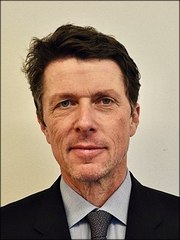
Prof. dr. ir. C.H. (Caspar) van der Wal is a Full Professor in Physics of Quantum Devices at the Faculty of Science and Engineering , University of Groningen. His research focuses on spintronic and quantum information functionalities using electron/nuclear spins in semiconductor devices, combining quantum optical and electron transport methods. PhD in Quantum Transport (Delft University of Technology, 2001) Postdoc in Quantum Optics at Harvard University (2001-2003) Scientific Director of Zernike Institute for Advanced Materials (2016-2022) Research keywords include Quantum Optics , Spintronics , Quantum Information , and Semiconductor Physics . Recent work explores 2D/3D semiconductor heterostructures , spin defects in SiC , and transition metal dichalcogenides . His scientific contributions have earned him the NWO-Vidi Grant (2005) , ERC Starting Grant (2011) , and multiple teaching awards. Publications since 2001 span topics like quantum superpositions in superconducting circuits, spin relaxation in quantum dots, and telecom-ready spin centers in silicon carbide. Grants : NWO-Vidi (2005), ERC Starting Grant (2011) Leadership : Scientific Director, Zernike Institute (2016-2022) Teaching : Teacher of the Year (2015), Education Prize (2012) Current affiliations include the Physics of Nanodevices group at the Zernike Institute for Advanced Materials. Collaborations span institutions like MIT, Harvard, and AMOLF.
Prof. Dr. Robert Blick is a faculty member at the University of Hamburg , leading the Institute for Nanostructure and Solid State Physics under the Faculty of Mathematics, Informatics, and Natural Sciences. He serves as Director of the Center for Hybrid Nanostructures (CHyN) and Head of the Board of Examiners of Nano-Science. Research Focus: Atomic Layer Deposition (ALD), quantum dots, superconducting thin films, biomaterials, and nanomechanical devices. Key Collaborations: Deutsches Elektronen-Synchrotron (DESY), molecular-beam epitaxy groups, Forschungslabor Mikroelektronik Deutschland. His academic contributions span nanoscience, materials growth, and biomedical applications. Current funding includes support from the Deutsche Forschungsgemeinschaft (DFG), Exzellenzcluster CUI, and the Joachim Herz Foundation. The CHyN research group operates a state-of-the-art clean room facility for electron-beam and focused-ion-beam lithography, enabling 8nm feature definition on 6-inch wafers. Applications of his work include memristor technology, quantum devices, and advanced biosensors. His PhD students include Ahmed Alshaikh, Kristian Deneke, Daniel Hensel, Marianna Brede, Daniel Schmidt, Malte Siegmund, and Jan Stelzner. Senior researchers Dr. Stefanie Haugg and Dr. Robert Zierold contribute to materials growth and atomic layer deposition.
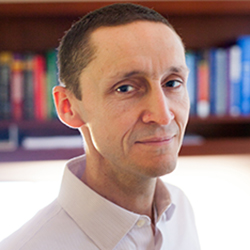
Robert M. Weikle, II is a Professor in the Charles L. Brown Department of Electrical and Computer Engineering at the University of Virginia, with a courtesy appointment in the Department of Physics. He earned his B.S. from Rice University (1986), M.S. (1987), and Ph.D. (1992) in Electrical Engineering from Caltech, followed by postdoctoral work at Chalmers University of Technology (1992). His research focuses on millimeter-wave and terahertz electronics , applied electromagnetics, integrated antennas, low-noise sensors, and heterogeneous integration of compound semiconductors. His work bridges electronics and photonics for spectrum access, with applications in astronomy, spectroscopy, and metrology. He has published extensively on micromachined silicon substrates, superconducting materials, and emerging technologies. Scientific Awards: IEEE Microwave Prize (1993) David A. Harrison III Award (1999) University of Virginia All-University Outstanding Teaching Award (2000) Edlich-Henderson Innovator of the Year (2016) Fulbright Scholar (2001) As Chief Technology Officer and co-founder of Dominion Microprobes, Inc., he commercializes micromachined wafer probes for high-frequency metrology. His lab, located in E220 Thornton Hall and the Jesse W. Beams Physics Building, has produced 15+ recent publications on submillimeter-wave devices, THz probes, and calibration techniques.
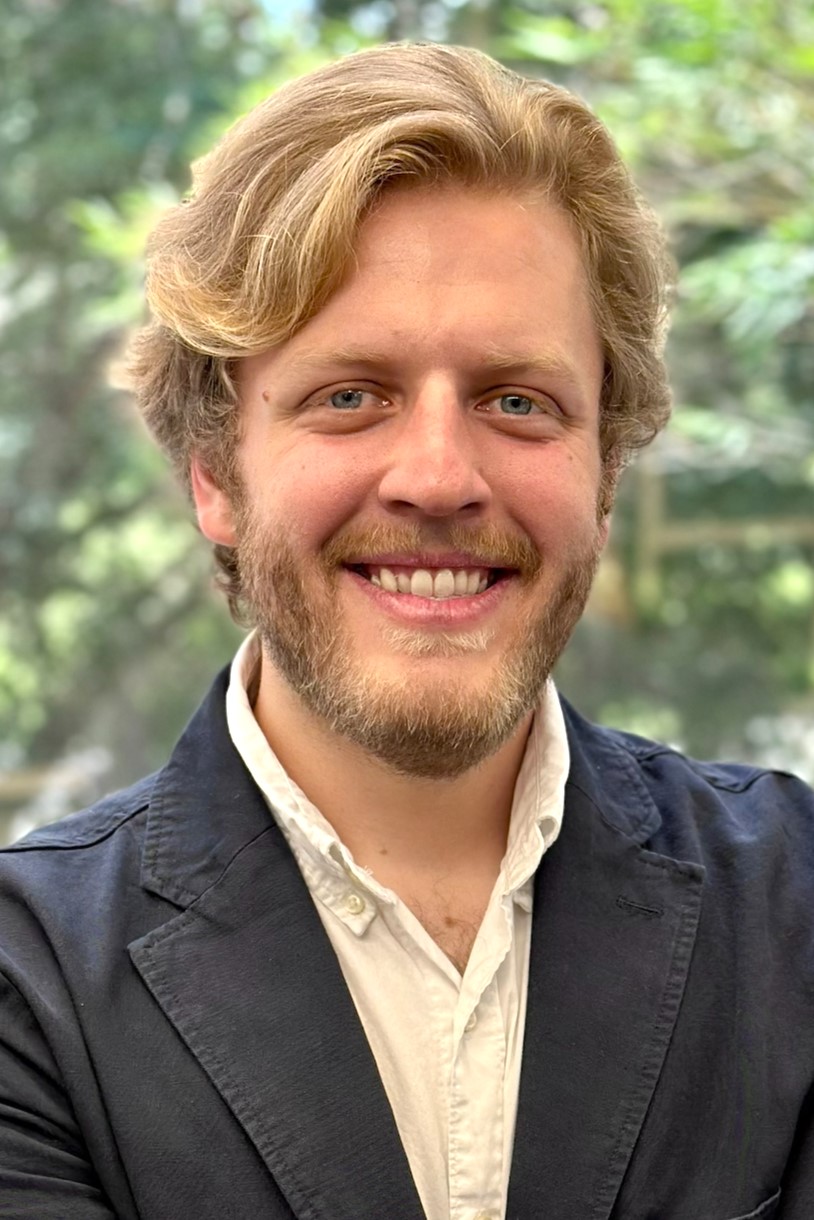
Lincoln J. Lauhon is a Professor of Materials Science and Engineering at Northwestern University. His research focuses on nanoscale structure-property relationships in low-dimensional materials, emphasizing synthesis, characterization, and device applications. He leads the Lauhon Research Group, which explores nanowires, 2D semiconductors, and heterostructures for quantum computing, high-power electronics, and energy conversion. Lauhon holds significant recognition including the Camille Dreyfus Teacher-Scholar Award (2008) and National Science Foundation CAREER Award (2005). His work bridges fundamental materials science with practical technologies through advanced microscopy and modeling techniques. Education: Postdoc in Chemistry at Harvard University, Ph.D. in Physics from Cornell University, and B.S. in Physics (Honors) from the University of Michigan. Research interests span nanowire synthesis, 3D nanotomography, scanning probe microscopy, and computational modeling. Current projects include III-As-Sb nanowire networks for quantum computing, GaN diodes for power electronics, and ferroelectric 2D materials. Lauhon's lab emphasizes collaboration across disciplines, with contributions to high-impact journals like Science Advances and Nano Letters . Awards highlight his dual excellence in teaching and research, including the Teacher of the Year award (2006). Professional service includes leadership roles in the Materials Research Society and organizing conferences on electronic materials. His team's innovations include novel nanomaterial synthesis methods and device architectures, with applications in computing, energy, and optoelectronics. The group actively engages in graduate and undergraduate training, fostering future leaders in nanotechnology.
California Institute of Technology (Caltech)United States
Harry Atwater is the Howard Hughes Professor of Applied Physics and Materials Science at the California Institute of Technology (Caltech). He serves as Director of the Joint Center for Artificial Photosynthesis (JCAP) and previously led the Light-Materials Interactions in Energy Conversion (LMI-EFRC) from 2009–2014. His research bridges photovoltaics, solar energy systems, plasmonics, and nanophotonics. Atwater pioneered the field of plasmonics and co-founded Alta Devices, a leader in GaAs photovoltaic technology. He holds over 200 publications and has been recognized with prestigious awards, including induction into the National Academy of Engineering (2015) and the ENI Prize (2012). His work spans cutting-edge innovations such as silicon wire array solar cells, metasurface technologies for optical manipulation, and space solar power systems. Current projects include developing lightsail propulsion for interstellar exploration and photothermocatalytic reactors for sustainable fuels. Atwater’s lab focuses on the intersection of nanophotonics and energy, exploring quantum emitters, carbon capture, and optomechanical systems. Research Highlights: Plasmonic light absorbers, metasurface-based imaging, and solar energy harvesting systems. Key Projects: Lightsail experiments, space-based solar power missions, and CO₂ reduction via electrochemical methods. Awards: Julius Springer Prize (2014), ISI Highly Cited Researcher (2014), and MRS Kavli Lecturer (2010).
Debbie Senesky is an Associate Professor at Stanford University in both the Aeronautics and Astronautics Department and the Electrical Engineering Department, as well as a Senior Fellow at the Precourt Institute for Energy. She serves as the Principal Investigator of the EXtreme Environment Microsystems Laboratory (XLab) and Site Director of nano@stanford. Dr. Senesky received her B.S. in mechanical engineering from the University of Southern California (2001), followed by M.S. (2004) and Ph.D. (2007) degrees in mechanical engineering from the University of California, Berkeley. Prior to joining Stanford, she held positions at GE Sensing (formerly NovaSensor), GE Global Research Center, and Hewlett Packard. Her research focuses on developing nanomaterials and electronic systems capable of operating in extreme environments, including high-temperature conditions for Venus exploration, microgravity synthesis of nanomaterials, and harsh environment electronics. Dr. Senesky's work bridges multiple disciplines, connecting aerospace engineering, electrical engineering, materials science, and space technology to solve challenges in extreme environment applications. Dr. Senesky has made significant contributions to the field of high-temperature electronics, GaN-based sensors, graphene aerogel synthesis in microgravity, and materials for space applications. Her recent publications demonstrate a strong focus on practical applications of these technologies, particularly for space exploration and extreme environment sensing. Presidential Early Career Award for Scientists and Engineers (PECASE), NASA (2025) Emerging Leader Abie Award from AnitaB.org (2018) Early Faculty Career Award from NASA (2012) Gabilan Faculty Fellowship Award (2012) Sloan Ph.D. Fellowship (2004-2006) Dr. Senesky actively advises students at all levels, from undergraduate to postdoctoral researchers, and has established herself as a leader in promoting diversity in STEM through her role as Faculty Advisor for the Stanford Chapter of the National Society of Women Engineers. Her collaborative approach is evident in her numerous interdisciplinary projects and partnerships with NASA, industry, and other research institutions. She directs the EXtreme Environment Microsystems Laboratory (XLab), which focuses on developing technologies for operation in extreme environments including high temperature, radiation, and microgravity conditions. The lab's work has applications for space exploration, particularly for Venus missions, as well as terrestrial applications requiring robust electronics.
Dr. Leland Nordin is an Assistant Professor at the University of Central Florida (UCF), with a joint appointment between the Department of Materials Science and Engineering and the College of Optics and Photonics (CREOL). He holds a BSc in Physics with honors from Grinnell College, followed by MSc and PhD degrees in Electrical and Computer Engineering from The University of Texas at Austin. His postdoctoral research was conducted at Stanford University’s Geballe Lab for Advanced Materials. Dr. Nordin’s research focuses on semiconductor materials and devices, particularly in nanostructuring techniques to enhance light-matter interactions. His lab specializes in ultra-wide band gap materials (e.g., III-Nitrides) for UVC lasers, LEDs, and detectors, as well as III-V semiconductor-based nanophotonic and heteroepitaxial devices. Key areas include mid-infrared optoelectronics, epitaxial growth, and high-performance photodetectors. He has received notable awards such as the 2025 Air Force Office of Scientific Research YIP Award, the 2024 Army Research Office ECP Award, and the 2022 Ben Streetman Prize. His lab advises graduate students in Optics and Physics PhD programs and has produced impactful work in semiconductor plasmonics and mid-infrared photonics.
Marco Pirola is a Full Professor at the Department of Electronics and Telecommunications (DET) of the Polytechnic University of Turin, Italy. He is a member of the Interdepartmental Center 'CleanWaterCenter@PoliTo' and actively contributes to research in high-frequency electronics and microwave engineering. His work focuses on power amplifiers, device characterization, and advanced microwave circuit design. Research Interests: Microwave power devices, GaN technology, 5G/mm-Wave applications, space communications, and smart pipeline monitoring systems. Awards: IEEE Fellow (since 2019), IEEE Senior Member. Recent Publications address topics like Ka-band MMIC amplifiers for SAR systems, broadband Doherty amplifiers using GaN, and harmonic analysis of current-mode power stages. His projects include STARGATE (European GaAs power architectures) and Millimetre-Wave GaN Radar for UAV detection. Teaching: He leads courses on 'Radio Frequency Integrated Circuits' and 'Advanced Devices for High Frequency Applications' at the Polytechnic University of Turin. Supervised PhD students include Wenjun Zhang and Abbas Nasri, who worked on III-V HEMT circuits and GaN power amplifiers.
Rod Beresford is a Professor of Engineering at Brown University's School of Engineering, where he has held several leadership positions including Senior Associate Dean for Academic Programs and Associate Provost for Academic Space. He earned his B.S. (1979) and M.S. (1981) in electrical engineering from Yale University and his Ph.D. (1990) from Columbia University. In 2020/21, he served as an IEEE/AAAS Congressional Fellow working on the Senate Energy and Natural Resources Committee. His research focuses on semiconductor nanostructures, including synthesis, modeling, integration with microelectronics, and applications, with a particular emphasis on molecular beam epitaxy. Beresford has published over 80 scientific papers and has worked on molecular beam epitaxial growth of III-V semiconductors since 1987. His current research emphasizes engineering innovations for decarbonization and electrification of the economy. Professor Beresford's scholarly work spans semiconductor materials and devices, quantum structures, nanomaterials, microfluidics, and biosensing. His recent publications demonstrate a strong focus on quantum dot arrays, nanowire electrical properties, and biosensing applications. The research shows evolution from fundamental semiconductor physics toward practical applications in sensing and energy technologies. His honors and awards include: Tau Beta Pi (1978) Sheffield Fellowship (Yale University, 1980–81) Office of Naval Research Fellowship (Columbia University, 1987–90) Sigma Xi (1991) BBV Foundation Chair (Visiting Professor, Polytechnic University of Madrid, 1996) Institute of Electrical and Electronics Engineers, Senior Member (2002) Professor Beresford has been instrumental in Brown's academic infrastructure development, including facilitating the successful development of the Engineering Research Center, an 80,000-sf lab building completed in October 2017. He has served as Academic Director for the Master of Science in Technology Leadership program and has introduced new courses in VLSI Design and Nanoelectronics. His research has been supported by significant grants including: Nanoelectronics Research Initiative / National Science Foundation: "Direct-Write Synthesis of Graphene Devices" (PI, $400,000) National Science Foundation Materials Research Science and Engineering Center: "Micro- and Nano-Mechanics of Electronic and Structural Materials" (co-PI, $9,360,000) Air Force Office of Scientific Research Multidisciplinary University Research Initiative: "Direct Nanoscale Conversion of Biomolecular Signals into Electronic Information" (co-PI, $5,609,969) Professor Beresford leads a research group focused on semiconductor nanostructures and collaborates extensively with colleagues including Jingming Xu, Eric Chason, Brian Sheldon, Alexander Zaslavsky, and David Paine. His laboratory includes molecular-beam epitaxy systems for advanced materials research.
Ricardo Zednik is a Professor at the Department of Mechanical Engineering, École de Technologie Supérieure (ÉTS) in Montreal. Holding degrees from Rice University (BA, BS) and Stanford University (MS, PhD), he specializes in piezoelectric materials, fracture mechanics, and microelectronic systems. His research focuses on sensors, innovative materials, and health technologies. Fields of Interest: Piezoelectricity, Fracture Mechanics, MEMS, Smart Materials, Crystallography With over 36 peer-reviewed publications and extensive supervision of graduate research (including 15+ co-directed theses and projects since 2016), Zednik contributes to applied research in materials science and biomedical engineering. He collaborates with LaCIME and PULÉTS laboratories on cutting-edge projects involving ultrasonic transducers, flexible sensors, and high-temperature material characterization. Current courses include Materials Technology (MEC200) and advanced research topics in Functional and Smart Materials (SYS877). His students explore applications like terahertz quality control, piezoelectric earcanal sensors, and Kirigami techniques for wearable electronics.
Professor Ahmet Bindal is a faculty member in the Department of Computer Engineering at San José State University . He earned his B.S. in Electrical Engineering from Bogazici University, Turkey, followed by M.S. and Ph.D. degrees from the University of California, Los Angeles. Industry Experience : 20 years at IBM, Intel, Philips, and Cadence Design Systems. Current Research : Nano-scale electron devices, silicon nanowire transistors, robotics, and VLSI architecture. Research Trends : His work focuses on silicon nanowire transistors for VLSI, FPGA, and robotics. Key themes include low-power/high-speed integrated circuits , dynamic logic design , neuromorphic engineering , and advanced semiconductor processing . Patents and Publications : He holds four U.S. patents (three with IBM, one with Intel). His 30+ journal and conference publications span nanowire transistors, FPGA architecture, robotics, and semiconductor process modeling. Teaching Contributions : Developed an undergraduate System-on-Chip (SoC) course and a MOSFET design laboratory at SJSU. Books Authored : Fundamentals of Computer Architecture and Design (Springer, 2017). Electronics for Embedded Systems (Springer, 2017). Silicon Nanowire Transistors (Springer, 2017).
Dr. Michael Fraser is a researcher affiliated with the Department of Electronic Materials Engineering at the Research School of Physics and Engineering, Australian National University. His work focuses on semiconductor optoelectronics and nanotechnology, particularly in quantum structures and terahertz technology. He collaborates with prominent researchers like Professor Chennupati Jagadish and Professor Hoe Tan. University: Australian National University Department: Electronic Materials Engineering Email: michael.fraser@riken.jp Dr. Fraser's research spans quantum structures , carrier dynamics , and terahertz emission . His publications highlight excitons , trions , quantum wires , and defect analysis in semiconductors . Techniques like micro-photoluminescence , X-ray absorption spectroscopy , and ion implantation are central to his studies. Key areas: Semiconductor optoelectronics, nanotechnology, quantum physics, material science, and terahertz technology. Recent trends: Carrier confinement in quantum wells, defect characterization in indium nitride, and polarization-sensitive terahertz detection.
Prof. Deniz ULUTAŞ is a Professor in the Department of Physics at the Faculty of Science, Istanbul University, where he has served since 2014. His academic career at Istanbul University spans over three decades, progressing from Research Assistant (1988-1999) to Assistant Professor (2000-2009), Associate Professor (2009-2014), and finally Professor (2014-present). He has held significant administrative positions including Head of Department (2014-2017, 2009-2013) and Vice Dean of the Faculty of Science (2009-2011). Dr. ULUTAŞ received his Doctorate from Istanbul University in 1999 with a dissertation on 'Electronic behavior of semiconductor and semi-insulator solid materials in thin film form,' following his Postgraduate studies (1987-1989) and Undergraduate education (1981-1987) at the same institution. His academic journey began with research on 'Optical Properties of Bismuth Thin Films' for his Master's degree. Prof. ULUTAŞ's research primarily focuses on dielectric properties, electronic structure, and electrical, magnetic, and optical characteristics of materials, particularly thin films and low-dimensional structures. His work spans condensed matter physics, materials science, and semiconductor physics, with significant contributions to understanding chalcogenide semiconductors, polymer composites, and nanostructured materials. His publication record includes 142 papers in Web of Science with an impressive h-index of 399, demonstrating substantial impact in his field. His recent work shows a strong trend toward interdisciplinary applications, including potential biomedical diagnostics using dielectric spectroscopy. His research demonstrates consistent focus on thickness-dependent properties, dielectric relaxation mechanisms, and the relationship between material structure and electrical behavior across various material systems including Tl-based chalcogenides, polymer electrolytes, and nanocomposites. The evolution of his work shows increasing sophistication in both experimental techniques and theoretical interpretations. 142 Publications in Web of Science 30 Publications in Scopus 399 h-index (Web of Science) 385 h-index (Scopus) Prof. ULUTAŞ has supervised numerous graduate students, with 8 doctoral and master's theses completed under his guidance and several more in progress. His laboratory appears focused on thin film deposition, dielectric characterization, and analysis of electronic properties across diverse materials systems. He has also contributed to educational materials with lecture notes on Thermodynamics, Statistical Physics, and Modern Research Topics in Physics.
Frances Laughton is a Professor in the Department of Physics at the University of Bath. Her research focuses on photonics, semiconductor physics, and optical engineering, particularly in laser technology and waveguide dynamics. Her recent work includes contributions to public engagement in pharmacology education and interdisciplinary initiatives in undergraduate curricula. Earlier publications (1996-1997) emphasize advanced laser systems, including tapered waveguide bow-tie lasers and Q-switched diode arrays using gallium arsenide materials.
Edmund R. Nowak is a Professor and Department Chair in the Department of Physics & Astronomy at the University of Delaware . His research focuses on spintronic nanostructures , magnetic tunnel junctions , vortex dynamics in superconductors , and granular media dynamics . He has contributed significantly to understanding noise mechanisms in magnetic devices and the development of ultra-sensitive magnetic field sensors. His work also spans material synthesis and characterization of novel semiconductor compounds, such as gallium pnictides and layered materials like BaGa₂Pn₂. His academic leadership includes chairing the Physics & Astronomy department, where he oversees both educational and research initiatives. His research has been published widely, with a focus on experimental and theoretical studies of magnetic nanodevices and their applications in spintronics and sensor technology. Notable contributions include advancing techniques to suppress noise in magnetic tunnel junctions, optimizing sensor performance for picoTesla-level detection, and investigating the effects of annealing on magnetic materials. His interdisciplinary approach bridges condensed matter physics, materials science, and device engineering. Edmund R. Nowak collaborates with industry and academic partners to translate fundamental research into practical applications, such as biodetection systems and low-power magnetometers. His lab at the University of Delaware is equipped for advanced material fabrication, magnetic characterization, and noise analysis.