Prof. Dr. Dominik Schwarz is a faculty member at the Faculty of Physics , Bielefeld University. His research focuses on Cosmology and Particle Physics , particularly in the areas of Dark Energy , Dark Matter , Cosmological Inflation , and Large-Scale Structure Formation . He contributes to projects like the International LOFAR Telescope Consortium and the SFB-TRR 211 on strongly interacting matter. APART Fellow of Austrian Academy of Sciences Humboldt Fellow CERN Fellow His recent work explores the cosmic dipole anisotropy , axion density perturbations , and multi-wavelength cosmic web mapping . He also advances data science infrastructure through the PUNCH4NFDI consortium.
David W. Hogg is Professor of Physics and Data Science in the Center for Cosmology and Particle Physics in the Department of Physics at New York University. He serves as Senior Research Scientist in the Astronomical Data Group in the Center for Computational Astrophysics of the Flatiron Institute and maintains an affiliation with the Max-Planck-Institut für Astronomie in Heidelberg. His primary research focuses on observational cosmology, particularly approaches that use galaxies to infer physical properties of the Universe. He also conducts significant research on stellar kinematics in the Milky Way and the measurement and discovery of exoplanets. Across all domains, Hogg develops engineering systems and statistical methodologies that enable large-scale astrophysical projects for both his research group and the broader community. Recent work demonstrates expertise in robust statistical methods, particularly dimensionality reduction techniques like Robust-HMF. His research bridges theoretical statistics with practical applications in major astronomical surveys including Gaia, SDSS-V, and SPHEREx. He frequently explores connections between Bayesian and frequentist approaches to astronomical data analysis, with recent work on nuisance parameter integration, anomaly detection, and robust matrix factorization. Research supported by NYU, NASA, NSF, Moore Foundation, Sloan Foundation Additional support from Max Planck Society, Humboldt Foundation, ERC, Simons Foundation Hogg is actively involved in major astronomical projects including Astrometry.net, Gaia, and SDSS, with long-term comprehensive goals of analyzing all galaxies, stars, and astronomical images. His work emphasizes open science principles, reproducible research practices, and the development of publicly accessible tools for the astronomical community.
Rhenish Friedrich Wilhelm University of BonnGermany
Cristiano Porciani is Professor of Astrophysics at the University of Bonn's Argelander Institute for Astronomy, specializing in cosmological structure formation and galaxy evolution. He leads a research group working on numerical simulations of large-scale structure and theoretical cosmology. His research focuses on dark matter distribution, galaxy bias, and cosmological parameter estimation using perturbation theory and high-performance computing. Recent work examines relativistic effects in large-scale structure and intensity mapping techniques. Publications show strong emphasis on Euclid mission science, including instrument characterization, survey simulations, and cosmological tests. Article trends reveal consistent development of statistical methods for analyzing next-generation sky surveys. Supervises 9 graduate students working on cosmological simulations, galaxy clustering statistics, and radiative transfer modeling. Leads research projects within the Euclid Consortium and Transregional Collaborative Research Centre.
Prof. Sherry Suyu is an Associate Professor at the Technical University of Munich (TUM) and a Max Planck Fellow at the Max Planck Institute for Astrophysics (MPA). Her research focuses on probing the dark cosmos through gravitational lensing, dark energy, dark matter, and supermassive black holes. She leads the H0LiCOW program measuring the universe's expansion rate using lensed quasars and the HOLISMOKES program studying lensed supernovae. Her work has been supported by an ERC Consolidator Grant. Education and Affiliations: PhD in Physics from Caltech (2008), postdoctoral positions at UC Santa Barbara and Stanford University. Joint appointments at MPA (since 2016) and TUM. Member of the Excellence Cluster ORIGINS. Holds honorary positions including Emmy Noether Visiting Fellowship at Perimeter Institute (2018). Research Interests: Gravitational lensing, cosmic expansion rate, galaxy evolution, supernovae, tidal disruption events, and deep learning applications. Her group studies galaxy clusters, dark matter distribution, and cosmological models using lensing techniques. Awards: 2021 Berkeley Prize (AAS), 2024 ISIMM Senior Prize. Over 90 peer-reviewed publications. Teaches courses on extragalactic astrophysics and gravitational lensing at TUM. Labs/Teams: Head of the Observational Cosmology Group at TUM-MPA. Collaborates internationally with institutions in the US, Europe, Japan, and Taiwan. Supervises postdocs, PhD students, and bachelor/master researchers.
Dr. Noam Libeskind is a faculty member and group head of the Cosmography and Large-Scale Structure group at the Leibniz-Institut für Astrophysik Potsdam (AIP). He specializes in mapping the Universe's large-scale structure and using these maps to simulate the local environment. His work bridges observational and theoretical astrophysics, focusing on galaxy formation, the Local Group dynamics, and cosmographic reconstructions. He has held professorial positions, including at the Institute of Two Infinities (Université de Lyon-1) until 2021. Current projects include leading trans-national initiatives on cosmic web impacts (with Purple Mountain Observatory) and gravity tests via Local Group simulations (with Polish Academy of Sciences). Libeskind’s research interests include satellite galaxies, matter distribution reconstructions, and alignments of galaxies relative to their environments. His work has been featured in Scientific American and Sky & Telescope , highlighting contributions such as cosmography of the Local Universe and dark matter studies. Key collaborations span institutions like Hebrew University, Shanghai Astronomical Observatory, and Durham University. He leads projects like CLUES (Constrained Local UniversE Simulation) and HESTIA (High-resolution Environmental Simulations) to model the Local Universe. His team’s efforts have been recognized, including a 2024 municipal award for organizing impactful scientific meetings. Publications span cosmological simulations, galactic dynamics, and observational cosmology, with a focus on advancing understanding of the Milky Way, Andromeda, and their surrounding structures.
Joachim Wambsganss is a Full Professor at the Faculty of Physics & Astronomy of the University of Heidelberg and serves as Director of the Astronomisches Rechen-Institut (ARI) and former Director of the Zentrum für Astronomie der Universität Heidelberg (ZAH) until 2015. Studied at Ruprecht-Karls-University Heidelberg, Ludwig-Maximilians-University Munich, and Princeton University Doctorate in 1990 with supervisors Peter Schneider and Rudolf Kippenhahn Research Interests: Extrasolar planets via microlensing Quasar studies and dark matter distribution Gravitational lensing techniques eScience and open-access astrophysical data His group has advanced microlensing planet detection and lensed quasar analysis. He led the German Astrophysical Virtual Observatory (GAVO) within the International Virtual Observatory Alliance and organized public outreach projects like the 70-lecture series "Uni(versum) für alle!". Publications span exoplanets, gravitational lensing, dark matter, and quasars, with major contributions in microlensing techniques and planetary system demographics.
Rhenish Friedrich Wilhelm University of BonnGermany
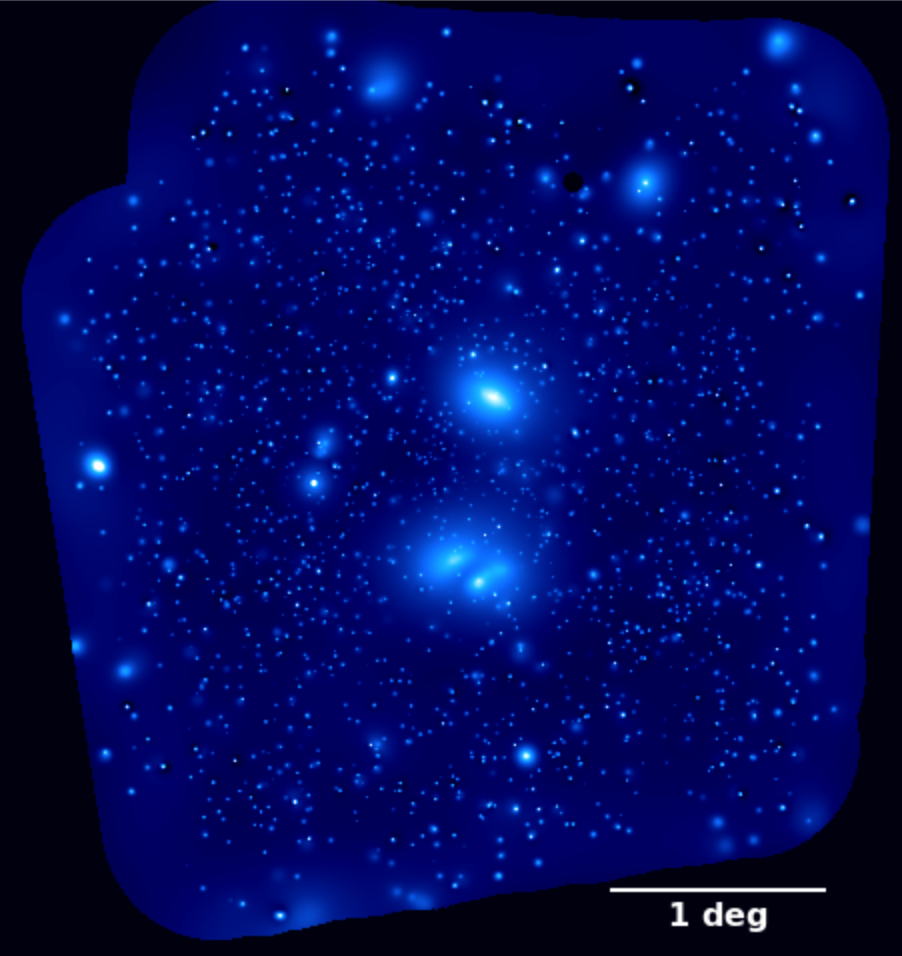
Professor Thomas H. Reiprich is a leading astrophysicist at the Argelander Institute for Astronomy, University of Bonn, specializing in X-ray observations of galaxy clusters and large-scale cosmic structure. His research focuses on dark energy, cosmology, and the physics of intergalactic medium through missions like eROSITA. His primary research interests include: Clusters of Galaxies and their evolution Supermassive Black Holes and active galactic nuclei Cosmological structure formation Gravitational lensing phenomena X-Ray and Optical Astronomy techniques Professor Reiprich's recent work has centered on the eROSITA mission, with groundbreaking discoveries including the 15 Mpc intergalactic filament connecting galaxy clusters Abell 3391/95, providing unprecedented evidence of cosmic web structure. His research combines X-ray, radio, and optical data to study the hot gas in cluster outskirts and filaments. He has been actively involved in public outreach, including lectures at the Planetarium Hamburg and Astronomy on Tap events, making complex cosmological concepts accessible to the general public. His work has received significant media attention from international science outlets including NASA and ESA. Professor Reiprich maintains an active teaching schedule at the University of Bonn, regularly offering courses on dark energy, galaxy clusters, and X-ray astronomy, for which he and colleague Jürgen Schmitt received the faculty's teaching award for their dark energy lecture in WS15-16.
Luisa Lucie-Smith is a Junior Professor at the Hamburg Observatory, University of Hamburg, Germany. Her research focuses on cosmological structure formation, dark matter halo evolution, and applying explainable AI to interpret physical processes in the universe. She combines numerical simulations with machine learning to uncover fundamental physics. Education: Began at Imperial College London studying gravitational wave backgrounds, completed a PhD at University College London (UCL) on cosmological machine learning applications, followed by a postdoc at Fermi National Accelerator Laboratory. She held a four-year Research Fellowship at the Max Planck Institute for Astrophysics (MPA) before joining Hamburg in 2024 to lead her own research group. Research Interests: Galaxy formation, large-scale structure evolution, dark matter/dark energy studies, and developing interpretable AI models to enhance astrophysical understanding. Publicly engaged in science outreach and advocating for academic diversity. Recent Activities: Keynote talks at the University of Zurich (Oct 2024), Cosmology from Home Conference (June 2024), and Princeton IAS (Aug 2021). Active in organizing equity initiatives in academia. Labs/Teams: Current group at Hamburg Observatory; previously part of GMGalaxies (UCL) and MPA teams. GitHub repositories include DeepHalos and machine learning tutorials.
Fabian Schmidt is a Professor (Forschungsgruppenleiter) at the Max Planck Institute for Astrophysics (MPA) in Garching, Germany. He specializes in cosmology, focusing on dark matter, dark energy, and the evolution of cosmic structures. His research explores the universe's composition, history, and the mechanisms behind primordial density fluctuations. Education: Diplom (equivalent to MSc) in cosmic gamma rays from Humboldt University Berlin, PhD (2005-2009) at the University of Chicago under advisors Scott Dodelson and Wayne Hu. Held fellowships at Caltech (Moore Fellow) and Princeton (NASA CXC Einstein Fellow) before joining MPA in 2013. Research interests include cosmological observables in general relativity, baryon acoustic oscillations (BAO) reconstruction, and field-level inference techniques. His group is funded by the Excellence Cluster Origins and MPA resources, with ongoing work on large-scale structure, gravitational lensing, and dark matter physics. Notable contributions span theoretical cosmology, computational methods for galaxy clustering analysis, and Bayesian forward modeling. His team advises PhD students and postdocs in areas like EFT-based BAO reconstruction, simulation-based inference, and dark matter dynamics. Outreach: Active in public talks (Lange Nacht der Wissenschaften) and collaborations with science journalists. Co-author of Modern Cosmology textbook (2nd ed. 2020, 3rd ed. 2025), addressing topics like inflation and quantum vacuum cosmology.
Prof. Dr. Dominik J. Bomans is a Professor at the Astronomical Institute of Ruhr University Bochum in Germany, located at GAFO 03 / 973, Universitätsstr. 150, 44801 Bochum. His research interests are broad and deep, spanning: Formation and evolution of dwarf galaxies Low surface brightness galaxies Diffuse warm and hot interstellar medium Galactic outflows, winds, and the circumgalactic medium Starburst galaxies at intermediate and high redshift Magnetic fields in galaxies, their circumgalactic medium, and the intergalactic medium Interstellar absorption lines of the warm and hot interstellar, circumgalactic, and intergalactic medium Interaction of massive stars with the interstellar medium Massive stellar transients His work bridges the gap between observational astronomy and theoretical astrophysics, with a focus on understanding the lifecycle of galaxies, the physics of their gaseous environments, and the role of magnetic fields and stellar feedback in galactic evolution. No students, awards, or publications are listed on his current webpage. He can be contacted via email at bomans@astro.ruhr-uni-bochum.de .
Chiara Circosta is a Research Fellow at the European Space Agency (ESA), specializing in observational astrophysics. Her work focuses on galaxy evolution and the role of active galactic nuclei (AGN) in stopping star formation by depleting gas reservoirs in galaxies. She studies the young Universe, ~10 billion years ago, using multi-wavelength data from space observatories like the Hubble Space Telescope, James Webb Space Telescope (JWST), and ESA’s XMM-Newton. Ongoing collaborations include: SUPER (SINFONI Survey for Unveiling the Physics and Effect of Radiative feedback), QFeedS (Quasar Feedback Survey), JADES (JWST Advanced Deep Extragalactic Survey), and DESI (Dark Energy Spectroscopic Instrument). Circosta’s research aims to characterize how supermassive black hole activity impacts host galaxy gas and star formation, providing insights into the processes that shaped galaxies into their current forms.
Stephen Hannon is a Research Fellow in the Department of Galaxies and Cosmology at the Max Planck Institute for Astronomy (MPIA) in Heidelberg, Germany. He is based in Room 316 at the institute's headquarters on Königstuhl 17, 69117 Heidelberg. His research spans core areas of modern astrophysics: Galaxy Formation and Evolution Cosmological Structure Formation Observational Cosmology Stellar Populations in Galaxies Dark Matter Distribution High-Redshift Galaxy Surveys Dr. Hannon's work integrates theoretical modeling with observational data to investigate the assembly history of galaxies across cosmic time, contributing to MPIA's leadership in extragalactic astronomy. Contact details: hannon@mpia.de | +49 6221 528-323
Prof. Maria-Rosa Cioni is a joint professor at the University of Potsdam and the Leibniz Institute for Astrophysics Potsdam (AIP). As a leading observational astronomer, her research focuses on the formation and evolution of dwarf galaxies, particularly the Magellanic Clouds. She leads major surveys including the VISTA Magellanic Cloud Survey (VMC) and the 1001MC survey within the 4MOST consortium. Her academic journey includes a PhD from Leiden Observatory (2001), postdoctoral positions at ESO and the University of Edinburgh, and prestigious fellowships like the Humboldt and DAAD awards. She currently holds the position of Section Head at AIP and has secured significant funding through an ERC Consolidator Grant (2016). Education: BSc in Astronomy, University of Bologna (1996) PhD in Astronomy, Leiden Observatory (2001) Professional History: ESO Fellow (2001–2005) Lecturer, University of Edinburgh (2005–2007) Senior Lecturer/Reader, University of Hertfordshire (2007–2010) Humboldt Fellowship (2010), DAAD Visiting Professorship (2010–2016) Her research emphasizes stellar populations and the interplay between dwarf galaxies and the Milky Way's halo. Recent work uses machine learning for source classification and Gaia data for dynamical modeling. She collaborates widely on projects like Euclid and SDSS-V, advancing survey techniques and galactic archaeology. Awards: ERC Consolidator Grant (2016), Humboldt Fellowship (2010), DAAD Visiting Professorship Grants & Funding: ERC Consolidator Grant supporting her research group since 2016 Prof. Cioni's lab contributes to cutting-edge facilities like the VISTA telescope and the upcoming Euclid mission. She actively mentors students and leads international collaborations to unravel the cosmic history of dwarf galaxies and their role in galaxy evolution.
Prof. Dr. Stefanie Walch-Gassner is a Professor of Theoretical Astrophysics at the University of Cologne, where she leads the Theoretical Astrophysics group Cologne (TAC) within the Department of Physics. She serves as head of the SILCC project (SImulating the life cycle of molecular clouds), a European collaboration focused on modeling molecular cloud formation, evolution, and dispersal with emphasis on astro-chemical modeling and feedback processes. Her research spans multiple spatial scales, from interstellar medium physics on kiloparsec scales down to protostellar disks and jets on astronomical unit scales. She employs computational tools including FLASH, GADGET, GANDALF, KROME, and radiative transfer codes like RADMC-3D and POLARIS. Walch-Gassner's work connects theoretical models with observational data, as evidenced by recent research on [CII] emission in high-redshift galaxies comparing simulation results with ALPINE survey observations. Her research group collaborates with: Prof. Dr. Arshia M. Jacob Prof. Dr. Lucas Labadie Prof. Dr. Dominik A. Riechers Prof. Dr. Peter Schilke Prof. Dr. Stephan Schlemmer Dr. Netty Honingh Dr. Urs Graf She has supervised numerous PhD students to completion since 2016 and regularly teaches courses including Hydrodynamics, Theoretical & Computational Star Formation, and Advanced Seminar on Topical Subjects of Astrophysics. She also organizes intensive workshops on numerical methods in astrophysics for graduate students.
Max Planck Institute for Extraterrestrial PhysicsGermany
Ralf Bender is a Professor and Director at the Max Planck Institute for Extraterrestrial Physics (MPE) and affiliated with the University Observatory of Ludwig-Maximilians-Universitaet Muenchen (LMU). His position combines leadership at one of Europe's premier astrophysics research institutes with academic responsibilities at Germany's leading university astronomy department. Institution: Max Planck Institute for Extraterrestrial Physics Academic Affiliation: Ludwig-Maximilians-Universitaet Muenchen, Faculty of Physics Department: University Observatory Location: Garching bei Muenchen, Germany Bender's research focuses on extragalactic astronomy , particularly the structure and dynamics of elliptical galaxies. His seminal work includes studies of isophote shapes, kinematic properties of stellar systems, and investigations into galactic nuclei including the triple nucleus of M31. His research has established fundamental relationships in galaxy structure and dynamics. His publication record spans several decades with significant contributions to understanding galaxy morphology and dynamics. Research trends show consistent focus on elliptical galaxies, with particular expertise in photometric and kinematic analysis techniques. His work bridges observational data with theoretical models of galaxy formation and evolution. Bender actively contributes to academic education through graduate-level teaching, having developed comprehensive lecture materials for astrophysics courses at LMU. His teaching portfolio includes both introductory and advanced topics in astrophysics for Master's students. He maintains extensive astronomical data resources that remain frequently accessed by the research community, demonstrating the lasting impact of his observational work. His leadership at MPE positions him at the forefront of extragalactic research in Europe.