Patrick Rinke serves as an Adjunct Professor in the Department of Applied Physics at Aalto University, Finland. His research bridges theoretical physics, materials science, and computational methodologies with a strong focus on machine learning applications. His computational work spans electronic structure theory, materials design, and atmospheric chemistry. Rinke's research integrates Bayesian optimization, active learning, and high-throughput computational screening to accelerate materials discovery, particularly in hybrid perovskites, catalysts, and biomaterials. Recent work demonstrates machine learning's transformative potential in predicting molecular properties, optimizing materials functionality, and solving complex physical chemistry problems. His scientific contributions have been recognized with multiple awards: Thesis Prize from the Institute of Physics (2003) DFG Research Scholarship (2007-2009) Outstanding Postdoctoral Achievement Award (2009) Outstanding Referee of Physical Review Letters (2014) August-Wilhelm Scheer Visiting Professorship (2017)
Alfredo Pasquarello is a Full Professor at the Chair of Atomic Scale Simulation within the Condensed Matter Theory Laboratory (CSEA) at the Ecole Polytechnique Fédérale de Lausanne (EPFL) . He teaches courses such as Computer Simulation of Physical Systems I and General Physics: Quanta . Education: Physics at Scuola Normale Superiore of Pisa (1986), University of Pisa (1986), PhD at EPFL (1991). Research: Focuses on atomic-scale simulations using density functional theory (DFT) and many-body perturbation to study defects in oxides , oxide-semiconductor interfaces , and energy materials like perovskites and photocatalysts. Recent Publications: 15 most recent articles (2022–2024) address band gaps, polarons, water splitting, and defect engineering in materials for photovoltaics and electrochemistry. Awards: Recipient of the EPFL Latsis Prize (1998) . Students: Supervised PhD/Master's students including Stefano Falletta, Thomas Bischoff, Patrick Gono, and Zhendong Guo. Labs: Leads the Chair of Atomic Scale Simulation at EPFL SB IPHYS CSEA.
Qile Chen is an Associate Professor in the Department of Mathematics at Boston College . His research focuses on Algebraic Geometry , particularly in Logarithmic Geometry , Moduli Spaces , and Gromov-Witten Theory . He has made significant contributions to understanding A^1-connectedness , Stable Log Maps , and Virtual Cycles in geometric contexts. His publications include collaborations with leading mathematicians such as Dan Abramovich , Felix Janda , Yi Zhu , and Dawei Chen . Key topics span Logarithmic GLSM , Multi-scale Differentials , and Spin/Hyperelliptic Structures . Recent Articles : Punctured logarithmic maps (2025), Gorenstein contractions (2024), Campana rational connectedness (2024) Co-advised Student : Zijian Han (Ph.D. in progress at Boston College)
Garnet K. Chan is the Bren Professor of Chemistry and Director of the Rudolph A. Marcus Center for Theoretical Chemistry at the California Institute of Technology. He received his B.S. from the University of Cambridge in 1996 and his M.A. and Ph.D. from the University of Cambridge in 2000. Dr. Chan's research lies at the interface of theoretical chemistry, condensed matter physics, and quantum information theory, focusing on quantum many-particle phenomena and the numerical methods to simulate them. His group has developed numerous methodologies including density matrix renormalization and tensor network algorithms, canonical transformation-based down-foldings, local quantum chemistry methods, quantum embeddings, and new quantum Monte Carlo algorithms. His work addresses problems that appear naively exponentially hard but where understanding of physics, particularly entanglement structure, allows for calculations of polynomial cost. Analysis of his recent publications reveals a strong focus on quantum simulation techniques, particularly tensor network methods applied to strongly correlated systems. His research spans fundamental theoretical developments to practical applications in quantum computing, molecular simulation, and materials science, with increasing integration of machine learning techniques and GPU acceleration in computational chemistry frameworks. Dr. Chan leads an active research group at Caltech dedicated to simulating chemical and physical systems at the level of many-particle quantum mechanics. His group has welcomed numerous researchers including Kasra Hejazi, Zuxin Jin, Zhihao Cui, Ke Liao, Henrik Larsson, and Wenyuan Liu. He teaches courses in Physical Chemistry (Ch 21 abc) and Advanced Quantum Chemistry (Ch 225), contributing significantly to theoretical chemistry education at Caltech.
Reed Essick is an Assistant Professor at the Canadian Institute for Theoretical Astrophysics (CITA), University of Toronto. His research focuses on experimental gravity, astrophysical signals, and nuclear physics, with particular emphasis on neutron stars, black holes, and gravitational waves. He develops advanced statistical methods like hierarchical Bayesian inference and nonparametric analysis for interpreting observational data from pulsars and gravitational wave detectors. Dr. Essick collaborates extensively with international observatories such as LIGO, Virgo, and KAGRA, contributing to cutting-edge projects like multimessenger astronomy and precision cosmology. His work bridges computational astrophysics with observational techniques, addressing fundamental questions about dense matter and strong-field gravity. Key contributions include studies on gravitational wave equation-of-state constraints, pulsar timing analysis, and the application of machine learning to detector data. His research leverages both ground-based interferometers and space-based observations to explore extreme astrophysical environments.
Prof. Dr. Ferdinand Evers is a Chair of Computational Condensed Matter Theory at the Institute of Theoretical Physics , University of Regensburg. His research spans quantum transport , spintronics , molecular electronics , and many-body localization , with a focus on ab initio and DFT-based modeling of nanostructures and low-dimensional systems . Key Research Areas: Quantum transport in molecular junctions Spin-orbit coupling and chiral effects Multifractality at quantum phase transitions Electronic structure of topological materials Ultrafast laser-driven electron dynamics Anderson localization and disorder Recent Article Trends (2021–2024): High-harmonic generation in topological insulators Spin-selective transport in chiral systems Mechanical torque in molecular rotors Self-consistent GW methods for molecular electronics Quantum interference in graphene nanoribbons Teaching: Lecturer for Theoretical Physics I-IV , Advanced Quantum Mechanics , and Scientific Perspectives courses at the University of Regensburg Focus on statistical mechanics , quantum transport , and computational nanoscience
Xifan Wu is a Professor of Physics at Temple University, specializing in computational methods and materials science. His research focuses on first-principles computational approaches, particularly exploring the locality of Wannier orbitals to address physical problems in solids and liquids. Key interests include superlattice design and applications of order-N exact exchange functionals like PBE0 and GW quasi-particle approximations. He has authored numerous high-impact publications in journals such as Physical Review Letters and Physical Review B , covering topics like ferroelectric superlattices, X-ray absorption spectroscopy, and the dielectric properties of electrolyte solutions. His work bridges quantum mechanical models with machine learning potentials, advancing large-scale simulations of complex materials. Education/Background: Not explicitly detailed in the provided text. Grants/Awards: No specific awards listed, but his research is supported by Temple University’s Center for the Computational Design of Functional Layered Materials (CCDM). Labs/Teams: Collaborates with teams focused on computational design and materials modeling, possibly through Temple’s physics department and affiliated research centers. His recent work explores molecular-scale insights into electrical double layers at oxide-electrolyte interfaces and the impact of ions on X-ray spectra, demonstrating expertise in linking theoretical models with experimental phenomena.
Dr. Greis Julieth Kim Reyes serves as Assistant Professor of Physics in the Department of Physics and Astronomy at SUNY New Paltz, where she conducts computational research on semiconductor materials and defects. Her work bridges theoretical physics and practical materials design for energy applications. Her educational journey includes a Ph.D. in Physics from University at Buffalo (2024), Master's in Physics from Universidad Nacional de Colombia (2014), and Bachelor's in Physics-Education from Universidad Distrital Francisco José de Caldas (2010). This international background informs her interdisciplinary approach to materials science. Dr. Reyes specializes in computational exploration of intermediate band semiconductors, defect engineering, and magnetic materials using density functional theory (DFT) and machine learning. Her research reveals how atomic-scale defects create novel electronic properties, particularly in 2D materials like C 3 N/C 3 B bilayers and perovskite oxides. She employs iterative Kohn-Sham methods to simulate electronic behavior and optical responses, with recent work focusing on excitonic effects for solar energy applications. Analysis of her 15 most recent publications shows consistent emphasis on computational discovery of materials with tailored optical and electronic properties. Key trends include defect-enabled photocatalysis, interlayer exciton engineering in van der Waals heterostructures, and Jahn-Teller effects in doped semiconductors - all targeting next-generation energy technologies. Her scholarly recognition includes: Bahethi Scholarship (SUNY Buffalo, 2022) Silvestro Scholarship (SUNY Buffalo, 2022) Marshall Plan Foundation grant (Johannes Keppler Universität, 2018) As an educator, Dr. Reyes develops interactive quantum mechanics curricula using Mathematica simulations, as evidenced by her GitHub repository. She teaches General Physics and Quantum Physics courses while integrating computational tools to build student intuition for quantum materials. Though specific research students aren't listed, her teaching philosophy emphasizes critical thinking through problem-solving sessions and real-world applications. Her computational laboratory work focuses on first-principles simulations of materials, with active development of educational resources for quantum mechanics instruction. Current projects explore machine learning pipelines for materials discovery and defect-property relationships in emerging semiconductor systems.
Bjorn Baumeier is an Associate Professor in the Department of Mathematics and Computer Science at Eindhoven University of Technology (TU/e). His research group is part of the Centre for Analysis, Scientific Computing and Applications (CASA) and the Institute for Complex Molecular Systems (ICMS). He also participates in several research groups including Scientific Computing, ICMS Core, Eindhoven Hendrik Casimir institute, and Computational Quantum & Molecular Dynamics. His educational background includes: Diploma in Theoretical Solid State Science from the University of Münster PhD in Theoretical Solid State Science from the University of Münster Baumeier's research focuses on the development and application of multiscale simulation techniques for studying electronic transport processes in soft matter. His work combines approaches from computational chemistry, statistical physics, and mathematics to analyze the interplay between molecular electronic structure and material morphology. Additional research lines include studies of disordered biomolecular assemblies and super-coarse-grained modeling of soft granular materials. His group employs large-scale computer simulations linking quantum chemistry, classical Molecular Dynamics at various levels, and rate-based models. Recent publications (2024-2025) demonstrate a strong focus on charge transport phenomena in complex materials, with particular emphasis on interface effects in polymer composites, trap identification in molecular networks, and embedded many-body Green's function methods. His work bridges fundamental physics with practical applications in energy materials and opto-electronic devices. Scientific awards include: Vidi grant from NWO (The Netherlands Organisation for Scientific Research) in 2017 (€800,000) Baumeier has received significant research funding, most notably the Vidi grant focusing on understanding mechanisms underlying long-distance and spin-selective electronic transport in complex molecular systems. His research is often conducted in collaboration with multiple institutions and research groups within TU/e, indicating a strong interdisciplinary approach. His work has practical applications in opto-electronic devices and bio-molecular processes. His research group operates within the Computational Quantum & Molecular Dynamics group, which is part of several larger research initiatives at TU/e including ICMS and the Eindhoven Hendrik Casimir institute. This positioning allows for strong collaboration across physics, chemistry, and engineering disciplines.
Professor Patrick Rinke leads the Chair of AI-based Materials Science at the Technical University of Munich (TUM), within the TUM School of Natural Sciences and Department of Physics. His research group develops advanced electronic structure and machine learning methods to address critical challenges in materials science, surface science, physics, chemistry, and nanoscience. Professor Rinke's research spans multiple cutting-edge domains including electronic structure theory development, machine learning applications for materials science, data-driven materials discovery, biomaterials engineering, atmospheric science applications, clean energy materials, and hybrid materials systems. His work integrates advanced computational methods with practical applications across diverse scientific fields, particularly focusing on how artificial intelligence can transform traditional materials research. Analyzing his recent publications reveals strong trends in applying machine learning techniques to materials discovery, with particular emphasis on Bayesian optimization methods, active learning approaches for molecular data, and efficient dataset generation strategies. His research spans from fundamental electronic structure theory to practical applications in biomaterials, atmospheric science, and renewable energy technologies. Professor Rinke has received several prestigious awards including the August-Wilhelm Scheer visiting professorship (2017), a German Science Foundation research scholarship (2007), the Outstanding Postdoctoral Research Achievement Award from UC Santa Barbara (2009), recognition as an Outstanding Referee for Physical Review journals (2014), and the Institute of Physics Computational Physics Group Thesis Prize (2003). Professor Rinke actively contributes to the academic community through teaching and supervision. For the Winter term 2025/26, he is teaching courses including Academic Writing Skills, Introduction to Machine Learning for Materials Science, Current Topics in AI-Based Materials Science, and Machine Learning for Natural Sciences. His research group includes several team members working on diverse projects spanning the intersection of AI and materials science.
Zhenfei Liu is an Associate Professor in the Department of Chemistry at Wayne State University, affiliated with the College of Liberal Arts and Sciences. His research focuses on theoretical and computational studies of electronic structure at molecule-substrate interfaces and nanostructured materials. Key areas include developing new electronic structure methods, studying functional materials for energy conversion, and analyzing charge transport in molecular junctions. He holds a B.S. from Peking University (2007), a Ph.D. in theoretical chemistry from UC Irvine (2012), and completed a postdoc at Lawrence Berkeley National Laboratory (2012–2018). His work is supported by grants from NSF, DOE, ACS, and the Sloan Foundation. Research interests emphasize first-principles methods for predicting energy conversion mechanisms in quantum dots, metal-organic frameworks, and 2D materials. He explores charge transport properties in molecular junctions and defects' impact on material performance. Notable awards include the 2024 Alfred P. Sloan Fellowship and NSF CAREER Award. He teaches advanced courses in quantum chemistry and statistical thermodynamics, and leads the Liu Group at WSU.
Stefan Blügel is a Professor of Theoretical Physics at RWTH Aachen University and a leading scientific staff member at the Peter Grünberg Institute (PGI-1), Forschungszentrum Jülich. His research focuses on the electronic properties of solids, quantum materials, spintronics, and advanced computational methods in condensed matter physics. He plays a central role in developing and applying density-functional theory (DFT) to complex magnetic and topological systems. His research interests lie at the intersection of theoretical physics and materials science, particularly in magnetism at surfaces and interfaces , spin-orbit coupling phenomena , topological spin textures such as skyrmions and Hopfions, and electronic structure methods . He has pioneered the understanding of the Dzyaloshinskii-Moriya interaction at interfaces, enabling the discovery of chiral domain walls and skyrmion lattices. His work underpins key advances in spintronics, including spin-orbit torque and terahertz generation. He is also active in emerging fields like orbitronics and cryo-spintronics, and continues to innovate in many-body theory and spectral DFT. The body of his recent publications reveals a strong focus on topological quantum materials , 2D magnetism , spin dynamics , and first-principles modeling of novel physical phenomena . His work consistently bridges fundamental theory with experimental relevance, especially in the context of next-generation memory and computing devices. Stefan Blügel has made foundational contributions to computational materials science, including the development of constraint DFT and key implementations in the FLEUR code. He has advised numerous researchers and led major collaborative projects in theoretical condensed matter physics. His group leverages high-performance computing for simulating complex quantum systems, and he is deeply involved in advancing electronic structure methodologies. He leads research at the Quantum Theory of Materials (PGI-1) division, which is part of the interdisciplinary Peter Grünberg Institute, known for its cutting-edge work in nanoelectronics, quantum materials, and spintronics. The institute fosters strong collaboration between Forschungszentrum Jülich and RWTH Aachen University, where Blügel holds a joint professorship.
Dr. Hrishit Banerjee is a theoretical physicist working as an Assistant Professor in Physics at the University of Dundee's School of Science and Engineering since January 2024. His academic journey includes a PhD from University of Calcutta, postdoctoral research at CNR Instituto SPIN in Italy, Graz University of Technology, and University of Cambridge. His educational background includes a Doctor of Philosophy from University of Calcutta (awarded March 2019), Master in Science from Jadavpur University (awarded December 2012), and Bachelor of Science from Jadavpur University (awarded December 2010). Banerjee's research focuses on theoretical methods to study electronic structure of materials using Density Functional Theory, Dynamical Mean Field Theory, and GW Approximation. His primary interests include exotic phenomena in novel materials such as spin crossover polymers, 2D electron gases, magnetism in low-dimensional materials, and energy materials including Li-ion batteries and hybrid perovskite solar cells. He believes energy transition is essential for planetary survival and focuses on degradation mechanisms in energy storage and conversion devices. His recent publications reveal a strong emphasis on battery cathode materials, with particular focus on electronic correlations in layered oxides, oxygen hole formation in nickel-based cathodes, and degradation mechanisms. His work bridges fundamental condensed matter physics with practical energy applications. Best Oral Presentation BOSEFEST 2016 Best Poster at Conference on Physics and Chemistry of Materials: Computation and Experiments, 2014 Best Poster Presentational BOSEFEST 2014 Early-Stage Program: Research - Innovation - Training (ESPRIT) Fellowship (December 2023) IOP Trusted Reviewer Status (January 2025) Banerjee teaches Introduction to Programming and Condensed Matter Physics at Dundee, and previously taught Theoretical Techniques at Cambridge. He actively supervises PhD students with projects on battery degradation mechanisms. His external positions include Honorary Research Fellow at University of Birmingham (2024-2027) and Visiting Scientist at University of Cambridge (2024-2025). He participates in public engagement activities like the Dundee Science Festival and serves as a peer reviewer for journals including Journal of Physical Chemistry Letters.
Stella Stopkowicz is an Associate Professor at the Department of Chemistry, University of Oslo (UiO), and a member of the Hylleraas Centre for Quantum Molecular Sciences. Her research focuses on theoretical and computational chemistry, particularly in developing advanced quantum chemical methods for studying molecular and atomic systems under extreme conditions such as strong magnetic fields. She specializes in coupled-cluster theory, Cholesky decomposition techniques, and relativistic quantum chemistry. Her work addresses challenges in calculating magnetic properties, such as magnetizability and optical rotation, using gauge-including atomic orbitals and finite-field approaches. Stopkowicz’s contributions span applications in astrophysics, materials science, and catalytic reaction mechanisms, emphasizing the interplay between computational efficiency and accuracy in large-scale simulations. Key areas of research include the development of relativistic two-component coupled-cluster methods, screening techniques for integrals in quantum chemistry calculations, and the study of paramagnetic materials like scandium and yttrium hydrides. She collaborates extensively with international researchers, advancing both the theoretical foundations and practical implementations of quantum chemistry tools. Her publications highlight advancements in computational methodologies for analyzing magnetic field effects in diverse systems, from white dwarf stars to molecular reactions. Stopkowicz’s interdisciplinary approach bridges theoretical chemistry with applications in physics and materials science, contributing to cutting-edge research in quantum molecular sciences.
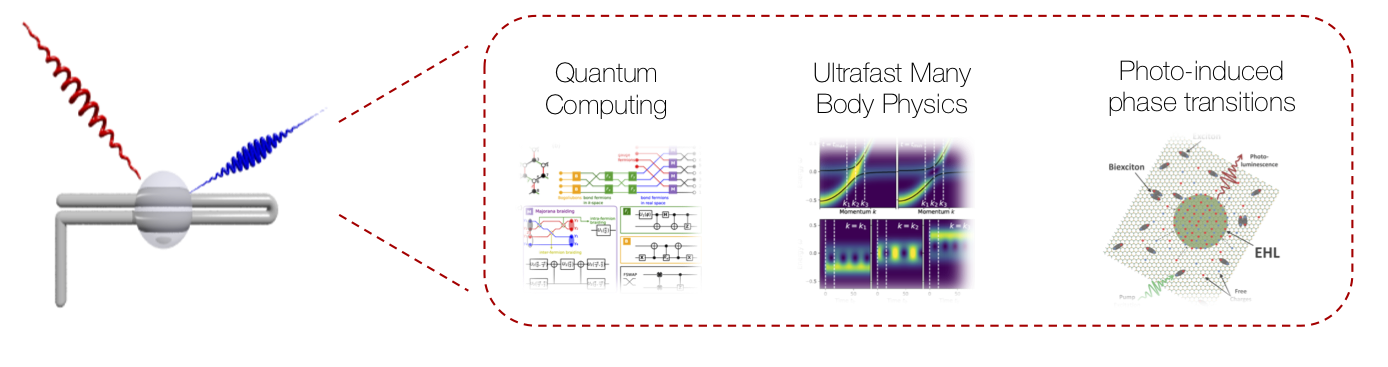
Dr. Alexander (Lex) Kemper is an Associate Dean for Research and Associate Professor in the Department of Physics at North Carolina State University (NC State), within the College of Sciences. He holds a PhD in Physics from the University of Florida (2010), followed by postdoctoral research at Stanford University/SLAC National Lab and Lawrence Berkeley National Lab as an Alvarez Fellow. He joined NC State in 2015 as an Assistant Professor, advancing to his current roles. His research focuses on quantum materials in and out of equilibrium, combining ultrafast laser experiments with computational modeling. Key areas include non-equilibrium dynamics in correlated materials, pump-probe spectroscopy, and quantum computing algorithms for simulating condensed matter systems. He received an NSF CAREER Award in 2018 for studying light-induced phases in 2D materials. Research interests span superconductivity (cuprates and Fe-based systems), electron-phonon coupling, and quantum machine learning applications. His lab develops software tools like eigenvector continuation and Hankel projections to study many-body systems. Recent work addresses quantum state preparation resilience, fast scrambling in hyperbolic models, and geometric quantum algorithms. Current lab members include graduate researchers (Anjali Agrawal, Heba Labib) and undergraduates (Liam Doak, Arvin Kushwaha). Alumni include notable contributors like Akhil Francis and Avinash Rustagi. Collaborations involve experimentalists in ultrafast spectroscopy and quantum hardware teams. Publications (2025) highlight advances in quantum algorithms (e.g., error mitigation, horizontal gates) and experimental techniques (correlation-ARPES, RIXS). His work bridges theoretical predictions with quantum hardware implementation, aiming to solve complex materials physics challenges on near-term quantum devices.