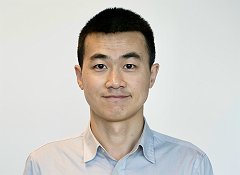
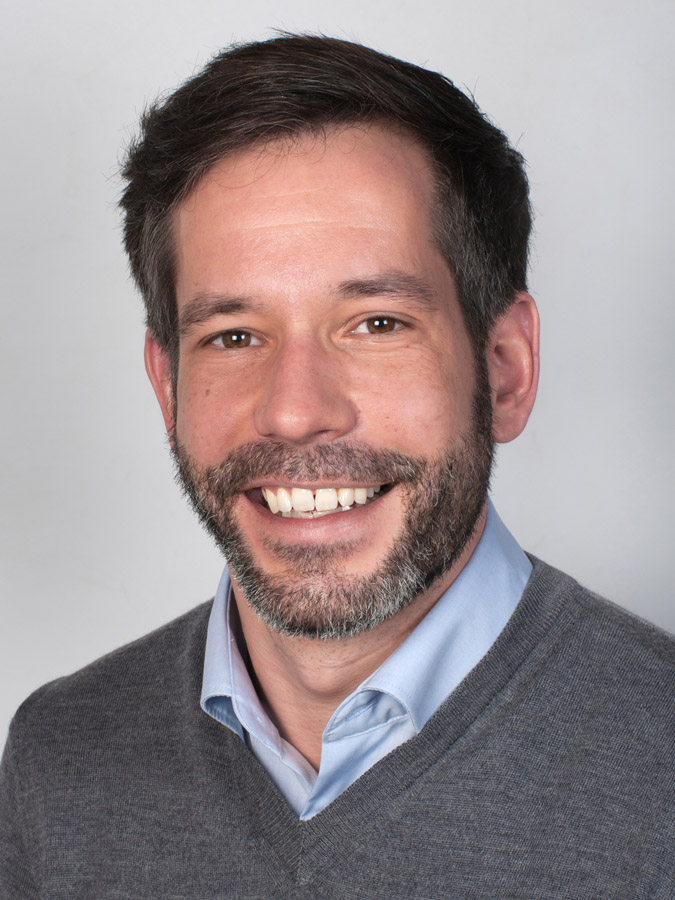
Chunyang Chen is a Professor at the School of CIT, Technical University of Munich (TUM), Germany. He maintains an active research profile in software engineering with a focus on applying data analysis and artificial intelligence techniques to software development processes. His primary research interests include Software Engineering , Applied Data Analysis , Deep Learning , and Human-Computer Interaction . Dr. Chen is particularly known for his work in applying data analysis to automated software development and mining software repositories, with significant contributions in mobile application testing, GUI testing, and leveraging Large Language Models for software engineering tasks. His recent publications (2024-2026) demonstrate a strong focus on integrating Large Language Models with software testing methodologies, particularly for mobile applications. The research trends show increasing sophistication in using multimodal LLMs, dynamic memory techniques, and retrieval augmentation to improve automated testing capabilities. Dr. Chen maintains an active presence in the software engineering research community, serving on program committees for major conferences including ASE, ICSE, and ESEC/FSE. He has also delivered keynote speeches on mobile application testing with Large Language Models, highlighting his thought leadership in this emerging area.
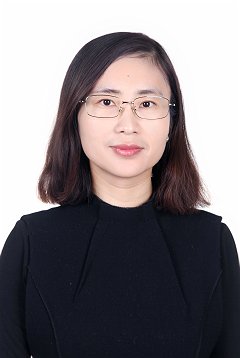
Professor Dan Hao is a distinguished faculty member at the Institute of Software, School of Computer Science, Peking University, where he has established himself as a leading researcher in software engineering. His extensive service to the academic community includes membership on the Steering Committee for The International Conference on Automated Software Engineering (ASE) since 2021, The ACM SIGSOFT International Symposium on Software Testing and Analysis since 2025, and The International Systems and Software Product Line Conference (SPLC) from 2018-2022. He has served as Program Co-Chair for multiple major conferences including ISSTA 2027, ICSME 2025, ICST 2023, SANER 2022, and ASE 2021. Professor Hao received his Bachelor's degree from Harbin Institute of Technology in 2002 and completed his Ph.D. at Peking University in 2008, followed by post-doctoral research at the same institution until 2009. His academic journey reflects a deep commitment to advancing software engineering research and education in China. Professor Hao's research primarily focuses on software testing and debugging, program comprehension, and software maintenance. His work has significantly contributed to compiler testing, fault localization, regression testing, and automated program repair. He has pioneered approaches in compiler auto-tuning, test-case prioritization, and history-guided testing techniques. His research bridges theoretical foundations with practical applications, addressing real-world challenges in large-scale software systems, particularly in online service environments. His publication record demonstrates a consistent trajectory of high-impact research in top-tier software engineering venues. Professor Hao's work shows increasing integration of machine learning techniques with traditional software engineering problems, particularly evident in his recent publications on LLM applications for code generation, neural theorem proving, and contrastive learning for vulnerability detection. His research maintains strong connections between theoretical rigor and practical applicability in industrial settings. ACM SIGSOFT Distinguished Paper Award for PDCAT: Preference-Driven Compiler Auto-Tuning at FSE 2025 Distinguished Paper Award for Formalizing, Mechanizing, and Verifying Class-Based Refinement Types at ECOOP 2024 ACM SIGSOFT Distinguished Paper Award for History-Guided Configuration Diversification for Compiler Test-Program Generation at ASE 2019 ACM SIGSOFT Distinguished Paper Award for History-driven Build Failure Fixing: How Far Are We? at ISSTA 2019 As an advisor, Professor Hao has mentored numerous graduate students, currently supervising 9 Ph.D. students and 7 Master's students. His former students have gone on to prestigious positions at institutions including King's College London, Tianjin University, Fudan University, and major technology companies like Huawei and China Construction Bank. His academic leadership extends through editorial roles as Deputy Editor-in-Chief of Software Testing, Verification and Reliability (STVR) and membership on the editorial boards of several premier journals including ACM Transactions on Software Engineering and Methodology, ACM Computing Surveys, and Empirical Software Engineering. Professor Hao leads a vibrant research group at Peking University's Institute of Software, focusing on cutting-edge problems at the intersection of traditional software engineering and artificial intelligence. His team actively collaborates with both academic institutions and industry partners to address practical challenges in software development and maintenance processes.
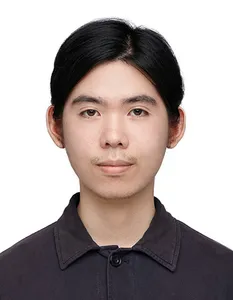
Abhishek Tiwari is an Associate Professor of Software Engineering at the Maersk Mc-Kinney Moller Institute, University of Southern Denmark, where he was promoted from Assistant Professor in September 2025. His academic journey includes positions as Senior Researcher at Software Institute, USI Lugano (2024), Senior Researcher at University of Passau (2022-2023), and Research Fellow at National University of Singapore (2020-2021). He completed his PhD in Software Engineering at University of Potsdam, Germany in 2019 under supervision of Prof. Dr.-Ing Christian Hammer. His research focuses on the intersection of programming languages and software engineering, with particular expertise in static program analysis, language-based security, information flow control, and automated program repair. His work has significant practical applications in Android security and privacy, addressing critical challenges in information flow analysis, vulnerability detection, and program repair. His research has evolved from foundational work on Android security mechanisms like PendingIntent analysis and anti-theft frameworks to more recent sophisticated approaches for information flow security repair and multilingual program analysis. Trends in his publication record show a consistent focus on Android security challenges, with increasing sophistication in analysis techniques from 2017 through 2025. His work spans theoretical foundations of program analysis while maintaining strong practical relevance to real-world Android security issues. Recent publications demonstrate growing interest in multilingual program analysis and formal specification challenges. ACM SIGSOFT Distinguished Paper Award (MOBILESoft 2023) Dr. Tiwari actively contributes to the academic community through program committee service for major conferences including ASE (2024, 2025), ICSE (2025), and ISSTA (2022-2024). His teaching portfolio includes Advanced Software Engineering Methodologies (2024), Automated Program Repair (2022-2023), and Mobile Security (2022) courses. He has received research funding from prestigious sources including Deutsche Forschungsgemeinschaft (DFG), German Federal Ministry of Education and Research, and EIT Digital for projects related to programming principles for privacy, SmartPriv, and SMAPPER.
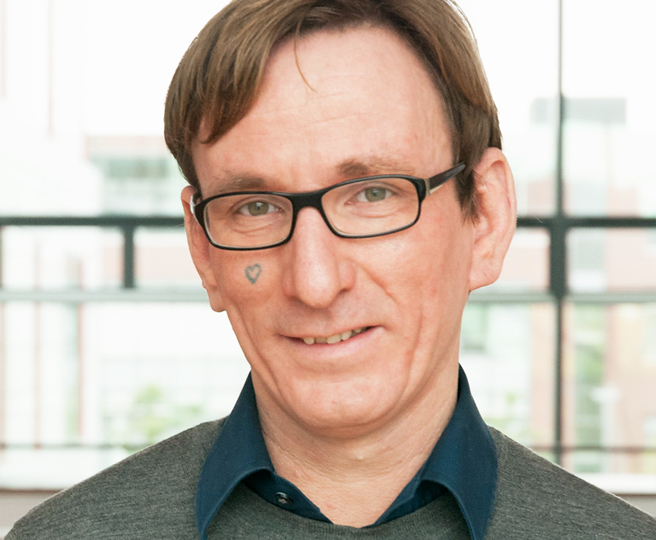
Yanqi Su is a postdoctoral researcher at the TUM School of Computation, Information and Technology (CIT) at the Technical University of Munich, affiliated with the Chair of Software Engineering & AI . She will soon complete her Doctorate at The Australian National University under Prof. Zhenchang Xing, following academic training at Nanjing University of Aeronautics and Astronautics. Education : PhD (in progress, ANU), Master’s/Bachelor’s in Computer Science and Technology (Nanjing University of Aeronautics and Astronautics) Research Focus : Her work centers on enhancing exploratory testing through Knowledge Graphs and Large Language Models (LLMs) , with notable contributions to test scenario generation , automated exploratory testing , and bug-component triaging . She has discovered ~300 bugs in applications like Firefox (desktop/Android), many resolved in collaboration with developers. Publication Trends : Her research spans LLM applications for GUI/code analysis , automated security testing , and AI ethics . Key subfields include model context protocols , vulnerability detection , code optimization , and human-AI collaboration in software development. Scientific Recognition : Recipient of the Distinguished Paper Award at ASE 2021 , her work appears in top-tier venues (ICSE, ASE, TSE, TOSEM).
Ludwig Felder is a Doctoral Candidate & Research Associate at the Technical University of Munich (TUM), affiliated with the Chair of Software Engineering & AI under the School of Computation, Information and Technology . His research focuses on Human-LLM Interaction & Collaboration and Development Tools for LLM-Powered Applications . Education: Master of Science in Human-Computer Interaction, Ludwig-Maximilians-Universität München Master of Science in Computer Science, Ludwig-Maximilians-Universität München Bachelor of Science in Media Informatics, Ludwig-Maximilians-Universität München Research Trends: His work explores the intersection of large language models (LLMs), graphical user interface (GUI) testing, and software development tools. Topics include LLM-based agents for app review, EU AI Act compliance, code vulnerability detection via knowledge graphs, and multimodal reasoning for UI/code generation. His research emphasizes practical applications of LLMs in software engineering and human-centric AI systems.
Wei-Tek Tsai is a Professor affiliated with Arizona State University's School of Computing, Informatics, and Decision Systems Engineering, and previously with Beihang University and the University of Minnesota. His research focuses on blockchain technology, cybersecurity, cloud computing, and software engineering. He has contributed significantly to areas such as blockchain-based systems, smart contract development, distributed testing methodologies, and crowdsourcing in software development. His work emphasizes practical applications like fraud detection, supply chain supervision, and decentralized financial systems. Research interests include permissioned blockchains, anomaly detection in cryptocurrency transactions, and optimizing consensus mechanisms. He has published extensively in top-tier journals and conferences, including IEEE Transactions and international workshops on software engineering and security. His work bridges theoretical advancements with real-world challenges in distributed systems and cybersecurity.
William J. Giraldo is a researcher in the fields of human-computer interaction, model-driven engineering, and interactive systems design. He has published extensively from 2007 to 2019, collaborating with prominent researchers such as Manuel Ortega, César A. Collazos, Ana I. Molina, and Oscar Pastor. His work appears in journals like Software Quality Journal , Information Systems , and Journal of Systems and Software , as well as conferences including Interacción, CAiSE, and CRIWG. His research interests include: Human-Computer Interaction (HCI) Model-Driven Engineering (MDE) Usability and quality in software modeling Interactive and groupware system design Educational technology and e-learning interfaces User interface development frameworks His recent publications focus on evaluating modeling language quality, integrating technical debt into MDE, participatory design for educational systems, and creating frameworks for UI development—especially for older adults and video-based systems. The articles show a consistent trend toward improving software quality, usability, and accessibility through model-based approaches. While no scientific awards are listed in the provided text, his collaborative work indicates strong integration within academic research networks in software engineering and HCI. He has contributed to advising and research teams, particularly in projects involving model-driven development of groupware and educational systems. His work often involves empirical studies and tool development, suggesting active engagement in both theoretical and applied research. William J. Giraldo has been involved in the development of frameworks such as the Activity Taxonomy (ATx) and tools for Android code generation from conceptual models, indicating a focus on practical, implementable solutions in software engineering and HCI.
Mauro Pezzè is a Professor of Software Engineering at Università della Svizzera italiana (USI), Constructor Institute of Technology (CIT), and Università degli Studi di Milano Bicocca. He coordinates the STAR - Software Testing and Analysis research Lab, a joint research team at USI and CIT. Pezzè has held significant editorial roles including Editor-in-Chief of ACM TOSEM and service on the editorial boards of IEEE TSE and STVR. He has chaired major conferences including ICSE 2012 and ISSTA 2006/2013. Professor Pezzè's research focuses on Software Engineering, particularly Software Testing and Analysis, Self Healing Systems, and Self Adaptive Systems. His work bridges theoretical foundations with practical applications, emphasizing automated testing techniques, program analysis, and self-adaptive software architectures. He is known for his influential book 'Software Testing and Analysis: Process, Principles and Techniques' which has shaped the field. Analysis of Pezzè's recent publications reveals a consistent focus on software testing and failure prediction, with increasing integration of AI and machine learning techniques. His work spans traditional program analysis, GUI testing, distributed systems reliability, and the application of large language models to testing challenges. The research demonstrates a trajectory from foundational testing techniques toward more complex, adaptive, and AI-enhanced approaches to software quality assurance. Professor Pezzè has received significant recognition through leadership roles in the software engineering community: Editor-in-Chief of ACM TOSEM (Transactions on Software Engineering and Methodology) Member of the editorial board of IEEE TSE (Transactions on Software Engineering) Member of the editorial board of STVR (International Journal of Software Testing, Analysis and Verification) Program Chair of ICSE (International Conference on Software Engineering) 2012 Program and General Chair of ISSTA (International Symposium on Software Testing and Analysis) 2006 and 2013 As coordinator of the STAR research lab, Professor Pezzè leads a collaborative effort between USI and Constructor Institute focused on advancing software testing and analysis methodologies. The lab's work spans theoretical foundations and practical applications, with particular emphasis on automated testing techniques, program analysis, and self-healing systems. This research environment fosters innovation in software quality assurance and trains the next generation of software engineering researchers.
Marco Torchiano is a Professor at Politecnico di Torino, where he researches software engineering, empirical methods, and gamification in software development. His work spans software testing, mobile development, and fairness in automated systems. His recent research explores gamification applications in software engineering education and testing, including tools like UMLegend for UML modeling and ScoutDroid for mobile testing. He also investigates algorithmic fairness in decision-making systems. Torchiano has developed gamified learning approaches for Scrum, BPMN modeling, and UML education. His publications demonstrate consistent focus on improving developer productivity and educational outcomes through innovative tools and methodologies. He serves on editorial boards including the Journal of Operations Management and has co-authored over 190 publications on software engineering topics.
Stephen H. Edwards is a Professor in the Department of Computer Science at Virginia Tech, specializing in computing education and automated grading systems. His work focuses on improving programming pedagogy through tools like Web-CAT, CodeWorkout, and Sofia Framework, emphasizing equitable assessment, mutation analysis, and behavioral nudges in CS1/CS2 courses. Research Themes : Automated feedback, software testing education, educational data mining, gamification for learning. Collaborations : Manuel A. Pérez-Quiñones, Adrienne Decker, Clifford A. Shaffer, Bob Edmison. Trends : Recent publications highlight grading equity (2024-2025), student testing behaviors (2020-2022), and tool development (2007-2017).
Zhen Tao is a Research Associate at the Chair of Software Engineering & AI , part of the TUM School of Computation, Information and Technology at the Technical University of Munich. They hold an academic affiliation in Heilbronn, Germany, and their email address is zhen.tao@tum.de . Education M.Sc. in Machine Learning and Computer Vision from The Australian National University Bachelor of Advanced Computing (Honours) from The Australian National University Bachelor of Computer Science and Technology from Shandong University (Weihai) Zhen Tao's research focuses on Usable Privacy and Security and Privacy Policy Analysis , with contributions to topics such as GUI testing, code vulnerability detection, and LLM-based agents for personalized app reviews. Their work intersects software engineering, human-computer interaction, and AI ethics, reflecting a multidisciplinary approach to improving user interface design and software security. They are part of a research team led by Prof. Chunyang Chen, collaborating on projects related to large language models, code optimization, and compliance with AI regulations like the EU AI Act.
Reto Wettach is a Professor at the University of Applied Sciences Potsdam, teaching Physical Interaction Design. His research focuses on tangible interfaces, mobile interaction, and service design methodologies emphasizing co-creation. He founded Fritzing, an open-source platform empowering designers and artists in electronics prototyping. Current research includes the BMBF-funded "Experience the Energy" project exploring tangible interfaces for energy consumption awareness. Wettach's work bridges academic research and industry application through his role as Design Director at Interaction Design Studios Berlin. Professional experience includes positions at Sony Tokyo, Ideo San Francisco, and the Interaction Design Institute Ivrea. He holds degrees in Industrial Design (UdK Berlin) and Mechanical Engineering (TU Berlin), with early training as a stonemason.
Dr. Felix Schüssel is a researcher at the University of Ulm, previously serving as a Research Associate. His work focuses on Multimodal Interaction and Affective Computing, with contributions to the Sonderforschungsbereich/Transregio 62 project on companion-technology for cognitive technical systems. He has taught courses such as Ubiquitous Computing , Human-Computer Interaction , and Interaction in Cognitive Technical Systems . His research emphasizes adaptive systems, multimodal fusion, and user-centered design, with over 15 publications since 2011. Notable contributions include works on companion-system architectures, error detection via interaction histories, and affective computing applications. He has supervised numerous theses on topics like emotion-based interaction and multimodal fusion frameworks. Key projects include developing a smart mirror ( Fitmirror ) for wellbeing and exploring VR driving simulations. His work bridges theoretical HCI principles with practical applications in smart environments and assistive technologies. Dr. Schüssel’s publications span journals like i-com and conferences such as HCI International and ACM Multimodal Interaction.
Stephan Arlt is a researcher at the Chair of Software Engineering, Institute of Computer Science, University of Freiburg. His research focuses on Software Testing and Program Analysis, with contributions to tools like Gazoo and Joogie. He has published extensively on topics including GUI testing, infeasible code detection, and formal verification techniques, appearing at venues like ICST, ISSTA, and CAV. His work emphasizes practical and automated methods for improving software reliability and verification efficiency. He has advised multiple students on projects such as Parameterized GUI Tests and Automated Grey-box Testing. His teaching spans courses like Software Testing, Model-based Testing, and Program Verification, reflecting his expertise in both theoretical and applied software engineering. Key contributions include developing Gazoo for generating GUI test cases and Joogie for analyzing Java programs. His research trends highlight advancements in automated testing strategies, formal verification, and optimizing test suite reduction techniques.
Jinhan Kim is a Postdoctoral Researcher at the Software Institute of USI University of Lugano, Switzerland, working in the TAU lab under the guidance of Prof. Paolo Tonella. He completed his Ph.D. in Software Engineering at KAIST, South Korea, under the supervision of Prof. Shin Yoo, where his research focused on mutation testing and the intersection of artificial intelligence and software engineering. His educational background includes: Ph.D. in Software Engineering, KAIST, South Korea (completed February 2023) Kim's research spans software engineering and artificial intelligence, with a focus on mutation testing, testing of deep learning systems, and security of AI models. He investigates techniques for improving the reliability and robustness of AI systems, particularly in safety-critical domains like autonomous driving. His work bridges traditional software engineering practices with modern AI systems, leading to novel approaches in fault localization, program repair, and adversarial testing. His recent publications reveal a strong trend toward testing and securing deep learning models in autonomous systems. He has developed taxonomies for attacks, frameworks for testing autonomous agents, and empirical studies on fault localization for neural networks. His work increasingly addresses securing AI systems against adversarial attacks and improving robustness of security detectors generated by large language models. Kim has received notable recognition including: Best Paper Award at the 18th International Workshop on Mutation Analysis (Mutation 2023) As an advisor, Kim supervises two PhD students: Masoud Jamshidiyan Tehrani and Samuele Pasini, working on security of deep learning models and robustness of security attack detectors. He actively serves the research community through program committees for ASE, ICSE, ISSTA, and ICST, and as organizer of DeepTest and SBFT workshops. His service includes being a Distinguished Reviewer for TOSEM. Kim is a core member of the TAU (Testing: Analysis and Understanding) lab at USI, which pioneers innovative approaches to software testing and analysis for modern AI-based systems.