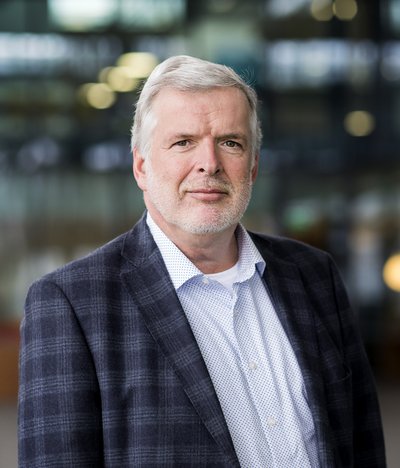
H.J. Sips is a Professor at Delft University of Technology within the Faculty of Electrical Engineering, Mathematics and Computer Science. His research focuses on data-intensive systems, parallel graph analytics, and distributed systems, with a strong emphasis on algorithm design and performance optimization. Academic Rank: Professor Institution: Delft University of Technology School: Faculty of Electrical Engineering, Mathematics and Computer Science His research interests include: Algorithms Distributed Systems Graph Analytics OpenCL and GPU Programming Social Network-based Sybil Defense His publications highlight trends in high-performance computing, with a focus on portability, parallelization, and hardware acceleration. Notable topics span Intel Xeon Phi architecture, acoustic ray tracing, and robust Sybil defense mechanisms under dynamic network churn. H.J. Sips has contributed to editorial activities for the Lecture Notes in Computer Science journal since 2009. His work demonstrates a sustained commitment to advancing computational efficiency and distributed system security.
Twan van Hooff is an Associate Professor and chairman of the Unit Building Physics and Services (BPS) in the Department of the Built Environment at Eindhoven University of Technology (TU/e). He has held this associate professor position since October 2020 (full time) after serving as an assistant professor from October 2015. Prior to his current appointment, he was a Research Fellow of the Research Foundation Flanders (FWO) from October 2014 until September 2020 and a postdoctoral researcher in the Climate Proof Cities research program from 2012 to 2014. His research expertise focuses on experimental modeling and numerical simulation of ventilation flows, including related heat and mass transfer processes, with the overall aim to provide healthy, comfortable and energy-efficient buildings. His specific research areas include building and room ventilation, natural ventilation, pedestrian-level wind comfort, sport stadium aerodynamics, computational fluid dynamics for the built environment and climate change adaptation measures on the building scale. His recent publications demonstrate continued active research in these areas, particularly regarding indoor airflow modeling, particle distribution, and infection risk mitigation. Dr. van Hooff has published 60 ISI journal papers (18 as first author) and 90 papers in international conference proceedings. His scholarly contributions extend to serving on the editorial boards of the Journal of Building Physics and the Journal of Wind Engineering and Industrial Aerodynamics, and he acts as a reviewer for 56 ISI journals while participating in more than 10 scientific committees at international conferences. Best Paper Award from Building and Environment (2011) As an educator, van Hooff teaches multiple courses including Sports and building aerodynamics, Heat, air and moisture transfer/CFD, Masterprojects, Introduction to building physics and material science, and Urban physics. His development of the 'SvS' (Senses versus Sensors) measurement tool demonstrates his commitment to enhancing student comprehension of indoor environmental quality, with 82% of students reporting improved understanding after using the device. His leadership extends beyond research as chairman of the Unit BPS since May 2021, guiding the strategic direction of the research group. His laboratory work centers on building ventilation research with a controlled test facility for particle distribution studies, and his team actively investigates computational methods for indoor airflow prediction. Current projects focus on ventilation effectiveness, portable air cleaner performance, and the development of faster computational methods for building physics applications.
Mircea Lazar is an Associate Professor in the Control Systems group at Eindhoven University of Technology. His research spans constrained control, model predictive control (MPC), and stability analysis of hybrid systems, with applications in power systems, smart grids, and precision mechatronics. Research highlights include: Development of data-driven predictive control methods Stability guarantees for nonlinear and hybrid systems Applications in water networks, power converters, and mechatronics He has received the EECI PhD Award and NWO VENI grant. Recent publications focus on real-time MPC implementations, physics-guided neural networks, and optimization for large-scale systems. Collaborations include ASML, DAF, Philips, and Ford. He chairs the IEEE CSS Technical Committee on Hybrid Systems and has supervised 9 PhD students.
Wieger Wesselink is Assistant Professor in Formal System Analysis at Eindhoven University of Technology, where he specializes in formal verification and concurrent systems. He is a lead developer of the mCRL2 toolset for modeling and verifying concurrent protocols. His research focuses on symbolic model checking, parity games, and efficient algorithm implementation. Awards: Received FMICS-AVoCS Best Paper award in 2017. Teaching: Instructs courses on Foundations of Artificial Intelligence and Provable Programming.
Peter de With is a Part-time Full Professor in the Department of Electrical Engineering at Eindhoven University of Technology (TU/e), leading the Video Coding & Architectures Group. His expertise spans video compression, image analysis in healthcare, surveillance, and multimedia. He holds a PhD from Delft University of Technology (1992) and has held roles at Philips Research, the University of Mannheim, and Cyclomedia Technology. His research focuses on video/image signal processing, machine learning, and healthcare applications such as esophageal cancer detection. He is an IEEE Fellow and has authored over 400 papers, receiving multiple awards for his work. Research interests include video coding, medical imaging, and system innovations in health, surveillance, and automotive sectors. Key publications address challenges in medical instrument detection, 3D ultrasound, and multiview rendering. He collaborates with industry partners like Bosch Security and hospitals for oncology research. His work bridges academic innovation with real-world applications, emphasizing practical solutions in healthcare technology and multimedia systems. Awards include IEEE Fellow status and paper awards from CE Chester Sall, SPIE, and Elsevier. He chairs program committees for IEEE conferences and holds 30 patents. His contributions to video analysis and system design have driven advancements in safety, security, and healthcare technologies.
Sacheendra Talluri is a Visiting Fellow at the Faculty of Science, Vrije Universiteit Amsterdam, affiliated with the Network Institute. His research focuses on distributed systems, serverless computing, and GPU-accelerated data processing. Current affiliation: Faculty of Science, Computer Science Department, Vrije Universiteit Amsterdam Research areas: Distributed Systems, Serverless Computing, GPU Programming, Performance Engineering Talluri's recent work investigates large language model service reliability , serverless computing overheads , and GPU-optimized data processing . His research output includes methodologies for Kubernetes configuration analysis and serverless event triggers, contributing to cloud infrastructure optimization. He participates in the project 'Extreme and Sustainable Graph Processing for Urgent Societal Challenges in Europe' (2023–2025), collaborating with researchers like Alexandru Iosup and R. van Bakel.
Simon Hengeveld is a Researcher and Software Developer for Health Research at Wageningen University. He holds a PhD from Université de Rennes (2024), and bachelor's/master's degrees in Computer Science from Utrecht University. His research focuses on computational geometry, protein structure determination via Distance Geometry, and human motion analysis. He has developed applications like the UNESCO World Heritage Collect app, combining software engineering with historical and travel interests. Education: Bachelor's/Master's in Computer Science, Utrecht University PhD in Structural Biology/Computational Geometry, Université de Rennes 1 Research Interests: His work bridges computational methods with biological applications, including protein structure determination using NMR data and optical computing. He also explores human motion retargeting and geometric algorithms for adaptive maps. Simon emphasizes practical implementations, such as GPU-based solutions for 1D Distance Geometry problems. Publications: His articles span computational geometry, bioinformatics, and algorithm design, with contributions to journals like Journal of Optics and conferences such as SOCG, GSI, and BIBM. Key themes include optical processors for matrix operations and geometric algorithms for skeletal posture analysis. Awards: No scientific awards explicitly mentioned. Advising/Grants: No formal advising roles or grants detailed in the text. Labs/Teams: Developed the UNESCO World Heritage Collect app with collaborators, though no formal university lab affiliation is noted.
Dr. Gang Mei is an Associate Professor in Scientific Computing within the School of Engineering and Technology at China University of Geosciences (Beijing), where he has held academic positions since 2014. His career progression includes Postdoctoral Researcher (2014-2016), Lecturer (Oct-Dec 2016), and current Associate Professor (since Jan 2017). His research bridges computational science and engineering applications with significant editorial contributions to computer science literature. Education: Ph.D. in Computer Science, University of Freiburg, Germany (2014) Research Interests: Dr. Mei specializes in Numerical Simulation and Computational Modeling, GPU Computing, Machine Learning, and Data Mining, with strong applications in Network Science and Spatial Information Systems. His work integrates Distributed and Parallel Computing techniques for large-scale scientific simulations, particularly in geospatial modeling and network analysis. The research demonstrates consistent focus on computational efficiency through hardware acceleration and algorithmic optimization across diverse domains including satellite imagery processing, financial event detection, and medical image classification. Publication Trends: His editorial portfolio reveals strong interdisciplinary patterns connecting computer science fundamentals with domain-specific applications. Recent works emphasize GPU-accelerated methods for data-intensive problems (2020-2022), spatial-temporal modeling (2019-2020), and network science applications (2021). The publications consistently address computational scalability challenges while maintaining practical relevance across geospatial, financial, medical, and engineering contexts. Professional Recognition: As an IEEE Member, Dr. Mei serves on editorial boards for IEEE Access and PeerJ Computer Science, reflecting peer recognition in computational fields. His editorial contributions span 15+ publications demonstrating expertise in evaluating cutting-edge computer science research. Academic Service: Beyond editorial work, Dr. Mei's service includes advising on computational methodology across multiple disciplines. His role as Academic Editor demonstrates commitment to scholarly communication, particularly in bridging theoretical computer science with practical engineering applications. No grant funding details were specified in available materials.