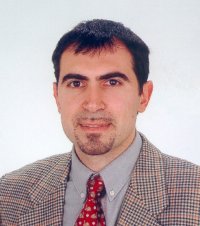
Dr. Gabriele Mencagli is an Associate Professor in the Department of Computer Science at the University of Pisa, Italy. He holds a Ph.D. in Computer Science (2012) and has served as an Assistant Professor (2014–2018) and Tenure-Track Professor (2018–2021) before his current position. His research focuses on parallel systems, including architectures, programming models, and runtime systems for data stream processing. He leads work on the WindFlow stream processing library and has contributed to projects like TEXTAROSSA, ADMIRE, and EUPEX. He co-organized major conferences like HPDC 2024 and DEBS 2025 and serves on editorial boards for journals like Future Generation Computer Systems and Cluster Computing. Education: B.Sc. (2006, summa cum laude), M.Sc. (2008, summa cum laude), Ph.D. (2012) in Computer Science, all from the University of Pisa. Research Interests: Parallel programming, self-adaptive systems, data stream processing, GPU/FPGA acceleration, and high-performance computing. Over 80 publications in top journals and conferences, including IEEE TPDS, JPDC, and Euro-Par. Awards include Italian Habilitation as Full Professor (2025). Teaching: Courses on High-Performance Computing and Computer Architecture, including CUDA programming and parallel design patterns. Active in curriculum development for both bachelor’s and master’s programs. Grants & Projects: Principal investigator in EU-funded projects (e.g., TEXTAROSSA, NOUS) and collaborations with industry (e.g., List-group S.p.A., Autodesk). Focus on exascale computing, digital twins, and edge computing.
Susanna Dazzi is a Fixed-term Researcher at the Department of Engineering and Architecture, University of Parma, Italy. Her work focuses on hydraulic engineering, flood risk management, and computational modeling, leveraging advanced techniques like physics-informed neural networks and GPU acceleration for real-time flood prediction. Key Research Areas: Flood hazard estimation, levee breach dynamics, dam-break scenarios, 2D hydraulic modeling, and sediment transport analysis. Teaching: Delivers courses on Hydraulic Infrastructures and Hydraulic Protection of the Territory for Master's Degree programs in Civil Engineering. Publications: Develops data-driven models (e.g., FloodSformer) for real-time flood forecasting and investigates hydrodynamic interactions with infrastructure. Contact: Email: susanna.dazzi@unipr.it ; Office: Science Area Park, 181/A, 43124 Parma, Italy.
Andrea Marongiu is an Associate Professor at the Department of Physical, Computer and Mathematical Sciences at the University of Modena and Reggio Emilia, specifically affiliated with the Mathematics department. He maintains an active research profile while teaching multiple courses in computer architecture and parallel systems. His research interests span computer architecture, high performance computing, parallel programming, and embedded systems. Marongiu focuses particularly on memory systems, heterogeneous computing architectures, FPGA-based acceleration, and real-time performance analysis. His work bridges theoretical foundations with practical implementation challenges in modern computing systems, with special attention to predictable execution models and quality of service guarantees. Analysis of his recent publications reveals a strong emphasis on memory bandwidth management in heterogeneous systems, particularly focusing on FPGA-based architectures and multicore SoCs. His research trajectory shows consistent work in memory interference analysis, PREM (Predictable Execution Model) scheduling techniques, and fine-grained QoS control mechanisms. The publications demonstrate a progression from general parallel programming concepts toward increasingly specialized techniques for resource-constrained environments like autonomous vehicles and edge computing devices. Marongiu teaches several advanced computer science courses including Computer Architecture I & II, Compilers, High Performance Computing, and Electronic Calculators across multiple degree programs. His teaching approach emphasizes both theoretical foundations and practical implementation, with a focus on RISC-V architecture and modern parallel programming techniques. The course materials indicate he incorporates hands-on laboratory work as an essential component of his pedagogy, particularly in areas like compiler construction and parallel programming.
Andrea Formisano is an Associate Professor in Computer Science at the Department of Mathematics, Informatics and Physics (DMIF) at the University of Udine, Italy. His research spans diverse areas within computational logic, including logic programming, answer set programming (ASP), constraint logic programming (CLP), action languages, automated deduction, theory reasoning, set theory, relational reasoning, GPU computing, and non-classical logics. Contact : Via delle Scienze 206, 33100 Udine, Italy | Tel: +39 0432 558496 | Fax: +39 0432 558400 Teaching : Offers courses on Operating Systems and Programming on Parallel Architectures through the university's elearning platform. Research Keywords : Computational Logic, Logic programming, ASP, CLP, Action languages, Automated deduction, Theory reasoning, Set theory, Relational reasoning, GPU computing, Games, Non-classical Logics. Professional Affiliations : Active in academic events such as the International Conference on Logic Programming (ICLP), Italian Conference on Computational Logic (CILC), and the Association for Logic Programming (ALP). He is also affiliated with the Italian Association for Logic Programming (GULP).
Silvia Giuseppina Franchini serves as a Contract Teacher in the Department of Biomedicine, Neuroscience and Advanced Diagnostics at the University of Palermo's School of Medicine and Surgery. Her academic career demonstrates a strong interdisciplinary focus bridging advanced mathematical frameworks with practical medical applications. Dr. Franchini's research interests include: Geometric and Clifford Algebra applications in medical imaging Hardware acceleration for geometric algebra operations Machine learning approaches for medical diagnosis, particularly for Crohn's disease Embedded systems design for real-time image processing Robotics control systems using conformal geometric algebra Medical image analysis and 3D reconstruction Her publication record spanning fifteen years reveals an evolution from foundational hardware implementations to sophisticated medical applications. She has developed specialized architectures including the GAPPCO system, ConformalALU coprocessor, and GAPP compiler, demonstrating innovative approaches to implementing geometric algebra in hardware for medical imaging. Her recent work emphasizes machine learning applications for Crohn's disease classification, showing how mathematical frameworks can translate to clinical diagnostic tools. Dr. Franchini maintains active research engagement with publications continuing through 2022, indicating ongoing contributions to the field of medical imaging technology development. Her work consistently addresses computational challenges while maintaining clinical relevance, particularly in gastroenterology through her Crohn's disease research.
Stefano Salsano is an Assistant Professor at the Department of Electronic Engineering at the University of Rome Tor Vergata since 2000. He holds a Laurea degree (1994) and PhD (1998) from the University of Rome. His research focuses on advanced networking technologies including Information-Centric Networking, SDN, Segment Routing (SRv6), 5G, and Network Function Virtualization (NFV). He has contributed to numerous EU-funded projects (e.g., INSIGNIA, ELISA, AQUILA) and led research in telecommunications at CoRiTeL until 2000. His work emphasizes scalable network architectures, performance measurement, and programmable data planes. Key projects include the OFELIA testbed, SRv6 implementation, and contributions to standards like RFC 9779. He has authored over 100 publications with an h-index of 17, addressing topics such as network programmability, cloud-native solutions, and hybrid SDN/IP systems. Research highlights include developing the DIDA framework for distributed machine learning, optimizing SRv6 for SD-WANs, and exploring 5G Superfluid Networks for dynamic service deployment. Collaborations include CNIT, Netgroup, and initiatives like the GEANT SDX project.
Luigi Cerulo is an Associate Professor in Computer Science at the Department of Science and Technology (DST) , University of Sannio in Benevento. He co-directs the bioinformatics research group with Francesco Napolitano, focusing on integrating computational methods into life sciences. His teaching includes advanced topics like Computational Genomics and Statistics and Bioinformatics for Master's programs in Biotechnology and Biology. Academic Rank: Associate Professor Department: Science and Technology, University of Sannio Email: lcerulo@unisannio.it Research Interests: Driven by cross-disciplinary innovation, his work bridges machine learning and bioinformatics. Key areas include reverse engineering gene regulatory networks using deep graph neural networks, predicting ligand-receptor interactions via graph autoencoders, and exploring non-coding RNA functions with self-supervised learning. His team also investigates drug synergy prediction and AI applications in biological data. Recent Publications: His 15 most recent works span 2022 to 2007, emphasizing machine learning in gene network reconstruction (Chang et al., 2020), deep learning for RNA classification (Noviello et al., 2020), and foundational contributions to software engineering tools (Canfora et al., 2007-2008). Research Infrastructure: The group utilizes high-performance systems including a Superdome Flex server (224 CPU cores, 1.5 TB RAM) and a GPU cluster at Biogem Institute. Advising and Grants: He mentors PhD students in bioinformatics and leads projects such as GENOMA E SALUTE (EU-funded) and Non-Coding RNA Explosion (Ministry of Research grant). Collaborations span institutions like the University of Naples and Biogem.
Stefano Cagnoni is an Associate Professor in the Department of Computer Engineering at the University of Parma, Italy. He holds a PhD in Bioengineering from the University of Florence and has been a key academic figure since joining the University of Parma in 1997. His research spans soft computing, evolutionary computation, neural networks, and their applications in computer vision and biomedical imaging. PhD in Bioengineering, University of Florence (1993) Bachelor’s in Electronic Engineering, University of Florence (1988) His primary research interests include evolutionary computation , neural networks , pattern recognition , and computer vision . He has pioneered work in genetic programming, particle swarm optimization, and GPU-accelerated computing for complex system analysis. His applied research focuses on biomedical image segmentation, autonomous robotics, and signal processing, with a strong emphasis on real-world implementation and industrial collaboration. The recent publications highlight a shift toward interdisciplinary applications, including machine learning for food authenticity, financial document analysis, and healthcare monitoring systems. These works reflect a consistent use of advanced computational intelligence techniques across diverse domains such as food science, finance, and medical informatics. Scientific Awards: Evostar 2009 Award for outstanding contributions to Evolutionary Computation Stefano Cagnoni has supervised numerous research projects funded by MIUR, CNR, ASI, ENEA, and the EU (including the Marie Skłodowska-Curie MIBISOC project). He has also led industrial collaborations, such as a computer vision-based train pantograph inspection system that led to a patented industrial product. He has organized major international events like EvoApplications and WIVACE and has held editorial roles in journals such as the Journal of Artificial Evolution and Applications. He leads research in evolutionary computation and soft computing, having founded GSICE (now WIVACE) and co-chaired MedGEC. His lab focuses on developing intelligent systems for image analysis, signal processing, and autonomous navigation, often using bio-inspired algorithms and parallel computing architectures.
Elisa Marenzi is an Assistant Professor at the University of Pavia's Department of Industrial and Information Engineering. She holds a PhD in Bioengineering and Bioinformatics (2014) and master's/bachelor's degrees in Biomedical Engineering from the same institution. Her research focuses on High Performance Computing (HPC), embedded systems for biomedical monitoring, signal processing in rehabilitation/automotive fields, and cerebellar neural circuit modeling. Education: PhD in Bioengineering (2014): Thesis on pressure ulcer monitoring systems Master's in Biomedical Engineering (2010): Thesis on capacitive sensor systems Bachelor's in Biomedical Engineering (2007): Thesis on medical guideline formalization Research Highlights: Her work spans HPC optimization for hyperspectral imaging, wearable medical devices, and neurocomputational modeling of cerebellar circuits. Notable contributions include: STRATUM project: AI-driven 3D decision support tools for neurosurgery HBP (Human Brain Project) simulations of hippocampal dynamics Hyperspectral imaging applications in skin cancer diagnosis FPGA-based real-time medical signal processing systems Awards: ETIC Award (2014) for PhD thesis Lifebility Award (2012) for social tech innovation NVIDIA GPU Research Center accreditation (2016) Professional Activities: She has held roles including Systems Administrator (2020-2023) and post-doctoral research in neurocomputation (2017-2019). Active in editorial roles for Microprocessors and Microsystems and Frontiers in Computational Neuroscience. Co-chair for ASHWPA special session at Euromicro DSD 2024. Labs/Teams: Key affiliations include the Neurocomputation Laboratory (DBBS) and collaboration with NVIDIA GPU Research Center.
Biagio Cosenza is an Associate Professor at the Department of Computer Science, University of Salerno, Italy. He leads research in high-performance computing, compiler technology, and software optimization. Previously, he was a Senior Researcher at TU Berlin (2015-2019) and a Post-Doctoral Researcher at the University of Innsbruck, Austria (2011-2015). His educational background includes: Ph.D. from University of Salerno (2011), supervised by Prof. Vittorio Scarano Dr. Cosenza's research focuses on creating efficient programming models for heterogeneous computing systems. His work spans compiler technology, automatic performance tuning, and energy-efficient computing approaches. He has made significant contributions to SYCL-based programming models and MPI implementations, with emphasis on portability across diverse hardware platforms including GPUs and accelerators. His research often bridges theoretical computer science with practical applications in scientific computing and bioinformatics. His recent publications demonstrate a strong trend toward heterogeneous and distributed computing, with particular emphasis on energy efficiency, performance portability, and SYCL-based programming models. Many papers focus on applications in drug discovery and scientific simulations, showing how his theoretical work translates to real-world scientific problems. Dr. Cosenza has received several prestigious recognitions: Best Paper Award at the 14th BenchCouncil International Symposium (2022) Elevated to Senior Member of the IEEE (2022) Recognized as ACM Senior Member (2022) He leads multiple significant research projects including the PRIN 2022 project "LibreRT" and the EuroHPC project "LIGATE." His work has secured substantial funding from sources including the German Research Foundation (DFG), the Italian Ministry of Education, University and Research, and EuroHPC. He actively mentors students and collaborators on advanced topics in high-performance computing. Dr. Cosenza is a member of the ISIS Lab at the University of Salerno and contributes to open standards through his work with the Khronos Group and SYCL Working Group. His research group develops tools like CELERITY, a C++ SYCL-based programming model for accelerator clusters, and EMPI, an enhanced message passing interface in modern C++.
Vincenzo Bonnici is an Associate Professor in Informatics at the Department of Mathematical, Physical and Computer Sciences , University of Parma, Italy. His academic career includes a PhD in Computer Science from the University of Verona (2015), preceded by a master’s degree from the University of Catania (2011). He has held research positions at prestigious institutions, including the Institute for Genomics and Bioinformatics (IGB) , University of California, Irvine (2013–2014). Education BSc/MSc in Computer Science from University of Catania (2008/2011) PhD in Computer Science from University of Verona (2015) His research focuses on bioinformatics and computational biology , with a strong emphasis on subgraph matching algorithms for biomedical graphs, genomic sequence analysis using information theory, and parallel computing for biological networks. His work spans pangenomics, phylogenomics, and non-coding RNA studies, with applications in GPU and SMP architectures. The article trends reflect his core expertise in graph algorithms and computational genomics. Key contributions include MULTI-GRAPHMATCH (2025) for multigraph analysis, ARC-MATCH (2024) for edge domain-based graph querying, and foundational work on pangenome discovery (e.g., PANDELOS series, 2023). Parallel computing and information theory are recurring themes across his publications. Scientific awards include the ICPR 2014 international graph-matching contest and a best poster award at the Jacob T. Schwartz International School for Scientific Research. He has served as a speaker at 12 international conferences. Teaching includes courses on Artificial Intelligence Algorithms (2025/2026), Artificial Intelligence Laboratory , and Software Engineering at the University of Parma. His work integrates algorithmic innovation with biological data analysis.
Tommaso Cucinotta is an Associate Professor at the Real-Time Systems Laboratory (ReTiS) within the TECIP Institute of Scuola Superiore Sant'Anna, Pisa, Italy. He earned a MSc and PhD in Computer Engineering from University of Pisa and Scuola Superiore Sant'Anna, respectively. His career spans academic and industrial roles, including researcher positions at Alcatel-Lucent Bell Labs (2012-2014) and Software Development Engineer at Amazon DynamoDB (2014-2016). He coordinates real-time and embedded systems research at ReTiS since 2019. Born in 1974, Potenza, Italy MSc in Computer Engineering, University of Pisa (2000) with 110 cum laude PhD in Computer Engineering, Scuola Superiore Sant'Anna (2004) His research focuses on real-time systems in cloud environments, including adaptive resource management, AI-driven performance monitoring, secure computing, and scalable NoSQL databases. He explores operating system innovations for many-core architectures, network function virtualization (NFV) optimization, and kernel-level enhancements for latency control. His work integrates formal methods with practical implementations, such as autonomic QoS control and high-performance container communication frameworks. Recent publications analyze predictive elasticity in cloud infrastructures, real-time DAG optimization on heterogeneous platforms, and AI applications for system-level performance tuning. He actively contributes to open-source tools like ARSim and AQuoSA, while mentoring MSc thesis projects on topics like Kubernetes optimization, fault-tolerant replication logs, and machine unlearning techniques for LLMs. Collaborations with industry leaders (Ericsson, Red Hat, Vodafone) bridge academic research with real-world scalability challenges. Scientific awards include the Best Paper Award at CLOSER 2020 for his work on high-performance inter-container communication frameworks. He participates in program committees of major conferences and contributes to the evolution of Linux real-time scheduling mechanisms through projects like SCHED_DEADLINE enhancements for multimedia applications.
Mario Roberto Casu is an Associate Professor in the Department of Electronics and Telecommunications (DET) at the Polytechnic University of Turin, where he also serves as a contact person for the Degree Course in Electronic Engineering. He is a member of the Interdepartmental Center SmartData@PoliTO - Big Data and Data Science Laboratory and actively contributes to the VLSILAB research group. Dr. Casu received his laurea degree summa cum laude in electronics engineering and his Ph.D. in electronics and communications engineering from the Polytechnic University of Turin in 1998 and 2001, respectively. He has held visiting researcher positions at Columbia University (2010-2011), National University of Singapore (2017), and CEA Grenoble (2001), as well as a visiting professorship at Chongqing Technology and Business University (2016). His research spans several interconnected domains focused on hardware implementation of advanced computing systems. Dr. Casu's work primarily addresses Embedded Machine Learning through heterogeneous embedded systems (ASICs, FPGAs, CPUs, GPUs), System-on-Chip design including latency-insensitive approaches and Network-on-Chip architectures, Microwave Imaging for both biomedical (breast cancer and stroke detection) and industrial applications (food contamination detection), and Ultra-Wide Band technologies for biomedical applications. His research bridges theoretical design methodologies with practical industrial applications across biomedical, automotive, and food sectors. Dr. Casu's recent scholarly output demonstrates a clear trajectory toward optimizing hardware implementations for machine learning workloads, particularly through FPGA-based solutions and precision-scalable multipliers. His work increasingly integrates microwave sensing technologies with machine learning for specialized applications like food contaminant detection, while maintaining strong foundations in traditional VLSI design and system-level optimization techniques. As an academic leader, Dr. Casu serves on the editorial board of IEEE TRANSACTIONS ON AGRIFOOD ELECTRONICS and regularly participates in program committees for major international conferences including DATE, ICCAD, DAC, and VLSI-SoC. He has been involved in 9 national academic research projects (2 as principal investigator), 2 European academic research projects, and 7 national and international industrial projects (2 as principal investigator). Dr. Casu actively mentors the next generation of engineers, currently supervising multiple PhD students including Lorenzo Lagostina, Edward Manca, Teodoro Urso, Fabrizio Ottati, and Luca Urbinati. His teaching portfolio includes courses such as Integrated Systems Technology, Microelectronics Digital Design, and Embedded Electronic Systems for AI/ML across both bachelor's and master's programs in Electronic and Computer Engineering. His laboratory work centers around the VLSILAB Group at DET, where his team develops innovative solutions in hardware acceleration for machine learning, microwave imaging systems, and system-level design methodologies. Current projects include the EU-funded GreenChips-EDU initiative for sustainable microelectronics education and industry collaborations with companies like Infineon Technologies on coarse-grained reconfigurable array architectures for machine learning applications.
Carmine Gravino is a Full Professor at the Department of Computer Science at the University of Salerno. His research focuses on software engineering, artificial intelligence (AI), and cybersecurity, with notable contributions to requirements engineering, functional size measurement, and AI-driven educational technologies. He leads initiatives in metaverse applications for education (e.g., SENEM) and has pioneered work on blockchain-based security in digital learning environments. His academic journey includes extensive exploration of AI in healthcare (e.g., diabetes prediction models) and cybersecurity methodologies. He actively contributes to international collaborations via Erasmus+ programs, fostering educational exchanges and research partnerships in software engineering and emerging technologies. Gravino’s publications emphasize practical solutions like RECOVER (requirements generation from stakeholder conversations) and Echo (use case quality enhancement via LLMs). His work bridges theoretical advancements with real-world applications, such as green computing optimizations using GPUs and model-driven development frameworks for web applications. He maintains a strong presence in academic service, overseeing teaching, research, and laboratory activities. His research agenda includes advancing explainable AI, ethical guidelines for emotion recognition systems, and fostering innovation in software quality assurance.
Marco Bertini is an Associate Professor at the Department of Information Engineering, University of Florence, where he teaches in the School of Engineering. He is affiliated with the Media Integration and Communication Center (MICC) and is a member of GIRPR (Group for Image Recognition and Pattern Recognition). His research focuses on computer vision, multimedia, and pattern recognition with applications in video analysis and semantic processing. Laurea Degree in Electronics Engineering from University of Florence (1999) Ph.D. (2004) Dr. Bertini's research spans automatic video analysis, annotation, semantic transcoding, and social media analysis. He has led multiple EU-funded research projects including ASSAVID, DELOS Network of Excellence, VIDI-Video, IM3I, ORUSSI, and euTV. His current work focuses on smart museums and smart cities funded by the Italian Ministry of University, Instruction and Research, along with semantic video coding applications. As an active contributor to the academic community, he serves as Associate Editor for IEEE Transactions on Multimedia and has organized major conferences including European Conference on Computer Vision 2012 and ACM Multimedia 2010. He has also guest-edited special issues for Multimedia Tools and Applications journal. Associate Editor, IEEE Transactions on Multimedia Organizer, European Conference on Computer Vision 2012 Organizer, ACM Multimedia 2010 Guest Editor, Multimedia Tools and Applications Special Issue Dr. Bertini teaches undergraduate and graduate courses including Programming (OOP, C++, design patterns), Parallel Computing, and GPU Programming. He has previously taught Unix Fundamentals, CISCO CCNA, Multimedia Databases, and Information Technologies Laboratory. His research is conducted primarily at the Media Integration and Communication Center (MICC), where he collaborates with industry partners including SELEX ES on Terrestrial Trunked Radio video communication systems.