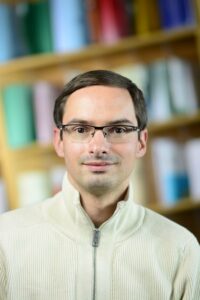
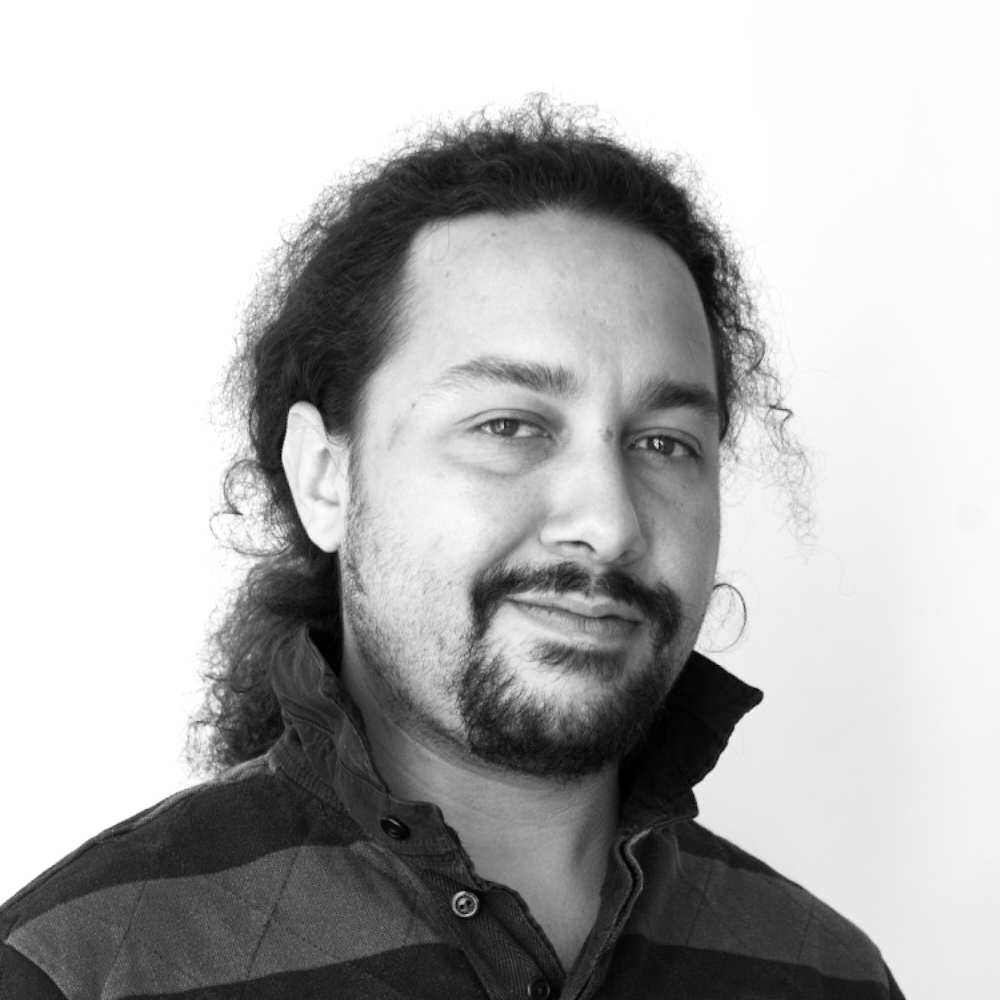
Nikhil Swamy is a Senior Principal Researcher at Microsoft Research (MSR) Redmond, affiliated with the RiSE group. His work focuses on Programming Languages , Program Verification , and Security , with a strong emphasis on type systems, program logics, and building provably secure programs for web applications, browsers, cryptography, and low-level systems code. His research involves F* , a programming language and verification tool for higher-order, effectful programs. He co-leads Project Everest , which aims to deploy provably secure communication software. His contributions span proof automation, secure multi-party computation DSLs, and separation logic frameworks. He has authored multiple papers at top venues like POPL, PLDI, CPP, and ESOP, and has participated in organizing and mentoring roles at conferences such as ICFP and PLMW. He is actively involved in advancing formal verification techniques and their practical applications in software security.
Jérémie Gaidamour is a CNRS Research Engineer at the Institut Élie Cartan de Lorraine (University of Lorraine), specializing in high-order numerical methods and high-performance computing (HPC) for quantum mechanics simulations. His work focuses on parallel solvers for large sparse linear systems, including hybrid direct-iterative methods and algebraic multigrid (AMG). PhD Thesis: "Conception d'un solveur linéaire creux parallèle hybride direct-itératif" (2009, Université de Bordeaux I) His research interests span Quantum Mechanics (Bose-Einstein condensates via Gross-Pitaevskii equations), Numerical Methods (pseudo-spectral techniques, domain decomposition), and High-Performance Computing (MPI, parallel algorithms). Recent publications highlight advancements in fractional gradient flows and energy-minimizing AMG preconditioners for nonlinear Schrödinger equations. Software development projects include BEC2HPC (parallel spectral methods for BECs), MueLu (AMG solver in Trilinos), and HIPS (hybrid direct-iterative sparse solver). He has contributed tutorials on HPC tools (MPI, OpenMP, GPU/Xeon Phi) and participated in Grid'5000/IDRIS support teams.
Richard Alligier is a lecturer and researcher at Ecole Nationale de l'Aviation Civile (ENAC) specializing in artificial intelligence applications for air traffic management. His work bridges machine learning, optimization algorithms, and trajectory prediction to address critical challenges in conflict detection and resolution for both manned and unmanned aerial systems. Research Focus : Trajectory prediction, conflict resolution, UAV collision avoidance, mass/thrust estimation, and uncertainty modeling Key Collaborations : Nicolas Durand, David Gianazza, Xavier Olive, Kim Gaume, Sarah Degaugue His publications (2011–2024) analyze trajectory uncertainty quantification, 3D maneuver visualization, and human-aligned deconfliction strategies using ADS-B data. Notable contributions include: Dual-horizon collision avoidance algorithms integrating human factors High-confidence interval prediction frameworks Wind parameter extraction from flight paths Machine learning models for climb/descent phase optimization Awarded the 2019 best paper in trajectory prediction , his work emphasizes operational alignment between automated systems and air traffic controller decision-making. He employs GPU acceleration, metaheuristics, and deep learning architectures while maintaining a focus on practical implementation through partnerships with ONERA and ISAE-SUPAERO.
Zoltán Szabó is a Professor of Data Science at the Department of Statistics, London School of Economics (LSE). His research focuses on statistical machine learning, particularly kernel methods, information theoretical estimators, and scalable computation. He has held roles such as Programme Director of the MSc Data Science program and is actively involved in academic service, including Area Chair positions at top conferences like NeurIPS and ICML. His work bridges theory and applications, with contributions to fields like safety-critical learning, economics, climate data analysis, and natural language processing. Education and Affiliations: While specific educational details are not explicitly listed, his career trajectory indicates advanced training in statistics and machine learning. He is affiliated with the LSE's Department of Statistics and the Turing Institute, contributing to academic leadership and interdisciplinary projects. Research Interests: His work emphasizes kernel-based methods, including kernel Stein discrepancies, Hilbert-Schmidt independence criteria, and shape-constrained prediction. Applications span finance, economics, robotics, and environmental data analysis. Recent projects include developing outlier-robust estimators and scalable algorithms for high-dimensional data. Publications: His recent work includes advancements in kernel methods for dependency testing, shape-constrained regression, and robust estimation. Key themes include improving computational efficiency, theoretical guarantees for kernel approximations, and practical applications in interdisciplinary domains. Awards and Grants: While no explicit awards are listed, his contributions to NeurIPS (e.g., a Best Paper Award in 2017) and his role in securing grants (e.g., Europlace Institute of Finance) highlight his impactful research. He also serves on editorial boards, including JMLR and ACM Transactions on Probabilistic Machine Learning. Students and Labs: Supervises PhD students in areas like functional data analysis and scalable computation. Collaborates with researchers on projects such as distribution regression and safety-critical learning, contributing to both theoretical and applied outcomes.
Patrick Martineau is a Researcher and lecturer affiliated with the Polytechnic School of the University of Tours (EPU) and the Fundamental and Applied Computer Science Laboratory (LIFAT, UR 6300). He holds roles as Corporate Relations Manager in the IT department of Polytech Tours and CASCIMODOT SF Manager. His teaching focuses on Operating Systems, UNIX, OpenMP, and GPU Parallel Programming. Research interests include Scheduling in Grid Computing, High-Performance Computing (HPC), and Big Data. He is associated with the LIFAT laboratory, contributing to both fundamental and applied computer science research.
Tamy Boubekeur is a Senior Director and Senior Principal Research Scientist at Adobe Research France, leading Adobe Research France and the Computer Graphics Group at Telecom Paris. He is a part-time Professor in Computer Science at École Polytechnique, Institut Polytechnique de Paris. Previously, he held roles including Full Professor at Telecom Paris (on leave since 2019), Chief Scientist at Allegorithmic, and Founder/Director of the Computer Graphics Group at Telecom Paris. His work bridges academia and industry, focusing on 3D computer graphics, geometry processing, and real-time rendering. Education: HDR (2012), PhD (2007), and MSc (2004) in Computer Science from French universities. Professional experience spans roles at INRIA, TU Berlin, and UBC. He has been involved in significant projects like FEMONUM (medical modeling) and 3DLife (European project). Research interests include 3D shape analysis, rendering techniques, GPU programming, and global illumination. His work emphasizes efficient processing of geometric data, with applications in medical imaging, animation, and real-time visualization. Notable contributions include SQEM for shape approximation and pioneering point-based global illumination techniques. Honors include multiple Best Paper Awards at Eurographics, SIGGRAPH, and Shape Modeling International. He has supervised numerous PhD students, many of whom now hold academic and industry roles. Boubekeur has chaired major conferences (e.g., EGSR 2019) and served on program committees for SIGGRAPH, EUROGRAPHICS, and others.
Elsa L Gunter is a Research Professor and Senior Lecturer at the University of Illinois at Urbana-Champaign's Department of Computer Science. Her academic background includes a Ph.D. in Mathematics from the University of Wisconsin, Madison. She leads research in formal methods, programming languages, and human-computer systems. Research Interests: Her work spans formal verification, programming language semantics, automated theorem proving, and security. She develops tools for compiler optimization verification, human-automation system safety, and concurrent program analysis. Key projects include the VeriF-OPT framework for parallel program transformations and Tutela for human-computer system protection analysis. Publications Focus: Her recent research emphasizes compiler verification, concurrency models, and human-system interaction. Work includes symbolic analysis for CSP, dependently-typed session systems, and robustness verification for safety-critical interfaces. Awards: Most Influential 10 Year Paper award at Requirements Engineering (RE 2010) EASST Best Software Science Paper at ETAPS 2001 Best Paper award at Fourth International Conference on Requirements Engineering (2000) Funding and Labs: Secured NSF grants for projects on parallel program verification ($450K) and human task analysis ($500K). Leads the Formal Methods and Verification Lab, collaborating with NASA on NextGen aviation systems. Student Advising: Mentored 7 PhD graduates and 12+ Master's students. Current PhD candidates work on secure distributed programming (Dennis Griffith) and formal methods for concurrent systems (Liyi Li, Susannah Johnson).
Alvin Cheung is an Associate Professor at the University of California at Berkeley, affiliated with the Department of Electrical Engineering and Computer Sciences (EECS). He leads the Data Systems and Foundations group, Programming Systems group, Sky Lab, and SLICE Lab, while also serving as a faculty affiliate at the Berkeley Institute for Data Science. His research focuses on integrating data management, programming languages, and software systems to develop tools for scalable data processing pipelines and improved data programming experiences. PhD students advised: Sahil Bhatia, Mick Kittivorawong, Jongseok Park Research keywords include Data Management , Programming Languages , Program Synthesis , Formal Verification , and Machine Learning . His recent work explores Verified Lifting techniques for database applications, stencil computations, and cloud systems, alongside novel programming paradigms for geospatial video analytics and speculative decoding. His publications from 2023-2025 demonstrate trends in LLM-driven code optimization , automated SQL equivalence , and neural code generation across domains like tensor operations and geospatial video systems. Notable scientific achievements include the Dahl-Nygaard Prize (2024) , VLDB Early Career Award (2023) , and CHI Best Paper Award (2021) .
Tiago Cogumbreiro is an Assistant Professor at the University of Massachusetts Boston, specializing in formal methods and high-performance computing. His research focuses on detecting concurrency errors like data-races and deadlocks in GPU programs, with a strong emphasis on static analysis and correctness proofs. PhD from University of Lisbon Postdoc at Georgia Tech and Rice University Research assistant at Imperial College London His work spans program analysis, GPU programming, and parallel computing, addressing challenges in concurrency verification and error localization. Key contributions include developing tools for static analysis of GPU kernels, formalizing automata theory in education, and creating frameworks for model checking hierarchical systems. Recent publications highlight trends in data-race detection via array projections, concurrency repair with resource cost analysis, and mechanized computational theory for educational purposes. His personal website details ongoing projects and affiliations with the Software Verification Lab .
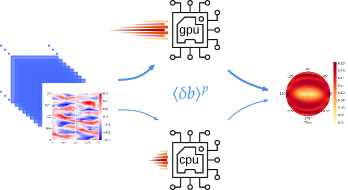
Romain Vallon is a researcher at the Laboratory of Fluid Mechanics and Acoustics (LMFA - UMR 5509) at École centrale de Lyon, France, specializing in computational methods for fluid dynamics research. His research focuses on: Computational Fluid Dynamics High-Performance Computing Turbulence Research Numerical Simulation GPU Programming Fluid Mechanics Vallon's work centers on optimizing computational methods for processing large datasets generated by Direct Numerical Simulations (DNS). His research involves developing strategies to accelerate Python CPU code using GPU technology for calculating structure functions, significantly reducing processing time from hours or days to more manageable durations. This work is particularly relevant for researchers dealing with large-scale fluid dynamics simulations who need efficient data processing methods. As a member of the Turbulence & Instabilities research team, Vallon contributes to advancing computational techniques in fluid mechanics. His upcoming seminar scheduled for July 18, 2025 at École centrale de Lyon demonstrates his active engagement in sharing research findings with the academic community.
Bruno Gaujal is a Research Professor at Inria Grenoble-Rhône-Alpes, affiliated with Université Grenoble Alpes. He obtained his PhD from the University of Nice in 1994 under François Baccelli's supervision and has held positions at AT&T Bell Labs, INRIA, and École Normale Supérieure de Lyon. He previously led the MESCAL (now POLARIS) research group focused on large-scale computing until 2015. His research interests center on performance evaluation, optimization, and control of discrete event dynamic systems with stochastic inputs. Specific areas include: Markov Chains and Markov Decision Processes Reinforcement Learning and stochastic optimization Queueing theory and scheduling algorithms Energy-efficient computing in distributed systems Game-theoretic approaches in network optimization Gaujal's recent publications show strong emphasis on reinforcement learning applications in queueing networks, energy optimization for real-time systems, and scalable algorithms for Markov Decision Processes. His work bridges theoretical frameworks like Whittle indices with practical implementations in cloud computing and distributed systems. He has supervised numerous PhD students including Nicolas Gast (now Inria researcher), Anne Bouillard (Huawei researcher), and Emmanuel Hyon (Paris Nanterre professor). Current students include Hélène Arvis and Romain Cravic. Gaujal co-founded RTaW, a startup specializing in real-time network design tools. At Inria, he leads research in the POLARIS group, focusing on optimization methods for large-scale distributed computing infrastructures. His work involves collaborations with 85+ co-authors across institutions globally.
Pierre-Antoine Thouvenin is an Assistant Professor at Centrale Lille, a prestigious engineering school within the University of Lille community in France. He is a member of the SigMA team from the CRIStAL laboratory (Centre de Recherche en Informatique, Signal et Automatique de Lille), where he conducts research on inverse problems with applications to remote sensing and astronomy. His academic journey began with an Engineering degree in Electronics and Signal Processing from INP - ENSEEIHT Toulouse in 2014, followed by a Master of Science in "Signal, Image, Acoustics" from the same institution. He completed his Ph.D. in "Signal, Image, Acoustics" from Institut National Polytechnique de Toulouse between 2014 and 2017, with research focused on modeling spatial and temporal variabilities in hyperspectral image unmixing. Thouvenin's research interests span several interconnected areas in signal processing and computational imaging. His primary focus is on solving inverse problems, particularly in the context of radio-interferometric imaging for astronomy and hyperspectral image unmixing for remote sensing applications. He has made significant contributions to developing advanced algorithms for handling spectral variability in hyperspectral data and for image reconstruction in radio astronomy. His work often combines Bayesian statistical methods with optimization techniques to address challenging high-dimensional problems. A distinctive aspect of his research is the development of distributed and parallel computational methods that enable processing of extremely large datasets that would be intractable with conventional approaches. An analysis of his recent publications reveals a strong trend toward developing distributed and parallel computational methods for large-scale inverse problems. His work increasingly integrates machine learning approaches, particularly neural networks, with traditional signal processing techniques. There's a clear progression from theoretical developments in hyperspectral unmixing to practical applications in astronomy, particularly through his involvement in the ORION-B project where he applies statistical methods to infer physical conditions in star-forming regions. His most recent work demonstrates sophisticated integration of spatial regularization techniques with Bayesian inference for astrophysical parameter estimation. Prix Léopold Escande from Institut National Polytechnique de Toulouse (2017) - awarded to the best PhD theses defended at INPT Prix de l'Institut National Polytechnique de Toulouse (2014) - awarded for outstanding academic achievement during engineering studies Thouvenin is actively involved in mentoring the next generation of researchers. He currently co-supervises the PhD thesis of Pierre Palud on "Statistical methods for model inversion and spatial distribution of physico-chemical properties of the molecular cloud Orion B" as part of the CNRS 80|Prime project OrionStat. His research is supported through various academic collaborations and projects, including the ORION-B project led by Jérôme Pety, which involves molecular line observations from the IRAM-30m Large Program. He has established productive international collaborations, particularly with researchers at Heriot-Watt University in Edinburgh where he worked as a Research Associate from 2017-2019. Thouvenin is a key member of the SigMA team within the CRIStAL laboratory, a joint research unit between Centrale Lille, INRIA, and University of Lille. His work often intersects with the ORION-B project, where he collaborates with astrophysicists to develop statistical methods for inferring properties of Galactic and extra-galactic star forming regions. This interdisciplinary environment fosters innovation at the intersection of signal processing, statistics, and astronomy. He has developed expertise in translating complex statistical methodologies into practical computational tools that address real-world challenges in both remote sensing and astronomical imaging.