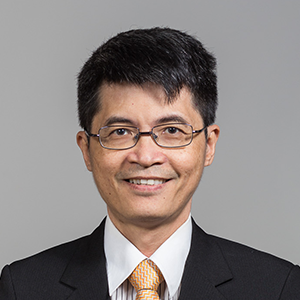
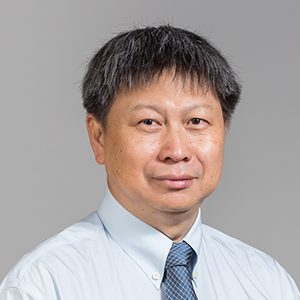
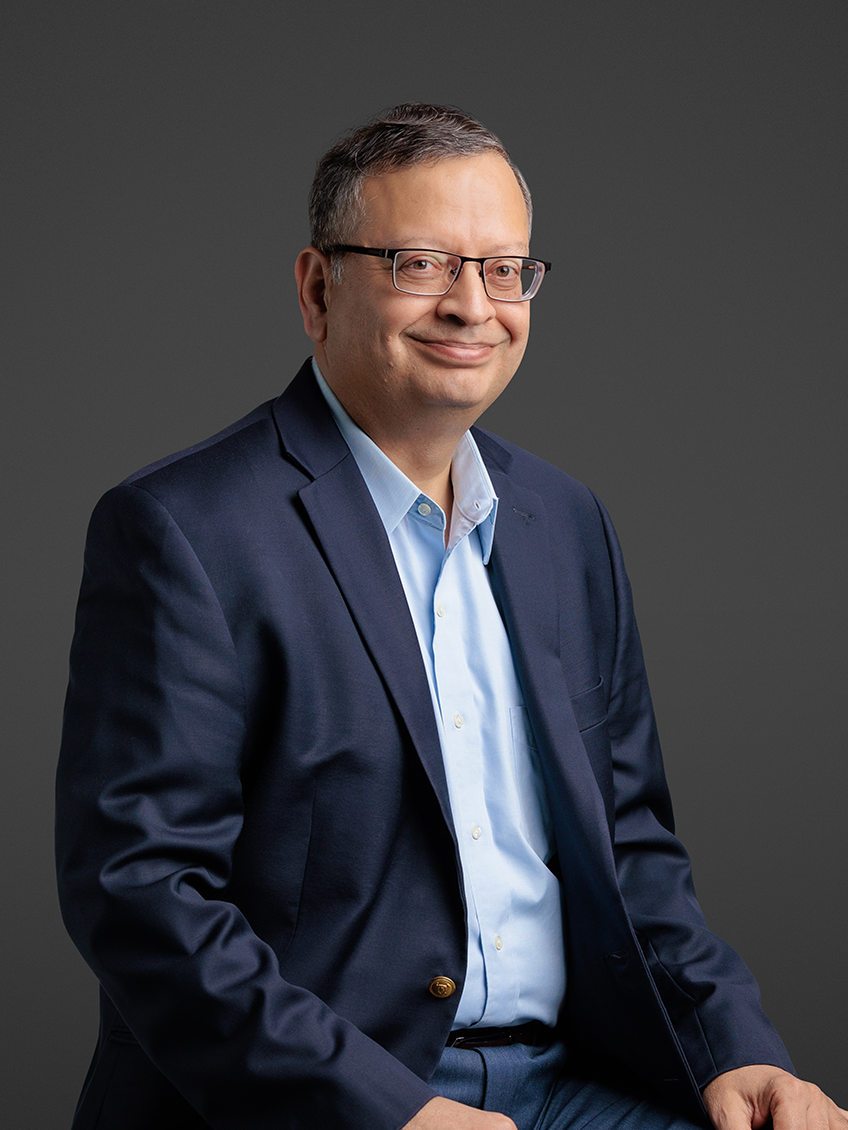
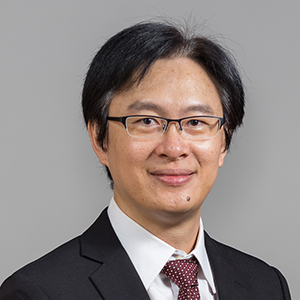
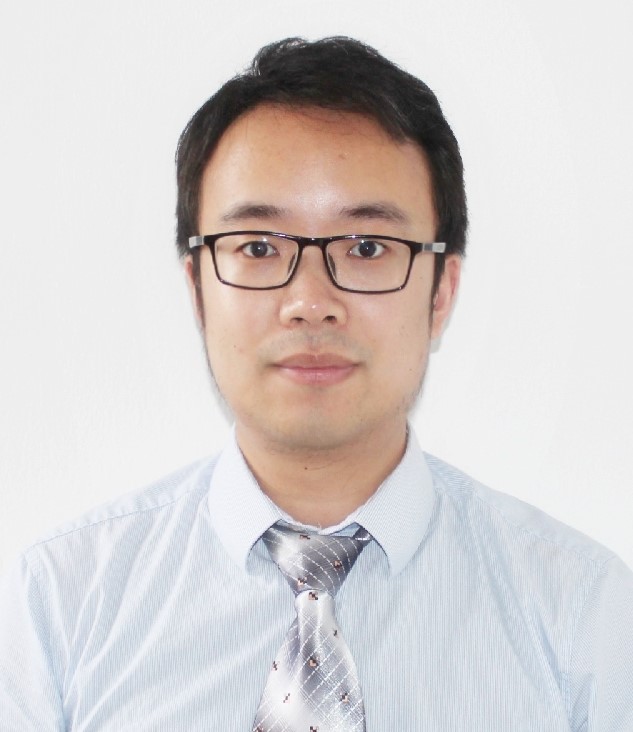
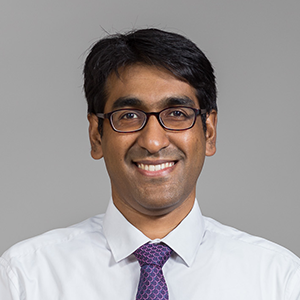
Kian-Lee Tan is a Tan Sri Runme Shaw Senior Professor and Professor of Computer Science at the School of Computing, National University of Singapore (NUS). He holds a Ph.D. (1994), M.S. (1992), and B.Sc. (1st Class Honours) from NUS. His academic career spans decades of contributions to database systems and data analytics. Ph.D. in Computer Science, National University of Singapore (1994) M.S. in Computer Science, National University of Singapore (1992) B.Sc. in Computer Science (1st Class Honours), National University of Singapore As a leading researcher in database systems, Tan focuses on query processing and optimization in multiprocessor/distributed systems, database performance, security, and multimedia information retrieval. His work extends to computational biology applications like genome databases and real-time influence analysis on social streams. His recent publications highlight trends in GPU-accelerated graph analytics, trajectory pattern mining, and computational journalism. These works emphasize parallel processing, performance optimization, and social/media data analysis. IEEE Technical Achievement Award (2013) President Science Awards, Singapore (2011) NUS Graduate School Excellent Mentor Award (2010/2011) Outstanding University Researchers Award (1997/1998) Tan has supervised numerous research projects and mentored students contributing to database systems. He secured significant grants including a US$1 million Ripple Foundation grant (2024) for financial technology education. His editorial roles include ACM Transactions on Database Systems and IEEE Transactions on Knowledge and Data Engineering. He leads the FinTech Lab at NUS Computing and has served on the VLDB Endowment Board (2012-2017). His work bridges database foundations with emerging applications in AI, fintech, and computational journalism.
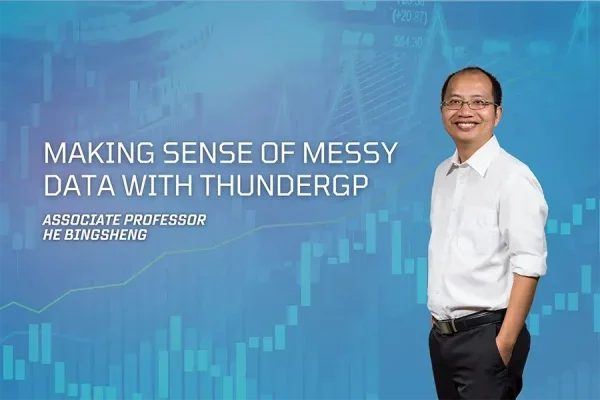
Professor He Bingsheng is a faculty member at the Department of Computer Science, School of Computing, National University of Singapore (NUS), where he also serves as Vice-Dean, Research. He holds a Ph.D. in Computer Science from the Hong Kong University of Science & Technology (2008) and dual bachelor’s degrees in Computer Science & Engineering and Business Administration from Shanghai Jiao Tong University (2003). Education: Ph.D. (HKUST, 2008), B.E./B.B.A. (SJTU, 2003) Prior roles: Microsoft Research Asia (2008-2010), Nanyang Technological University (NTU), Singapore His research focuses on Big Data management systems , particularly on cloud computing and emerging hardware architectures (GPU, FPGA, NVM). He has led projects like ThunderGP, a novel FPGA-accelerated graph processing framework achieving 419x speedup for Covid-19 prevalence estimation. His work spans parallel/distributed systems and graph algorithms , with publications in ACM SIGMOD, VLDB, SC, and IEEE Transactions. The selected articles highlight his contributions to GPU/FPGA optimization , LLM applications , and graph analytics . He has received multiple best paper/demo awards, including IEEE/ACM ICCAD (2017), IEEE IC2E (2016), and ACM SIGMOD (2008). As a PC chair and editorial board member for journals like IEEE TPDS and TCC, he actively shapes academic discourse. PhD Students: Chen Xinyu, Tan Hongshi Courses Taught: CS4225/5425 Big Data Systems for Data Science
Rajesh Krishna BALAN is a Full-Time Professor at the School of Computing and Information Systems (SCIS) at Singapore Management University (SMU) . His research focuses on Human-Machine Collaborative Systems , Pervasive Sensing , and Health & Wellbeing technologies. Based in Singapore, he leverages mobile computing to address urban sustainability and quality-of-life challenges. PhD from Carnegie Mellon University (2006) Specializes in WiFi sensing , VR/AR , and health monitoring Advises PhD students in areas like urban mobility , empathetic design , and cyber-physical systems Beyond academia, BALAN's work bridges ubiquitous computing and public health , with applications in ageing populations , mental health analytics , and smart city optimization . His recent publications highlight cross-disciplinary approaches to sleep analysis , group behavior modeling , and contactless physiological sensing . BALAN actively contributes to educational technology through projects like Technology-Enhanced Learning frameworks. He is also a mentor in collaborative research areas including biomedical informatics and lifestyle monitoring , with a focus on mobile GPU optimization and low-power systems .
Thorsten Koch serves as Head of the Department of Applied Algorithmic Intelligence Methods within the Division of Mathematical Algorithmic Intelligence at Zuse Institute Berlin (ZIB). His research spans mathematical optimization, energy systems modeling, quantum computing applications, and scientometrics. Koch leads significant research projects including FAN (focusing on AI in scholarly communication), UNSEEN (energy scenarios), HPO-NAVI (research software visibility), and Multi-Energy Models for European Energy System Planning. Koch's research interests center on developing advanced optimization algorithms for complex systems, particularly in energy networks and scientific data analysis. His work bridges theoretical mathematics with practical applications in gas network optimization, wind farm design, portfolio management, and quantum computing. He has pioneered methods for large-scale mixed-integer programming, scenario generation, and the integration of machine learning with traditional optimization techniques. His recent publications demonstrate growing emphasis on quantum optimization, scientometrics, and the application of AI to scientific communication infrastructure. His publication trends reveal a strategic expansion from traditional mathematical optimization into quantum computing applications and scientific data infrastructure. Recent work shows increasing collaboration across disciplines - connecting energy systems analysis with financial modeling, integrating machine learning with optimization solvers, and applying computational methods to scientometrics. The 15 most recent articles highlight three major thrusts: quantum optimization (33%), energy systems modeling (27%), and scientific data infrastructure (40%), reflecting his leadership in both theoretical algorithm development and practical implementation for societal challenges. Koch actively contributes to research infrastructure through leadership roles in projects like KOBV (Berlin-Brandenburg Cooperative Library Network), HDC (Humanities Data Centre), and CIB (future library networks). His work on the DeepGreen initiative focuses on establishing legally secure workflows for implementing open-access components in scientific publication licensing agreements, demonstrating his commitment to open science principles and research data management.
Trevor E. Carlson is an Assistant Professor at the School of Computing, National University of Singapore (NUS), focusing on high-efficiency microarchitectures, hardware/software co-design, and secure chip design for IoT and server applications. He earned his Ph.D. in Computer Science from Ghent University (2014) and B.Sc./M.Sc. in Electrical & Computer Engineering from Carnegie Mellon University (2002/2003). Research Interests include energy-efficient processors, secure computing platforms, neuromorphic accelerators, and fast simulation methodologies. He co-developed the Sniper Multi-Core Simulator used globally for performance/power evaluation. Scientific Awards : Best Paper Award, International Conference on Embedded Computer Systems (2016) Best Paper Award, International Symposium on Performance Analysis of Systems and Software (2013) Heidelberg Laureate Forum participation (2015) HiPEAC Technology Transfer Award for Sniper Simulator (2013) Current Research involves secure Systems-on-Chip (SOCure project), hardware security for IoT, and simulation methodologies. He leads a lab with researchers working on topics like Capstone for trustless secure memory access and LABS for laser fault injection benchmarks.
Ooi Beng Chin is a Professor at the School of Computing , National University of Singapore (NUS). He holds concurrent roles as an adjunct Chang Jiang Professor at Zhejiang University, Visiting Distinguished Professor at Tsinghua University, and Director of NUS AI Innovation and Commercialization Centre in Suzhou, China. He earned his B.Sc. (1st Class Honours, 1985) and Ph.D. (1989) from Monash University, Australia. His research spans database systems, blockchain, machine learning, and large-scale analytics , focusing on system architectures, security, and cross-domain applications. Notable contributions include initiating the Apache SINGA distributed deep learning platform and developing Blockbench, the first blockchain benchmarking system. He also co-founded MZH Technologies (2018) for healthcare analytics. Key publications highlight his work in blockchain-database integration, AI for healthcare/finance, and 5G-enabled data systems. Awards include the ACM SIGMOD EF Codd Innovation Award (2020), Singapore President's Science Award (2011), and fellowships from SNAS, IEEE, ACM , and SAEng (2023). He leads the Singapore Blockchain Innovation Programme (SBIP) and contributes to industry collaborations with healthcare institutions and financial organizations. Fellow, Singapore National Academy of Science (SNAS) Fellow, IEEE Fellow, ACM Singapore President's Science Award, 2011 IEEE Kanai Award, 2012 NUS Outstanding Researcher Award, 2013 ACM SIGMOD EF Codd Innovation Award, 2020 Foreign Member, Chinese Academy of Sciences, 2023
Anthony TUNG Kum Hoe is a Professor in the Department of Computer Science at the National University of Singapore (NUS), where he has established himself as a leading researcher in database systems and data mining. He is also affiliated with the NUS Graduate School for Integrative Sciences and Engineering and serves as a SINGA supervisor. His educational background includes a Ph.D. in Computer Science from Simon Fraser University (2001), an M.Sc. in Information Systems & Computer Science from NUS (1998), and a B.Sc. with 2nd Class Upper Honours in Information Systems & Computer Science from NUS (1997). Professor Tung's research spans several interconnected areas within database systems and data mining. His primary focus is on developing efficient methods for indexing and searching complex data structures including time series, trajectories, trees, graphs, and high-dimensional objects. He has pioneered work in visual query processing, keyword search, and ranking systems. His GENIE (Generic Inverted Index) and LAMP (semi-Lazy Mining Paradigm) projects represent significant contributions to big data analytics, particularly in handling the 'variety' aspect of big data by providing unified frameworks for processing diverse data structures while preserving semantic meaning. His research bridges theoretical database concepts with practical applications in visual data mining, collaborative analytics, and just-in-time model construction. His recent publications reveal a clear evolution from traditional database research toward more complex analytics on diverse data types. While maintaining his core expertise in database indexing and query processing, his work has expanded to incorporate machine learning techniques, particularly in areas like nearest neighbor search, anomaly detection, and predictive analytics. There's a noticeable trend toward interdisciplinary applications, with publications spanning computer vision, natural language processing, transportation systems, and social computing. His research group consistently publishes in top-tier venues including SIGMOD, VLDB, ICDE, and KDD, demonstrating both theoretical rigor and practical relevance. 2005 Best Paper Award for 'Indexing DNA Sequences Using q-grams' 2007 Invited panel speaker on 'Advice for a successful database researcher career in Asia' at SIGMOD 2010 Guest Lecturer for VLDB Database School 2012 VLDB 2012 Research PC Co-chairs 2015 10 Years Best Paper Award, DASFAA 2015 Invited to SIGMOD 2008 and SIGKDD 2008 Program Committees Professor Tung has supervised numerous PhD students and research associates throughout his career, including notable researchers like Zhang Zhenjie (recipient of the 2007 President Graduate Fellowship) and Wang Nan (published in SIGMOD'08). His research group has been consistently productive, with students publishing in top conferences including SIGMOD, ICDE, and VLDB. His professional service is extensive, having served as PC Chair for COMAD'06, Research PC Co-chair for VLDB 2012, and on program committees for virtually all major database and data mining conferences over the past two decades. His research has been supported by various grants that have enabled significant contributions to database technology. His GENIE and LAMP projects represent a cohesive research direction focused on developing systematic approaches to big data analytics. GENIE provides a unified platform for storage and retrieval of big data with various structures, while LAMP introduces a novel paradigm for predictive analytics that combines the strengths of lazy and eager learning approaches. These projects have evolved to incorporate GPU acceleration and parallel processing capabilities, reflecting his commitment to addressing real-world scalability challenges in data-intensive applications.
TAN Tiow Seng is an Associate Professor at the School of Computing, National University of Singapore . He holds a Ph.D. in Computer Science from the University of Illinois Urbana-Champaign (1993), an M.Sc. in Computer Science from NUS (1988), and a B.Sc. in Mathematics & Computer Science from NUS (1984). Research Interests : Design of geometric algorithms for GPU acceleration Applications in interactive graphics, visualization, and game development Development of robust GPU software for geometric computation Selected Publications demonstrate expertise in Delaunay triangulation, Voronoi diagrams, convex hulls, and GPU-based distance transforms. His team pioneered GPU-accelerated mesh refinement techniques and parallel recurrence optimization. Scientific Awards : NUS/SOC Teaching Excellence Award (1999, 2004, 2022) C. W. Gear Outstanding Graduate Student Award (UIUC, 1992) National University Overseas Graduate Scholarship (1988–1992) Data Processing Managers’ Association Award (1984) Industry Contributions : Holds five US/Singapore patents Chairman/co-founder of G Element Pte Ltd , a graphics/visualization company Served as expert panel member for Media Development Authority (MDA) funding evaluations
Rakesh Nagi is a Professor and Head of the Engineering Systems and Design Pillar at Singapore University of Technology and Design (SUTD), where he joined in August 2023. He concurrently holds the Donald Biggar Willett Professorship at the University of Illinois, Urbana-Champaign (UIUC), on leave. His academic leadership includes serving as Department Head of Industrial and Enterprise Systems Engineering at UIUC (2013–2019) and as Interim Director of the Illinois Applied Research Institute (2016–2018). Previously, he was Chair of Industrial and Systems Engineering at the University at Buffalo (SUNY) from 2006 to 2012. Education: PhD (1991) and MS (1989) in Mechanical Engineering from the University of Maryland, College Park, with work at the Institute for Systems Research and INRIA, France. BE (1987) in Mechanical Engineering from the University of Roorkee (now IIT Roorkee), India. Research focuses on Data Science, Machine Learning, Operations Research, GPU-accelerated computing, and military applications. Key areas include Big Graphs, High-level Information Fusion, Production Systems, and Multi-Agent Systems. His work often leverages parallel computing and optimization techniques. Recipient of prestigious awards: IISE David F. Baker Award (2022), INFORMS Koopman Award (2021, 2018), and multiple DARPA Graph Challenge recognitions. Contributions span over 100 peer-reviewed articles in top journals (e.g., Operations Research, IEEE Transactions) and conferences. Research projects include Hybrid AI/ML-Optimization for cloud workflows, GPU-accelerated algorithms for multi-target tracking, and interventions against illicit supply chains. Active collaborations with IBM-Illinois and NSF-funded initiatives address strategic resource allocation and network analysis. Labs/Teams: Leads the Engineering Systems and Design Pillar at SUTD and coordinates interdisciplinary projects at UIUC’s Coordinated Science Laboratory.
ZHENG Baihua serves as Professor of Computer Science at Singapore Management University's School of Computing and Information Systems (SCIS), concurrently holding leadership roles as Associate Dean for SCIS Post-Graduate Research Programmes and Director of the Master of Science in Computing programme. Currently on leave but maintaining full-time faculty status, his academic career spans over two decades with foundational training from Hong Kong University of Science and Technology. Professor Zheng's research program integrates artificial intelligence, data science, and urban computing to solve critical challenges in mobility and sustainability. His expertise centers on trajectory data management, social network analysis, and spatio-temporal modeling, with significant contributions to trajectory compression algorithms, influence minimization in social networks, and real-time traffic prediction systems. His work bridges theoretical database innovations with practical applications in smart city infrastructure and public health interventions. Analysis of recent publications (2024-2025) reveals a dominant focus on physics-informed trajectory processing, GPU-accelerated indexing for high-dimensional data, and transformer-based models for urban mobility prediction. Key trends include the fusion of graph neural networks with spatio-temporal dynamics, novel approaches to contact tracing through timeline graphs, and differentiable search techniques for structured data discovery. These works consistently target real-world deployment in transportation systems and epidemic control. No scientific awards are documented in available institutional records. Information regarding student supervision, research grants, laboratory facilities, or collaborative teams remains unspecified in current public profiles.
Dr. Kok Lim Low serves as a Senior Lecturer in the Department of Computer Science at the School of Computing, National University of Singapore (NUS), where he has established himself as a leading researcher in computer graphics and computational art. With over two decades of academic service, he bridges technical innovation with creative applications while maintaining exceptional teaching standards. His educational foundation includes: Ph.D. in Computer Science from the University of North Carolina at Chapel Hill (2006) M.Sc. in Computer Science from the National University of Singapore (1997) B.Sc. (Honours) in Computer Science from the National University of Singapore (1996) Dr. Low's research centers on computational approaches to visual media, with three interconnected pillars: Computational Art explores algorithmic generation of artistic papercraft and pop-up books; Real-Time Rendering develops GPU-accelerated global illumination techniques; and Computational Photography enhances image aesthetics through depth adaptation and recomposition. His work consistently merges mathematical rigor with artistic sensibility, producing methods that automate creative processes while preserving aesthetic integrity. Analysis of his recent publications reveals an evolving trajectory from core graphics research toward computer science education innovation. While maintaining strong output in computational art (evident in his 2014-2015 pop-up design papers), his 2021-2023 work demonstrates significant contributions to CS1 pedagogy through educational tool development and curriculum design, reflecting his dual commitment to research and teaching excellence. His scientific recognition includes: Three Faculty Teaching Excellence Awards from NUS School of Computing (2014, 2016, 2017) Best Paper Award at Computer Graphics International Conference (2015) Honorable Mention at ACM CHI Conference (2011) As an educator, Dr. Low has advised Ph.D. and Master's students while serving on numerous thesis committees. He teaches foundational courses like Programming Methodology to freshmen alongside advanced topics including Graphics Rendering Techniques, demonstrating equal commitment to novice and advanced learners. His student mentorship extends to undergraduate research projects across the computing curriculum. Dr. Low operates within NUS Computing's collaborative research ecosystem, where his interdisciplinary work connects computer science with art and design disciplines. His laboratory contributions focus on developing practical computational tools that transform creative workflows while advancing theoretical understanding of visual media processing.
Associate Professor at Nanyang Technological University's College of Computing and Data Science, serving as Deputy Director of the Cyber Security Research Centre @ NTU (CYSREN) and Associate Director of the NTU Centre Computational Technologies for Finance (CCTF). His research focuses on building trustworthy, efficient, and intelligent systems with emphasis on security and privacy across AI, robotics, and cloud infrastructures. Educational background: Bachelor of Physics, Peking University, 2011 Ph.D. in Electrical Engineering, Princeton University, 2017 Research spans five core domains: Generative AI Safety (vulnerability identification, safety testing, misuse detection), Deep learning security (adversarial examples, backdoor attacks, privacy protection), Robotics security (perception system attacks, safety testing), Machine learning optimization (workload scheduling, acceleration), and Computer architecture security (side-channel defenses, cloud security). His work bridges theoretical security with practical system implementations across diverse applications. Recent publications (2024-2026) reveal intense focus on securing generative AI systems, particularly text-to-image models and large language models, with significant contributions to red teaming methodologies, backdoor attack mitigation, and multimodal security. Emerging trends show expanding research into autonomous vehicle security and privacy-preserving machine learning with cryptographic techniques. Key awards include: Distinguished Artifact Award (CCS 2024) Stamatis Vassiliadis Best Paper Award Nominee (FPL 2024) Outstanding Paper Award (ACL 2024) Distinguished Artifact Award (Usenix Security 2024) Actively supervises PhD students and research staff while leading multiple high-impact grants: Ongoing: NRF CREATE Quantum Security (2025-2029), Continental NTU Corp Lab Automotive HPC (2025-2028), CRPO EV Charging Security (2025-2027) Completed: MoE AcRF Tier2 IP Protection (2022-2025), NTU S-Lab Efficient GPU Scheduler (2020-2025) Leads research within CYSREN and TAICeN (Trustworthy AI Centre NTU), directing interdisciplinary teams that investigate security threats across AI deployment stacks while developing practical defenses for real-world systems.
Weng Fai WONG is an Associate Professor and Deputy Head of the Department of Computer Science at the School of Computing, National University of Singapore (NUS). With over three decades of academic experience at NUS, he has established himself as a leading researcher in computer systems, with particular expertise in the interface between hardware and software stacks. Dr. Wong received his B.Sc. (First Class Honors) and M.Sc. from the National University of Singapore in 1989 and 1991 respectively, followed by a Dr.Eng.Sc. from the University of Tsukuba in 1993. His academic journey began at NUS (then DISCS) in 1985, where he progressed from student to Senior Tutor in 1989, and later returned from Japan as a Lecturer in 1993. Dr. Wong's research focuses on systems and networking, with special emphasis on hardware-software co-optimization. His current research interests include approximate computing , neuromorphic computing , and hardware acceleration for deep learning. His work spans computer architecture , embedded systems , compilers and runtime systems , and programming languages . He has made significant contributions to optimizing software for novel hardware including FPGAs, GPUs, and non-volatile memory technologies. His recent publications (2023-2025) demonstrate a strong focus on energy-efficient AI computing, with particular emphasis on spiking neural networks, large language model acceleration, and FPGA-based solutions for graph processing and machine learning workloads. His research shows a clear trajectory toward green AI through hardware-software co-design that minimizes energy consumption while maintaining computational effectiveness. Dr. Wong is a Member of ACM and a Senior Member of IEEE. His paper "Exploiting half precision arithmetic in Nvidia GPUs" was a Best Paper Finalist at the IEEE High Performance Extreme Computing Conference (HPEC 2017). As Deputy Head of the Department of Computer Science at NUS, Dr. Wong plays a key leadership role in academic administration while maintaining an active research program. His work has been supported by numerous research grants, though specific details are not provided in the available information. Dr. Wong leads research in the Systems & Networking area at NUS, with particular focus on the Hardware-Software Interface Laboratory. His team explores innovative approaches to bridge the gap between theoretical computer science and practical hardware implementation, with applications spanning from edge computing to large-scale data centers.
Prateek SAXENA is an Associate Professor in the Computer Science Department at the School of Computing, National University of Singapore. He serves as Co-Director of the CRYSTAL Centre and teaches courses including CS3235 Computer Security and CS5562 Trustworthy Machine Learning. His research spans multiple domains within computer security and systems. Dr. SAXENA earned his Ph.D. in Computer Science from the University of California, Berkeley (2012), an M.S. in Computer Science from Stony Brook University (2007), and a B.E. in Computer Engineering from the University of Pune, India (2004). His research focuses on building better security and privacy in practical systems through principled approaches combining formal reasoning, tools and ideas from several computer science domains. Current research thrusts include machine learning security, decentralized systems security, security processors, and automatic program translation. His work has resulted in several practical artifacts powering real-world systems, including spinoffs like Zilliqa and Kyber Network. His publication record demonstrates consistent high-impact research across security domains including web security, blockchain, trusted execution environments, and machine learning security. His work shows a progression from foundational web security research to cutting-edge work on blockchain systems and machine learning security. MIT Technical Review, Top 10 Innovators under 35, Asia - 2017 Security and Privacy Research Award, 2018 Young Research Award, NUS, 2017 David J. Sakrison Memorial Prize for outstanding doctoral work, UC Berkeley, 2012 AT&T Best Applied Security Research Paper Award 2010 Dr. SAXENA has advised numerous successful PhD students who have gone on to prominent positions at Microsoft Research, Georgia Tech, ETH Zurich, and industry leaders like Zilliqa and Kyber. His research has been generously supported by CISCO Research, Google, Intel, Symantec, MoE-Singapore, DSO Labs, and NRF-Singapore. He leads the KISP Lab (Keep It Secure and Private), which has produced influential research in blockchain, trusted execution environments, and security tools.
Associate Professor at the Department of Computer Science , School of Computing , National University of Singapore . Research focuses on systems-level optimization across hardware-software stacks, including GPU computing, memory systems, and approximate computing for deep learning. Dr.Eng.Sc. (University of Tsukuba, 1993) M.Sc. (NUS, 1991) B.Sc. (NUS, 1989) Research interests span computer architecture , compiler design , and embedded systems , with recent emphasis on precision analysis , variable precision arithmetic , and deep learning approximation using hardware accelerators . Publications reveal trends in GPU optimization, memory management for NAND flash, and fault-tolerant cloud-based GPU computing. Scientific Recognition: Best Paper Finalist at IEEE High Performance Extreme Computing Conference (HPEC) 2017 Professional memberships include ACM Member and IEEE Senior Member , with editorial contributions to Software Practice and Experience . Teaching experience includes courses like CS2100 Computer Organisation and CS5250 Advanced Operating Systems .