Arris S. Tijsseling is a researcher active in engineering fields, particularly focusing on transient pipe flow , water hammer , and fluid-structure interaction . His work spans both theoretical and applied research, with a strong emphasis on computational fluid mechanics and dynamics. Field of Interest : Transients, One-Dimensional Modeling, Hydrodynamics Course Taught : Analysis 3 (2013–2025) His recent research includes GPU-accelerated simulations of two-phase flows and the development of Lagrangian particle models for moving boundary problems. Publications highlight collaborations with international researchers and institutions, addressing complex challenges in pipeline systems and pressure wavefronts. Tijsseling has supervised 19 formal advisees and contributed to datasets in transient flow analysis. His work has been cited over 3,700 times, reflecting significant impact in fluid dynamics and pipeline engineering.
Sander Stuijk is an associate professor at the Department of Electrical Engineering of Eindhoven University of Technology, chairing the Electronic Systems (ES) group. His research focuses on design methodologies for embedded signal processing applications in high-tech systems like industrial manufacturing, automotive, and healthcare. He develops high-level compilation strategies for heterogeneous multi-core platforms, with interests in efficient code generation and resource allocation. Prof. Stuijk holds leadership roles including chairing the ES group, serving on the board of 4TU.NIRICT (a Dutch ICT research consortium), and coordinating the Embedded Systems master program. He contributes to national ICT initiatives through ICT Next Generation, a network for mid-career academics. He also chaired the Department Council (2016-2018) and participates in TPC activities. His research spans streaming applications, real-time systems, and multi-processor architectures. Notable projects include the PROMES initiative (programming embedded multi-media systems) and the MNEMEE project (automated MPSoC design). His work emphasizes predictable and energy-efficient computing, with applications in healthcare monitoring (e.g., remote PPG, thermal imaging) and reconfigurable systems. Prof. Stuijk has advised numerous PhD/Master students and led projects like FORSEE, VSM, and SenSafety. His publications include over 70 journal/conference papers, covering topics like neuromorphic computing, GPU optimization, and medical signal processing. He actively engages in academic service, including organizing SCOPES workshops and serving on editorial boards.
Simon Portegies Zwart is a Professor of Computational Astrophysics at Leiden University's Leiden Observatory (Sterrewacht Leiden). His research focuses on computational gravitational dynamics, stellar evolution, and supercomputing applications in astrophysics. He leads the AMUSE software framework project, enabling multi-domain astrophysical simulations. He holds editorial roles at the Journal of Computational Astrophysics and is a member of the Royal Netherlands Academy of Arts and Sciences (KHMW). Education: PhD in Astrophysics (Utrecht University) Research Interests: His work spans numerical stellar dynamics, galaxy evolution, and high-performance computing. Notable contributions include simulating star cluster dynamics, supermassive black hole interactions, and planetary system formation. He emphasizes sustainable computational practices and interdisciplinary software development. Key Contributions: Developed the Starlab, AMUSE, and OMUSE software packages Recipient of the HPC Innovation Excellence (2020) and SURF Innovation Challenge (2015) awards Advising & Grants: Supervises multiple PhD candidates and postdocs, focusing on computational astrophysics and oceanography. Collaborates with institutions like RIKEN (Japan) and the Massachusetts Institute of Technology (MIT). Labs & Teams: Leads the Computational Astrophysics group at Leiden, specializing in gravitational dynamics and multi-physics simulations.
Jacco Bikker is a Senior Lecturer at the Academy for AI, Games & Media at Breda University of Applied Sciences, where he founded the CMGT program (formerly known as IGAD) in 2006 together with Frank Peters. With a background in the Dutch game industry as a rendering specialist, he brings practical industry experience to his academic role. Dr. Bikker defended his doctoral thesis on Ray Tracing in Real-time Games in 2012 at Delft Technical University under the supervision of Professor Erik Jansen. His research focuses on cutting-edge graphics techniques including real-time ray tracing on CPU and GPU, path tracing for real-time global illumination, denoising, and artificial intelligence applications for rendering challenges. His work bridges the gap between academic research and industry implementation, with strong emphasis on knowledge transfer to students and practitioners. His research output shows a clear progression from foundational rendering techniques to advanced real-time ray tracing implementations. Early work focused on path guiding and BRDF matching algorithms, while more recent contributions center on practical implementations of real-time ray tracing systems. His research spans both theoretical computer graphics and practical software optimization challenges faced in game development. As an active member of the graphics community, Bikker serves in leadership roles including as Paper Chair for High Performance Graphics (HPG) '24 and as Chair for ACM/Eurographics committees. He regularly presents at industry events and has contributed to press discussions about game development education and technology. Dr. Bikker is the creator of the TinyBVH open-source library, a single-header dependency-free BVH construction and traversal library that has gained significant traction in the graphics community. The library is used by projects including EA SEED's Gigi and Unity implementations, demonstrating its practical impact on real-world graphics applications.
Prof. Gabriele Keller is a Professor of Software Technology at Utrecht University's Faculty of Science. She previously held roles at the University of New South Wales, including Associate Professor (2014–2018) and Senior Lecturer (2001–2013). Her research focuses on functional programming, type systems, high-performance computing, and verification methodologies. Current projects include Accelerate (a parallel computing DSL embedded in Haskell) and Cogent (a systems programming language with formal verification features). Education: PhD in Natural Sciences (Technische Universität Berlin, 1999): 'Efficient Compilation of Nested Data-Parallelism for Distributed Memory Machines' MSc Computer Science (Technische Universität Berlin, 1995) Research Interests: Type systems and correctness guarantees Parallel computing and GPU programming Formal verification of systems software Domain-specific languages for high-performance domains Professional Activities: Co-Chair, IPN Working Group on Equity, Diversity & Inclusion Editor, Journal of Functional Programming Member, IFIP Working Group 2.8 Selected Projects: Accelerate: Optimized parallel computing for Haskell Cogent: Verified systems programming with uniqueness types EmoSTL: Formal verification of game emotion logic
Bob Dröge is a researcher specializing in computational infrastructure and astronomical data systems. His work focuses on optimizing scientific software stacks for high-performance computing (HPC) environments, particularly through collaborations like the Euclid Mission and the EESSI project . He has contributed to distributed data processing systems, GPU-accelerated simulations, and mission-critical archival infrastructures. Research Interests Supercomputing and HPC architecture Scientific software deployment and optimization Astronomical data distribution networks Dark matter cosmological surveys Key Collaborations include the Euclid Mission (European Space Agency) and EESSI (European Environment for Scientific Software Installations). His publications span conferences like ADASS (Astronomical Data Analysis Software and Systems) and journals such as Software - Practice and Experience .
Dip Goswami is an Associate Professor in the Electronic Systems group at Eindhoven University of Technology (TU/e), focusing on embedded control systems for automotive and robotics applications. His work spans resource-aware design, multi-core predictability, and cyber-physical systems (CPS) optimization. He has co-authored over 80 conference papers, 20 journal articles, and received three best paper awards (ASP-DAC 2011, EUC 2010, ECYPS 2019). His research integrates predictable multi-core architectures distributed automotive control image-based control systems real-time optimization . Recent publications highlight advancements in nonlinear MPC for water networks DNN-driven motion control multi-rate sensor fusion parallel GPU solvers resource-constrained CPS . Scientific Awards: Best Paper Award at ECYPS 2019 Best Paper Award in ASP-DAC 2011 Best Paper Award in EUC 2010 He actively contributes to journal editorial boards (e.g., Microprocessors and Microsystems ) and serves on program committees for DAC, DATE, RTSS, and EMSOFT. Goswami's work aligns with UN SDG 4 (Quality Education) and SDG 9 (Industry Innovation), bridging control theory and embedded systems implementation.
Alessandro Gabbana is a University Researcher at Eindhoven University of Technology, affiliated with the Applied Physics and Science Education school and the Computational Multiscale Transport Phenomena group. His research focuses on computational physics, particularly lattice-Boltzmann methods and fluid dynamics. He co-leads the HTCrowd project (2020–2026), developing high-tech platforms for human crowd flow monitoring and modeling. Research interests span: Advanced computational fluid dynamics (CFD) Turbulence subgrid modeling using data-driven approaches Pedestrian dynamics and probabilistic flow analysis Neural network integration with kinetic schemes His publications demonstrate strong emphasis on improving lattice-Boltzmann boundary conditions, turbulence closures, and large-scale pedestrian dynamics simulations.
Jiri Kosinka is an Associate Professor at the University of Groningen , affiliated with both the Faculty of Science and Engineering and the Faculty of Medical Sciences/UMCG . His work bridges Scientific Visualization and Computer Graphics with Robotics and Image-Guided Surgery . Research spans computational geometry, medical visualization, and fluid dynamics Key contributions in subdivision surfaces, distance transforms, and point cloud processing Recent publications focus on 3D surgical planning , turbulent flow simulations , and medical image analysis . His work integrates deep learning techniques for geometry processing and virtual reality applications in medical education. Notable collaborations include interdisciplinary projects with UMCG and Siemens . Awards and grants are not explicitly listed in the provided data.
Huiqing Wang is a researcher at Eindhoven University of Technology, specializing in room acoustics and computational methods. She holds a Ph.D. in Aerospace Engineering from TU/e (2021), a Master's from Delft University of Technology, and a Bachelor's in Aircraft Design from Nanjing University of Aeronautics and Astronautics. Education: Bachelor of Engineering (2012), Nanjing University of Aeronautics and Astronautics Master of Science (2015), Delft University of Technology Ph.D. (2021), Eindhoven University of Technology Her research focuses on room acoustics simulation, time-domain discontinuous Galerkin methods, and open-source software development. She has contributed to Python-based wave propagation models and hybrid acoustic modeling approaches integrating image source, diffusion equation, and Galerkin methods. Recent publications highlight trends in open-source acoustic software, reproducibility challenges, and collaborative platforms for room acoustics. She actively promotes open research practices in computational acoustics. Key Research Areas: Room Acoustics Simulation Discontinuous Galerkin Methods Acoustic Diffusion Equations Open-Source Software Development Wave-Based Modeling Reproducibility in Acoustic Research
Ivo Gabe de Wolff is a Lecturer at the Faculty of Science , Utrecht University , affiliated with the Information and Computing Sciences department. His primary role involves teaching and research in the Software Technology group. Research: Focus on high-performance computing , compilers , and programming language design , particularly via projects like Accelerate (a domain-specific language for GPU computing in Haskell) and Helium (a Haskell compiler). Teaching: Contributes to courses such as Concurrency , Language-Based Security , and Security in Computer Science bachelor's and master's programs. Contact: Office located in Buys Ballot Building , Room 570, Princetonplein 5, Utrecht, Netherlands.
Dr. Hongyang Cheng is an Assistant Professor at the University of Twente's Civil Engineering & Management Department, specializing in multi-scale modeling of granular materials and Bayesian uncertainty quantification for geotechnical applications. His work bridges physics-based and data-driven approaches, focusing on soil mechanics from quasi-static to dynamic behaviors, with applications in geohazard mitigation, laser sintering, and pharmaceutical powder processing. Education: PhD in Multiscale characterization of geosynthetic-reinforced soil, Hiroshima University (2013–2016) Master's in Civil Engineering, Hiroshima University (2011–2013) Dr. Cheng's research spans multi-scale modeling of granular materials, including Discrete Element Method (DEM) and Finite Element Method (FEM) integrations, and Bayesian uncertainty quantification frameworks like GrainLearning. His work addresses geotechnical challenges such as dike safety, offshore infrastructure resilience, and soil-structure interactions under extreme loading, utilizing machine learning surrogates to enhance computational efficiency. Scientific awards include the Japanese Government Scholarship (2011), Best Student Paper at DEM2016, and IACMAG Excellence in 2022. He leads EU-funded projects like POSEIDON (offshore geohazards) and TUSAIL (upscaling particle systems), supervises postdocs/PhD students, and co-leads Working Group 1 for COST Action ON-DEM to promote open-source DEM tools. Recent publications emphasize DEM's role in bio-cemented soils, vegetation effects on soil mechanics, and sintering kinetics. His teaching includes undergraduate courses on Soil Mechanics and graduate-level GeoRisk Management, integrating probability theory, stochastic modeling, and Python-based risk assessment tools.
H.J. Sips is a Professor at Delft University of Technology within the Faculty of Electrical Engineering, Mathematics and Computer Science. His research focuses on data-intensive systems, parallel graph analytics, and distributed systems, with a strong emphasis on algorithm design and performance optimization. Academic Rank: Professor Institution: Delft University of Technology School: Faculty of Electrical Engineering, Mathematics and Computer Science His research interests include: Algorithms Distributed Systems Graph Analytics OpenCL and GPU Programming Social Network-based Sybil Defense His publications highlight trends in high-performance computing, with a focus on portability, parallelization, and hardware acceleration. Notable topics span Intel Xeon Phi architecture, acoustic ray tracing, and robust Sybil defense mechanisms under dynamic network churn. H.J. Sips has contributed to editorial activities for the Lecture Notes in Computer Science journal since 2009. His work demonstrates a sustained commitment to advancing computational efficiency and distributed system security.
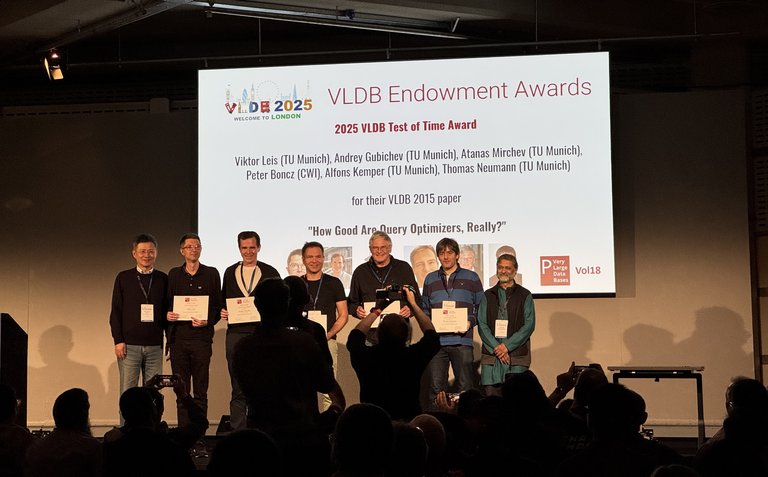
Peter Boncz is a Professor in the special chair of Large Scale Analytical Database Systems at Vrije Universiteit Amsterdam and leads the Database Architectures (DA) research group at CWI (Centrum Wiskunde & Informatica), the Netherlands' national research institute for mathematics and computer science. He serves on the CWI management team and is actively involved in multiple research initiatives and industry collaborations. Professor Boncz is internationally recognized as a pioneer of column-store databases, introduced through his PhD project MonetDB. His research spans database architecture, query processing optimization, and analytical database systems. His work on vectorized query processing with his first PhD student Marcin Zukowski has become foundational in modern analytical databases including BigQuery, Databricks, Snowflake, and DuckDB, which has millions of monthly downloads. Current research focuses include GPU data processing, vector search optimization, confidential computing, and graph data management. Boncz's recent publications reveal strong trends toward optimizing database systems for modern hardware architectures, particularly GPUs and cloud CPUs. His work bridges theoretical database concepts with practical implementation, focusing on performance optimization through innovative data layouts, compression techniques, and hardware-aware processing. The research shows a clear trajectory from foundational database concepts toward specialized optimization for emerging hardware and application requirements. VLDB Test of Time Award 2025 (second time, previously won in 2009) CIDR Test of Time Award 2024 ACM Fellow (2022) Humboldt Research Award (2013) ICTRegie Award (2006) Boncz has co-founded six spin-off companies in data systems, including MonetDB BV, and serves as an advisor to ventures like Databricks Corp. His research is supported by multiple external funding projects including Actian Research Grants, Databricks research agreements, and Motherduck Service Agreements. He has advised numerous students, with Marcin Zukowski being notably mentioned as his first PhD student who co-developed vectorized query processing. As leader of the Database Architectures research group at CWI, Boncz oversees a team focused on pushing the boundaries of database technology. The group maintains close ties with industry through projects with Databricks, Motherduck, and RelationalAI, while continuing to develop open-source technologies like DuckDB. The team is particularly active in GPU acceleration, confidential computing, and graph data management through the Linked Data Benchmark Council (LDBC), which Boncz founded.
Zebin Ren is a PhD Candidate at the Faculty of Science , Vrije Universiteit Amsterdam , specializing in Computer Systems and High Performance Distributed Computing . Research interests focus on: Input/Output Systems for NVMe SSDs Storage Optimization in cloud environments Data Structures for high-throughput systems Operating Systems performance tuning Recent publications highlight trends in storage system characterization for LLMs, GPU interconnect analysis , and Linux scheduler benchmarks . Key methodologies involve open source tools , filesystem design , and high-performance computing .