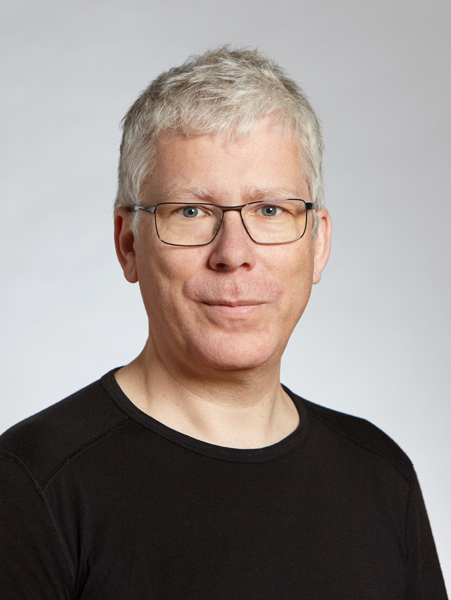
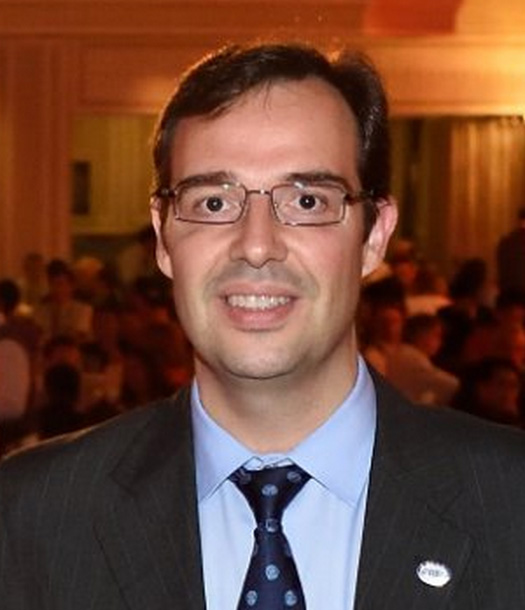
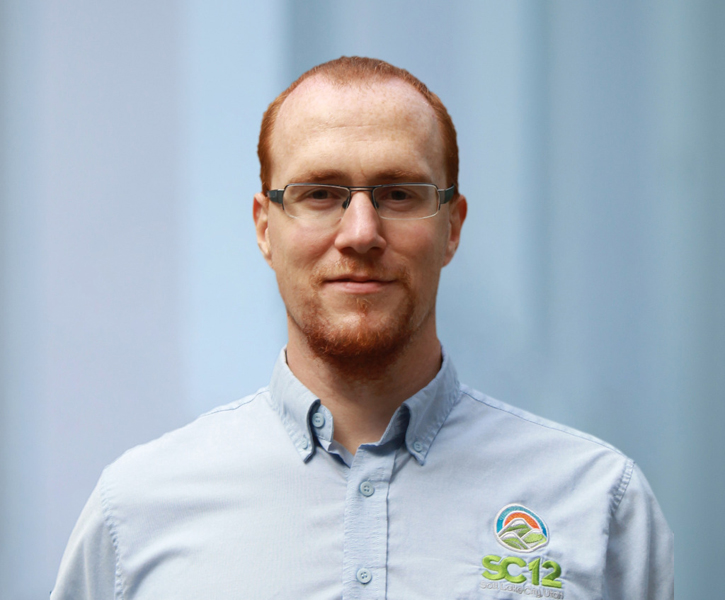
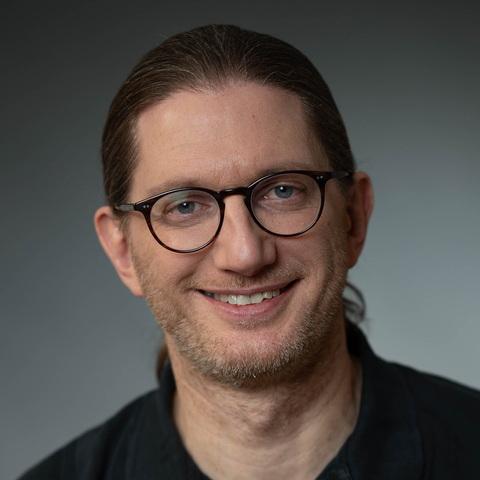
Dominik Schörkhuber is a PreDoc Researcher at the Vienna University of Technology (TU Wien) in the Computer Vision department. With a background in Informatics (BSc, Dipl.-Ing.), he focuses on computer vision applications for autonomous driving, robotics, and human-machine interaction. His work spans driver action recognition, pedestrian prediction, and adaptive lighting systems. Current projects: Empathic Vehicle (2024–2026), SyntheticCabin (2021–2025), SmartProtect (2020–2025) Research themes: Video transformers, synthetic data transfer learning, multi-task learning, and sensor-lighting integration Specializes in 3D sensing, nighttime driving analysis, and mobile video creation tools
Claudia Plant is a Professor in the Faculty of Computer Science , leading the Research Group Data Mining and Machine Learning . Her research focuses on clustering algorithms, data mining, and machine learning applications in areas like biomedical data, wind energy, and causality inference. She has contributed to projects such as Knowledge-infused Deep Learning for Natural Language Processing (2020–2028) and Hybrid Computational Sciences (2021–2021). Plant has authored over 160 publications, with recent work emphasizing deep learning, anomaly detection, and GPU-optimized algorithms. She actively engages in academic activities, including talks on clustering methods and interdisciplinary projects like Governing Algorithms: The Politics of Data and Decision-Making . Her research interests span clustering algorithms , graph neural networks , causality discovery , and ethical digital transformation . Notable projects include causal analysis of wind farm dynamics and AI-enhanced education tools. Plant’s work bridges computational methods with societal challenges, such as empowering marginalized communities through ethical technology adoption.
Marc Pollefeys is a Full Professor of Computer Science at ETH Zurich and Director of the Microsoft Mixed Reality and AI Zurich Lab. He has held roles such as Visiting Professor at Stanford University (2007) and Assistant/Associate Professor at UNC-Chapel Hill (2002–2009). His research focuses on 3D computer vision, robotics, machine learning, and augmented reality. Education: PhD in Computer Science from KU Leuven (1999), followed by postdoctoral research there until 2002. He transitioned to academic roles at UNC-Chapel Hill before joining ETH Zurich in 2007. Research interests include 3D reconstruction, visual localization, SLAM, and applications in archaeology, urban modeling, and robotics. Notable projects include real-time 3D scanning, city-scale reconstruction, and autonomous vision-based drones. Key awards include ACM Fellow (2022), IEEE Fellow (2012), and ERC Starting Grant (2008). He advises numerous PhD students and collaborates with institutions like Google and Microsoft. Labs and teams: Leads the Computer Vision and Geometry (CVG) lab at ETH Zurich and directs the Microsoft Mixed Reality and AI Lab. His work bridges academia and industry, focusing on perception for mixed reality and autonomous systems.
Sylvain Lefebvre is a permanent researcher at INRIA (Institut National de Recherche en Informatique et en Automatique) in France, where he leads the MFX research team since 2018. Previously, he was part of the ALICE group at INRIA Nancy (2009-2018) and the REVES team in Sophia Antipolis (2006-2009). His career includes a postdoctoral position at Microsoft Research Seattle (2005) following his PhD at INRIA Rhones-Alpes under Fabrice Neyret. His educational background includes a PhD in Computer Graphics from Université Joseph Fourier (Grenoble) in 2005, preceded by a Master in Computer Graphics from INP Grenoble in 2001. His habilitation thesis focused on Runtime Texture Synthesis. Lefebvre's research centers on simplifying content creation for highly detailed patterns, structures, and shapes with applications spanning Computer Graphics to additive manufacturing. He develops fast, controllable by-example synthesis approaches that generate content while enforcing user-specified constraints. His work addresses computational challenges through novel data structures and algorithms optimized for GPUs and FPGAs, including his Silice programming language. The ERC-funded ShapeForge project (2012-2017) advanced shape generation for 3D printing, leading to the IceSL software for digital modeling and fabrication. Analysis of his 15 most recent publications reveals a strong focus on additive manufacturing optimization, with recurring themes in structural integrity, material efficiency, and geometric algorithms. His work bridges computer graphics theory with practical fabrication constraints, particularly in microstructure design, slicing techniques, and mechanical metamaterials. The interdisciplinary nature spans computer science, materials engineering, and robotics. EUROGRAPHICS Young Researcher Award (2010) ERC Starting Grant for ShapeForge project (2012) Lefebvre has advised over 25 PhD students and interns including Marco Freire, Thibault Tricard, and Jimmy Etienne. His ShapeForge project received significant ERC funding, supporting research in computational fabrication. He serves on numerous program committees including SIGGRAPH, Eurographics, and SIGGRAPH Asia, reflecting his leadership in the computer graphics community. As leader of the MFX team since 2018, Lefebvre directs research in computational fabrication, focusing on IceSL software development for 3D printing workflows. The team integrates computer graphics techniques with manufacturing constraints, developing tools that simplify complex object design and fabrication while addressing real-world challenges in material usage and structural integrity.
Antonio Plaza is a Full Professor at the University of Extremadura, Spain, and Head of the Hyperspectral Computing Laboratory. With over 600 publications, he is a leading expert in hyperspectral data processing and parallel computing of remote sensing data. He serves as IEEE Fellow and has received numerous accolades, including the 2019 Excellent Teaching Award and multiple Highly Cited Researcher recognitions. Research Interests : His work bridges Hyperspectral Image Analysis , Medical Imaging , and High-Performance Computing . Recent projects focus on 3D anatomical modeling, AI-driven surgical tools, and deep learning applications for aortic dissection segmentation. Scientific Awards : 2019 Highly Cited Researcher (Geosciences) 2015 IEEE Fellow 2019 Excellent Teaching Award 2018 Highly Cited Researcher (Cross-Field) 2002 Best PhD Dissertation, University of Extremadura Editorial Leadership : Served as Editor-in-Chief of IEEE Transactions on Geoscience and Remote Sensing (2013–2017) and held multiple committee roles in IEEE GRSS. His articles reflect a shift from remote sensing to medical imaging, with a focus on Aortic Dissection Segmentation , Skull Reconstruction , and AI-driven Medical Tools .
Torsten Hoefler is a Full Professor of Computer Science at ETH Zurich, Switzerland, with an adjunct appointment in Electrical Engineering. He previously held roles at the National Center for Supercomputing Applications (University of Illinois at Urbana-Champaign) and Indiana University. Full Professor of Computer Science, ETH Zurich (2020–present) Adjunct Professor of Electrical Engineering, ETH Zurich (2020–present) Member at Large, ACM SIGHPC Executive Committee (2013–present) Leadership roles in the MPI Forum and Blue Waters project His research focuses on performance-centric system design , with emphasis on scalable networking, parallel programming models, and performance modeling. Key contributions include the Slim Fly network topology, Data-Centric Python framework, and innovations in parallel graph computations and RDMA-based systems. Recent publications span topics like LLM training networks , quantization geometry , chiplet interconnects , and AI-driven climate modeling , reflecting his interdisciplinary approach combining HPC, AI, and hardware-software co-design. ACM Gordon Bell Prize (2019) ERC Consolidator Grant (2020) IEEE TCSC Award for Excellence (2019) SIAM SIAG/SC Junior Scientist Prize (2012) Latsis Prize of ETH Zurich (2015) He has received multiple best paper awards at top conferences (SC10, SC13, SC14, SC19, IPDPS'15, HPDC'15, OOPSLA'16) and contributed to MPI-3 standardization.
Michael Wimmer is a Full Professor at TU Wien, leading the Rendering and Modeling Group and directing the Center for Geometry and Computational Design. He holds a M.Sc. (1997) and Ph.D. (2001) from TU Wien. His research focuses on real-time rendering, procedural modeling, computational design, and point-based graphics. He has co-authored over 200 papers and the book *Real-Time Shadows*. He serves as Co-Editor-in-Chief of Computer Graphics Forum , chairs SIGGRAPH Asia 2025, and received the Eurographics Outstanding Technical Contributions Award (2023). Education: M.Sc. in Computer Science (1997), TU Wien Ph.D. in Computer Science (2001), TU Wien Research Interests: Real-time rendering and visualization Procedural modeling and computational design Point-based graphics and neural rendering Applications in computer games and urban environments Awards: Eurographics Outstanding Technical Contributions Award (2023) Wolfgang Straßer Award (Best Paper, 2022) Eurographics Fellow (2018) Outstanding Service Award (2012) Advising & Grants: Coordinator of the Special Research Programme Advanced Computational Design Key researcher at VRVis Research Center Labs & Teams: Rendering and Modeling Group Center for Geometry and Computational Design
Univ.Prof. Michael Wimmer is a Professor in the Department of Computer Graphics and Visualization at TU Wien's Faculty of Informatics. His research focuses on real-time rendering, point cloud processing, GPU computing, and computational design. He leads projects involving architectural visualization, thermal simulation, and integrative design frameworks combining 4D sketching with material modeling. His work bridges computer graphics with applications in architecture and engineering. ORCID: 0000-0002-9370-2663 Research Group: Network Lab Recent research emphasizes GPU-accelerated algorithms (e.g., LOD generation for 2 billion points), real-time rendering techniques, and deep learning approaches for surface reconstruction. Collaborations span thermal simulation with civil engineers and 4D design tools for architects. Notable contributions include: Developing PPSurf for detailed surface reconstruction using point convolutions Advancing Vulkan-based rendering pipelines in academic settings Integrating light polarization for HDR imaging His lab explores applications in architectural design metaphors, computational material assessment via GeoRadar, and thermal simulation using precomputed radiative transport. Students under his supervision focus on GPU optimization, 3D reconstruction, and VR ergonomics.
Prof. Lukas Einkemmer is a faculty member at the University of Innsbruck, holding a position in the Institute of Mathematics. He specializes in numerical analysis, plasma physics, and high-performance computing. His work focuses on developing advanced numerical methods for solving complex kinetic equations and PDEs, with applications in plasma simulation and computational fluid dynamics. Education: He earned a PhD in applied mathematics (2014) and MSc in physics (2013) from the University of Innsbruck, alongside BSc in applied mathematics (2010). He completed research stays at UC Merced and holds notable academic awards, including the SciCADE New Talent Award (2015) and participation in the Heidelberg Laureate Forum (2013). Research & Teaching: His research includes exponential integrators, dynamical low-rank methods, and semi-Lagrangian discontinuous Galerkin schemes. He teaches numerical methods, PDEs, and computational courses at both undergraduate and graduate levels. He also leads training programs in parallel computing (OpenMP/MPI) at the University’s Research Center for High-Performance Computing. Publications & Grants: Over 70 peer-reviewed articles in journals like J. Comput. Phys. and SIAM J. Sci. Comput. , focusing on numerical algorithms and their applications. He has secured grants from FWF and other agencies, advancing methods for plasma physics and kinetic theory. Awards & Recognition: Multiple honors, including the Oberwolfach Leibniz Graduate Student award (2014) and sustained scholarship support for academic excellence.
Alexandru Nicolau is a Distinguished Professor and Chair of the Department of Computer Science at the University of California, Irvine (USA), where he has worked since 1992. He previously held positions as Associate Professor (1988–1992) and Assistant Professor (1984–1988) at UC Irvine and Cornell University, respectively. Education : B.A., Brandeis University (1980) MS (1981), Ph.D. (1984), Yale University Research Interests : A leading expert in parallelizing compilers , high-performance computing , and software-hardware co-design , Nicolau pioneered foundational techniques like Percolation Scheduling and Optimal Loop Parallelization . His work enables efficient exploitation of instruction-level parallelism in general-purpose programs, with applications in embedded systems , matrix algorithms , and GPU-based neural networks . He has also contributed to Electronic Design Automation (EDA) and lightweight synchronization protocols . Scientific Awards : IEEE Fellow (2014) ACM SIGPLAN Most Influential Paper (PLDI 20 years) EDAA/IEEE/ACM DATE Most Influential Paper (10 years) ACM ICS Most Influential Paper (25 years) 4 Best Paper awards (VLSI design 2003, ISHPC 2005, CASES 2008, IJCNN 2009) Advising & Grants : He has mentored notable scholars now at Stanford, McGill, and Google, and secured over $20M in funding from NSF , DARPA , and industry leaders like IBM and Intel . His professional service includes chairing ACM ICS’09 and PPOPP’13, and serving on steering committees for LCPC and ICS. Labs & Collaborations : His techniques have been adopted by IBM Watson, Siemens Munich, Fujitsu Labs Japan, and the open-source GCC compiler.
Dieter Schmalstieg is the Alexander von Humboldt Professor of Visual Computing at the University of Stuttgart and an adjunct professor at Graz University of Technology. He leads research in augmented reality (AR), virtual reality (VR), and visualization, with contributions to tracking, rendering, and medical applications. His work spans academia and industry, with over 400 publications and numerous awards, including the IEEE ISMAR Career Impact Award and Fellow of the IEEE. Education: PhD (1997), Habilitation (2001) from Vienna University of Technology. Research: Focuses on AR/VR systems, medical visualization, and real-time graphics. Key projects include the Christian Doppler Laboratory for Handheld AR and collaborations with Qualcomm and VRVis. Awards: START Prize (2002), IEEE Technical Achievement Award (2012), Humboldt Professorship (2023). His teaching includes courses on computer graphics, VR, and real-time rendering. He has advised over 30 PhD students, many of whom hold academic or industry leadership roles. Current research explores situated analytics, mixed reality telepresence (MRUnion), and AR applications in mining and medicine (MiReBooks).
Tekaya Nidham serves as a Junior Researcher at the University of Applied Sciences St. Pölten within the Media Computing Research Group, Institute of Creative Media Technologies, Department of Media and Digital Technologies. Currently pursuing a PhD jointly at FHSTP and TU WIEN, they contribute to interdisciplinary research bridging technology and cultural applications. Education: MScRes in AI for Decision Making (2020-2022) BSc in Business Intelligence (2017-2020) Research focuses on foundational computer vision with applications spanning medical imaging, cultural heritage preservation, and social sciences. Their work integrates GPU computing and multi-modal learning to develop innovative solutions for data representation and AI-driven analysis in marketing contexts. Special emphasis is placed on making complex data tangible through visual analytics. Publication trends demonstrate strong alignment with cultural heritage technology applications, particularly through the 2025 Science Festival contribution on data tangibility systems. This reflects their commitment to translating technical research into public-facing interactive experiences. Scientific Awards: Actively engaged in collaborative research projects including "Visual Analytics and Computer Vision Meet Cultural Heritage," they work within the Media Computing Research Group to advance computational methods for heritage preservation. No formal advising responsibilities or grant management details are currently documented in available sources. Operates within the Media Computing Research Group infrastructure at Campus-Platz 1, St. Pölten, focusing on practical implementation of computer vision systems for real-world cultural and social applications.
Bernhard Kerbl is a Researcher and Teaching Assistant at the Institute of Computer Graphics and Vision, Technical University of Graz (TU Graz). He holds a Master’s degree in Software Engineering and Economics. His research focuses on parallel and distributed processing, with special emphasis on adaptive rendering and GPU optimization under Prof. Dieter Schmalstieg and Dr. Markus Steinberger. His interests include real-time graphics, high-performance rendering, and Virtual Reality (VR). He contributes to teaching by organizing lectures on computer graphics. His recent work involves publications in areas like adaptive radiance caching and distributed rendering systems. Collaborations include projects with industry and academic partners, though specific grants or lab affiliations are not detailed in the provided texts.
Lukas Radl is a University Assistant and PhD Student at the Institute of Visual Computing, Graz University of Technology, where he works on 3D Scene Representations for View Synthesis under the supervision of Markus Steinberger. His research focuses on advancing real-time rendering techniques, particularly in Neural Radiance Fields (NeRF) and Gaussian Splatting, to bridge digital and physical world representation. Education: Master of Science in Computer Science (with distinction), Graz University of Technology, 2018-2023 Bachelor of Science in Software Engineering, Graz University of Technology, 2018-2023 Research Focus: Radl's work intersects Computer Graphics, Computer Vision, Machine Learning, and Parallel Processing. He pioneers practical implementations of Radiance Field Representations, addressing critical challenges in view consistency, anti-aliasing, and real-time performance for interactive applications. His innovations enable robust rendering in virtual reality and complex lighting scenarios through novel geometric and neural approaches. Publication Impact: Recent publications (2024-2025) demonstrate a cohesive trajectory toward production-ready radiance field systems. Key advances include sorting algorithms for view consistency (StopThePop), anti-aliasing frameworks for Gaussian Splatting (AAA-Gaussians), and VR-optimized pipelines (VRSplat). These contributions establish new standards for real-time performance while maintaining visual fidelity across diverse hardware platforms. Scientific Recognition: Dean's List (top 5% of students) at Graz University of Technology (2019, 2020) Mentorship & Service: Radl actively shapes academic discourse as a reviewer for premier venues (CGF, ICCV, TVCG) and mentors students through open projects in real-time rendering. His teaching portfolio spans exercise coordination for core visual computing courses since 2020, with current leadership in Real-Time Graphics and Computer Graphics instruction. He fosters talent through student projects advancing Gaussian Splatting implementations. Research Ecosystem: Embedded in Graz University of Technology's Institute of Visual Computing, Radl collaborates within a specialized team focused on radiance field optimization. The group maintains active pipelines for NeRF and Gaussian Splatting research, with strong industry connections evidenced by his upcoming Meta Reality Labs internship. Current projects target foveated rendering, geometric consistency, and editing capabilities for next-generation AR/VR systems.
Kathrin Hanauer is an Assistant Professor at the University of Vienna, where she is affiliated with the Research Group Theory and Applications of Algorithms and the Research Network Data Science. She conducts research in the design, analysis, and experimental evaluation of fast algorithms, with a focus on Algorithm Engineering connecting theoretical foundations with practical implementations. Her research interests include: Algorithm Engineering for practical algorithm implementation Dynamic algorithms for efficiently handling changing data Graph algorithms and network analysis Reachability problems on directed graphs Ranking problems, particularly the NP-hard Feedback Arc Set problem Network analysis, motif search, and subgraph counting Dr. Hanauer's recent publications demonstrate a strong focus on dynamic graph algorithms, with significant contributions to reachability queries, subgraph counting, and datacenter network optimization. Her work spans both theoretical algorithm design and practical implementation, often with C++ software projects. Notable contributions include the O'Reach algorithm for faster reachability queries in large graphs and several dynamic algorithms for subgraph counting and network analysis. Her scientific contributions: O'Reach: A novel approach to reachability queries in large graphs that outperforms previous methods Dynamic algorithms for four-vertex subgraph counting with efficient update operations Work on demand-aware link scheduling for reconfigurable datacenters Interdisciplinary research on normative reasoning with Aristotelian diagrams Dr. Hanauer actively supervises student research, with numerous completed theses focusing on dynamic graph algorithms, geometric algorithms, and reachability problems. Her lab maintains several software projects related to graph algorithms, including a modular algorithms library for dynamic graphs written in C++ and specialized implementations for reachability queries and subgraph counting.