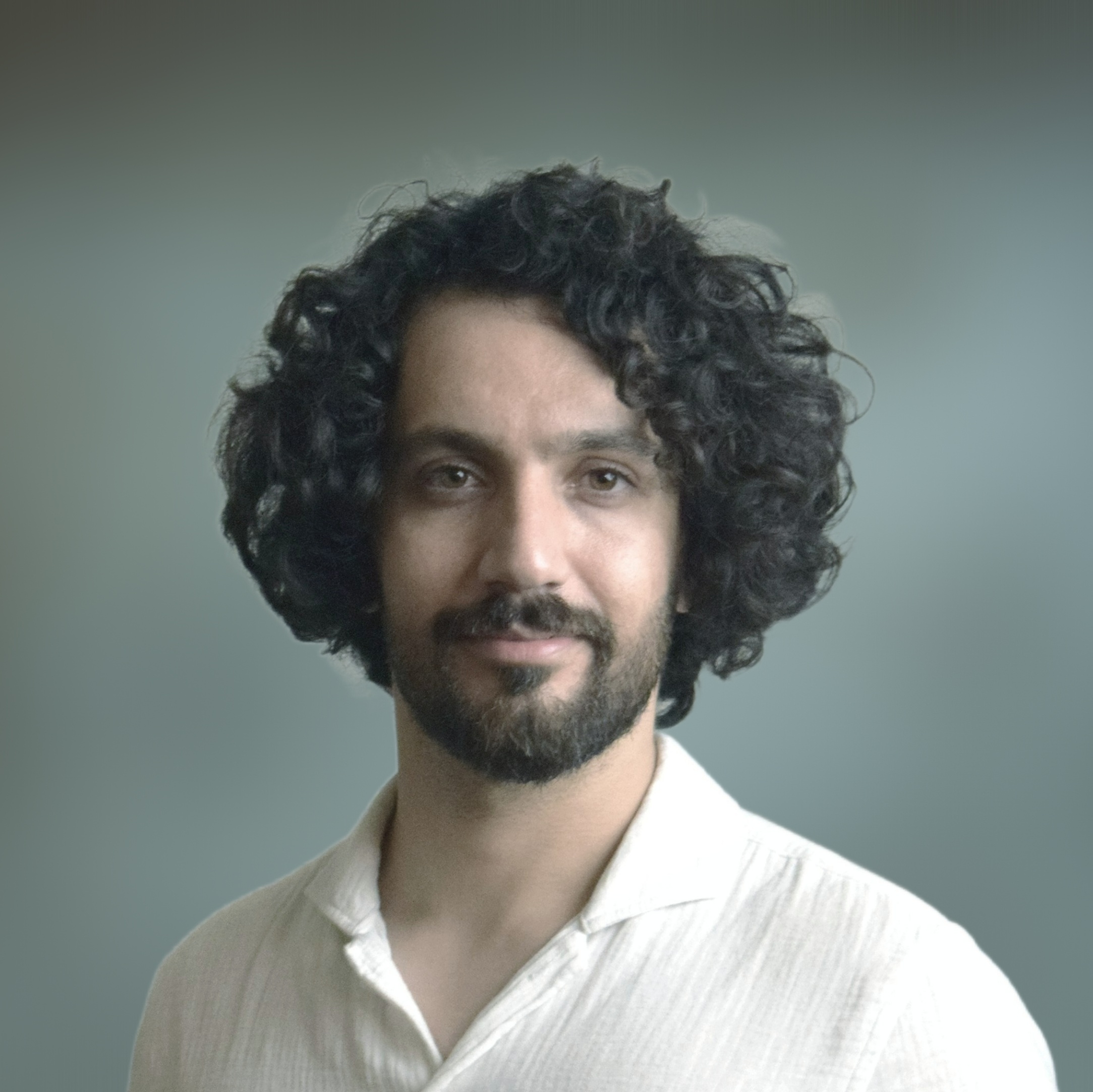
Philipp Fleck is a researcher at the Institute of Visual Computing at Graz University of Technology (TU Graz). His work focuses on augmented reality (AR), virtual reality (VR), and computer graphics, with applications in industrial systems, medical imaging, and situated analytics. He has developed tools like CECILIA and RagRug for game content exploration and spatial data analysis. Research Highlights: AR for heavy machinery safety using laser projections Thermochromic temperature sensing for cost-efficient thermal imaging Compact World Anchors for large-scale localization Situated analytics frameworks for physical-digital integration Scientific Contributions: His publications span 3D reconstruction, SLAM, image processing, and IoT-ready XR-WebApps. Awards include Best Paper at VISAPP 2020 and Honorable Mention at IEEE VR 2024.
Majid Salimibeni is a PostDoc Researcher and Research Fellow at Vienna University of Technology (TU Wien) , affiliated with the Parallel Computing research unit. He previously held a Postdoc position at the Department of Computer Science at the University of Salerno, Italy (2024), and has been a visiting researcher at TU Wien (2023). Currently based in Vienna, Austria, his work focuses on High Performance Computing (HPC) and its interdisciplinary applications. Education: Ph.D. in Computer Science, University of Salerno, Italy (2020–2024) M.Sc. in Computer Engineering (Software), Shiraz University, Iran (2017–2020) B.Sc. in Computer Engineering (Software), University of Birjand, Iran (2012–2016) Salimibeni's research explores High Performance and Parallel Computing , with a focus on optimizing GPU communication via NCCL , improving energy efficiency in heterogeneous computing environments , and enhancing MPI collective algorithms for large-scale systems. His work bridges HPC infrastructure with emerging applications in Distributed Deep Learning and AI . Recent publications highlight his expertise in GPU frequency scaling , NCCL profiling , and process arrival pattern analysis to improve distributed system performance. These works appear at top conferences like IPDPS , Cluster Computing , and ASHPC . Scientific Awards: Best Paper Award, Bench 2022 Salimibeni contributes to academic committees as a program committee member for IEEE ICPP 2025, ISC 2025, and BigHPC 2024, and serves on artifact evaluation committees for ASPLOS and CF conferences.
Bernhard Kerbl is a Post-doctoral Researcher at the Computer Graphics Group (E193-02) within the Faculty of Informatics at Vienna University of Technology (TU Wien). He actively contributes to research in real-time rendering, GPU optimization, and 3D visualization. His work focuses on point cloud rendering, Gaussian splatting, and low-level graphics API development (particularly Vulkan). Core Research Areas: Real-time rendering, GPU programming, point cloud processing, 3D Gaussian splatting, task-based parallelism Projects: IVILPC (2023–2026), ACD (2020–2028), EVOCATION (2018–2022) Key Contributions: Developed real-time rendering techniques for massive datasets, pioneered GPU-based scene streaming architectures, and created novel methods for visual error prediction using machine learning. His work on Vulkan transition in academia received recognition, and he maintains active collaborations in GPU education. Scientific Achievements: Best Paper Award at EGPGV 2024 for "Fast Rendering of Parametric Objects on Modern GPUs" Recipient of Vienna Science and Technology Fund (WWTF) support for graphics research Technical Expertise: Specializes in CUDA, OpenGL/Vulkan APIs, and real-time systems. His work bridges academic research with practical implementations in virtual reality, augmented reality, and GPU education.
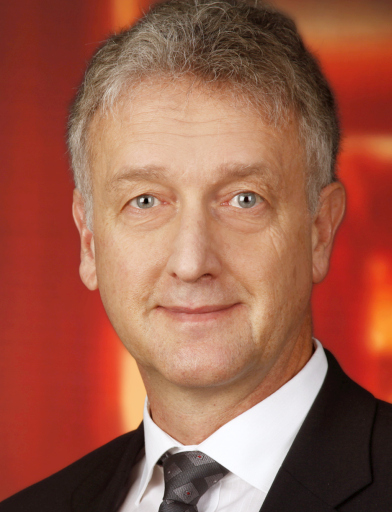
Dieter W. Fellner is a distinguished Professor of Computer Science at Technical University of Darmstadt, Germany, where he serves as Director of the Fraunhofer Institute of Computer Graphics (IGD). He also holds a concurrent position as Professor of Computer Science and Founding Director of the Institute of Computer Graphics and Knowledge Visualization at Graz University of Technology, Austria. With a career spanning over three decades, Fellner has established himself as a leading figure in computer graphics, digital libraries, and related fields. Education: Diploma in Technical Mathematics, Graz (1981) Doktorate (Ph.D.) in Technical Mathematics, Graz (1984) Habilitation, Graz (1988) Professor Fellner's research spans multiple domains within computer science, with a primary focus on computer graphics and its applications. His work encompasses computational geometry, 3D modeling and rendering, virtual and augmented reality, and digital libraries with emphasis on cultural heritage preservation. He has made significant contributions to algorithms for integrating modeling and rendering processes, efficient visualization techniques, and generative modeling approaches. His research extends to practical applications in internet-based multimedia systems, where he coordinated a strategic initiative funded by the German Research Foundation that supported approximately 50 researchers across 21 groups from 1997 to 2005. An analysis of Professor Fellner's publication record reveals a consistent trajectory of innovation in computer graphics and digital document systems. His early work focused on foundational graphics algorithms and videotex systems, evolving toward more complex 3D document modeling, visualization techniques, and digital library architectures. A notable trend is his interdisciplinary approach, bridging computer graphics with applications in cultural heritage, bioinformatics, and brain-computer interfaces. His research demonstrates a progression from theoretical algorithms to practical implementations addressing real-world challenges in information visualization and knowledge management. Scientific Awards: Fellow of the Eurographics Association (2000) Member of the IST Advisory Group for the European Commission (ISTAG) (2007) Best Technical Paper Award (Günther Enderle Award) at Eurographics'98 Conference Honorary Doctorate from the University of Rostock (2019) Throughout his career, Professor Fellner has supervised numerous students and researchers, though specific names are not documented in the available sources. His leadership extends to significant grant activities, most notably coordinating the German Research Foundation's strategic initiative on distributed processing and mediation of digital documents from 1997 to 2005. This major project provided funding for approximately 50 researchers annually across 21 research groups, demonstrating his capacity to lead large-scale collaborative research efforts. He has also served on editorial boards of leading journals and program committees of international conferences, shaping the direction of research in his fields of expertise. Professor Fellner directs the Fraunhofer Institute of Computer Graphics (IGD) in Darmstadt, a prominent research institution focused on applied computer graphics. He also founded and chairs the Institute of Computer Graphics and Knowledge Visualization at Graz University of Technology. These institutions serve as hubs for interdisciplinary research, bringing together computer scientists, domain experts, and industry partners to advance the state of the art in visualization, digital libraries, and knowledge management systems. The teams under his leadership have produced influential work in 3D document processing, cultural heritage digitization, and advanced visualization techniques.
Reinhold Preiner is a Senior Researcher at the Institute for Computer Graphics and Knowledge Visualization, part of the Faculty for Computer Science and Biomedical Engineering at TU Graz. He holds a PhD from TU Wien (2017) focused on dynamic and probabilistic point-cloud processing. His research emphasizes 3D graphics, geometry processing, and cultural heritage digitization. Current projects include Open Reassembly (fragment assembly for archaeological artifacts) and VR4CPPS (virtual reality in production systems). Education: PhD in Computer Science, TU Wien (2017) Dipl.-Ing. (MSc equivalent) in Computer Science, TU Wien Research Interests: Probabilistic geometry processing, interactive visualization, cultural heritage preservation through digital methods, and VR applications. Recent work includes thermal conduction modeling in astrophysical systems and crowd simulation algorithms. Projects & Grants: FWF Research Group A+CHIS (Cultural Heritage Informatics) Collaborative projects with Fraunhofer Institute Labs/Teams: Leads the Visual Computing group at TU Graz, collaborating with international partners on cultural heritage digitization and VR solutions.
Zsolt Horvath is a researcher at TU Wien's Engineering Hydrology Research Section (Forschungsbereich Ingenieurhydrologie). His work focuses on advanced hydrological modeling, flood risk management, and computational fluid dynamics. He specializes in developing high-resolution simulation frameworks for urban/rural flash floods and river flooding, leveraging GPU acceleration and numerical methods like the Saint-Venant system. Expertise: Flood modeling, computational hydrology, geospatial analysis, climate impact studies Key Projects: HORA 3.0 flood risk zoning, interactive flood visualization tools, Kepler shuffle GPU algorithms
Florian Bruckner is a researcher at the Faculty of Physics , affiliated with the Physics of Functional Materials group. His work spans computational physics and materials science, focusing on micromagnetics, spintronics, and inverse design methodologies. He has contributed extensively to spin-wave devices, magnetic field sensing, and 3D-printed magnetic systems. Research Interests: Micromagnetics, Magnonics, Spin-Orbit Torque, Topology Optimization, 3D-Printed Magnets, Computational Modeling. Publication Trends: Recent articles highlight advancements in inverse-design magnonics , spin-wave transducers , and micromagnetic simulations with applications in 5G technology and magnetic sensors. Collaborations with colleagues like Dieter Süss and Andrii Chumak are central to his work. Projects: He leads a research-funded initiative on eddy current solvers for micromagnetic inverse design (2024–2028), focusing on computational frameworks for magnetic device optimization.
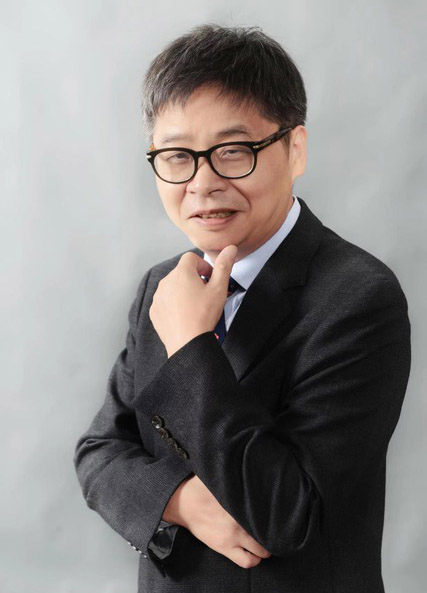
Minyi Guo is a Chair Professor and Head of the Department of Computer Science and Engineering at Shanghai Jiao Tong University (SJTU), China. Previously, he served as Professor and Department Chair at the School of Computer Science and Engineering, University of Aizu, Japan. Dr. Guo received his BSc and ME degrees from Nanjing University, China in 1982 and 1986, and his PhD from University of Tsukuba, Japan in 1998. Dr. Guo's educational background includes: BSc in Computer Science, Nanjing University, China (1982) ME in Computer Science, Nanjing University, China (1986) PhD in Computer Science, University of Tsukuba, Japan (1998) Dr. Guo's research spans multiple areas in computer science, with a primary focus on parallel/distributed computing , compiler optimizations , cloud computing , database systems , and big data . He has published over 400 papers including approximately 150 in major journals and 250 in international conferences, with more than 60 papers in IEEE/ACM transactions and over 100 papers in prestigious conferences. Dr. Guo has also authored 7 books (4 in English, 3 in Chinese) and received 5 best/highlight paper awards from international conferences. Dr. Guo's publication record demonstrates strong contributions across multiple domains of computer systems research. His recent work shows particular emphasis on big data processing, edge computing, graph neural networks, and data center optimization. The publications reveal a consistent trajectory of impactful research in parallel and distributed systems, with increasing focus on AI/ML applications and blockchain technologies in more recent years. Dr. Guo has received numerous prestigious awards and honors: State Technological Invention Award of China (second class award, 2019) Shanghai Technological Invention Award (first class award, 2018) IEEE Technical Committee on Scalable Computing Award for Excellence in Scalable Computing (2018) Ministry of Education Natural Science Award (first class award, 2017) IEEE Fellow (2017) Chief Scientist of National Basic Research Project (973 Program, 2014) Recruitment Program of Global Experts (2010) Excellent Academic Leaders of Shanghai (2010) National Science Fund for Distinguished Young Scholars (2007) As an academic leader, Dr. Guo has served as Department Head for ten years, managing a department with over 100 faculty members and 1000+ students. Under his leadership, the department was promoted to the top tier in China and ranked among the top 40 in the world. He has secured significant research funding, including serving as Chief Scientist of the prestigious 973 Program in 2014 and receiving the National Science Fund for Distinguished Young Scholars in 2007. Dr. Guo has also been selected for the Recruitment Program of Global Experts in China (2010). Dr. Guo actively contributes to the academic community as an associate editor of IEEE Transactions on Parallel and Distributed Systems, IEEE Transactions on Cloud Computing, and Journal of Parallel and Distributed Computing. He has served as General/Program Chair for IEEE conferences and delivered keynote speeches at well-established conferences. His research group has developed practical technologies with industry impact, including 28 licensed patents, some of which have been transferred to companies like Alibaba.
Siegfried Benkner is a full Professor at the Vienna University of Technology (TU Wien) within the Faculty of Computer Science and leads the Research Group for Scientific Computing. His work focuses on high-performance computing (HPC), parallel programming models, runtime systems, and performance optimization for heterogeneous architectures. He has actively contributed to EU-funded projects such as TROCI (2024–2027) and PEPPHER, addressing resilience in critical infrastructures and programmability for exascale systems. His research spans topics like task-based runtime systems (OCR-Vx), autotuning frameworks (Periscope PTF), and performance portability for GPUs/Xeon Phi architectures. Recent interests include accelerating graph neural networks via novel matrix compression formats and cloud-edge continuum systems for eHealth applications. Prof. Benkner has published over 270 articles, with a focus on runtime systems, parallel patterns, and HPC infrastructure. His work emphasizes practical applications, including semantic data management for medical research and cloud-based analytics frameworks for big data processing in cellular networks. He has led multiple EU projects (9 total), including the 2024 initiative on exascale computing and resilience, and frequently presents at conferences like Euro-Par and Supercomputing events. His activities include media engagement on topics like exascale hardware trends and HPC challenges.
Ass.-Prof. Dr. Sashko Ristov is an Assistant Professor at the Department of Computer Science, University of Innsbruck. His research focuses on serverless computing, distributed systems, and workflow orchestration, with applications in cloud computing, healthcare informatics, and high-performance computing. He leads research on federated serverless infrastructures, resilient function choreographies, and digital twins in construction engineering. His work addresses challenges in cross-cloud resource management, workflow scheduling, and anomaly detection in microservices. Recent contributions include frameworks like StoreLess for federated storage orchestration and CODE for cross-platform serverless deployment. Research trends in his publications emphasize bi-objective optimization for batch workflows, GPU-accelerated document processing, and disaster-resilient cloud systems. He actively participates in workflows community summits to advance scientific workflow standards and interoperability. Dr. Ristov has collaborated on projects like the Montage workflow analysis and ECG monitoring systems using serverless architectures. His work bridges theoretical computing models with practical implementations in healthcare and civil engineering domains.
Nidham Tekaya is a Junior Researcher at the Media Computing Research Group within the Institute of Creative\Media/Technologies at St. Pölten University of Applied Sciences since January 2024. Previously, he worked as a Computer Vision Research Engineer at L3i - La Rochelle University from February 2023 to January 2024. Education: MScRes in AI for Decision Making (2020-2022) BSc in Business Intelligence (2017-2020) Research interests include foundational and applicative computer vision, GPU computing, multi-modal learning, medical imaging, cultural heritage digitization, AI in social sciences, and AI for marketing. His current project focuses on Visual Analytics and Computer Vision Meet Cultural Heritage . Publications: 2025: Making data tangible (Demo & Poster) at E³ UDRES² Science Festival
Jiri Filipovic is a researcher affiliated with the Faculty of Computer Science, active in the Research Group Scientific Computing. His work focuses on optimizing computational performance through dynamic autotuning techniques in heterogeneous computing environments. Primary Fields: OpenCL, Autotuning, Dynamic Autotuning Secondary Areas: Graphics Processing Unit (GPU) Computing, Performance Portability, Energy Efficiency In 2020, Filipovic co-authored a significant article in Future Generation Computer Systems presenting a benchmark suite for CUDA/OpenCL kernels with dynamic autotuning capabilities. This work reflects his emphasis on maximizing computational efficiency across diverse hardware architectures. The PlumX Metrics indicate 25 citations, 16 Mendeley readers, and 47 social media shares, highlighting the visibility of his research in high-performance computing communities. No specific scientific awards or formal student advisement activities are documented in the available materials.
Gundolf Haase is a Professor at the Department of Mathematics and Scientific Computing at the University of Graz, Austria. His academic career spans several decades with significant contributions to parallel computing and numerical methods for partial differential equations. He maintains an active research profile with numerous publications in high-impact journals and conferences. His research interests primarily focus on Scientific Computing, High Performance Computing, Parallel Algorithms, Domain Decomposition Methods, Finite Element Methods, Multigrid Methods, and GPU Programming. His work has increasingly incorporated biomedical applications, particularly in cardiac electrophysiology modeling and computational fluid dynamics for cardiovascular applications. Haase's recent publications demonstrate a strong focus on many-core parallelization techniques, particularly for GPUs, with applications spanning from computational cardiology to engineering simulations. His research shows a consistent pattern of developing efficient numerical methods for solving complex partial differential equations across various scientific domains. He teaches courses including Scientific Computing and FEM, Computer Mathematics, Programming in C++, and High Performance Computing at both undergraduate and graduate levels, demonstrating his commitment to education alongside research.
Elke Pilat-Lohinger is a researcher at the Department of Astrophysics, University of Vienna, with expertise in planetary dynamics and exoplanetary systems. Her work focuses on understanding the dynamics of binary star systems, including their impact on planetary habitability, orbital stability, and collisional processes. She leads or contributes to projects like 'Chaotic-Streams & Risks for Earth' (2020-2024) and 'BinaryStars - dyn.Habitability' (2012-2021). Her research integrates computational models like GANBISS for simulating N-body interactions in binary systems. Key research areas include stellar encounters (e.g., Gliese 710's passage through the Oort cloud), collision outcomes in planetesimal disks, and the evolution of terrestrial planets in habitable zones. Her studies address fundamental questions about planetary formation, orbital stability, and the long-term dynamics of planetary systems under gravitational perturbations. Publications highlight analyses of trans-Neptunian objects, protoplanetary disk dynamics, and the interplay between binary star configurations and habitability. Her work bridges astrophysics with planetary science, contributing to both theoretical frameworks and observational interpretations of exoplanetary systems.
Karl Haubenwallner is a PhD student at the Institute of Computer Graphics and Vision at the Technical University of Graz , supervised by Prof. Dieter Schmalstieg. His research focuses on procedural content generation for computer games, with specific interests in shape grammars, artificial intelligence, and GPU computing. Education : Master's degree in Computer Science from Graz University of Technology (2017) His research bridges computational design and AI, aiming to automate content creation in gaming environments. The 2017 publication ShapeGenetics demonstrates his work integrating genetic algorithms with procedural modeling techniques. While no scientific awards are mentioned in the text, his academic work centers on scalable solutions for game development using evolutionary computation and parallel processing frameworks.