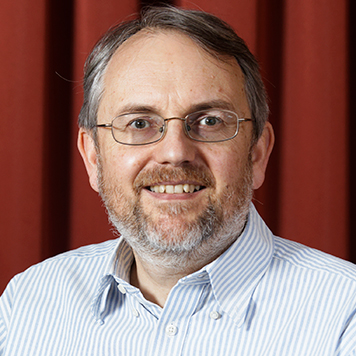
Dr. John Wickerson is an Associate Professor in the Circuits and Systems group at the Department of Electrical and Electronic Engineering, Imperial College London. His research focuses on improving the reliability of high-performance computing through formal methods, with contributions to high-level synthesis, memory models, and concurrency verification. He holds leadership roles including Course Director for the Electrical and Information Engineering degree and Deputy Tutor for PhD students. Research Interests: Formal Verification of Hardware/Software Systems High-Level Synthesis (HLS) and FPGA Compilation Weak Memory Models and Concurrency Semantics Fuzz Testing for Hardware Tools Compiler Optimization and Correctness Digit Elision and Arbitrary-Precision Arithmetic Notable Achievements: Best Paper Award at EuroSys 2024 (database isolation validation) Pioneered formal methods for HLS tools (e.g., QuteFuzz, C4) Co-developed the C4 C compiler concurrency checker Published over 60 peer-reviewed papers across top venues (ASPLOS, PLDI, FPGA) Lab/Team: Part of the Circuits and Systems group at Imperial College, collaborating with industry partners like Kaihong Yann and ARM.
Martin Berzins is a Professor of Computer Science at the University of Utah, affiliated with the School of Computing and the Scientific Computing and Imaging (SCI) Institute. His research focuses on parallel scientific computing, numerical methods for partial differential equations, and high-performance computing frameworks. He is a leading developer of the Uintah framework, a scalable simulation tool used for large-scale engineering and scientific problems. Research Interests : Parallel algorithms, adaptive mesh refinement, material point method (MPM), exascale computing, computational fluid dynamics, and performance portability. His work emphasizes scalable software solutions for complex multiscale and multiphysics simulations, with applications in environmental modeling, explosive detonation analysis, and computational mechanics. Recent articles highlight advancements in Uintah's portability to exascale systems, error estimation in MPM, and high-order numerical methods. Berzins has contributed significantly to the development of task-based parallelism strategies and heterogeneous computing optimizations. His research bridges theoretical numerical analysis with practical large-scale computational challenges. Collaborations include DOE projects on hazard analysis and exascale computing. He has pioneered the integration of runtime systems like Hedgehog with Uintah to enhance scalability on modern architectures. His work ensures computational frameworks remain viable for emerging hardware trends, emphasizing both algorithmic innovation and software engineering rigor.
Erik Bjørnager Dam is a Professor in the Machine Learning section at the Department of Computer Science, University of Copenhagen (UCPH). His research spans theoretical foundations of machine learning to practical applications in medical data analysis, sustainability, and materials science. His key research interests include: Small-scale and resource-efficient deep learning Medical image analysis and segmentation Sustainable and environmentally conscious AI development Graph neural networks for materials science Resource-constrained AI systems Professor Dam's recent publications demonstrate a strong focus on making AI more accessible and sustainable while maintaining high performance standards. His work on 'Performance Per Resource Unit' metrics addresses critical challenges in deploying AI in resource-limited environments, particularly in healthcare applications. His research bridges theoretical machine learning with practical implementations across multiple domains. His notable professional activities include: Co-founding Cerebriu A/S (since 2018) Co-founding Biomediq A/S (since 2008) Delivering lectures on AI's role in green transition (April 24, 2023) Media contributions on deep learning applications in plant research (September 13, 2018) With 74 documented research outputs, Professor Dam maintains an active research profile with significant contributions in 2023-2025 across medical imaging, sustainable AI, and materials science applications.
Trevor E. Carlson is an Assistant Professor at the School of Computing, National University of Singapore (NUS), focusing on high-efficiency microarchitectures, hardware/software co-design, and secure chip design for IoT and server applications. He earned his Ph.D. in Computer Science from Ghent University (2014) and B.Sc./M.Sc. in Electrical & Computer Engineering from Carnegie Mellon University (2002/2003). Research Interests include energy-efficient processors, secure computing platforms, neuromorphic accelerators, and fast simulation methodologies. He co-developed the Sniper Multi-Core Simulator used globally for performance/power evaluation. Scientific Awards : Best Paper Award, International Conference on Embedded Computer Systems (2016) Best Paper Award, International Symposium on Performance Analysis of Systems and Software (2013) Heidelberg Laureate Forum participation (2015) HiPEAC Technology Transfer Award for Sniper Simulator (2013) Current Research involves secure Systems-on-Chip (SOCure project), hardware security for IoT, and simulation methodologies. He leads a lab with researchers working on topics like Capstone for trustless secure memory access and LABS for laser fault injection benchmarks.
Magdalena Szymczyk is a Lecturer in the Department of Biocybernetics and Biomedical Engineering at AGH University of Science and Technology, Faculty of Electrical Engineering, Automatics, Computer Science and Biomedical Engineering. Her work bridges embedded systems, biomedical signal processing, and geophysical data analysis. Research focuses on energy-efficient sensor networks, neural networks for GPR data classification, and mathematical transforms in signal analysis Expertise in parallel computing, real-time systems, and biomedical engineering applications Her publications (2015–2025) demonstrate a trajectory from parallel neural networks and S-transform/GPR methodologies to recent work on MicroPython in embedded systems. Key themes include energy optimization in distributed architectures and AI-driven signal processing across biomedical and geophysical domains. She has authored works on deterministic chaos in simulations, GPU image processing, and cybersecurity in microcontroller systems. Her current research emphasizes embedded systems security, medical signal diagnostics, and computational methods for geological analysis. She utilizes tools like OpenCL for GPU acceleration and MATLAB for parallel computing implementations.
Luciano Lavagno is a Full Professor at the Department of Electronics and Telecommunications, Polytechnic University of Turin, with over two decades of academic and research contributions. His work bridges hardware acceleration, low-power electronics, and intelligent system design. Research Focus: Hardware-accelerated machine learning, high-level synthesis (HLS) for FPGA/ASIC, heterogeneous CPU/GPU/FPGA platforms Key Projects: SPACE (predictable acceleration), REBECCA (secure AI acceleration), HPC-National Center (quantum computing), and oral history preservation via "Ti racconto una storia" initiative His recent publications analyze CNN inference optimization, subgraph isomorphism, and superword-level parallelism exploitation. Lavagno supervises multiple PhD students working on FPGA acceleration, neural network hardware, and embedded systems. As Principal Investigator for national and EU-funded projects (PRIN, JTI-ECSEL, PNRR), he drives advancements in sustainable computing infrastructure. His patented technologies include MIx&Latch timing methodology, capacitive sensing innovations, and 5G acceleration frameworks.
Nikos Hardavellas is a Professor of Computer Science and Electrical and Computer Engineering at Northwestern University, affiliated with the McCormick School of Engineering. He leads the Parallel Architecture Group at Northwestern (PARAG@N), focusing on energy-efficient parallel computing and quantum systems. His research spans quantum computing systems, fault-tolerant quantum error management, memory-centric architectures, and photonics-based interconnects. Education: Ph.D. Computer Science, Carnegie Mellon University (2009) M.S. Computer Science, Carnegie Mellon University (2006) M.S. Computer Science, University of Rochester (1997) B.S. Computer Science, University of Crete (1995) Research Interests: Quantum system software stack and error mitigation Memory-centric computing and programmable memory systems Energy-efficient architectures and dark silicon Photonics and optical interconnects Parallel systems and compiler-hardware co-design Key Contributions: Developed SupermarQ, a scalable quantum benchmark suite Pioneered optical cache hierarchies (Pho$) and energy-proportional photonic networks Advanced compiler-driven virtual memory systems (CARAT) and MPI autotuning (ACCLAiM) Awards & Honors: NSF CAREER Award (2015) Future CRA Leader (2024) Best Paper Awards at HPCA (2022) and ISLPED (2021 nomination) Test-of-Time Award at EDBT (2019) Grants & Service: Secured $4.8M in research funding from NSF, industry partners, and university initiatives Executive Committee member of Northwestern’s INQUIRE Institute for Quantum Research General Co-chair of IEEE/ACM MICRO 2022 Extensive service on departmental committees and thesis advisory boards Labs & Teams: Directs PARAG@N, collaborating on quantum computing, photonics, and energy-efficient architectures. Engages with industry partners like AMD, Intel, and Synopsys.
Stefano Markidis is a Professor of Computer Science at KTH Royal Institute of Technology, affiliated with the School of Electrical Engineering and Computer Science and the Digital Futures Faculty. He holds a Ph.D. from the University of Illinois at Urbana-Champaign and an MS from Politecnico di Torino. His research focuses on high-performance computing systems, including supercomputers and quantum computers, with expertise in plasma simulations, quantum algorithms, and scalable computational frameworks. Markidis leads the development of the Neko framework for high-fidelity computational fluid dynamics and the iPIC3D particle-in-cell code for plasma physics. He teaches courses such as Quantum Computing for Computer Scientists, High-Performance Computing, and Applied GPU Programming. His work addresses exascale computing challenges, including optimizing algorithms for GPUs, quantum systems, and distributed architectures. Key research interests include: Parallel Programming Models and HPC Frameworks Quantum Computing Applications in Scientific Simulations Physics-Informed Machine Learning Exascale System Optimization Turbulence Modeling and Plasma Dynamics His publications span over 100 articles in journals like Journal of Computational Physics and Scientific Reports , focusing on topics such as scalable CFD, quantum neural networks, and plasma simulation techniques. He has advised numerous students in these areas. Markidis collaborates with institutions like Los Alamos National Laboratory and RISE Research Institutes of Sweden through the Digital Futures initiative, aiming to solve societal challenges via digital technologies.
Riyadh Baghdadi is an Assistant Professor of Computer Science at New York University Abu Dhabi and a Global Network Assistant Professor at the Tandon School of Engineering, NYU. He is also a Research Affiliate at MIT, where he previously completed a postdoctoral fellowship. His academic journey includes a PhD and Master’s from Sorbonne University (INRIA/UPMC) and an engineering degree from Ecole Supérieure d’Informatique in Algiers. Assistant Professor, NYU Abu Dhabi Global Network Assistant Professor, Tandon School of Engineering, NYU Research Affiliate, MIT His research lies at the intersection of compilers, programming languages, and applied machine learning, with a focus on developing advanced compiler techniques for deep learning, high-performance computing, and data-parallel algorithms. He is the lead developer of the Tiramisu compiler , a polyhedral compiler designed to optimize dense and sparse deep learning workloads across diverse architectures including CPUs, GPUs, and FPGAs. Riyadh’s recent publications demonstrate a strong trend toward integrating machine learning into compiler optimization—particularly in cost modeling, loop scheduling, and automatic code generation. His work addresses critical challenges in optimizing sparse neural networks and enabling efficient execution on resource-constrained platforms like smartphones and autonomous vehicles. Outstanding Paper Award, MLSys 2021 He has mentored 18 students and taught core courses such as Computer Systems Organization and Machine Learning at NYUAD. His service to the academic community includes program committee roles at MLSys, IPDPS, ECOOP, and PACT, as well as organizing workshops on polyhedral compilation and machine learning for hardware-software co-design. Riyadh actively contributes to open-source projects and collaborates with industry leaders including Google, Facebook, NVIDIA, and Intel. He leads the development of Tiramisu and collaborates on DSLs like GraphIt and Halide, focusing on performance portability and automation in compiler design.
Prof. Dr.-Ing. Jürgen Teich is a full Professor and Chair for Hardware-Software Co-Design at the Department of Computer Science, Friedrich Alexander University Erlangen-Nuremberg (FAU). He serves as Head of Department Computer Science and Vice Dean of the Technical Faculty since August 2024, and has been Speaker of the FAU Research Center Embedded System Initiative (FAU ESI) since 2023. His educational background includes: Diploma degree in Electrical Engineering, University of Kaiserslautern (1989) Dr.-Ing. degree in Electrical Engineering, University of Saarland (1993) Habilitation (PD Dr.-Ing.) entitled "Synthesis and Optimization of Digital Hardware/Software Systems" (1996) Prof. Teich's research focuses on Embedded Systems , Invasive Computing , Hardware-Software Co-Design , and Reconfigurable Computing . His work spans from theoretical foundations to practical implementations, with particular emphasis on resource-constrained systems, many-core architectures, and energy-efficient computing. He has pioneered research in invasive computing paradigms that enable more efficient use of many-core processors by allowing applications to dynamically claim resources. His recent publications reveal a strong trend toward energy-efficient AI deployment on embedded devices , security of embedded systems , and novel memory technologies . There's a clear focus on practical implementations of machine learning on microcontrollers (TinyML), hardware acceleration for data processing, and innovative approaches to power management in self-powered systems. Among his notable scientific awards are: IEEE Fellow (since 2018) Member of Academia Europaea, Section Informatics (since 2011) Member of the National Academy of Science and Engineering (acatech) (since 2018) Member of the German Society of Humboldtians (since 2021) Prof. Teich has been Principal Investigator for numerous DFG-funded projects including SFB/Transregio 89 "Invasive Computing" (2010-2022), SFB 694, and multiple priority programs. He has coordinated large collaborative research efforts across Germany and internationally, with significant funding from DFG and other sources. His research group has produced influential work in embedded systems design and co-design methodologies. He leads the Hardware-Software Co-Design research group at FAU, which focuses on innovative approaches to embedded system design, invasive computing architectures, and efficient implementation of machine learning on resource-constrained devices. The group maintains strong collaborations with industry partners including Intel, Xilinx, and automotive companies.
Yanan Guo is an Assistant Professor in the Department of Computer Science at the University of Rochester, specializing in computer architecture and cybersecurity. Her research focuses on GPU memory safety, side-channel attacks, quantum computing, and machine learning security, with recent projects exploring cross-VM side-channel vulnerabilities and quantum circuit simulation. PhD, University of Pittsburgh (advisor: Dr. Jun Yang) Her work bridges hardware and software security, addressing issues like GPU cache eviction mechanisms, memory corruption attacks, and adversarial threats in neural networks. She actively collaborates with researchers like Youtao Zhang and Jun Yang, with publications in top venues including USENIX Security, MICRO, and ICML. Recent publications highlight trends in GPU security (memory safety, side-channel attacks), quantum computing optimizations, and adversarial machine learning. Her team’s projects have received recognition such as the NSF OAC grant for AI workflow security and features in IEEE Transactions on Computers. Featured Paper in IEEE Transactions on Computers (02/22 issue) Shortlisted for Top Picks in Hardware and Embedded Security 2023 Dr. Guo mentors PhD students and offers weekly office hours for undergraduates, emphasizing career paths, graduate applications, and research guidance. She serves on program committees for conferences like USENIX Security and ASPLOS.
Dr. Tim Oates is a Professor in the Department of Computer Science and Electrical Engineering at the University of Maryland, Baltimore County . His research spans machine learning, artificial intelligence, and brain-machine interfaces, with a focus on weakly supervised methods, human-in-the-loop reinforcement learning, and grounded policy development for robotics. Ph.D., Computer Science, University of Massachusetts, Amherst, 2000 M.S., Computer Science, University of Massachusetts, Amherst, 1997 B.S., Computer Science and Electrical Engineering, 1989 Current research threads include: Developing non-invasive brain injury severity assessment via medical time series Modeling human brain development through computational frameworks Designing algorithms for autonomous robotic learning Recent publications highlight AI security mechanisms (backdoor detection via tensor decomposition, matrix factorization) Medical applications (3D artery reconstruction, skin lesion diagnosis, EEG denoising) Neuro-symbolic integration (holographic representations, language-guided reinforcement learning) Mathematical reasoning (schema-based problem solving, subitizing algorithms) Contact: oates@cs.umbc.edu | Office: 336 Information Technology and Engineering (ITE) Building
Simon Moore is a Professor of Computer Engineering at the University of Cambridge's Department of Computer Science and Technology. He leads the Computer Architecture research group, focusing on secure processors and subsystems, particularly the CHERI project. His work emphasizes formal verification, hardware-software co-design, and scalable security solutions. He is a Fellow and Director of Studies at Trinity Hall, overseeing undergraduate admissions and mentoring in Computer Science. Research Interests: Moore's primary focus is the CHERI secure processor architecture, integrating RISC-V cores with formal verification. His work spans secure hardware design, memory safety, and embedded systems. Notable contributions include the CHERI-RISC-V microarchitecture, CheriABI, and formal verification frameworks. Key Projects: CHERI, CheriBSD, Morello (ARM collaboration) Recent Achievements: Test of Time Award (IEEE Security & Privacy 2025), finalist for Bhattacharyya Award (2022) Grants: Innovate UK Digital Security by Design, DARPA Mission Oriented Resilient Clouds Publications: Over 200 papers on secure architectures, including influential work on CHERI's capability model, formal verification, and hardware security. Recent focus areas include temporal memory safety, embedded system security, and GPU-based capability systems. Labs/Teams: Directs the Computer Architecture Group and collaborates with industry partners like ARM and Microsoft on CHERI implementations.
Nicola Capodieci is an Associate Professor at the Department of Physical, Computer and Mathematical Sciences at the University of Modena and Reggio Emilia, specializing in Information Processing Systems (IINF-05/A). He actively teaches multiple courses including Object-Oriented Programming, Web Technologies, and General Computer Science across Computer Science and Mathematics degree programs. His research interests focus on GPU acceleration for embedded systems, autonomous vehicles, and real-time computing. Dr. Capodieci's work addresses critical challenges in heterogeneous computing platforms, particularly for automotive applications and smart city infrastructure. His research bridges theoretical computer science with practical applications in autonomous driving and urban mobility systems. Analysis of his recent publications reveals a strong focus on optimizing GPU performance for latency-sensitive applications, particularly in autonomous vehicles. His work spans path planning algorithms, memory interference management, and real-time scheduling on heterogeneous platforms. A significant portion of his research addresses practical implementation challenges in embedded systems where computational resources are constrained but timing predictability is critical. Dr. Capodieci's teaching portfolio demonstrates expertise in both foundational programming concepts and advanced topics in web technologies. His courses emphasize practical implementation skills while covering theoretical foundations of object-oriented programming, web development frameworks, and computational thinking.
Jung-Eun Kim is an Assistant Professor in the Department of Computer Science at North Carolina State University, where she conducts research at the intersection of artificial intelligence, machine learning, and cyber-physical systems. Her work focuses on creating trustworthy, interpretable, and efficient AI systems, particularly for safety-critical applications. Education: Ph.D. in Computer Science, University of Illinois at Urbana-Champaign (2017) M.S. in Computer Science and Engineering, Seoul National University (2009) B.S. in Computer Science and Engineering, Seoul National University (2007) Dr. Kim's research primarily investigates how to make AI systems more trustworthy, interpretable, and efficient, with particular emphasis on understanding failure modes, safety risks, vulnerabilities, and biases in deep learning models. Her work bridges theoretical understanding with practical applications in safety-critical systems. She explores how efficiency considerations interact with these issues, seeking to fundamentally anatomize neural networks to understand what causes failure modes and how to mitigate them. Her approach has been described as 'like a heart surgeon, we open the heart of a neural network architecture, look into it, interpret it, and cure it.' Her recent publications demonstrate a strong focus on safety alignment in large language models, mitigation of spurious correlations, privacy preservation against membership inference attacks, and sustainable AI development. Her work spans theoretical foundations of trustworthy AI while addressing practical challenges in model deployment, particularly for resource-constrained environments. She has made significant contributions to understanding how model compression techniques like pruning and quantization can inadvertently amplify biases and vulnerabilities. Scientific Awards: ICLR Spotlight, 2025 IBM Faculty award, 2023 CRA Early & Mid Career Mentoring Workshop, 2023 Cloud GPU provided by Lambda, worth $17,280, for course, Spring 2023 NeurIPS Spotlight and nomination for Best Paper Award, 2022 CRA Career Mentoring Workshop, 2022 GPU Grant by NVIDIA Corporation, 2018 The MIT EECS Rising Stars, 2015 The Richard T. Cheng Endowed Fellowship, 2015-2016 Dr. Kim actively mentors PhD students, currently advising Xingli Fang, Varun Mulchandani, Jianwei Li, Rishi Singhal, and Minseon Kim. She has secured significant research funding, including an NSF SaTC (Secure and Trustworthy Cyberspace) grant as Co-PI for 'Partition-Oblivious Real-Time Hierarchical Scheduling' ($281,629.00, 2022-2024). Her research has also been supported by an NVIDIA GPU Grant and cloud resources from Lambda. She serves on program committees for top AI conferences including ICLR, ICML, NeurIPS, AAAI, and IJCAI, and has held roles such as Publicity Chair for IJCAI 2024. Her research group focuses on developing methods to make AI systems more trustworthy, interpretable, and efficient, with particular attention to safety-critical applications. The group investigates how to identify and mitigate failure modes in neural networks while maintaining efficiency, exploring the fundamental relationship between model architecture, safety risks, and computational constraints.