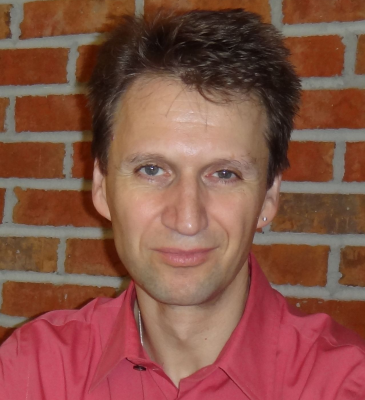
Pedro Petersen Moura Trancoso is a Full Professor at the Department of Computer Engineering , Chalmers University of Technology, Sweden. His research focuses on deep learning accelerators , heterogeneous computing , energy-efficient architectures , and memory system optimization for IoT and edge devices. Key projects: AutoPIM (autonomous vehicle accelerators), VEDLIoT (efficient AIoT), eProcessor (European processor ecosystem), PRIME (PIM systems) Collaborations: European Commission, Swedish Research Council, Swedish Foundation for Strategic Research Research Trends : Hybrid CNN/GPU/FPGA Acceleration On-Chip/Scratchpad Memory Optimization Adaptive Resource Allocation for Energy Efficiency Hardware-Software Co-Design for AIoT Publications demonstrate leadership in deep learning hardware , heterogeneous memory systems , and edge computing architectures . Key journals: IEEE ISPASS, ACM Computing Frontiers, DATE Conference.
Andrea Marongiu is an Associate Professor at the Department of Physical, Computer and Mathematical Sciences at the University of Modena and Reggio Emilia, specifically affiliated with the Mathematics department. He maintains an active research profile while teaching multiple courses in computer architecture and parallel systems. His research interests span computer architecture, high performance computing, parallel programming, and embedded systems. Marongiu focuses particularly on memory systems, heterogeneous computing architectures, FPGA-based acceleration, and real-time performance analysis. His work bridges theoretical foundations with practical implementation challenges in modern computing systems, with special attention to predictable execution models and quality of service guarantees. Analysis of his recent publications reveals a strong emphasis on memory bandwidth management in heterogeneous systems, particularly focusing on FPGA-based architectures and multicore SoCs. His research trajectory shows consistent work in memory interference analysis, PREM (Predictable Execution Model) scheduling techniques, and fine-grained QoS control mechanisms. The publications demonstrate a progression from general parallel programming concepts toward increasingly specialized techniques for resource-constrained environments like autonomous vehicles and edge computing devices. Marongiu teaches several advanced computer science courses including Computer Architecture I & II, Compilers, High Performance Computing, and Electronic Calculators across multiple degree programs. His teaching approach emphasizes both theoretical foundations and practical implementation, with a focus on RISC-V architecture and modern parallel programming techniques. The course materials indicate he incorporates hands-on laboratory work as an essential component of his pedagogy, particularly in areas like compiler construction and parallel programming.
William D. Gropp serves as the Director of the National Center for Supercomputing Applications (NCSA) at the University of Illinois Urbana-Champaign, where he holds the prestigious Thomas M. Siebel Chair in Computer Science and the Grainger Distinguished Chair in Engineering within the Siebel School of Computing and Data Science. His leadership extends to major NSF-funded initiatives including the Delta and DeltaAI supercomputing systems. Gropp's research centers on high performance computing, with particular expertise in parallel I/O systems, scalable numerical algorithms for partial differential equations, and programming models for massively parallel applications. His work bridges theoretical computer science with practical implementation through widely adopted software frameworks. Gropp has received numerous prestigious honors including election to the National Academy of Engineering (2010) and fellowships from ACM, IEEE, SIAM, and AAAS. In 2024, he was named one of the 35 HPC Legends by HPC Wire, recognizing his foundational contributions to the field. AAAS Fellow (2018) SIAM Fellow (2011) National Academy of Engineering Member (2010) IEEE Fellow (2010) ACM Fellow (2006) 35 HPC Legends by HPC Wire (2024) HPCWire Readers Choice Award for Outstanding Leadership in HPC (2023) Gropp leads multiple major research initiatives including the Midwest Big Data Hub and the MPI Forum, serving on the Computing Research Association board and Computing Community Consortium executive committee. His current projects focus on heterogeneous computing systems, data movement optimizations, and next-generation MPI implementations. As Director of NCSA, Gropp oversees significant cyberinfrastructure resources including the Delta supercomputer, designed to accelerate adoption of GPU computing and non-POSIX file systems by the computational science community, and DeltaAI, an AI/ML optimized supercomputer.
Hai Lin is a Professor at the State Key Lab of CAD&CG (Zhejiang University, China). His research spans computer graphics, scientific visualization, volume rendering, virtual reality, and graphical electromagnetic computing. He earned B.Eng and M.Eng degrees from Xidian University (1987, 1990) and a Ph.D. in Computer Science from Zhejiang University. Current Position: Professor, Zhejiang University (1990–Present) Research Fellow, Medical Visualization, De Montfort University (2000–2003) Visiting Professor, University of Bedfordshire Research Focus includes: Medical Imaging: AI-driven tumor segmentation (colorectal, liver), retinal disease classification (SatFormer), and mandible segmentation via LRVRG. Electromagnetic Computing: Shape deformation optimization, GPU-based wave propagation prediction, and scattering analysis. Scientific Visualization: Graph convolutional networks for volume data, voxel2vec representations, and dynamic network exploration. Collaborations involve PhD students (Huan Liu, Yiming Li, YanKai Jiang, Han Wang) and teams at Zhejiang University. His work integrates AI with electromagnetic and medical imaging domains, emphasizing GPU acceleration and novel algorithm design.
Klaus Mueller is a Professor in the Computer Science Department at Stony Brook University , with additional appointments in Biomedical Engineering and Radiology. He serves as Director of the Visual Analytics and Imaging (VAI) Lab, Liaison for the SUNY Korea CS Program, and Interim Chair of the Department of Technology and Society . His career spans roles at Brookhaven National Lab and leadership positions at SUNY Korea. Dr. Mueller earned his PhD in Computer and Information Science (1998), MS in Computer and Information Science (1996), and MS in Biomedical Engineering (1990) from The Ohio State University , alongside a BS in Electrical Engineering (1987) from the Polytechnic University of Ulm, Germany. His research focuses on visual analytics , explainable AI , algorithmic fairness , computational imaging , and medical imaging . He has pioneered GPU-accelerated CT reconstruction techniques, bias mitigation frameworks (e.g., D-BIAS), and tools like DOMINO for causal reasoning. His work bridges data science , human-computer interaction , and medical applications , often integrating large language models for visualization tasks. Recent publications highlight advances in multivariate volume rendering , LLM-driven bias detection , and mDDPM-based medical image synthesis . His articles span IEEE Transactions , Nature Machine Intelligence , and conferences like IEEE VIS and ACM CHI . Award highlights include NSF CAREER (2000), SUNY Chancellor Award (2011), IEEE Golden Core Award (2016, 2022), induction into the National Academy of Inventors (2018), and elevation to IEEE Fellow (2024). He has chaired major conferences and served as Editor-in-Chief of IEEE Transactions on Visualization and Computer Graphics (2019-2022). He teaches graduate and undergraduate courses in visualization , medical imaging , and GPGPU programming , and leads the Visual Analytics Seminar (CSE 648). His lab ( VAI Lab ) fosters interdisciplinary research in GPU-accelerated analytics and ethical AI.
Prof. Dr. Thomas Rauber is a Professor at the University of Bayreuth in the Faculty of Mathematics, Physics and Computer Science, where he leads the Chair of Applied Computer Science II – Parallel and Distributed Systems. His research spans several decades with continuous scholarly output, demonstrating significant contributions to parallel computing, high-performance systems, and energy-efficient computation. Rauber maintains strong collaborative relationships with researchers including Gudula Rünger and Matthias Korch, with whom he has co-authored numerous publications. His primary research interests include parallel and distributed systems, high-performance computing, task scheduling, energy efficiency in computing, scientific computing with focus on Runge-Kutta methods and ODE solvers, and performance modeling. Rauber's work has evolved from foundational parallel programming concepts to contemporary concerns about energy consumption in computing systems. His research addresses both theoretical aspects of parallel algorithms and practical implementation challenges on modern architectures. Rauber's publication record shows a clear trend toward energy-aware computing, with recent work focusing on the trade-offs between performance, energy consumption, and solution accuracy. His 2023-2025 publications demonstrate continued innovation in task scheduling, software-defined environments for cloud applications, and optimization of numerical methods for modern multicore processors. His textbook "Parallel Programming for Multicore and Cluster Systems" (now in its third edition) has become a standard reference in the field. While specific grant information isn't detailed in the provided text, Rauber's extensive publication record across multiple decades suggests sustained research funding. His work on projects like TGrid (Runtime environment for heterogeneous systems and grid systems) and investigations into task pools for dynamic load balancing indicates involvement in significant research initiatives. Rauber maintains an active research laboratory focused on parallel and distributed systems, with ongoing projects examining communicating multiprocessor tasks, runtime environments for heterogeneous systems, and self-adaptation techniques for time-step-based simulations on heterogeneous HPC systems. His research group continues to produce influential work at the intersection of theoretical computer science and practical high-performance computing applications.
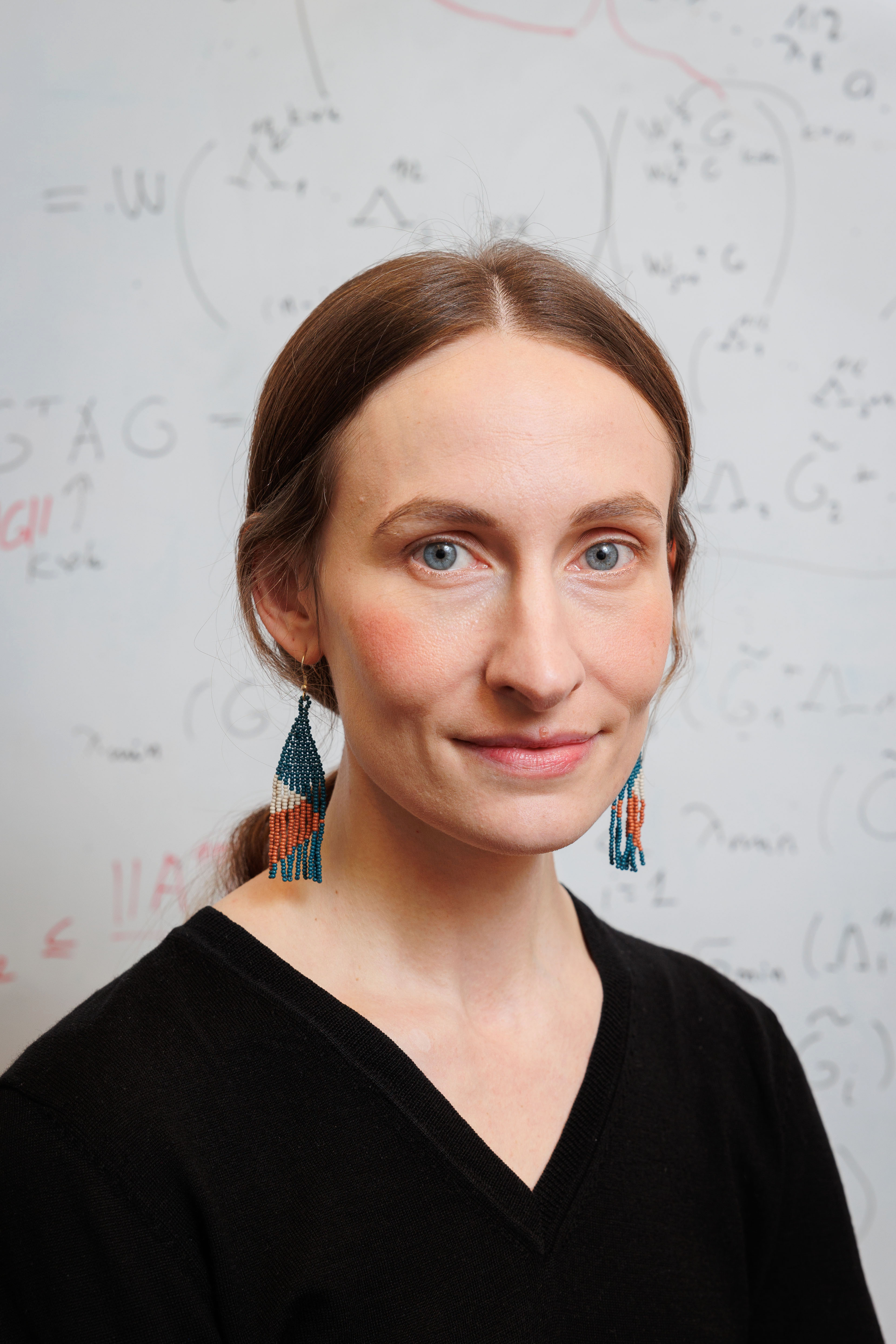
Erin Claire Carson is an Assistant Professor at the Department of Numerical Mathematics, Faculty of Mathematics and Physics, Charles University, Prague. A specialist in numerical linear algebra and high-performance computing, she leads the ERC Starting Grant project InEXASCALE focused on exascale algorithms. Her research explores mixed precision arithmetic, communication-avoiding Krylov subspace methods, and stability analysis in finite precision. Ph.D., University of California, Berkeley (2015) Courant Instructor, New York University (2015-2018) Postdoctoral Researcher and PRIMUS Fellow, Charles University (2018-2022) Dr. Carson's work bridges theoretical analysis with practical implementations for supercomputers. Her recent publications include advancements in low-synchronization orthogonalization, silent error detection, and multilevel sampling techniques. She received the 2025 Wilkinson Prize from SIAM for outstanding contributions to numerical analysis. Current trends in her research involve: Exploiting mixed precision arithmetic for algorithm acceleration Developing stable communication-avoiding Krylov methods Optimizing numerical stability in GPU-based solvers Understanding error propagation in multistage refinements Scientific honors: 2025 SIAM Wilkinson Prize in Numerical Analysis and Scientific Computing 2023 ERC Starting Grant recipient 2019-2022 PRIMUS Research Fellow She supervises PhD and Master’s students while teaching advanced courses in numerical linear algebra and high-performance computing. Her work has been featured in WIRED and Forbes Czech Republic for improving supercomputer algorithms.
Dagmara Kulig, PhD, Eng., serves as a Lecturer at the Department of Particle Interactions and Detection within the Faculty of Physics and Applied Computer Science at AGH University of Science and Technology in Kraków, Poland. Her research focuses on advancing radiation measurement technologies for medical applications, particularly in radiotherapy quality assurance and dosimetry innovation. Her primary research domains include Radiation Dosimetry, Medical Physics, and Radiotherapy, with specialized expertise in Optically Stimulated Luminescence (OSL) and Thermoluminescence (TL) phenomena. Kulig investigates novel luminescent materials—especially LiMgPO 4 -based compounds—and develops 3D-printed scintillators for precise dose measurement. Her work bridges experimental physics with clinical oncology through computational modeling and deep learning applications for treatment planning optimization. Analysis of her 15 most recent publications (2016-2025) reveals a consistent trajectory in radiation monitoring systems, with increasing emphasis on modular detector architectures and AI-driven medical imaging. The Dose-3D project represents a significant computational contribution, while her material science work on LiMgPO 4 dosimeters addresses critical challenges in signal stability and sensitivity. Recent publications demonstrate growing integration of 3D printing and deep learning for personalized radiotherapy solutions. Scientific awards: No awards documented in provided information Advising and grants: No student supervision details available No external funding sources specified Laboratory engagement: Core contributor to Dose-3D project developing Monte Carlo simulation platforms Experimental work on radiation detector systems at Department of Particle Interactions and Detection Material synthesis and characterization for luminescent dosimeters
Bingcong Li is a postdoctoral researcher at ETH Zurich collaborating with Prof. Niao He and the ODI group. Previously, they completed doctoral studies at the University of Minnesota under Prof. Georgios B. Giannakis, followed by industry experience focused on large language models (LLMs). Education includes a PhD from the University of Minnesota under Prof. Georgios B. Giannakis. Research centers on making computation efficient, accessible, and affordable across heterogeneous resources—from GPU clusters to consumer hardware—through interdisciplinary approaches combining deep learning, optimization, and signal processing. Key research areas address foundational computing architectures, large-scale system sustainability, and personalized AI access. Their work develops theoretically grounded methods for explainable systems, with recent focus on LLM fine-tuning efficiency. Publication trends show consistent contributions to top conferences (NeurIPS, ICML, ICLR) with emphasis on optimization techniques for resource-constrained LLM deployment. Their advising and grant activities aren't explicitly detailed, though they actively participate in academic service through conference talks (EUROPT 2025, ICASSP 2025) and co-organizing events like the Efficient LLMs Fine-tuning Track at AI+X Summit. Lab affiliation centers on ETH Zurich's ODI group under Prof. Niao He, focusing on optimization-driven AI solutions.
Dr. Deniz Bezgin is a Researcher at the Department of Aerodynamics and Fluid Mechanics of the Technische Universität München (TUM) . Her work focuses on computational fluid dynamics (CFD), machine learning integration in numerical methods, and high-order differentiable solvers for compressible flows. Research specialties include shock-capturing methods, multi-phase flow modeling, and data-driven shape optimization. Developed JAX-Fluids, a fully-differentiable framework for compressible two-phase flows. Key contributions to ENO/WENO schemes and thermodynamically consistent interface models. Current projects explore machine-learned discretizations and GPU-based high-performance computing. Her recent publications address differentiable simulations, data assimilation, and turbulence modeling. She has not received any explicitly listed scientific awards.
Thomas Wiemann is a temporary Professor for Autonomous Robotics at Osnabrück University and a researcher at the German Research Center for Artificial Intelligence (DFKI) , group Kooperative und Autonome Systeme . He has been active since 2007, focusing on 3D mapping, SLAM, and semantic interpretation of sensor data for robotics. He received his Dr. rer. nat. in 2013 and his habilitation in 2020. His work is widely recognized, with awards such as the Karman Innovation Award (2007) and the Intevation Free Software Award (2014). Education: Habilitation in Computer Science, Osnabrück University (2020) Doctorate (Dr. rer. nat.) in Computer Science, Osnabrück University (2013) M.Sc. in Physics and Computer Science, Osnabrück University (2007) B.Sc. in Physics and Computer Science, Osnabrück University (2005) Research Focus: Thomas Wiemann's research is centered on autonomous robotics , particularly in 3D mapping , SLAM , and semantic environment understanding . His work includes the automatic generation of polygonal maps from point cloud data, large-scale 3D reconstruction, hyperspectral data integration, and hardware-accelerated SLAM systems using FPGAs and GPUs. He has developed open-source tools like the Las Vegas Reconstruction Toolkit (LVR) and contributed to ROS packages for 3D mapping and navigation. Scientific Awards: Karman Innovation Award (2007) for his master’s thesis Intevation Free Software Award (2014) for his contributions to open-source software Advising & Grants: He has supervised over 60 bachelor’s and master’s theses, primarily in the areas of 3D mapping, SLAM, and robotics systems. His projects include SOILAssist (2019–2021), focusing on sustainable agriculture using robotics, and 3DinOS (2016–2017) for 3D documentation of historical buildings. He has also worked on DFG-funded projects like RoboRithmics . Labs & Teams: He is part of the Knowledge Based Systems Group at Osnabrück University and collaborates with the DFKI Robotics Innovation Center . His lab focuses on advanced 3D perception, semantic mapping, and energy-efficient robotic systems.
Sun-Jeong Kim is a Professor at the Department of Computer Science within the School of Computer Science at Korea University . Her research focuses on real-time rendering techniques, GPU programming, and game engine optimization. Specializes in procedural modeling and interactive visualization Develops efficient rendering algorithms for virtual reality Active in graphics hardware acceleration and collision detection Her research has produced 15+ publications on topics including tessellation strategies, skeletal animation systems, and particle effect optimizations. While specific awards and students aren't detailed in the current text, her work demonstrates consistent contributions to real-time graphics and game development.
Dr. Arne Schmitz is a researcher at the Department of Computer Science, RWTH Aachen University, specializing in computational methods for wireless communications and computer graphics. His work bridges radio wave propagation physics with advanced visualization techniques, focusing on practical applications for mobile network planning and mobile device interfaces. His primary research domains include: Radio wave propagation modeling in urban environments GPU-accelerated beam/ray tracing algorithms Antenna pattern compression using spherical harmonics Real-time 3D visualization for resource-constrained mobile devices Ad-hoc multi-display systems for collaborative mobile applications Analysis of his publication timeline reveals an evolution from foundational radio propagation models (2006) toward increasingly sophisticated urban simulation frameworks (2011-2012), with consistent emphasis on computational efficiency. His most impactful contributions integrate computer graphics rendering techniques with telecommunications engineering, particularly in adapting beam tracing for radio wave simulation and developing novel mobile visualization paradigms that overcome hardware limitations through client-server architectures. Dr. Schmitz maintains a strong collaborative relationship with Professor Leif Kobbelt and colleagues at RWTH Aachen, with co-authorship appearing in 9 of his 10 documented publications. His research demonstrates consistent funding support through participation in IEEE and ACM conferences, though specific grant details are not disclosed in the available materials.
Paul Richmond is a Professor of Research Software Engineering at the University of Sheffield's School of Computer Science. He holds an EPSRC Early Career Research Software Engineering Fellowship focused on accelerating scientific discovery through GPU-accelerated architectures. With a strong interdisciplinary research track record, he develops software solutions for complex systems simulation using high-performance computing architectures. His research spans GPU computing, agent-based modeling, complex systems simulation, and high-performance computing methodologies. Richmond leads the development of FLAME GPU, a framework enabling large-scale agent-based simulations on GPUs, applied to domains including computational biology, transportation systems, and neural simulations. Analysis of his recent publications reveals strong emphasis on GPU-accelerated scientific computing, computational biology applications (particularly oncology and neuroblastoma modeling), transportation simulations, and parallel algorithm development. His work consistently bridges theoretical computer science with practical engineering applications. EPSRC Early Career Research Software Engineering Fellowship Fellow of the Higher Education Academy Richmond has secured substantial research funding including £4.3M as PI/CI over five years. Major grants include leadership roles in PRIMAGE (childhood cancer diagnostics), ExaTEPP (particle physics), and industrial collaborations with Fujitsu, Siemens, and Department for Transport. He founded and led the University of Sheffield's Research Software Engineering group, growing it to 13.5 FTEs supporting £13M in research projects. He established the GPUComputing@Sheffield group, leads the FLAME GPU development team, and served as Engineering Lead for Cambridge's Institute of Computing for Climate Science. Richmond is also former President of the Society for Research Software Engineering.
Joy Arulraj is an Associate Professor at Georgia Institute of Technology, affiliated with the School of Computer Science and the Database group. His research focuses on developing innovative data systems for video analytics, non-volatile memory optimization, and self-driving database management systems. Research Interests: Database systems Machine learning Non-volatile memory Self-driving databases Query optimization Geo-distributed data management Notable Research Contributions: Developed EVA , a video analytics system using deep learning Created APOLLO for automated database debugging Designed EQUITAS to minimize SQL computation overlap Explored NVM-based database architectures ( BzTree , Write-Behind Logging ) Investigated self-tuning databases Key Awards: IEEE Rising Star Award Students: Co-advised multiple graduate students including Pramod Chunduri, Gaurav Tarkok Kakkar, and Jiashen Cao Graduated students: Xinyu Liu, Qi Zhou, Jinho Jung Labs & Teams: Member of Georgia Tech's Database group Collaborates with international institutions (MIT, Stanford, Microsoft Research, etc.)