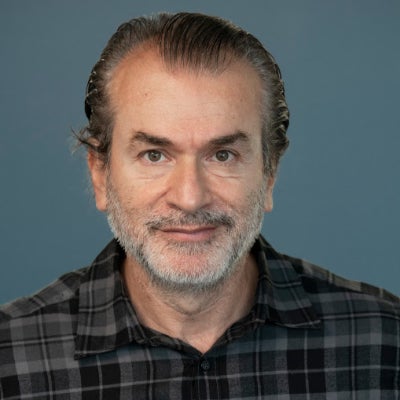
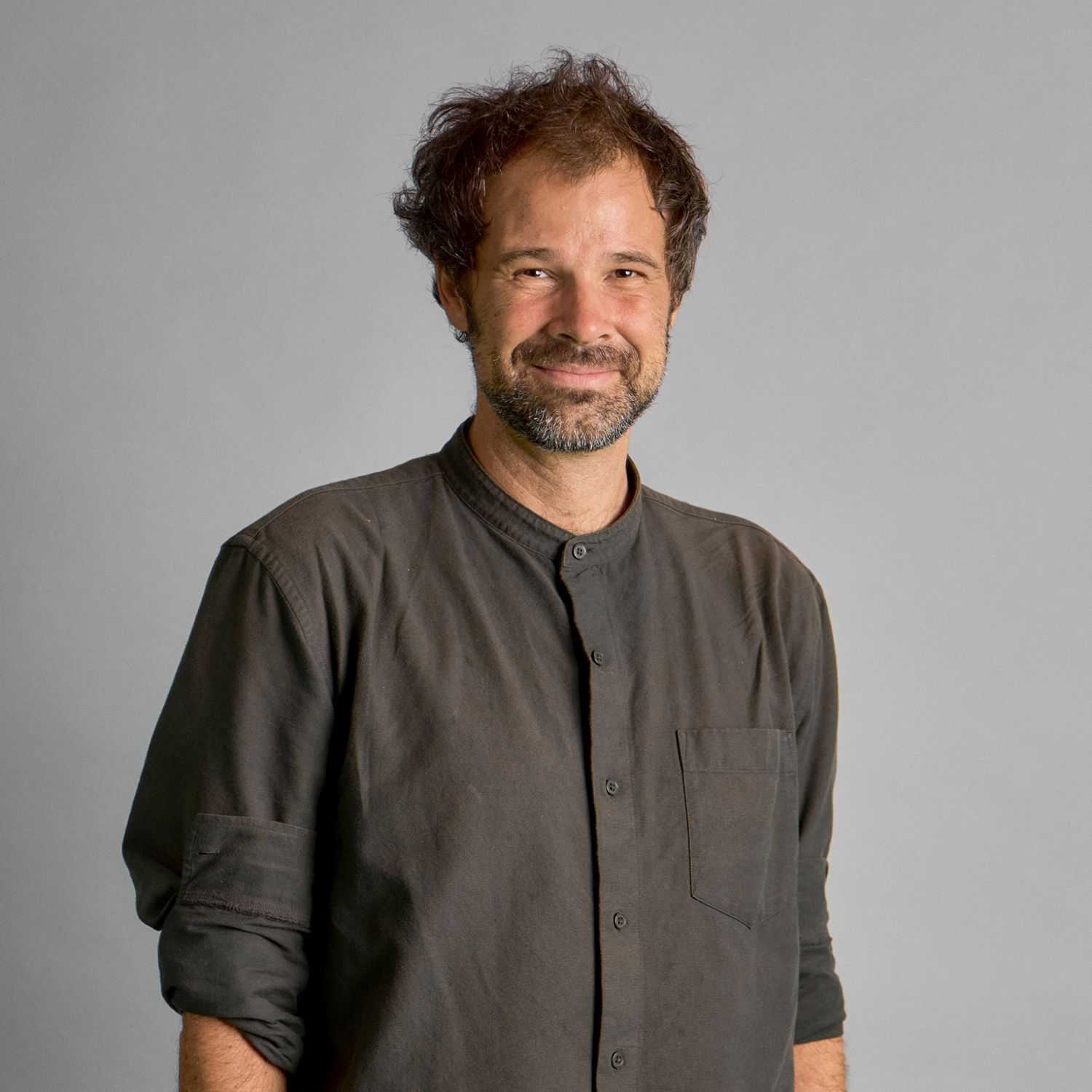
Raffaele Cappelli is an Associate Professor at the Department of Computer Science and Engineering, University of Bologna. His research focuses on fingerprint biometrics, emphasizing anti-spoofing, segmentation, and synthetic data generation. He contributes to the Fingerprint Verification Competition (FVC) and has pioneered tools like SFinGe for synthetic fingerprint databases. His work addresses security vulnerabilities in biometric systems and forensic applications. Education and affiliations include roles at the University of Bologna, with expertise in computer science and engineering. His research integrates machine learning, pattern recognition, and hardware acceleration to enhance biometric system performance and reliability. Key areas of study include presentation attack detection, fingerprint orientation estimation, and large-scale database management. He has authored over 70 publications, with notable contributions to forensic science and secure authentication protocols.
Anna Queralt Calafat is an Associate Professor at the Universitat Politècnica de Catalunya (UPC), affiliated with the Department of Services and Information Systems Engineering at the Barcelona School of Informatics. Her research focuses on High-Performance Computing (HPC), distributed systems, and data governance, with notable contributions in knowledge graphs, cloud-edge continuum management, and parallel workflow optimization. She leads projects funded by European and national grants, including contributions to strategic research agendas like ETP4HPC. Queralt has supervised doctoral students like Jonathan Marti and Rizkallah Touma, and her work spans over 100 publications in top venues such as Future Generation Computer Systems and the International Semantic Web Conference. She actively participates in conference committees and has received a Best Student Paper Award for collaborative research. Her educational background includes a degree in Computer Engineering and a doctorate in Software. She is part of research groups inSSIDE and DTIM, advancing areas like HPC integration with big data analytics. Key projects include automated data lifecycle management and fog-to-cloud distributed processing. Her work bridges theoretical models with practical systems like DataClay and PyCOMPSs, emphasizing scalable and efficient computing solutions.
Arvind is the Johnson Professor of Computer Science and Engineering at MIT and a member of CSAIL (Computer Science and Artificial Intelligence Laboratory). He holds a B.Tech. from IIT Kanpur (1969), M.S. and Ph.D. from the University of Minnesota (1972-1973). His research focuses on computer architecture, parallel computing, memory models, and hardware synthesis. He pioneered dataflow architectures and developed the pH programming language. Notable projects include the Monsoon dataflow machine and Sandburst, a semiconductor company for 10G-bit Ethernet routers. Arvind has received prestigious awards like the IEEE Harry H. Goode Memorial Award (2012) and ACM Fellow (2007). He co-founded Bluespec Inc. and managed collaborations like Nokia-CSAIL (2006-2010). His work spans academia and industry, emphasizing scalable systems and secure computing. Research interests include synthesis/verification of digital systems, graph algorithms, and weak memory models. Current projects explore next-gen Graph AI systems and financial security applications.
Robert Ricci is a Research Professor in the Kahlert School of Computing at the University of Utah and director of the Flux Research Group. He has been affiliated with the University of Utah since 1997, earning a BS (2001) and PhD (2010) in Computer Science, advised by Jay Lepreau and Sneha Kasera. He also serves as an Adjunct Professor at Westminster College. His research focuses on infrastructure systems, including operating systems, networking, cloud computing, and security, with an emphasis on empirical methods and reproducibility. Ricci leads development of testbeds like Emulab and CloudLab, enabling large-scale experiments in distributed systems. Education: B.S. in Computer Science, University of Utah (2001, Honors) Ph.D. in Computer Science, University of Utah (2010) Research Interests: Infrastructure systems (OS, networking, distributed systems) Cybersecurity and privacy Testbeds for experimental research Performance measurement and reproducibility Cloud computing and resource management Key Contributions: Co-developer of Emulab and its successors (CloudLab, GENI) Pioneered work on network testbed mapping and disk image deployment Advances in cloud performance variability analysis and anomaly detection Research on security protocols and malware detection in cloud environments Students: Supervises 7 current PhD students and has advised over 30 alumni, many now in industry leadership roles at companies like Microsoft, Google, and Amazon. Labs/Teams: Leads the Flux Research Group, collaborating on projects like CloudLab, PhantomNet, and POWDER wireless testbed.
Bin Ren is an Assistant Professor in the Department of Computer Science at the College of William & Mary, where he has been a faculty member since Fall 2016. He holds a Ph.D. in Computer Science and Engineering from The Ohio State University (2014) and was a postdoctoral research associate at Pacific Northwest National Laboratory from 2014 to 2016. Research Interests: His work centers on high-performance computing, compiler techniques, and machine learning systems, with a focus on enabling real-time and energy-efficient deep neural network execution on mobile and edge devices. He explores compiler optimizations, DNN pruning, neural architecture search, and GPU memory management to improve system performance and efficiency. Publication Trends: His recent publications (2023–2025) reveal a strong focus on compiler-aware deep learning systems, mobile and edge AI, and performance optimization across heterogeneous platforms. Key themes include DNN acceleration, memory efficiency, real-time inference, and hardware-software co-design. His work frequently appears in top-tier venues such as ASPLOS, SC, CVPR, and PLDI. Scientific Awards: NSF CAREER Award, 2021 Best Paper Award, SC 2020 Best Student Paper Nomination, SC 2020 Jeffress Trust Award, 2020 ISLPED Design Contest First Place, 2020 Student Cluster Reproducibility Challenge Paper, SC 2019 Best Paper Award, CGO 2013 SIGPLAN Research Highlights, 2013 Advising and Grants: Bin Ren has advised numerous Ph.D. and master’s students, many of whom have co-authored influential papers. His research has been supported by competitive grants, including the NSF CAREER Award. He actively mentors students in areas of parallel computing, compiler design, and machine learning systems. He has also received funding from the Jeffress Trust Awards and other sources to support interdisciplinary research. Professional Service: He has served in leadership roles such as Program Co-Chair for PPoPP'25 and HIPS'21, Track Co-Chair for ICPP'24 and HiPC'24, and Artifact Evaluation Co-Chair for PPoPP'24 and ALENEX'25. He is a frequent reviewer for top journals and conferences including TPDS, TACO, NeurIPS, and SC. Teaching: He teaches courses such as CS304 (Computer Organization) and CS642 (Compiler Techniques for High Performance Computing), contributing to both undergraduate and graduate education in systems and programming. Lab and Team: His research group focuses on system-software co-design for efficient AI deployment. Collaborators include researchers from institutions like Pacific Northwest National Laboratory and The Ohio State University. His team works on real-world applications in healthcare, autonomous systems, and scientific computing.
Ian Lane is an Associate Professor in the Computer Science and Engineering Department at the University of California, Santa Cruz's Baskin Engineering school, serving as Program Director for the Natural Language Processing Professional Master's Degree Program. He joined UCSC in Fall 2022 after an extensive career spanning academia and industry. His research centers on computational systems that understand spoken human language, spanning speech recognition, transcription, meaning interpretation, and contextually appropriate responses. Key research areas include: Natural Language Processing for real-world applications Conversational AI systems development Speech-to-speech translation technologies Multimodal interaction (audio-visual integration) Language technologies that learn through real-world interaction His recent publications demonstrate strong focus on hallucination detection in LLMs, tabular data understanding, explainable AI, and robust speech recognition systems. Current work emphasizes "in the wild" language technologies that adapt through user interaction. Dr. Lane has received recognition through impactful industry applications including Jibbigo (the first mobile speech translation app) and military translation systems deployed in Iraq and Afghanistan. He actively mentors students and collaborates across UCSC's Silicon Valley Campus programs including Games and Playable Media and Human-Computer Interaction. His vision includes integrating NLP with virtual environments for language learning and skill acquisition.
Dr. Xiaoyi Lu is an Associate Professor in the Department of Computer Science & Engineering at the University of California, Merced (UC Merced), where he founded and directs the Parallel and Distributed Systems Laboratory (PADSYS Lab). He is affiliated with the AgAID Institute since 2023 and has authored over 170 publications, including ten Best Paper Awards or Nominations (e.g., SC 2019, IPDPS 2024). His research outcomes like OpenDOTA and MVAPICH2-Virt are used by hundreds of organizations globally. Research Interests: He focuses on scalable parallel systems for HPC, Big Data, AI, Cloud, and Edge Computing, leveraging advanced technologies like RDMA/PMEM/NVMe/GPU/DPU. His work bridges high-performance computing with applications in precision agriculture, biostatistics, and digital twin technology. Article Trends: Recent publications emphasize DPU offloading, compression-optimized collective communication, error detection in HPC, and scalable Bayesian group testing. Topics span GPU clusters, NVMe-over-Fabrics, and adaptive networks for LLM training, reflecting his expertise in heterogeneous architectures and distributed systems. Scientific Awards: NSF CAREER Award (2024) Amazon Research Award (2023) Google Research Award (2022) Meta Faculty Research Award (2022) Multiple Best Paper Nominations Professional Activities: He serves as Associate Editor for Frontiers in High Performance Computing and organizes tracks at SCAsia and HiPC. His leadership in PADSYS Lab drives innovation in systems for social good.
Witold Andrzejewski is an active researcher in computer science, focusing on data deduplication pipelines, co-location pattern mining, and GPU-accelerated algorithms. His work bridges academia and industry, with publications analyzing customer record deduplication in the financial sector, performance optimization of spatial data processing, and comparative studies of statistical modeling versus machine learning approaches. 2025: Co-location pattern mining with Euclidean metrics 2024: Customer data deduplication parameter tuning 2023: Text similarity measures in financial applications
Carlo Curino is a researcher at Microsoft Research , focusing on database systems, cloud computing, and machine learning integration. He has collaborated extensively with institutions including MIT, Microsoft, and the University of Wisconsin-Madison. His research spans Geo-distributed data analytics Automated configuration tuning Tensor-based database systems Data lake optimization Spark performance engineering Recent publications highlight his work on AI-driven systems like MotherNet and Rockhopper , alongside contributions to query processing over compressed data and log-structured tables. Collaborators include prominent figures such as Raghu Ramakrishnan and Jesús Camacho-Rodríguez . Key projects involve LST-Bench (cloud storage benchmarking), AutoComp (data compaction), and PyFroid (commodity workstation analytics). His work bridges database optimization with modern machine learning demands in enterprise environments.
Dr. Jelle Aalbers is an Assistant Professor at the Faculty of Science and Engineering , University of Groningen, affiliated with the Van Swinderen Institute for Particle Physics and Gravitation and the Dark Matter research group. His work focuses on Weakly Interacting Massive Particles (WIMPs) , Neutrino Physics , and Gravitational Lensing . Research Interests: He explores Dark Matter detection via Liquid Xenon Detectors , Neutrinoless Double Beta Decay , and Low-Energy Particle Interactions . His contributions include Signal Reconstruction and Background Modeling in experiments like XENONnT and XLZD. Recent Publications: His 2025 work in Physical Review Letters and European Physical Journal C highlights advancements in Neutrino Fog Analysis , Neutron Veto Systems , and Ionization Signal Discrimination . Earlier studies (2023–2024) address Gravitational Lensing Inference and Dark Matter Constraints .
Resit Sendag is a Professor and Director of Graduate Studies in the Department of Electrical, Computer and Biomedical Engineering at the University of Rhode Island. He serves as Director of both the URI Computer Architecture Laboratory and the URI Generative AI Development Group, leading cutting-edge research in computer architecture and high-performance computing. His academic credentials include: Ph.D. in Computer Engineering from the University of Minnesota (2003) B.Sc. in Electrical Engineering from Hacettepe University, Ankara (1994) Professor Sendag specializes in computer architecture with research interests spanning processor design, memory systems, parallel computing, and hardware acceleration. His work focuses on improving computational performance through innovative techniques in cache management, prefetching, branch prediction, and specialized hardware implementations using FPGAs and GPUs. Recent research has expanded into applying these architectural principles to solve complex optimization problems like vehicle routing. His publication record demonstrates a consistent evolution from fundamental computer architecture research toward practical applications of architectural techniques. The most recent work shows strong emphasis on implementing genetic algorithms for vehicle routing problems using specialized hardware platforms (FPGAs and GPUs), while maintaining his foundational research on memory access optimization through sophisticated prefetching techniques. Professor Sendag has secured research funding from the Office of Naval Research through collaborative projects with the University of Connecticut focused on advanced manufacturing, shipbuilding processes, and material tracking systems. He actively mentors graduate students, with current advisees working on challenging computer architecture projects. His former students have achieved notable success at leading technology institutions including ETH-Zurich, Intel, NVIDIA, AMD, and various research laboratories. Professor Sendag leads key research initiatives including the URI Computer Architecture Laboratory, the Generative AI Development Group, and the PatternFinder project (an NSF-funded open-source tool for program behavior analysis).
David Ryan Glowacki is a cross-disciplinary Research Professor at Universidad de Santiago de Compostela, specializing in the intersection of virtual reality, molecular dynamics, and computational chemistry. He is the founder of the Intangible Realities Laboratory (IRL), a research group working at the immersive frontiers of scientific, aesthetic, computational, and technological practice. His educational background includes a B.A. from the University of Pennsylvania (2003), an M.A. in cultural theory from Manchester University (2004), and a Ph.D. in molecular physics from Leeds University (2008). His diverse academic training spans chemistry, mathematics, philosophy, comparative literature, and religions, reflecting his interdisciplinary approach. Glowacki's research focuses on interactive virtual reality applications for scientific simulation and visualization, particularly in molecular dynamics and drug discovery. He has pioneered the development of interactive molecular dynamics in virtual reality (iMD-VR) as a tool for flexible substrate and inhibitor docking, reaction network exploration, and computational drug design. His work bridges computer science, nanoscience, aesthetics, and cultural theory, creating innovative approaches to scientific problems. An analysis of his recent publications reveals a strong trend toward applying virtual reality technologies to solve complex problems in computational chemistry and drug discovery. His work on iMD-VR has been particularly influential, demonstrating how immersive technologies can enhance molecular modeling, protein-ligand binding studies, and educational approaches in chemistry. He has made significant contributions to understanding reaction networks, SARS-CoV-2 protease inhibition, and the application of machine learning to molecular systems. Royal Society Research Fellowship Philip Leverhulme award ERC grant SIG-CHI best paper award Glowacki has secured substantial research funding through prestigious grants including an ERC grant and Royal Society Fellowship, enabling his innovative work at the intersection of science and technology. His Narupa framework provides an open-source, multi-person VR environment that has been applied across multiple research domains. While specific student advising isn't detailed in the provided information, his educational publications suggest active engagement in teaching computational chemistry through innovative VR approaches. As founder of the Intangible Realities Laboratory, Glowacki leads a team exploring how immersive technologies can transform scientific practice. The lab's work spans from fundamental molecular dynamics research to applications in drug discovery and mental health, demonstrating the broad impact potential of interactive VR technologies. Their citizen science approach to distributed VR experiments represents a novel methodology for conducting large-scale psychological research.
Bo Zeng is an Associate Professor in the Swanson School of Engineering at the University of Pittsburgh. His research focuses on developing and utilizing optimization and analytics tools to address challenges in real systems, particularly in discrete optimization models with uncertainties, game theory models, and advanced data analysis and computing methods. His work is extensively applied in engineering, healthcare, and management systems. Dr. Zeng earned his PhD from Purdue University in 2007 and his BS from Xian Jiaotong University in 1998. His research interests span optimization, robust optimization, stochastic programming, power systems, demand response, renewable energy integration, high performance computing, game theory, mixed integer programming, and multilevel optimization. Analysis of Dr. Zeng's recent publications reveals a strong focus on power systems and energy applications, with significant contributions to microgrid planning, demand response modeling, renewable energy integration, and robust optimization techniques. His work demonstrates a consistent pattern of applying advanced mathematical optimization methods to solve complex problems in energy systems, with increasing attention to uncertainty modeling and risk management in power grid operations. Dr. Zeng has collaborated extensively with researchers across multiple institutions, particularly in China, reflecting the global nature of energy research and the international collaboration needed to address complex energy challenges. His publications span high-impact journals in power systems, optimization, and interdisciplinary energy research.
Dr. Jolita Bernatavičienė serves as a Senior Researcher at Vilnius University's Institute of Data Science and Digital Technologies within the Image and Signal Analysis Group. With a Doctorate in Technological Sciences (Informatics), she has established herself as a leading researcher in medical image analysis and artificial intelligence applications in healthcare. Her extensive research portfolio spans over 15 years of continuous contributions to the field. Dr. Bernatavičienė's research interests primarily focus on medical image analysis, particularly in ophthalmology and oncology applications. Her work integrates advanced machine learning techniques with medical diagnostics, specializing in eye fundus image analysis for glaucoma detection and prostate MRI analysis for cancer identification. She has made significant contributions to deep learning architectures, signal processing methodologies, and data analysis frameworks applicable to biomedical challenges. Her publication record demonstrates strong trends in applying cutting-edge AI techniques to solve concrete medical problems, with a noticeable shift toward more sophisticated deep learning architectures in recent years. The research spans multiple medical domains including ophthalmology, cardiology, oncology, and renewable energy systems monitoring, reflecting her interdisciplinary approach to data science applications. Leader of International Conference 'Data Analysis Methods for Software Systems (DAMSS)' 2015-2024 Member of IEEE Computer Society section (since 2022) Member of the Council of the Lithuanian Computer Association, Artificial Intelligence Section Member of the Lithuanian Operations Research Society Expert at the Science, Innovation and Technology Agency (MITA) (2020-2022) Dr. Bernatavičienė actively supervises doctoral and master's students, with current doctoral student Roman Surkant working on prostate MRI analysis. She leads multiple significant research projects including 'Developing Talents in Artificial Intelligence to Solve Disruptive Environmental Problems' and serves as scientific leader for the Research Council of Lithuania funded project on cardiac MRI texture analysis. Her work has been supported by various national and international funding mechanisms including COST activities, EuroHPC programs, and Lithuanian national research grants. She is principal investigator for the long-term project developing a database of depersonalized fundus images (2018-2030) and has led numerous projects related to medical image analysis, AI applications in healthcare, and data science methodologies. Her research group maintains strong international collaborations through COST actions and other European research networks.
Maximilian Schüle serves as Assistant Professor in the Department of Data Engineering at the University of Bamberg's Faculty of Information Systems and Applied Computer Sciences since October 2022. Previously, he held research positions at Technical University of Munich (2017-2022). His research bridges database systems and machine learning through compiler-based approaches. His research focuses on in-database machine learning , GPU-accelerated query processing , and recursive SQL extensions . Key contributions include: Developing MLIR-based compilers for automatic differentiation in SQL (DuoLingo-AutoDiff) Creating GPU code generators for database kernels using NVRTC Designing higher-order lambda functions for expressive query languages Implementing end-to-end neural network training within database engines His recent publications (2023-2025) demonstrate consistent output in top venues including ICDE, VLDB workshops, and BTW conferences, with growing emphasis on hardware-aware optimization and compiler techniques for analytical workloads. He currently leads a DFG-funded project on elastic memory hierarchies for memory-intensive applications (2025-2028), supporting multiple PhD researchers. His supervision emphasizes open-source contributions to database systems like Umbra and practical implementation skills alongside theoretical foundations. As an active member of the database community, he serves as workshop chair for BTW 2025 and regularly reviews for ACM TODS, VLDB Journal, and Information Systems. His work on public transport analytics demonstrates real-world impact through collaborations with urban mobility initiatives in Bamberg.