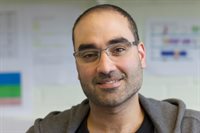
Shawkat K. Guirguis is an academic researcher with a focus on cybersecurity, machine learning, and IoT technologies. His work spans across intrusion detection systems, botnet prevention, and adaptive algorithms for network security. He has contributed to advancements in deep learning applications for social media analysis and real-time trajectory compression. His research often intersects with practical implementations in smart cities and healthcare authentication systems. Key areas of exploration include the use of boosting algorithms, tree-based models, and blockchain integration to enhance IoT security. His publications highlight contributions to wireless sensor networks and stock prediction models. Despite extensive research output, affiliations such as university or department remain unspecified in available records.
Dr. Ivan Lokmer is an Associate Professor in Petroleum Geoscience at the School of Earth Sciences, University College Dublin. His research focuses on geophysical inversion techniques, volcano seismology, and seismic wave propagation in complex media. He holds a PhD from UCD and has expertise in numerical modeling, machine learning applications, and subduction zone dynamics. Key research areas include stress field analysis along the Hikurangi Margin, diffraction imaging using deep learning, and long-period volcanic seismic event mechanisms. He has coordinated modules such as 'Applied Geophysics' and 'Geocomputation' at UCD since 2019. Education: BSc in Physics (University of Zagreb, 1997), MSc in Geophysics (University of Zagreb, 2002), PhD in Volcano Seismology (UCD, 2008). Research highlights include studies on seismic source inversion, borehole stress orientation variability, and volcanic tremor analysis. His work integrates field observations with computational methods to advance understanding of tectonic and volcanic processes. Notable contributions include the FAME project using fiber-optic sensing for volcano monitoring and publications on subduction zone stress patterns. Teaching responsibilities include courses on geophysical methods and geocomputational tools. Ongoing projects focus on machine learning in seismic imaging and geohazard analysis.
Mahmoud Shafik serves as a University Reader in Mechatronics Engineering within the College of Science and Engineering at the University of Glasgow. His academic position places him at the forefront of robotics and intelligent systems research, with a strong emphasis on practical applications that address real-world challenges in healthcare, manufacturing, and urban environments. Dr. Shafik's research interests span multiple interconnected domains: Robotics and mechatronics systems with emphasis on self-learning capabilities Imitation learning and deep learning applications for robotic systems Healthcare technology development, particularly assistive robotics for elderly care Autonomous vehicle navigation systems and sensor fusion techniques AI applications in advanced manufacturing and industrial processes Smart city technologies with focus on accessibility and inclusive design His work demonstrates a consistent approach of bridging theoretical machine learning concepts with practical engineering solutions. Dr. Shafik has established productive research collaborations across multiple institutions and with industry partners including Rolls-Royce. His publications reveal expertise in both fundamental robotics research and applied technology development for specific industrial challenges. Analysis of Dr. Shafik's publication record reveals a clear trajectory toward increasingly sophisticated applications of imitation learning in robotics. His recent work shows particular strength in healthcare robotics, where his team has developed self-learning systems that can assist with patient care. The 2025 publications indicate continued innovation in this space, with a focus on deep imitation learning solutions. His research also maintains strong connections to industrial applications, as evidenced by work on Rolls-Royce turbine components and product inspection systems. Dr. Shafik has made significant contributions to conference proceedings and academic journals, serving as editor for multiple conference proceedings including the 'Advances in Manufacturing Technology' series. His editorial work demonstrates leadership in the academic community and commitment to advancing knowledge dissemination in his field. Based on co-authorship patterns across numerous publications from 2021-2025, Dr. Shafik appears to supervise multiple research students and early-career researchers. His consistent collaboration with researchers including Y. Jadeja, P. Wood, and A. Makkar suggests an active research group focused on developing innovative robotics and AI applications for healthcare, manufacturing, and transportation systems.
Rebecca Randell is Professor of Digital Innovations in Healthcare at the University of Bradford . Previously, she held roles at the University of Leeds (Senior Translational Research Fellow, Lecturer, Associate Professor), University of York , and City University London . She founded the Health Technologies for Quality & Safety research group and directs the Centre for Digital Innovations in Health & Social Care . Education: BSc in Software Engineering (Durham University), PhD in Human-Computer Interaction (Glasgow University, 2004) Her research focuses on the social aspects of healthcare IT design , including medical handover practices, histopathology diagnostics, and multidisciplinary team collaboration. She examines how nurses customize ICU equipment, use decision support systems, and how novel hardware affects GP-patient communication. Her work emphasizes qualitative methods and realist evaluation , with applications in virtual reality for pathology teaching and AI adoption in healthcare. Recent publications highlight AI workload impacts in radiology, EPR systems in ICU during pandemics, and digital tools for cancer referrals. She leads NIHR-funded projects on robotic surgery, clinical dashboards, and falls prevention systems. Scientific Awards: 1 unspecified award She has advised on healthcare fieldwork ethics, clinical audit data use, and strategic workforce planning. Her lab collaborates with the National Pathology Imaging Cooperative and the NIHR Yorkshire & Humber Patient Safety Research Collaboration .
Drew Davidson serves as Associate Professor in the Department of Electrical Engineering and Computer Science at the University of Kansas, where he joined the faculty in August 2018 as Assistant Professor. His research program centers on computer security and privacy, with current projects focused on automatic security policy generation for web applications and privilege separation architectures for modern server environments. Davidson maintains active industry engagement through co-founding Tala Security, a security startup addressing DevOps security challenges. Davidson completed his PhD in December 2016 with dissertation research titled "Enhancing Mobile Security through App Splitting" under advisor Somesh Jha. His doctoral committee included Thomas Reps, Aws Albarghouthi, Mihai Christodorescu, and Xinyu Zhang. This foundational work established his expertise in mobile security mechanisms and application isolation techniques. His research spans critical security domains including mobile platform security, web application vulnerabilities, UAV sensor spoofing, and software ecosystem risks. Davidson's work bridges theoretical security models with practical system implementations, particularly in containerization, microservice architectures, and package manager ecosystems. He has made significant contributions to understanding language-based software security issues and developing deployable countermeasures against supply chain attacks. Analysis of his recent publications reveals concentrated focus on emerging threats in modern software development practices. His 2020-2024 work demonstrates deep investigation into npm package vulnerabilities (typosquatting, package confusion, install-time attacks), microservice security challenges (service mesh vulnerabilities, multi-hop network enforcement), and practical UAV defense mechanisms. This research trajectory shows consistent evolution from mobile security foundations toward contemporary cloud-native and software supply chain security challenges. Scientific recognition includes: NSF SBIR Phase I award (2017) for Tala Security's "Automated Security for the DevOps World" proposal Davidson contributes to academic training through courses including EECS 665 (Compiler Construction) and EECS 700 (Mobile Security). His research program integrates teaching with practical security solutions development, evidenced by student-involved projects in mobile security and compiler techniques. The NSF-funded Tala Security initiative represents significant industry-academia technology transfer. As co-founder of Tala Security, Davidson leads research translating academic insights into commercial security products. The startup focuses on automated security policy generation for DevOps environments, building directly on his publication record in application splitting and container security. Current work explores scan-impeding delays for web deployments and multi-hop network connection enforcement in microservice architectures.
Óscar Gutiérrez Blanco is a Professor at the Universidad de Alcalá , affiliated with the Department of Computer Science within the School of Computer Science and Artificial Intelligence . He is a member of the GTNA Group of Advanced Numerical Techniques , focusing on computational methods and wireless communication systems. He holds a Doctorate in Computer Science from Universidad de Alcalá (2002), with a thesis titled Contribución a la mejora de la óptica física para el cálculo del campo radiado y dispersado por cuerpos complejos , supervised by Dr. Manuel Felipe Cátedra Pérez and Dr. Francisco Manuel Sáez de Adana Herrero. His research emphasizes natural and hybrid localization algorithms , numerical simulation techniques , and wireless communication systems . He has pioneered work in ray-tracing methods for indoor/outdoor localization, real-time kinematic positioning in agriculture, and electromagnetic compatibility in healthcare environments. His interdisciplinary work spans computational biology (avian morphometrics, tick-borne pathogens) and medical research (IGF-I gene therapy for glioblastoma). Key contributions include the FASPRO and FASANT software tools for propagation analysis and antenna modeling. His web-based simulation tool integrates OpenStreetMap data for outdoor path loss estimation. Recent work explores precision agriculture through low-cost RTK systems and high-precision airport safety algorithms. No scientific awards are explicitly listed, but his extensive publication record reflects sustained innovation in computational and applied research. He has advised numerous graduate projects (theses listed in institutional portal) and collaborates internationally on sensor networks and biomedical applications.
Vasil Hnatyshin is a Full Professor and Department Head of the Department of Computer Science within the College of Science & Mathematics at Rowan University. He has established himself as a prominent figure in computer science education and research, with a focus on network technologies and data science applications. His educational background includes: Ph.D. in Computer and Information Sciences from the University of Delaware M.S. in Computer and Information Sciences from the University of Delaware B.S. in Computer Science from Widener University Hnatyshin's research expertise spans multiple critical areas of computer science, with particular emphasis on Internet and Computer Networks, Computer and Network Security, and Data Science. His work bridges theoretical concepts with practical applications, especially in network simulation and security protocols. He has developed innovative approaches to network modeling and has contributed significantly to the understanding of routing protocols in mobile ad hoc networks. His recent research has expanded into machine learning applications, particularly in metabolomics and clustering algorithms, demonstrating his ability to apply computational methods to interdisciplinary problems. An analysis of his publication record reveals a consistent research trajectory focused on computer networking fundamentals that has evolved to incorporate data science and machine learning techniques. His early work centered on network protocols, bandwidth distribution, and quality of service mechanisms, while more recent publications demonstrate an expansion into data clustering algorithms, machine learning applications, and wireless communication systems. This evolution reflects the broader shifts in computer science research toward data-intensive approaches while maintaining his foundational expertise in network technologies. Dr. Hnatyshin has secured significant research funding through multiple collaborative projects with Bristol-Myers Squibb (BMS), serving as Principal Investigator on several initiatives including the Rowan-BMS Collaboration projects spanning from 2014 to 2022. These projects focused on areas such as PCO project development, automated image classification frameworks, EDM software improvements, and automated data analysis. Hnatyshin is an active member of professional organizations including the Association for Computing Machinery (ACM) and the Institute of Electrical and Electronics Engineers (IEEE), demonstrating his engagement with the broader computer science community. His work has been cited numerous times, with his OPNET User Guide book being particularly influential in network simulation education and practice.
Luis Miguel Hernández Acosta serves as an Associate Professor in the Department of Telematics Engineering at the University of Las Palmas de Gran Canaria (ULPGC), affiliated with both the GIR IUMA: Information and Communications Systems research group and the IU of Applied Microelectronics. His academic work spans software engineering and telematics systems within the School of Engineering. His research interests focus on Software Engineering , Mobile Computing , and Computer Vision , with significant contributions to practical applications including web/mobile platforms for service management, computer vision for medical diagnostics, and communication systems. Current projects demonstrate strong industry alignment in restaurant management, transportation optimization, and telemedicine solutions. Analysis of recent publications reveals consistent expertise in full-stack development, real-time systems, and cross-platform frameworks, with increasing integration of machine learning techniques since 2022. Key thematic trends include Practical implementation of publish/subscribe architectures for real-time notifications Computer vision applications in medical diagnostics Optimization algorithms for transportation and service platforms Advising Activities: Supervised 28 bachelor/master theses (2021-2025) Specializes in guiding telecommunications and computer engineering students Projects span mobile development (65%), web platforms (25%), and AI applications (10%) Research Infrastructure: Works within the Department of Telematics Engineering's ecosystem, leveraging resources from both GIR IUMA and the Applied Microelectronics Institute for hardware-software integration projects.
Dr. Emrullah DEMİRAL is a Lecturer in the Software Engineering Department at the Faculty of Engineering, Karabuk University, Turkey. He has been serving as a full-time academic staff member since 2024, holding additional administrative roles as the Director of Safranbolu Vocational School and Department Head at Karabuk University. Dr. DEMİRAL completed his PhD in Computer Engineering from Karabuk University Graduate School of Education in 2024. He earned his Master's degree in Computer Engineering (Thesis) from Karabuk University Institute of Science in 2015, and holds two bachelor's degrees: one in Political Science and Public Administration from Anadolu University (2015), and another in Mathematics from Ege University (2011). Dr. DEMİRAL's research focuses on several key areas within computer science and engineering. His primary interests include Algorithms and Computational Theory , Information Systems , Big Data , and Artificial Intelligence . Within these broad fields, he has made significant contributions to indoor navigation systems using RFID technology , positioning systems , and geographic information systems . His work often combines theoretical computer science with practical applications in emergency evacuation systems, traffic management, and spatial data analysis. He has developed innovative approaches for 3D indoor environments, including robot navigation prototypes and smart fire evacuation systems that leverage artificial neural networks. Analysis of Dr. DEMİRAL's publication record reveals a consistent focus on spatial information systems and navigation technologies. His most recent work (2024-2025) explores GPS trace data clustering and optimization, indoor robot prototypes guided by RFID positioning systems, and mobile-web-based geographic information applications. His research trajectory shows a progression from foundational work on RFID-based positioning systems (2013-2015) to more sophisticated applications integrating artificial intelligence and big data analytics. The interdisciplinary nature of his work bridges computer engineering, geographic information science, and emergency management systems. Dr. DEMİRAL has been actively involved in several research projects, including TÜBİTAK 4004 project on 'Science and Technology in Nature Walking: Awareness of Environment and Climate Change!' and various projects on RFID-based positioning and navigation systems. His research has been supported by both TÜBİTAK and university funding sources. He teaches a diverse range of courses at both undergraduate and graduate levels, including Principles of Artificial Intelligence, Introduction to Software Engineering, Programming II, Web Design, Data Science, and various specialized courses in computer technology and mobile programming.
Wang Baiyao (BY Wang) is a part-time Professor affiliated with Academia Sinica's Department of Information Engineering. His research expertise includes model checking, formal verification, and logic in computer science, though his publication record reveals extensive contributions to climate science, atmospheric measurement systems, and weather monitoring technologies. Academic Rank: Professor (part-time) Institution: Academia Sinica Department: Department of Information Engineering His work spans two distinct fields: Computer Science: Focus on formal methods and logic-based verification systems. Climate Science: Analysis of water vapor trends, radiosonde calibration, and climate modeling through GPS and satellite data. Key publication topics include: Atmospheric measurement systems (radiosonde, GPS, microwave sensors) Climate data homogenization and uncertainty estimation Weather forecasting model evaluation Extreme weather event analysis (e.g., Colorado floods) Polar atmospheric studies (Antarctica inversions) Diurnal climate cycles and boundary layer dynamics
Hattie Cant is a Researcher at the University of Manchester 's Division of Informatics, Imaging & Data Sciences , focusing on digital tools to enhance general practice healthcare services. She collaborates with Professor Tjeerd van Staa and works on multiple NIHR-funded projects. Research Interests: Her work centers on applying digital knowledge support tools through large-scale healthcare data analysis and lived-experience perspectives to optimize complex patient management in UK GP services. She emphasizes mixed-methods approaches and co-development with stakeholders. Recent Publications demonstrate expertise in clinical codelist automation, medication review optimization, polypharmacy risk analysis, and AI-driven prescribing support systems. Her research contributes to UN Sustainable Development Goals in health equity and quality care. Education : MSc Statistics with Data Science (University of Edinburgh, 2020) BSc Mathematics (Imperial College London, 2018) Teaching & Mentorship: She supervises a HDRUK-funded PhD student and teaches on the UCL-UoM Health Informatics MSc program, including R workshop development for maternal health researchers.
Dr. Ali Hilal Al-Bayatti is an Associate Professor in Cyber Security at De Montfort University (DMU), UK, affiliated with the School of Computer Science and Informatics under the Faculty of Computing, Engineering and Media. He leads multiple MSc programs including Cyber Technology, Software Engineering, and Cyber Security. His research focuses on Intelligent Transportation Systems, Vehicular Ad hoc Networks (VANETs), Cyber Security, Context-aware Systems, and Pervasive Computing. He actively contributes to academic leadership through teaching, advising over 30 PhD and MSc students, and program coordination. Education: B.Sc. in Computer Engineering from the University of Technology, Iraq, and Ph.D. in Computer Science from DMU, UK. Professional roles include programme leadership for four MSc programs and teaching the undergraduate module 'CTEC3604 Multi-service Networks.' Research interests span cyber security frameworks for vehicular networks, privacy-preserving protocols, and smart transportation systems. His work emphasizes safety, efficiency, and security in mobility contexts. He has authored numerous publications on topics such as VANET security, medical imaging analysis, and crash detection models. Professional activities include journal reviewing for titles like IET Networking, Vehicular Communications, and Sensors. He has served on program committees for IEEE conferences (e.g., VTC2016, ISWTA2012) and international workshops on technology management and information systems. His advising record includes successful PhD completions on topics like context-aware systems, GPS integrity monitoring, and privacy management in data warehousing. Current PhD students are exploring crash-detection architectures and performance testing in VANETs. Labs/Teams: Member of the Cyber Technology Institute (CTI) and Software Technology Research Laboratory (STRL) at DMU, focusing on applied research in secure software and vehicular technologies.
Sung-Bae Cho is a prolific researcher in computer science with a publication record spanning over three decades from 1990 to 2025, demonstrating sustained academic productivity and research leadership. Their work primarily focuses on machine learning, neural networks, and their applications across diverse domains including cybersecurity, healthcare, and intelligent systems. Cho's research interests center around advanced machine learning techniques including deep learning architectures, Bayesian networks, and context-aware systems. Their work shows a consistent evolution from traditional neural networks to modern deep learning approaches, with recent publications emphasizing graph neural networks, federated learning, and anomaly detection systems. The research demonstrates strong methodological rigor with applications in practical domains such as traffic prediction, medical diagnosis, and security systems. The publication pattern reveals significant research productivity with multiple high-impact papers annually in reputable venues including IEEE Access, Neurocomputing, and Expert Systems with Applications. Recent work shows particular emphasis on addressing contemporary challenges in machine learning including continual learning, few-shot learning, and privacy-preserving approaches in federated settings. The research demonstrates both theoretical contributions and practical implementations across various application domains. Cho has cultivated an extensive collaborative network with numerous co-authors including Kyung-Joong Kim, Satchidananda Dehuri, Jin-Hyuk Hong, and Seok-Jun Bu, suggesting leadership in research groups and projects. The collaborative pattern indicates supervision of junior researchers and students, though specific advisee relationships aren't explicitly documented in the publication metadata. The researcher maintains active contributions to laboratory and team-based research, with recent publications indicating involvement in projects related to healthcare AI, cybersecurity systems, and intelligent transportation. Current research directions appear focused on addressing limitations in deep learning including catastrophic forgetting, data scarcity, and privacy concerns through novel architectural and training approaches.
Tanvir Islam is a distinguished researcher and professor at Sungkyunkwan University's College of Engineering, Department of Electrical and Computer Engineering. His extensive publication record spanning over 15 years demonstrates significant contributions to multiple technical fields including remote sensing, antenna design, wireless communications, and machine learning applications. His work bridges theoretical advancements with practical implementations across diverse technological domains. Dr. Islam's research interests encompass a broad spectrum of cutting-edge technologies. He has made substantial contributions to remote sensing methodologies, particularly in land surface temperature and emissivity retrieval from satellite data. His expertise extends to advanced antenna design for 5G and mm-wave communications, where he has developed innovative MIMO antenna systems and metamaterial-inspired filters. Additionally, he has pioneered work in applying machine learning techniques to diverse problems including wind speed super-resolution, personalized meal recommendation systems, and multilingual natural language processing. His interdisciplinary approach integrates signal processing, computational methods, and domain-specific knowledge to solve complex engineering challenges. Analysis of Dr. Islam's recent publications (2023-2025) reveals a strategic expansion of his research portfolio while maintaining core expertise. His work shows a clear evolution from traditional remote sensing and antenna design toward more integrated systems that incorporate machine learning and artificial intelligence. The increasing number of publications in areas like large language model adaptation, personalized recommendation systems, and multilingual NLP demonstrates his ability to adapt to emerging technological trends while maintaining his foundational expertise in wireless communications and remote sensing. Dr. Islam has established productive collaborations with researchers across multiple institutions worldwide, as evidenced by his extensive co-author network including Sudipta Das, Boddapati Taraka Phani Madhav, and Mohammed El Ghzaoui. His research has been published in high-impact journals such as IEEE Transactions on Geoscience and Remote Sensing, IEEE Access, and Remote Sensing, reflecting the quality and relevance of his contributions to the scientific community.
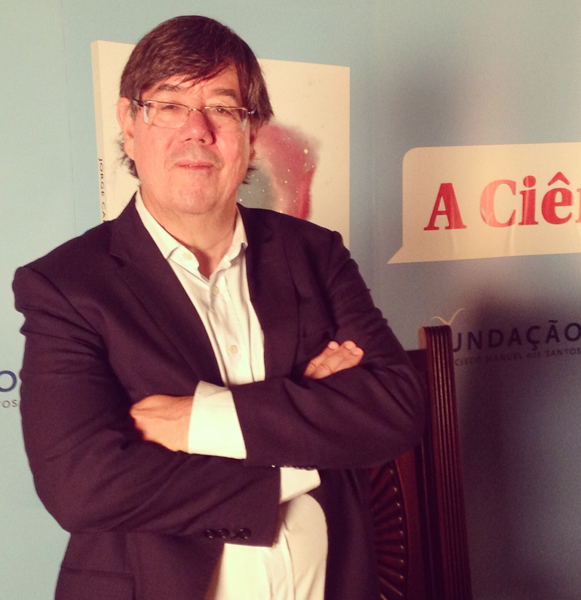
Carlos Fiolhais is a distinguished Full Professor of Physics at the Department of Physics, University of Coimbra, where he has served since achieving this rank in 2000 after progressing through Associate and Assistant Professor positions at the same institution. Born in Lisbon in 1956, he graduated in Physics from the University of Coimbra in 1978 and earned his PhD in Theoretical Physics from Goethe University in Frankfurt/Main, Germany in 1982. His academic career includes sabbatical leaves at Tulane University in New Orleans (1991 and 1997) and professorships in the United States and Brazil. Fiolhais's research interests span three primary areas: Computational Condensed Matter Physics, History of Science, and Physics Education. As founder and director of the Center for Computational Physics at the University of Coimbra, he championed the installation of Portugal's largest computer for scientific computing. His work extends to science communication and public engagement through his direction of the 'Rómulo - Ciência Viva Center of the University of Coimbra' and regular contributions to the national newspaper 'Público.' Analysis of his publication record reveals a diverse scholarly output with significant contributions across multiple domains. His work demonstrates a consistent pattern of bridging theoretical physics with historical context and educational applications. The articles reflect strong interdisciplinary connections between computational methods, historical analysis, and pedagogical innovation, with increasing emphasis on digital approaches to physics education in recent years. Major Awards and Honors: Latin Union Prize for scientific translation (1994) União Latina - JNICT Prize for scientific translation (2005) Gold Globe of Merit and Excellence in Science (SIC TV channel) (2005) Order of Henry the Navigator (2005) Rómulo de Carvalho Prize (University of Évora) (2006) Innovation Prize by Third Millennium Forum (2006) BBVA Prize for the best article in teaching Physics in the Ibero-American space (2012) Innovation Prize Manuel Pinto de Azevedo Júnior (2012) Throughout his career, Fiolhais has demonstrated exceptional leadership in academic administration, having served as Director of the Computer Center of the University of Coimbra, Chairman of the Interdisciplinary Research Institute, Director of the General Library, and member of the Scientific Board of the Foundation for Science and Technology. His supervisory work includes mentoring numerous M.Sc. and Ph.D. students, though specific names aren't documented in the available sources. He has also coordinated multiple research projects and contributed significantly to science policy through his involvement with the Francisco Manuel dos Santos Foundation, where he created the GPS - Global Portuguese Scientists network. Fiolhais has established several notable institutional structures including the Center for Computational Physics, the Rómulo - Ciência Viva Center, and the Integrated Library Service of the University of Coimbra (SIBUC), along with digital repositories 'Estudo Geral' and 'Almamater.' His entrepreneurial spirit is evident in co-founding Coimbra Genomics and maintaining the blog 'De Rerum Natura.'