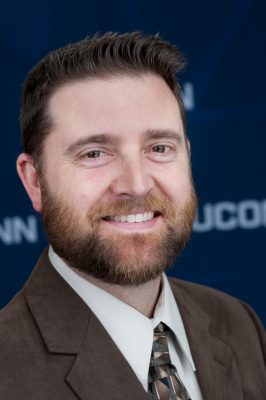
Dr. Chadwick Rittenhouse is an Associate Professor in Residence at the University of Connecticut , serving as Associate Department Head in the Department of Natural Resources & the Environment. He also directs the Master of Energy and Environmental Management program and coordinates the Sustainable Environmental Planning and Management initiative. PhD (2008) , Wildlife Science, University of Missouri MS (2003) , Wildlife Science, University of Missouri BS (2000) , Wildlife Ecology, University of Wisconsin-Madison His research focuses on the intersection of science and environmental management , with emphasis on conservation planning and landscape ecology . Key areas include: Remote sensing and GIS applications in forest disturbance analysis Wildlife resource selection , movement patterns, and population dynamics (elk, mule deer, box turtles, birds) Environmental planning for habitat protection and restoration Climate change impacts on forest ecosystems Decision support systems for conservation stakeholders Recent publications highlight trends in invasive species management , geospatial conservation tools , and adaptive forest management . His work spans ecosystem restoration in South Africa, bat habitat responses to silviculture, and private land stewardship challenges in the Northeast US. Scientific awards include: Leadership Institute Fellow , The Wildlife Society (2011) Dr. Rittenhouse teaches advanced courses in natural resources management, decision methods, environmental communications, and conservation planning. He has active collaborations in forest ecosystem vulnerability assessments and habitat suitability modeling .
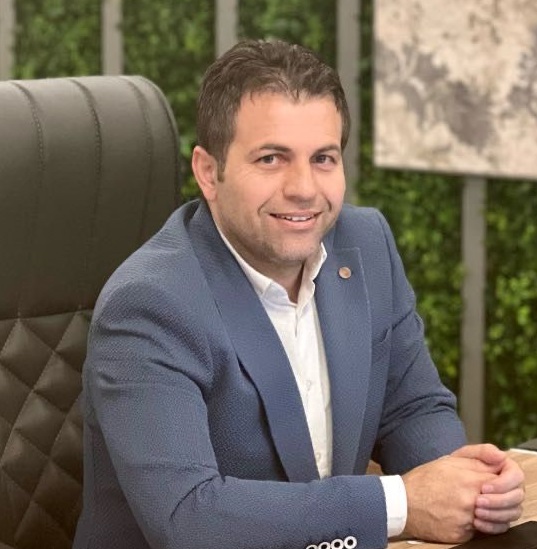
Süleyman Mete is an Associate Professor in the Industrial Engineering Department at Gaziantep University's Faculty of Engineering. He has been serving in this position since 2021, following previous roles as a Doctor Lecturer at Gaziantep University (2019-2021) and Munzur University (2017-2019). His academic career began as a Research Assistant at Gaziantep University (2011-2016) and Tunceli University (2010-2011). Dr. Mete earned his Doctorate in Industrial Engineering from Gaziantep University (2013-2017), followed by a Master's degree in Industrial Engineering from the same institution (2011-2013). He completed his undergraduate studies in Industrial Engineering at Selcuk University (2005-2010). Dr. Mete's research focuses on Operations Research, Modeling and Optimization, and Multi-criteria Decision Making. His work spans several specialized areas including disassembly line balancing, humanitarian logistics, risk assessment, and fuzzy logic applications. His research integrates mathematical programming with practical industrial applications, particularly in disaster response, sustainable manufacturing, and supply chain optimization. He has developed innovative approaches combining various multi-criteria decision-making methods with fuzzy logic to address complex real-world problems in occupational safety, transportation, and humanitarian aid distribution. His extensive publication record demonstrates a clear trajectory toward increasingly complex applications of optimization techniques, particularly in humanitarian contexts. Recent work shows a strong focus on drone-assisted logistics, urban mobility sustainability, and advanced risk assessment methodologies using various fuzzy set approaches. His research consistently bridges theoretical methodological development with practical applications in industrial engineering problems. University 2% Most Influential Scientist (2023) University 2% Most Influential Scientist (2022) Dr. Mete has successfully supervised numerous graduate students through their thesis work, with a particular focus on humanitarian logistics, disassembly line balancing, and risk assessment applications. His research projects include "Sustainable, Digital, and Smart Humanitarian Logistics in Disaster Relief Operations" (EU-funded) and "Data-Driven and Web-Based Decision Support System Development for Integrated Optimization of Vector Control Process" (Tübitak 1505). He has also served as a visiting researcher at Karlsruhe Institute of Technology (KIT) in Germany under the TÜBİTAK 2219 Postdoctoral Research Program. Dr. Mete's work demonstrates strong integration between theoretical methodological development and practical applications, particularly in humanitarian contexts and industrial engineering problems. His research group appears to focus on optimization techniques applied to real-world challenges in disaster response, sustainable manufacturing, and supply chain management.
Dr Alexander Krasovitsky is a Lecturer in Russian Language at the University of Surrey, with extensive contributions to Russian and South Slavic linguistics. His research bridges synchronic and diachronic morphosyntax, dialectal/historical phonology, and GIS for linguistic analysis, focusing on vowel reduction/neutralization patterns and case inflection loss. Current project: Declining Case: Inflectional Loss in Progress (Leverhulme Trust 2021–2024) Recent themes: Vowel reduction in Russian dialects (Alexander von Humboldt grants 2018–2021), South Slavic case loss, and EMU speech data management systems Scientific awards include multiple Alexander von Humboldt fellowships (2009–2021), AHRC funding (2004–2008), and Russian Foundation for Humanities support. He has supervised PhD students like Tatiana Korobeinikova and led key databases including the Russian Regional Corpus and Declining Case database. Notable presentations: 45th DGfS Annual Meeting (2023), 25th ICHL (2022), and SLE conferences (2010–2023) Collaborations with institutions: University of Surrey (Surrey Morphology Group), Ludwig Maximilian University Munich, Ruhr University Bochum, Russian Academy of Sciences, and University of Oxford
Professor Alexandra Tragaki is a faculty member at Harokopio University of Athens, serving in the Department of Geography, where she holds the rank of Professor of Economic Demography. Her office is located in the Geography Building (Office 2.2) at 70 El. Venizelou, Kallithea, Athens, Greece. Education: PhD in Economics (Specialisation in Economic Demography), Institut d’Études Politiques de Paris, 1997 DEA in Economic Demography, Institut d’Études Politiques de Paris, 1993 Degree in Mathematics, National and Kapodistrian University of Athens, 1992 Research Interests: Professor Tragaki’s research centres on the complex interactions between demographic dynamics, economic performance, environmental sustainability and social policy. She investigates how population ageing, migration and fertility shifts influence labour markets, social security systems and environmental vulnerability. Her work integrates advanced statistical and spatial analysis to inform evidence-based policy making, particularly within the European context. Across her extensive publication record, three dominant themes emerge: (1) mortality modelling and health transitions , often using sophisticated parametric distributions to forecast longevity and evaluate pandemic impacts; (2) fertility dynamics under economic stress , exploring how recessions, labour-market conditions and policy interventions shape reproductive behaviour; and (3) spatial demography and risk assessment , mapping population structures, coastal hazards and migration patterns across Greece and Europe. Scientific Awards: No specific awards are mentioned in the provided materials. Teaching & Program Development: Undergraduate courses: Statistical Analysis for Geographers, Population Geography and Demography, Population Economics and Policy Postgraduate courses: Applied Spatial Analysis, The Demographic Factor in Europe’s Economic and Social Policy, Migration Policy and Migration Flows She is involved in the interdepartmental MSc in Applied Geoinformatics and the MSc in Climate Crisis, Risks and Disasters. Laboratories & Research Teams: While no dedicated laboratory is explicitly named, her teaching and research activities within the Department of Geography suggest close collaboration with spatial analysis and geoinformatics teams at Harokopio University.
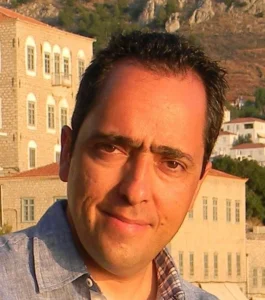
Professor Theodoridis Ioannis is a distinguished faculty member in the Department of Informatics at the University of Piraeus, where he serves as Director of the Data Science Laboratory within the School of Information and Communication Technologies. With a career spanning over two decades, he has established himself as a leading expert in data management and analysis. His research interests focus on Data Science, particularly in databases, big data management, data mining, and geoinformatics. Professor Theodoridis has made significant contributions to spatial database systems, time series analysis, and distributed data processing. His work bridges theoretical foundations with practical applications in areas such as smart cities, mobility analytics, and scientific data management. His publication record demonstrates consistent research productivity with over 100 peer-reviewed articles in top-tier venues, accumulating more than 10,000 citations. His research output shows a clear evolution from foundational database techniques toward contemporary challenges in big data analytics, machine learning integration, and privacy-preserving methods. Member of editorial board of ACM Computing Surveys (since 2016) Reviewer for numerous international journals and conferences Active participant in data management conference committees Professor Theodoridis has secured significant research funding through Horizon 2020 projects, serving as project coordinator and research team leader since 2001. His work demonstrates strong industry and academic collaboration, with applications spanning multiple domains. He has also co-authored three influential monographs in his field. He leads the Data Science Laboratory, which serves as a hub for interdisciplinary research at the intersection of database systems, machine learning, and domain-specific applications. The laboratory fosters collaboration between computer scientists, domain experts, and industry partners to address real-world data challenges.
Claire Pavlik is a Lecturer at the University of Iowa . Her research bridges economic geography and global health, focusing on service industry restructuring (particularly in healthcare) and the spatial implications of care delivery systems. She employs qualitative methods and GIS-based assessments in her analyses. Interdisciplinary collaborations with University of Iowa's College of Nursing and College of Public Health Recipient of grants from Obermann Center and CDC Specializes in home-based care economics and spatial reorganization of medical services Research Focus Pavlik's work examines how healthcare delivery systems transition from hospital-centred inpatient care to clinic-based ambulatory care and home/family-provided care. She analyzes: Organizational changes in healthcare sectors Geospatial impacts of service relocation Unpaid labor in care economies Technological rationalization in medical services Publications & Methodologies Her scholarship spans geostatistical methods (kriging, inverse distance weighting) to network analysis in economic systems. Key contributions include: Comparative analysis of spatial interpolation techniques Critical evaluation of autocorrelated errors in statistical surfaces Exploration of parallel processing applications in spatial series Academic Contributions Teaching includes courses on GIS applications in urban/economic contexts, European geography, and graduate-level economic geography. Supervises PhD candidates while integrating qualitative research methodologies into spatial analysis training.
Richard Lemoine-Rodriguez is a Postdoctoral Research Fellow in the English Linguistics department at the Institute of Modern Languages, University of Würzburg. His unique interdisciplinary position bridges traditional linguistics with advanced geospatial analysis through the emerging field of Geolingual Studies, which examines the interconnection between language patterns and physical urban spaces. His educational background reflects this interdisciplinary approach, holding a Dr. rer. nat. in Geography from Ruhr-Universität Bochum (dissertation: "Urban form, urban warming and time. From global regularities to local heterogeneities"), a Master in Geography from the National Autonomous University of Mexico (thesis on urban conurbations in Morelia), and a Bachelor in Biology from the University of Veracruz (thesis on vegetation cover changes in Xalapa). Lemoine-Rodriguez's research integrates concepts from urban ecology, geoinformatics, and digital humanities to study cities as complex socio-ecological systems. His primary interests include urban form, social perception, urban big data, urban heat island effects, remote sensing, and the relationship between linguistic patterns and spatial organization. He approaches cities as complex systems where physical and social dimensions interact, aiming to uncover patterns that can inform more sustainable urban development. His work often employs large-scale spatial analysis of social media data to understand how people interact with and perceive urban environments. His recent publications (2024-2025) reveal a strong focus on the intersection of urban morphology, social media analytics, and climate impacts. He has developed innovative methods for analyzing geotagged social media content to understand urban concerns, particularly regarding heat exposure. His work on "Geolingual Studies" represents a novel approach combining linguistics with remote sensing to assess how physical and social spaces interrelate. The publication pattern shows increasing international collaboration, particularly with researchers from Germany, Mexico, and other global partners. As a developer of research tools, he co-created LSTtools, an R package for processing thermal data from Landsat and MODIS images, demonstrating his technical expertise in geospatial analysis. He is actively involved in multiple professional networks including the Global Land Programme, Ecosystem Services Partnership, Society for Urban Ecology, and the International Association for Urban Climate, reflecting the interdisciplinary nature of his work. Lemoine-Rodriguez teaches in the Spatio-temporal dynamics of urban systems and the EAGLE Master program at the University of Würzburg, sharing his expertise in geospatial analysis and urban studies. He has previously taught courses on GIS modeling, remote sensing, and spatial analysis at institutions including Ruhr-Universität Bochum and the National Autonomous University of Mexico.
Anna Porter is an Associate Research Scientist in Biostatistics at the Yale School of Public Health and an Affiliated Faculty member at the Yale Institute for Global Health. With 20 years of diverse experience in public health research, she focuses on answering both methodological and health outcome questions with expertise in clinical and translational research. Her educational background includes: PhD in Epidemiology from UTHealth School of Public Health in Austin (2017) MPH in Health Behavior from The University of Alabama at Birmingham School of Public Health (2009) BS in Psychology from The University of Alabama at Birmingham (2006) Post-doctoral training in Cardiovascular Epidemiology at UNC Chapel Hill Dr. Porter's research spans multiple domains with a historical focus on physical activity and how the built environment influences behaviors such as bicycling. Her work demonstrates expertise across: Cardiorespiratory and Physical Fitness Cancer, Cardiovascular Diseases, and Chronic Diseases Epidemiology Methods and GIS/Disease Mapping Global Health and Health Equity Implementation Science and Environmental Health Her recent publications reveal a strategic expansion into environmental health research, particularly examining the relationship between per- and polyfluoroalkyl substances (PFAS) and health outcomes including infectious disease susceptibility and vaccine response. She maintains her foundational interest in physical activity through developing measurement tools and community-based interventions. Key contributions include: Development of the Active Communities Tool for implementing built environment recommendations Research on leisure-time activities and mortality risk relationships Comprehensive studies on burnout among secondary school athletic trainers Groundbreaking investigations into PFAS exposure and immune response As a member of the Center for Methods in Implementation and Prevention Science (CMIPS), Dr. Porter bridges methodological innovation with practical public health applications through rigorous epidemiological approaches that address critical population health challenges.
Karin Pfeffer is a Full Professor at the Department of Urban and Regional Planning and Geo-Information Management within the Faculty of Geo-Information Science and Earth Observation at the University of Twente. Previously, she served as Associate Professor at the University of Amsterdam (2009-2016) and as Vice-Dean Research at ITC (2020-2024). Her work bridges geospatial technologies with urban sustainability, focusing on infrastructure, equity, and digital innovation. PhD in Physical Geography, Utrecht University Research Interests: Urban infrastructures, socio-spatial inequality, digital twins, participatory GIS, and climate-resilient urbanism. She integrates GIS, remote sensing, and qualitative methods to analyze urban poverty, smart cities, and nature-based solutions. Recent Article Trends: Her 2024-2025 work examines remote work's urban-rural impacts , inclusive mapping tools , and digital twins for drainage systems . Themes span geospatial analytics, equity in infrastructure, and collaborative planning. Scientific Awards: 2022-23: Room for Failure in Science Grant (Diversity, Equity & Inclusion Fund) Supervised Work & Grants: She guides 12 ongoing and 23 completed PhD projects (e.g., urban mobility in Saudi Arabia, digital twins for drainage systems). Past projects include DynaSlum (slum growth modelling) and CODALoop (energy behavior feedback). Her research aligns with UN SDGs 11 (Sustainable Cities) and 13 (Climate Action).
Jessie Marshall Zarazaga is a Clinical Associate Professor of Civil & Environmental Engineering at the Lyle School of Engineering, Southern Methodist University . She directs the Sustainability + Development Program (SDP) and the Initiative for Spatial Literacy (GIS@SMU) , while also serving as a Fellow at the Hunt Institute for Engineering and Humanity. Trained as an architect and urban designer, her work bridges urbanism, landscape design, geospatial mapping, and community engagement. Education: Ph.D. Engineering, Applied Science, SMU M.A. Dip. Arch. Architecture, Cambridge University B.A. Architecture, Cambridge University B.A. Theatre Design, Williams College Research Interests focus on integrating creativity and design into engineering education, using participatory GIS for community-driven sustainable urban development. Her work examines how infrastructure as landscape shapes urban spaces, emphasizing environmental, economic, and cultural equity through collaborative design processes. Recent Publications highlight trends in GIS applications for education and urban analysis, with case studies in Dallas, Chile, Tanzania, and Texas. Topics span infrastructure equity , COVID-era pedagogy , and community-based mapping . Scientific Awards: Dunnigan Community Engagement Award (2023) Tech Titans University Award (2022) Fulbright Scholar (2005) RIBA/USA Commendation Award (2004) Annaka International Design Competition Finalist (2003) AIA Dallas Chapter Honor Awards (2009, 2001) British American Universities Fellowship (1992) Wingate Foundation Fellowship (1989) As a GIS@SMU director, she leads initiatives connecting geospatial analysis with social equity , including the Paseo project remapping West Dallas. Her Hunt Institute fellowship supports interdisciplinary collaborations in sustainable development.
Joel Jalkanen is a Postdoctoral Researcher at the University of Helsinki working within the Biodiversity Informatics Unit of the Conservation Informatics Research Group. His research focuses on the intersection of urban planning, biodiversity conservation, and spatial analysis, with particular emphasis on developing methods for identifying priority urban green areas that serve both ecological and social functions. Dr. Jalkanen's research interests include urban ecology, conservation biology, spatial conservation prioritization, and biodiversity offsetting. His work addresses critical challenges in urban environmental management, particularly how to balance biodiversity conservation with equitable access to green spaces in cities. His research employs advanced spatial analysis techniques to identify optimal locations for urban green infrastructure that maximize both ecological benefits and social accessibility. His publication record demonstrates a strong focus on practical applications of conservation science in urban contexts, with recent work examining the implications of EU Nature Restoration Law targets, methods for identifying priority urban green areas, and the social values associated with biodiversity and carbon flow in cities. His research shows a clear trajectory toward increasingly interdisciplinary work that bridges ecological science with urban planning and social considerations. Dr. Jalkanen is actively involved in significant research projects, most notably the BOOST and BOOST II projects funded by the Academy of Finland. These projects focus on biodiversity offsetting in the context of a just transition toward no net loss of nature. His collaborative work spans multiple institutions and disciplines, reflecting the interdisciplinary nature of contemporary conservation science. He has participated in numerous academic activities including conferences, seminars, and public talks, demonstrating his engagement with both academic and broader communities. His 2017 presentation "Biodiversity-Based and Ecosystem Function-Aware Spatial Prioritization of an Urban Green Infrastructure" highlights his expertise in applying spatial analysis to urban conservation challenges.
Richard J. Barth Jr, MD is Professor of Surgery and Chief of the Section of General Surgery at Dartmouth's Geisel School of Medicine, where he has significantly expanded the surgical faculty from 10 to 24 members. His clinical practice focuses on breast cancer, melanoma, pancreas cancer, and metastatic liver tumors, performing approximately 250 operations annually with over 95% patient satisfaction ratings. Dr. Barth earned his A.B. in Biochemical Sciences from Princeton (1981) and his M.D. from Harvard (1985), followed by a research fellowship in Steve Rosenberg's lab at the NCI Surgery Branch. His educational background established the foundation for his dual career in surgical oncology and immunotherapy research. His research spans three major domains: 1) Development of novel methods to increase precision in breast conserving surgery, including founding CairnSurgical, Inc. to commercialize the Breast Cancer Locator device; 2) Appropriate opioid prescribing after surgery, where his work demonstrated that 75% of prescribed opioids go unused and developed interventions to reduce prescriptions by 50%; and 3) Cancer immunotherapy, with seminal work on tumor infiltrating lymphocytes and dendritic cell vaccines. His clinical trial of a dendritic cell vaccine for metastatic colorectal cancer showed 66% of patients developed immune responses with improved 5-year recurrence-free survival. Analysis of his recent publications reveals a consistent trajectory from foundational immunology research toward practical clinical innovations addressing surgical precision and the opioid epidemic. His work increasingly focuses on implementing evidence-based changes in surgical practice through device development, clinical guidelines, and healthcare system interventions. Arthur Naitove Award and Surgery Chief Resident's Award for teaching excellence Dartmouth Mosenthal Surgical Fellowship and DMS Excellence in Teaching Award Alma Hass Milham Award for clinical excellence and compassionate patient care Recognition as Leading Physician in Breast and General Surgery by NH Magazine Finalist for Leonard Tow Humanism in Medicine Award (twice) Dr. Barth has mentored 25 residents, medical and PhD students in research projects resulting in national presentations and publications, with two advancing to surgical oncology faculty positions. His administrative leadership includes directing the GI Oncology Program, chairing the Clinical Cancer Care Committee, and co-directing the Immunology and Cancer Immunotherapy Research Program. He has secured significant funding including NIH R21 and SBIR grants for his surgical device development work. As Section Chief of General Surgery, he developed a multidisciplinary collaboration with four community hospitals and established specialized divisions in colorectal surgery and acute care/trauma. His laboratory work in cancer immunotherapy evolved into clinical applications through the Dartmouth Immunology COBRE grant-funded DC vaccine trial, demonstrating the translational research pipeline from bench to bedside.
Professor Tatjana Thimm is a Professor for Tourism Management at the Constance University of Applied Sciences (HTWG Konstanz) since 2007, where she has made significant contributions to tourism research and education. She serves as a representative of the Faculty of Economics and Social Sciences in the Sustainability Council of the HTWG Konstanz and is actively involved in numerous research projects focusing on sustainable tourism development. Her academic journey includes a Doctorate in Philosophy from the Georg-August University of Göttingen in 2002, following studies in Economic Geography, Romance Studies, Economics and International Cooperation at the University of Trier and RWTH Aachen. Prior to her current position, she served as Head of the Office for University Development, Law and Research at the Hamburg University of Applied Sciences (2003-2007) and held various positions in press and public relations at cultural institutions and universities. Professor Thimm's research interests span Sustainable Tourism, Cultural Tourism, Constructivism (New Cultural Geography), Destination Management, Tourism Marketing, Tourism Experience Management, Travel Writing, Regional Development, Service Management, and Mobility, with regional expertise in India, Lake Constance, Spain, Argentina, New Zealand, Canada, Australia, Oman, and Uzbekistan. Her work particularly emphasizes sustainable development approaches in tourism, cultural heritage preservation, and innovative destination management strategies. Her recent publications and presentations reveal a strong focus on cultural mapping, indigenous tourism, accessible tourism, e-mobility in tourism destinations, and the impacts of climate change on tourism. She has developed frameworks for indigenous ecotourism projects, examined Finnish tango dance tourism as embodied space, and investigated cultural sustainability in Aboriginal tourism contexts. Her research often employs participatory GIS and digital storytelling methods to understand cultural perceptions of tourist destinations. APSA Pacific Studies Association AK Tourism Research of the DGfG (Member of the Extended Board 2013-2016) BEST Education Network (Sustainable Tourism) DGT German Society for Tourism Studies Association of Geographers at German Universities (VGDH) gate Joint Working Group for Tourism and Ethnology IAF Institute for Applied Research at the HTWG Konstanz German Society for Geography IGU Commission on Tourism, Leisure and Global Change Professor Thimm serves on the scientific advisory board of the journal via@ and acts as a reviewer for multiple prestigious journals including the Journal of Tourism Studies, Europa Regional magazine, Journal of Heritage Tourism, and Journal of Rural and Community Development. She has received recognition including third place in the Best Contribution Award for her work on Finnish Tango Dance Tourism and admission to the Baden-Wuerttemberg Doctoral Association in 2022. Her current research projects include "East-West Dialogue" focusing on Uzbekistan (funded by DAAD) and "Utopia Auroville?" (funded by HTWG, SRP). She has led numerous completed projects such as Cultural Mapping 4.0, Accessible Tourism at Lake Constance, Digitalisation in the Leisure Industry, PredTour, and E-Destination, often in collaboration with international partners like ZHAW (Switzerland). Professor Thimm maintains an active international research presence with recent research stays in Australia, New Zealand, the Seychelles, and Uzbekistan. She frequently presents her work at major international conferences including CAUTHE, IGU, and AAG, demonstrating her global engagement in tourism scholarship.
Lutz Kindler serves as a Lecturer at the University of Mainz and as a scientific Assistant at MONREPOS Archaeological Research Centre and Museum for Human Behavioural Evolution, part of the Leibniz Center for Archaeology. He has maintained these positions since 2004 and 2003 respectively, establishing himself as a prominent researcher in Paleolithic archaeology. Dr. Kindler earned his Master's degree in 2002 from the University of Cologne with studies spanning Prehistory and Early History, Ancient History, Geology/Paleontology, and Biology. He completed his doctorate in Prehistory and Early History at the University of Mainz in 2007. His academic credentials reflect the interdisciplinary nature of his research approach. His primary research interests encompass Taphonomy, Zooarchaeology, Paleolithic studies, Paleoecology, human evolution, Human ecology, and Nutrition and subsistence. Through meticulous analysis of faunal remains and stable isotope studies, Kindler has significantly advanced our understanding of Neanderthal hunting practices, landscape utilization, and adaptation to interglacial environments. His work demonstrates that Neanderthals possessed sophisticated ecological knowledge and hunting capabilities previously underestimated by scholars. Analysis of Dr. Kindler's publication record reveals a consistent focus on Neanderthal exploitation of large mammals, particularly straight-tusked elephants, and the reconstruction of Pleistocene environments through interdisciplinary approaches. His research at the Neumark-Nord site in Germany has been particularly influential, showing that Neanderthals actively hunted elephants weighing up to 13 metric tons during the Last Interglacial period. His methodological approach integrates zooarchaeology, stable isotope analysis, and GIS-based spatial analysis to reconstruct past human behaviors and ecological contexts. This comprehensive methodology has produced groundbreaking insights into Neanderthal social organization, suggesting either temporary aggregation in larger groups than previously believed or sophisticated methods of food preservation. Dr. Kindler's research has been conducted primarily at key Pleistocene sites in Germany, including Neumark-Nord, Balver Cave, and other locations that provide critical insights into Neanderthal adaptations during different climatic periods. His work challenges simplistic views of Neanderthals as cognitively inferior to modern humans, instead portraying them as sophisticated hunters with complex social structures and deep ecological knowledge.
Dr. Christian Sailer is a Lecturer at ETH Zurich's Department of Civil, Environmental and Geomatic Engineering. As a teaching specialist, he supports educational innovation in geospatial technologies and digital learning methods. His research develops GIS-based educational frameworks for field studies and civic engagement. Sailer created the OMLETH platform for location-based mobile learning and founded GEOSchoolDay to promote geospatial literacy. Current projects examine augmented reality for urban planning participation and AI integration in geography education. He holds a PhD from ETH Zurich focused on enhancing spatial reasoning through mobile technologies. Beyond academia, Sailer leads geoinformatics initiatives through SOGI (Swiss Organization for Geographic Information) and applies GIS in environmental education through his smartTrip consultancy. He maintains active political engagement in sustainable community development in Langnau.