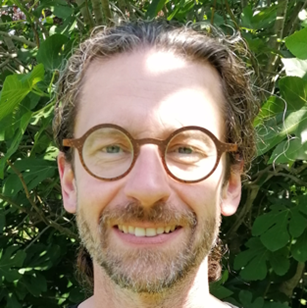
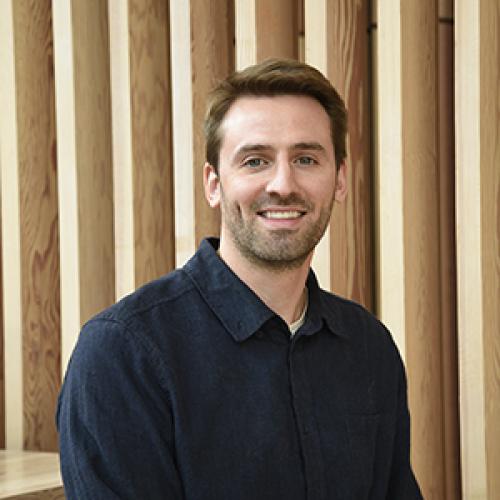
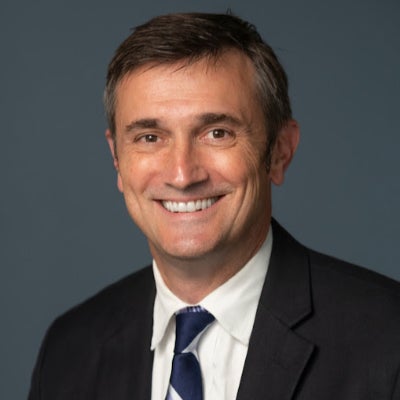
Michael McAlpine is a Professor in the Mechanical Engineering department at the University of Minnesota . He also holds affiliations with the Biomedical Engineering and Electrical and Computer Engineering departments. His research focuses on 3D printing functional materials & devices , Nanoscale inks , Biomedical devices , Bioelectronics , and Flexible Microsystems . Research Interests : 3D Printing, Biomedical Engineering, Nanotechnology, Flexible Electronics, Microfluidics Labs : ME 361/363 Contact : mcalpine@umn.edu , (612) 626-3303, ME 117 Recent Research Trends include 3D Printed Biomedical Devices , Flexible Electronics , and Bioprinting Applications . His work spans from Spinal Organoid Formation to Programmable Drug Release Capsules . Scientific Award : Circulation Research 2020 Best Manuscript Award
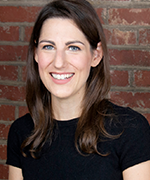
Allison Koenecke is an Assistant Professor of Information Science at Cornell Tech and a field faculty member in Computer Science at Cornell University. Previously, she was a postdoctoral researcher at Microsoft Research New England and completed her PhD at Stanford University’s Institute for Computational & Mathematical Engineering. Her research focuses on algorithmic fairness, computational social science, and causal inference in public health, addressing disparities in automated systems like speech recognition and policy decision-making. Education : PhD, Stanford Institute for Computational & Mathematical Engineering MA/MS, Stanford University BA/BS, Massachusetts Institute of Technology Research Interests : Dr. Koenecke’s work bridges economics and computer science, emphasizing equity in AI systems. Key areas include: Algorithmic bias in speech recognition (e.g., racial disparities in voice assistants) Fairness in policy tools like environmental justice data systems Causal analysis in public health interventions Ethical implications of large language models in education Media & Impact : Her research has been featured in outlets like New York Times , Science , and Scientific American . Notable studies include exposing racial gaps in speech-to-text systems and advocating for inclusive dataset development. She also explores societal impacts of AI in education and governance. Awards : Sloan Research Fellow in Computer Science Forbes 30 Under 30 in Science NSF Awards Cornell CIS Teaching Excellence Award (2024) Teaching & Outreach : She teaches courses like Designing Fair Algorithms and Data Science for Global Development , emphasizing interdisciplinary collaboration. Her PhD Professionalization course addresses hidden curricula in academia. She advises on AI ethics for nonprofits, tech companies, and government agencies.
Professor Andrew Hudson-Smith is the Director of the Bartlett Centre for Advanced Spatial Analysis (CASA) at University College London (UCL), where he holds the title of Professor of Digital Urban Systems. He leads UCL's academic and applied research in smart cities, digital twins, and urban informatics. His roles include Editor-in-Chief of the Future Internet Journal and academic lead for the Smart Queen Elizabeth Park project. He contributes to strategic initiatives such as the Greater London Authority Smart London Board and EPSRC Digital Economy Programme Advisory Board. Education: PhD (2003), MSc (1996) from UCL; BSc in Geography from the University of Plymouth (1992). Research focuses on digital urban systems, IoT applications, sustainable urban planning, and cyberphysical systems. Notable projects include urban heat island monitoring, participatory planning platforms, and metaverse-driven urban design. His work bridges technology, art, and public engagement, exemplified by initiatives like Tales of Things and the Haggle-O-Tron. Recent publications emphasize digital twins, metaverse urbanism, and IoT integration in urban environments. Awards include a Fellowship of the Royal Society of Arts. His work addresses SDGs 3 (Good Health) and 11 (Sustainable Cities), with a focus on equitable smart city development and public space innovation.
Professor Haijiang Li is a Chair in BIM for Smart Engineering at Cardiff University's School of Engineering. His roles include leading the Computational Mechanics and Engineering AI Research Group, directing the BIM for Smart Engineering Centre, and overseeing the BIM MSc programme. He holds editorial roles for journals like Construction Innovation and Automation in Construction , and chairs the European Group of Intelligent Computing in Engineering (EG-ICE). Research focuses on smart computational engineering platforms integrating BIM, AI, and big data for sustainable infrastructure. Key areas include digital twins, disaster management, and resilient urban systems. He has secured £40M in research funding, including £9M as PI, and led over 70 research staff and students. Prof. Li is a Standards Committee Technical Executive at buildingSMART, driving international BIM standards. His work includes co-authoring a book on BIM standards across China, the US, and the UK. Awards include Fellowships from the British Computer Society (FBCS) and the Higher Education Academy (FHEA). His research outputs span over 250 publications, covering topics like AI-driven bridge maintenance, ontology-based decision-making, and energy-efficient urban systems. Collaborations with industry and global partners emphasize practical applications of BIM and smart technologies.
Clio Andris is an Associate Professor at Georgia Tech, jointly appointed in the School of City and Regional Planning and the School of Interactive Computing. She directs the Friendly Cities Lab, focusing on mathematical models of social networks applied to urban planning, transportation, and geography. Her work integrates spatial analysis with visualization, emphasizing interdisciplinary collaboration. Education and Career: Andris earned a PhD in Urban Information Systems from MIT (2011), where she was an NDSEG Fellow. She held postdoctoral positions at Singapore-MIT Alliance for Research and Technology and the Santa Fe Institute. Prior to Georgia Tech, she was a faculty member at Penn State’s Department of Geography, affiliated with the GeoVISTA Center. Research Focus: Her research bridges social networks, geovisualization, and urban informatics. Key areas include spatial social network analysis, GIS applications for urban policy, and the impact of digital tools on civic engagement. She has developed innovative visual analytics tools like SNoMaN and ROBIN to democratize spatial data exploration. Awards: She received the NSF CAREER Award (2021) and NDSEG Fellowship (2011). Her lab is affiliated with the Center for Spatial Planning Analytics and Visualization (CSPAV) and the Information Visualization Lab. Labs and Collaborations: The Friendly Cities Lab focuses on socially just urban design through computational methods. Her work addresses issues like food security networks, pandemic impacts on biodiversity, and community mapping for activism. Grants and Outreach: Her NSF-funded projects emphasize public good applications, such as real-time pandemic risk communication and educational tools for migration data. She actively collaborates with non-profits and policymakers to translate research into actionable urban strategies.
Karin Allor Pfeiffer is a Professor in the Department of Kinesiology at Michigan State University (MSU) and Director of the Institute for the Study of Youth Sports. She holds additional membership in the Center for Physical Activity and Health. With a Ph.D. from MSU, her research focuses on physical activity measurement methodologies and population health interventions, particularly among children and adolescents. Her work addresses obesity prevention, environmental design impacts on activity levels, and sociocultural factors influencing youth sport participation. Education: Ph.D. in Kinesiology from Michigan State University Her research interests emphasize: - Quantitative methods for physical activity assessment - Schoolyard redesign strategies and their health impacts - Cardiometabolic risk factors in pediatric populations - Longitudinal tracking of physical fitness and health outcomes Recent work explores accelerometer fragmentation metrics, GPS-linked activity tracking, and disparities in sedentary behavior across demographic groups. She has pioneered interdisciplinary approaches integrating spatial analysis, wearable technology, and policy evaluation. Key contributions include developing the Observational System for Recording Physical Activity in Children and advancing consensus methods for accelerometer data interpretation. Her studies frequently highlight socioeconomic and environmental determinants of health behaviors. Dr. Pfeiffer collaborates with public health agencies and urban planners to translate research into actionable policies. Her lab focuses on scalable interventions for underserved communities, leveraging community-engaged methods to address greenspace accessibility and safety concerns.
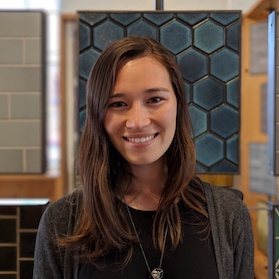
T. Donna Chen is an Assistant Professor in the Department of Civil and Environmental Engineering at the University of Virginia. Her research focuses on sustainable transportation systems, transportation economics, travel demand modeling, and crash safety. Ph.D., Civil Engineering, University of Texas at Austin (2015) M.E., Civil Engineering, University of Texas at Arlington (2008) B.S., Civil Engineering, Texas A&M University (2005) Her work explores the impacts of new vehicle technologies on traveler behavior and the environment, with an emphasis on modeling shared autonomous electric vehicle operations, pricing schemes, and life-cycle emissions. She also investigates spatial patterns of electric vehicle adoption and roadway safety for cyclists. Recent publications highlight her contributions to transportation electrification, fleet management, and safety analysis. Key themes include sustainability , autonomous systems , economic modeling , and urban mobility . American Society of Civil Engineers ExCEEd Fellow (2017) NSF IGERT Fellow (2013-2015) FHWA Eisenhower Fellow (2012-2013) Dr. Chen teaches courses on transportation infrastructure design and economics. Her funded projects include research on green vehicle adoption, connected vehicle planning, and dynamic tolling frameworks. She is affiliated with the Transportation Research Board, ASCE TD&I, ITS America, ITE, and Women’s Transportation Seminar.
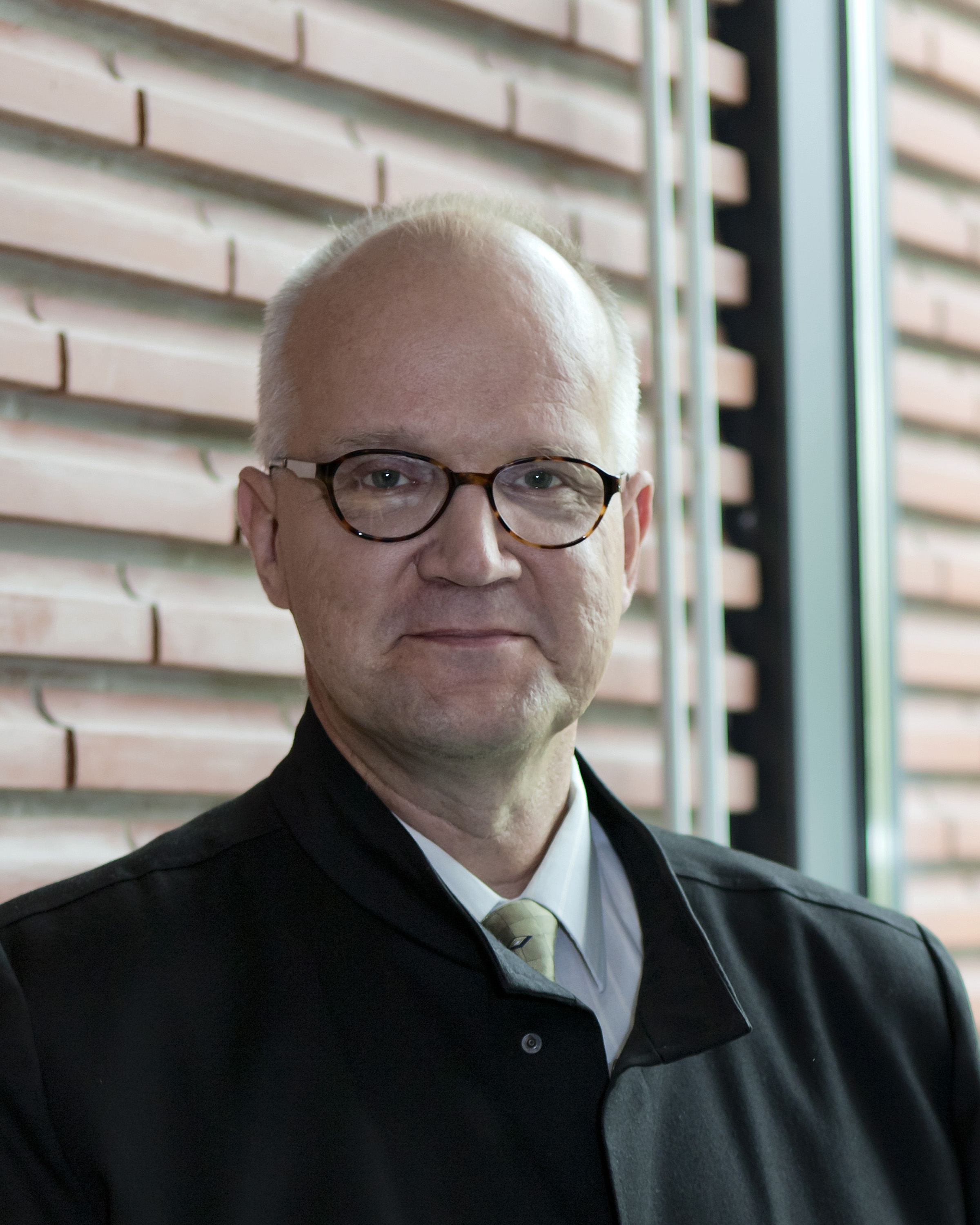
Eero Hyvönen is a Professor of Computer Science at Aalto University and Director of the Helsinki Centre for Digital Humanities (HELDIG) at the University of Helsinki. He leads the Semantic Computing Research Group (SeCo), specializing in Semantic Web technologies and applications. Hyvönen holds an Adjunct Professor title at the University of Helsinki's Department of Computer Science. His work focuses on developing national-level semantic web infrastructure, with applications in digital humanities, cultural heritage, and AI. He has published over 500 research articles and books, receiving numerous awards including the Decoration of Knight, First Class, of the Order of the White Rose of Finland (2018). Hyvönen chairs editorial boards of journals like Semantic Web and serves on committees for major conferences. His research spans semantic web technologies, linked open data, and AI applications in cultural heritage domains. Key projects include Sampo portals (e.g., LetterSampo, OperaSampo) for cultural data analysis, ParliamentSampo for parliamentary data, and FindSampo for archaeological finds. His work emphasizes interdisciplinary collaboration, integrating law, history, and computing through initiatives like FIN-CLARIAH. Hyvönen advises doctoral and master's students, notably Annastiina Ahola and Jouni Tuominen, who have won awards under his supervision. He directs research infrastructures, chairs international boards, and actively contributes to open data policies and standards development.
Marina Alberti is a Professor of Urban and Environmental Planning at the University of Washington, affiliated with the Department of Urban Design and Planning. She directs the Interdisciplinary Ph.D. Program in Urban Design and Planning and leads the Urban Ecology Research Laboratory. Her expertise lies in studying the interactions between urban development patterns and ecosystem dynamics, focusing on resilience, socio-ecological innovation, and biocomplexity. Her research emphasizes interdisciplinary approaches to urban ecological problems, with a strong focus on Geographic Information Systems (GIS), land cover change, and environmental performance metrics. She has developed simulation models integrating urban development and ecological processes, supported by NSF, NOAA, and Washington state grants. NSF Biocomplexity Program Grant : Developing simulation models for urban-ecological integration. Washington State Department of Transportation Grant : Remote sensing for impervious surface estimation. NOAA/Washington Department of Ecology Grant : GIS analysis of land use and shoreline habitats. Her work spans urban planning, ecological assessment, and policy-making, with a methodological emphasis on GIS, remote sensing, and land use dynamics. She has contributed extensively to journals like International Regional Science Review , Urban Ecosystems , and BioScience , addressing topics such as urban gradients, biodiversity, and environmental sustainability. Alberti's teaching includes Urban Ecology, Environmental Planning, GIS, and advanced research design, reflecting her commitment to training the next generation of urban ecologists.
Prof. dr. Nico Van de Weghe is a full Professor of GIScience at the University of Ghent (UGent), affiliated with the CartoGIS research unit. His work bridges computer science, social science, and natural science through geospatial information studies, focusing on enabling machines to reason spatially (GeoAI). Since 2004, he has specialized in knowledge-based AI, particularly spatiotemporal reasoning and moving object analysis, with applications in animal behavior, criminology, healthcare, mobility, and sports. Van de Weghe's research emphasizes hybrid GeoAI systems combining knowledge-driven and data-driven approaches. Keywords include GeoAI, GIScience, Spatiotemporal Analysis, Moving Objects, and Data Mining. Recent publications highlight urban road network analysis, hybrid trajectory modeling, BIM semantic enrichment, and cycling safety studies using virtual reality.
Dr Olly Bartlett is a Senior Lecturer in Remote Sensing and Geography at the University of Hertfordshire , affiliated with the Department of Psychology, Sport and Geography within the School of Life and Medical Sciences. His work focuses on planetary-scale remote sensing analysis of the cryosphere, with field campaigns in Greenland, Nepal, Svalbard, and the Peruvian Andes. Education: PhD in Physical Geography (University of Exeter, 2020); MSc in Polar and Alpine Change (University of Sheffield, 2016); BSc in Physical Geography (University of Sheffield, 2015) Dr Bartlett specializes in UAV-based remote sensing and Google Earth Engine , holding a UK GVC for UAV operations. His research tracks environmental changes in polar and alpine regions, including quantifying Antarctic Peninsula greening (1986–2021) and glacier dynamics in the Himalayas and Canadian Arctic. Recent publications highlight his methodological innovations in radar surveying and supraglacial hummock morphology studies. His work bridges glaciology and geospatial analysis , focusing on climate-induced glacial retreat impacts. He supervises PhD student Lottie Pearson on pan-Arctic permafrost thaw projects and collaborates internationally on cryospheric studies.
Gary William Hecht is a Professor in the Department of Accountancy at the Gies College of Business, University of Illinois at Urbana-Champaign. He serves as Associate Dean of Professional Education Pathways and holds the Arthur Andersen Faculty Fellowship. His research focuses on performance measurement systems, management accounting, and organizational behavior. Associate Dean, Gies College of Business Arthur Andersen Faculty Fellow Professor, Department of Accountancy Hecht’s research explores the intersection of performance measurement , managerial decision-making , and organizational incentives . Key themes include strategic use of performance data, impact of reporting frequency on employee behavior, and experiential vs. vicarious learning mechanisms in accounting contexts. His recent work (2020-2025) emphasizes effort intensity metrics , transparency in promotion behavior , and noise in performance measures . Articles reveal a focus on optimizing management control systems and understanding behavioral responses to accounting frameworks. Scientific awards : Arthur Andersen Faculty Fellow
Claudia R. Binder is Full Professor at EPFL's School of Architecture, Civil and Environmental Engineering, leading the Laboratory for Human-Environment Relations in Urban Systems (HERUS) since 2016. Previously, she held professorships at the University of Munich (2011-2016), University of Graz (2009-2011), and University of Zurich (2006-2009). She served as Dean of EPFL's ENAC School from 2020-2023 and holds advisory roles with Swiss federal institutions including the Mercator Foundation since 2024. Her academic foundation includes a Biochemistry degree and PhD in Environmental Sciences from ETH Zurich, followed by postdoctoral research at the University of Maryland. This interdisciplinary background underpins her research approach spanning natural and social sciences. Professor Binder's work centers on urban sustainability transitions, examining urban metabolism dynamics through systems science frameworks. She investigates energy-food-transport interdependencies in cities using transdisciplinary methods that integrate material flow analysis, spatial modeling, and socio-technical assessments. Her research particularly emphasizes regulatory mechanisms and transformation drivers in human-environment systems, with case studies across Swiss and global urban contexts. Recent publications reveal evolving focus from foundational urban metabolism studies toward actionable transition strategies. Her 2024-2025 work increasingly addresses social tipping dynamics, circular decarbonization, and spatially explicit waste management, demonstrating methodological innovation through geo-referenced material flow analysis and participatory backcasting frameworks. Key thematic clusters include energy innovation diffusion, plastic waste governance, and demand-side flexibility in residential systems. She actively mentors 7 current PhD candidates while supervising 11 graduates since 2018, with research spanning urban metabolism modeling, sustainability assessment, and transition governance. Her leadership extends to Swiss National Science Foundation committees and National Research Program 71 on energy consumption management. At EPFL, she directs the HERUS laboratory which develops the Sustainability Solution Space methodology for urban assessment. The lab operates at the intersection of data science, environmental engineering, and social theory, maintaining strong field connections in Switzerland, Indonesia, and Germany for empirical validation of transition models.
Jacob Bukoski is Assistant Professor and Director of the Forests and Climate Change graduate certificate at Oregon State University's College of Forestry. His research examines forest carbon dynamics, climate mitigation, and international forestry. Education includes: PhD in Environmental Science from UC Berkeley MS in Environmental Science from Yale University BA in Environmental Studies from UNC Chapel Hill Research focuses on carbon accumulation in forests, mangrove conservation, and climate policy integration. Teaches interdisciplinary courses on social-ecological systems and forest carbon analysis. Recent publications quantify carbon storage in global plantations and mangrove ecosystems. Current projects investigate albedo impacts on reforestation protocols and coastal conservation synergies. Directs graduate studies in Forests and Climate Change.
Christopher D.P. Baxter is a Professor and Department Chair of Civil and Environmental Engineering at the College of Engineering, University of Rhode Island , with expertise in geotechnical engineering, offshore wind energy, and coastal resilience. He holds a Ph.D. in Civil Engineering from Virginia Tech (1999), an M.S. from Purdue University (1994), and a B.S. from Tufts University (1990). Research Focus: Geotechnical characterization of marine sediments, liquefaction resistance analysis, fiber-optic sensing for infrastructure monitoring, and coastal protection systems. Recent Publications: 15+ articles (2011–2025) covering topics like shear wave velocity, offshore wind foundation dynamics, and tsunami hazard modeling. Grants: Led projects on offshore wind monitoring (2019–2024) and fiber-optic seismic sensing (2021–2023). Key Collaborations: Work with teams on submarine landslide analysis, coastal dune reinforcement, and Rhode Island infrastructure resilience. His work bridges experimental geomechanics with practical coastal engineering solutions.