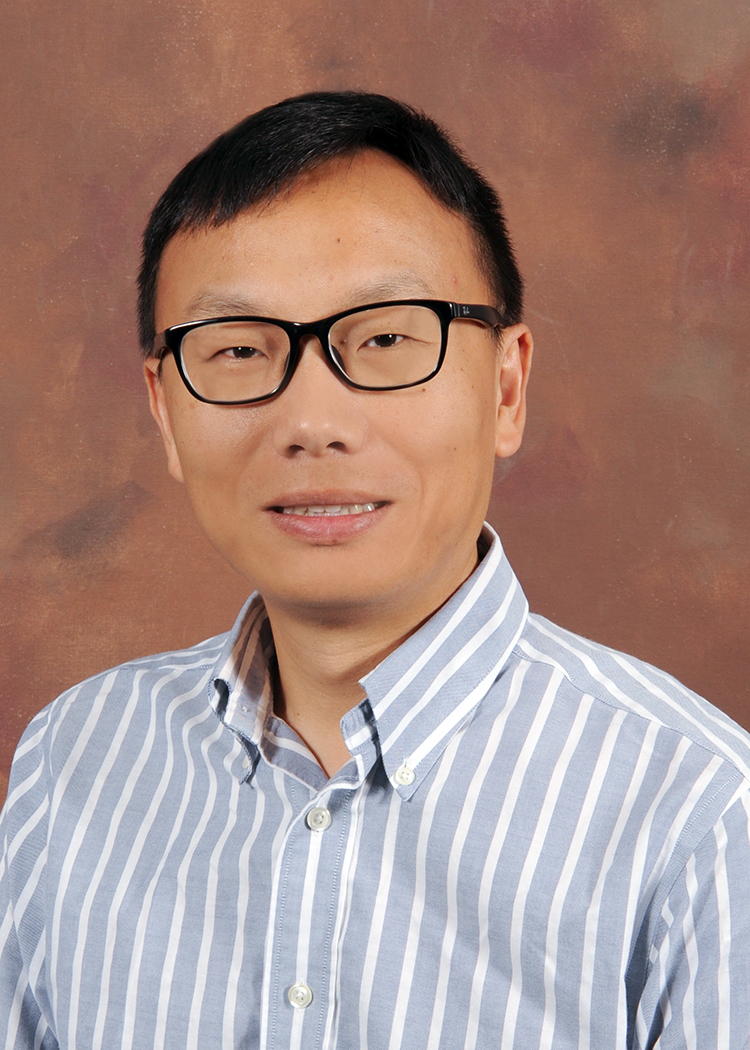
Jonathan Bootle is a cryptography researcher in the Foundational Cryptography group at IBM Research – Zurich , specializing in efficient zero-knowledge proofs. He holds a PhD from University College London and a Mathematics degree from Clare College, University of Cambridge . Education : PhD (UCL), Mathematics (Part III, Cambridge) His research focuses on zero-knowledge proofs , lattice-based cryptography , and error-correcting codes , with applications in post-quantum security. Recent work includes formal verification of protocols, elastic SNARKs, and generalized key exchange mechanisms. Key publication trends: 2024: Formal verification of sumcheck protocol 2023: Lattice-based credentials and succinct arguments 2022: Gemini SNARKs and DualDory linkable signatures He teaches the 2024 ETH Zurich course on Zero-Knowledge Proofs , covering sigma protocols, Fiat-Shamir transformations, and polynomial commitments. Labs/Teams: Foundational Cryptography group, IBM Security Department Collaborations with UC Berkeley (Alessandro Chiesa) and UCL (Jens Groth)
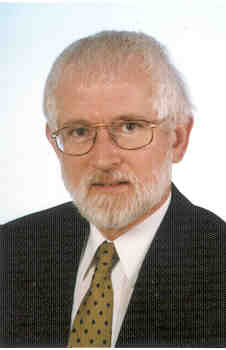
János Tóth is University Professor and Rector of Selye János University in Komárno, Slovakia. He simultaneously heads the Department of Mathematics within the Faculty of Economics and Informatics. Education 1986 – MSc in Mathematical Analysis, Faculty of Mathematics and Physics, Comenius University, Bratislava 1998 – PhD in Algebra and Number Theory, Faculty of Mathematics and Physics, Comenius University, Bratislava 1999 – RNDr. (rigorosum), Constantine the Philosopher University, Nitra 1998 – Habilitation (docent), Constantine the Philosopher University, Nitra 2018 – Full Professorship (prof.), Faculty of Mathematics, Physics and Informatics, Comenius University, Bratislava Research interests Professor Tóth’s core research lies in number-theoretic aspects of density and distribution of sequences, including asymptotic and weighted densities, ratio sets and their distribution functions. He has extended these investigations into fuzzy measures and the theory of maldistributed sequences. Parallel to this, he maintains an active line of research in mathematics education, focusing on the didactics of mathematics and informatics at both undergraduate and doctoral levels. Publication trends His 126 registered outputs (200+ citations) concentrate on four interconnected strands: (i) asymptotic and weighted densities, (ii) distribution functions of ratio and block sequences, (iii) fuzzy measures and their limit behaviour, and (iv) applications of these theories in Diophantine approximation and probabilistic number theory. The work is published in leading journals such as Acta Arithmetica , Journal of Number Theory , Journal of Mathematical Analysis and Applications and Rocky Mountain Journal of Mathematics . Grants & leadership Principal investigator on VEGA grants 1/4006/07, 1/0753/10, 1/1022/12, KEGA 3/3080/05, APVV SK-HU-0009-08, SK-CZ-0075-11 and others (2005–2023) Team member or leader on Czech GAČR projects 201/01/0471, 201/04/0381, 201/07/0199 and on the research intent VZ MSM 6198898701 Current rector of Selye János University (2025– ) and earlier vice-rector for development (2017–2025) Laboratories & teams Professor Tóth leads the research group in Number Theory and Mathematical Analysis at the Department of Mathematics, coordinates the doctoral programme in Theory of Teaching Mathematics and Informatics, and oversees the university-wide research support infrastructure as institutional leader.
Dr. Daniel G. Schwartz is a Professor in the Computer Science Department at Florida State University (FSU). He holds a B.A. in Mathematics from Portland State University (1969), an M.S. in Mathematics from Simon Fraser University (1974), and a Ph.D. in Systems Science from Portland State University (1981). His career includes roles as Assistant Professor at Binghamton University (1981–1983) and Florida State University (1984–1989), and Associate Professor at FSU (1989–2021) before becoming a full Professor in 2021. Dr. Schwartz's research focuses on artificial intelligence, formal methods, and autonomous systems. Key areas include nonmonotonic reasoning, fuzzy logic, and applications to mission planning for autonomous vehicles (e.g., driverless cars, unmanned naval systems). He has pioneered work on dynamic reasoning systems, qualified syllogisms, and agent-oriented epistemic reasoning. His recent projects involve secure communications for unmanned aerial vehicles (funded by the U.S. Navy) and path planning for autonomous surface/underwater vehicles with doctoral student Mohamad Imran Chowdhury. Teaching includes courses on artificial intelligence, Java programming, databases, and theoretical computer science (e.g., automata theory, formal languages). His work on network security includes a U.S. Army-funded project (2001–2006) developing case-based reasoning systems for intrusion detection. His research outputs span over 20 years, with contributions to robotics, formal logic, and fuzzy systems. Current projects emphasize autonomous vehicle navigation and event possibility theory for decision-making under uncertainty.
Benedetto Di Paola is an Associate Professor at the University of Palermo , affiliated with the School of Human Sciences and Cultural Heritage . His primary teaching role involves mathematics education for elementary and kindergarten schools, focusing on pedagogical methodologies and didactic implementations. His research interests center on mathematics education, particularly exploring cross-cultural cognitive differences between Chinese and European educational systems. Key areas include: Epistemological foundations of mathematical demonstration Impact of natural language on mathematical reasoning Argumentation processes in multicultural primary schools Role of cultural context in algorithmic thinking Integration of rhythm and movement in mathematical learning His publications (2007-2011) systematically investigate the intersection between: Chinese logographic writing systems and mathematical cognition Fuzzy logic applications in common sense reasoning Comparative analysis of chess/Weich’i strategies Statistical implicational analysis in educational research Historical mathematical texts (e.g., Liu Hui's Nine Chapters)
David Defour is a Professor in Computer Science at the University of Perpignan, affiliated with the Faculty of Science and Engineering and the Mathematics and Computer Science Department. He conducts research at the Multidisciplinary Modeling and Simulation Laboratory (LAMPS) and serves as Scientific Coordinator of the MESO@LR Computing Center. His research focuses on the critical intersection of computer arithmetic and computer architecture, with emphasis on: Unconventional arithmetic systems (interval, fuzzy, high/reduced precision) Numerical reproducibility and error estimation in computational workflows Hardware-software co-design for GPUs, multicore systems, and embedded architectures Reverse engineering of computational units and power consumption optimization Defour actively mentors master's students through thesis proposals on numerical bug detection using LLMs, SAT solvers for numerical challenges, soft error resilience in floating-point units, and reverse execution debugging for HPC. He leads the ANR InterFlop project (2021-2025) and previously managed the BPS collaboration contract (2021-2022), while serving as IT expert for the High Court of Perpignan. The LAMPS laboratory under his research activities structures work around two core thematic axes: Characterization of Digital and Discrete Systems, and Mathematical and Numerical Modeling for Mechanics.
Dr. Weiming Xiang is an Associate Professor at the School of Computer and Cyber Sciences of Augusta University , Georgia. He transitioned from Assistant Professor (2019–2023) to his current role (2023–present). His academic journey includes postdoctoral positions at Vanderbilt University and University of Texas at Arlington , and a research associate role at the University of Hong Kong . He earned his Ph.D. (2014) in hybrid transportation systems from Southwest Jiaotong University , an M.Sc. (2007) in automation from Nanjing University of Science and Technology , and a B.E. (2005) in electrical engineering from East China Jiaotong University . Research Interests: Dr. Xiang focuses on formal synthesis and verification techniques for cyber-physical systems (CPS) , particularly addressing safety, security, and reliability in learning-enabled CPS . His work spans hybrid systems , neural network verification , control theory , and data-driven modeling , with applications in autonomous vehicles , power systems , and transportation . He develops scalable verification frameworks using reachable set computation , interval arithmetic , and polyhedral methods . Scientific Awards: NSF CAREER Award (2022) IEEE Senior Member (2017–present) Outstanding Reviewer awards from journals like IEEE Transactions on Automatic Control, Neurocomputing, and Journal of the Franklin Institute Top 1% Reviewers in Engineering, Publons (2018) Grants & Collaborations: Dr. Xiang leads multiple NSF-funded projects, including a $498,985 CAREER Award (2022–2027) for machine-learning-intensive CPS upgrades, a $499,000 CPS Program grant with Jason Orlosky (2022–2025) for XR-assisted h-CPS modeling, and a $270,913 NSF grant with Hoang-Dung Tran (2023–2026) for safety assessment of learning-enabled systems. He also contributes to Augusta University's CyberCorps Scholarships for Service program. Labs & Teams: Dr. Xiang leads the AI-CPS Lab , which explores intersections between artificial intelligence , formal verification , and cyber-physical systems . His lab collaborates on projects involving runtime safety monitoring , neural network compression , and hybrid control architectures .
Natalia Karlsson is an Associate Professor and Lecturer at Södertörn University , specializing in Applied Mathematics and Mathematics Didactics . She serves as a Subject Coordinator and focuses on transforming mathematical concepts into accessible teaching frameworks. PhD in Mathematics and Physics (1997, Russian Academy of Sciences) Master in Applied Mathematics and Educational Sciences Licensed teacher for primary, secondary, and adult education Her research expertise spans two domains: (1) Applied Mathematics , involving mathematical modeling in nonlinear elasticity and fuzzy methods for formalizing strategy maps; and (2) Mathematics Didactics , focusing on how school-level mathematical concepts can evolve into rigorous ones without contradictions. She emphasizes task-oriented learning , diagnostic teaching , and transformative pedagogy to enhance educators and students. The 15 most recent articles highlight trends in pre-service teacher training , algebra instruction , and fractions education . Key areas include conceptual transitions from arithmetic to algebra, syntactic and substantive knowledge development, and inverse operations in teaching. Many works address proportional reasoning and multiplicative structures in classroom settings. As a supervisor , she has guided bachelor’s, master’s, and PhD students and served as an opponent for doctoral theses. She currently acts as a scientific reviewer for international journals but does not participate in active research projects.
Andrei Popescu is a Senior Lecturer (Associate Professor level) in the Department of Computer Science at the University of Sheffield, where he conducts research in formal methods, proof assistants, and information flow security. He previously held academic positions at Middlesex University and TU Munich. University: University of Sheffield Department: Department of Computer Science Previous Affiliations: Middlesex University, TU Munich His research focuses on the logical foundations and practical applications of proof assistants, particularly Isabelle/HOL. He has made foundational contributions to inductive and coinductive datatypes, syntax with bindings, higher-order logic, and the formal verification of secure systems. His work bridges theoretical logic with real-world systems such as conference management (CoCon) and social media platforms (CoSMeDis). The recent publications highlight a strong trend in formalizing deep logical results (e.g., Gödel’s incompleteness theorems), advancing datatype theory, verifying complex security properties, and applying formal methods to practical systems. His work consistently appears in top-tier venues such as POPL, CAV, ITP, and CSF. Distinguished Paper Award at POPL 2025 Distinguished Paper Award at POPL 2024 Distinguished Paper Award at POPL 2023 RS 3 Best Paper Award for 2012–2013 He has advised PhD students including Lorenzo Gheri and has been actively involved in organizing major academic events such as the Midlands Graduate School, CPP, ITP, and TABLEAUX conferences. He has served on numerous program committees including POPL, ITP, CSF, and CAV, and has led research projects funded by VeTSS and industrial partners. He is a key contributor to the Isabelle proof assistant ecosystem, particularly in the development of the (co)datatype package and foundational consistency results. His work combines deep theoretical insight with practical implementation, making significant impacts in both academia and applied security.
Prof. Dusan M. Milosevic is a Full Professor at the Department of Mathematics within the Faculty of Electronic Engineering of the University of Niš, Serbia. He holds a PhD in Mathematics from the Faculty of Natural Sciences and Mathematics in Niš (2005), a Master's degree in Mathematics from the Faculty of Electronic Engineering (1992), and a Bachelor's degree in Computer Engineering from the same institution (1988). His academic career includes significant contributions to computational mathematics, numerical methods, and interdisciplinary applications in renewable energy and environmental modeling. Research interests span numerical analysis of polynomial zeros, fuzzy logic systems, and sustainable development strategies. He has authored/co-authored over 33 papers in impact-factor journals and multiple textbooks, including "Numerical Solution of Nonlinear Equations" and "Mathematics 4" . Current research focuses on energy projects, smart city modeling, and industrial building reuse. He participates in one national and international research projects. His work bridges theoretical mathematics with practical applications, evident in studies like spectral reflectance modeling for agriculture and adjustable models for renewable energy systems in Serbia. Academic leadership includes textbook development for engineering education and contributions to validated numerical computations.
M. Sadegh Riazi is an Assistant Professor in the Department of Computer Science and Engineering at the University of California, San Diego's Jacobs School of Engineering. He completed his PhD at UCSD in 2020 with a dissertation titled 'Towards A Private New World: Algorithm, Protocol, and Hardware Co-Design for Large-Scale Secure Computation.' Dr. Riazi's research focuses on the critical intersection of cryptography, machine learning, and hardware security, with particular emphasis on making secure computation practical for real-world applications. His work spans secure multi-party computation, homomorphic encryption, privacy-preserving machine learning, and hardware acceleration for cryptographic protocols. He has made significant contributions to optimizing secure computation frameworks for deep learning applications, developing techniques that balance security guarantees with computational efficiency. His publication record shows a clear progression from foundational secure computation techniques to increasingly sophisticated applications in privacy-preserving AI. Notably, his work on HEAX (Homomorphic Encryption Acceleration) and XONN (XNOR-based Oblivious Neural Network) demonstrates practical approaches to making encrypted deep learning feasible. The research trends in his publications indicate a consistent focus on bridging theoretical cryptographic security with practical system implementations. Dr. Riazi has established a strong collaborative network, most prominently with Professor Farinaz Koushanfar's research group at UCSD, with whom he has co-authored numerous papers across multiple domains including biometric security, secure hardware design, and privacy-preserving machine learning. His research has been published in top-tier venues including IEEE Security & Privacy, USENIX Security, ASPLOS, and CCS, reflecting the high impact and quality of his work in both the security and systems communities.
Björn Lisper is a Professor at Mälardalen University, Sweden, affiliated with the School of Innovation, Design and Engineering and the Division of Computer Science and Software Engineering. His research focuses on formal methods, real-time systems, embedded software, static analysis, and high-level synthesis. He has contributed to advancements in WCET analysis, machine learning applications in testing, and compiler optimization techniques. His work emphasizes practical industrial applications, particularly in automotive and multi-core systems. Research Interests: Real-Time Systems & WCET Analysis Static Program Analysis High-Level Synthesis for FPGAs Machine Learning in Software Testing Formal Methods & Verification Embedded Systems Design Publications span topics like neural network accelerators, automated testing frameworks, and compiler optimizations, reflecting a blend of theoretical and applied computer science. His work is characterized by collaboration between academia and industry to bridge gaps in embedded software predictability and performance.
Dana Piciu is an Associate Professor in the Department of Mathematics at the Faculty of Sciences, University of Craiova, Romania. She is actively engaged in research and teaching, with her office located in room 308 of the Central Building. Her academic work is closely tied to algebraic structures and mathematical logic. Her research interests focus on foundational areas of mathematics, particularly Algebra , Mathematical Logic , and Number Theory . She specializes in MV-algebras, BL-algebras, and localization techniques within algebraic systems. These topics lie at the intersection of algebra and logic, contributing to the theoretical underpinnings of fuzzy logic and related algebraic frameworks. While specific publications were not listed in the provided text, her research trajectory centers on algebraic logic and related structures, indicating consistent scholarly activity in these domains. Dana Piciu has no listed scientific awards in the provided information. She has not advised any students listed in the current data. There is no mention of research grants or funded projects. Her academic journey includes a PhD in Mathematics from the University of Bucharest in 2004, supervised by Professor George Georgescu. Dana Piciu is involved in the academic community through her departmental affiliation and maintains a personal academic webpage at http://math.ucv.ro/~piciu/ .
Günter Mayer is a Professor of Mathematics at the University of Rostock, Germany, specializing in numerical analysis with particular expertise in interval arithmetic and verification numerics. He serves on the University Council and chairs the Examination Boards for Technomathematics and Mathematics programs. His academic career began with a dissertation at Universität Karlsruhe in 1982 followed by habilitation there in 1986. His research focuses on Numerical mathematics Numerical linear algebra Interval calculation Verification numerics Parallel algorithms with significant contributions to the theoretical foundations and practical applications of interval methods in scientific computing. Mayer has published extensively since the early 1980s, with his most recent book appearing in 2017. His work shows strong collaboration with other leading researchers in interval analysis, particularly G. Alefeld. Mayer's publications demonstrate consistent contributions to understanding solution sets of interval linear systems, verification methods for eigenvalue problems, and computational complexity of interval algorithms. His research has evolved from foundational theoretical work to increasingly sophisticated applications in scientific computing with guaranteed accuracy. He has taught a wide range of mathematics courses including Numerical Mathematics for Mechanical Engineering students, Interval Calculation, Verification Numerics, and various specialized topics in numerical analysis. His teaching portfolio reflects his research expertise while serving the needs of engineering and mathematics students.
Ana Maria Colubi Cervero is a Professor in the Department of Statistics and Operations Research at the University of Oviedo. Her research focuses on statistical methods for imprecise data, particularly fuzzy sets and interval-valued data analysis. She has established herself as a leading researcher in the field of fuzzy statistics and statistical inference with imprecise information. She earned her Doctorate from the University of Oviedo in 2000 with a thesis titled "Leyes fuertes de los grandes números para variables aleatorias difusas" (Strong Laws of Large Numbers for Fuzzy Random Variables), supervised by Dr. José Santos Domínguez Menchero and Dr. María Angeles Gil Alvarez. Colubi Cervero's research primarily centers on fuzzy statistics, with particular emphasis on fuzzy random variables, interval-valued data analysis, and statistical methods for imprecise information. Her work bridges theoretical statistics with practical applications, developing methodologies that can handle uncertainty and imprecision in data. She has made significant contributions to distance-based statistical analysis of fuzzy data, regression models for interval-valued responses, and hypothesis testing for fuzzy parameters. Her publication record shows a consistent trend toward developing robust statistical frameworks for imprecise data, with increasing focus on practical applications in recent years. The articles demonstrate a progression from theoretical foundations to more applied statistical methods, particularly in regression analysis and hypothesis testing with fuzzy and interval-valued data. Throughout her career, Colubi Cervero has maintained extensive collaborations, primarily with researchers from Spanish institutions but also with international scholars. Her work shows strong interdisciplinary connections between statistics, probability theory, and computational mathematics. She has been actively involved with research groups including GRINAT (Grupo de Investigación en Riesgos Naturales) and SMIRE+CoDIRE (Estadística con Elementos Imprecisos Aleatorios & Comparación de Distribuciones entre Elementos Aleatorios), focusing on natural risk research and statistical methods for imprecise random elements.
Emil Daniel Schwab is a Professor of Mathematics in the Department of Mathematical Sciences at the University of Texas at El Paso (UTEP), College of Science. He previously served as Associate Dean for Research (2014-2015) and held administrative roles at University of Oradea, Romania (1996-1998). Education: Ph.D. in Mathematics, "Babes-Bolyai" University of Cluj-Napoca, Romania (1995). Thesis: "Contribution to the Study of Multiplicativity and Additivity in Incidence Algebras". Licentiate in Mathematics, West University of Timisoara, Romania (1987). Thesis: "Inverses in Special Categories". Dr. Schwab's research bridges algebra, number theory, and combinatorics through categorical techniques, focusing on Möbius inversion, inverse semigroups, arithmetical functions, and quantum logic. His work demonstrates deep connections between abstract algebraic structures and combinatorial frameworks, with significant contributions to incidence algebras and categorical logic. His 15 most recent publications (2011-2016) reveal consistent exploration of semigroup theory, Möbius categories, and Dirichlet convolution variants, showing increasing integration of categorical methods with number-theoretic applications. Grants: Cross Institutional Implementation of Supplemental Instruction- UTEP-EPCC Cooperative Project, U.S. Dept. of Education (2008-2011) Modular Development and Supplemental Instruction (SI) for the Calculus Course taken by all STEM Majors, U.S. Dept. of Education (2005-2008)