Dr. Margaret Shipley is a Professor of Management at the University of Houston-Downtown's College of Business, specializing in fuzzy logic applications for decision-making systems. With a Ph.D. in Operations Research from University of Pittsburgh, she has taught courses including Project Management, Operations Management, and Managerial Decision Making. Academic Rank: Professor University Affiliation: University of Houston-Downtown Key Research Areas: Fuzzy logic, multicriteria decision making, supply chain management Her research focuses on integrating fuzzy logic with operations management frameworks to address uncertainty in business processes, particularly in supplier selection, virtual team dynamics, and ecological sustainability models. Recent publications examine sentiment analysis in supply chains, artificial reef impacts on marine ecosystems, and SME sustainability strategies. Scientific recognition includes multiple Faculty Development Grants from UHD for international conference participation and a significant NSF-sponsored research collaboration. Her professional service spans editorial reviewing for European Journal of Operational Research , Computers & Operations Research , and committee roles in academic governance.
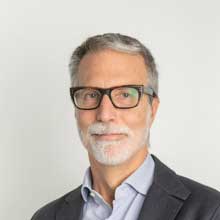
Ali Danandeh Mehr is a Professor in the Department of Civil Engineering at Antalya Bilim University, Turkey, with a focus on stochastic hydrology, hydroinformatics, and climate change impacts on water resources. He has held adjunct research positions at the University of Tabriz (Iran), Middle East University (Jordan), and the University of Oulu (Finland). PhD in Civil Engineering from Istanbul Technical University Bachelor’s degree from Islamic Azad University His research spans drought forecasting , extreme hydrologic events , and hydroclimatic modeling , leveraging advanced machine learning and hybrid algorithms. Recent work includes the S-Transformer deep learning model, MOGGP multi-objective genetic programming, and Wavelet-Entropy Clustering for drought risk mapping. He has authored over 90 peer-reviewed journal articles and six books, with recognition as a World’s Top 2% Scientist (Stanford/SCOPUS, 2019–2022) and Top 1% Highly Ranked Scholar (ScholarGPS™, 2022). Current roles include Associate Editor for Discover Water (Springer) and J. Civil. Env. Eng. (University of Tabriz).
Amir Shirdel is a Researcher at the Faculty of Science and Engineering, focusing on advanced control systems and system identification techniques. His work spans various applications including industrial automation, process control, and energy systems. Dr. Shirdel's research interests center around control theory and system identification, with specific expertise in: Handling structural disturbances in control systems Wiener model identification Sparse optimization techniques for system identification Fuzzy control systems for industrial applications Kernel-based methods for forecasting and optimization His publication record shows a consistent research trajectory from 2014-2018, with a focus on addressing practical challenges in system identification and control design. His work often addresses real-world engineering problems such as overhead crane control, waste heat recovery in ships, and process control systems that must function reliably despite disturbances and outliers. His publications demonstrate increasing impact, with his 2015 fuzzy controller paper receiving 21 Scopus citations. Dr. Shirdel has established strong research collaborations, particularly with Böling, J. and Toivonen, H., with multiple co-authored publications appearing in reputable venues including IFAC World Congress and journals like Journal of Process Control and Neural Computing and Applications.
Jozsef Mezei is a Professor at the School of Business and Economics, Faculty of Social Sciences, Economics and Law, at Åbo Akademi University. His research lies at the intersection of artificial intelligence, information systems, and business analytics, with a strong focus on customer satisfaction, sentiment analysis, and e-commerce platforms. His research interests include Artificial Intelligence , Machine Learning , Large Language Models , Customer Review Analysis , Fuzzy Logic , and Configurational Methods in digital business environments. He applies computational intelligence techniques to understand user behavior, trust, and satisfaction in online platforms. The most recent publications highlight a strong trend toward integrating Large Language Models with traditional data analysis frameworks like CRISP-DM and qualitative comparative analysis (QCA), as well as continued innovation in fuzzy systems for sentiment and decision modeling. His work bridges technical AI methods with practical business applications, especially in e-commerce and digital health. He has contributed to research recognized under the UN Sustainable Development Goals, particularly in digital innovation and inclusive economic growth. While no specific scientific awards are listed, his work has been published in high-impact journals and top-tier conferences such as HICSS and Bled eConference. Jozsef Mezei supervises academic work, with at least two supervised projects documented. His research is supported by active collaboration networks across Europe, particularly in Finland and neighboring countries. He has developed frameworks combining sentiment analysis with fuzzy logic, applied to areas like mobile banking, recommendation systems, and customer feedback integration. He is affiliated with research in digital health usage, exploring how information systems facilitate healthcare innovation. His lab or research group appears to focus on intelligent systems for business decision-making, though no explicit lab name is provided. Future work is likely to further explore generative AI, trust modeling, and hybrid AI systems in digital platforms.
Paulo Jorge Carvalho Menezes is an Assistant Professor at the Department of Electrical and Computer Engineering, Faculty of Science and Technology, University of Coimbra. He is an associate researcher at the Institute of Systems and Robotics (ISR) and leads the Artificial Perception for Intelligent Systems and Robotics Team (AP4ISR) and the Immersive Systems and Sensory Stimulation Laboratory (IS3Lab). Ph.D. in Electrical and Computer Engineering (Informatics specialization) from University of Coimbra Lectures courses: Operating Systems, Computer Networks, Mobile Robotics, Computer Vision, Human-Machine Interaction Research focuses on Augmented Reality, Virtual Reality, Human-Robot Interaction, Computer Vision, and Assistive Technologies His 15 most recent publications span immersive systems, affective computing, and robotics, with keywords including Robotics , Human-Computer Interaction , and Artificial Intelligence . Notable subfields include Immersive Rehabilitation Games , Telepresence Systems , and Emotion Recognition . Scientific Awards 1st Prize 'As Novas Fronteiras da Engenharia' (2017) Best Paper Award (2016, 2020) Best Demonstrator Awards (2015, 2016, 2019) Honourable Mentions (2015, 2019) He supervises 12+ students in projects involving 3D Modeling , Emotion-Biosignal Analysis , and Assistive Robotics . Grants include EU Horizon 2020 (LIFEBOTS Exchange) and national projects like Move4ASD and BioHab .
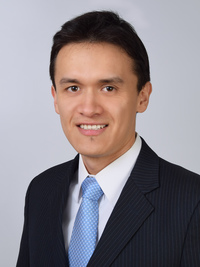
Camilo Andres Gordillo Chaves serves as a Researcher in the Department of Computer Science at the University of Freiburg's Faculty of Engineering, working within the Autonomous Intelligent Systems research group under Prof. Dr. Wolfram Burgard since February 2015. His academic background includes: Master of Science in Microsystems Engineering from the University of Freiburg (2012-2014) Bachelor of Science in Mechatronics Engineering from Universidad Militar Nueva Granada, Colombia (2007-2012) His research integrates Machine Learning, Embedded Systems, and Robotics to address challenges in neural engineering and intelligent control systems. Key contributions include neural microprobe channel optimization using multi-armed bandit algorithms and computer vision-based traffic management solutions. His work demonstrates strong interdisciplinary connections between robotics, machine learning, and embedded hardware design. Publications reveal a consistent focus on real-time adaptive systems, with applications spanning neural recording technologies and intelligent transportation infrastructure. His methodologies frequently combine algorithmic optimization with physical system constraints. He actively contributes to the Autonomous Intelligent Systems group's research agenda, including the Advanced EDC project, while maintaining technical operations from his office at Georges-Köhler-Allee 080 in Freiburg.
Carlo Bagnoli is a Full Professor of Business Economics at Ca' Foscari University of Venice, affiliated with the Department of Management and Venice School of Management. His roles include leadership in strategic innovation initiatives, teaching excellence, and extensive research coordination. He holds key administrative roles such as Rector's Delegate for Strategy Innovation and oversees Ca' Foscari's innovation projects like the Venice Strategic Innovation Center. Education: High School Certificate in Accounting (1988) Bachelor’s in Economics and Banking (cum laude, 1992) PhD in Business Economics and Management (1997) Research Focus: Strategic innovation, business models, knowledge management, and sustainability. Recent work explores digital transformation, blockchain applications, and eco-design. He coordinates international projects on strategic innovation with Slovenia and Austria. Awards: Multiple teaching excellence awards (2006–2013) Kizok best paper award (2007) Distinguished International Business Scholar (2013) Festival delle Città Impresa Award (2012) Grants & Projects: Secured €2.8M+ in EU and regional funding for projects like Venice Strategic Innovation Center (€962K), Co-generazione di conoscenza (€2.85M), and Innovarea (€1M). Active in advisory roles for regional economic policies and enterprise innovation. Labs/Teams: Leads the Research Institute for Innovation Management. Founded Strategy Innovation Srl, a university spin-off (10% equity). Collaborates with IBM on Master’s programs and cross-disciplinary storytelling projects (Istorie).
Maria Victoria Ruano García is an Associate Professor in the Department of Chemical Engineering at the School of Engineering, Universitat de València, Spain. She is an active researcher affiliated with the CALAGUA-UV Research Group on Environmental Technologies, where her work focuses on advancing sustainable solutions in wastewater treatment and process optimization. Her research interests lie at the intersection of chemical and environmental engineering, particularly in the development and application of intelligent control systems for environmental processes. Key areas include wastewater treatment , biological nutrient removal , fuzzy logic-based control systems , and optimization of industrial processes . Her work contributes to improving the efficiency and sustainability of water resource recovery facilities. While no publications are listed in the provided text, her research profile suggests a strong emphasis on applied control theory within environmental engineering contexts, particularly in bioprocesses. This indicates a trend toward smart, adaptive systems in environmental technology. Awards and Honors: No specific scientific awards were mentioned in the provided text. Advising and Grants: Maria Victoria Ruano García completed her PhD under the supervision of Dr. Josep Ribes Bertomeu and Dr. Aurora Seco Torrecillas. While no current advisees or grant funding details are listed, her affiliation with CALAGUA-UV suggests ongoing participation in collaborative research projects related to environmental technologies. Laboratories and Research Teams: She is an active member of the CALAGUA-UV Research Group on Environmental Technologies, a multidisciplinary team dedicated to innovation in water treatment, sustainability, and process engineering.
Simon Walters is a Reader in Power Engineering at the Division of Engineering, School of Architecture, Technology and Engineering, University of Brighton. He has been a key academic figure since completing his undergraduate studies at the institution in the early 1990s, progressing through research, teaching, and leadership roles. He is currently Subject Group Leader of Engineering (Energy Conversion) and Cohort Leader for MEng Year 4. He is a member of the Advanced Engineering Centre and actively involved in interdisciplinary research and teaching. His educational background includes an HND in Electronic Systems Engineering from Kingston Polytechnic (1986–1988), followed by MEng and BEng(Hons) in Electrical and Electronic Engineering from Brighton Polytechnic / University of Brighton (1990–1993), and a PhD in intelligent systems applied to automotive electronics (1993–1998). Dr Walters’ research focuses on power and high voltage systems, power electronics, intelligent systems (neural networks, fuzzy logic), automotive electronics, condition monitoring, and sustainability of energy and water resources. His work spans electrical, electronic, automotive, mechanical, and computer engineering disciplines, often bridging theory and industrial application. His recent publications (2021–2025) reflect a strong focus on magnetic materials, particularly amorphous alloys, with investigations into saturation magnetisation, spin wave stiffness, disaccommodation, and effective anisotropy. Earlier works emphasize intelligent systems in automotive engineering, including emissions control, fuel economy, and engine diagnostics. This evolution shows a shift from automotive applications to fundamental materials science while retaining a core focus on electrical and power engineering. Outstanding Contribution to the MBA Programme (University of Brighton, 2003) Chartered Engineer (CEng, MIET, from 2007) Fellow of the Higher Education Academy (FHEA) Dr Walters has supervised multiple PhD and MPhil students to completion and currently supervises three PhD candidates. He has secured funding from Interreg, KTP, InnovateUK, and consultancy projects, including ongoing KTP and RISE projects with industry partners like BHC and Eluxevo Ltd. His economic engagement includes contract work with Johnson Matthey and leadership in university-industry MEng projects focused on energy-saving systems. He is actively involved in professional service as Co-Chair of the Sustainable Energy Technologies track at the SEB conference, reviewer for IEEE Transactions and other journals, and auxiliary supervisor at Częstochowa University of Technology. He also leads the MEng Major Team Project and teaches across levels 4 to 7 in electrical engineering and related disciplines.
Zervoudakis Konstantinos is a Researcher at the School of Production Engineering and Management, Technical University of Crete. His work focuses on computational intelligence, optimization algorithms, and their applications in education and product design. He holds a fixed-term research position and is based in Office G3.0.01, Building G3. Research Interests: His primary areas include developing nature-inspired optimization algorithms (e.g., flying fox, mayfly, and bees algorithms), applying computational methods to educational challenges like student psychological fitness assessment and group formation, and optimizing product line design using metaheuristics like Tabu Search and Differential Evolution. He also investigates the impact of ICT on education and special education teacher efficacy. Publications Trends: Recent works emphasize hybrid optimization algorithms for real-world problems (maintenance scheduling, product design), AI-driven educational tools for mental health assessment and learning grouping, and algorithmic solutions for multi-objective decision-making. His research bridges computational innovation with practical applications in education and engineering. Awards: None explicitly mentioned in the provided texts. Advising & Grants: No student advisees listed. No grants disclosed in the data.
Pilar Dellunde is a Full Professor in the Department of Philosophy at the Autonomous University of Barcelona (UAB), specializing in the intersection of logic, artificial intelligence, and philosophical inquiry. Her work bridges theoretical foundations with real-world AI applications. Education: Ph.D. (Doctorat) from Universitat de Barcelona (UB), 1996 Llicenciat from Universitat de Barcelona (UB), 1988 Her research spans computational logic frameworks including modal, substructural, and fuzzy logics, with significant contributions to explainable AI and probabilistic argumentation systems. She investigates how logical structures can enhance AI transparency and address societal challenges like algorithmic bias and accessibility for people with disabilities. Her fingerprint analysis reveals strong connections between Horn clauses, global similarity metrics, and art style recognition. Recent publications demonstrate a clear trajectory toward ethically grounded AI development, with increasing focus on human-machine integration, social robotics for vulnerable populations, and value-based design of intelligent systems. This evolution reflects her commitment to aligning technical AI advancements with philosophical and social considerations. She actively supervises PhD research in logics for AI, probabilistic argumentation frameworks, and explainable AI. Her current grant portfolio includes: ENGEENIRING CARE IN NURSING HOMES: ROBOTS MEET OLDER PEOPLE (2023-2026) Cátedra UAB-Cruilla de Inteligencia Artificial en Música y Artes (2023-2026) MOSAIC: Modal logics project (2021-2026) AppPhil: Applied Philosophy for Social Network Apps (2018-2021) Syntax Meets Semantics: Substructural logics (2016-2019) Dellunde maintains an active interdisciplinary presence through UAB's research ecosystem, collaborating across computer science, philosophy, and social sciences to develop human-centered AI solutions with societal impact.
Tanja Van Hecke is an Associate Professor at Ghent University's Faculty of Engineering and Architecture, Department of Information Technology, specializing in stochastic analysis, mathematical modeling, and signal processing applications. Her research spans interdisciplinary domains including antenna design, occupational health, and computational methods. 2014–2018: Supervised doctoral project on 'Direction-of-Arrival Estimation' with Robbe Van Thielen 2022–2024: PhD supervision of Seppe Van Brandt on 'Wireless Systems for Joint Communication and Sensing' Research keywords include polynomial chaos, Monte-Carlo simulations, and DOA estimation. She contributes to journals like Sensors and Journal of Chemical Theory and Computation , with methodological innovations in Gaussian process regression and fuzzy logic applications. Her work with the IT & Data Science Lab explores statistical evaluation of engineering systems and occupational risk factors through large-scale data analysis.
Osman Taha Şen is an Associate Professor in the Department of Mechanical Engineering at Istanbul Technical University (ITU). He specializes in vibration and noise control, with a focus on brake systems, nonlinear dynamics, and acoustic performance optimization. As the Principal Investigator (PI), he leads projects such as 'Improving the acoustic performance of diesel generators with passive control approaches' and 'Vibroacoustically Optimized Compressor Design.' His research interests include brake squeal suppression, nonlinear mathematical modeling, and experimental validation of vibration systems. He has contributed to advancements in piezoelectric damping treatments, fuzzy logic applications for dynamic stability prediction, and mobile device-based noise identification in vehicles. Key awards include the LEO BERANEK STUDENT MEDAL FOR EXCELLENCE IN NOISE CONTROL (2012) and YOUNG PROFESSIONALS AWARD (2013). His work spans theoretical models and practical engineering solutions, addressing challenges in automotive, mechanical, and vibration/acoustics domains. He has supervised 25 ongoing theses and led several industry-oriented projects, including 'Teknofest Robotaxi Autonomous Passenger Competition' and 'BMC Power Data Analysis.' His research aligns with ITU's engineering and innovation priorities, emphasizing both academic rigor and real-world applications.
Abdüsselam Altunkaynak is a Professor at Istanbul Technical University's Civil Engineering Department. With an h-index of 29 and over 20 years of research activity, his work bridges civil engineering with advanced computational methods for environmental monitoring. Specializes in wave energy systems and climate change impact modeling Develops hybrid machine learning frameworks for hydrological predictions Active in coastal engineering and marine data optimization Research Focus : Wave Energy Applications : Designs and optimizes oscillating water column systems and energy conversion frameworks Climate-Hydrology Interactions : Investigates rainfall patterns and river discharge changes under climate projections Machine Learning Innovations : Pioneers eigenvalue-based ensemble models for spatiotemporal forecasting Publication Trends : Recent work emphasizes transformer models and wavelet analysis for oceanographic predictions Develops stacking ensemble frameworks for coastal energy systems Integrates empirical and singular value decomposition techniques in marine modeling Scientific Awards : Recipient of 2017's Most Successful Thesis Award Collaborations : Active in international coastal engineering networks Supervised 21 academic works with students
Luciano Serafini is a researcher at Fondazione Bruno Kessler in Trento, Italy, specializing in Artificial Intelligence with a focus on Neuro-Symbolic Integration and Knowledge Graphs . His work bridges Machine Learning and Symbolic Reasoning , emphasizing Planning , Relational Learning , and Visual-Textual Grounding . Key Research Areas : Neuro-symbolic systems, logic-based knowledge representation, planning under uncertainty, and computer vision. Recent Publications highlight trends in Embodied AI for open-world tasks, Weighted Model Counting , and Graph Generative Models . His contributions include Logic Tensor Networks for integrating deep learning with formal logic and methods to mitigate Data Sparsity through knowledge transfer. Collaborations span institutions like the University of Trento and research teams in Computer Vision and Reasoning , with applications in Social Navigation and Event Recognition .

.jpeg)