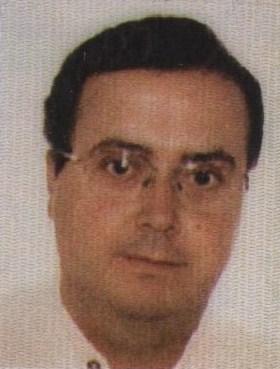
Miquel Àngel Serra Moll serves as a Lecturer in the Department of Geometry and Topology within the School of Mathematics and Computer Science at the University of the Balearic Islands (UIB). His teaching portfolio spans multiple engineering and business degrees, including Discrete Mathematics for Informatics Engineering, Mathematics for Business Administration, and Calculus courses for Automation Engineering programs across academic years 2023-24 through 2025-26. His research centers on topological applications for fuzzy information systems, evidenced by active membership in UIB's Consolidated R+D+I Group MOTIBO (Topological Models for Fuzzy Information Processing). This work integrates geometric structures with computational logic to model imprecise data, reflecting his dual focus on theoretical topology and practical information processing frameworks. Serra Moll's academic contributions prioritize foundational mathematics education across diverse technical disciplines. Current teaching assignments demonstrate consistent engagement with core quantitative subjects for engineering and business undergraduates, emphasizing discrete structures and calculus applications. His affiliation with MOTIBO indicates ongoing research activity at the intersection of topology and computational intelligence despite primary responsibilities in course instruction.
Tomás Martínez Coronado is an Associate Professor of Mathematics at the University of the Balearic Islands, where he has taught since 2016 after earning his PhD in Mathematics from the same institution in 2021. He holds a Master's degree in Advanced Mathematics and Mathematical Engineering from the Polytechnic University of Catalonia. His educational background includes: PhD in Mathematics, University of the Balearic Islands (2021) Master's in Advanced Mathematics and Mathematical Engineering, Polytechnic University of Catalonia Bachelor's in Mathematics, University of the Balearic Islands (2015) His research focuses on Phylogenetics and Evolutionary Biology within Bioinformatics, applying topological models and fuzzy logic to biological data analysis. As an active member of the Computational Biology and Bioinformatics (BIOCOM) group and Topological Models for Fuzzy Information Processing (MOTIBO) group, he bridges advanced mathematics with computational biology. He teaches core mathematics courses including Abstract Algebra, Geometry, Topology, and Linear Algebra across multiple degree programs such as Mathematics, Informatics Engineering, and Telematics Engineering, demonstrating expertise in both theoretical frameworks and applied computational methods. His research groups represent key interdisciplinary teams driving innovation in mathematical approaches to evolutionary biology and information processing, with strong institutional support as consolidated R+D+I units at the university.
José María Feria Toribio is a University Professor in the Department of Geography, History and Philosophy at Pablo de Olavide University in Seville, Spain, specializing in Human Geography with focus on metropolitan dynamics, territorial management, and sustainable development. Education: PhD from University of Seville (1991) with thesis "Territorial Settlement Systems in Andalusia. Their Organization at the Intermediate Scale", supervised by Dr. Josefina Cruz Villalón. His research spans Urban and Metropolitan Studies, Territorial Management, Sustainable Development, and Historical Geography. He investigates metropolitan governance, residential mobility, low-density settlement systems in Andalusia, urban heritage, and green infrastructure applications. His work emphasizes the interplay between demographic dynamics and sustainable territorial development in Mediterranean contexts. Analysis of his 2020-2024 publications reveals dominant themes in metropolitan area delimitation, socio-spatial dynamics during economic crises, and historical urban evolution (particularly in Seville). His methodological approach frequently employs spatial analysis and fuzzy logic modeling to examine complex territorial processes across multiple scales. Scientific Awards: No scientific awards were mentioned in the provided text. He supervises doctoral candidates in programs covering Territorial and Environmental Management, Natural Hazards, Coastal and Marine Environment, and History and Humanistic Studies. While specific grant details are unavailable, his research leadership is evidenced by consistent publication output and research group involvement. He actively participates in the TITA Workshop on Territorial and Environmental Research, conducting interdisciplinary studies on Mediterranean territorial challenges and sustainable planning solutions.
Enrique Onieva Caracuel is a full Professor at the University of Deusto's School of Engineering , Department of Computing, Electronics and Communication Technologies . He leads the PhD program in Engineering for the Information Society and Sustainable Development, and serves as Researcher in Intelligent Transportation Systems at DeustoTech-Mobility. His work spans 30+ research projects including EU-funded H2020 initiatives TIMON and LOGISTAR . Research Interests : Artificial Intelligence applications in transportation Machine Learning & Deep Learning Fuzzy Logic & Evolutionary Optimization Smart City solutions RFID & IoT systems Scientific Impact : 100+ publications (50+ top-tier journals), H-index 23 (Scopus), with recognition at international conferences. Advising : Supervised 6 theses including work on vehicle routing optimization, PTML models for nanotechnology, and industrial anomaly detection. Current Projects : Developing smart mobility systems, real-time passenger profiling, and ethical AI frameworks, funded by European Commission, Basque Government, and Diputación Foral de Gipuzkoa.
Joan Carles Ferrer Comalat is a Professor in the Department of Company at the University of Girona, specializing in Financial Economics and Accounting. He serves as co-responsible researcher for the Research Group in Accounting and Mathematics for Economics and Business . Education Graduate in Mathematical Sciences (Statistics), University of Barcelona, 1982 Diploma in Scientific Applications Programming, University of Barcelona, 1982 Master's in Teaching Mathematics and Experimental Sciences, Autonomous University of Barcelona - University of Girona, 1995 PhD in Economic and Business Sciences, University of Girona, 1997 Research Focus His research applies fuzzy logic to economic systems, developing methods for decision-making under uncertainty. Key areas include classification techniques for imprecise data, expert opinion aggregation for economic modeling, and forecasting economic variables using artificial neural networks . His work bridges mathematical theory and practical business applications.
Dr. José SantaMaría López is a Professor at the Department of Computer Science , University of Jaén, specializing in Machine Learning , Medical Imaging , and Evolutionary Computation . His work bridges Artificial Intelligence with practical applications in Healthcare and Security . Current research focuses on Trustworthy AI , Explainable AI , and 3D Modeling for forensic identification. His Google Scholar profile highlights publications on adversarial attacks, data fusion, and real-time diagnostics using Deep Learning . He employs Evolutionary Algorithms and Fuzzy Logic for optimization in medical imaging and vehicular networks. Key trends in his recent publications include Decentralized Learning , Security in AI , and Parallel Computing for healthcare applications.
Xari Rovira Llobera is a Full Professor at the Department of Operations, Innovation and Data Sciences within the Esade School of Business Administration and Management. They are affiliated with the Institute for Data-Driven Decisions and actively engage in research related to fuzzy linguistic assessment, multi-criteria decision-making, and educational outcomes. Education: Not explicitly detailed in the provided text. Research Interests revolve around decision-making processes, business education, learning experiences, ordinal scales, process optimization, natural language processing, and fuzzy logic. Their work often intersects computer science, social sciences, and data-driven methodologies. Recent Articles focus on workplace readiness in higher education, fuzzy aggregation for user profiling, volatility modeling in econometrics, and decision support systems for career services and conference reviews. These publications highlight interdisciplinary applications of computational methods to real-world problems. Projects include collaborations with institutions like AGAUR and Esade, addressing topics such as capturing emotions through language, multi-criteria models, hesitant terms reasoning, and linguistic information structures under uncertainty.
Airam Expósito Márquez is a Researcher at the University of La Laguna, affiliated with the Department of Computer Science and Systems Engineering and the GA2 Grupo de Algoritmia Avanzada research group. They hold a PhD in Computer Science from the University of La Laguna (2020), supervised by Dr. Julio Antonio Brito Santana and Dr. José Andrés Moreno Pérez. Research focuses on optimization techniques, soft computing, logistics, and transportation systems. Key areas include production planning in industries, maritime logistics, waste collection route design, and smart mobility solutions. They have explored fuzzy logic, GRASP algorithms, and simulation models to address complex routing and scheduling problems. Recent work emphasizes real-world applications in seaport truck management, greenhouse gas reduction in freight distribution, and intelligent tourism routing. Their contributions span conference proceedings, peer-reviewed journals, and collaborative projects with industry partners. No scientific awards are explicitly mentioned, but their active publication record indicates sustained academic engagement. They are involved in teaching and curriculum development, as seen in their 2024 publication on secondary education technology programming. Labs/Teams: Active member of the GA2 Advanced Algorithmics Group, focusing on algorithm design and optimization for real-world challenges.
Daniel Vázquez Vázquez is an Assistant Professor in the Chemical Engineering and Materials Science Department at IQS School of Engineering (Universitat Ramon Llull). He is an active member of the Grup d'Enginyeria i Simulació de Processos Ambientals (GESPA), where he contributes to research in process engineering and environmental systems. His work spans multiple areas of chemical engineering with a particular focus on sustainable process design and optimization. Research Interests Daniel's research primarily centers on Inherent Safety Engineering and Safety Index development, with significant contributions to Multiobjective Optimization methodologies for chemical process design. His work bridges theoretical developments in optimization techniques with practical applications in environmental engineering and sustainable chemical processes. He has developed novel approaches like the OFISI (Optimizable Fuzzy Inherent Safety Index) that integrate fuzzy logic with process safety assessment. His research portfolio demonstrates a strong trajectory toward addressing complex sustainability challenges, particularly in the areas of carbon management, renewable energy integration, and circular economy principles. Recent work shows an increasing focus on planetary boundaries and the development of methodologies that ensure chemical processes operate within environmental limits while maintaining economic viability. Publication Trends Analysis of Daniel's recent publications reveals a clear evolution in research focus from traditional chemical process optimization toward more comprehensive sustainability frameworks. Early work concentrated on inherent safety metrics and distillation sequence design, while more recent publications integrate machine learning techniques (particularly Bayesian symbolic regression) with process engineering to develop hybrid modeling approaches. There's a marked emphasis on carbon management, with multiple publications addressing carbon dioxide removal technologies, methanol production from renewable sources, and the integration of carbon capture with energy systems. Collaborations and Projects M-AD-NESS Project (2024-2027): As Principal Investigator, Daniel is leading research on Dual Anaerobic Bioelectrochemical Digesters for in-situ biomethane production from wastewater sludge. GESPA Project (2022-2025): As a researcher, he contributed to this group focused on Environmental Process Engineering and Simulation, funded by the Agència de Gestió d'Ajuts Universitaris i de Recerca (AGAUR). Daniel's research has gained significant attention, with his 2021 Nature Communications paper 'Delaying carbon dioxide removal in the European Union puts climate targets at risk' receiving 61 citations, policy references, and coverage in multiple news outlets. His work has been highlighted by 4 news outlets, blogged about, referenced in policy sources, and shared widely on social media platforms. Laboratory and Research Group Daniel is an active member of the Grup d'Enginyeria i Simulació de Processos Ambientals (GESPA), a research group dedicated to environmental process engineering and simulation. This group brings together multiple researchers from IQS to address challenges in sustainable chemical processes, waste management, and environmental protection through advanced modeling and optimization techniques.
Maria del Mar Bibiloni Femenias is an Assistant Professor at the Department of Mathematical Sciences and Computer Science, University of the Balearic Islands (UIB). She earned her PhD in Information and Communication Technologies from UIB in 2024 with a thesis on "modular indistinguishability operators with applications." Her research focuses on fuzzy logic, topology, and mathematical optimization, and she is a member of the research group Models for the Treatment of Fuzzy Information (MOTIBO) . Education: BS in Mathematics (UIB, 2017) MSc in Big Data Analysis in Economics and Business (UIB, 2021) MSc in Teacher Training (UIB, 2022) PhD in Information and Communication Technologies (UIB, 2024) Her teaching spans mathematics for Economics, Business Administration, and Tourism degrees, as well as discrete mathematics and optimization in Computer Engineering programs. She also contributes to data science courses like "Introduction to R and Python" and "Tools for Simulation and Sampling with Massive Data." MOTIBO's work aligns with her expertise in fuzzy information modeling. While no specific awards or publications are listed, her roles bridge academia and industry through technical positions at SM2 Information Technologies (2018–2019) and SM2 by Plexus (2019–2021).
Raquel Fernández Peralta is an Assistant Professor at the Department of Mathematical Sciences and Computer Science, University of the Balearic Islands (UIB). She holds a PhD fellowship (FPU) and is supervised by Dr. Sebastià Massanet and Dr. Arnau Mir for her thesis on fuzzy implication functions. BSc in Mathematics (2018) from UIB, with a thesis on fuzzy implication functions MSc in Statistical and Computational Information Processing (2019) from UCM and UPM, focusing on Markov chains and epidemiological models Her research focuses on fuzzy connectives , functional equations , and statistical & computational information processing . She contributes to the Soft Computing, Image Processing and Aggregation (SCOPIA) research group. Raquel teaches Álgebra Abstracta I in multiple programs (Mathematics, Computer Engineering, Telecommunications Engineering) and has previously taught Matemáticas I/II in Biology and Biochemistry degrees since 2020-21.
Dr. Sebastián Massanet Massanet is a Full Professor at the Department of Mathematical Sciences and Computer Science, University of the Balearic Islands (UIB). His academic career at UIB spans since 2011, teaching in multiple undergraduate and postgraduate programs including Mathematics, Biology, Biochemistry, Chemistry, Business Administration, Big Data Analysis, and Intelligent Systems. He has held leadership roles in academic initiatives like co-directing the Master's Degree in Intelligent Systems (2018-2023) and coordinating the Mathematical Talent Stimulation (ESTALMAT) project for UIB (2019-2023). PhD in Mathematics (2012), UIB Master in Mathematics (2009), UIB Graduate in Mathematics (2008), UIB His research focuses on Soft Computing , particularly fuzzy logical connectives (fuzzy implications and aggregation functions) and their applications in approximate reasoning, decision-making, and biomedical image processing. His work includes 53 journal publications (42 in Q1 journals), 114 conference communications, 6 invited book chapters, and 2 edited books. He has supervised 2 theses and serves on editorial boards of Fuzzy Sets and Systems , International Journal on Approximate Reasoning , and International Journal of Computational Intelligence Systems . He is actively involved in organizing special sessions at leading conferences (EUSFLAT, IPMU) and has participated in 6 national research projects (2 as PI) and 6 FECYT scientific culture projects (5 as PI). Key affiliations include the Soft Computing, Image Processing, and Aggregation (SCOPIA) research group, Balearic Islands Health Research Institute, and the Board of the European Society of Fuzzy Logic and Technology (EUSFLAT).
Dr. Marc Munar Covas is an Assistant Professor at the Department of Mathematical Sciences and Computer Science, University of the Balearic Islands, where he has worked since 2020. He holds a PhD in Information and Communication Technologies (2024), a Master in Intelligent Systems (2020), and a Bachelor in Mathematics (2019) from the same institution. His research focuses on theoretical and applied aspects of fuzzy logic operators, mathematical morphology, and artificial intelligence. He has contributed to abdominal surgery image processing through the development of the clinically validated mobile application Redscar , which detects infection signs using AI analysis of patient photographs and health questionnaires. Currently undergoing multicenter validation, this tool aims to improve postoperative care in Spanish hospitals. He has also developed MIA4LUNG , a web platform for lung region segmentation and pathology detection (e.g., COVID-19, tuberculosis) using deep learning and information aggregation techniques. As a member of the Soft Computing, Image Processing and Aggregation (SCOPIA) research group and collaborator of the Graphics and Computer Vision Unit and Artificial Intelligence (UGIVIA), he has participated in national and regional competitive projects. His international research experience includes a three-month stay at LORIA (Nancy, France). Teaching activities center on mathematical analysis and statistics across multiple degree programs, including dual degrees in Mathematics with Computer Engineering and Telecommunications Engineering. He has taught courses like Integral Calculus in Several Variables , Statistics , and Linear Algebra Methods since 2020.
Miki Hermann is a CNRS Researcher at the Laboratory of Computer Science (LIX) at École Polytechnique, France. He is affiliated with the Algorithms and Complexity research group and maintains an active research program in theoretical computer science and computational logic. His research interests span computational complexity, constraint satisfaction problems, satisfiability, and logic in computer science. Hermann's work focuses on the theoretical foundations of computational problems, particularly examining complexity classifications, counting problems, and algorithmic solutions for logical and combinatorial structures. His research bridges theoretical computer science with practical applications in artificial intelligence and data analysis. The analysis of his recent publications reveals a consistent focus on computational complexity across various logical frameworks. His work demonstrates expertise in classifying the complexity of constraint satisfaction problems, propositional logic systems, and graph-theoretic problems. Notable research directions include minimal inference problems, counting complexity, and applications of satisfiability to big data transformation through his MCP project. Hermann is part of the Algorithms and Complexity research group at LIX (CNRS, UMR 7161), where he contributes to theoretical computer science research. He has developed significant software projects including MCP (Multi-Classification Project) for transforming datasets into propositional formulas and GYT (Generalized Young Tableaux) for solving variadic polynomial equations over non-negative integers.
Francisco José Climent Diranzo is a Professor in the Department of Financial and Actuarial Economics at the Faculty of Economics, University of Valencia, Spain. He is currently the Coordinator of the Intercollegiate Doctoral Program in Quantitative Finance and Economy and has previously directed the Master in Banking Management and the Intercollegiate Doctorate Program in Banking and Quantitative Finance. Full Name: Francisco José Climent Diranzo Institution: University of Valencia School: Faculty of Economics Department: Department of Financial and Actuarial Economics Academic Rank: Professor Email: f.jose.climent@uv.es Office: 5D05, Faculty of Economics, Av. de los Naranjos s/n, 46022 Valencia, Spain Education: Diploma in Business Administration, University of Valencia (1990) Bachelor’s Degree in Economic and Business Sciences, University of Valencia (1992) PhD in Economics, University of Valencia (1999), Thesis: Interrelaciones entre los mercados bursátiles internacionales His research focuses on quantitative methods in Financial Economics , particularly in financial econometrics, banking management, market efficiency, and machine learning applications in finance. He has published extensively in top international journals such as Journal of Financial Markets , Energy Policy , Quantitative Finance , and Journal of Business Ethics . His recent work (2020–2025) shows a strong trend toward applying machine learning techniques—especially extreme gradient boosting and fuzzy-set methods—to predict bank failure, analyze ESG fund performance, and detect financial market manipulation. The analysis of his 15 most recent publications reveals a consistent focus on banking stability , market efficiency , financial innovation , and advanced quantitative modeling . Themes such as ESG investing, digital banking, Euribor manipulation, and mutual fund performance dominate his recent output, reflecting both academic rigor and relevance to current financial challenges. Scientific Awards and Recognitions: Teaching Excellence Award, University-Society Awards, Social Council of the University of Valencia (2014) Recognition by the Ministry of Education, Culture and Sport of the Generalitat Valenciana (2014) Excellent Qualification in DOCENTIA Program (2012–2017 and 2017–2022) Four recognized research six-year periods (sexenios) Six recognized teaching five-year periods He has served as Principal Investigator in competitive research projects funded by the Ministry of Science and Technology, the Generalitat Valenciana, and private institutions. He has supervised doctoral theses and mentored students in finance and banking. As academic leader, he has played a central role in shaping postgraduate education in quantitative finance at the University of Valencia. He is affiliated with the research group EFEN (Financial Economics and Energy Finance) , which supports collaborative research in financial markets, energy finance, and econometric modeling.