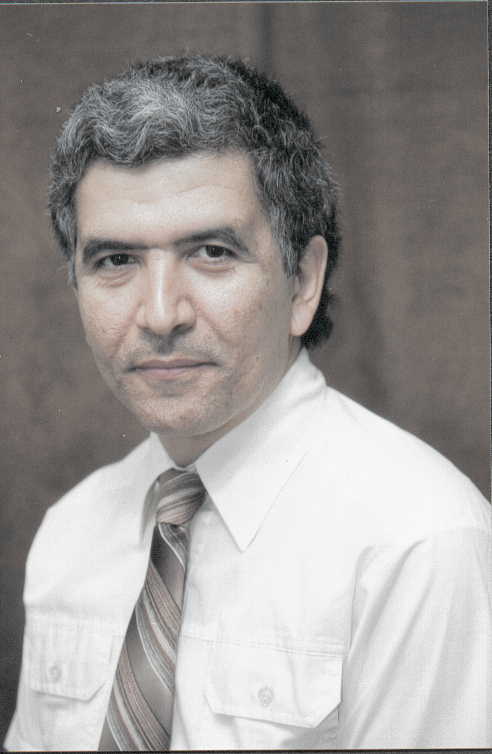
Mustapha C.E. Yagoub is a Full Professor at the School of Electrical Engineering and Computer Science, University of Ottawa, with over 500 publications in RF/microwave CAD, RFID systems, neural networks, and applied electromagnetics. He leads research in the ELEMENT Laboratory and RFM Research Group , focusing on wireless communication systems and nonlinear device modeling. PhD in Electronics (Institut National Polytechnique de Toulouse, 1994) Magister in Telecommunications (École Nationale Polytechnique d'Alger, 1987) Dipl.-Ing. in Electronics (École Nationale Polytechnique d'Alger, 1979) His research bridges Microwave Circuit Design with Artificial Intelligence , including applications in Energy Conservation and Telecommunication Systems . Key trends in his publications include hybrid modeling techniques combining Neural Networks with Computational Electromagnetics for optimizing Antenna Design and RF Components . He is a Senior Member of IEEE and licensed with the Professional Engineers of Ontario and Ordre des Ingénieurs du Québec . His lab teams focus on High-Tc Superconducting Devices and Directional Antenna Optimization for RFID networks.
Dr. Shabnam Sadeghi Esfahlani is an Associate Professor in Robotics at the School of Engineering and the Built Environment, Anglia Ruskin University , where she serves as Deputy Leader of the BORI research group and leads the Automation & Robotics MSc program. Her interdisciplinary expertise spans mechatronics, artificial intelligence, virtual reality, and serious games , with a focus on applications for rehabilitation, medical training, and autonomous systems . As a Chartered Engineer and Senior Fellow of the Higher Education Academy , she has secured significant funding from Innovate UK, Horizon 2020, and GCRF , with grants exceeding £3 million. Education PhD in Mechanical Engineering, Anglia Ruskin University BSc (First Class) in Statistics & Mathematical Science, Shahid Beheshty University Her research integrates AI with robotics for societal impact, exemplified by the open-source SROBO ground robot and projects like Rehabgame and the Assistive Feeding Robot . She has published over 45 peer-reviewed articles and contributes to academic communities as a journal guest editor and conference organizer . Key collaborations include IET, IMechE, and the Nuffield Foundation as a mentor for young students. Scientific Awards & Recognitions: Chartered Engineer (CEng), Engineering Council UK Senior Fellow (SFHEA), Higher Education Academy Student-Voted 'Made a Difference Award' (2018) Post-Graduate Certificate in Higher Education
Edward Jenkins is a Postdoctoral Researcher at the University of Oxford, affiliated with Balliol College. He is a member of the Davis Group, focusing on T-cell Biology and its intersections with proteomics, immunology, and cell signaling. His research spans diverse areas such as: T-cell activation mechanisms and membrane dynamics Vaccine adjuvant responses in lymph nodes CAR-T cell engineering for therapeutic specificity Proximity proteomics in inflammatory pathways Computational methods for 3D cell segmentation Recent publications highlight his work in immune receptor signaling, deubiquitinase substrate discovery, and nanoscale imaging of T-cell interactions. His studies often bridge molecular and cellular immunology with advanced imaging and computational tools, aiming to enhance cancer immunotherapy and vaccine design. Edward contributes to collaborative research within the Davis Group, utilizing techniques such as localisation microscopy and free-standing membrane platforms to investigate immune cell dynamics.
Prof. Fausto Cavallaro is a faculty member at the Department of Economics of the University of Molise . His research focuses on sustainability, renewable energy, and multi-criteria decision-making using advanced fuzzy logic methodologies. He actively collaborates on global projects related to sustainable development and supply chain optimization. Primary institution: University of Molise Department: Economics Academic rank: Professor Research interests include: Core: Sustainability, Renewable Energy, Fuzzy Set Theory Specialized: Multi-Criteria Decision Making, Circular Economy, HyperSoft Sets Applications: Healthcare supply chain, Wind energy, Wastewater treatment Recent publication trends show interdisciplinary work combining: Fuzzy logic with sustainability frameworks Innovative methods like SPC-MARCOS and RANCOM-WISP Focus on healthcare logistics, offshore wind farms, and circular economy
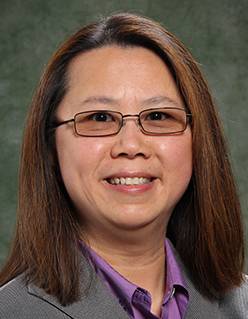
Sarah S. Lam is a Professor of Industrial and Systems Engineering and serves as Graduate Director at the School of Systems Science and Industrial Engineering, Binghamton University. She also holds the role of Assistant Director for Systems Analysis and Modeling at the Watson Institute for Systems Excellence. Her expertise spans system modeling, simulation, and optimization using computational intelligence techniques such as neural networks, meta-heuristics, fuzzy logic, and stochastic simulation. Education: MS from University of Delaware PhD from University of Pittsburgh Her research focuses on neural networks, evolutionary optimization, machine learning, and system modeling and optimization. She actively contributes to fields like business analytics, medical informatics, and health systems. Awards: Chancellor's Award for Excellence in Teaching (2012) Dr. Lam’s work integrates probability and statistical methods (design of experiments, regression, ANOVA, PCA) with innovative computational approaches to solve complex engineering and healthcare challenges.
Dr. Dilum Dissanayake is an Associate Professor in Human Geography and Transportation Planning at the University of Birmingham's School of Geography, Earth and Environmental Sciences. She holds a PhD from Nagoya University, Japan, and has expertise in transport planning, data analysis, and behavioral change to mitigate climate change. Her research integrates computing, data mining, and behavioral sciences with a focus on sustainable mobility, smart infrastructure, and innovative transport solutions. Education: PhD (Transport Planning), Nagoya University, Japan MEng (Infrastructure Planning and Management), Asian Institute of Technology, Thailand BSc (Hons) (Civil Engineering), University of Moratuwa, Sri Lanka Diploma in Programming Research Interests: Travel demand modeling, electric/autonomous vehicles, behavioral change for sustainability, transport policy analysis (e.g., congestion pricing, telecommuting), and developing country transport challenges. She applies methods like discrete choice models, machine learning, and NLP. Awards & Grants: Co-Investigator in CLEETS (UK-Japan £10m project), Principal Investigator in Capitalisation and eHUBS (€392k/€412k EU projects). Notable awards include the 2022 Remarkable Women in Transport Award and Duo-India Fellowship. Advising & Grants: Supervises 6 current PhD students and has guided 10 completed PhDs. Leads Transport Demand Management in CLEETS and Transport Modelling in Capitalisation. Teaches modules like Sustainable Cities and One-Planet Thinking. Labs/Teams: Part of Birmingham's Sustainable Cities research group, leading projects on micro-mobility, EV adoption, and post-pandemic transport trends. Engages in international collaborations via CLEETS and eHUBS.
Prof. Cengiz Kahraman is a Professor in the Department of Industrial Engineering at Istanbul Technical University (ITU). He holds a PhD in Industrial Engineering from ITU and has held numerous academic and administrative roles, including Head of Department (2010–2013) and Vice Dean (2004–2008). His research focuses on fuzzy logic, multi-criteria decision making, engineering economics, and statistical analysis. He has supervised over 60 theses and led projects funded by TUBITAK and private institutions, including studies on fuzzy decision support systems, warranty cost analysis, and performance evaluation systems. Education: PhD in Industrial Engineering, Istanbul Technical University (1992–1996) MSc in Industrial Engineering, Istanbul Technical University (1988–1990) BSc in Industrial Engineering, Istanbul Technical University (1984–1988) Research Interests: Fuzzy logic extensions (e.g., spherical, Pythagorean, neutrosophic sets) Multi-criteria decision-making methodologies (AHP, TOPSIS, VIKOR) Applications in supply chain management, sustainability, and engineering economics Key Awards: Applied Soft Computing Journal Best Paper Award (2024) ITU Engineering Science Award (2023) TUBITAK Science Award (2018) Memorial Da Ruan Award (2014) Recent Projects: Intelligent multi-criteria legal tracking systems Fuzzy inference techniques for debt collection optimization Social innovation platforms for education volunteers Warranty cost modeling for Arçelik products Grants & Advising: Recipient of multiple TUBITAK Publication Incentives (2011–2015) Advisor to over 60 graduate students in fuzzy decision-making and engineering Directed projects totaling over ₺1.2 million in funding Labs/Teams: Leads research groups focusing on fuzzy decision systems and sustainable engineering solutions.
Professor Kannan Govindan serves as Director of the Center for Sustainable Operations and Supply Chain Resilience at the University of Adelaide, Australia, and holds a Chair Professor position at the University of Southern Denmark. Recognized as a Highly Cited Researcher in 'Engineering' for seven consecutive years (2018-2024) by Clarivate Analytics, he stands among the top scholars globally in his field with over 475 international journal publications. His research focuses on sustainable supply chain management, reverse logistics, and circular economy models, integrating environmental, social, and economic dimensions of sustainability within supply chain operations. Professor Govindan has pioneered approaches for measuring sustainability performance using multi-criteria decision-making methods and extensively studied barriers to implementing green supply chain practices across diverse industries. His recent work emphasizes digital transformation of supply chains through Industry 4.0 technologies to enhance sustainability and resilience, particularly in response to global disruptions like the COVID-19 pandemic. His influential publications span topics including healthcare supply chain resilience, circular economy implementation, and sustainable supplier selection. Analysis of his recent work (2019-2023) reveals a strong focus on integrating digital technologies with sustainable practices, addressing supply chain disruptions, and developing frameworks for circular economy implementation in various industry contexts. Professor Govindan's scholarly contributions have been recognized with numerous prestigious awards: Highly Cited Researcher in 'Engineering' (2018-2024) Research.com Business and Management in Australia Leader Award (2025) Research.com Engineering and Technology in Australia Leader Award (2025) Multiple Research.com Leader Awards for Denmark (2022-2024) in both Business Management and Engineering Technology As an academic leader, Professor Govindan serves as Executive Editor of the Journal of Cleaner Production and holds editorial positions with several other leading journals. His research has attracted significant grant funding, supporting large-scale studies on sustainable supply chain practices across multiple industries. He actively mentors PhD and Master's students, focusing on developing the next generation of supply chain sustainability researchers. At the University of Adelaide, Professor Govindan leads the Center for Sustainable Operations and Supply Chain Resilience, which brings together interdisciplinary researchers to address critical challenges in sustainable supply chain management. The center maintains strong industry partnerships globally, facilitating the translation of research findings into practical applications that enhance supply chain sustainability and resilience in real-world contexts.
Damir Isovic is an Associate Professor and Vice-Chancellor for Internationalization at Mälardalen University's Academy of Innovation, Design and Technology. Previously, he served as Dean of the School of Innovation, Design and Engineering. His roles include leadership in academic administration and participation in national boards. He holds a PhD and has extensive international teaching experience. Research focuses on real-time systems, embedded systems design, and scheduling algorithms. Notable contributions include seminal work in real-time scheduling recognized by the IEEE Technical Community on Real-Time Systems. He has organized major conferences and delivered keynotes globally. His publications emphasize hybrid scheduling approaches, real-time operating systems (RTOS), media processing in resource-constrained systems, and MPEG standards. Recent work integrates memetic algorithms with fuzzy controllers and explores multi-core scheduling fairness. His research bridges theoretical scheduling models with practical embedded system implementations. No scientific awards explicitly listed in the text. Advising activities include supervising PhD students, though specific names are not provided. Lab affiliations include the Division of Networked and Embedded Systems, where he develops frameworks like GENESIS for embedded system engineering. His work emphasizes cross-disciplinary collaboration and industry partnerships in education and technology development.
Ayman El-Hag is an Associate Professor in the Department of Electrical and Computer Engineering at the University of Waterloo. He is affiliated with the Outdoor Insulation and Condition Monitoring Research Group, focusing on advancing technologies for high-voltage insulation systems and smart grid infrastructure. His work integrates machine learning, signal processing, and materials science to improve condition monitoring and diagnostic methods for power equipment. Research interests include partial discharge detection using UHF and acoustic sensors, machine learning applications for defect classification in outdoor insulators, and the development of non-invasive sensing techniques for real-time monitoring. He also explores energy management systems leveraging fuzzy logic and smart meter data analysis for residential and grid-level applications. Recent publications highlight advancements in capsule networks for insulator discharge prediction, deep learning-based hydrophobicity classification, and novel antenna designs for partial discharge localization. His work emphasizes practical solutions for power system reliability and environmental resilience of insulation materials under extreme conditions. El-Hag is a Full-time faculty member and holds Adjunct faculty status, contributing to interdisciplinary research projects. He actively engages in promoting condition monitoring methodologies through educational initiatives and industry partnerships.
Dr. Reza Alikhani is an Assistant Professor of Operations and Supply Chain Management at the MBS School of Business in France. He holds a PhD in Production and Operations Management from the University of Tehran and has held postdoctoral and visiting research positions at EM Normandie Business School and DePaul University. His primary research focuses on applying operations research methodologies to optimize supply chain and logistics systems, with expertise in supply chain resilience, sustainable operations, and collaborative logistics. Education and Positions: PhD in Production and Operations Management, University of Tehran, Iran (2018) Postdoctoral Researcher at EM Normandie Business School Visiting Research Fellow at DePaul University, Chicago Research Interests: Dr. Alikhani’s work emphasizes supply chain resilience , sustainable operations , and collaborative logistics optimization . His studies often integrate fuzzy logic, stochastic programming, and multi-objective models to address uncertainties and strategic decision-making in supply chains. Recent trends in his publications highlight advancements in concurrent resilience strategies and cross-industry collaboration for logistics efficiency. Collaborations and Industry Links: He actively collaborates with international companies to enhance operational efficiency through innovative supply chain solutions. This bridges academic research with real-world applications, particularly in retail logistics and humanitarian relief considerations. Professional Contributions: Dr. Alikhani serves as an ad hoc reviewer for top-tier journals such as Production and Operations Management and European Journal of Operational Research , contributing to the rigor of supply chain literature.
Christian Fermüller is an Associate Professor in the Department of Theory and Logic at the Faculty of Informatics, Technische Universität Wien (TU Wien). His research focuses on theoretical computer science, artificial intelligence, automated deduction, and formal logic systems. He specializes in fuzzy logic, proof theory, and non-classical logics, with contributions to semantic games, dialogue systems, and computational models of reasoning under vagueness. **Research Interests:** Foundations of fuzzy logic and many-valued logics Proof theory and analytic calculi Game-based semantics for non-classical logics Formal models of judgment aggregation and argumentation theory Applications in automated reasoning and computational intelligence **Grants & Projects:** Austrian Science Fund (FWF) projects on graded deontic reasoning (2025–2027), semantic games and analytic calculi (2019–2023), and fuzzy logic foundations (2008–2013) Co-PI of the LogICCC initiative exploring contextualism and fuzzy logic **Teaching:** Courses include logical methods in computer science, quantum computing, and theoretical computer science. Supervised over 15 PhD and master’s theses on topics ranging from semantic games to argumentation frameworks. **Affiliations:** Active in the LogiCS research group and regularly organizes seminars on logic and computation.
Xiaoqiang Wang is a Professor in the Department of Scientific Computing at Florida State University (FSU). His research focuses on numerical analysis, applied partial differential equations, mathematical biology, image processing, and scientific computing. He holds a Ph.D. from Pennsylvania State University (2005). His work emphasizes phase-field modeling for elastic bending energy, biological microstructures, and computational methods for complex systems. Notable contributions include advancements in centroidal Voronoi tessellation algorithms for image segmentation and high-performance computing techniques for scientific visualization. Recent publications highlight innovations in topology-preserving phase-field models, neural network-based energy minimization, and stochastic resource competition models. His research bridges theoretical mathematics with practical applications in biophysics, materials science, and biomedical engineering. Wang collaborates actively with interdisciplinary teams, contributing to FSU's computational science initiatives. His lab focuses on developing novel numerical methods and simulations for biological and physical systems, reflecting a commitment to both foundational and applied research.
Benjamin Lev is a Professor in the Department of Decision Sciences and Management Information Systems (DS&MIS) at the LeBow College of Business, Drexel University. He previously served as Trustee Professor (2014–2021) and Department Head (2009–2014) at Drexel. His academic leadership extends to prior roles as Professor, Department Head, and Dean at the University of Michigan-Dearborn (1990–2009), Professor and Department Head at Worcester Polytechnic Institute (1987–1990), and Professor and Department Head at Temple University (1970–1987). He has held short appointments at institutions in China and the U.S., including the Wharton School and Tel Aviv University. Lev’s research spans Operations Research, Management Science, and Decision Sciences , with expertise in mathematical programming, operations planning, inventory control, supply chain management, and optimization under uncertainty. His recent work focuses on applications in disaster management, sustainable supply chains, AI in operations, water resource allocation, and emergency logistics. He has published over 150 journal articles and authored or edited 18 books, with a strong emphasis on real-world problem-solving using quantitative methods. The trends in his recent publications (2022–2025) reflect a focus on complex optimization under uncertainty , particularly in humanitarian logistics, environmental sustainability, and digital commerce. His work frequently employs advanced methodologies such as bi-level programming, stochastic optimization, fuzzy logic, and data envelopment analysis (DEA), often applied to critical societal challenges like disaster response, air pollution, and resource scarcity. Lev is an INFORMS Fellow (2003) and has received several honors, including the 2023 Top Cited Article award in Naval Research Logistics and the 2023 First Prize from the Jiangxi Province Social Science Outstanding Achievement Award. His editorial leadership is most notably demonstrated by his 23-year tenure as Editor-in-Chief (2002–2025) of OMEGA – The International Journal of Management Science , one of the premier journals in the field. He has advised numerous scholars and presented his work globally, particularly on his experience as EiC of OMEGA . He has been actively involved in academic collaborations, especially in China, serving on advisory boards and as an external reviewer for institutions like Sichuan University. He has also received significant grant funding from the U.S. National Institutes of Health, U.S. Public Health Service, and U.S. Air Force for research in medical information systems and operations research applications. Lev has been instrumental in organizing major international conferences and has served on the editorial boards of over 20 journals, including Interfaces, IIE Transactions, OR Journal, and Financial Innovation . His role as Vice President of TIMS and INFORMS further underscores his leadership in the global operations research community.
Dr. Cheng-Chew Lim is a Professor in the School of Electrical and Mechanical Engineering at the University of Adelaide. He specializes in control theory, autonomous systems, and multi-agent reinforcement learning. His research focuses on trusted autonomous systems, secure cyber-physical networks, and decentralized decision-making models. He has published over 300 articles and supervised 50+ PhD and master’s students. Dr. Lim teaches courses in control systems, autonomous systems, and engineering project management. He has held editorial roles, including Associate Editor for IEEE Transactions on Systems, Man, and Cybernetics, and is actively involved in professional associations like the IEEE Control and Aerospace Electronic Systems Joint Chapter. His current projects include physics-informed neural networks for medical imaging, secure distributed autonomous systems, and resilient formation control under cyberattacks. Dr. Lim has secured research grants from ARC and industry partnerships, emphasizing practical applications in robotics, cybersecurity, and smart systems.