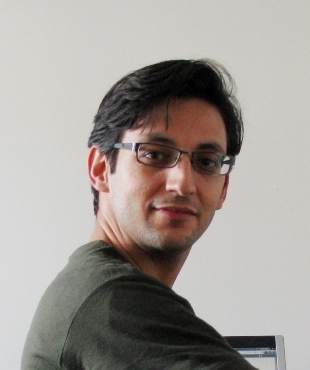
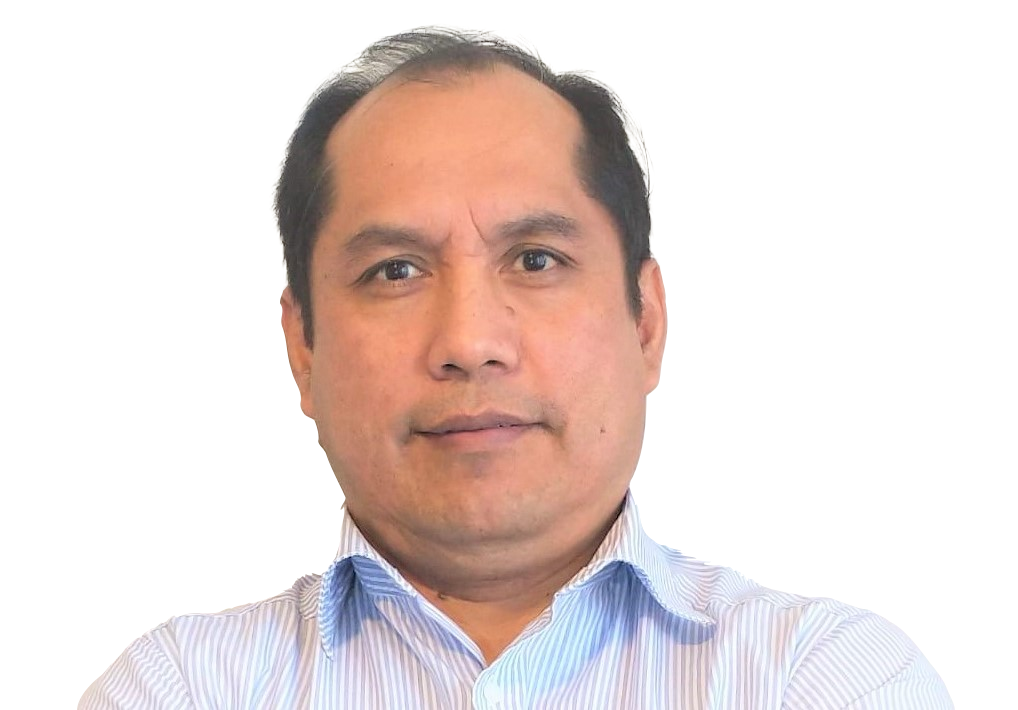
Dymytro Makarchuk is a Senior Lecturer in Bridge Simulation and Ship Handling at Solent University's Warsash Maritime School and Department of Maritime Operations. He is a member of the Warsash Maritime Autonomous Surface Ships (MASS) Research Centre and serves as the Research Group Convenor there. His work focuses on maritime technology, environmental awareness, and AI-driven solutions for navigation and safety. Research interests include optimizing vessel routes using fuzzy logic and cellular automata, unmanned systems for environmental monitoring, and navigation in confined spaces. He collaborates on EU-funded projects like SEAGUARD (2024-2027), which integrates AI and robotics for maritime safety, and Innovate UK projects addressing air quality and virtual reality applications in hazardous environments. Recent publications explore the application of AI to maritime logistics, with a focus on environmental and operational efficiency. His projects are funded by the European Commission, UK Research and Innovation, and Innovate UK. Grants and collaborations include leadership roles in two major projects: SEAGUARD (€X) and a confined-area navigation initiative (UK£X). These projects emphasize interdisciplinary approaches to maritime challenges, combining robotics, environmental science, and AI.
Assoc. Prof. Dr. Yavuz CENGİZ holds an academic position in the Department of Circuits and Systems Theory at the Faculty of Engineering and Natural Sciences. His research focuses on microwave engineering, heuristic optimization algorithms, fuzzy logic, and data mining applications in electronic systems. He has conducted extensive work on amplifier design, neural network modeling, and electromagnetic testing methodologies such as the reverberation chamber approach. Education: Licentiate in Electrical-Electronic Engineering from Istanbul University (1997) Master's in Electronics and Communications Engineering from Süleyman Demirel University (2000) PhD in Communication Engineering from Yıldız Technical University (2004) Research Interests: Wide-Band Microwave Amplifiers, Fuzzy Logic, Artificial Neural Networks, Heuristic Optimization (e.g., Genetic Algorithms, Memetic Algorithms), Data Mining, Antenna Design, and RF Technologies. He has pioneered methods combining optimization algorithms with microwave device modeling and reverberation chamber testing. Recent Contributions: Recent work includes nanofiber-based frequency selective surfaces, elastic property modeling of timber using AI, and modified metaheuristic algorithms. His publications span IEEE journals, Expert Systems with Applications, and international conferences. Grants & Collaborations: No specific grants mentioned, but active collaboration with researchers in electromagnetics and optimization fields through co-authored papers. Labs/Teams: Engages in circuits and systems research without explicitly named labs, focusing on practical implementation of theoretical algorithms in microwave and communication systems.
Mahdi Vasighi is currently serving as an Assistant Professor at the Department of Computer Science and Information Technology, Institute for Advanced Studies in Basic Sciences (IASBS) in Zanjan, Iran, a position he has held since February 2012. Prior to this, he was a Post-doc Researcher at the same institution from February 2011 to February 2012. He has also served as a Visiting Researcher at the Milano Chemometrics and QSAR Research Group, University of Milano - Bicocca, Milan, Italy from September to October 2009, and as a Guest Lecturer at the Pasteur Institute, Tehran, Iran since September 2016. Dr. Vasighi earned his educational qualifications from the Institute for Advanced Studies in Basic Sciences (IASBS) in Zanjan, Iran, where he completed his Ph.D. in Chemometrics in May 2010 and his M.Sc. in Analytical Chemistry between 2002 and 2005. His undergraduate education was in Pure Chemistry at Imam Khomeini International University, Qazvin, Iran, from 1998 to 2002. Dr. Vasighi's primary research interests lie at the intersection of bioinformatics, machine learning, and data analysis. His work focuses on structural bioinformatics, particularly on modeling relationships between biological sequences and their corresponding structure or function. He has made significant contributions to the field of self-organizing maps with dynamic structure, developing innovative approaches like the Directed Batch Growing Self-Organizing Map (DBGSOM) that enhance topology preservation and visualization of high-dimensional data. His research spans multiple domains including protein structural classification, cancer diagnostics using fluorescence spectroscopy, and drug discovery for diseases like COVID-19. Dr. Vasighi's publication record demonstrates a strong trajectory in applying machine learning techniques to solve complex problems in bioinformatics and medical diagnostics. His recent work shows an increasing focus on applying computational approaches to healthcare challenges, including cancer detection, protein analysis, and drug discovery for viral diseases. He has successfully bridged the gap between theoretical machine learning advancements and practical applications in biology and medicine, with a particular emphasis on developing interpretable models that can be used by domain experts. Dr. Vasighi has actively contributed to the academic community through teaching and conference organization. He has served as Local Chair for the International Conference on Contemporary Issues in Data Science 2019 (CiDaS 19) and as Scientific Committee Member and Organizing Chair for previous CICIS conferences. His teaching portfolio includes graduate courses in Artificial Neural Networks, Computational Data Mining, Bioinformatics, Statistical Pattern Recognition, and Multimedia Systems. Dr. Vasighi has supervised numerous MSc students, with over twenty graduated students and nine current students listed in his profile. His research has been supported through collaborations with institutions like the Pasteur Institute, where he worked on projects related to nuclear magnetic resonance-based screening of thalassemia and determination of coronary heart disease risk using NMR spectra of plasma lipoproteins. Through his Directed Batch Growing Self-Organizing Map (DBGSOM) package and other software contributions, Dr. Vasighi has made his research tools accessible to the broader scientific community. His work continues to push the boundaries of how machine learning can be applied to solve challenging problems in bioinformatics and medical diagnostics.
Dr. Eusebio Ingol Blanco is an Assistant Professor in the Department of Civil Engineering at New Mexico State University's College of Engineering. He joined NMSU in 2024 after serving as a Professor in the Department of Water Resources at the National Agrarian University La Molina in Lima, Peru from 2019-2023. Dr. Ingol Blanco has extensive international experience in water resources engineering, with previous appointments at Pontifical Catholic University of Peru, San Ignacio de Loyola University, and the University of Texas at Austin. His educational background includes: Ph.D. in Civil Engineering (Water Resources Engineering), The University of Texas at Austin, 2011 M.S. in Hydrosciences, Colegio de Postgraduados, Mexico, 2003 B.S. in Agricultural Engineering, Pedro Ruiz Gallo National University, Peru, 1996 (First-Place Honors) Dr. Ingol Blanco's research focuses on water resources engineering with particular expertise in hydrological modeling, climate change impacts, groundwater systems, flood hazard analysis, and the application of artificial intelligence to water resources problems. His work often integrates remote sensing data and advanced computational methods to address challenges in arid and semi-arid regions, particularly in South America. He has published extensively on topics including groundwater management in the Atacama Desert, climate change impacts on Andean watersheds, and the development of machine learning approaches for hydrological prediction. Dr. Ingol Blanco has received recognition as a Former Fellow of the Ford Foundation International Fellowships Program and is an Associate Member of the American Society of Civil Engineering (ASCE) and the Environmental & Water Resources Institute (EWRI). He is also a Member of the Peruvian Association of Hydraulic Engineering and Environmental (APIHA). As an educator, Dr. Ingol Blanco teaches courses in water resources systems analysis, groundwater hydrology, and irrigation engineering. He has extensive teaching experience from his time at multiple Peruvian universities, where he taught courses in surface hydrology, hydraulic models, fluid mechanics, and water resources systems analysis at both undergraduate and graduate levels. Dr. Ingol Blanco leads the IngWater research team, which focuses on developing innovative approaches to water resources management through the integration of hydrological modeling, remote sensing, and artificial intelligence.