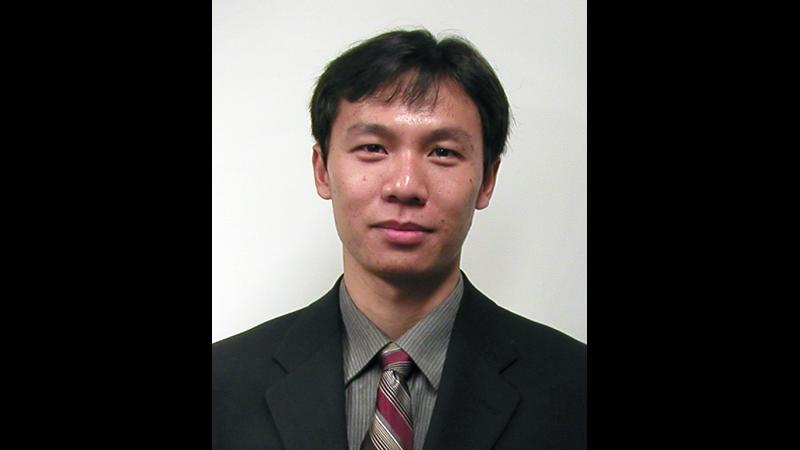
Xiangyu Zhang is the Samuel D. Conte Professor of Computer Science at Purdue University. He specializes in AI security, software analysis, and cyber forensics, with a focus on detecting vulnerabilities in traditional software and AI systems. His research includes dynamic slicing, program profiling, and securing AI models against backdoors. He has led projects funded by DARPA, IARPA, NSF, and industry, securing over $13 million in grants. He has mentored 30+ PhD students and postdocs, many of whom hold academic positions or industry roles. His work has been recognized with awards like the ACM SIGPLAN Distinguished Dissertation Award and NSF Career Award. Education: PhD, Computer Science, University of Arizona (2006) MS & BS, Computer Science, University of Science and Technology of China (2000 & 1998) Research Interests: AI Security: backdoor detection, adversarial attacks, model integrity Program Analysis: dynamic slicing, static/dynamic debugging Cyber Forensics: log analysis, attack investigation Software Reliability: fault localization, vulnerability detection Key Projects: DARPA V-SPELLS: domain-specific program analysis IARPA TrojAI: AI backdoor detection competitions NSF-funded research on model debugging and co-reasoning of software/NL artifacts Awards & Recognition: Top performer in IARPA TrojAI competitions (13/18 rounds) ACM SIGPLAN Distinguished Dissertation Award (2006) NSF Career Award (2009) Ranked 8th globally in systems research productivity (2024) Career Contributions: Secured over $13M in research funding Guided 25 PhDs and 8 postdocs Published 89+ top-tier papers (2014–2024)
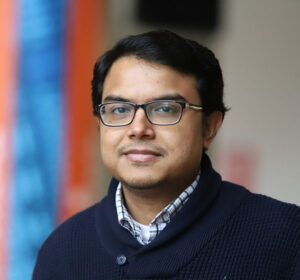
Sishuai Gong is an Assistant Professor in the Department of Computer Science at the University of North Carolina at Chapel Hill, focusing on system reliability and security. His research bridges machine learning, software engineering, and computer architecture to address challenges in large-scale software systems. Education : Ph.D. in Computer Science from Purdue University (2025), B.S. in Computer Science from the University of Science and Technology of China (2019). Research Interests : System reliability and security, kernel concurrency testing, verified security modules, and machine learning for systems. He develops interdisciplinary techniques to identify and mitigate functional interference bugs in OS virtualization and latency-sensitive applications. Scientific Awards : Jay Lepreau Best Paper Award at OSDI (2024) Google Cloud Research Innovator (2024) Bilsland Dissertation Fellowship at Purdue (2024) Teaching : Offering COMP 790: Reliable and Secure Systems (Fall 2025) with a focus on empirical studies, static/dynamic analysis, and machine learning for systems. Course grading includes paper presentations (30%), class participation (30%), and research projects (40%).
Dr. Xinwen Fu is a Professor in the Miner School of Computer & Information Sciences at the University of Massachusetts Lowell, where he also serves as Director of the iSAFER Center. He received his Ph.D. in Computer Engineering from Texas A&M University (2005), M.S. in Electrical Engineering from University of Science and Technology of China (1998), and B.S. in Electrical Engineering from Xi'an Jiaotong University (1995). Research Interests Dr. Fu specializes in Computer Security and Privacy , with particular focus on IoT Security , Mobile Security , Network Security , and Digital Forensics . His research has been published in all four top computer security conferences: IEEE Symposium on Security and Privacy (S&P/Oakland), ACM Conference on Computer and Communications Security (CCS), USENIX Security Symposium, and Network and Distributed System Security Symposium (NDSS), as well as prestigious journals like ACM/IEEE Transactions on Networking and IEEE Transactions on Dependable and Secure Computing. His work has gained significant media attention from CNN, Wired, Huffington Post, Forbes, Yahoo, MIT Technology Review, and PC Magazine, including multiple appearances on CNN Domestic and International. He has also served as TPC member for numerous prestigious conferences including ACM CCS, IEEE INFOCOM, and IEEE ICDCS. Scientific Awards Best paper award at IEEE International Conference on Industrial Internet (ICII) 2019 Best paper award, International Conference on Wireless Algorithms, Systems, and Applications (WASA), 2017 Teaching Excellence Award of Department of Computer Science, UMass Lowell, 2016 Best paper award, International Performance Computing and Communications Conference (IPCCC) 2016 Award of Excellence, GeekPwn 2016 Ethic Smart Life Hack Competition Erich Spengler Student Cyber Paper Award with students, The Colloquium for Information Security Education (CISSE), 2016 Spotlight Paper of the IEEE Transactions on Mobile Computing (TMC), February 2014 Best paper award, International Conference on Wireless Algorithms, Systems, and Applications (WASA), 2013 Best paper award, IEEE International Conference on Communications (ICC): Communications and Information Security Symposium, 2013 Teaching award, Department of Computer Science, University of Massachusetts Lowell, 2011
Caroline Lemieux is an Assistant Professor at the Department of Computer Science, University of British Columbia (UBC), with research focused on advancing software correctness, security, and performance through innovative testing and synthesis techniques. Her work bridges Programming Languages and Software Engineering , particularly in fuzz testing, specification mining, and program synthesis. PhD from University of California, Berkeley (2021), advised by Koushik Sen Postdoctoral researcher at Microsoft Research, NYC (2021-2022) Key contributions: FuzzFactory , CodaMOSA , Arvada , and Gauss Her research integrates machine learning with traditional testing methods, exemplified by projects like RLCheck (reinforcement learning for test generation) and AutoPandas (neural synthesis for dataframes). Recent publications analyze generator-based fuzzing challenges and propose hybrid strategies combining coverage feedback with AI-driven insights. Scientific Awards : ACM/SIGSOFT Best Paper Award (ESEC/FSE 2019) ACM/SIGSOFT Tool Demonstration Award (ISSTA 2019) ACM/SIGSOFT Distinguished Artifact Award (ISSTA 2019) NSERC Postgraduate Scholarship-Doctoral (PGS D) UBC Governor General's Silver Medal (2016) Teaching roles include: 2025W2: CPSC 539L - Topics in Programming Languages 2024W2: CPSC 410 - Advanced Software Engineering 2023W2: CPSC 410 (with Alex Summers) She supervises graduate and undergraduate researchers working on projects like ExploTest (automated unit test generation) and GRIMOIRE (grammar extraction from pseudo-rules). Her research team collaborates with institutions including Microsoft Research, Google, and academic partners in systems security and AI-driven testing.
Prof. Dr. Andrea Stocco is a Professor at the Technische Universität München (TUM), affiliated with the TUM School of Computation, Information and Technology. His research focuses on the intersection of software engineering and deep learning, particularly addressing the robustness and reliability of data-intensive systems. Key areas include autonomous vehicles, web application testing, and automated functional oracles for deep learning systems. He leads initiatives such as the Lehrstuhl für Software und Systems Engineering , collaborating on projects like CrESt and SUPPRA – Algorand Center of Excellence . Research interests encompass monitoring techniques for AI-driven systems, test suite maintainability, and scenario-based testing of cyber-physical systems (CPS). His work emphasizes practical applications, such as improving testing frameworks for evolving web applications and enhancing interoperability in autonomous driving systems (ADS). Recent efforts include leveraging large language models (LLMs) for secure code assessment and benchmarking generative AI for test input generation. No scientific awards are explicitly mentioned in the provided texts. His publications reflect a strong focus on testing methodologies, with over 40 articles since 2013, covering domains like web test automation, dependency-aware testing, and safety-critical failure prediction in autonomous systems. Advising and grants details are not detailed in the current data, but his lab contributes to TUM's broader efforts in software engineering and systems reliability.
Ruoyu (Fish) Wang is an Associate Professor at the School of Computing and Augmented Intelligence, Arizona State University (Tempe campus). He also holds affiliations as Associate Director of Impact at the Global Security Initiative, Center for Cybersecurity & Trusted Foundations, and with the Biodesign Center for Biocomputing, Security and Society. His educational background includes: Ph.D. in Computer Science, University of California, Santa Barbara Professor Wang's research focuses on system security, with an emphasis on automated binary program analysis and reverse engineering of software. He is the co-founder and core developer of the angr binary analysis platform, which won third place in the DARPA Cyber Grand Challenge (2018). His work spans vulnerability discovery, fuzzing, and security tool development for binary program analysis. His current research interests include: Binary program analysis and reverse engineering Automated vulnerability discovery and mitigation Fuzzing techniques and robust testing Phishing and fraud detection in e-commerce Security of firmware and embedded systems Application of machine learning to security problems His recent publications (2024-2025) demonstrate cutting-edge research in fraud detection for e-commerce using LLMs, advanced fuzzing methodologies, and binary decompilation techniques. Key trends include bridging theoretical program analysis with practical security tools, as evidenced by extensions to the angr platform, and addressing emerging threats in financial ecosystems and client-side security. Dr. Wang has received notable recognition: Third place in DARPA Cyber Grand Challenge (2018) with team Shellphish As an active educator, he supervises graduate research (CSE 599/799) and teaches core cybersecurity courses including Software Security (CSE 545) and Information Assurance (CSE 365). His teaching spans multiple semesters through 2025, covering practicums, internships, and special topics in computing security. Dr. Wang co-founded the angr binary analysis platform and contributes to Arizona State University's security research ecosystem through leadership roles in the Center for Cybersecurity & Trusted Foundations and Biodesign Center for Biocomputing, Security and Society.
Vijay Laxmi is a Professor in the Department of Computer Science and Engineering at Malaviya National Institute of Technology (MNIT) Jaipur, India. With over a decade of active research publication from 2014-2024, Dr. Laxmi has established themselves as a prominent researcher in network security, Android security systems, and Network-on-Chip architectures. Their work demonstrates consistent collaboration with Manoj Singh Gaur and numerous doctoral students at MNIT Jaipur. Dr. Laxmi's research interests span Network Security, Android Security, Malware Analysis, Network-on-Chip Architectures, Routing Protocols, Side-Channel Attacks, Wireless Networks, and Mobile Security. Their work bridges theoretical security frameworks with practical implementations, particularly in mobile and embedded systems. Recent publications indicate a growing focus on AI-based security approaches including GAN applications for fuzzing and deep learning for image dehazing. The research trajectory shows increasing sophistication in security analysis techniques, evolving from basic malware detection to advanced side-channel attack analysis and sophisticated network security protocols. Recent publications demonstrate expertise in both theoretical frameworks and practical implementations with applications in real-world security challenges. Dr. Laxmi has mentored numerous graduate students including Vineeta Jain, Anugrah Jain, Sonal Yadav, Mohit Singh, and Gaurav Singal, who appear as co-authors across multiple publications. Their collaborative network extends to researchers at international institutions, indicating strong academic connections beyond their home institution.
Cristian Cadar is a Professor in the Department of Computing at Imperial College London, leading the Software Reliability Group . His research focuses on improving software reliability and security through practical techniques in software engineering, computer systems, and program analysis. Education: Ph.D. in Computer Science, Stanford University M.Eng. in Computer Science, MIT B.S. in Computer Science and Mathematics, MIT His research interests center on software engineering and software security , particularly symbolic execution , dynamic symbolic execution (DSE) , and multi-version execution . Current work explores techniques for scalability, constraint solving, and runtime security in software systems. Key trends in his recent articles include optimizing symbolic execution for testing, addressing path explosion in constraint-based test generation, and advancing multi-version execution for dynamic software updates. His publications also cover program analysis , automated testing , and formal methods for software reliability. Awarded prestigious honors such as the Humboldt Research Award (2024) , ERC Consolidator Grant (2018) , and IEEE New Directions Award (2022) . Other accolades include the BCS Roger Needham Award (2019) and SIGOPS Hall of Fame (2018) . Cadar supervises PhD and postdoctoral researchers in software reliability and security. His group has secured grants from the ERC and EPSRC , including a Consolidator Grant (2018) and Early-Career Fellowship (2013) . He actively contributes to conference organizing committees and editorial boards. The Software Reliability Group at Imperial College, led by Cadar, specializes in techniques like KLEE and EXE for automated testing. Their work has been adopted by industry partners such as Fujitsu, IBM, and Microsoft, particularly in runtime security tools like WIT .
Prof. Alexander Pretschner is a Professor of Software & Systems Engineering at the Technical University of Munich (TUM) and Founding Director of the Bavarian Research Institute for Digital Transformation (bidt). He also serves as Scientific Director of fortiss, a Bavarian research institute for software-intensive systems. His research focuses on software engineering, testing, information security, and ethical software development. Pretschner holds a PhD from TUM and has held academic positions at Karlsruhe Institute of Technology (KIT) and TU Kaiserslautern. He is a co-editor of several prestigious journals, including IEEE Transactions on Reliability and the Journal of Software Testing, Verification and Reliability. Education: PhD in Computer Science, Technical University of Munich MSc in Computer Science, University of Kansas (on Fulbright Scholarship) Diplom in Computer Science, RWTH Aachen University Research Interests: His work spans testing methodologies, secure software design, and ethical considerations in agile development. Notable contributions include frameworks for metamorphic testing, distributed data usage control, and accountability mechanisms for cyber-physical systems. Awards: IBM Faculty Award (2012, 2013) Google Focused Research Award (2011, 2012) EARTO Innovation Prize (2014) 2nd Platz Supervisory Award (2020) Advising & Grants: Pretschner has supervised numerous PhD and Master’s students, contributing to over 200 publications. He leads projects like EDAP (Ethical Deliberation in Agile Processes) and collaborates with industry partners on cybersecurity and AI ethics initiatives. Labs & Teams: His work is anchored in bidt, fortiss, and TUM’s Chair of Software & Systems Engineering, focusing on societal impacts of digitalization and trustworthy AI systems.
Nozomu Togawa is a Professor at Waseda University's Faculty of Science and Engineering, School of Fundamental Science and Engineering, specializing in Computer Science. He has held this position since 2009 and also serves as Chief Scientific Officer (CSO) of Quanmatic Inc. since 2022. With a PhD in Engineering from Waseda University (1997), his academic journey includes positions at Waseda University and the University of Kitakyushu before his current professorship. His research interests focus on integrated system design , quantum computation , and information security . Togawa has published extensively with over 368 papers and significant citation metrics (Scopus h-index: 23, Google Scholar h-index: 28). His work bridges theoretical quantum computing with practical security applications, particularly in hardware security and IoT systems. Togawa's research demonstrates a clear progression from traditional hardware security toward quantum-inspired computing solutions. His recent publications focus on Ising machines, quantum annealing, and hardware Trojan detection, showing how quantum approaches can solve complex optimization problems in security contexts. He has made significant contributions to applying quantum computing techniques to practical problems like course selection optimization, travel planning, and hardware security verification. Among his notable recognitions are the Minister of Education, Culture, Sports, Science and Technology Award for Science and Technology (2018), SCOPE Results Development Promotion Award (2022), and multiple Best Paper Awards. He serves on important committees including the Ministry of Internal Affairs and Communications Cyber Security Task Force and the Institute of Electronics, Information and Communication Engineers' VLSI Design Technology Research Committee. Togawa actively mentors students who frequently appear as co-authors on his publications. His research group produces high-impact work in quantum computing applications and hardware security, with strong industry connections through his CSO role at Quanmatic Inc. He has received substantial research funding supporting his innovative work at the intersection of quantum computing and security.
Professor Jun Zhang is a leading academic in cybersecurity at Swinburne University, Australia, where he directs the Cybersecurity Lab. He has been honored as Australia's top cybersecurity researcher and instrumental in establishing Swinburne as a globally recognized cybersecurity research institution. His work includes high-impact papers and multi-million-dollar R&D projects, culminating in awards like the 2021 'Top Cybersecurity Research Institution' accolade. As course director of the Bachelor of Cyber Security, he pioneered an industry-driven teaching model with Deloitte and CSIRO, significantly boosting course enrollment. His collaborations extend to Adobe's Curriculum Innovation Program and the Australian P-TECH initiative, promoting STEM education and cybersecurity awareness. He supervises doctoral candidates and leads grants focused on AI-driven cybersecurity, smart home security, and blockchain-based edge computing. His research spans vulnerability detection, GAN forensics, IoT security, and privacy preservation in OSNs. Research interests include cybersecurity fundamentals, data science applications, and distributed systems. Notable achievements include the PTFix framework for Java vulnerabilities, the IoTFuzz smart home testing system, and CTI mining methodologies. Awards reflect his mid-career research excellence and industry partnerships. His grants with CSIRO and defense organizations emphasize real-world impact, addressing challenges from malware detection to adversarial machine learning. The Cybersecurity Lab and collaborative projects like Artchain demonstrate his commitment to bridging academia and industry. Professional activities include supervising over 20 HDR students and securing grants totaling millions. His work on blockchain-based edge storage (CSEdge) and SDCCP congestion control highlights innovation in networking. Future directions include advancing AI for design collaboration with CSIRO and enhancing privacy in smart energy technologies. His contributions span technical, educational, and community outreach domains, positioning him as a pivotal figure in cybersecurity's evolution.
Valerie Viet Triem Tong is a Research Professor at the Paris Institute of Electrical and Electronic Engineering, School of Electrical and Electronic Engineering. She has established herself as a leading researcher in cybersecurity with a particular focus on information flow control systems, Android security, and malware analysis. Her work spans both theoretical foundations and practical security tools development. Her research interests center on Information Flow Control , where she has developed frameworks for monitoring and enforcing security policies at both operating system and application levels. She has made significant contributions to Android Security , creating tools for detecting malicious behavior in mobile applications and addressing privacy concerns in smartphone environments. Her work in Malware Analysis includes developing advanced techniques for tracking and visualizing malware behavior, with emphasis on evasive Windows malware and Android malware in the wild. She also investigates Peer-to-Peer Network Security , focusing on Sybil attack resistance and distributed identity management. Analysis of her publication record reveals a consistent trajectory from foundational work in information flow theory to increasingly applied security research. Her recent work shows a strong emphasis on practical security tools (DaViz, GUI-Mimic, BAGUETTE), security evaluation methodologies (Digital twin, CERBERE), and addressing contemporary challenges in malware analysis (debiasing datasets, handling obfuscated applications). A notable trend is her integration of visualization techniques with security analysis to make complex security data accessible to both experts and machine learning systems. As an advisor, she has mentored numerous researchers who have become first authors on significant publications, including Radoniaina Andriatsimandefitra, Tomás Concepcion Miranda, and Cedric Herzog. Her research has been supported by multiple grants focused on cybersecurity infrastructure, though specific grant details are not provided in the available information. Dr. Tong is actively involved with the CIDre security research group in Rennes, contributing to collaborative projects that bridge theoretical security models with practical implementation challenges. Her work on information flow monitoring has evolved from basic research to applied systems that address real-world security concerns across multiple platforms.
Endadul Hoque is an Assistant Professor in the Department of Electrical Engineering and Computer Science at Syracuse University (SU), leading the SYNE Lab. Previously, he held a similar position at Florida International University (FIU). He earned his Ph.D. in Computer Science from Purdue University in 2015, with postdoctoral research at Northeastern University. His research focuses on cybersecurity, particularly in automated vulnerability detection, network/system security, and IoT defense mechanisms. He draws on program analysis, formal verification, and fuzz testing. Key honors include the NSF CAREER Award (2024) and a Google Research Scholar Award (2022). His work has been published in top venues like ACM CCS, NDSS, and IEEE S&P. He actively seeks students for PhD/MSc positions in security, IoT, and program analysis. His grants include NSF funding for IoT policy enforcement and context-sensitive fuzzing. Education Ph.D., Computer Science, Purdue University, 2015 M.S., Computer Science, Marquette University, 2010 B.S., Computer Science and Engineering, Bangladesh University of Engineering and Technology, 2008 Research Interests Dr. Hoque’s work spans secure network systems, IoT security, vulnerability detection, and automated reasoning methods like SMT solving and symbolic execution. Recent innovations include VetIoT (runtime IoT defense validation) and LLM-driven security tools like iConPAL. He emphasizes practical defenses and user-centric security solutions, such as the SeQR enterprise Wi-Fi configurator. Awards NSF CAREER Award (2024) Google Research Scholar Award (2022) NDSS Distinguished Paper (2018) Grants & Service He leads NSF-funded projects on IoT policy enforcement and context-sensitive fuzzing. Served on program committees for S&P, SecDev, and DSN. Teaches courses on systems security and operating systems at SU and FIU. Lab/Team SYNE Lab at Syracuse University focuses on securing networked systems through automated analysis, runtime verification, and resilient protocols.
Ki-Woong Park is a tenure-track full Professor in the Department of Computer and Information Security at Sejong University. He leads the System Security and Computer Engineering Research (SysCore) Lab, which focuses on system security research with numerous ongoing projects funded by major Korean research institutions including IITP, NRF, and KRIT. Sejong University, Department of Computer and Information Security System Security and Computer Engineering Research (SysCore) Lab Leader Member of IEEE, IEEE Computer Society, and ACM Education: Ph.D. in Electrical Engineering & Computer Science, KAIST (Advisor: Prof. Kyu-Ho Park) M.S. in Electrical Engineering & Computer Science, KAIST (Advisor: Prof. Kyu-Ho Park) B.S. in Computer Science, Yonsei University (Summa Cum Laude) Exchange Student at University of California, Los Angeles (UCLA) Professor Park's research focuses on designing, building, and analyzing secure systems, particularly for cloud computing, networked systems, and embedded systems. His work often involves reevaluating existing security mechanisms and actual system implementations with subsequent evaluation in real computing environments. He has made significant contributions to areas including cloud security, IoT security, ransomware detection, moving target defense, and metaverse security. His research approach emphasizes both theoretical foundations and practical implementation, with numerous publications in top-tier security and systems venues. His recent publications (2023-2024) demonstrate a strong focus on emerging security challenges in modern computing environments, particularly in metaverse platforms, UAV systems, and edge computing. These works span both theoretical security frameworks and practical implementations, with an emphasis on visualization techniques, hardware-based security mechanisms, and AI-enhanced security analysis. His research shows a clear progression from traditional cloud and network security toward next-generation security challenges in immersive virtual environments and cyber-physical systems. Scientific Awards: Microsoft Research Fellowship (2009-2010) Best Poster Gold Award at WISA 2020 Best Paper Award at MobiSec'18 Professor Park actively mentors numerous graduate and undergraduate students through the SysCore Lab, with current members including Ph.D. students, MS students, and undergraduate researchers. His research is supported by multiple significant grants, including the NRF Outstanding Researcher-Mid-career Researcher project, IITP Information Security Core Source Technology Development, and Defense Technology Advancement Research Institute projects. These grants total tens of billions of Korean won and address critical national security challenges in cyber defense, cloud security, and metaverse technologies. The SysCore Lab, under Professor Park's leadership, maintains a strong industry and government collaboration network, with part-time researchers from organizations including Hyundai Duty Free, Astron Security, Korea University, and various military cyber commands. This unique structure enables the lab to address both theoretical security challenges and practical implementation issues in real-world systems.
Mathias Payer is an Associate Professor at EPFL's School of Computer and Communication Sciences (IC), leading the HexHive Laboratory . His work focuses on software security, particularly addressing memory corruption and type violations through binary analysis and compiler-based techniques. He contributes to research in secure system design, fault isolation, and fuzzing methodologies. Current PhD students : Di Bartolomeo Luca, Feng Zhiyao, Hofhammer Florian, Lyu Tao, Mao Philipp Yuxiang, Zhang Chibin, Zheng Han Past EPFL PhD students: Badoux Nicolas Daniel, Bhattacharyya Atri, Hazimeh Ahmad His research explores software security in areas like: Protecting applications from vulnerabilities Binary exploitation and mitigation Compiler-driven security hardening Strong sanitization and privilege separation Memory corruption detection The HexHive group develops tools and frameworks for: Automated fuzz driver generation Gradual compartmentalization State inference for feedback optimization Secure cell architectures Recent publications highlight advancements in: Fuzzing hybrid approaches (e.g., DUMPLING, MendelFuzz) Memory safety validation (QMSan, Pacmem) Compiler-assisted defenses (Gradient, Type++)