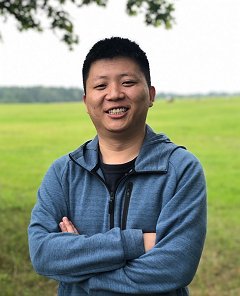
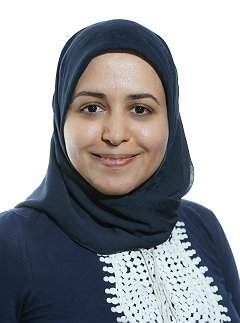
Lars Grunske is a Professor at the Department of Computer Science, Faculty of Mathematics and Natural Sciences, Humboldt University of Berlin. His research focuses on software and systems engineering, safety-critical systems, and software evolution. Department: Computer Science University: Humboldt University of Berlin Academic Rank: Professor His work spans automated software analysis, probabilistic model checking, and formal methods for complex systems. Key collaborations include researchers from Swinburne University, University of Hull, and University of Queensland. Recent publications address research software engineering, program repair, and explainability in cyberphysical systems. Professional roles include leadership in examination boards and program committees for conferences like ICSE and ASE. Contact info: Email: grunskel@hu-berlin.de Phone: +49 30 2093-41142 Address: Unter den Linden 6, Berlin
Yu Jiang is an Associate Professor at the School of Software, Tsinghua University, China. His research focuses on software security with emphasis on fuzz testing, embedded systems, and database security. He leads the Software System Security Assurance Group which has discovered over 1,000 bugs in major system software with 300+ CVEs registered. Dr. Jiang's research interests include Software Engineering , Embedded Systems Security , and Cross-Layer Fuzzing . His work addresses vulnerabilities in operating systems, databases, communication protocols, and IoT firmware through innovative fuzzing frameworks. Key contributions include semantic-aware fuzzing for heterogeneous software stacks and learning-based vulnerability detection for embedded systems. His recent publications demonstrate strong trends in database security (Hulk, PUPPY, THANOS), ransomware defense (Fawkes, Preventing Disruption), and web security (JANUS). Research spans both theoretical advances in fuzzing techniques and practical industrial applications, with significant impact evidenced by numerous distinguished paper awards. Career Award, NSFC: 2026 Distinguished Paper Award, ISSTA: 2025 First Prize for Technical Invention, CCF: 2024 Distinguished Paper Award, USENIX Security: 2024 SIGSOFT Distinguished Paper Award, FSE: 2022 Dr. Jiang has advised over 50 graduate students including 20 PhD candidates. His research is supported by major grants including NSFC projects ($600,000 for Software Trustworthiness Construction and $350,000 for Distributed Database Reliability), Huawei ($80,000 for LLM-Powered Fuzzing), and Tencent ($120,000 for LLM-Powered Unit Testing). The Software System Security Assurance Group maintains strong industry partnerships with Huawei, Alibaba, Tencent, and Webank. The group operates cutting-edge infrastructure for fuzz testing across multiple domains including database systems, operating kernels, blockchain platforms, and industrial control systems. Current projects integrate LLM technologies with traditional fuzzing techniques to enhance vulnerability detection in complex software stacks.
Alexandre Bartel is a Professor in the Department of Computing Science at Umeå University, Sweden, specializing in software security and software engineering. His research focuses on system security and analysis of permission-based software stacks, particularly Android. With numerous publications in top-tier security and software engineering conferences and journals, Bartel has established himself as a leading researcher in vulnerability analysis and software security. Bartel's research interests primarily center around software security, with a particular emphasis on Java and Android ecosystems. His work delves into vulnerability analysis, deserialization attacks, control flow integrity, and security mechanisms for complex software systems. He investigates how to verify security properties through efficient algorithms and examines existing software layers from a security perspective. His research bridges theoretical security concepts with practical implementation challenges in real-world systems. Analysis of Bartel's recent publications reveals a strong focus on Java deserialization vulnerabilities, control flow integrity mechanisms, and Android security. His work demonstrates a consistent trajectory from fundamental vulnerability analysis to developing practical security solutions and benchmarks. The research spans both theoretical frameworks and empirical evaluations, with significant contributions to understanding long-term security adoption patterns and developing tools for vulnerability detection. Scientific Awards: Most influential Paper ICSE N-10 Award for IccTA: Detecting Inter-Component Privacy Leaks in Android Apps Bartel actively contributes to the academic community through service roles, having served on program committees for major conferences including ASE, ESEC/FSE, ICSE, and FSE. His research has practical implications for software developers and security practitioners, particularly in the areas of vulnerability detection and security mechanism implementation. While specific grant information isn't detailed in the provided materials, his extensive publication record suggests successful funding for his research initiatives. Though not explicitly detailed in the provided information, Bartel's research likely involves collaboration with students and researchers on projects related to software security analysis. His work on benchmarks like Gleipner and CONFUZZION suggests involvement in developing tools and resources for the security research community.
Koushik Sen is a Professor in the Department of Electrical Engineering and Computer Sciences at the University of California, Berkeley. His research focuses on developing software tools and methodologies to enhance programmer productivity and software quality, with expertise in Software Engineering, Programming Languages, and Formal Methods. Education: B.Tech from Indian Institute of Technology, Kanpur M.S. and Ph.D. in Computer Science from University of Illinois at Urbana-Champaign Research Focus: Professor Sen pioneers automated testing techniques including concolic testing and DART (Directed Automated Random Testing). His work bridges formal methods with practical software development, emphasizing bug detection, program synthesis, and AI-driven software analysis tools. Recent innovations include machine learning approaches for code recommendation and fuzzing. Publication Trends: His recent publications (2019-2023) demonstrate strong emphasis on fuzzing techniques, program synthesis, and AI/ML applications in software engineering. Notable domains include smart contract security, automated testing, and developer tooling, with frequent collaborations in top-tier conferences. Awards and Honors: NSF CAREER Award (2008) Sloan Foundation Fellowship (2011) IFIP TC2 Manfred Paul Award (2010) Okawa Foundation Research Grant (2015) Multiple ACM SIGSOFT Distinguished Paper Awards UIUC Distinguished Alumni Educator Award (2014) Leadership: Active program committee member for premier conferences (PLDI, ICSE, ISSTA) and keynote speaker. His research is supported by NSF, Okawa Foundation, and Sloan Foundation.
Luca Caviglione is a prominent cybersecurity researcher at the National Research Council of Italy (CNR), specializing in steganography, covert channels, and network security. With over 140 publications spanning from 2015 to 2025, he has established himself as a leading expert in information hiding techniques and their security implications. His research bridges theoretical foundations with practical applications in IoT, cloud computing, and mobile security environments. Dr. Caviglione's primary research interests focus on steganography and covert communication channels , particularly their application in modern computing environments. He investigates how data can be hidden within network protocols, mobile applications, and cloud infrastructures, while simultaneously developing detection methodologies. His work extends to IoT security , where he examines vulnerabilities in constrained devices and develops AI-based approaches for threat detection. Additional research areas include container security, malware analysis (particularly stegomalware), and security protocol analysis. Caviglione's publication record reveals a clear evolution toward applying machine learning and artificial intelligence to detect sophisticated threats like stegomalware. His recent work increasingly addresses container security, DDoS protection in microservices, and post-quantum security challenges, reflecting the evolving threat landscape. He frequently collaborates with international researchers, notably Wojciech Mazurczyk (46 co-authored papers) and Steffen Wendzel (31 co-authored papers), forming a productive research network in information hiding. As an active contributor to the cybersecurity research ecosystem, Caviglione serves on editorial boards and has organized special issues focused on information security methodology and replication studies. His leadership in developing taxonomies for steganography methods demonstrates his influence in shaping research directions in this specialized field. His work has practical implications for securing modern computing environments against increasingly sophisticated hidden communication channels.
Miryung Kim is a Professor and Vice Chair of Graduate Studies in UCLA's Computer Science Department, where she directs the Software Engineering and Analysis Laboratory. She is renowned for her pioneering work in software evolution, code clone management, and establishing the emerging field of Software Engineering for Data Intensive Computing (SE4DA and SE4ML). Her research focuses on automated testing and debugging for Apache Spark, developer tools for heterogeneous computing, and conducting systematic studies of refactoring practices in industry. She led the first large-scale study of data scientists in industry and developed JDebloat, a Java bytecode debloating tool that made significant tech transfer impact to the Navy. Her recent publications demonstrate strong trends in fuzz testing for big data analytics and heterogeneous computing, with a focus on natural input generation, co-dependence awareness, and leveraging hardware probes for acceleration. Her work bridges software engineering with data-intensive and heterogeneous computing paradigms. ACM SIGSOFT Influential Educator Award (2022) ICSME Most Influential Paper Award (2023 and 2020) NSF CAREER award Google Faculty Research Award Okawa Foundation Research Award Humboldt Fellow ACM Distinguished Member As an academic advisor, she has produced eight tenure-track faculty members at institutions including Columbia, Purdue, and Virginia Tech. Her research has been supported by National Science Foundation, Air Force Research Laboratory, Google, IBM, Intel, Okawa Foundation, Samsung, and Office of Naval Research. She previously served as Program Co-Chair of ESEC/FSE 2022 and has delivered keynotes at ASE 2019 and ISSTA 2022. She maintains active industry collaborations, serving as an Amazon Scholar at Amazon Web Services and having spent time as a visiting researcher at Microsoft Research.
Yuhong Nan is an Associate Professor in the School of Software Engineering at Sun Yat-sen University, China, specializing in software security and privacy leakage analysis for emerging platforms including IoT, mobile systems, and blockchain. Previously a Post-doctoral Research Associate at Purdue University under Prof. Dongyan Xu, she builds practical security tools to detect and mitigate vulnerabilities in real-world systems. Dr. Nan earned her PhD from Fudan University in 2018 supervised by Prof. Min Yang. Her academic journey spans rigorous research in security engineering with emphasis on empirical validation and tool development for complex platform ecosystems. Her research program focuses on uncovering systemic security flaws through innovative analysis techniques. Key contributions include vulnerability detection in smart contracts (e.g., state dependencies, reentrancy), privacy leakage analysis in mobile/IoT ecosystems, and countermeasures against deceptive UI patterns. She employs hybrid approaches combining static/dynamic analysis, machine learning, and large-scale empirical studies to develop deployable security solutions. Analysis of her 15 most recent publications (2023-2025) reveals dominant themes in blockchain security (60%), particularly smart contract/DApp vulnerabilities, with significant work in mobile privacy (30%) and cross-platform threats (10%). Her methodology consistently leverages fine-grained static analysis, semantic enrichment, and feedback-driven fuzzing, yielding tools like SmartAxe and Midas that have influenced industry practices. Dr. Nan actively mentors graduate researchers with 17 advisees including Tencent-employed graduates, and serves as a trusted reviewer for premier journals (IEEE TDSC, TMC, TOPS) and conference committees (ASIACCS, ICICS). Her leadership in security communities bridges academic research with practical defense mechanisms. At Sun Yat-sen University, she directs a high-output research group that collaborates with industry partners to address evolving threats in decentralized systems, maintaining her position among top publishing authors in USENIX Security, CCS, and NDSS venues through rigorous technical innovation.
Claire Le Goues is a Professor of Computer Science at Carnegie Mellon University, primarily affiliated with the Software and Societal Systems Department (S3D) within the School of Computer Science (SCS). She serves as the Associate Department Head for Faculty within S3D and leads the squaresLab research group. Le Goues also co-directs the REUSE@CMU summer program and teaches software engineering and program analysis at undergraduate, master's, and PhD levels. Her research spans software engineering and programming languages, with a particular focus on how to construct, maintain, evolve, improve/debug, and assure high-quality software systems. Le Goues has made significant contributions to automated program repair, program analysis, and defect detection. Her work often bridges theoretical foundations with practical applications, addressing real-world challenges in software development and maintenance. Le Goues' recent publications demonstrate a clear trend toward integrating large language models and generative AI with traditional software engineering techniques. Her research examines how these technologies can enhance program repair (BatFix, AdverIntent-Agent), vulnerability detection (Interpretable Vulnerability Detection Reports), and testing (LWDIFF for WebAssembly). This represents an evolution from her earlier foundational work in program repair (GenProg) toward leveraging contemporary AI advancements. She has mentored numerous students through her squaresLab research group and has been instrumental in developing educational programs that prepare the next generation of software engineers. Le Goues is also known for her advocacy for double-blind review processes in academic conferences, having implemented this approach when co-chairing the Symposium for Search-Based Software Engineering in 2014.
Jinqiu Yang is an Associate Professor in the Department of Computer Science and Software Engineering at Concordia University in Montreal, Canada. Her research focuses on improving software reliability and quality assurance, particularly in the context of machine learning systems and autonomous vehicles. She leads active research projects in software testing, automated program repair, and mining software repositories, with strong connections to both academic and industrial applications. Her research interests span software reliability, quality assurance of machine learning systems including autonomous vehicles, software testing, automated program repair, text analytics of software artifacts, and mining software repositories. She has developed novel approaches for testing deep learning libraries, evaluating robustness in autonomous driving systems, and tracking the evolution of static code warnings. Her work bridges traditional software engineering with emerging challenges in AI systems, addressing critical issues of reliability and safety in complex software environments. Yang's recent publications (2021-2025) demonstrate a clear trajectory toward AI/ML system reliability, with increasing focus on autonomous vehicles, concept drift detection, and security aspects of large language models. Her work spans both theoretical foundations and practical applications, often involving empirical studies of real-world systems and development of practical tools to address identified challenges. ACM SIGSOFT Distinguished Paper Award Dr. Yang actively mentors graduate students and is currently recruiting Master's and PhD candidates. She has secured significant research funding including NSERC Discovery Grants (2019-2025), Gina Cody Research and Innovation Fellowship (2024-2026), and participation in the NSERC CREATE Program SE4AI (2021-2026). Her research is supported by multiple grants including NOVA – FRQNT-NSERC PROGRAM (2024-2027) and Volt-Age Seed Grant (2024-2026). She leads research in the O-RISA Lab at Concordia University, focusing on reliability and security aspects of intelligent software systems. Her team collaborates with industry partners including IBM, where she previously worked at IBM Watson Research Lab and IBM CAS, bringing practical experience to her academic research.
Baishakhi Ray is an Associate Professor of Computer Science at Columbia University, working at the intersection of AI, Software Engineering, and Security. She received her Ph.D. from the University of Texas, Austin, and has established herself as a leading researcher in applying artificial intelligence to software engineering challenges. Her educational background includes a Ph.D. from the University of Texas, Austin, which provided the foundation for her research career at the forefront of AI and software engineering. Dr. Ray's research focuses on leveraging artificial intelligence to solve fundamental challenges in software engineering and security. Her work spans multiple areas including code generation with large language models, vulnerability detection, software testing, and program analysis. She has pioneered approaches that combine deep learning with traditional software engineering techniques to create more robust, secure, and efficient software development processes. Her research has practical implications for improving code quality, enhancing software security, and accelerating development cycles through AI assistance. Her recent work demonstrates a strong emphasis on semantic-aware code generation, execution reasoning, and addressing hallucinations in code language models. She has also made significant contributions to evaluating the functionality and security of AI-generated code, identifying critical challenges in the practical adoption of AI for software development. Dr. Ray has received numerous prestigious awards recognizing her contributions to the field: IEEE TCSE Rising Star NSF CAREER award IBM faculty award VMware Faculty award Distinguished Paper awards at FSE'17, ASE'22, and ISSTA'23 ICSME Most Influential Paper award Publications featured in CACM Research Highlights As an Amazon Visiting Academic and active participant in major software engineering conferences, Dr. Ray has established herself as a thought leader in AI for software engineering. Her research has been widely covered in trade media, indicating its relevance and impact on industry practices. She has mentored numerous students through their research and has been instrumental in shaping the next generation of researchers in this interdisciplinary field. Her work demonstrates a consistent focus on bridging theoretical advances with practical applications, ensuring that her research has tangible benefits for the software development community. The trajectory of her publications shows an evolving research agenda that has successfully adapted to the rapidly changing landscape of AI and its applications to software engineering.
Dongdong She is an Assistant Professor in the Department of Computer Science and Engineering at The Hong Kong University of Science and Technology (HKUST). His research focuses on the intersection of security and machine learning, applying data-driven approaches to solve security problems. He has established himself as a prominent researcher in software security and fuzzing techniques with publications in top conferences including IEEE S&P, CCS, and USENIX Security. Dr. She received his Ph.D. from Columbia University's Department of Computer Science, where he worked with Professors Suman Jana and Baishakhi Ray. Prior to Columbia, he conducted research with Zhiyun Qian on Android Security at the University of California, Riverside. He completed his undergraduate studies at Huazhong University of Science and Technology. His research spans two main areas: LLM Security, which investigates the security of large language models and LLM-powered systems, and LLM for Traditional Security, which leverages LLMs to solve traditional security problems such as program analysis and vulnerability discovery. His work often combines machine learning techniques with traditional security approaches to develop innovative solutions for software security challenges. Dr. She's publication record shows a consistent evolution from foundational work in neural network-assisted fuzzing (NEUZZ) toward more advanced applications in LLM security and program analysis, demonstrating both theoretical rigor and practical impact with techniques adopted by the security community. Among his notable achievements: Distinguished Paper Award at ISSTA 2025 Distinguished Paper Award at IEEE S&P 2025 Best Paper Award Runner-Up at CCS 2022 Second Place in SBFT 2024 Fuzzing Competition Finalist in 2019 NYU CSAW Applied Research Competition Dr. She currently advises several Ph.D. students including Yuchong Xie, Shuangjie Yao, and Qiao Zhang, who began their studies in Fall 2024. He serves on program committees for major conferences including ASE 2025, where he is a PC Member for the Research Papers track. His research is supported by grants enabling his team to pursue innovative approaches at the intersection of machine learning and security. His research group maintains active collaborations with institutions worldwide and contributes to open-source security tools that are widely used in both academia and industry, with a particular focus on developing advanced techniques for software security analysis through the application of machine learning.
Shaohua Li is an Assistant Professor at The Chinese University of Hong Kong (CUHK), specializing in the correctness and security of critical software systems with emphasis on compilers. His research spans Software Engineering , Programming Languages , and Security , focusing on innovative compiler testing methodologies. Key areas include leveraging large language models for test generation, optimizing fuzzing techniques through prefix-guided execution, and decoupling sanitization mechanisms to reduce overhead in vulnerability detection. His work addresses fundamental challenges in ensuring reliability of systems programming infrastructure. Recent publications demonstrate a cohesive trajectory toward practical compiler validation: from empirical rustc bug analysis to SAND's low-overhead sanitization framework. The research consistently bridges theoretical formal methods with real-world implementation challenges in security-critical systems, showing particular strength in adapting AI techniques for traditional software testing problems.
Xiaofei Xie is an Assistant Professor in the School of Computing and Information Systems at Singapore Management University (SMU), where he has been employed since 2022. Prior to this position, he was a postdoctoral researcher at Nanyang Technological University in Singapore from 2018 to 2021. His research primarily focuses on program analysis, software testing, vulnerability detection, and quality assurance of AI systems. SMU is ranked No. 9 (No. 5 in Asia) in the Software Engineering category according to CSRankings. Dr. Xie's research interests span multiple critical areas in software engineering and AI systems. His work on program analysis includes detecting non-termination bugs and developing practical methods like EndWatch for real-world software. In software testing, he has made significant contributions to deep learning systems testing, autonomous driving systems testing, and smart contract security. His research on vulnerability detection encompasses various aspects of AI security, including backdoor attacks, adversarial examples, and security testing for web-based deep learning frameworks. His quality assurance work for AI systems includes developing metrics for robustness evaluation and creating testing methodologies for diverse AI applications. Dr. Xie's publication record shows a strong trend toward integrating large language models with traditional software engineering techniques. His recent work demonstrates increasing focus on testing autonomous systems, securing AI models, and applying advanced machine learning techniques to traditional software engineering problems. The research spans multiple domains including deep learning frameworks, smart contracts, autonomous driving systems, and federated learning environments. Among his notable achievements are multiple ACM SIGSOFT Distinguished Paper Awards (ASE 2019, ASE 2023, ISSTA 2022), the ACM Tianjin Doctoral Dissertation Award 2019, and the Best Paper Award at APSEC 2020. His work has been accepted to top-tier conferences including ICSE, FSE, ASE, ISSTA, and security venues like USENIX Security. Dr. Xie actively serves the academic community as a PC co-chair for ICECCS 2025 and as a program committee member for numerous prestigious conferences including ICSE, FSE, ASE, ISSTA, and AAAI. He has also organized workshops such as the Workshop on AI and Software Testing/Analysis (AISTA) and served as Guest Editor for special issues on AI security. His service demonstrates leadership in bridging software engineering with AI and security research communities.
Alessio Gambi is a Researcher at the Austrian Institute of Technology (AIT) within the Security & Communication Technologies department, specializing in software engineering for autonomous systems. His current work focuses on testing methodologies for self-driving cars, self-adaptive systems, and cloud environments. His research interests center on Software Testing for Autonomous Vehicles , where he develops novel techniques for scenario generation, safety validation, and uncertainty management. Key areas include search-based procedural content generation, simulation-based testing, and the integration of large language models for test learning. His work bridges theoretical advances with practical tools like Flexcrash and TEASER for real-world validation. Analysis of his recent publications (2023-2025) reveals a strong trend toward autonomous vehicle testing with increasing incorporation of AI techniques. Approximately 60% of his work addresses self-driving car validation, 25% focuses on general software testing methodologies, and 15% explores AI/LLM applications in testing. His subfield specialization shows consistent emphasis on critical scenario generation, mixed-traffic simulation, and safety monitoring. Gambi actively contributes to the software engineering community through program committee roles at major conferences including ASE (2023-2025), ICSE (2024-2026), ISSTA (2021-2025), and ESEC/FSE. He has served as session chair, workshop organizer, and track committee member across these venues, demonstrating leadership in software testing research. His professional activities include developing open-source testing tools (visible on GitHub), teaching engagements like the Database Systems course at AIT (2024), and industry collaborations through AIT's research infrastructure. Current projects focus on predictive safety monitoring and uncertainty management for automated driving systems.
Reyhaneh Jabbarvand is an Assistant Professor in the Department of Computer Science at the University of Illinois at Urbana-Champaign, where she leads the Intelligent CAT Lab. Her research focuses on improving software quality, reliability, and maintenance through neuro-symbolic approaches that combine AI techniques with formal methods. Her research interests span Neural Program Analysis, Software Testing (with emphasis on mobile apps and autonomous software), Bug Localization, and Applied Optimization for Software Analysis. She has made significant contributions to the fields of energy testing for Android applications, neuro-symbolic approaches for code analysis, and large language models for software engineering tasks. Dr. Jabbarvand's recent publications reveal strong trends in applying machine learning to software engineering problems, particularly using neuro-symbolic methods to bridge the gap between deep learning and formal program analysis. Her work on code translation, test flakiness, and test oracle generation demonstrates her focus on practical applications of AI in software development workflows. Google PhD Fellowship in Programming Technology and Software Engineering Rising Star in EECS NSF CAREER Award Dr. Jabbarvand has received research funding from multiple sources including NSF, IBM Research, and C3.ai. She actively mentors students through her Intelligent CAT Lab and has served on numerous program committees for major software engineering conferences including ICSE, FSE, and ISSTA. She teaches courses on Advanced Topics in Software Engineering, ML for Code, and Software Engineering I. Her lab focuses on neuro-symbolic approaches to software engineering problems, bringing together PhD, undergraduate, and high school students to tackle challenges in AI-assisted software development and testing.