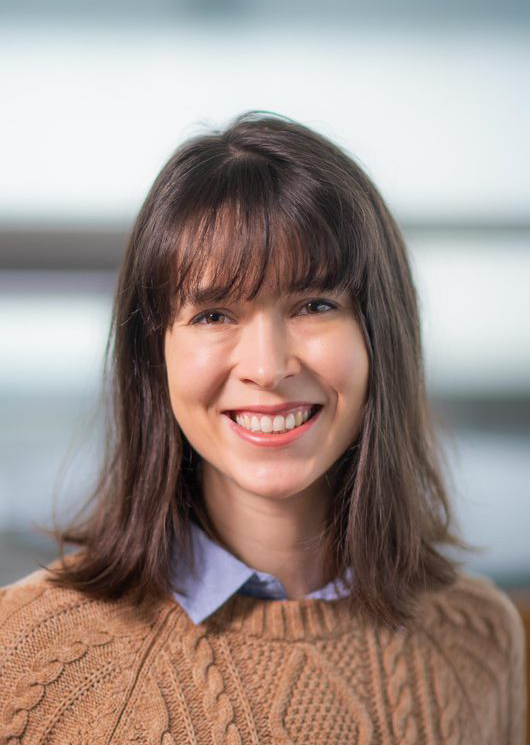
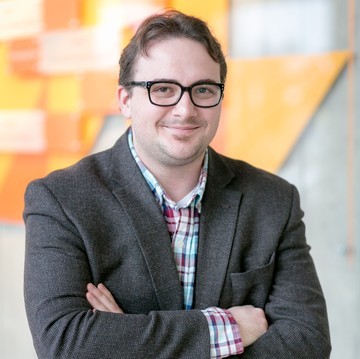
Caroline Lemieux is an Assistant Professor at the Department of Computer Science, University of British Columbia (UBC), with research focused on advancing software correctness, security, and performance through innovative testing and synthesis techniques. Her work bridges Programming Languages and Software Engineering , particularly in fuzz testing, specification mining, and program synthesis. PhD from University of California, Berkeley (2021), advised by Koushik Sen Postdoctoral researcher at Microsoft Research, NYC (2021-2022) Key contributions: FuzzFactory , CodaMOSA , Arvada , and Gauss Her research integrates machine learning with traditional testing methods, exemplified by projects like RLCheck (reinforcement learning for test generation) and AutoPandas (neural synthesis for dataframes). Recent publications analyze generator-based fuzzing challenges and propose hybrid strategies combining coverage feedback with AI-driven insights. Scientific Awards : ACM/SIGSOFT Best Paper Award (ESEC/FSE 2019) ACM/SIGSOFT Tool Demonstration Award (ISSTA 2019) ACM/SIGSOFT Distinguished Artifact Award (ISSTA 2019) NSERC Postgraduate Scholarship-Doctoral (PGS D) UBC Governor General's Silver Medal (2016) Teaching roles include: 2025W2: CPSC 539L - Topics in Programming Languages 2024W2: CPSC 410 - Advanced Software Engineering 2023W2: CPSC 410 (with Alex Summers) She supervises graduate and undergraduate researchers working on projects like ExploTest (automated unit test generation) and GRIMOIRE (grammar extraction from pseudo-rules). Her research team collaborates with institutions including Microsoft Research, Google, and academic partners in systems security and AI-driven testing.
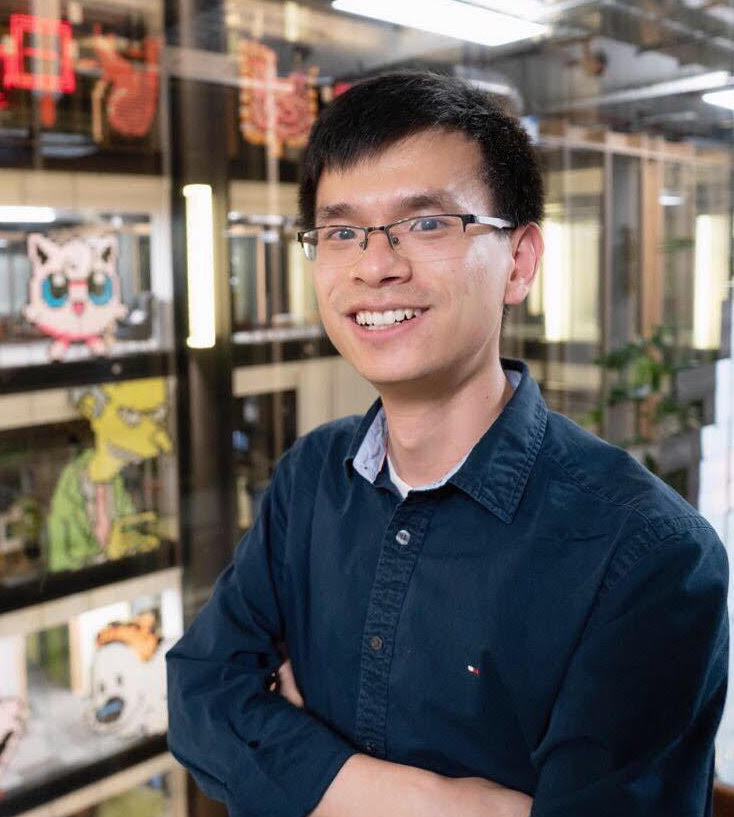
Xujie Si is an Assistant Professor in the Department of Computer Science at the University of Toronto. He is also a faculty affiliate at the Vector Institute and an affiliate member at Mila - Quebec AI Institute, holding a Canada CIFAR AI Chair. Previously, he served as an Assistant Professor at McGill University's School of Computer Science. Education: Ph.D., Computer and Information Science, University of Pennsylvania (advised by Mayur Naik) M.S., Computer Science, Vanderbilt University B.E. (with Honors), Nankai University Research Focus: His work bridges AI and program reasoning, emphasizing the integration of statistical and logical methods. Key areas include: Static analysis and verification using deep learning/reinforcement learning Neuro-symbolic systems for urban simulation (e.g., LogiCity) Automated theorem proving via LLMs and symbolic reasoning Program repair and compiler fuzzing Recent Article Trends: Recent work focuses on synergizing LLMs with symbolic reasoning (e.g., Olympiad inequality proving), advancing SAT solving with graph neural networks, and applying neuro-symbolic methods to Euclidean geometry formalization. Awards: Canada CIFAR AI Chair (2023) Lab/Teams: Leads research teams exploring program analysis, neuro-symbolic AI, and formal verification at the University of Toronto and Vector Institute.
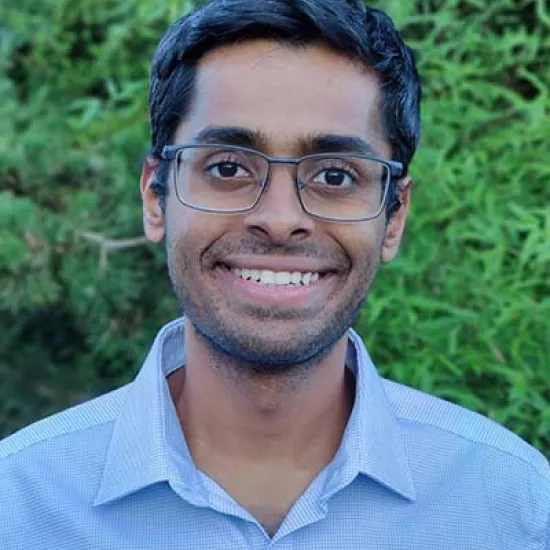
Gururaj Saileshwar is an Assistant Professor in the Department of Computer Science at the University of Toronto, within the Mathematical and Computational Sciences school. His research focuses on securing computing hardware and systems, with a focus on microarchitectural security (cache side-channels, Rowhammer attacks), system security (memory safety), and security for machine learning systems. Education: PhD in Computer Science from Georgia Institute of Technology (2019), advised by Prof. Moinuddin Qureshi. B.Tech and M.Tech from Indian Institute of Technology Bombay (India). Prior to UofT, he was with NVIDIA Research. Research interests include developing new attacks, defenses, and tools for automated security analysis. His work has received multiple awards including the IEEE Top Pick in Hardware and Embedded Security, HPCA Best Paper Award, and IEEE HOST Best PhD Dissertation Award. He teaches courses on secure computer systems and hardware security, including CSC427 (Computer Security) and a topics course on secure computer systems. His lab focuses on hardware-software co-design solutions for security and reliability challenges in modern computing systems. Labs/Teams: Leads the Secure Hardware Systems Lab at UofT, collaborating on Rowhammer mitigation, cache attack defenses, and machine learning security. Grants: Active funding from NSF, industry partnerships with NVIDIA, and other hardware security initiatives. Advising: Currently recruiting PhD students interested in hardware security, system security, and machine learning systems security.
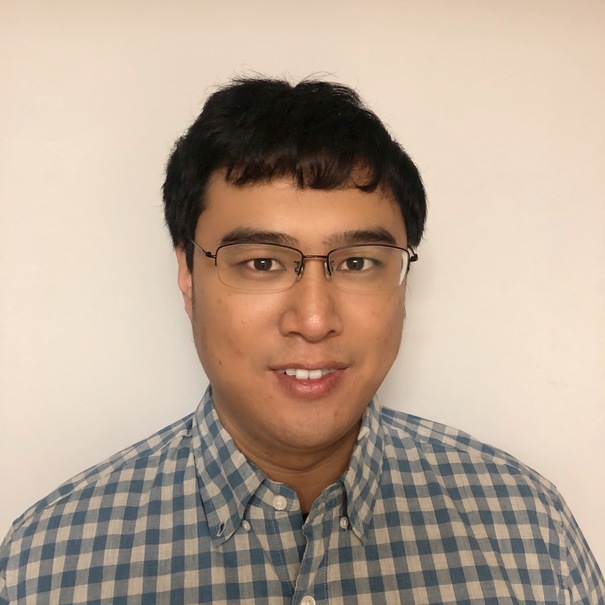
Meng Xu is an Assistant Professor in the Cheriton School of Computer Science at the University of Waterloo, Canada. He is affiliated with the Cryptography, Security, and Privacy (CrySP) group and the Cybersecurity and Privacy Institute (CPI). His research focuses on system and software security, emphasizing secure-by-design languages (e.g., Rust, Move), automated program analysis, and runtime defense techniques. Education : Ph.D., Computer Science (2020), Georgia Institute of Technology B.Eng. and B.Business (First Class Honors), Nanyang Technological University (2014) Research Interests : Secure-by-design languages Automated security analysis (fuzzing, symbolic execution) Runtime defense mechanisms (moving target defense, secure hardware) Key Awards : EAPLS Best Paper Award (2022) USENIX Security Distinguished Paper Award (2018) Grants & Funding : BlackBerry Research Grant (CAD $200,000) Amazon Research Award (USD $60,000) NSERC Discovery Grant (CAD $170,000) Labs & Collaborations : CrySP (Cryptography, Security, and Privacy Group) Cybersecurity and Privacy Institute (CPI)
Prof. Lionel C. Briand is a leading academic in software engineering and trustworthy AI, holding appointments at the University of Ottawa (EECS Department, Nanda Laboratory) and the University of Limerick (Lero - National Software Research Centre). He serves as Director of Lero and Scientific Director of the SnT software verification lab in Luxembourg. His research focuses on software testing, model-driven engineering, AI-driven quality assurance, and regulatory compliance. He has held the Canada Research Chair (Tier 1) since 2003 and led major institutions like Simula Research Laboratory (Norway) and Fraunhofer Institute (Germany). Education & Career: Full Professor at Carleton University (2008–2012) Head of Software Quality Engineering at Fraunhofer IESE (2000–2008) Research Scientist at NASA Software Engineering Lab (1990s) Research Interests: His work spans secure AI systems, automated legal compliance (e.g., GDPR), metamorphic testing, search-based software engineering, and safety-critical systems. He emphasizes practical applications, collaborating with industry partners globally. Awards & Recognition: IEEE Fellow (2010), ACM Fellow (2020) Harlan Mills Award (2012), ERC Advanced Grant (2016) Fellowships from Royal Society of Canada (2023) and Academia Europaea (2025) Grants & Labs: PEARL grant from Luxembourg FNR for SnT lab ERC Advanced Grant for software testing research Leadership roles in Lero and Nanda Lab Publications: Over 500+ papers on testing methodologies, AI ethics, and regulatory compliance. Notable tools include CompAI (GDPR compliance) and Teasma (DNN test adequacy).
Dr. Vijay Ganesh is a Professor of Computer Science at Georgia Institute of Technology, where he also serves as Associate Director of the IDEaS Institute and is affiliated with Tech AI. Previously, he held roles as Associate Professor (2018–2023) and Assistant Professor (2012–2018) at the University of Waterloo, and Research Scientist at MIT (2007–2012). He earned his PhD from Stanford University in 2007. His research focuses on SAT/SMT solvers and their applications in AI, software engineering, security, mathematics, and physics. Notable contributions include developing solvers like MapleSAT, Z3str4, and AlphaZ3, and exploring machine learning-augmented reasoning. He has led projects in logic for AI, proof complexity, and security of blockchain technologies. His awards include ACM Impact Paper (2019), ACM Test of Time (2016), and DATE’s Ten-Year Most Influential Paper (2008). He has advised startups like Quantstamp, a blockchain security firm, and co-directed the Waterloo AI Institute (2021–2023). His teaching includes courses on discrete mathematics, software engineering, and AI. Education: PhD in Computer Science, Stanford University (2007); Master’s in Electrical Engineering, Stanford (2000) Research Interests: SAT/SMT solvers, formal methods, automated testing, AI security, combinatorial mathematics Affiliations: Georgia Tech’s School of Computer Science, IDEaS Institute
Yousra Aafer is an Assistant Professor in the Department of Computer Science at the University of Waterloo. Her research focuses on mobile and smart device security, system security, and software security, particularly in the context of Android and cyber-physical systems. She holds a Ph.D. and M.Eng. from Syracuse University. Education: Ph.D., Syracuse University, United States (2016) M.Eng., Syracuse University, United States (2012) Her research interests include analyzing vulnerabilities in Android systems, binary analysis, IoT security, and fuzzing techniques. She explores methods to enhance security through formalized protocols, probabilistic protection recommendations, and leveraging large language models for vulnerability detection. Her work addresses critical areas such as cross-language buffer overflow detection, residual API audits in custom ROMs, and cyber-physical inconsistency in robotic vehicles. Her recent publications span topics like Android security, binary disassembly (e.g., D-ARM), and IoT security protocols (e.g., ProFactory). She has also contributed to frameworks like Poirot for probabilistic protection recommendations and StochFuzz for efficient binary fuzzing. While no awards are explicitly mentioned, her extensive publication record indicates active recognition in the security research community. She advises on multiple projects but no student names are listed here. Her work often involves collaboration on tools and frameworks for practical security applications.
Mahmoud Alfadel is an Assistant Professor in the Department of Computer Science at the University of Calgary, Faculty of Science. His research focuses on software ecosystems, build systems, security vulnerabilities, and mining software repositories. He holds a PhD in Software Engineering from Concordia University (2021), an M.S. from KFUPM (2017), and a B.S. from Damascus University (2013). Education: Bachelor of Science in Information Technology, Damascus University (2013) Master of Science in Software Engineering, King Fahd University of Petroleum and Minerals (KFUPM, 2017) Doctor of Philosophy (Ph.D.) in Software Engineering, Concordia University (2021) His research emphasizes empirical studies in DevOps practices, continuous integration, and software security. Recent work explores vulnerability lifecycle analysis in Golang, fuzz testing adoption in open-source projects, and dependency-induced waste in CI pipelines. His publications reflect a focus on improving software quality and security through automated tools and empirical analysis. Awards and Grants: No specific awards or grants are listed in the profile. His work is supported through empirical studies and academic collaborations. Advising and Labs: No student advisees or specific lab affiliations are noted in the provided materials. His research is likely conducted through collaborative projects with students and industry partners.
Paria Shirani is an Assistant Professor and Tier 2 Canada Research Chair in Cybersecurity at the School of Electrical Engineering and Computer Science (EECS), University of Ottawa. She holds a PhD in Information Systems Engineering from Concordia University (FRQNT Doctoral Scholarship recipient) and completed an NSERC Postdoctoral Fellowship at Carnegie Mellon University (CMU). Her research focuses on cybersecurity, including IoT security, vulnerability detection, malware analysis, threat intelligence, and AI/ML applications. She leads funded projects across undergraduate, master’s, PhD, and postdoctoral levels, emphasizing equity, diversity, and inclusion (EDI). Research Highlights: Develops AI-driven solutions for IoT security and vulnerability detection. Pioneers binary code fingerprinting and firmware analysis techniques. Advances threat intelligence through machine learning and anomaly detection. Key awards include the NSERC Postdoctoral Fellowship, FRQNT Doctoral Scholarship, and the Tier 2 Canada Research Chair. Collaborations involve institutions like Concordia University, Carnegie Mellon University, and IBM’s Cyber Range. She actively serves on editorial boards (e.g., ACM Computing Surveys) and organizes conferences (e.g., SecureComm, PST).
Chengnian Sun is an Associate Professor at the University of Waterloo's David R. Cheriton School of Computer Science. He holds a Ph.D. from the National University of Singapore (2013). His research focuses on software engineering, emphasizing software reliability, security, and developer productivity. His work spans compiler testing, program analysis, cybersecurity, and programming language tools. Key research trends include leveraging large language models (LLMs) for compiler testing and program reduction, probabilistic debugging techniques, and enhancing software security against ransomware and fuzzing attacks. His contributions address challenges in program simplification, fault localization, and vulnerability detection. Notable projects include frameworks like Perses (syntax-guided program reduction), T-Rec (language-agnostic program reduction), and tools like AddressWatcher for memory leak detection. His work bridges theoretical advancements with practical software engineering solutions. Chengnian advises on compiler reliability, cybersecurity, and developer productivity. His research has led to collaborations with industry on testing tools and security frameworks. He maintains an active lab focused on advancing software systems through rigorous analysis and innovation.
Jinqiu Yang is an Associate Professor in the Department of Computer Science and Software Engineering at Concordia University. His research focuses on software reliability, automated program repair, software testing, and quality assurance of machine learning systems, particularly in autonomous vehicles. He holds a PhD and MASc from the University of Waterloo and a B.Eng. from Nanjing University. Yang has been a tenure-track faculty member at Concordia since 2018, following research roles at IBM Watson and IBM CAS. Research Interests: Automated Program Repair Software Testing Machine Learning Systems Text Analytics of Software Artifacts Mining Software Repositories Autonomous Systems Quality Assurance Key Contributions: His recent work includes detecting concept drifts in ML systems (ICSE-25) and investigating social bias in LLM-generated code (AAAI-25). He leads the O-RISA Lab and has authored over 50 peer-reviewed publications, including distinguished papers at MSR-2018. Yang currently holds grants such as the NOVA FRQNT-NSERC Program (2024-2027) and the NSERC Discovery Grant (2019-2025). Service & Awards: Editorial Board Member of the Empirical Software Engineering Journal (EMSE) and active PC member in top venues like ICSE and FSE. Recipient of the IBM CAS Fellowship and ACM SIGSOFT Distinguished Paper Award. Teaching & Students: He mentors students in Master's and PhD programs, with funding available. His lab focuses on cutting-edge topics like secure code generation and autonomous vehicle reliability.
Affiliations & Roles Michael W. Godfrey is a Professor in the David R. Cheriton School of Computer Science at the University of Waterloo . He holds the David R. Cheriton Faculty Fellowship and has served as an associate director of Cornell's M.Eng. program. His roles include: General Chair for ICPC 2025 (IEEE Program Comprehension) Member of steering committees for ICSME, MSR, SCAM, and SWAN Course coordinator for CS138/CS246 and instructor for advanced topics courses Research Focuses on software evolution , program comprehension , and mining software repositories . His work addresses challenges in code clone analysis, developer productivity, and empirical software engineering. Notable contributions include: Advocating for intentional cloning as valid design practice Pioneering studies on code review quality and anomaly detection Developing tools like JavaDUCK (educational project) and mel (model extraction) Awards & Recognition Recipient of: Best Paper Awards at WCRE 2006, 2011, 2013 Most Influential Paper Award at SANER 2016 Outstanding Reviewer Awards (ICSME 2019/2020) Service & Outreach Active in: Program committee roles for ICSE, ICSM, MSR, and 30+ conferences University service: Undergraduate Recruitment Committee (2016–present) Industry collaborations with CWI (Amsterdam), Sun Microsystems, and automotive software teams
Song Wang is an Associate Professor in the Department of Electrical Engineering and Computer Science at York University's Lassonde School of Engineering. He joined York University as an Assistant Professor in July 2019 and was promoted to Associate Professor in May 2024. He serves as an Associate Editor of ACM Transactions on Software Engineering and Methodology (TOSEM) and has established himself as a prominent researcher at the intersection of Software Engineering and Artificial Intelligence. Dr. Wang earned his Ph.D. in Computer Engineering from the University of Waterloo in December 2018 under Prof. Lin Tan. He received his MS degree from the Chinese Academy of Sciences in June 2014 under the supervision of Prof. Ye Yang, Prof. Wen Zhang, and Prof. Qing Wang. His undergraduate education includes a BE in Software Engineering and a BHRM in Human Resource Management from Sichuan University in June 2011. Prior to academia, he gained industry experience through internships at Microsoft Research, Morgan Stanley Capital International, Yahoo, and Baidu, and co-founded a startup named QualDivine. Dr. Wang's research focuses on two main directions: (1) leveraging AI technologies to address software reliability challenges (AI for SE), and (2) developing software reliability assurance techniques for AI systems (SE for AI). His recent work has particularly focused on how Large Language Models can optimize and reshape software testing practices. His research has practical impact, with tools and techniques that have detected hundreds of true bugs in real-world software systems. His work spans multiple application areas including mobile testing, fuzz testing, and functional testing. His recent publications (2024-2025) demonstrate a strong focus on the intersection of AI and software engineering, with significant contributions in automated vulnerability detection, API recommendation, bias analysis in generated code, and mobile application testing. His research combines empirical studies with innovative technical approaches, often involving benchmarking and systematic literature reviews to establish foundations for future work. He has published over 60 papers in prestigious IEEE/ACM Software Engineering journals and flagship conferences, with over 2,600 citations. Dr. Wang has received four best paper awards: a Distinguished Paper Award at APSEC'23, an ACM Distinguished Paper Award at ICPC'22, an ACM Distinguished Paper Award at ICSE'20, and a Best Paper Award at PROMISE'19. He was recognized as one of the top-10 most impactful early-career researchers in Software Engineering by the Journal of Systems and Software in 2020 and received the TOSEM Distinguished Reviewer Award in 2023. Dr. Wang currently supervises multiple PhD and Master's students including Mohammad Abdollahi, Haoran Xue, Jiho Shin, Nima Shiri Harzevili, and Moshi Wei. He has successfully guided several students to complete their theses, including Reem Al Eithan (Master's thesis defense in April 2025), Moshi Wei (PhD thesis defense in April 2025), and Nima Shiri Harzevili (PhD thesis defense in February 2025). His research group has received funding from various sources to support their work on software engineering and AI. Dr. Wang leads an active research group focused on AI and software engineering at York University. His team includes PhD students, Master's students, and research assistants working on various projects related to software testing, reliability, and AI applications in software engineering. The group has developed tools that have detected hundreds of true bugs in real-world software systems, with some findings documented in Jira issues and GitHub repositories across numerous open-source projects.
Dr. Andrew Tappenden serves as Dean of Natural Science and Associate Professor of Computing Science at The King's University. He holds a PhD and B.Sc. from the University of Alberta. His research focuses on improving software quality through areas such as software verification, web application testing, security testing, and agile development. His work is supported by grants from NSERC and SSHRC. He has published extensively in journals and conferences, with notable contributions to cookie management systems, web service testing frameworks, and evolutionary testing strategies. He actively participates in academic conferences and mentorship of undergraduate researchers. His interdisciplinary approach bridges computing science with fields like geography and information systems. Education: PhD in Computing Science, University of Alberta (2010) B.Sc. in Computing Science, University of Alberta (Year unspecified) Research Interests: Dr. Tappenden’s research emphasizes practical solutions to software quality challenges. His work spans: Software verification techniques for complex systems Automated testing methodologies for web applications and services Security testing frameworks for modern platforms Agile development practices in interdisciplinary contexts Grants and Support: NSERC Discovery Grant (active) SSHRC Insight Development Grant (active) Lab/Team: Leads the Computing Science research group at King’s, focusing on applied software engineering and interdisciplinary computing projects.
Weiyi (Ian) Shang is an Associate Professor at the University of Waterloo, affiliated with the Department of Electrical and Computer Engineering within the Faculty of Engineering. His research focuses on software engineering, performance testing, and machine learning applications in software systems. He leads the Software Engineering and System Engineering Lab, emphasizing practical solutions for logging, performance optimization, and automated testing. Key research areas include log analysis (privacy leakage detection, log summarization, and logging strategies), performance monitoring (regression detection, workload modeling), API evolution (migration techniques, workaround analysis), and automated code generation (LLMs in bug decomposition, AI code evaluation). His work bridges theoretical advancements with industrial applications, particularly in web systems and mobile app ecosystems. Publications span empirical studies, novel algorithms (e.g., DELA for error detection, CoMSA for configuration testing), and tools like LogAssist and Log4Perf. His research consistently addresses challenges in developer productivity, system reliability, and security across diverse domains like federated learning and DevOps practices. Notable contributions include improving log management through topic models, enhancing performance testing efficiency via microbenchmark optimization, and analyzing privacy risks in mobile app logs. Ongoing work explores AI-driven code evaluation and generalizable code embeddings for software tasks. Shang’s lab collaborates with industry on real-world systems, as seen in case studies involving serverless applications and database-centric systems. His research often involves empirical studies and tool development to bridge gaps between academic research and practical software engineering challenges.