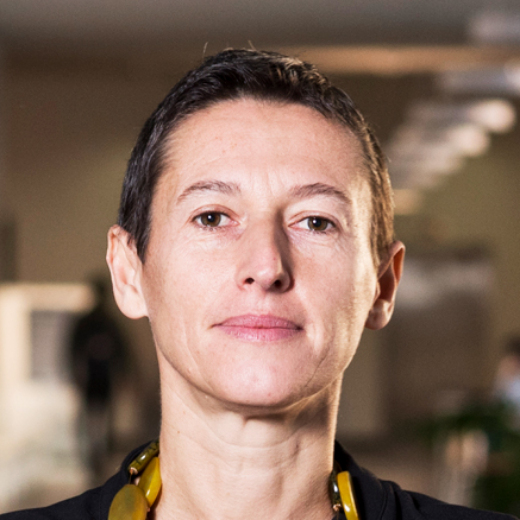
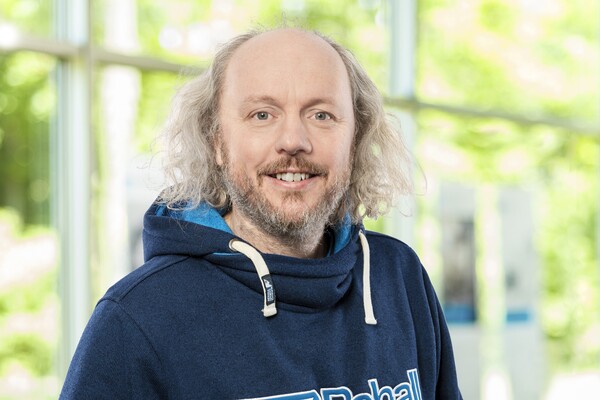
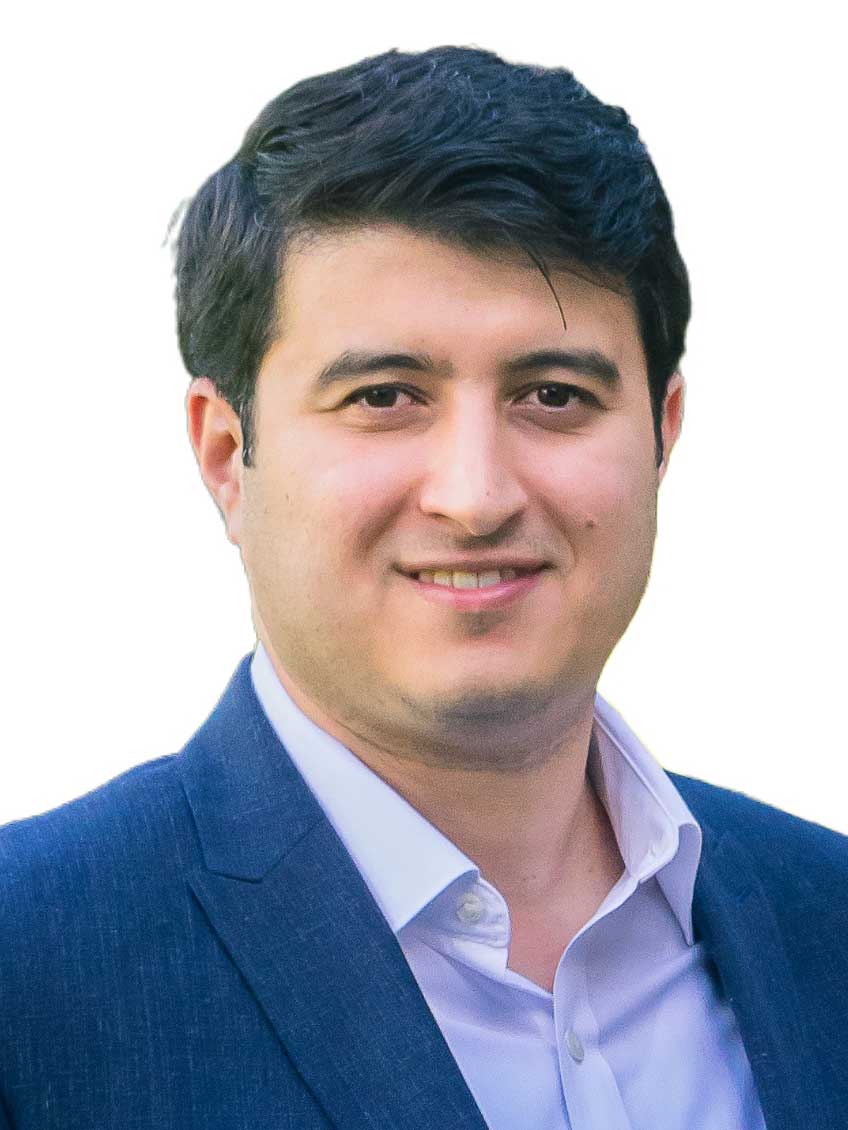
Lei Lei is an Associate Professor at the University of Guelph, specializing in Computer Engineering. Her research focuses on Machine Learning/Deep Reinforcement Learning, Internet of Things (IoT)/Internet of Vehicles (IoV), Mobile Edge Computing, and Smart Grid Optimization. She explores cutting-edge applications in energy-efficient systems, autonomous vehicles, and intelligent transportation networks. Her work integrates advanced AI techniques with real-world challenges in communication and control systems. Key research areas include optimizing electric vehicle charging schedules using hierarchical deep reinforcement learning and enhancing vehicular networks through 6G communication protocols. She has pioneered methods for joint communication-control systems, securing federated learning models, and developing robust resource allocation strategies in IoT and edge computing environments. Lei Lei’s publications emphasize interdisciplinary solutions, bridging computer science, electrical engineering, and transportation systems. Her recent work addresses challenges in smart grid security, multitimescale control systems, and the application of AI tools like ChatGPT in connected vehicles. She is affiliated with the AI Affiliated Faculty at the University of Guelph, reflecting her contributions to artificial intelligence research.
Yong-Bin Kang is a Senior Data Science Research Fellow at the ARC Centre of Excellence for Automated Decision Making and Society (ADM+S) at Swinburne University of Technology, affiliated with the School of Social Sciences, Media, Film and Education. He holds a PhD in AI from Monash University and leads numerous transdisciplinary research projects applying artificial intelligence to address complex societal challenges. Education: PhD in Faculty of IT, Monash University, Australia Dr. Kang's research focuses on Responsible AI and Society, with specific interests in developing Societal-AI platforms that integrate social data with ethical principles. His work spans healthcare, humanitech, education, financial planning, environmental health, and justice domains. He investigates how AI can enhance decision-making processes while promoting societal well-being, with particular attention to ethical implementation and human-centered approaches. His expertise encompasses AI, natural language processing, machine learning, and decision-making optimization. Analysis of Dr. Kang's recent publications reveals a strong trajectory toward socially responsible AI applications across diverse domains. His work consistently bridges technical AI capabilities with social implications, particularly focusing on ethical frameworks, community-centered design, and addressing societal inequalities through technology. The publications demonstrate increasing collaboration across disciplines including criminology, environmental science, mental health, and education. Dr. Kang is actively involved in significant research funding initiatives, with multiple ongoing projects that address critical societal challenges through AI. His supervision availability includes Doctorate (PhD) candidates, indicating his commitment to mentoring the next generation of researchers in AI and data science fields. Current Flagship Areas: Digital Capability Innovative Society Manufacturing Futures Sustainable Development Goals: Good Health and Well Being (SDG 3) Industry, Innovation and Infrastructure (SDG 9) Affordable and Clean Energy (SDG 7)
Rosella Gennari is an Associate Professor in Computer Science at the Faculty of Engineering, Free University of Bozen-Bolzano, where she conducts research and teaches in Human-Computer Interaction (HCI). Her work is centered on designing interactive technologies for children, focusing on physical-digital (phygital) artefacts, Technology-Enhanced Learning (TEL), and inclusive design. She leads the Research Unit Human-Centred Intelligent Systems and is actively involved in institutional leadership, including serving on the Third-Mission Board. Ph.D. : Computer Science, Amsterdam University (2002) Postdoctoral Experience : CWI, Amsterdam (ERCIM Alain Bensoussan Fellow); FBK-irst, Trento Leadership : Scientific & Technological Coordinator of the FP7-EU TERENCE project Her research explores how children interact with and design smart technologies, including IoT and AI, through playful and tangible interfaces. She investigates socio-emotional learning, digital well-being, and responsible design, often employing participatory and action research methods. Her work bridges computer science, education, and social impact, aiming to empower young learners as co-creators of technology. The analysis of her recent publications reveals a strong trend in developing and evaluating toolkits and frameworks for children and pre-teens to engage in designing smart things, IoT systems, and sustainable cities. Her work consistently emphasizes inclusivity, reflection, and responsible design, often in collaboration with teachers and learners. The publications span top HCI venues and journals, demonstrating a focus on practical applications in educational settings and the impact of technology on young users. Scientific Awards and Recognition ERCIM Alain Bensoussan Fellowship for talented young researchers Editorial Board Member, Journal of Child Computer Interaction (Elsevier, Q1) Regular reviewer for top HCI conferences and journals Advising and Grants : While specific advisees are not listed, her leadership role in the FP7-EU TERENCE project and numerous other research initiatives indicates extensive experience in securing and managing competitive grants. She mentors students through her research group and teaching, fostering the next generation of HCI researchers. Her collaborative network is extensive, with frequent co-authorship with researchers such as Alessandra Melonio, Maristella Matera, and Mehdi Rizvi. Labs and Teams : She leads the Human-Centred Intelligent Systems research unit, which serves as her primary lab and team. This group focuses on placing humans at the center of computer science and information engineering research. She is also a core member of the organizing committee for the MIS4TEL international conference series, highlighting her role in building and sustaining a global research community in Technology-Enhanced Learning.
Julia Powles is an Associate Professor at the UWA Law School and Director of the UWA Tech & Policy Lab. Her research focuses on privacy, intellectual property, internet governance, and the legal and political dimensions of data, automation, and AI. She has led investigations into high-profile cases like the NHS/Google DeepMind data breach and Sidewalk Labs’ smart city project. Currently, she advises on national robotics strategy, responsible AI, and privacy policies in Australia. With a background spanning academia, policy, and law, she holds roles in global committees and contributes to media outlets like the New Yorker and Financial Times. Her work bridges legal frameworks and technological innovation, emphasizing ethical governance and societal impact. Education: BSc (Hons) ANU, LLB (Hons) UWA, BCL Oxford, PhD Cantab. Expertise includes AI ethics, data privacy, and regulatory policy. Recent projects address drone delivery systems, corporate accountability of Big Tech, and governance in health monitoring. Awards include the 40 Under 40 Award for WA (2022) and Poynter Fellowship (2018). Grants include the Children’s Online Safety Program (2024–2027) and Minderoo Foundation initiatives. She chairs the PRIS Universities Network and co-chairs international tech policy summits. Roles: Director, UWA Tech & Policy Lab; Expert on National AI Centre, WA Privacy Committee. Research: Over 100 outputs, focusing on AI governance, corporate liability, and tech ethics.
Professor Marios C. Angelides is a full-time faculty member at Brunel University London , serving as Professor of Computing and Divisional Lead within the College of Engineering, Design and Physical Sciences . He leads the Creative Computing Research Group under the Institute of Digital Futures and contributes to the Digital Media department at Brunel Design School. BSc (First Class Honours) and PhD in Computing from the London School of Economics (LSE) Chartered Engineer (CEng) and Chartered Fellow of the British Computer Society (FBCS CITP) His research focuses on Creative Computing , specifically applying Machine Learning , Serious Gaming , and Cognitive Modeling to develop Smart IoT Applications . His work spans autonomous drone fleets for environmental monitoring, cybersecurity middleware for Android systems, wearable technology for lifestyle recommendations, and historical analysis of Alan Turing’s legacy in modern AI. Recent publications highlight trends in deploying Machine Learning for: IoT systems optimization Autonomous aerial/underwater vehicle coordination Deepfake detection using Turing’s Imitation Game Energy allocation in CubeSats via gaming mechanics Scientific recognition includes being Deputy Editor of The Computer Journal and runner-up for the 2016 Oxford University Press Wilkes Award . He has supervised PhD students in topics like Smart Android Middleware for Cybersecurity and Wearable Recommendation Systems , with active involvement in editorial boards and international conferences.
Christopher G. Brinton is the Elmore Associate Professor of Electrical and Computer Engineering at Purdue University, where he leads the ION research lab. He is affiliated with the Department of Electrical and Computer Engineering in the College of Engineering at Purdue University's West Lafayette campus. Dr. Brinton received his PhD from Princeton University, where he was previously the Associate Director of the EDGE Lab and a Lecturer of Electrical Engineering. His research focuses on the intersection of networking, communications, and machine learning, with particular emphasis on Fog computing systems, the Internet of Things (IoT), NextG Wireless, and social learning networks. His research integrates foundational techniques including convex and non-convex optimization, machine learning, and signal processing to address challenges in networked intelligent systems. The ION lab under his leadership develops both theoretical frameworks and practical implementations for next-generation networking solutions, with strong industry collaborations including Qualcomm, Nokia, Intel, Cisco, Dell, and Ericsson. Recent publications reveal a strong trend toward federated learning, decentralized algorithms, and edge intelligence, with significant contributions to model partitioning, communication-efficient learning, and robust network architectures. His work increasingly bridges traditional communication theory with modern machine learning techniques to solve emerging challenges in distributed networked systems. NSF CAREER Award ONR Young Investigator Program (YIP) Award DARPA Young Faculty Award (YFA) AFOSR Young Investigator Program (YIP) Award Intel Rising Star Faculty Award (RSA) Dr. Brinton teaches several courses including ECE 647: Performance Modeling of Computer Communication Networks, ECE 301: Signals and Systems, and ECE 547: Introduction to Computer Communication Networks. He has co-authored the book 'The Power of Networks: Six Principles That Connect Our Lives' and taught three Massive Open Online Courses (MOOCs) with over 400,000 cumulative students. While not currently actively recruiting students, he remains open to connecting with highly motivated individuals. Dr. Brinton leads the ION (Intelligent Optimization and Networking) research lab, which focuses on creating theoretical foundations and practical implementations for next-generation networked systems. The lab has recently published significant work on 6G taxonomy in collaboration with major industry partners and continues to push boundaries in distributed learning and network optimization.
Frank Fitzek serves as Full Professor holding the Deutsche Telekom Chair of Communication Networks at Dresden University of Technology, where he directs the Centre for Tactile Internet (CeTI) Cluster of Excellence and maintains association with the Faculty of Computer Sciences. His work is institutionally anchored within the School of Engineering Sciences and actively engages with 5G Lab Germany and 6G-life Hub initiatives, positioning him at the forefront of next-generation communication research. Fitzek's research spans communication networks, tactile internet systems, 5G/6G mobile technologies, network coding, quantum networking, virtual twinning, and haptic feedback systems. His recent publications demonstrate emphasis on resilient network architectures through quantum security protocols, cloud-native 5G implementations, theoretical communications frameworks, and human-computer interaction in mixed reality environments. This work consistently bridges theoretical innovation with practical testbed validations across multiple emerging technology domains. As Director of CeTI, Fitzek leads a major interdisciplinary research cluster focused on ultra-low latency networks enabling remote physical interaction. His affiliations with 5G Lab Germany and 6G-life Hub facilitate industry-academic collaboration on standardization and deployment of future communication infrastructures, with particular emphasis on network coding techniques and tactile internet applications that transform industrial automation and teleoperation scenarios.
Marco Di Renzo is a CNRS Professor (Directeur de Recherche Titulaire) at University of Paris-Saclay, affiliated with CentraleSupelec and the Signals and Systems Laboratory (L2S). He serves as Coordinator of the Communications Networks Area at the DigiCosme Laboratory of Excellence and Editor-in-Chief of IEEE Communications Letters. His academic leadership includes membership in the Ph.D. School on ICT Admission Committee at Paris-Saclay University. His educational background includes a Laurea (cum laude) and Ph.D. in Electrical Engineering from University of L'Aquila, Italy (2003, 2007), and a Habilitation à Diriger des Recherches from University Paris-Sud (2013). Laurea (cum laude), Electrical Engineering, University of L'Aquila (2003) Ph.D., Electrical Engineering, University of L'Aquila (2007) Habilitation à Diriger des Recherches, University Paris-Sud (2013) Di Renzo's research focuses on next-generation wireless communications, particularly reconfigurable intelligent surfaces (RIS), 6G technologies, and stochastic geometry modeling. His work bridges theoretical communication theory with practical implementations in cellular networks, millimeter-wave communications, and ultra-wide band systems. Recent publications demonstrate leadership in holographic metasurfaces, integrated sensing and communication (ISAC), and AI-empowered network design, establishing him as a pioneer in electromagnetic wave manipulation for future networks. His award-winning publications span RIS-aided communications, channel modeling, and security frameworks. Analysis of his recent work reveals consistent focus on three pillars: (1) fundamental electromagnetic theory for wave manipulation, (2) practical RIS implementations across frequency bands, and (3) integration with AI for network optimization. His articles frequently address industrial applications including factory automation and space-air-ground networks. Di Renzo's scientific recognition includes: IEEE Fellow (2020) and IET Fellow (2020) Highly Cited Researcher (Web of Science, 2019) SEE-IEEE Alain Glavieux Award (2017) Multiple Best Paper Awards (IEEE ICC, EURASIP) Nokia Foundation Visiting Professorship (2020) As Principal Investigator for CNRS, he coordinates multiple Horizon 2020 projects including SURFER, PathFinder, and MetaWireless. His leadership extends to serving as Project Coordinator for H2020 5Gwireless, 5Gaura, MAPNET, and REDESIGN. With over 350 publications, 17,000+ citations, and h-index of 66+, his research group maintains strong industry partnerships with Nokia and other telecommunications leaders. Di Renzo directs the Signals and Systems Laboratory (L2S) at Paris-Saclay and coordinates the DigiCosme Excellence Lab's Communications Networks Area. His team specializes in electromagnetic modeling for wireless networks and has pioneered the European Telecommunications Standards Institute (ETSI) Industry Specification Group on RIS. The group maintains active collaborations with Aalto University (Finland), University of Technology Sydney (Australia), and University of L'Aquila (Italy).
Carlos Enrique Palau is a prominent researcher in the field of Internet of Things (IoT), edge computing, and cyber-physical systems. His work focuses on interoperability, security, and scalability in distributed systems, particularly in industrial and smart city applications. He has contributed to frameworks for cloud-edge continuum integration, blockchain-based IoT solutions, and federated computing architectures. Key areas of research include: IoT interoperability and semantic frameworks Edge computing and distributed workload management Cybersecurity for IoT and critical infrastructure Smart port logistics and real-time data analytics Cognitive services in legacy port management systems His recent work explores: Data-as-a-Product frameworks for Industry 4.0/5.0 Autonomous workload scheduling in energy-efficient edge-cloud systems Deception mechanisms for IoT security Self-* capabilities in cloud-edge nodes Palau has collaborated extensively with institutions like Universitat Politècnica de València and international partners in projects funded by EU initiatives. His research addresses practical challenges in industrial IoT deployments, smart city infrastructure, and emergency management systems.
Jon Rogers is Professor of Creative Technology at Northumbria University with a PhD in neural networks from Imperial College London. His research examines human relationships with emerging technologies through hands-on making and critical design practices. Rogers' work explores alternative narratives for digital futures through internet-connected objects and open hardware systems. He develops tangible interfaces that challenge conventional technology design paradigms and enable public participation in technological discourse. Recent research includes experimental prototyping platforms for open hardware development and methodological frameworks for reflecting on connected devices. His publications document innovative approaches to tangible computing and participatory design methodologies. Rogers founded the OpenDoTT doctoral training program exploring trust in IoT systems. He regularly organizes workshops at major technology conferences and maintains collaborations with international makerspaces and research institutions.
Blayne Haggart is a Professor in Political Science at Brock University, Canada. His research focuses on the international political economy of knowledge, particularly intellectual property rights, data governance, and internet governance. He previously worked as a professional journalist and economist with the Parliamentary Information and Research Service before transitioning to academia. BA (Carleton University) MA (University of Toronto) MA (Carleton-NPSIA) PhD (Carleton University) Dr. Haggart's current research explores: International Political Economy frameworks Digital policy and governance Intellectual property rights in the digital age North American political economy dynamics Intersections between sports and politics His scholarly work has been published in leading journals including: Canadian Public Administration Telecommunications Policy Journal of Digital Media & Policy Journal of Information Policy Dr. Haggart serves as: Senior Fellow with the Centre for International Governance Innovation Associate Senior Fellow with the Käte Hamburger Kolleg/Centre for Global Cooperation Research
Salman Durrani is a Professor and Associate Director Education at the School of Engineering, Australian National University. He holds a PhD in Electrical Engineering from the University of Queensland and a BSc (First Class Honours) from the University of Engineering & Technology, Lahore, Pakistan. His research spans Internet of Things networks, satellite/UAV communications, machine learning applications in wireless systems, early wildfire detection, and backscatter communications. Current projects focus on terahertz communication security, UAV-assisted networks, and IoT-based environmental monitoring. His recent publications demonstrate strong emphasis on wireless security, terahertz technology optimization, UAV network design, and IoT applications for environmental protection. Technological innovations include novel beamforming techniques and lightweight authentication protocols. AI 2000 Internet of Things Most Influential Scholar (2020, 2022, 2023) IEEE ComSoc Asia Pacific Outstanding Paper Award (2016) Australian Council of Graduate Research Excellence Award (2019) ANU Vice-Chancellor's Awards for Supervision (2018) and Education (2012) He has supervised 15 PhD students to completion and secured $1.9M in research funding as chief investigator for six grants. Current projects include participation in the ANU Optus Bushfire Research Centre of Excellence.
Prof. Dr. Gordana Gardašević is a full professor at the Department of Telecommunications, Faculty of Electrical Engineering, University of Banja Luka, Bosnia and Herzegovina. She has been actively contributing to telecommunications research and education since the early 2000s and was appointed to full professor in September 2020. Her research interests focus on advanced networking technologies, particularly in these areas: Industrial Internet of Things (IIoT) and 6TiSCH networks Visible Light Communication and audio/speech quality assessment Quality of Service (QoS) in heterogeneous wireless networks Smart healthcare applications using IoT technologies Network protocols for time-sensitive industrial applications Professor Gardašević's publication record shows consistent research activity over two decades with a strong recent focus on 6TiSCH networks and Visible Light Communication. Her work combines theoretical analysis with experimental validation using platforms like OpenMote-B. She has published in reputable journals including IEEE Sensors, Entropy, and Wireless Personal Communications, with increasing emphasis on healthcare applications of IoT technologies in recent years. She has served as principal investigator for numerous research projects including: Algoritmi za lokalizaciju u IoT mrezama (2025, active) Eksperimentalno testiranje performansi industrijskih 6TiSCH mreza (2022-2023) Razvoj Internet of Things (IoT) aplikacija primjenom opticko-bezicnih tehnologija (2021-2022) Projectovanje industrijskih Internet of Things aplikacija (2021) Razvoj algoritama za vremenski osjetljive aplikacije u industrijskim IoT mrezama (2019-2021) Professor Gardašević collaborates extensively with researchers across Europe through COST Actions and Horizon Europe initiatives. Her laboratory work focuses on experimental testbeds for IoT and industrial communication systems, particularly using OpenMote platforms for 6TiSCH network evaluation. She has also contributed to standardization efforts through white papers and collaborative projects.
Benyamin Davaji serves as an Assistant Professor in the Department of Electrical and Computer Engineering at Northeastern University, where he joined in January 2022. He holds additional appointments as a Center Member of The Plastics Center and Core Faculty of the Institute for NanoSystems Innovation (NanoSI). His work bridges microsystems engineering, nanofabrication, and data science to develop next-generation sensing technologies. Dr. Davaji's educational background includes: Postdoctoral Associate in Electrical and Computer Engineering at Cornell University (2016-2021) Ph.D. in Electrical Engineering from Marquette University (2016) His research centers on integrated microsystems with emphasis on mechanical wave-based sensing and computation, ultrasound transducers, bio-interfaces, and microcalorimetry. The Autonomous Integrated Microsystems (AIMS) Laboratory combines physics with AI/ML to invent novel sensors and computational devices through advanced nanofabrication. Key thrusts include power-sustaining architectures and analog/digital computational integration. Recent publications (2024-2025) reveal strong trends in MEMS/NEMS optimization using digital twins, plasmonically enhanced infrared detection, ferroelectric actuators for high-speed scanning, and ultrasound-enabled metrology. His work increasingly integrates machine learning for design automation and process optimization across semiconductor manufacturing and flexible hybrid electronics. Dr. Davaji advises graduate students including Yilmaz Arin Manav (PhD'28), who won the FLEX 2024 Future Student Poster Award. He has secured over $3 million in competitive funding as PI/Co-PI, including a $550k NSF grant for MEMS actuators, $330k NSF grant for quantum detectors, and $2M DARPA grant for inertial sensors. He directs the interdisciplinary AIMS Laboratory focused on MEMS, ultrasound, and calorimetric technologies. The lab collaborates extensively with NanoSI and The Plastics Center, developing autonomous microsystems for biomedical, environmental, and industrial applications through advanced manufacturing techniques.
Elisabeth Schilling serves as Associate Professor of Social Sciences at the University of Applied Sciences for Police and Public Administration North Rhine-Westphalia (HSPV NRW), holding a W2 professorship since December 2009. She previously taught at the Cologne department until 2012 and now works at the Bielefeld location. Her academic appointments include habilitation in Sociology at the University of Erfurt (2022) and guest professorship at Georg-August-Universität Göttingen (2015). Schilling's institutional affiliations extend to the Max-Weber-Kolleg at the University of Erfurt and the Institute for Diversity Research at Göttingen. Her education includes a PhD in Sociology from Heinrich-Heine-University Düsseldorf (2005, magna cum laude), with dissertation titled "Die Zukunft der Zeit: Vergleich von Zeitvorstellungen in Russland und Deutschland im Zeichen der Globalisierung." Additional academic training includes specialized sociology studies at RWTH Aachen (2000-2001) and University of California at Davis (2000), where she achieved top 5% standing in her cohort. Schilling's research fundamentally examines how time structures shape social experience across multiple domains. Her work explores temporal dimensions of migration, particularly how Ukrainian refugees construct future perspectives amid trauma. She investigates gendered time inequalities in public administration careers, analyzing how interrupted career paths disproportionately affect women. Her scholarship reveals how bureaucratic systems administer time through scheduling practices that reinforce social inequalities. Schilling develops methodological approaches for studying temporal diversity through qualitative time practice assessments, bridging classical life course theory with biographical subjectivity. Her publication trajectory shows consistent focus on time, migration, and biography since 2005, with recent work increasingly addressing refugee experiences and temporal aspects of public administration. The articles reveal methodological sophistication in qualitative time research, with growing emphasis on practical applications for public sector management. Schilling's work demonstrates strong interdisciplinary connections between sociology, gender studies, and public administration. Her current research portfolio includes multiple funded projects examining time perspectives among Ukrainian refugees (2023-2024), integration of Ukrainian refugees (2022-2023), and time management during remote work periods (2020-2021). These projects reflect her ability to address timely social issues through her temporal lens while maintaining theoretical rigor. Schilling maintains active research collaborations including the Time Perspective Network around Philip Zimbardo and the Max-Weber-Kolleg. Her editorial work includes special issues of BIOS journal and edited volumes with Springer VS. She directs research groups focusing on time structures as inequality-reproducing classification systems, demonstrating sustained scholarly impact in her field.