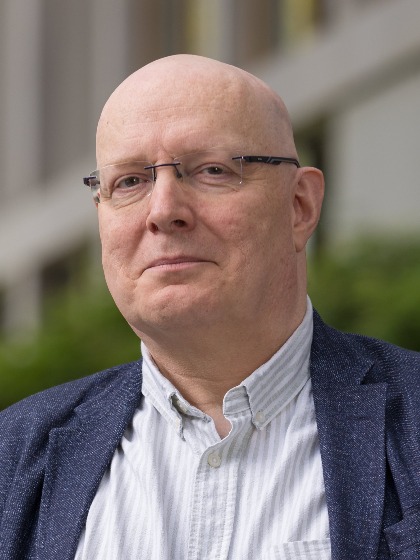
Prof. Rob Timmermans is a Professor of Theoretical Physics and Vice-Dean for Education at the University of Groningen (UG). He is affiliated with the Faculty of Science and Engineering and the Precision Frontier — Van Swinderen Institute for Particle Physics and Gravity. His research focuses on theoretical particle physics, quantum mechanics, and precision measurements, particularly in electric dipole moment (EDM) searches using molecules like BaF. His work includes developing methods for molecular beam manipulation, phase-space analysis, and symmetry violation studies. He has contributed to collaborations such as NL-eEDM, advancing techniques for EDM detection and precision physics. Prof. Timmermans has received nominations for teaching awards, reflecting his commitment to education. Research highlights include studies on nucleon decay, antinucleon-nucleon interactions, and chiral effective field theory. His lab activities involve collaborations on laser-cooled molecules and trapping techniques. Prof. Timmermans’ articles often address fundamental physics questions, such as Lorentz violation in beta decay and parity violation in molecular systems. Awards: Nominated for Faculty Teaching Award 2014, Teacher of the Year 2014-15. Grants/Advising: Leads projects on EDM searches and particle physics, with active roles in international collaborations. Labs/Teams: Van Swinderen Institute, Precision Frontier group.
Howard A. Stone is the Donald R. Dixon '69 and Elizabeth W. Dixon Professor and Neil A. Omenn '68 University Professor in the Department of Mechanical and Aerospace Engineering at Princeton University's School of Engineering and Applied Science. He leads the Complex Fluids Group, conducting interdisciplinary research at the intersection of engineering, physics, chemistry, and biology. Dr. Stone received his B.S. in Chemical Engineering from UC Davis (1982) and Ph.D. from Caltech (1988). After a postdoctoral year at Cambridge University, he joined Harvard University's faculty in 1989, where he became the Vicky Joseph Professor of Engineering and Applied Mathematics before moving to Princeton in 2009. His research focuses on fluid dynamics phenomena across multiple scales, with particular emphasis on microfluidics, complex fluids, and biomechanics . His group investigates multiphase flows, colloidal systems, bio-inspired fluid phenomena, and physicochemical hydrodynamics. Recent work spans from fundamental studies of thin film drainage and droplet dynamics to applications in biological systems including blood flow, bacterial transport, and biomolecular condensates. The Complex Fluids Group employs experimental, theoretical, and computational approaches, often collaborating with industry partners on applications from medical devices to industrial processes. Analysis of his recent publications reveals a continued expansion into biological applications of fluid dynamics, with increasing focus on cellular mechanics, biomolecular condensates, and pathological hemodynamics, while maintaining strong contributions to fundamental fluid mechanics in complex systems. His work consistently bridges theoretical insights with practical applications across multiple disciplines. Major honors include: Election to the National Academy of Engineering (2009) Election to the National Academy of Sciences (2014) APS Fluid Dynamics Prize (2016) G.K. Batchelor Prize in Fluid Dynamics (2008) NSF Presidential Young Investigator Award Professor Stone has advised numerous PhD students through their Final Public Oral examinations, with recent graduates working on topics spanning microfluidics, bacterial transport, and complex fluid phenomena. His research has been supported by diverse funding sources including NSF, NIH, and industry partnerships. The Complex Fluids Group maintains state-of-the-art experimental facilities in the Engineering Quadrangle, featuring specialized equipment for microfluidics, rheology, and interfacial phenomena investigations. The group actively collaborates with researchers across Princeton and globally, maintaining strong connections to both academic and industrial partners working on fluid-related challenges.
Professor Asmita Mukherjee is a faculty member in the Department of Physics at the Indian Institute of Technology Bombay (IIT Bombay), where she holds the position of Professor. She is actively engaged in theoretical particle physics research with a focus on Quantum Chromodynamics (QCD) and related phenomena. Professor Mukherjee's research interests primarily include Theoretical Particle Physics, Quantum Chromodynamics, QCD spin physics, Light-cone wave functions, and collider phenomenology. She teaches several advanced courses including Elementary Particle Physics (PH540), Mathematical Physics-I (PH407), Mathematical Physics-II (PH408), Quantum Physics and Applications (PH107), and various Quantum Mechanics courses (PH422, PH423, PH105). Her publication record shows a strong focus on gravitational form factors, transverse momentum dependent distributions, angular momentum structure of hadrons, and electron-ion collider physics. Recent work has explored gluon contributions to proton structure, dressed quark states, and azimuthal asymmetries in various production processes. Her research demonstrates expertise in light-front quantization techniques and their application to fundamental questions in hadron physics. Professor Mukherjee has received recognition for her work in High Energy Theory, with numerous publications in prestigious journals addressing fundamental questions in hadron structure and QCD dynamics. Her work provides crucial theoretical foundations for upcoming experiments at the Electron Ion Collider. Current PhD students: Sudeep Saha, Amol Pawar Graduated PhD students: Ravi Manohar, Sreeraj Nair, Vikash K. Ojha, Sangem Rajesh, Raj Kishore Postdoctoral researchers: Shaik Khatiza Banu (CFNS), Jai More, Tanmay Maji, Mariyah Siddiqah Research projects: BRNS project with Ravi Singh as Junior Research Fellow Her research group at IIT Bombay continues to explore fundamental questions in hadron physics, with ongoing projects examining the mechanical properties of protons, the decomposition of angular momentum in QCD, and the development of theoretical tools for interpreting data from next-generation colliders.
John Oakey is a Professor and Graduate Coordinator in the Department of Chemical and Biomedical Engineering at the University of Wyoming, with additional affiliations to the INBRE Program, Molecular and Cellular Life Sciences Program, and Materials Science and Engineering Program. Education Postdoctoral Fellow, Center for Engineering in Medicine, Massachusetts General Hospital & Harvard Medical School (2007–2010) Ph.D. Chemical Engineering, Colorado School of Mines (2003) M.S. Chemical Engineering, Colorado School of Mines (1999) B.S. Chemical Engineering, Penn State University (1997) Research Interests Oakey’s laboratory integrates fluid dynamics, colloidal science and materials science to understand how biological systems behave under flow, on surfaces and within complex 3-D geometries. A unifying theme is the use of microfabrication and microfluidics to create new diagnostic, prognostic and therapeutic platforms. Current thrusts include: Heterogeneous biomaterials: self-assembled particulate tissue scaffolds whose mechanical and transport properties can be temporally programmed. Inertial microfluidics: exploiting lift forces for membrane-free particle sorting, enrichment and diagnostics. Multi-temporal analysis by flow cytometry: development of closed-loop, high-throughput microfluidic cytometers for longitudinal single-cell studies. Publication Trends From 2025 back to 2010, Oakey’s articles reveal a consistent trajectory that marries fundamental physics (microtubule mechanics, inertial focusing) with translational applications (cell encapsulation, tissue scaffolds, drug delivery). Recent work (2023-2025) increasingly targets injectable granular hydrogels, single-cell therapeutic delivery and sustainable carbon-sequestering living materials, demonstrating an evolution from microscale transport phenomena to macroscopic biomedical and environmental impact. Scientific Awards No named awards are listed in the supplied text. Advising & Coordination Roles As Graduate Coordinator for the Department of Chemical and Biomedical Engineering, Professor Oakey oversees graduate program development and student mentoring. While no individual students are named, his role implies active supervision of M.S. and Ph.D. advisees in chemical and biomedical engineering. Laboratory & Teams The Oakey Research Group operates from the Energy and Environmental Research Building (EERB 435A) at the University of Wyoming. The lab enjoys R1-level research infrastructure and collaborates broadly with the Wyoming INBRE network, the Molecular and Cellular Life Sciences Program, and the Materials Science and Engineering Program.
Harvey B. Meyer is a Professor of Theoretical Physics at Johannes Gutenberg University Mainz since 2014. Previously, he held positions including Junior Professor at Mainz (2010), Fellow at CERN's Theoretical Physics Division (2009), Research Scientist at MIT (2008), and postdoctoral roles at MIT (2006-2008) and DESY (2004-2006). He earned his D.Phil. in Theoretical Physics from the University of Oxford (2001-2004) and a Diplome de Physique from the University of Lausanne (1996-2001). His research focuses on lattice field theory, QCD phase diagrams, thermal field theory, and hadron structure. He leads the NEPhEuQCD collaboration and has received the ERC Consolidator Grant (2018) for the SIMDAMA project. Meyer teaches courses in theoretical physics and mathematical methods at Mainz, including 'Theoretische Physik 4' and 'Mathematische Rechenmethoden'. His work integrates advanced computational techniques to address fundamental questions in particle and nuclear physics. Key achievements include pioneering studies on the muon's anomalous magnetic moment, hadronic light-by-light scattering, and quark-gluon plasma dynamics. Collaborations include MIT, CERN, and institutions globally through lattice QCD projects. His lab and team contributions are central to the PRISMA+ Cluster of Excellence at Mainz.
Simon Birrer is an Assistant Professor in Physics and Astronomy at Stony Brook University, specializing in cosmology and gravitational lensing. He holds a PhD from ETH Zurich (2016) and previously served as Kavli Fellow at Stanford University. Birrer leads research probing dark matter and dark energy using gravitational lensing phenomena. His group develops computational tools for analyzing strong gravitational lensing data to study cosmic expansion and dark matter distribution. Research areas include time-delay cosmography, Hubble constant measurements, and machine learning applications in astrophysics. Recent publications focus on multi-messenger gravitational lensing (2025), LSST survey applications (2025), and AI-powered lens modeling pipelines (2025). His work consistently addresses fundamental cosmological tensions like the Hubble constant discrepancy. Awards: Kavli Postdoctoral Fellowship (2019-2022) Kugelpyramide Lifetime Achievement Award Experimental Innovation Award (ETH Zurich) Research Group: Leads the SBU Strong Lensing group with 9+ graduate students and postdocs. The group participates in major collaborations including LSST Strong Lensing Science Collaboration (co-chair), LSST Dark Energy Science Collaboration, and TDCOSMO.
Thomas Hartman is a Professor of Physics in the College of Arts and Sciences at Cornell University. He received his A.B. in Physics from Princeton University in 2004 and his Ph.D. in Physics from Harvard University in 2010. His professional journey includes being a Member of the School of Natural Sciences at the Institute for Advanced Study (2010-2013), Research Associate at the Kavli Institute for Theoretical Physics, UCSB (2013-2014), Assistant Professor at Cornell University (2014-2020), Associate Professor at Cornell University (2020-2022), and Professor at Cornell University (2022-present). Hartman's research focuses on theoretical aspects of quantum gravity and quantum field theory, with particular emphasis on black hole information and strongly interacting quantum fields. His work explores four major interconnected areas: gauge/gravity duality (examining how quantum field theory degrees of freedom organize into fluctuating spacetime), black hole information paradox (investigating the relationship between classical black hole solutions and quantum statistical systems), new approaches to quantum field theory using dualities and entanglement dynamics, and the physics of de Sitter space with implications for early universe cosmology. His research employs techniques from string theory, holographic duality, general relativity, and quantum information theory. Analysis of Hartman's publication record reveals a strong focus on resolving fundamental questions in quantum gravity, particularly through the development of replica wormhole techniques that address the black hole information paradox. His work spans both highly mathematical approaches to quantum gravity and connections to potentially observable phenomena, with increasing emphasis on connections between quantum information science and gravitational physics in recent years. Member, School of Natural Sciences, Institute for Advanced Study, 2010-2013 Hartman has advised graduate students including Jeevan Chandra Namburi and Wan Zhen Chua, contributing to the next generation of theoretical physicists. His research group actively investigates the emergence of spacetime from quantum information principles and develops new mathematical frameworks for understanding quantum gravity. The group maintains strong connections with other leading institutions through collaborative projects and participates in major theoretical physics initiatives including Snowmass planning for future research directions in high energy physics. Hartman's research program represents a vital bridge between abstract theoretical concepts in quantum gravity and potential experimental tests, working to develop frameworks that could ultimately connect quantum gravity to observable phenomena in both high-energy physics and cosmological observations.
Professor Todd Squires is a distinguished faculty member in the Department of Chemical Engineering at the University of California, Santa Barbara, within the Robert Mehrabian College of Engineering. His research focuses on the fundamental principles of transport phenomena as applied to interfaces, membranes, and complex fluids, employing theoretical, computational, and experimental approaches to address significant challenges in micro-scale fluid mechanics. Dr. Squires' educational background includes: BS in Physics, UCLA (1995) BA in Russian Language and Literature, UCLA (1995) PhD in Physics, Harvard University (2002) His research interests span microfluidics and electrokinetics, active and nonlinear microrheology of complex materials, polymer dynamics and sensors, with particular emphasis on non-linear electrokinetic flows, interfacial rheology, and the self-assembly of nanostructured materials. His work bridges fundamental fluid mechanics with practical applications in microfluidic devices, energy storage, and biomedical systems, demonstrating the versatility of this fascinating field. Analysis of Professor Squires' recent publications reveals a consistent focus on interfacial phenomena, with particular attention to the rheological properties of fluid interfaces, particle dynamics in complex fluids, and novel microfluidic techniques for measuring and manipulating these systems. His research demonstrates strong interdisciplinary connections between chemical engineering, physics, and materials science, with applications spanning energy storage, biomedical engineering, and environmental systems. Professor Squires has received numerous prestigious awards and honors: 2018 Robert W. Vaughan Lecture in Chemical Engineering, Caltech 2015 Elected Fellow of the American Physical Society 2013 Mid-Career Award, American Electrophoresis Society 2012 The Dudley Saville Memorial Lecture at Princeton 2010 Pierre Gilles de Gennes Prize 2010 Allan P. Colburn Memorial Lectureship, University of Delaware 2009 Francois Frenkiel Award for Fluid Mechanics 2009 Camille Dreyfus Teacher-Scholar Award 2008 Beckman Young Investigator 2007 NSF CAREER Award 2005 'Rising Star' - Chronicle of Higher Education As principal investigator of the Squires Group, Professor Squires leads a dynamic research team that combines experimental, theoretical, and computational approaches to investigate transport phenomena at interfaces. His work has been supported by major funding agencies including the National Science Foundation, with his CAREER award indicating early recognition of his potential as both researcher and educator. While specific grant details aren't provided in the source material, his extensive publication record and prestigious awards suggest robust and sustained research funding. The Squires Group maintains state-of-the-art laboratory facilities for studying micro-scale fluid mechanics, including specialized equipment for microrheology measurements, microfluidic device fabrication, and interfacial characterization. Their research environment fosters collaboration across disciplines, with connections to materials science, physics, and biomedical engineering researchers at UCSB and beyond.
Seth Aubin is a Professor of Physics at the College of William & Mary, affiliated with the College of Arts & Sciences. His research focuses on experimental atomic, molecular, and optical physics, with emphases on precision measurements and quantum phenomena. Key projects include developing atom chip technologies for trapping ultracold atoms, Rydberg atom-based sensors for charged particle diagnostics, and francium spectroscopy for weak interaction studies. Education: License de Physique (ENS Paris/MIP), 1994 B.Sc. in Physics, Yale University, 1995 Ph.D. in Physics, SUNY Stony Brook, 2003 Research Themes: Quantum Trapping Techniques: Innovations in AC Zeeman atom chip traps and RF microtraps to suppress potential roughness Rydberg Atom Sensors: Pioneering applications in electron beam profiling and electromagnetic field imaging Franium Spectroscopy: Collaborative work on parity-violation measurements and isotope shift analyses Recent Article Trends: Recent work emphasizes practical implementations of quantum sensors (e.g., charged particle beam diagnostics) and foundational trapping technology advancements. Over 30 peer-reviewed publications since 2018 reflect sustained contributions to atom chip systems and precision measurements. Awards: American Physical Society Fellow (APS Fellow) Grants & Collaborations: Lead PI on atom chip-based interferometry projects Contributing member to the FrPNC collaboration at TRIUMF (atomic parity violation studies) Developed hybrid optical dipole traps for magnetometry applications Labs & Infrastructure: Manages state-of-the-art atomic physics labs at W&M, including ultrahigh-vacuum systems for francium trapping and laser stabilization setups. Active in developing microwave/radio-frequency atom chip platforms for next-generation quantum sensors.
William H. Matthaeus is the Martin A. Pomerantz Chair of Physics & Astronomy at the University of Delaware, where he has been a faculty member since 1983. He is affiliated with the Bartol Research Institute, housed in the H. Rodney Sharp Laboratory on the University of Delaware campus. His work focuses on space physics, plasma physics, turbulence theory, and computational physics. Dr. Matthaeus received his B.A. degree in physics and philosophy from the University of Pennsylvania in 1973, followed by a Ph.D. from William and Mary in 1979. His academic journey included a National Academy of Sciences Research Associate position from 1980-1982 before joining the University of Delaware. Matthaeus's research spans solar wind physics, space plasmas, kinetic microinstabilities, and space mission development. His work involves theoretical, computational, and observational approaches to understanding plasma turbulence and magnetic reconnection in space environments. He has made significant contributions to understanding energy transfer in magnetohydrodynamic turbulence, solar wind dynamics, and particle acceleration mechanisms. His recent publications demonstrate a continued focus on multiscale plasma phenomena, with particular attention to turbulence in the solar wind, magnetosheath, and near-Sun environments. The research utilizes data from multiple spacecraft missions including Parker Solar Probe, MMS, and HelioSwarm, combined with sophisticated numerical simulations. James Clerk Maxwell Prize in Plasma Physics (2019) from the American Physical Society James B. Macelwane Award from the American Physical Society University of Delaware College of Arts & Sciences Scholarship Award Fellow of the American Physical Society Fellow of the American Geophysical Union Fellow of the American Association for the Advancement of Science Fellow of The Institute of Physics Dr. Matthaeus serves as director of the Delaware NASA Space Grant Consortium and the Delaware NASA EPSCoR program. He is a co-investigator on several major spacecraft missions including Cluster/PEACE, the Magnetospheric Multiscale mission, the Parker Solar Probe ISOIS instruments, the Interstellar Mapping and Acceleration Probe, PUNCH and Helioswarm. For over a decade, he has organized the Arcetri Workshop on Plasma Astrophysics in Florence, Italy, fostering international collaboration in the field. His research group at the Bartol Research Institute maintains active collaborations with scientists worldwide and contributes to advancing our understanding of fundamental plasma processes that govern space weather and astrophysical phenomena.
Royal Holloway, University of LondonUnited Kingdom
Grégoire Ithier is a Senior Lecturer in Physics at the Department of Physics, Royal Holloway, University of London. His research focuses on quantum engineering, decoherence, thermalization, mesoscopic physics, and random matrix theory. He leads the 'TypDyn' project exploring typical dynamics of embedded quantum systems, and co-leads the Leverhulme Trust-funded 'Generation and detection of quantum signals' initiative. His work bridges theoretical and experimental domains, including superconducting circuits and cryogenic microwave engineering. Ithier's research tools include advanced numerical methods (e.g., exact diagonalization) and statistical techniques (e.g., random matrix theory). Key Projects: TypDyn: Studies typical dynamics in embedded quantum systems (2015–present) QSimFP: Quantum simulators for fundamental physics (2020–2024) A new statistical theory of disordered quantum systems (2020–2024) His experimental work involves superconducting qubits, Josephson devices, and nano-superfluidic cavities. Grants include STFC and Leverhulme Trust funding. Recent publications address quantum thermalization, many-body systems, and random Hamiltonian analysis.
Massachusetts Institute of TechnologyUnited States
Nuno F. Loureiro is Professor of Nuclear Science and Engineering and the Herman Feshbach (1942) Professor of Physics at MIT, and serves as Director of MIT's Plasma Science and Fusion Center (PSFC) since May 2024. He holds joint appointments in MIT's School of Engineering and School of Science, and is affiliated with the MIT Kavli Institute for Astrophysics and Space Research and the MIT Energy Initiative. Director, Plasma Science and Fusion Center (2024-present) Professor of Nuclear Science and Engineering (2016-present) Herman Feshbach (1942) Professor of Physics (current) Loureiro earned his MEng in Physics from Instituto Superior Técnico in Lisbon (2000) and his PhD in Physics from Imperial College London (2005). He completed postdoctoral work at Princeton Plasma Physics Laboratory (2005-07) and UKAEA Culham Centre for Fusion Energy (2007-09) before returning to lead the Theory and Modeling Group at the Institute for Plasmas and Nuclear Fusion at IST Lisbon. Loureiro's research focuses on fundamental aspects of magnetized plasma dynamics, with particular emphasis on magnetic reconnection, magnetic field generation and amplification, confinement and transport in fusion plasmas, and turbulence in strongly magnetized, weakly collisional plasmas. His work bridges theoretical physics with computational simulations using state-of-the-art tools like the Viriato code, which he developed for reduced-gyrokinetic modeling. His research has significant implications for both understanding cosmic phenomena and advancing practical fusion energy solutions. Analysis of Loureiro's recent publications reveals a strong focus on magnetic reconnection mechanisms across multiple scales, from electron-only reconnection to relativistic plasma turbulence. His work increasingly incorporates computational innovations, including quantum computing approaches for plasma modeling. The research spans applications from solar physics and astrophysical phenomena to practical fusion energy challenges, demonstrating the unifying nature of plasma physics across disciplines. NSF Presidential Early Career Award for Scientists and Engineers (PECASE) (2025) American Physical Society Fellow (2022) NSF CAREER Award (2017) Thomas H. Stix Award for Outstanding Early Career Contributions (2015) Loureiro leads the Loureiro Group at MIT, which conducts research at the interface of analytical theory and numerical simulations on supercomputers. His laboratory has developed the Viriato code for plasma simulations and investigates phenomena relevant to both fusion energy and astrophysical plasmas. As Director of the PSFC, he oversees one of MIT's largest research laboratories with over 250 full-time researchers, staff members, and students working across 250,000 square feet of lab space.
Rui Ni is an associate professor in the Department of Mechanical Engineering at Johns Hopkins University, directing the Fluid Transport Lab. His research focuses on experimental fluid mechanics, turbulence, multiphase flows, and their applications in energy systems, environmental engineering, and physiological processes. He holds a PhD in Physics from the Chinese University of Hong Kong (2011), followed by postdoctoral work at Yale and Wesleyan Universities. Before joining JHU, he held the Kenneth Kuan-Yun Kuo Early Career Professorship at Penn State University. His research interests include dusty flows, Lagrangian particle tracking, and animal collective behaviors. Notable projects include collaborations with NASA on plume-surface interaction and the development of advanced diagnostic tools like physics-informed machine learning and 3D particle tracking. He has received prestigious awards, including the NSF CAREER Award and ACS-PRF New Investigator Award, and leads studies on turbulence modulation by deformable bubbles, fish schooling efficiency in turbulent environments, and interfacial mass transfer dynamics. Key Projects: Plume-Surface Interaction (NASA collaboration), Fish Aquarium with Turbulent Environment (FATE) facility, V-ONSET multiphase flow facility. Grants: Gordon and Betty Moore Foundation’s Experimental Physics Investigators Initiative Grant. Lab Focus: Experimental and computational studies of multiphase flows, physiological flows, and complex systems. Ni’s work bridges fundamental fluid dynamics with practical applications, such as improving energy efficiency and understanding biological systems like fish schooling and nasal drug delivery mechanisms.
Takemichi Okui is a Professor of Physics at Florida State University (FSU), part of the Department of Physics within the College of Arts and Sciences. He holds a Ph.D. from the University of California, Berkeley (2003), and a B.Sc. from Hokkaido University, Japan (1998). His research focuses on High Energy Theory, with expertise in particle physics, cosmology, and quantum field theory. Okui has been recognized with awards such as the FSU Developing Scholar Award (2017) and University Teaching Award (2016). He has mentored multiple graduate students and postdoctoral researchers. Okui's academic roles include serving on FSU's Graduate Affairs Committee and organizing events like the Dirac Lectures. He has taught advanced courses in high energy physics, quantum field theory, and relativity. His research has been supported by grants from the U.S. Department of Energy (DOE) and Japan's JSPS, totaling over $10 million in funding. Key research interests include neutrino physics, dark matter, and axion models. Recent work explores primordial black holes and B-meson decays at the Belle II experiment. Okui actively contributes to professional services, reviewing grants for NSF/DOE and refereeing top journals like Physical Review Letters.
Anthony Rollett is a Professor in the Department of Materials Science and Engineering at Carnegie Mellon University , where he has been a faculty member since 1995. He serves as the Principal Investigator and Co-Director of the NASA-supported Institute for Model-Based Qualification & Certification of Additive Manufacturing (IMQCAM) and co-director of the Next Manufacturing Center . Prior to CMU, he held leadership roles at Los Alamos National Laboratory (1991-1995). Education: Ph.D., Materials Engineering, Drexel University (1987) MA, Metallurgy and Materials Science, Cambridge University (1977) Research Interests: Rollett’s work focuses on microstructural evolution and microstructure-property relationships in 3D using experiments and simulations. His expertise spans additive manufacturing , metal 3D printing , materials for energy systems , grain growth , recrystallization , and stereology , with techniques like high-energy diffraction microscopy (HEDM) and dynamic x-ray radiography (DXR) . Scientific Contributions: He has over 320 peer-reviewed publications and an h-index >80 . His recent articles highlight machine learning for laser processing , fatigue analysis of additively manufactured alloys, and design optimization for heat exchangers in supercritical CO2 and solar thermal applications . Scientific Awards: Fellow of ASM International (1996) Fellow of the Institute of Physics (UK) (2004) Fellow of The Minerals, Metals & Materials Society (TMS) (2011) Cyril Stanley Smith Award (TMS, 2014) Member of Honor, French Metallurgical Society (2015) US Steel Professor (2017) Francqui International Professor (2020-2021) International FAME Award (2023) Leadership & Impact: Rollett co-led the development of a NASA Space Technology Research Institute for additive manufacturing and established a new master’s program in additive manufacturing (2018). His research group is funded by industry , federal agencies , and Pennsylvania state grants . He also serves on the Basic Energy Science Advisory Committee and Defense Programs Advisory Committee for the Department of Energy.