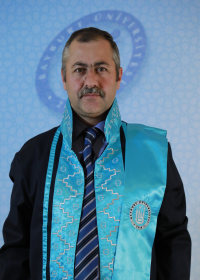
Dr. Ebubekir AKKOYUNLU is a Lecturer at the Department of Mathematics and Science Education, Faculty of Education, Bayburt University. His research spans applied mathematics, mathematical analysis, and nonlinear differential equations, with a focus on chemotaxis models, blow-up phenomena, and variable exponent spaces. Current commissions include: Diameter-Make Commission, Adaptation-Exemption Commission, International Relations Commission, Department Quality Commission, and Library Commission. His recent work analyzes anisotropic parabolic equations, attraction-repulsion chemotaxis systems, and Kirchhoff-type problems, often involving nonstandard growth nonlinearities. Publications emphasize existence theory, boundedness, and blow-up time estimation. He has contributed to mathematics education research, particularly in realistic teaching methods for derivative concepts in secondary education.
Gert Desmet is a Full Professor at Vrije Universiteit Brussel , leading research in the Department of Chemical Engineering and Separations Science within the Chemical Engineering and Applied Biological Sciences faculty. With an h-index of 49 and over 842 research outputs, his work focuses on advanced liquid chromatography systems and separation science innovations. 1995–2029: Active fundamental and applied research projects 2020–2025: Supervised 102 research works and 3 PhD theses His research explores stationary phase design , dispersion modeling , and 3D-printed chromatography media , with recent emphasis on AI-driven peak detection and theoretical plate height modeling. He leads international collaborations like the VUB-Universiteit Twente joint PhD program. Notable scientific awards include: First Prize - HPLC 2008 & 2020 Poster Awards First Prize - Analytical Science Advances Best Poster Second Prize - Udias Master Thesis Award 2012 As principal advisor, he has guided doctoral research on topics such as: Gradient Stationary Phase Selectivity (2015) 3D-Printed Sample Preparation (2025) Computational Flow in Porous Media (2019)
James Smith is a public health doctor and general practitioner based at the University of Cambridge. He delivers public health teaching for the University of Cambridge Clinical School and works independently to protect and improve health by supporting action to address climate change and promote sustainable development. His work is associated with Cambridge Public Health, which appears to be part of the University's structure with physical location in the Department of Engineering at Trumpington Street, Cambridge. Dr. Smith's educational background includes: Masters in Public Health from Cambridge University Bachelors degree in Medicine from Cambridge University James Smith's professional focus centers on the critical intersection of public health and climate change. He has established programs that integrate sustainability within public health frameworks, emphasizing how climate action directly impacts community health outcomes. His work as a sessional GP in Cambridge complements his public health teaching and climate action initiatives. He has developed extensive teaching materials and actively contributes to public health education at the university level, with particular emphasis on creating healthier, more equitable communities through sustainable development. Analysis of his publication record reveals an interesting dichotomy - while his professional profile emphasizes public health and climate action, his scholarly publications focus predominantly on neuroscience and Alzheimer's disease research spanning from 2018 to 2005. These works cover stem cell models, neurodegenerative mechanisms, and molecular pathways, suggesting possible early career research that differs from his current public health focus. Dr. Smith has received the following honors and recognitions: Fellow of the UK Faculty of Public Health Member of the UK Royal College of General Practitioners National Institute for Health and Clinical Excellence's Scholars programme East of England NHS Leadership Fellows programme Professionally, James Smith has held several significant positions. From 2013-2014, he established Public Health England's Sustainability Programme, integrating climate change, extreme weather, and sustainable development initiatives. His five years of professional public health training included work with the NHS Sustainable Development Unit, the Centre for Diet and Physical Activity Research, and local public health teams in Suffolk and Bedfordshire. Before specializing in public health, he completed medical training and worked as a general practice doctor. Dr. Smith maintains an active blog where he explores climate-health connections, fossil fuel divestment campaigns in Cambridgeshire, and political dimensions of climate action. He has written extensively about cycling infrastructure, comparing Cambridge with Copenhagen, and advocates for local action on climate change as a public health imperative. His work is fundamentally motivated by 'the desire to create a better, healthier, fairer world for everyone,' emphasizing practical community-level interventions that address both environmental sustainability and health equity.
Viola Gelli is a Research Fellow at the Niels Bohr Institute, University of Copenhagen, specializing in the Cosmic Dawn Center (DAWN) where she investigates galaxy formation during the universe's first billion years. Her work combines James Webb Space Telescope (JWST) observations with theoretical modeling to study high-redshift phenomena including Population III galaxies and early star formation processes. Her research focuses on astrophysical processes at cosmic dawn, particularly bursty star formation, metallicity evolution in primordial galaxies, and feedback mechanisms from supernovae. She employs multi-wavelength JWST data to analyze galaxy clustering, stellar populations, and chemical enrichment in the reionization era, often developing novel statistical approaches for interpreting sparse high-z observations. Analysis of her eight recent publications reveals a cohesive research program centered on JWST's capabilities to probe the epoch of first galaxies. Her work consistently addresses how stellar feedback shapes early galaxy evolution, with particular emphasis on quenching mechanisms, metal-pollution signatures, and connections between high-z systems and local galaxy analogs. No scientific awards were documented in the available institutional materials. Gelli actively contributes to major international collaborations including the Lighter BEACON JWST survey consortium, where her expertise in pure-parallel imaging analysis informs survey design and data interpretation. Her research methodology integrates observational constraints with cosmological simulations to model galaxy formation under extreme high-redshift conditions. As a core member of the Cosmic Dawn Center, she participates in this Danish National Research Foundation-funded initiative that unites theoretical and observational efforts across multiple institutions to decode the physics of cosmic dawn through coordinated JWST programs and simulation campaigns.
Filippo Cagnetti is an Associate Professor (Professore di II fascia) in the Department of Mathematical, Physical and Computer Sciences at the University of Parma , Italy. He regularly teaches foundational courses such as Calculus 2A and Mathematical Analysis A to first- and second-year students enrolled in Mathematics, Geological Sciences (Earth Sciences), and Management Engineering degree programmes, spanning academic years from 2023/2024 through 2025/2026. His research lies at the intersection of calculus of variations , partial differential equations , and geometric measure theory . A recurrent theme is the rigorous derivation of effective models for materials with microstructures via deterministic and stochastic homogenisation , particularly for free-discontinuity problems that describe brittle fracture. Parallel efforts focus on symmetrisation inequalities (Pólya–Szegö, Steiner, Schwarz, Gaussian) and their rigidity properties: under which geometric or analytic conditions equality in an inequality forces the domain to be symmetric or even trivial. Over the past decade his publication portfolio shows a clear evolution from foundational results on viscosity solutions and large-time behaviour of Hamilton–Jacobi equations to highly specialised contributions on Korn- and Poincaré-Korn-type inequalities in spaces of special functions of bounded deformation (GSBD), and on optimal regularity of free boundaries in cohesive fracture models. The techniques employed combine Γ-convergence, fine properties of BV and GSBD spaces, measure-theoretic arguments, and stochastic two-scale convergence. Contact: Email: filippo.cagnetti@unipr.it
Pablo Souza Alonso is a Researcher at the Department of Soil Science and Agricultural Chemistry within the Higher Polytechnic School of Engineering at the University of Vigo. He is an active member of the UXAFORES (Sustainable Environmental and Forest Management Unit) research group. Alonso earned his PhD from the University of Vigo in 2015 with a thesis titled "From trees to molecules: The invasive process of Acacia dealbata Link at different scales" under the supervision of Dr. Luis González Rodríguez. His research focuses on: Soil biogeochemistry, particularly carbon and phosphorus dynamics in disturbed ecosystems Wildfire ecology, including fire regime analysis and post-fire recovery in Mediterranean and South American biomes Ecological impacts of invasive plant species on soil communities and native vegetation Integration of service-learning approaches for community engagement in environmental management Land-use change effects on soil sustainability and ecosystem restoration Analysis of his 15 most recent publications (2022-2025) reveals three dominant themes: (1) Soil nutrient cycling under anthropogenic disturbances (deforestation, afforestation, fire), with emphasis on carbon and phosphorus transformations; (2) Spatiotemporal wildfire patterns and management strategies across South American ecoregions, particularly the Gran Chaco; and (3) Applications of participatory education models to enhance knowledge transfer in fire management and ecological restoration. His work consistently demonstrates interdisciplinary integration of field ecology, biogeochemistry, and social engagement methodologies. No scientific awards, prizes, or fellowships are documented in the available information. There is no evidence of current student advising roles or major grant funding in the provided materials. Alonso conducts research through the UXAFORES unit, which specializes in sustainable forest management and environmental conservation strategies, with field operations spanning the Iberian Peninsula and Latin America.
Jitka Čejková is an Associate Professor at the University of Chemistry and Technology Prague, Faculty of Chemical Engineering, Department of Chemical Engineering. She holds an MSc (2006) and PhD (2010) in Chemical Engineering from the same institution, with her doctoral research focusing on structured particles for chemical robots under Prof. František Štěpánek. Her research explores artificial life systems through droplet dynamics, chemobrionics, and unconventional robotics. Key interests include: Protocell development and liquid robots exhibiting life-like behaviors Non-linear pattern formation in surfactant systems Chemotactic mechanisms in biological and artificial systems Applications in drug delivery and biomedical engineering Her publications consistently demonstrate interdisciplinary approaches combining chemical engineering, materials science, and biological principles. Major scientific recognitions include the ISAL Distinguished Early-Career Investigator Award (2021), multiple L'Oréal-UNESCO For Women in Science finalist positions, and best paper/poster awards at international conferences. She has secured significant funding including a Junior Research Grant from the Czech Science Foundation and participates in EU projects like EVOBLISS and COST Actions. She leads the Chemical Robotics Laboratory, mentors bachelor/master students, and organizes major scientific events including ALIFE 2027. Her extensive science communication activities include documentary films, popular articles, and YouTube content with over 340k views.
Elizabeth Harper is a Professor at the Department of Earth Sciences, University of Cambridge. Her research focuses on the biological and paleontological evolution of marine invertebrates, particularly molluscs and brachiopods, using multidisciplinary techniques to study biomineralization, predator-prey dynamics, and environmental adaptation. She collaborates with the British Antarctic Survey and the Natural History Museum (London). Biomineralization: Investigating shell composition and structural adaptations to environmental stressors. Predator-Prey Relationships: Global biodiversity patterns tied to the Mesozoic Marine Revolution. Adaptive Radiations: Evolution of modern marine biota. Her recent publications highlight trends in biomineralization plasticity, paleoenvironmental reconstruction, and the interplay between ecological stress and evolutionary responses. Her work leverages resources such as the Sedgwick Museum of Earth Sciences collections and fieldwork in modern and fossil marine environments.
Johannes de Boor is a Professor at the University of Duisburg-Essen’s Faculty of Engineering, affiliated with the Institute of Nanostructure Technology (NST), and a researcher at the German Aerospace Center (DLR) Institute of Materials Research. His work focuses on thermoelectrics, photovoltaics, and nanoparticle synthesis, with a particular emphasis on energy conversion materials and device optimization. Education: Physics, University of Rostock (2001–2006) MPhil Research, University of Queensland (2007, DAAD scholarship) Doctorate, Max Planck Institute of Microstructure Physics (2008–2011) His research explores thermoelectric materials like MgAgSb, Mg₂(Si,Sn), and Fe₂VAl composites, targeting enhanced power factors, stability, and interface design. Recent publications highlight innovations in band convergence, energy filtering, and electrode compatibility. Key trends in his 15 most recent articles (2025–2020) include advanced computational modeling for electronic transport, phase stability analysis in Mg-based alloys, and electrode optimization for thermoelectric generators. Collaborative studies with institutions in Australia, Germany, and Japan underscore his international impact. Scientific Awards: 2011 Young Talent Award, German Thermoelectric Society 2016 Outstanding Poster Award, ICT, Wuhan China 2018 Poster & Lecture Prizes (WE-Heraeus Seminar, ICT2018, ISCTA 2018) 2021 Young Investigator Award, International Thermoelectric Society As a reviewer for journals like ACS Applied Materials & Interfaces and Energy Conversion and Management , and session chair at major conferences (ICT, ECT), de Boor contributes to advancing thermoelectric research. He leads the DLR junior research group 'Thermogenerators for Space Applications' and mentors students in materials science and device engineering.
Changxue Xu serves as Associate Professor and IMSE Graduate Advisor at Texas Tech University's Whitacre College of Engineering within the Department of Industrial, Manufacturing & Systems Engineering. His leadership extends to chairing the IMSE Graduate Committee, guiding departmental academic initiatives. Education: Ph.D. in Mechanical Engineering, Clemson University (2014) M.S. in Mechanical Engineering, Sichuan University (2009) B.S. in Mechanical Engineering, Sichuan University (2006) Dr. Xu's pioneering research centers on 3D bioprinting and biofabrication , with dual focus on tissue engineering applications and cancer microenvironment modeling. His work investigates tumor microenvironment dynamics , cancer cell migration mechanisms, and biopolymer rheology, while advancing micro/nanofabrication techniques for microspheres, nanofibers, and functional materials. The integration of electrohydrodynamic jet printing with biological systems represents a cutting-edge frontier in his methodology. Analysis of his 15 most recent publications (2022-2025) reveals dominant themes in bioprinting process optimization, particularly addressing cell sedimentation and aggregation challenges. His research demonstrates sophisticated approaches to vascular structure bioprinting, tumor microenvironment modeling, and mechanical property control in cellular constructs, with strong emphasis on quantitative characterization of cell-biomaterial interactions. As Graduate Advisor and Committee Chair, Dr. Xu mentors numerous graduate students through the IMSE department's robust programs. His research is conducted within the university's dedicated Bioprinting and Biofabrication Laboratory , featuring specialized equipment for advanced biofabrication techniques and cellular mechanics studies.
Jingwei Hou is an Associate Professor at the School of Chemical Engineering, University of Queensland. He is an ARC Future Fellow (2022-2025) and the group leader of the Functional Materials Engineering (FME) Lab. Hou serves as the Membrane Separation Theme Leader of the ARC Centre of Excellence for Green Electrochemical Transformation for Carbon Dioxide (2023-2029). Dr Hou received his PhD in Chemical Engineering from the University of New South Wales in 2015. He then conducted post-doctoral research at the UNESCO Centre for Membrane Science and Technology (2015-2017) and the University of Cambridge (2017-2019, affiliate of Trinity College). In 2019, he returned to Australia as an ARC DECRA Fellow at the University of Queensland. His primary research focuses on understanding the physical properties of microporous materials and translating them into practical applications for membrane separation, optics, energy storage, and catalysis. His work particularly emphasizes metal-organic frameworks (MOFs), glass composites, and their applications in environmental and energy technologies. Hou has published over 150 papers in high-impact journals including Science, Nature Communications, JACS, and Advanced Materials, accumulating more than 11,000 citations with an H-index of 63. His recent publications demonstrate significant advancements in gradient hydrogel-based ion channels, self-cleaning nanofiber membranes, structural dynamics of perovskite materials, and engineering of meltable MOFs. His work spans from fundamental material science to practical applications in CO2 capture, water treatment, and energy storage. Royal Society of Chemistry Dalton Horizon Prize (2025) Membrane Society of Australasia Membrane Research Award (2023) Australian Synchrotron Research Award (2022) ARC Future Fellowship (2022-2025) ARC DECRA Fellowship (2019-2022) Dr Hou has attracted over $9 million AUD in external research funding as lead Chief Investigator. He has delivered over 40 plenary, keynote, and invited talks globally. As group leader of the FME Lab, he mentors a team of researchers working at the cutting edge of functional materials engineering. His laboratory focuses on developing novel microporous glass composites with applications in separation, catalysis, and energy technologies. The research group collaborates extensively with industry partners and international research institutions to translate fundamental discoveries into practical applications.
Bin Zhao is a Postdoctoral Researcher at Aalto University's Department of Applied Physics and affiliated with the Molecular Materials research group. His work focuses on advanced lignin-based materials, nanocellulose technologies, and sustainable carbon constructs for environmental applications. Academic rank: Researcher Research Interests : Bin Zhao's research spans the development of lignin-based porous materials for carbon capture, nanocellulose composites for industrial applications, and biomass-derived carbon technologies for environmental and photonic applications. His work integrates materials science, chemical engineering, and sustainable chemistry. Scientific Awards : 3 months research grant Encouragement grant, Department of Bioproducts and Biosystems, May 2022 Best poster, Department of Bioproducts and Biosystems, Jun 2022 Publications : Bin Zhao's publications emphasize wood-based carbon materials for CO2 capture, single-atom catalysts , and bioproducts engineering , reflecting his commitment to sustainable materials and environmental solutions. Research Groups : He contributes to the Molecular Materials group, advancing nanotechnology and bioproducts research.
Mikael Bäckström serves as a Professor in the Department of Engineering, Mathematics and Science Education (IMD) at Mid Sweden University. His primary affiliation is with the Sports Tech Research Centre (STRC), where he conducts research at the intersection of advanced manufacturing and sports technology. Key institutional connections include the Research Centers: Sports Tech Research Centre and Department of Engineering, Mathematics and Science Education. His research focuses on Additive Manufacturing (particularly Electron Beam Melting), Sports Technology applications in skiing/cycling, and Biomechanics for injury prevention. Major projects include body heat radiation studies in STRC's climate tunnel, head injury safety systems, and ski vibration analysis. His work bridges material science with practical sports engineering challenges. Analysis of his 15 most recent publications reveals dominant themes in metal additive manufacturing (70% of works), sports biomechanics (20%), and medical device applications (10%). Key technical threads include EBM process optimization, surface roughness characterization, and instrumented testing of sports equipment. His collaborations frequently involve Koptyug, Rännar, and Cronskär across material science and sports engineering domains. Professor Bäckström leads research within Mid Sweden University's Sports Tech Research Centre, utilizing specialized facilities including the climate tunnel and wind tunnel for sports technology testing. His laboratory work integrates electron beam melting technology with biomechanical analysis for both sports equipment and medical applications.
Carlos Botero serves as a Senior Lecturer in the Department of Engineering, Mathematics and Science Education at Mid Sweden University, Östersund campus. His work is closely affiliated with the Sports Tech Research Centre and focuses on advanced manufacturing techniques within mechanical engineering. Botero's research centers on cutting-edge additive manufacturing processes, particularly Electron Beam Powder Bed Fusion (PBF-EB). His expertise spans functionally graded materials , metal-ceramic composites , and biomedical implant fabrication using Ti6Al4V alloys. Current investigations include ceramic powder processing, infrared heating applications, and microstructural characterization of multi-material systems. His publication analysis reveals concentrated activity in materials process optimization (65% of recent works), with significant contributions to biomedical applications (25%) and structural lattice systems (10%). Key methodologies include nanomechanical testing, electrochemical characterization, and thermal process innovation. Botero actively collaborates on major research initiatives including NewAIMS, Cold Start, FRAMGRAF, and FUN-LAM projects, focusing on material property enhancement through additive manufacturing. His work demonstrates strong industry-academia integration through the Sports Tech Research Centre. Technical facilities supporting his research include advanced electron beam melting systems, nanomechanical testing equipment, and specialized surface characterization laboratories within Mid Sweden University's engineering infrastructure.
Christophe Tribet is a Senior CNRS Research Scientist affiliated with the Department of Chemistry at École normale supérieure (ENS) Paris. He previously held positions at SIMM Laboratory (ESPCI Paris) and Université de Montréal. His work focuses on physical chemistry of polymers and soft matter, particularly stimuli-responsive macromolecules for protein stabilization and cell biology applications. He has pioneered amphipols for membrane protein dispersion and explores dynamic polymer systems responsive to light, temperature, and redox potential. Senior CNRS Research Scientist, ENS Paris (2010–) Senior Research Scientist, SIMM ESPCI Paris (2007–2010) Visiting Scientist, Université de Montréal (2005) His research spans protein aggregation/stability (therapeutic antibodies, enzymes), polymer-biomembrane interactions, chaperone-like polymers, genetically encoded capsules, and dynamic substrates for cell guidance. Current projects involve micropatterned substrates to modulate cell-polymer interactions and biosourced responsive lipid capsules. Recent publications highlight innovations in stimuli-responsive materials: temperature-switchable substrates for cell adhesion (2016–2019), amphipol-based membrane protein stabilization (2019), and photocontrolled foam/emulsion destabilization (2012). The team uses scattering methods and colloidal engineering to advance biomedical and soft matter applications. Dr. Tribet teaches advanced courses on polymer physico-chemistry, biomaterials, and scattering techniques within PSL University and Sorbonne University programs.